
How to Tell If Acid Has Damaged Your Surfaces
If someone previously used vinegar on delicate surfaces in your home, check for these characteristic signs of acid damage:
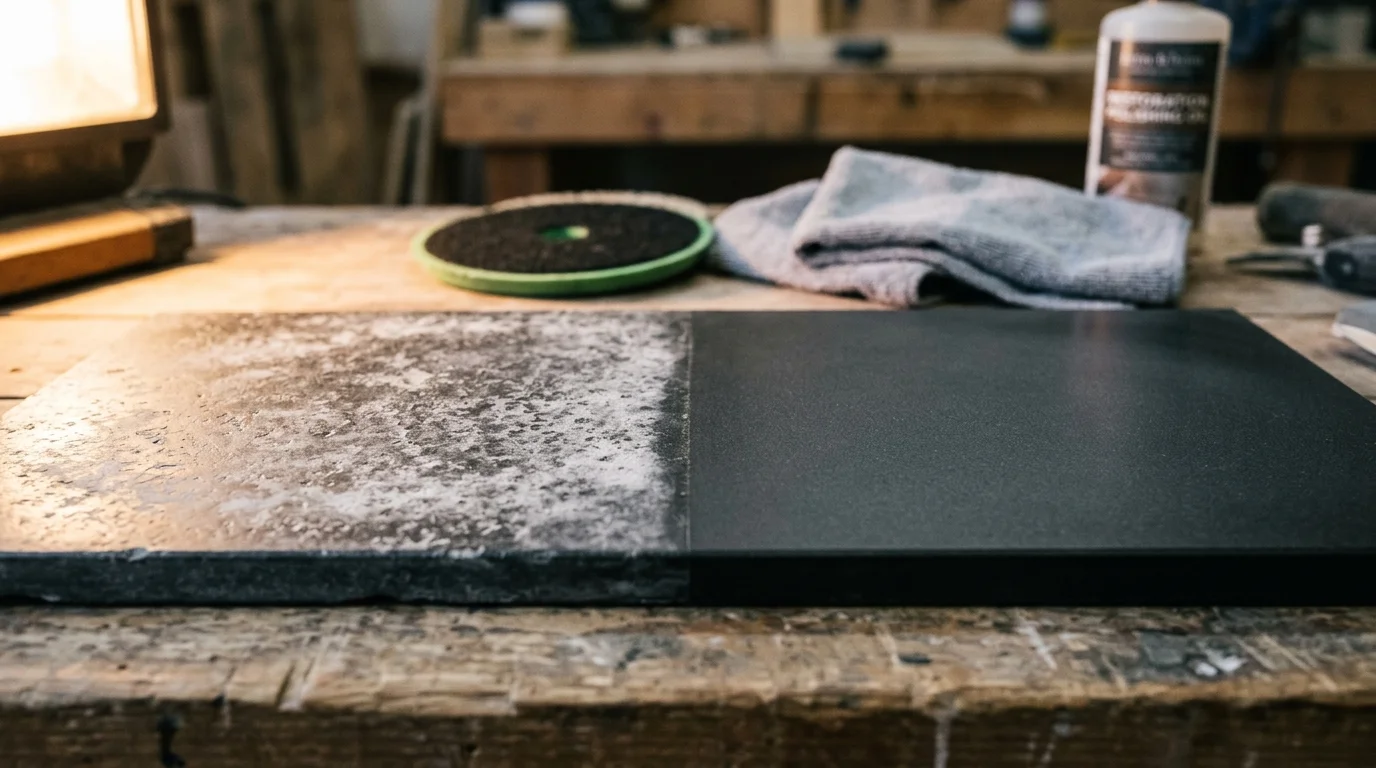
- Dull “Water Spots” on Polished Stone: If a shiny marble counter looks clean from straight on but reveals chalky, matte spots when sunlight hits it from an angle, acid has etched the surface. You can often smooth minor etching using an abrasive marble polishing powder and a felt buffing pad, but deep etches require professional diamond honing.
- Milky Haze Across Hardwood: When a wood floor looks cloudy regardless of how many times you buff it, the polyurethane finish has oxidized and separated microscopically. Resolving this problem requires a professional “screen and recoat” treatment to lay down a fresh layer of polyurethane.
- Splotchy Glare on Displays: If your smartphone or tablet glass has patches that catch oil and resist smooth finger movement, the oleophobic coating has worn away. Applying a high-quality tempered glass screen protector effectively restores a smooth, factory-grade oleophobic surface over the damaged screen.
- Gummy or Hardened Appliance Seals: If your front-loading washing machine door boot feels sticky to the touch or shows tiny hairline fractures, the rubber has degraded. Replace the gasket before it ruptures and spills water onto your subflooring.





Great information! Thank you
show the damn 5 surfaces
I agree. My Mother cleaned everything with vinegar. It’s the only thing she used.
Right! Because I have vinegar in my Instcart coming to do my floors.
can you clean stains in a kitchen sink with vinegar?
Fill your stainless steel sink halfway with warm water & pour in a cup of bleach!
Toss in ALL your cutlery (unless they’re sterling silver), & while you’re at it, put any badly stained coffee/tea mugs in there too. Let them all soak for a couple hours, empty bleach water, then do dishes as usual with dishsoap.