
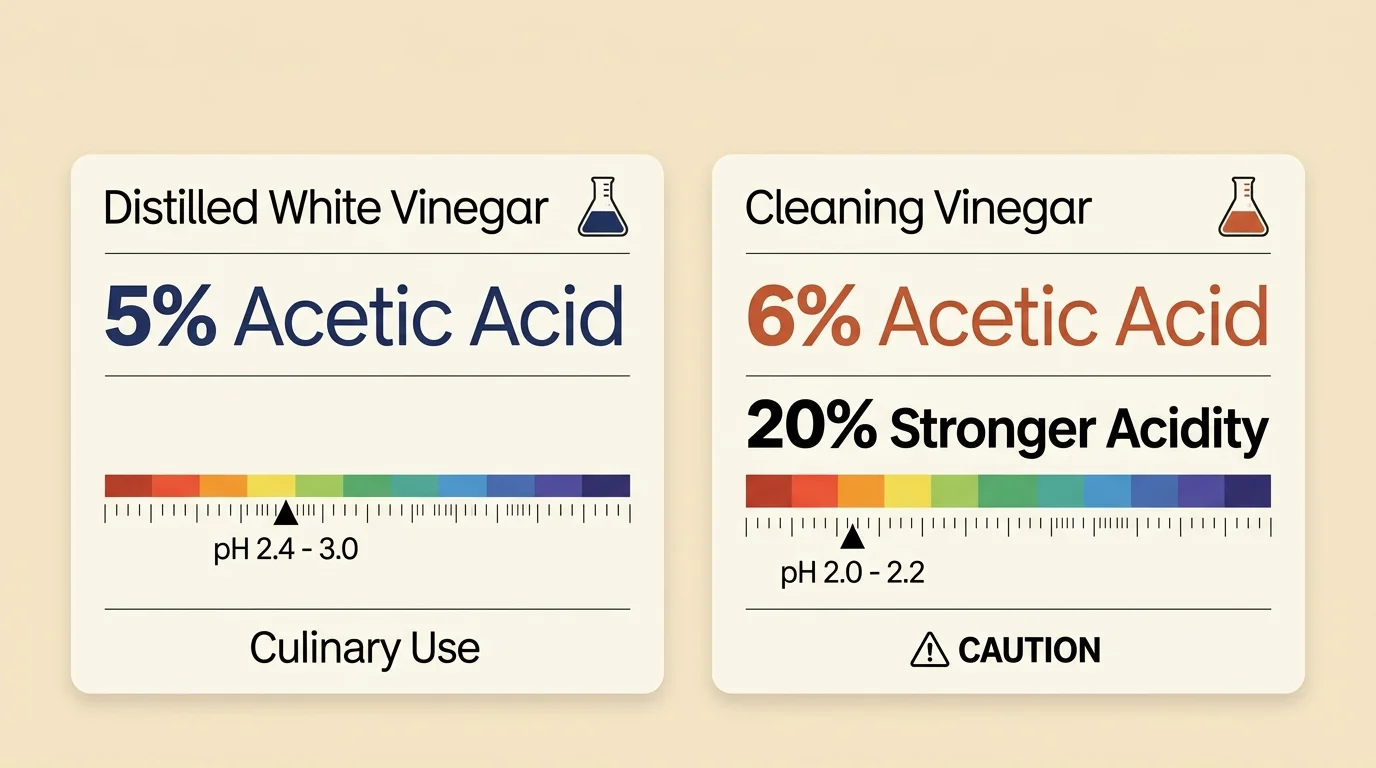
The Chemistry: Distilled White Vinegar vs. Cleaning Vinegar
To understand the surfaces vinegar can damage, examine the chemical disparity between standard kitchen vinegar and commercial cleaning vinegar. While both products appear identical, their acid concentrations alter their corrosiveness substantially:
| Feature / Property | Standard Distilled White Vinegar | Specialized Cleaning Vinegar |
|---|---|---|
| Acetic Acid Content | 5% Acetic Acid | 6% Acetic Acid |
| pH Range | 2.4 – 3.4 | 2.0 – 2.6 |
| Acidic Strength Difference | Baseline standard | 20% more acidic than 5% vinegar |
| Food Grade Safety | Yes (safe for consumption/canning) | No (untested for culinary ingestion) |
| Corrosive Risk Level | Moderate (etches stone over time) | High (accelerates etching and seal breakdown) |
Because the pH scale is logarithmic, a drop from pH 3.0 to pH 2.0 represents a tenfold increase in acidity. That additional 1% of acetic acid in commercial cleaning vinegar increases its chemical strength by 20%, which strips finishes, degrades sealants, and damages metal fixtures much faster than culinary table vinegar.





Great information! Thank you
show the damn 5 surfaces
I agree. My Mother cleaned everything with vinegar. It’s the only thing she used.
Right! Because I have vinegar in my Instcart coming to do my floors.
can you clean stains in a kitchen sink with vinegar?
Fill your stainless steel sink halfway with warm water & pour in a cup of bleach!
Toss in ALL your cutlery (unless they’re sterling silver), & while you’re at it, put any badly stained coffee/tea mugs in there too. Let them all soak for a couple hours, empty bleach water, then do dishes as usual with dishsoap.