
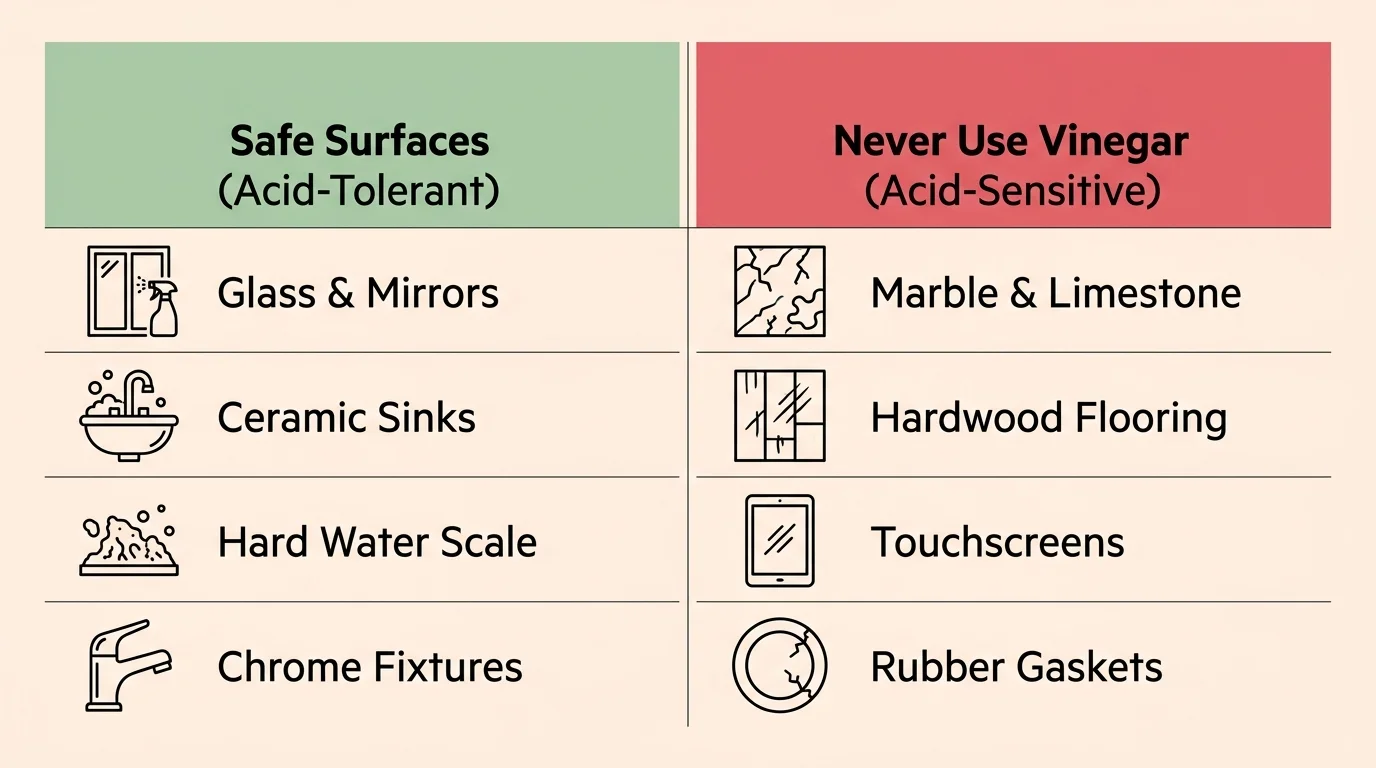
Quick Reference: Safe vs. Unsafe Vinegar Cleaning Guide
Review this quick reference guide to verify which surfaces tolerate vinegar and which require pH-neutral alternatives:
| Household Surface | Is Vinegar Safe? | Risk of Vinegar Use | Recommended Safe Alternative |
|---|---|---|---|
| Marble, Travertine, Limestone | No | Surface etching, dull white spots, eroded stone | pH-neutral stone cleaner or diluted castile soap |
| Hardwood Floors & Cabinets | No | Polyurethane clouding, moisture intrusion, warping | Damp microfiber with pH-neutral wood floor cleaner |
| Touchscreens & TV Displays | No | Stripping of oleophobic and anti-glare coatings | Dry optical microfiber cloth or distilled water |
| Front-Load Rubber Door Gaskets | No | Rubber brittleness, gasket cracking, water leaks | Oxygen bleach washing machine tablets |
| Raw Meat Cutting Boards | No | Incomplete sanitization of Salmonella and E. coli | EPA-registered kitchen sanitizer or hot soapy water |
| Glass Windows & Mirrors | Yes | Minimal (avoid unsealed wooden framing) | 1:1 ratio of white vinegar and warm water |
| Ceramic Bathroom Tiles | Yes | Safe on ceramic; avoid unsealed cementitious grout | Diluted vinegar spray or baking soda paste |
| Chrome Showerheads & Faucets | Yes (short exposure) | Extended soaking (over 1 hour) can pit thin plating | Short 30-minute vinegar soak followed by clean rinse |


Great information! Thank you
show the damn 5 surfaces
I agree. My Mother cleaned everything with vinegar. It’s the only thing she used.
Right! Because I have vinegar in my Instcart coming to do my floors.
can you clean stains in a kitchen sink with vinegar?
Fill your stainless steel sink halfway with warm water & pour in a cup of bleach!
Toss in ALL your cutlery (unless they’re sterling silver), & while you’re at it, put any badly stained coffee/tea mugs in there too. Let them all soak for a couple hours, empty bleach water, then do dishes as usual with dishsoap.