You can remove years of trapped dust and lost items without straining your back or scratching your floors. Cleaning tight spaces beneath heavy furniture requires clever leverage rather than brute physical force.
Dust under furniture collects allergens, pet hair, and pest attractants that degrade your indoor air quality every time someone sits down. These practical cleaning hacks let you sanitize low-clearance areas effortlessly.
Grab a common household item or a specialized flat tool to clean under your couch today without moving heavy wood frames.
The Hidden Health Risks of Neglecting Under-Couch Dirt
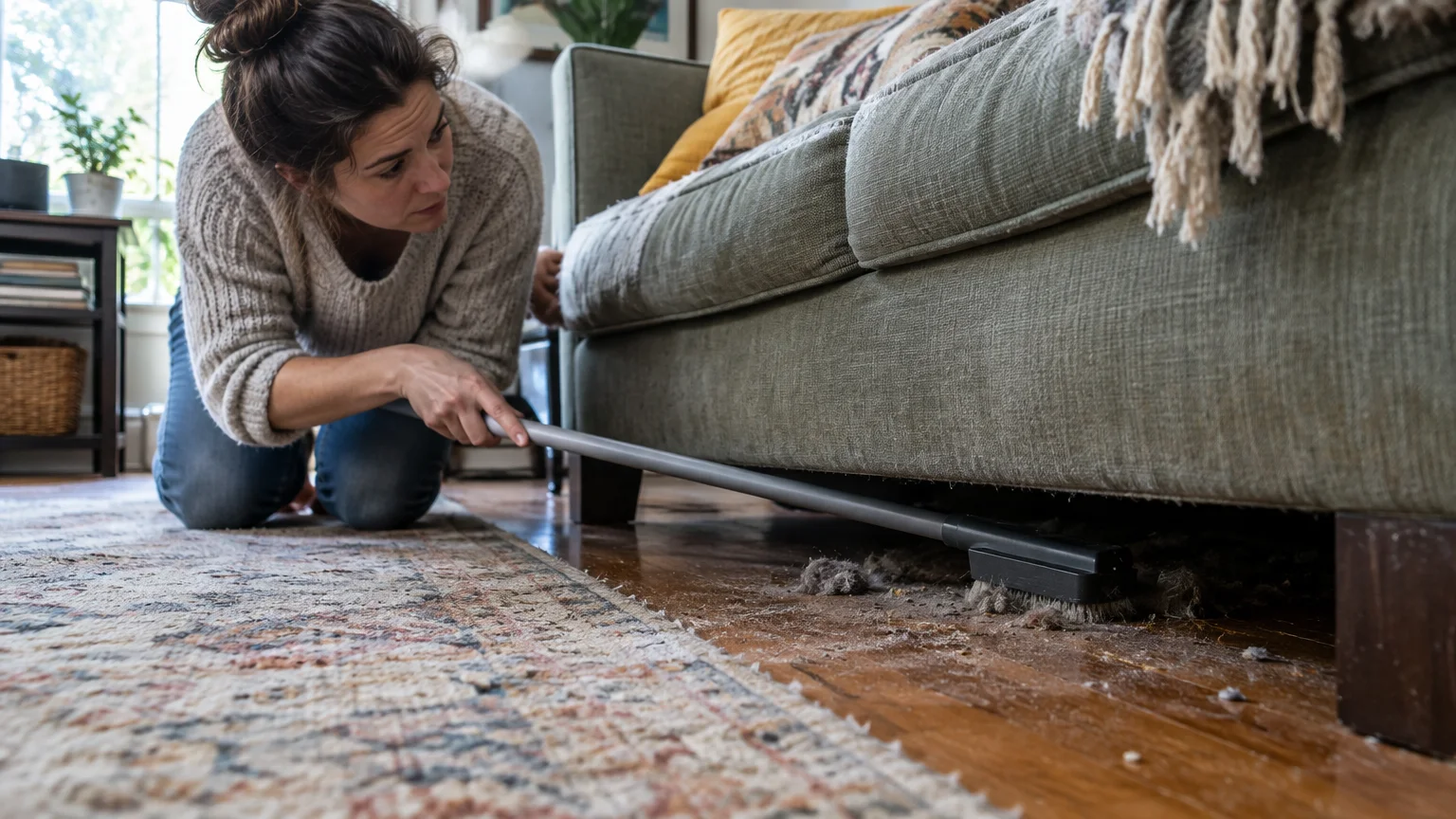
Dark, undisturbed gaps beneath large sectionals and sofas create ideal microclimates for biological contaminants. Normal household airflow pulls airborne debris along baseboards, funneling fine particulate matter beneath heavy seating where vacuum brushes cannot reach.
Over time, this accumulation forms dense mats of lint, skin cells, and dried pet dander. The Asthma and Allergy Foundation of America notes that dust mites thrive in warm, dark areas containing shed human skin.
Whenever you drop onto couch cushions, the downward pressure acts like a bellows. It expels settled allergens directly back into your breathing zone.
According to the EPA indoor air quality guidelines, poor indoor air quality triggers chronic respiratory issues, eye irritation, and allergic rhinitis. Routine removal of settled particulate matter protects sensitive household members from recurring flare-ups.
Beyond allergens, neglected floor gaps collect fallen food crumbs that invite unwanted pests. Silverfish, carpet beetle larvae, and ants feed on organic debris hidden beneath upholstery skirts.
Abrasive grit also poses physical risks to hard surfaces. As people shift on the sofa, microscopic sand particles grind into hardwood sealants, causing permanent floor dulling.
Method 1: The Bendable Microfiber Gap Duster
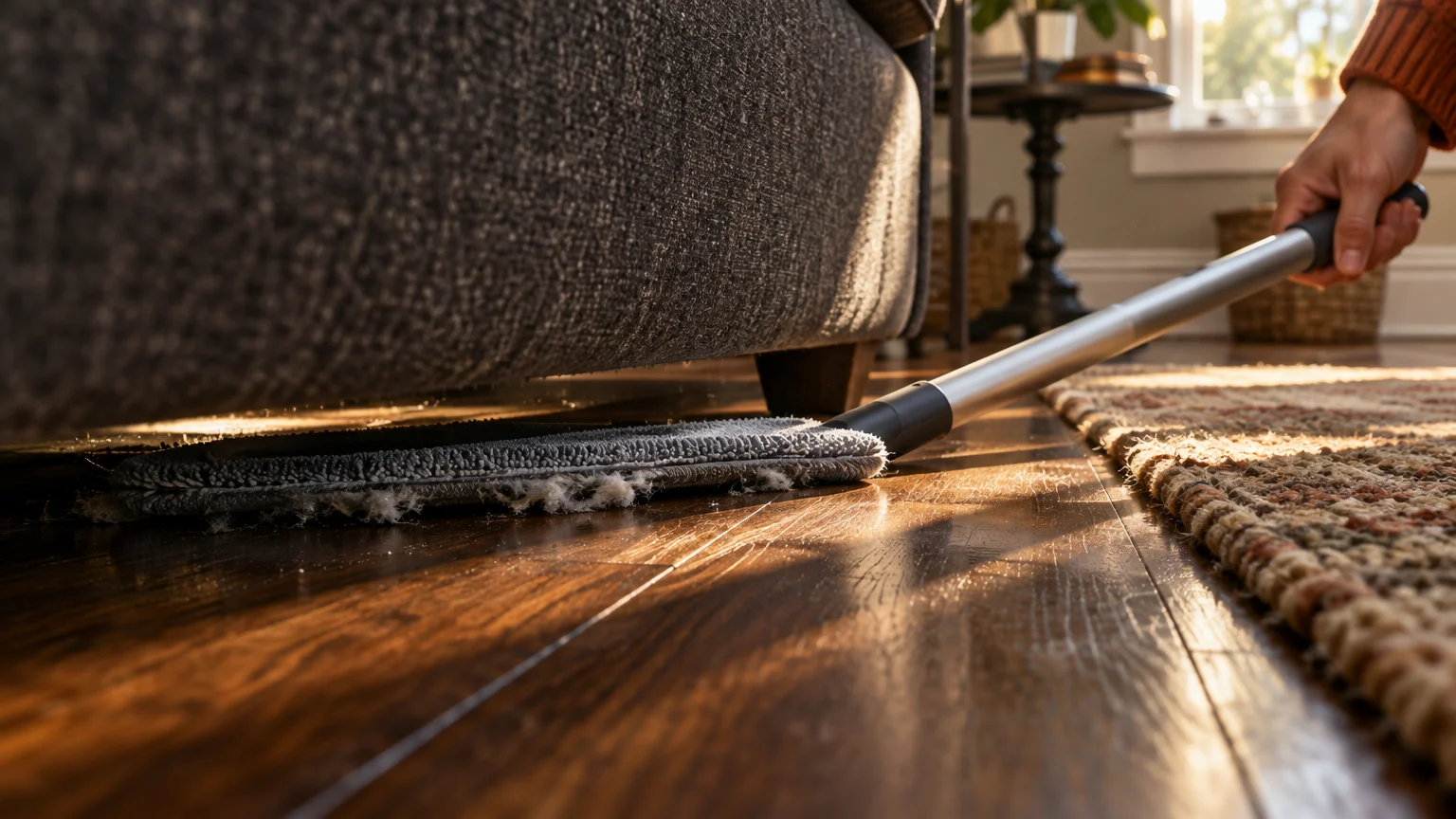
Specialized flat gap dusters provide the most reliable dry-cleaning method for modern low-profile furniture. These tools feature a long, flexible plastic blade wrapped in an electrostatic microfiber sleeve.
The ultra-thin blade measures less than half an inch thick. This slender profile slides under couches with almost zero floor clearance.
Unlike feather dusters that merely scatter debris into the air, microfiber carries a natural static charge. The split synthetic fibers attract, capture, and lock in microscopic dust particles through van der Waals forces.
To use this tool effectively, extend the telescoping pole to match the full depth of your sofa. Slide the flat blade along the baseboards first, where dust concentration peaks.
Work in slow, overlapping horizontal sweeps from the rear wall toward your feet. Avoid lifting the duster until you pull the accumulated debris completely out from underneath.
Once finished, slide the microfiber sleeve off the plastic wand and shake it inside an outdoor trash can. Launder the sleeve in warm water using mild detergent.
Never add liquid fabric softener or dryer sheets to the wash cycle. Fabric softeners coat microfiber strands with silicone, permanently destroying their electrostatic dust-trapping ability.
Method 2: The DIY Yardstick and Microfiber Sock Hack
You do not need commercial cleaning equipment to extract deep dust mats. You can build an effective, zero-cost reach tool using standard household items.
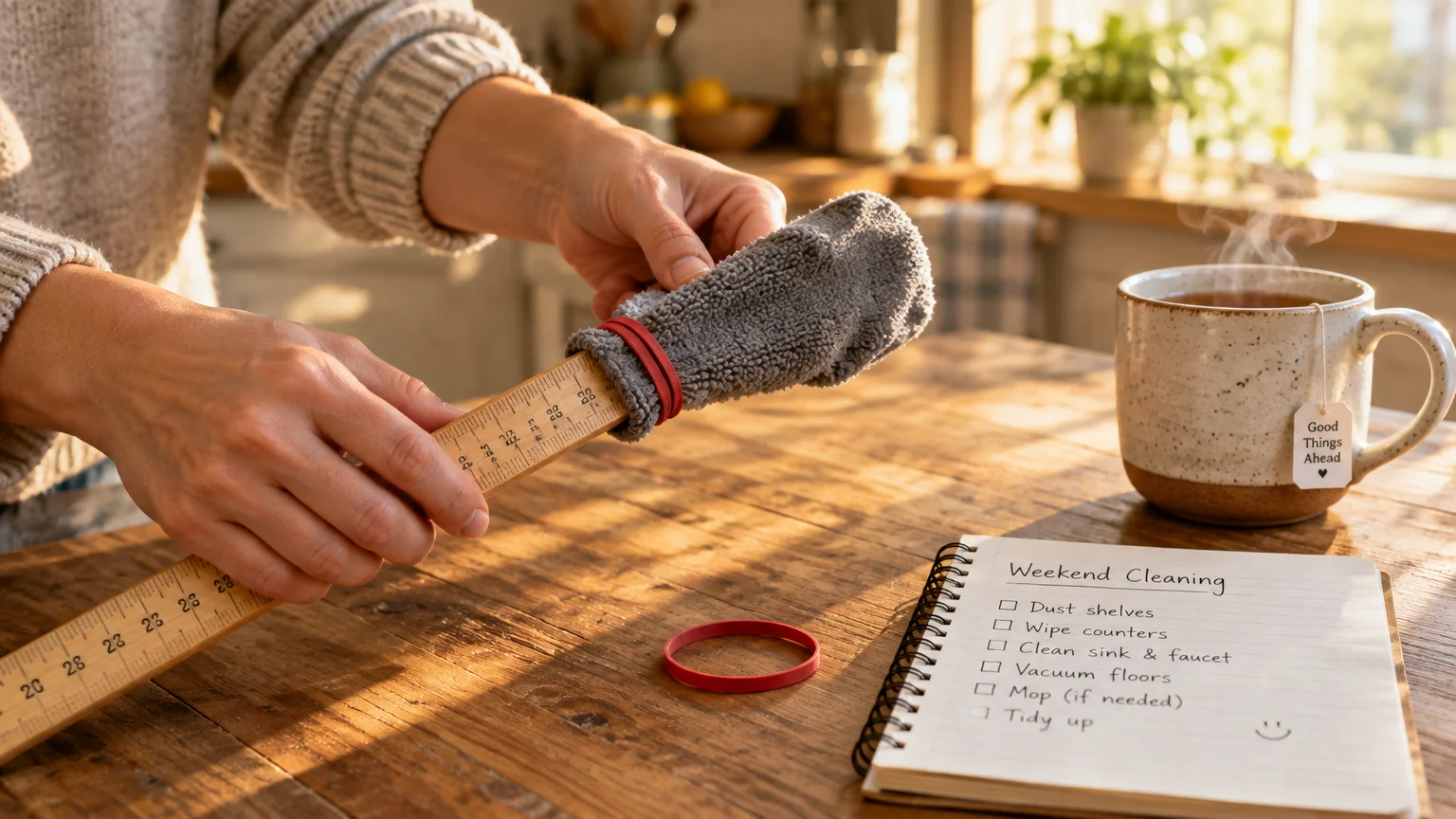
Locate a sturdy wooden yardstick, a clean microfiber sports sock or cloth, and two heavy-duty rubber bands. A wooden paint-stirring stick also works for shallow furniture.
Pull the microfiber sock completely over the end of the yardstick. Ensure the soft toe wraps around the blunt tip to prevent bare wood from gouging your baseboards or flooring.
Secure the open end of the sock tightly to the shaft using your rubber bands. The fabric must remain taut so it does not bunch up when pushed under tight clearances.
Lightly mist the fabric with clean tap water from a spray bottle. The cloth should feel barely damp to the touch, not soaked or dripping wet.
Slide the yardstick under the couch, sweeping in wide fan arcs across the subfloor. The damp microfiber captures fine soil and pet hair without leaving standing moisture behind.
Remove the sock after two passes, turn it inside out, and reattach it to present a clean cleaning surface. This zero-cost hack cleans just as thoroughly as expensive specialty tools.
Method 3: Low-Profile Vacuum Crevice Attachments and Extension Wands
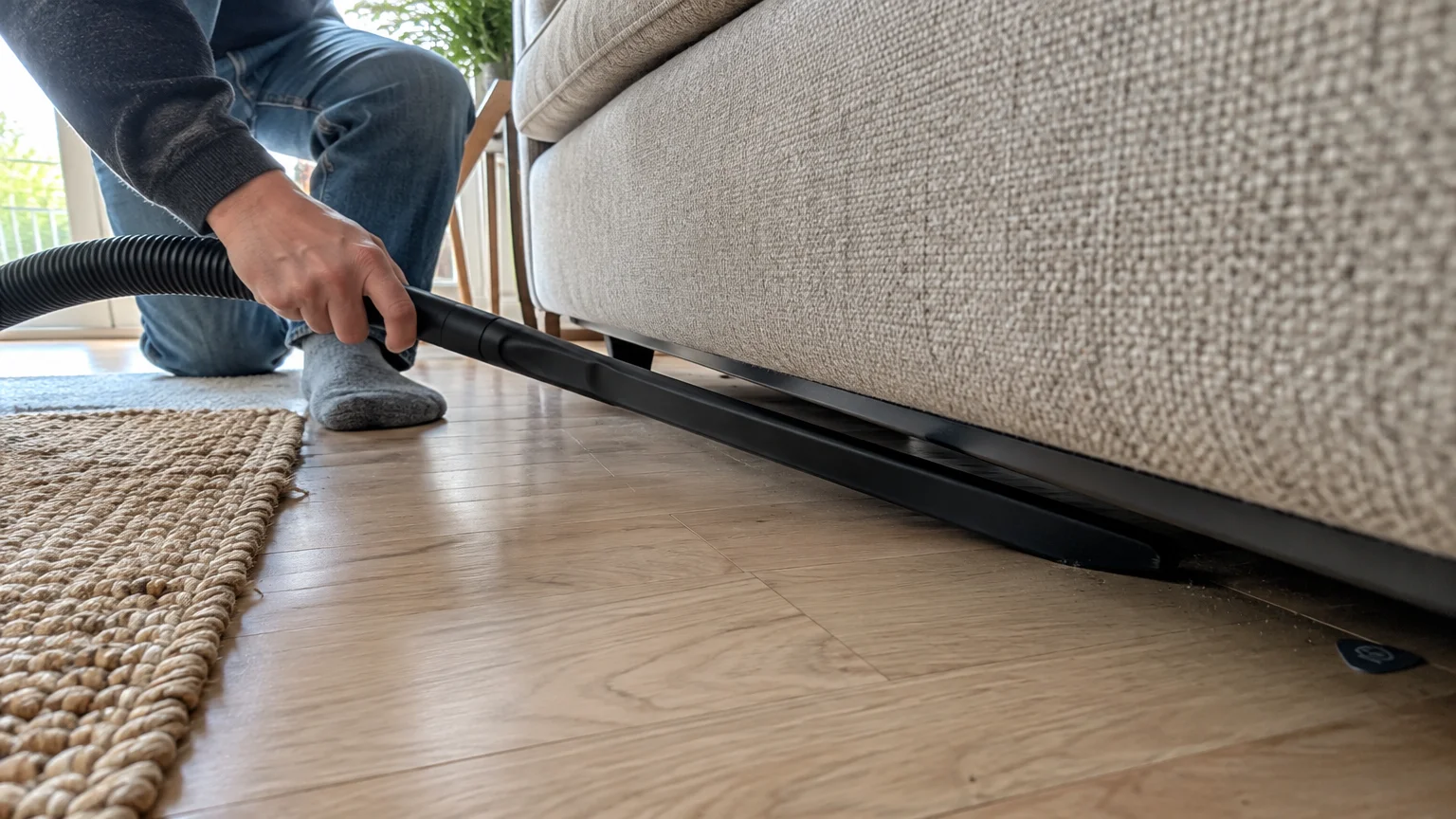
Standard vacuum floor heads feature bulky motor housings that prevent you from reaching under low frames. Fortunately, low-profile under-appliance vacuum attachments solve this physical limitation.
These rigid plastic tools flatten out into a wide, narrow nozzle measuring less than one inch tall. They fit directly onto standard 32-millimeter and 35-millimeter vacuum extension wands.
Connect the under-appliance tool securely to your vacuum hose. Ensure your vacuum canister or upright unit features a clean, certified HEPA filter before beginning.
The CDC home hygiene recommendations emphasize using vacuums with proper filtration to capture fine particles without blowing exhaust dust across living spaces. High-suction air currents remove deep-seated grit from carpet backing.
Insert the nozzle horizontally along the floor surface. Move the wand in straight, parallel lines, overlapping each vacuum pass by two inches.
Listen for rattling noises that indicate small lost objects entering the tube. If you suspect missing earrings or coins hide underneath, secure a nylon stocking over the suction opening with a rubber band first.
The mesh stocking catches valuable items instantly while allowing vacuum air to pull loose dust into the nozzle. This safety trick protects both your jewelry and your vacuum motor.
Method 4: The Reverse-Air Blower and Catch Technique
When furniture clearance is too tight for wands or blades, controlled airflow offers an ingenious solution. You can push dirt out from hidden depths using positive air pressure.
You will need a hair dryer with a narrow concentrator nozzle or an electric canister air blower. You will also need two damp bath towels and a standard vacuum cleaner.
Set your hair dryer strictly to its cool or cold setting. Never use heated air; hot airflow can melt synthetic carpet fibers, damage sofa fabric, or ignite dry lint.
Position damp towels along the front edge of the sofa, leaving a single wide gap open. The damp fabric catches airborne dust bunnies so they cannot escape into your living room.
Place the hair dryer nozzle close to the floor at the rear or side opening of the couch. Direct the airflow inward at a shallow forty-five-degree angle toward the front opening.
Turn on the blower to drive settled hair and dust tumbleweeds straight toward the front exit. The damp towels catch floating debris like an electrostatic net.
Run your vacuum nozzle immediately along the open collection zone to pull the gathered piles into the dustbin. This dynamic method clears inaccessible dust mats in under three minutes.
Method 5: Ultra-Slim Robotic Vacuums with Low Clearance
Automated robotic vacuums offer consistent, maintenance-free dirt removal for furniture with moderate clearance. However, not all robotic vacuums navigate tight gaps successfully.
Standard robot vacuums feature top-mounted LiDAR domes that stand four to five inches tall. These tall domes frequently wedge under sofa framing, scratching decorative wood legs.
Choose an ultra-slim model that relies on integrated bumper sensors or optical floor tracking instead of raised domes. Slim models measure less than three inches tall, allowing them to glide effortlessly under modern sofas.
Before deploying your robot, inspect the space underneath using a strong flashlight. Pick up stray charging cables, pet toys, and loose upholstery threads that could tangle the spinning brush roll.
Set your vacuum app to clean under the living room furniture daily or every other day. Routine runs prevent dust bunnies from bonding into dense, stubborn mats.
If your sofa features low-hanging center support legs, install physical magnetic boundary strips underneath. These barriers prevent the robot from straddling low center braces and getting stuck mid-cycle.
Method 6: Long-Handled Rubber Brooms and Squeegees for Carpets
Pet hair adheres tenaciously to carpet fibers beneath furniture through friction and static cling. Traditional vacuum nozzles often glide right over embedded pet hair without lifting it.
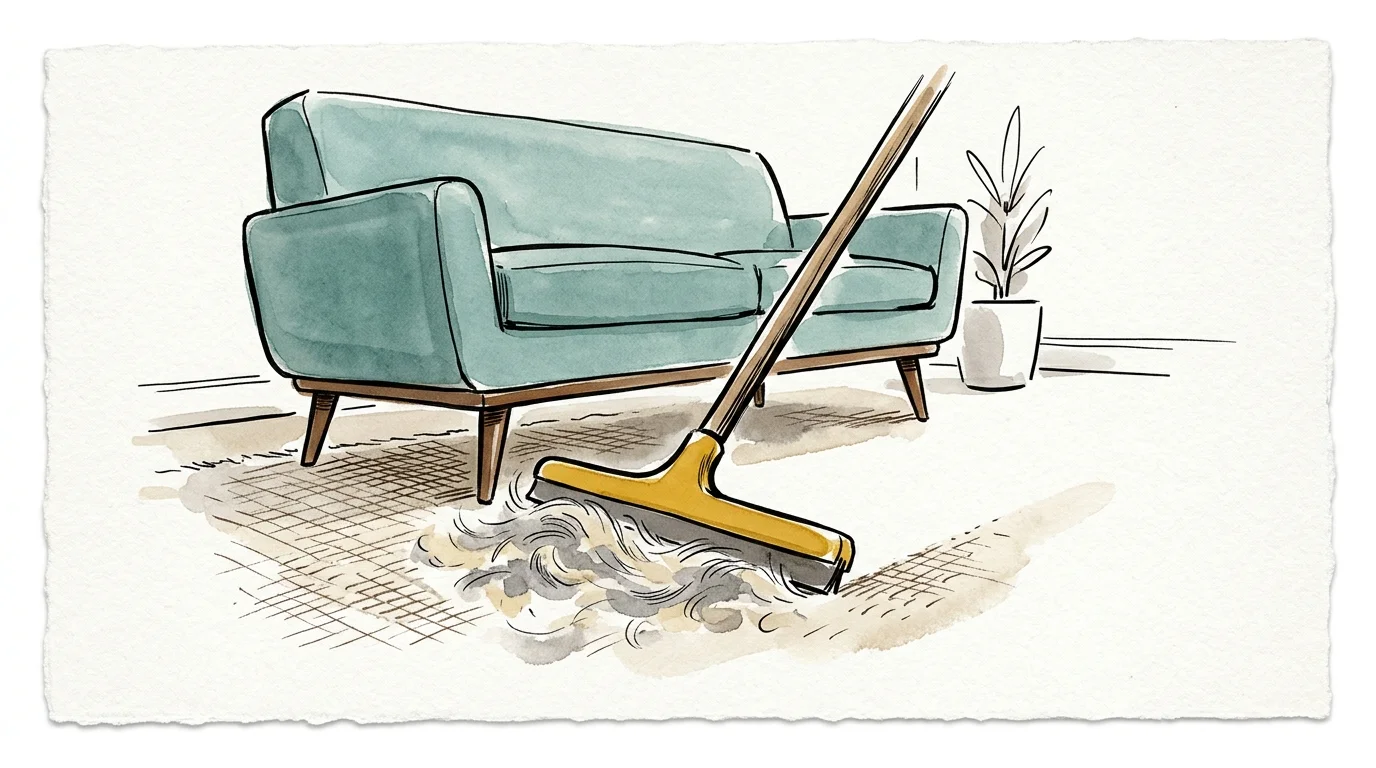
A telescoping rubber broom or commercial floor squeegee provides exceptional mechanical leverage on carpeted surfaces. Dense rubber blades create massive surface friction that pulls stubborn hair free.
Telescoping handles adjust down to flat horizontal angles, allowing you to slide the head under deep furniture frames. The flexible rubber head will not scuff or scratch finished wood legs.
Press the rubber blade firmly into the carpet pile. Pull the broom toward you using short, assertive six-inch scraping strokes.
The rubber friction generates static electricity, rolling hair, dander, and rug lint into tight, manageable cords. Sweep these cords out from beneath the front edge of the couch.
Once you extract the hair clumps, vacuum them up with your standard floor nozzle. Wash the rubber squeegee head under warm running water to remove clinging soil particles.
Flooring Compatibility: Protecting Hardwood, Tile, and Rugs
Different flooring materials require customized cleaning approaches to prevent accidental surface damage. Using the wrong tool can leave permanent scratches or moisture rings under furniture.
Hardwood and luxury vinyl plank floors scratch easily when loose grit scrapes across their protective wear layers. The University of Georgia Extension recommends using soft microfiber and avoiding abrasive tools on finished wood surfaces.
Never slide bare plastic or metal vacuum pipes across unprotected hardwood. Ensure all DIY tools feature thick fabric padding around sharp edges to protect sensitive floor sealants.
For tile and natural stone floors, beware of deep grout lines. Grout joints act as collection gutters, trapping fine dirt that flat sweepers might skip over.
Use a narrow vacuum crevice tool along tile grout lines to extract packed grime via concentrated suction. Keep damp cleaning tools only slightly moist to prevent dirty water from pooling in unsealed grout.
Low-pile carpets benefit most from vacuum suction combined with rubber squeegee agitation. Avoid using soaking wet cloths over carpets under furniture, as poor airflow promotes mold growth in damp padding.
Tool Comparison for Low-Clearance Furniture Cleaning
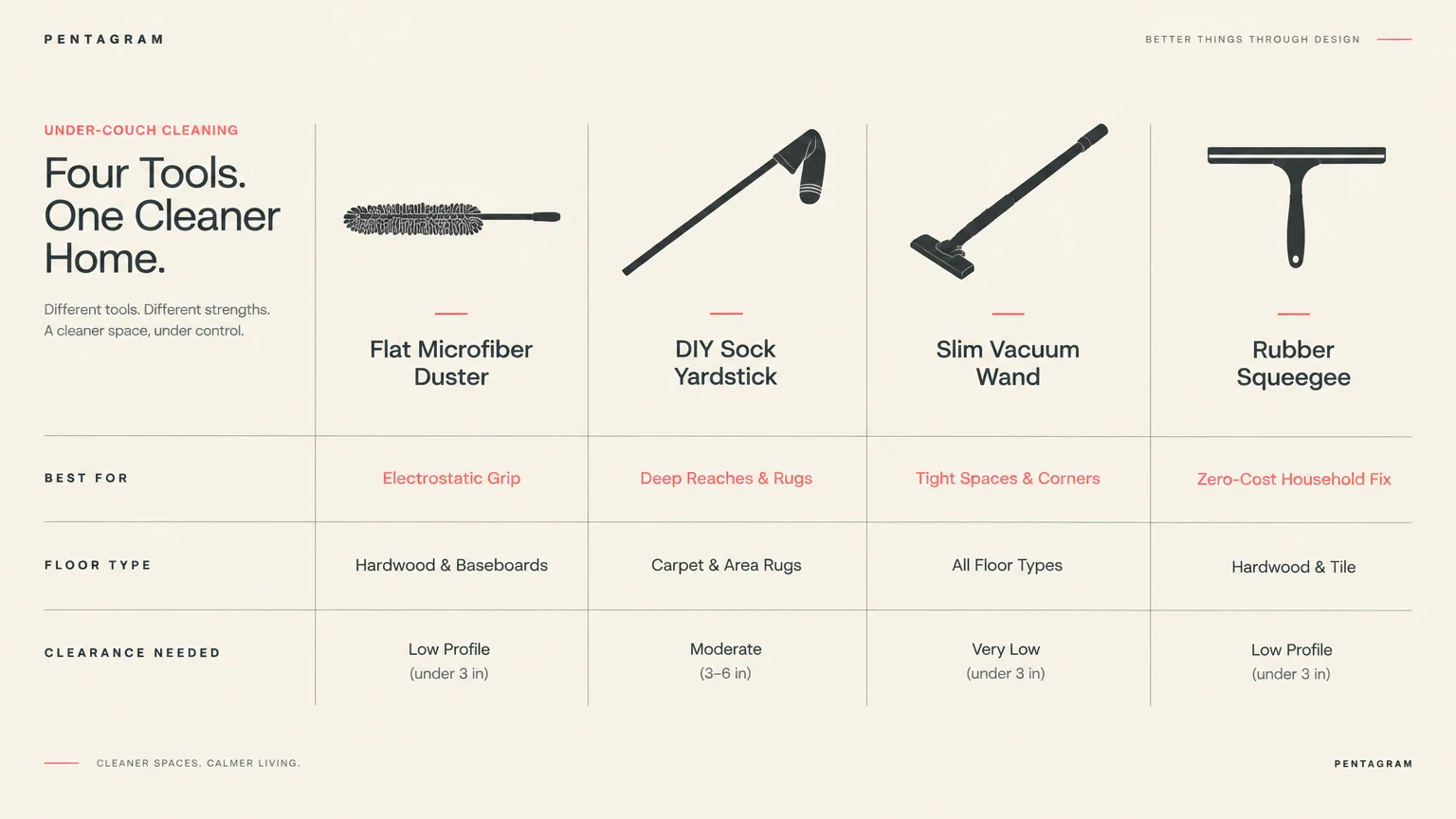
Selecting the ideal tool depends on your furniture clearance height and your floor surface. Review this comparison table to choose the best solution for your living room.
| Cleaning Method | Ideal Flooring | Minimum Clearance | Primary Benefit | Key Limitation |
|---|---|---|---|---|
| Microfiber Gap Duster | Hardwood, Vinyl, Tile | 0.5 inches | Static charge traps dust without scattering | Cannot lift heavy debris or large crumbs |
| DIY Yardstick & Sock | Hardwood, Laminate | 0.5 inches | Zero equipment cost using household items | Requires manual washing between rooms |
| Low-Profile Vacuum Wand | Carpets, Rugs, Tile | 1.0 inch | Deep suction extracts embedded grit | Requires a compatible vacuum hose |
| Reverse-Air Blower | All Floor Types | 0.25 inches | Works in virtually inaccessible heights | Can send dust airborne if uncontained |
| Ultra-Slim Robot Vacuum | Hard Floors, Low Carpet | 2.8 inches | Automated daily maintenance | Fails on extra-low sofas with skirts |
| Rubber Carpet Squeegee | Carpets and Area Rugs | 1.5 inches | Lifts stubborn, woven pet hair | Ineffective on slick polished tile |
Step-by-Step Under-Couch Cleaning Routine
Follow this systematic routine to clean under your couch thoroughly without moving heavy sectionals. Completing these sequential steps delivers professional results in under fifteen minutes.
- Perform a visual inspection: Shine a bright flashlight beneath the sofa from end to end. Identify lost toys, pens, loose change, and hidden electrical cords before introducing cleaning tools.
- Retrieve physical obstructions: Use a bent wire coat hanger or yardstick hook to retrieve solid items. Clearing toys and cords prevents equipment tangles and clogged vacuum hoses.
- Run the dry extraction phase: Insert your flexible microfiber duster or low-profile vacuum wand. Sweep the subfloor in systematic overlapping rows from back to front, capturing dry dust bunnies.
- Scrape carpets for pet hair: If your couch rests on a rug, sweep a rubber carpet squeegee over the pile. Short pulling strokes lift embedded fur that standard suction wands leave behind.
- Perform a spot wipe: Wrap a damp microfiber cloth around your yardstick for hard floors. Lightly glide it over the surface to capture fine electrostatic residue and sticky spills.
- Verify full dust removal: Shine your flashlight under the frame at floor level once more. Check corners and baseboards to ensure no lingering debris clusters remain behind.
How to Keep Dust and Debris Out from Under Your Couch
Once you extract hidden grime, establish protective measures to stop dirt from returning. Proactive barriers save you substantial time and effort during future cleaning sessions.
Install clear PVC under-couch toy blockers along the perimeter of the furniture legs. These discreet, transparent plastic panels attach to sofa legs using strong hook-and-loop straps.
Toy blockers prevent tennis balls, pet toys, and stray socks from sliding beneath the frame. They also limit airflow drafts that pull ambient room lint into dark gaps.
Alternatively, attach dense fabric draft stoppers or custom-fit foam pipe insulation tubes behind the front sofa legs. These soft buffers remain invisible while sealing the clearance gap completely.
Upgrade your central HVAC furnace filters to a minimum MERV 11 rating. High-efficiency filters pull floating airborne lint out of circulation before it settles beneath your furniture.
Regularly groom shedding cats and dogs with an undercoat rake outdoors. Reducing loose shedding at the source drastically cuts the volume of pet dander accumulating under your sofa.
Your Immediate Next Step
Grab a flashlight right now and inspect the clearance height beneath your living room couch. Choose the cleaning tool above that matches your exact clearance space, and spend five quick minutes extracting hidden dust today.