
02 Hardwood Floors and Solid Wood Cabinetry
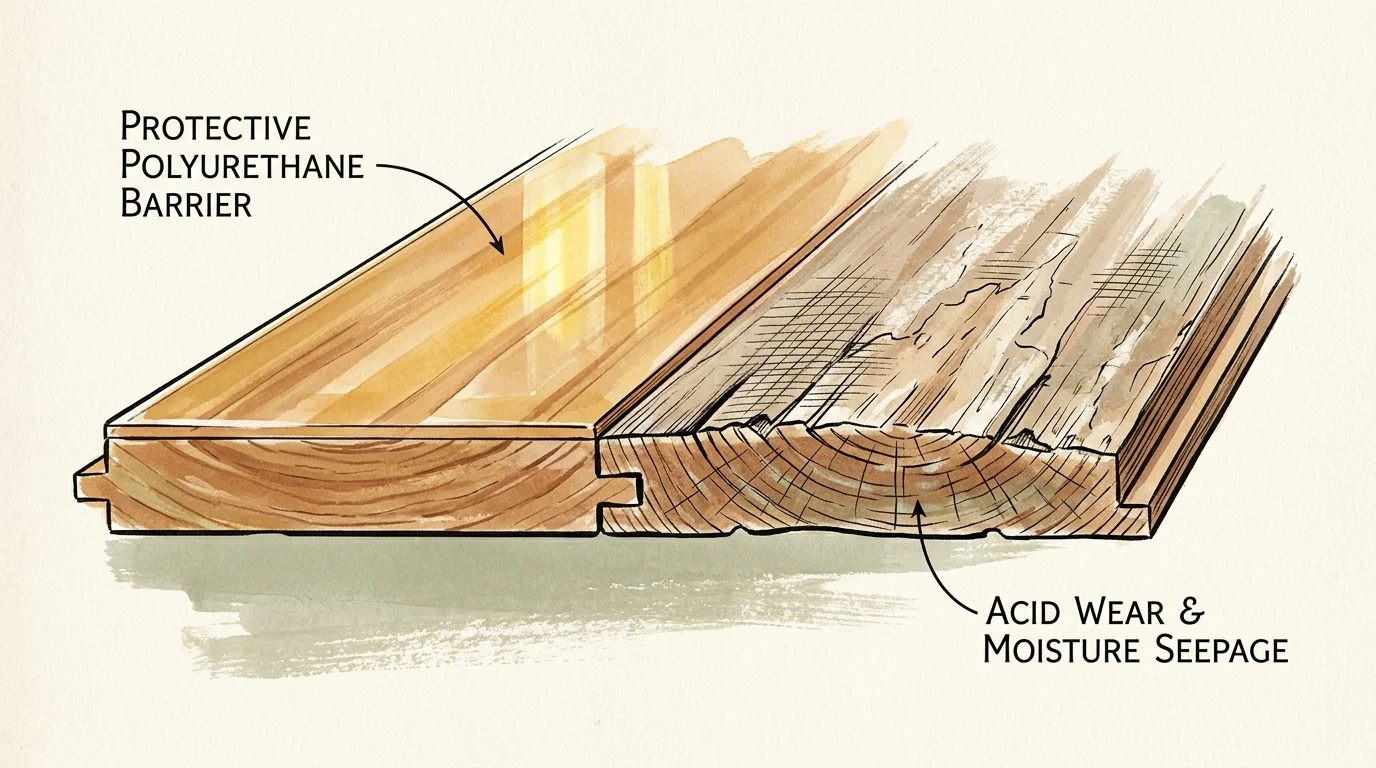
A persistent internet cleaning myth suggests mopping hardwood floors with diluted vinegar and warm water. Following this advice leads to one of the most widespread vinegar cleaning mistakes in modern homes. While the acetic acid will not instantly burn through a plank of red oak, it steadily degrades the protective polyurethane, polyacrylic, or lacquer finish that shields your wood.
Modern hardwood floors rely on factory-applied urethane topcoats to create an airtight, waterproof barrier. The continuous application of an acidic solution with a pH below 4.0 breaks down these synthetic polymers; this chemical wear strips away the glossy sheen and leaves behind a hazy, milky film. Once this outer barrier weakens, water from your mop seeps directly into the raw wood grain below, causing cupping, warping, and edge splintering.
Using vinegar on wood floors often voids manufacturer warranties. The National Wood Flooring Association advises homeowners against using acidic or oil-based additives on sealed hardwood, recommending dedicated, pH-balanced floor cleaners instead.
Step-by-Step Method to Clean Hardwood Floors Safely
- Dry Dust First: Remove loose grit and pet hair using a dry microfiber dust mop. Loose dirt acts like sandpaper when dragged under a wet mop.
- Lightly Mist the Floor: Spray a specialized, pH-neutral wood floor cleaner lightly onto a clean microfiber pad rather than soaking the floorboards directly.
- Follow the Grain: Mop in the direction of the wood grain to lift dirt without leaving streaks.
- Air Dry Completely: Ensure the room has adequate airflow so the minimal moisture evaporates within two to three minutes.




Great information! Thank you
show the damn 5 surfaces
I agree. My Mother cleaned everything with vinegar. It’s the only thing she used.
Right! Because I have vinegar in my Instcart coming to do my floors.
can you clean stains in a kitchen sink with vinegar?
Fill your stainless steel sink halfway with warm water & pour in a cup of bleach!
Toss in ALL your cutlery (unless they’re sterling silver), & while you’re at it, put any badly stained coffee/tea mugs in there too. Let them all soak for a couple hours, empty bleach water, then do dishes as usual with dishsoap.