
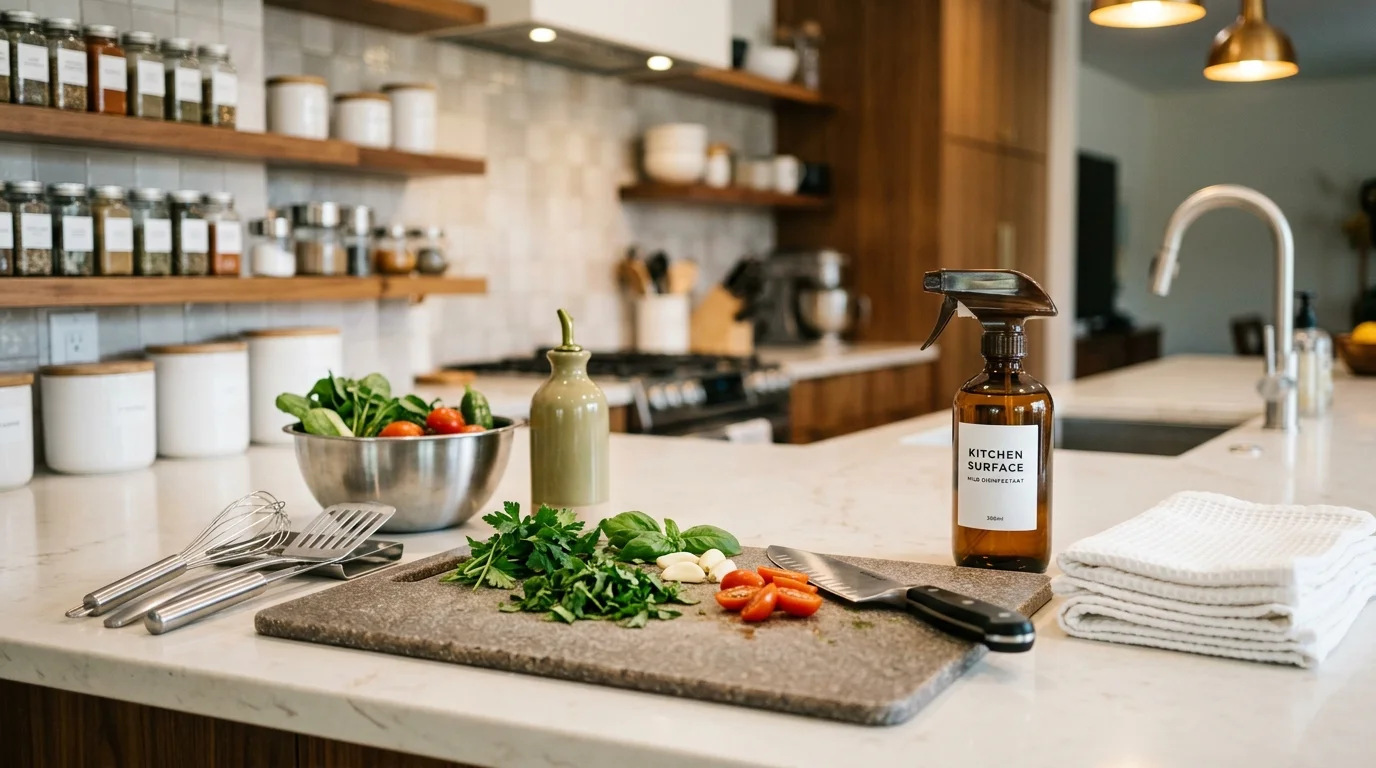
05 Raw Meat Prep Zones and High-Risk Pathogen Surfaces
One of the most dangerous vinegar cleaning mistakes is relying on it as a medical-grade disinfectant for kitchen cutting boards, diaper changing tables, or bathroom fixtures during household illness. Vinegar demonstrates modest antibacterial qualities against weak domestic bacteria, but it fails federal public health standards for sanitization.
The U.S. Environmental Protection Agency (EPA) registers antimicrobial products that consistently achieve a 99.9% kill rate against serious pathogens like Salmonella enterica, Staphylococcus aureus, and Escherichia coli within a specified contact time. Vinegar is not an EPA-registered broad-spectrum disinfectant. Relying on vinegar to sanitize surfaces exposed to raw poultry or ground beef leaves dangerous foodborne pathogens behind.
Dangerous Chemical Mixing Hazards
In an effort to boost vinegar’s sanitizing power, some homeowners mix it with other common cleaning agents. Combining vinegar with other household chemicals triggers volatile chemical reactions that threaten your health:
- Vinegar + Household Bleach: Mixing acetic acid with sodium hypochlorite creates toxic chlorine gas ($Cl_2$) and chloramine vapors. Inhaling chlorine gas causes immediate coughing, respiratory burns, eye watering, and pulmonary edema. The Centers for Disease Control and Prevention (CDC) strictly warns against combining acid with bleach.
- Vinegar + Hydrogen Peroxide: Combining these two liquids in the same container forms peracetic acid (PAA). Peracetic acid is a highly corrosive compound that burns skin tissue, damages eye corneas, and irritates mucous membranes.




Great information! Thank you
show the damn 5 surfaces
I agree. My Mother cleaned everything with vinegar. It’s the only thing she used.
Right! Because I have vinegar in my Instcart coming to do my floors.
can you clean stains in a kitchen sink with vinegar?
Fill your stainless steel sink halfway with warm water & pour in a cup of bleach!
Toss in ALL your cutlery (unless they’re sterling silver), & while you’re at it, put any badly stained coffee/tea mugs in there too. Let them all soak for a couple hours, empty bleach water, then do dishes as usual with dishsoap.