
03 Electronic Touchscreens, Monitors, and Smart Displays
Smartphones, tablets, laptop screens, and flat-panel televisions are common household items ruined by vinegar. Modern interactive displays feature a microscopic fluoropolymer layer known as an oleophobic (oil-repellent) coating. This coating reduces fingerprint smudges and helps your fingers glide across the glass smoothly. Many computer monitors and anti-glare televisions also feature delicate anti-reflective coatings.
Vinegar quickly dissolves these microscopic coatings. Wiping your phone or TV with vinegar or ammonia-based cleaners strips the oleophobic layer unevenly, creating cloudy patches, permanent streak lines, and rough spots that attract oil and dust like a magnet. Once stripped, the screen loses its smooth tactile response and clear optical visibility.
Major device manufacturers like Apple and Samsung explicitly warn against using household vinegar, window cleaners, or abrasive solvents on their displays.
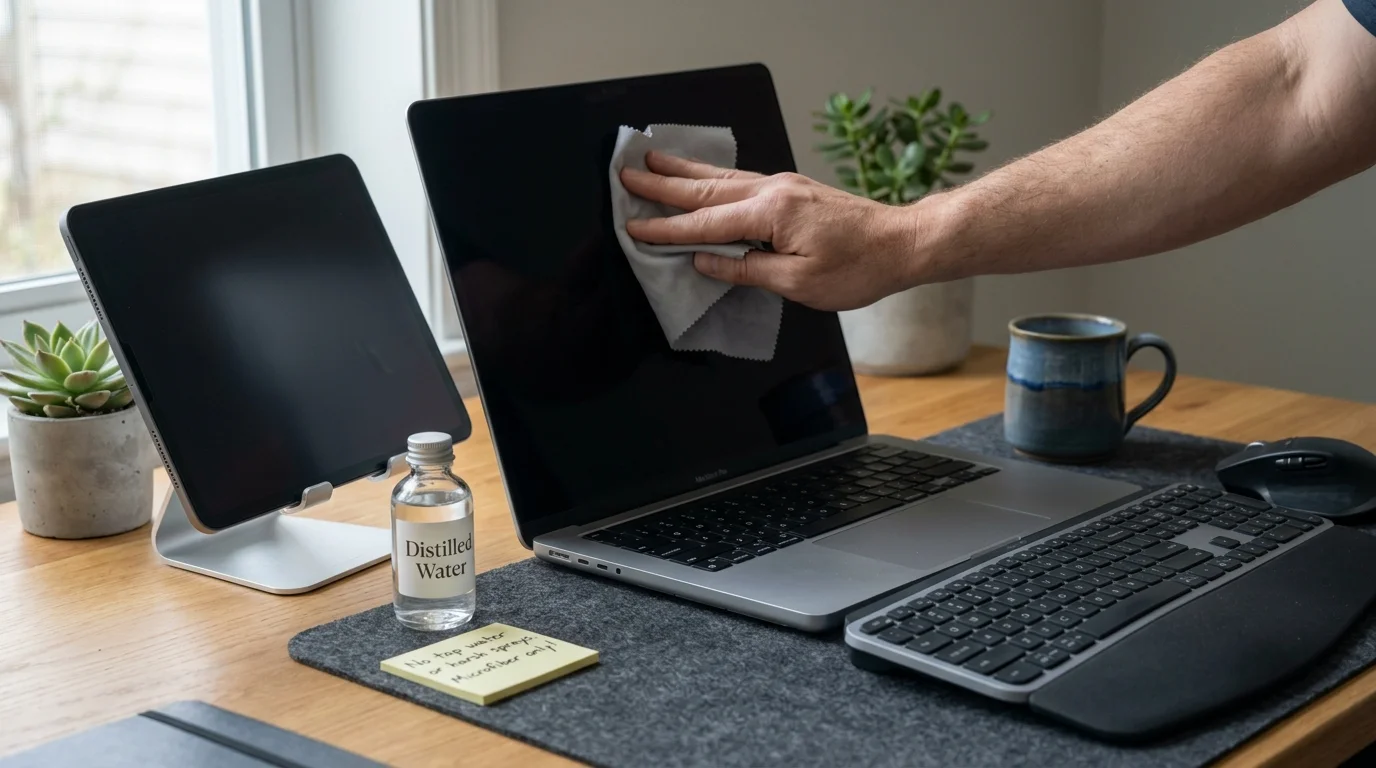
How to Clean Electronic Screens Properly
- For Dust and Light Smudges: Power down the device so the black screen makes dust easily visible. Wipe gently in one direction with a dry, lint-free optical microfiber cloth.
- For Stubborn Grime: Lightly dampen the corner of your microfiber cloth with pure distilled water—never tap water, which contains abrasive minerals—and wipe the smudge. Follow immediately with the dry portion of the cloth.
- For Disinfection: Where manufacturer guidelines permit, use an approved 70% isopropyl alcohol wipe to gently sanitize the exterior surfaces, avoiding all ports and openings.





Great information! Thank you
show the damn 5 surfaces
I agree. My Mother cleaned everything with vinegar. It’s the only thing she used.
Right! Because I have vinegar in my Instcart coming to do my floors.
can you clean stains in a kitchen sink with vinegar?
Fill your stainless steel sink halfway with warm water & pour in a cup of bleach!
Toss in ALL your cutlery (unless they’re sterling silver), & while you’re at it, put any badly stained coffee/tea mugs in there too. Let them all soak for a couple hours, empty bleach water, then do dishes as usual with dishsoap.