06 Deodorizing Carpets, Area Rugs, and Runners
Living room rugs and entryway runners absorb everyday foot traffic, pet dander, and cooking smells. Liquid carpet shampoos can leave soapy residues that actually attract new dirt if not thoroughly extracted.
Dry baking soda hacks eliminate this issue by refreshing carpet fibers without saturating the subfloor or carpet pad.
Before applying the powder, make sure the carpet is completely dry. Sprinkling baking soda onto a damp carpet creates a sticky paste that proves difficult to vacuum out.
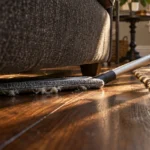
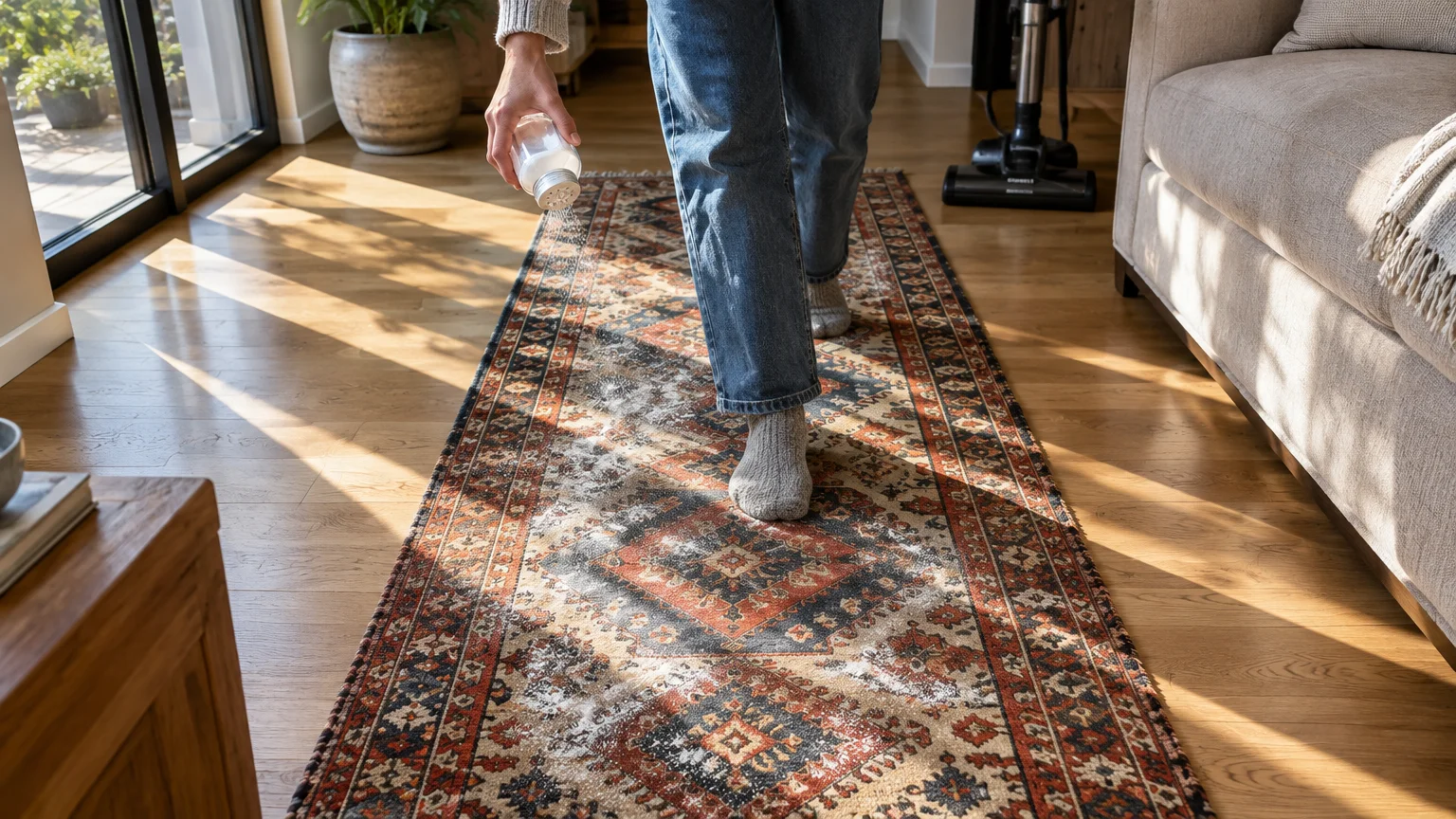
Lightly dust the carpet fibers with baking soda, using roughly one standard box for an average-sized area rug. Gently work the powder into high-pile fibers using a dry push broom or clean sponge mop.
Allow the powder to rest for thirty minutes to neutralize ambient odors. Vacuum the room slowly using overlapping strokes, ensuring your vacuum filter is clean so airflow remains strong.
07 Dissolving Soap Scum in Porcelain Tubs and Sinks
Bathroom soap scum forms when fatty acids in bar soap bind with calcium and magnesium minerals in hard water. This stubborn film coats tubs, basins, and wall surrounds, leaving a dull, slippery residue.
Baking soda serves as an exceptional soft-abrasive scouring agent that lifts this mineral film without etching fiberglass or porcelain.
To prepare an effective natural scouring cream, combine the following ingredients in a small bowl:
- One cup of baking soda
- Three tablespoons of liquid vegetable-based castile soap or gentle dish soap
- One tablespoon of warm water
Stir the mixture until it resembles thick cake batter. Scoop a small amount onto a damp cellulose sponge and wipe the tub basin in broad, overlapping circles.
Rinse the surface with warm shower water to reveal clean, shiny porcelain. This paste eliminates the heavy, suffocating fumes associated with conventional commercial tub and tile cleansers.