Everyday carpet cleaning mistakes quietly shorten your flooring’s lifespan, lock in stubborn odors, and void factory warranties. Knowing which habits damage fibers helps you protect your home and avoid steep premature replacement bills.
Whether you blot muddy paw prints yourself or hire a technician each year, small missteps add up fast. Adjusting how you vacuum, treat spills, and dry damp pile keeps rooms fresher with far less effort.
Below are ten costly missteps homeowners make, along with safe, practical fixes you can use right away.
01 Skipping Regular Vacuuming or Rushing Your Passes
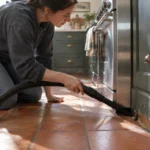
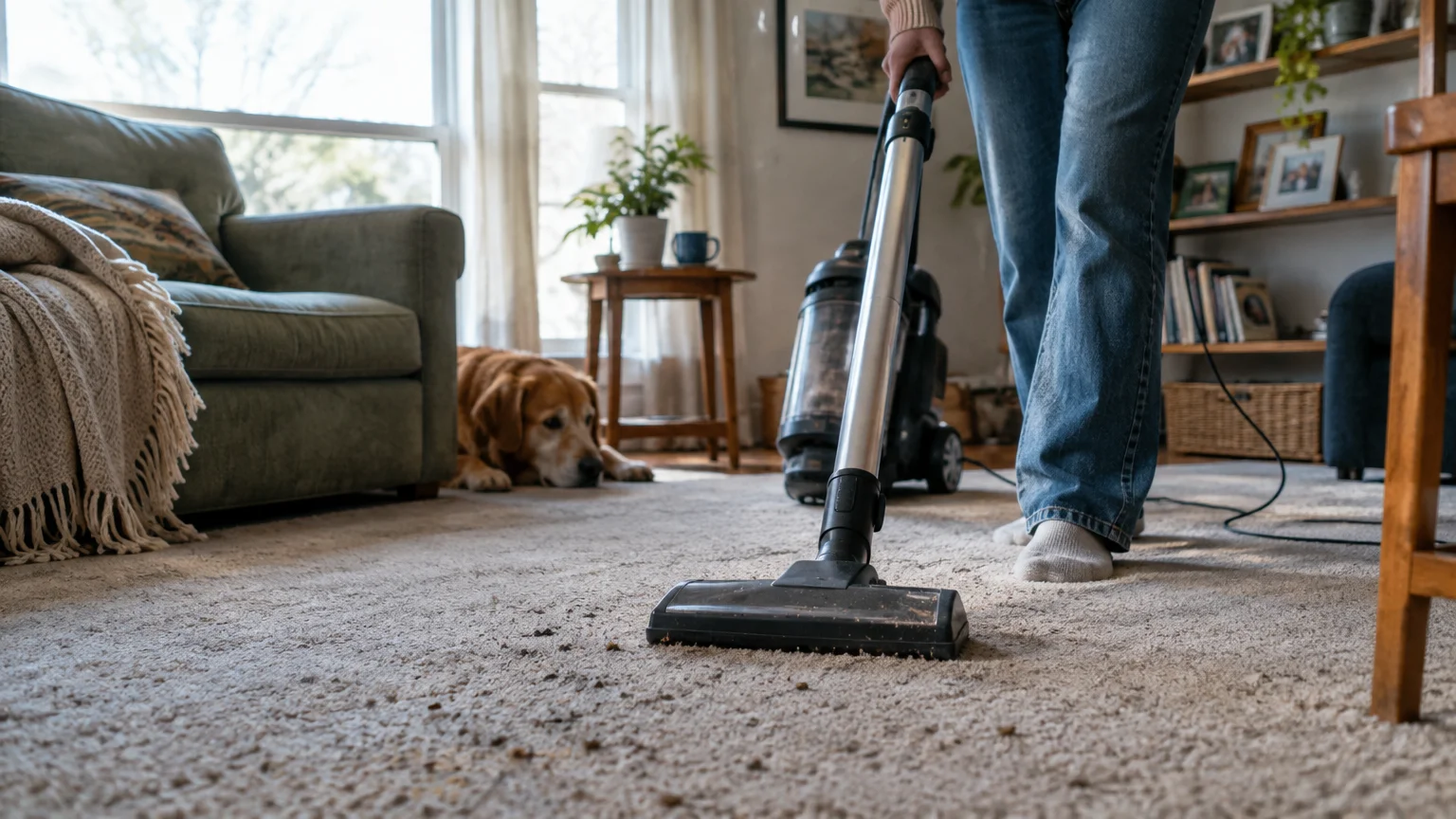
Many people pull out the vacuum only when crumbs or pet hair become obvious across the living room. Unfortunately, visible litter is rarely what wears out your flooring prematurely.
According to the Carpet and Rug Institute (CRI) 204 standard and Shaw Industries maintenance guidelines, at least 79%—and often 79% to 85%—of soil in carpet is dry, insoluble dirt. Sharp sand and grit settle deep into the pile, slicing against yarn every time you walk past.
Once foot traffic abrades those fibers, high-traffic hallways look permanently dull and matted even after wet washing. Regular dry soil removal stops that mechanical wear before it starts.
The CRI recommends vacuuming daily in high-traffic zones and pet areas, twice weekly in medium-traffic spaces, and at least once weekly in light-traffic bedrooms with edge attachments. Households with children accumulate carpet soil 40% faster, making consistent routines essential for busy families.
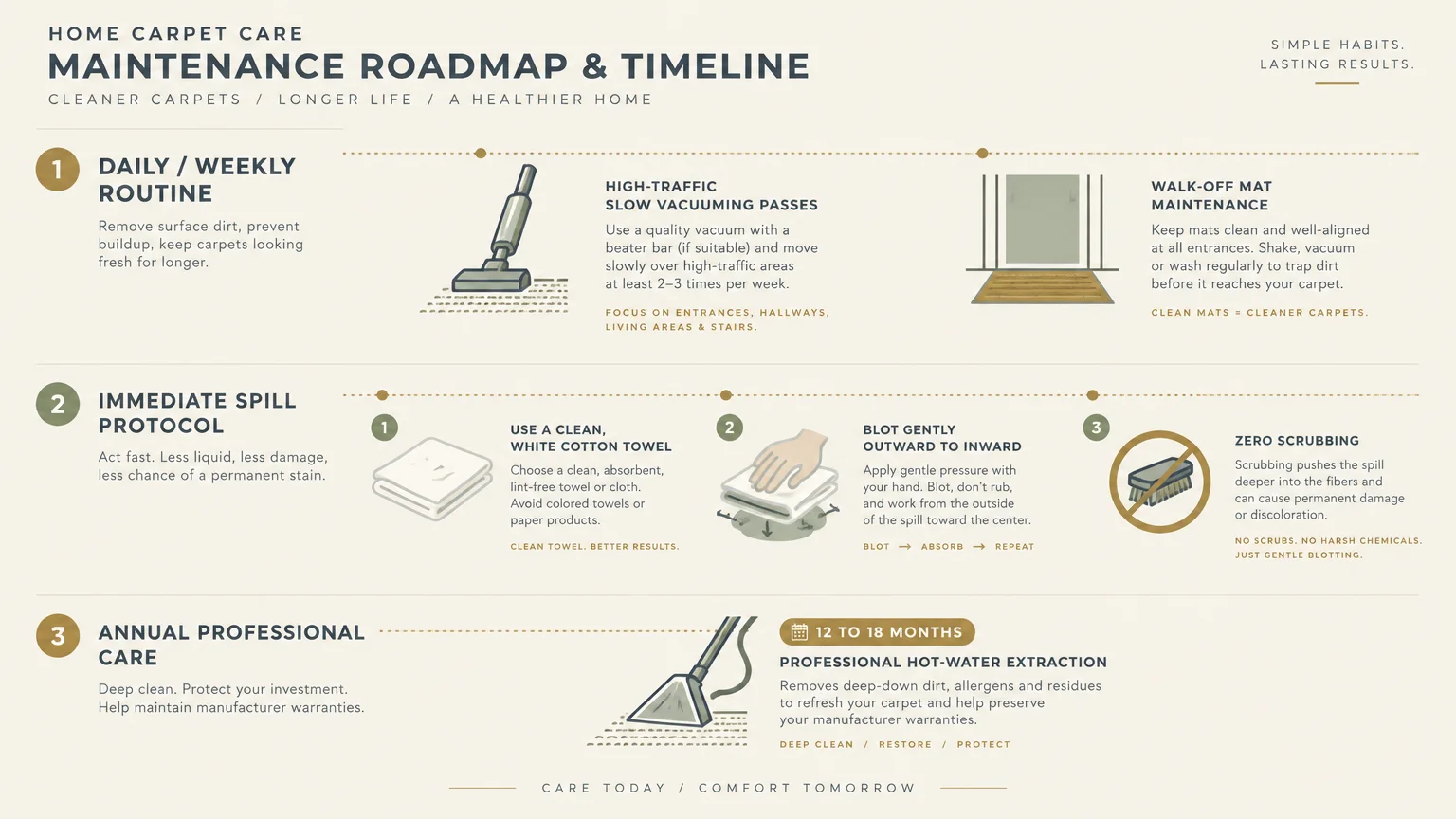
Technique matters just as much as frequency when deciding how to clean carpet efficiently. Both the CRI and Shaw advise slow, overlapping passes—roughly four swipes over each spot—so airflow and brush agitation lift embedded grit cleanly.
Check your dust cup or vacuum bag before every session as well. Shaw specifies emptying bags at half full, and industry standards warn that suction drops noticeably once canisters pass one-half to two-thirds capacity.
If anyone in your home struggles with seasonal allergies or asthma, equipment filtration deserves extra attention. HEPA filters capture 99.97% of particles 0.3 microns or larger, and the U.S. EPA advises weekly HEPA vacuuming to reduce dust mites and microbes.
02 Leaving Out Long Entrance Mats
Dropping a small decorative mat inside your front door feels tidy, yet it catches almost none of the mud tracked in from driveways and sidewalks. Your carpeting ends up acting as an expensive doormat instead.
Under the CRI 204 standard, entrance mats extending 9 to 15 feet inside a doorway trap 80% of soil and moisture within the first five or six steps. A short square mat simply cannot catch multiple strides.
Place a coarse scraper mat outside every exterior entrance to knock off gravel, dry leaves, and winter salt. Then pair that outdoor mat with a long, absorbent indoor runner along hallways and garage access doors.
Wash, shake out, or vacuum your runners on the same schedule as your main rooms. Once a mat fills with grit, shoes pick that dirt back up and carry it straight onto your carpet.
03 Scrubbing Spills Instead of Blotting Gently
When red wine, coffee, or gravy hits the floor, grabbing a towel and scrubbing furiously feels like the quickest rescue. Yet aggressive back-and-forth rubbing is one of the fastest ways to ruin carpet texture.
Friction untwists heat-set yarn tufts, leaving a permanent fuzzy halo that catches overhead light differently than surrounding fibers. Worse, hard scrubbing forces liquids down into the backing and pad where household spotters cannot reach them.
Proper carpet stain removal relies on calm pressure rather than elbow grease. Lay a clean white cotton cloth or plain paper towel flat over the spill and press firmly straight down to absorb moisture.
Always choose white cloths or plain white towels instead of dyed kitchen rags. Colored towels can transfer fugitive fabric dyes onto wet carpet fibers, turning a simple juice spill into a permanent stain.
Work systematically from the outer edge of the spot inward toward the center. Blotting inward prevents liquids from wicking outward into wider rings as the area dries.
Once your towel lifts no more color or liquid, apply a small amount of carpet spotter. Follow the exact dwell time listed on the product label, then blot again with plain cool water until no soap remains.
04 Using High-pH Cleaners or Bleach on the Wrong Fibers
Reaching under the kitchen sink for degreasers, laundry stain sticks, or bathroom sprays ranks among the costliest home cleaning mistakes. Hard-surface formulas rely on harsh alkalinity or strong oxidizers that strip color and weaken textiles.
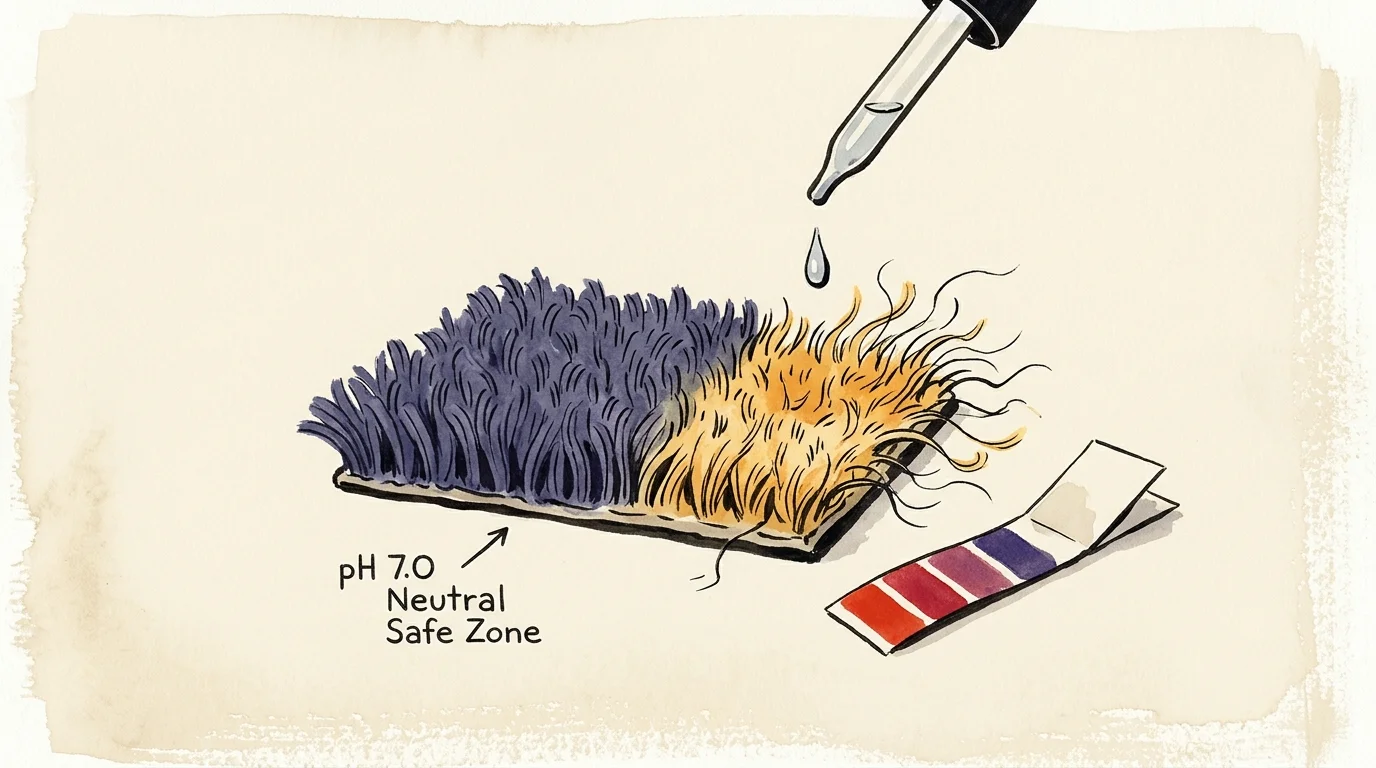
Natural wool requires especially careful pH control during routine spot care. The CRI Seal of Approval Program specifies that wool cleaners must stay between pH 5.0 and 8.0.
Alkaline solutions above that window trigger alkaline hydrolysis on wool fibers, leading to permanent yellowing, browning, brittle texture, or severe color bleed. Even one high-pH spot treatment can leave a bright pale ring on an heirloom wool rug.
Synthetic nylon and polyester carpets are tougher, yet they still carry strict chemical limits under factory warranties. Both Mohawk and Shaw warranties prohibit any cleaner with a pH of 10 or higher.
Specifically, Shaw requires pH 4 to 9.99 for solution-dyed carpet and pH 6 to 8 for injection-dyed styles. Manufacturer care manuals also ban household bleach, optical brighteners, chlorinated solutions, and quaternary ammonium salts.
Even familiar medicine-cabinet bottles can ruin color if the strength is wrong. Hydrogen peroxide solutions above 3% bleach color from wool and solution-dyed nylon, while concentrations of 6% or higher can degrade polypropylene (olefin) bonds with extended contact.
05 Mixing Household Cleaners on Stubborn Carpet Stains
When a stubborn pet accident or mystery mark resists your first spray, layering a second product on top creates an immediate health emergency. Chemical reactions happen silently inside damp fibers and release invisible gases straight into your breathing space.
The Centers for Disease Control and Prevention (CDC), the Agency for Toxic Substances and Disease Registry (ATSDR), state health departments, and poison centers warn homeowners never to combine household cleaners. Several everyday pantry and laundry pairings generate toxic fumes within seconds.
- Bleach plus ammonia: Releases toxic chloramine gas; remember that stale pet urine naturally contains ammonia, so applying bleach over urine creates the same dangerous reaction.
- Bleach plus acids: Mixing bleach with white vinegar, lemon juice, or acidic rust removers releases hazardous chlorine gas.
- Bleach plus rubbing alcohol: Forms toxic chloroform vapor that harms your nervous system, liver, and lungs.
- Hydrogen peroxide plus vinegar: Produces corrosive peracetic acid, irritating eyes, skin, and airways while eating away at finishes.
These accidents happen far more often than most homeowners realize. A peer-reviewed study of U.S. poison center data from 2015 through 2022 documented 75,186 chlorine and chloramine gas exposures, with 85.5% occurring inside homes, 16.7% needing emergency care, 2% hospitalized, and 26 deaths.
Broader safety tracking tells a similar story about daily household products. The 2023 National Poison Data System Annual Report recorded over 2 million human poison exposures overall, with household cleaning substances accounting for 7.12% of all reported cases.
Protect your household by sticking to one product at a time and reading the safety directions first. Open windows, run an exhaust fan for ventilation, rinse the spot thoroughly with plain water, and wait until the carpet dries before trying a different formula.
06 Over-Wetting Your Carpet with Domestic Rental Machines
Renting a grocery-store carpet washer feels productive, yet heavy spraying without enough suction leaves gallons of dirty water trapped beneath your rug. Excessive moisture turns a routine freshen-up into a hidden indoor air hazard.
Shaw Industries states that proper cleaning equipment should allow carpets to dry within 6 to 12 hours. Dampness lasting longer than 24 hours risks mold growth, persistent mildew odors, and separation of the carpet backing—known as delamination.
Equipment suction power explains why DIY jobs often stay wet far too long. Professional truck-mounted extractors remove up to 95% of applied moisture, whereas domestic rental machines typically recover only 50% to 60% at best.
All that unrecovered water sinks straight into the foam pad and wooden subfloor below. Because padded flooring dries slowly from the bottom up, surface fibers can feel cool while dampness lingers underneath.
Both the CDC and U.S. EPA mold prevention guidelines advise drying wet materials completely within 24 to 48 hours to stop mold growth. Guidance from the IICRC confirms that mold spores typically begin colonizing wet porous materials like carpet within that 24-to-48-hour window.
Warm, humid rooms speed up that biological clock considerably. Mold thrives at temperatures between 77 and 86 degrees Fahrenheit when relative humidity climbs above 60%.
To keep rooms safe, the U.S. EPA recommends maintaining indoor relative humidity below 60%, and ideally between 30% and 50%. If you use a rental unit, spray lightly, make several slow suction-only passes, and point fans across the damp area immediately.
07 Leaving Sticky Detergent Residue or Using Spin-Bonnet Systems
Adding an extra capful of soap to the tank might make stained hallways look brighter on Saturday afternoon. Within a few weeks, however, those exact walkways often turn dingier than they looked before you washed them.
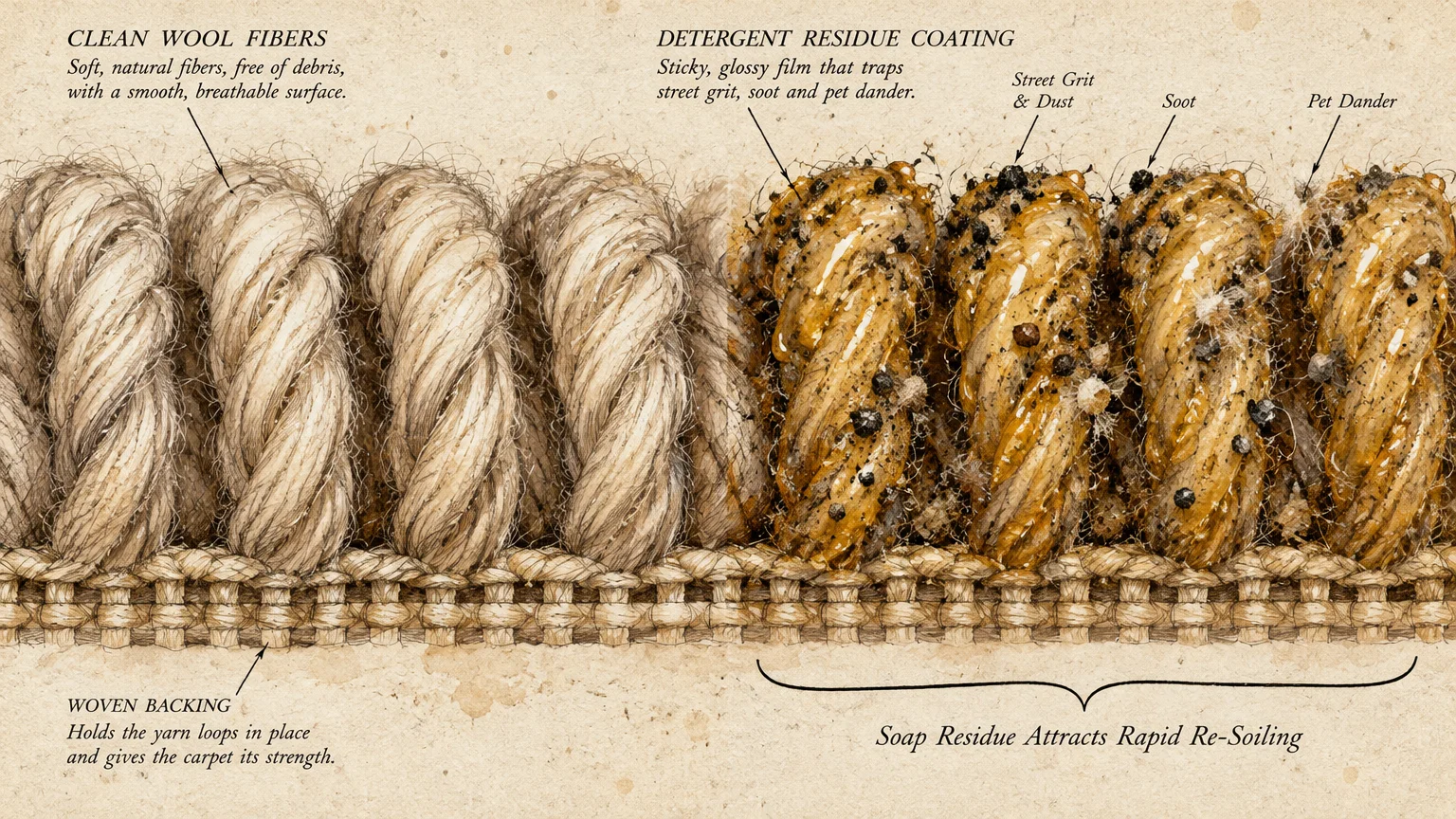
Unrinsed soap dries into an invisible, slightly tacky coating along every yarn strand. Instead of staying clean, sticky surfactant film grabs dust, skin oils, and shoe grime out of the air and locks them onto the surface.
Avoid this trap by measuring the exact dilution ratio listed on a CRI Seal of Approval detergent label. Resist the urge to pour extra concentrate into heavily soiled hallways; pre-treating traffic lanes and rinsing thoroughly works much better.
Whenever your DIY machine allows, run a clear, cool-water rinse pass after washing with detergent. Pulling leftover cleaning solution out of the yarn stops rapid re-soiling and leaves carpet feeling soft rather than stiff.
Watch out for rapid-dry commercial services that rely solely on spin-bonnet machines as well. Spin-bonnet pads scrub only the top 1/8 inch of carpet pile, leaving grit and spills buried near the backing.
Shaw explicitly advises against bonnet cleaning on residential carpets. Industry maintenance guidelines also note that spin-bonnet systems can void factory warranties because they leave sticky detergent residues that accelerate re-soiling.
08 Skipping Spot Tests and Ignoring New PFAS-Free Finishes
Pouring a new stain remover straight onto the center of your living room rug is a gamble you never need to take. Even gentle products can strip dye or change sheen on unfamiliar weaves.
Before applying any spotter, identify whether your carpet is wool, nylon, polyester, or olefin by checking your purchase paperwork or inspecting an inconspicuous edge. Then dab a drop of cleaner inside a closet or behind a heavy sofa.
Wait for the full label dwell time and press a dry white cloth firmly onto the test spot. If any dye transfers onto your towel or the fibers stiffen or lighten, stop right away and pick a milder product.
Spot testing and careful care matter even more today because protective carpet chemistry has shifted across the United States. Under California’s AB 1817, effective January 1, 2025, textiles—including carpets and rugs—containing regulated PFAS at 100 ppm total organic fluorine are banned from manufacture or sale.
Parallel state bans and restrictions on PFAS in carpets, rugs, and fabric stain treatments took effect across 2025 and 2026 in Minnesota, Colorado, Washington, Maine, and New York. Additionally, 3M completed its exit from PFAS manufacturing at the end of 2025, shifting consumer fabric protectors to PFAS-free formulas.
While removing persistent chemicals protects household health, newer PFAS-free treatments repel oily drips differently than older coatings. Following careful carpet care tips—especially fast blotting and gentle, pH-appropriate cleaners—keeps modern carpets looking spotless without harsh chemistry.
09 Delaying Routine Professional Deep Cleaning
Waiting until traffic paths turn gray and matted before calling a professional creates permanent fiber wear that no cleaning crew can reverse. Deep grit wears down yarn tips well before dirt looks obvious from across the room.
The CRI and major carpet makers—including Shaw, Mohawk, and Stainmaster—recommend professional hot water extraction every 12 to 18 months. Many warranties actually require dated proof of this routine schedule, along with CRI Seal of Approval products and equipment, to remain valid.
Technicians and homeowners often refer to hot water extraction as steam cleaning, though no actual steam is generated. True boiling steam could shrink natural wool or weaken synthetic backing adhesives, whereas heated water extraction rinses soil away safely.
Skipping professional service to save money rarely makes financial sense once you compare routine upkeep against full flooring replacement. According to Angi 2026 data, professional carpet cleaning averages $183 per project nationwide.
Typical jobs run $123 to $242 per project or room, or roughly $0.20 to $0.90 per square foot. Hot water extraction specifically averages $40 to $90 per room, while whole-house cleanings covering 1,000 to 1,500 square feet generally run $300 to $900.
By comparison, 2026 carpet replacement costs $3 to $11 per square foot installed, totaling $3,000 to $11,000 for a 1,000-square-foot area. Material prices alone average $1 to $3 per square foot for polyester or olefin, $2 to $5 for nylon, and $4 to $20 for wool, with manufacturers advising replacement within 10 years.
10 Walking on Damp Pile or Replacing Furniture Too Soon
Once your carpet looks fresh and clean, rushing back into the room undoes hours of hard work in minutes. Moisture temporarily softens carpet tufts, leaving them vulnerable to crushing and permanent traffic paths.
Bare feet, socks, and house slippers also carry skin oils and floor dust straight onto damp yarn. Wet fibers grab dirt effortlessly, creating gray smudges across newly rinsed hallways before the room even dries.
Sliding wooden chairs, end tables, or metal bed frames onto moist carpet causes even worse damage. Wood stains bleed dark brown or red marks into wet pile, while bare metal glides rust rapidly on damp backing.
Heavy furniture bases also trap pockets of moisture against the padding past the safe 24-hour drying window. Keep children, pets, and foot traffic off freshly cleaned rooms for 6 to 12 hours until every inch feels dry.
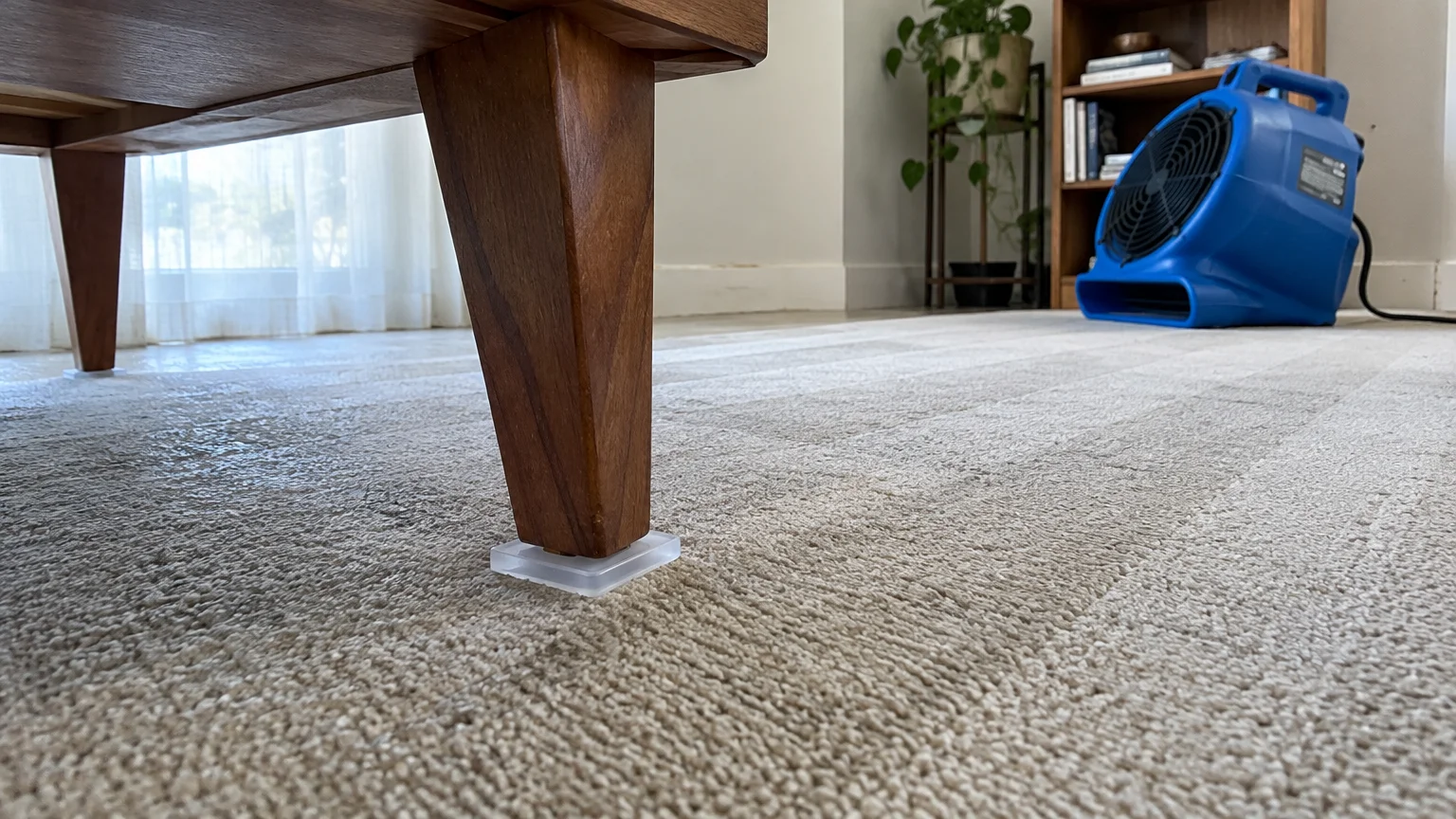
If heavy sofas or dressers must stay in the space during drying, place square sheets of aluminum foil, wax paper, or plastic blocks under every leg. Leave those moisture barriers in place for a full day so air circulates freely beneath the frame.
DIY Rental vs. Professional Extraction: Quick Cost and Risk Comparison
Choosing between a weekend machine rental and a certified extraction crew depends on your budget, drying setup, and warranty terms. The comparison below summarizes key 2026 figures and performance benchmarks.
| Method or Option | Typical 2026 Cost | Moisture Removed | Expected Dry Time | Warranty and Fiber Impact |
|---|---|---|---|---|
| DIY Machine Rental | $45 average per 24 hours ($25–$70; $100+ with solutions and tools) | 50% to 60% at best | Often slow without fans | Risks over-wetting, soap residue, and mold if rushed |
| Professional Hot Water Extraction | $183 average ($40–$90 per room; $300–$900 for 1,000–1,500 sq. ft.) | Up to 95% with truck-mounted units | 6 to 12 hours | Meets 12–18 month CRI and major factory warranty rules |
| Spin-Bonnet Cleaning | Varies by commercial service | Low water use; cleans top 1/8 inch only | Varies | Advised against by Shaw; can void warranties and leave residue |
| Full Carpet Replacement | $3–$11 per sq. ft. installed ($3,000–$11,000 per 1,000 sq. ft.) | Not applicable | Not applicable | Usually recommended within 10 years |
Notice how a single professional extraction every 12 to 18 months costs a tiny fraction of replacing damaged flooring. If you rent a machine between visits, focus on extra dry-suction passes and strong airflow to keep drying times short.
Step-by-Step Safe Carpet Stain Removal Checklist
Keeping a simple, repeatable routine ready prevents panicked scrubbing the next time a mug tips over. Follow these ordered steps whenever a fresh spill lands on your floor.
- Scoop solids first: Use a dull butter knife or plastic spoon to lift mud, food, or pet mess gently without pressing it into the pile.
- Blot with white towels: Press clean white cotton cloths or paper towels straight down onto wet spots until the towel stays nearly dry.
- Confirm your fiber and spot-test: Check your carpet type, apply a drop of CRI Seal of Approval spotter to a hidden closet corner, wait for the label’s dwell time, and check for dye transfer.
- Apply one cleaner sparingly: Spray or dab the tested cleaner onto a clean cloth rather than pouring directly onto the carpet, keeping your pH safe (pH 5.0–8.0 for wool; under pH 10 for synthetics).
- Work from outside in: Blot gently from the outer perimeter toward the center so the spot shrinks instead of spreading outward.
- Follow label dwell time and ventilate: Let the single solution sit for the manufacturer’s specified wait time while running a fan or opening a window; never layer bleach, ammonia, vinegar, or peroxide together.
- Rinse and blot dry: Dab the area with cool plain water on a fresh white towel to remove soap residue, then weigh down a stack of dry towels with a heavy book for several hours to wick up remaining moisture.
Pair this spill response with a steady weekly habit to cut down on emergency cleanups overall. Empty vacuum bags at half full, sweep entry runners regularly, and keep indoor humidity between 30% and 50% year-round.
Your Practical Next Step for Longer-Lasting Carpets
Walk over to your hallway closet today and complete two quick five-minute checks. Empty your vacuum canister if it is half full, and read the back label on your carpet spotter to confirm its pH range and safety warnings.
If your home has not had professional hot water extraction in the last 12 to 18 months, add a seasonal booking to your calendar now. Small, steady precautions keep your carpets soft, odor-free, and protected for years to come.