04 Refreshing Kitchen Drains and Garbage Disposals
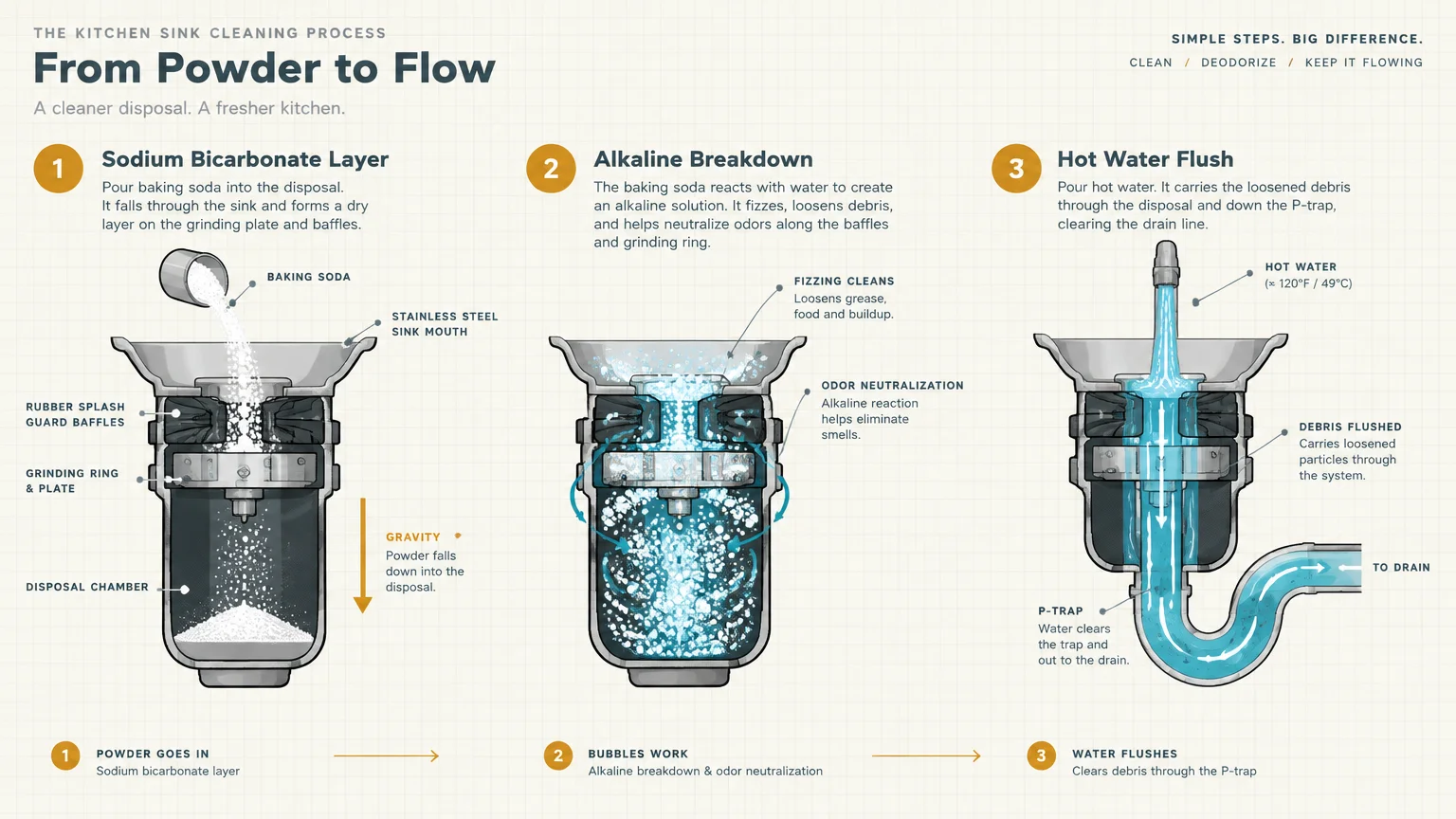
Kitchen sink drains collect decaying grease and trapped food particles, creating foul odors that drift through the kitchen. Baking soda breaks down acidic odor compounds while creating a fresh foundation inside your pipes.
Many cleaning blogs recommend pouring baking soda and vinegar together down the drain to blast clogs. However, chemistry reveals that mixing an acid and a base quickly neutralizes both ingredients into salty water.
While the foaming reaction offers mild mechanical agitation, you achieve stronger grease-cutting results by letting the baking soda work at its naturally high pH.
Keep your kitchen sink clean with this targeted sequence:
- Pour half a cup of dry baking soda directly into the drain opening or disposal chamber.
- Allow the dry powder to sit undisturbed for twenty minutes to absorb foul organic odors.
- Flush the drain with two quarts of boiling water to melt residual fats and rinse the pipes clear.
- For garbage disposals, follow with a cup of cold water and run the motor for thirty seconds.
This simple habit prevents buildup without damaging older plumbing seals or septic bacterial balances. For broader household safety guidelines on green cleaning, the EPA Safer Choice Program provides reliable standards for chemical alternatives.
05 Lifting Baked-On Grease from Glass Oven Doors
Splattered cooking oils quickly polymerize on oven window glass under high heat, forming a stubborn brown glaze. Standard glass sprays simply bead up and slide off these carbonized grease deposits.
A moisture-rich baking soda paste softens these baked fats without scratching the specialized tempered glass.
Mix half a cup of baking soda with just enough water to create a spreadable paste similar to frosting. Spread the paste generously over the entire glass window, avoiding any heating elements or rubber gasket seals.
Dampen a clean kitchen rag with warm water and lay it flat over the paste to prevent it from drying out prematurely. Let the paste dwell on the glass for forty-five minutes.
Lift the rag and use light pressure to wipe the softened grease away. Buff the glass with a clean, damp cloth, and finish with a dry microfiber towel for a crystal-clear finish.