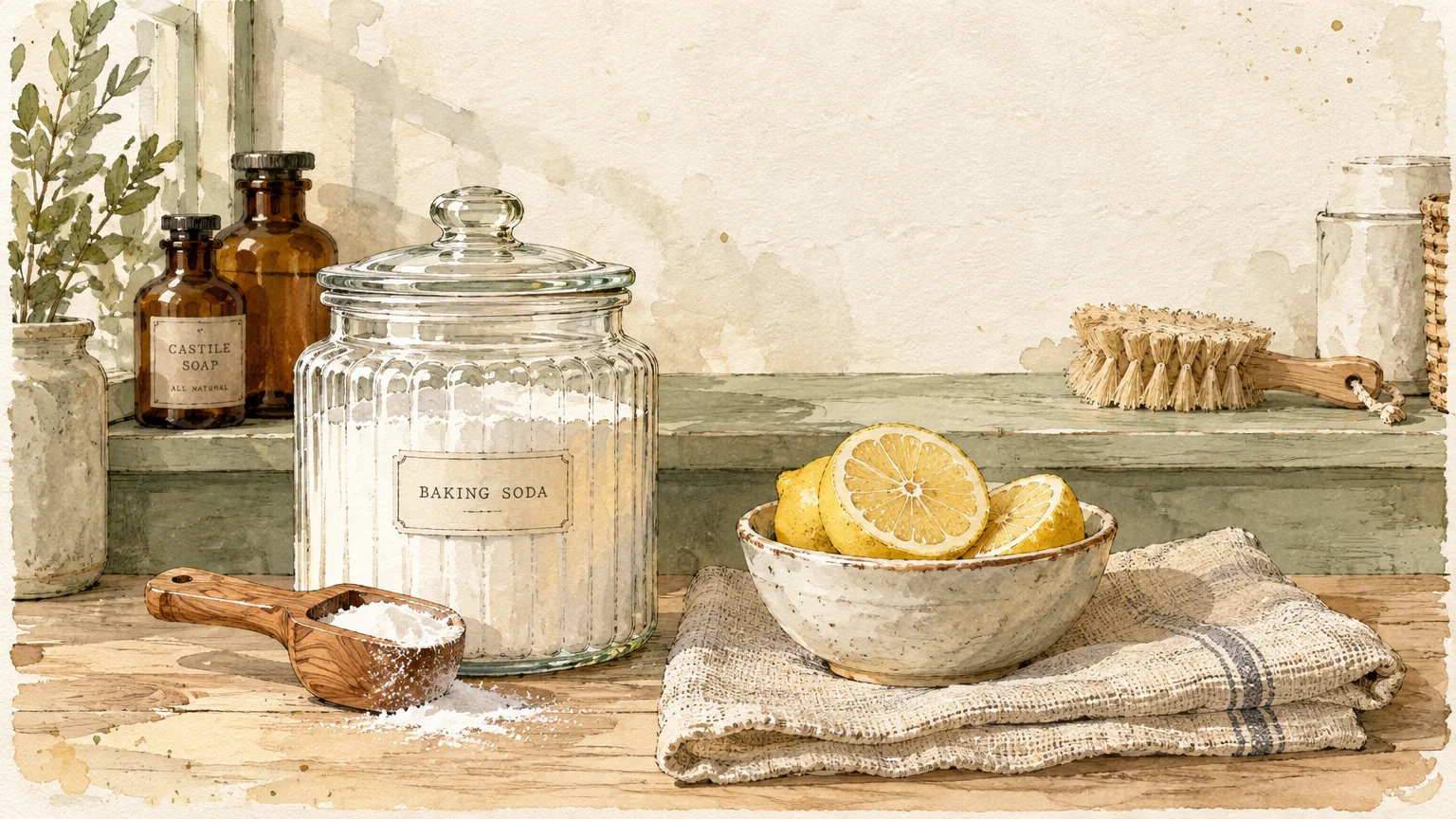
You can cut your household cleaning time and eliminate harsh fumes by using simple baking soda across your home. This mild alkaline powder dissolves stubborn grease and neutralizes odors on contact without scratching delicate surfaces.
Whether you want to simplify your cleaning shelf or avoid strong synthetic scents, cleaning with baking soda delivers dependable results. A single pantry box handles multiple tough chores with minimal physical effort.
These ten reliable baking soda cleaning tricks will help you refresh your living space safely and keep your daily routine manageable.
01 Deep-Cleaning Burnt Cookware Without Strenuous Scrubbing
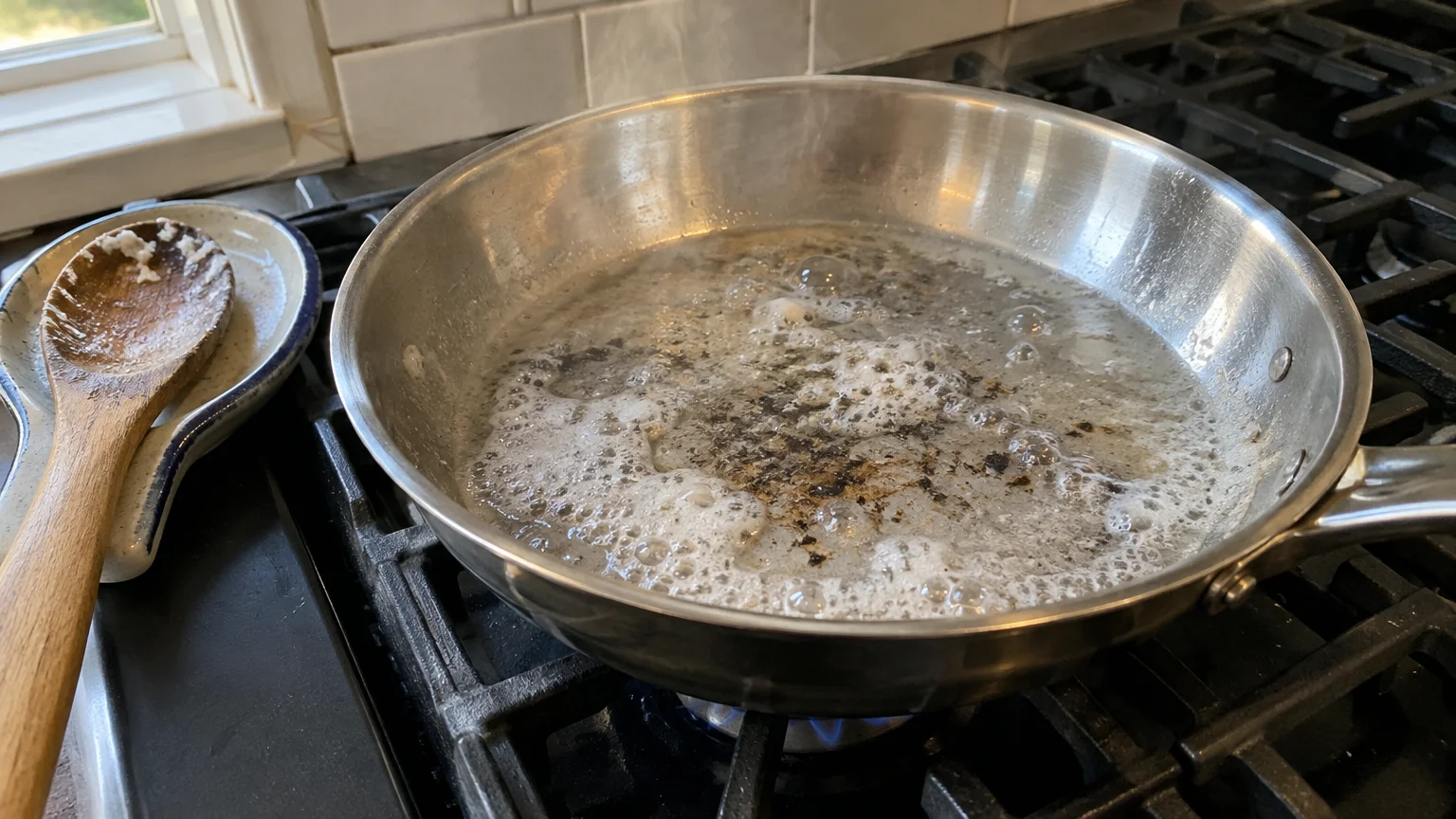
Scraping scorched food from stainless steel or enamel pans can strain your wrists and ruin cookware coatings. Baking soda—scientifically known as sodium bicarbonate—softens baked-on starch and carbonized fat through mild alkaline action.
This gentle chemical reaction loosens hardened food deposits so you can wipe them away without scouring pads.
Follow these steps to restore your scorched pots and pans:
- Cover the burnt surface with a half-inch layer of water.
- Sprinkle a generous layer of baking soda over the scorched patches until the water forms a cloudy slurry.
- Place the pan on your stove and bring the mixture to a gentle simmer over medium heat for ten minutes.
- Remove the pot from the heat and allow the liquid to cool completely.
- Wipe the loosened debris away using a non-scratch sponge, then rinse the surface with clean water.
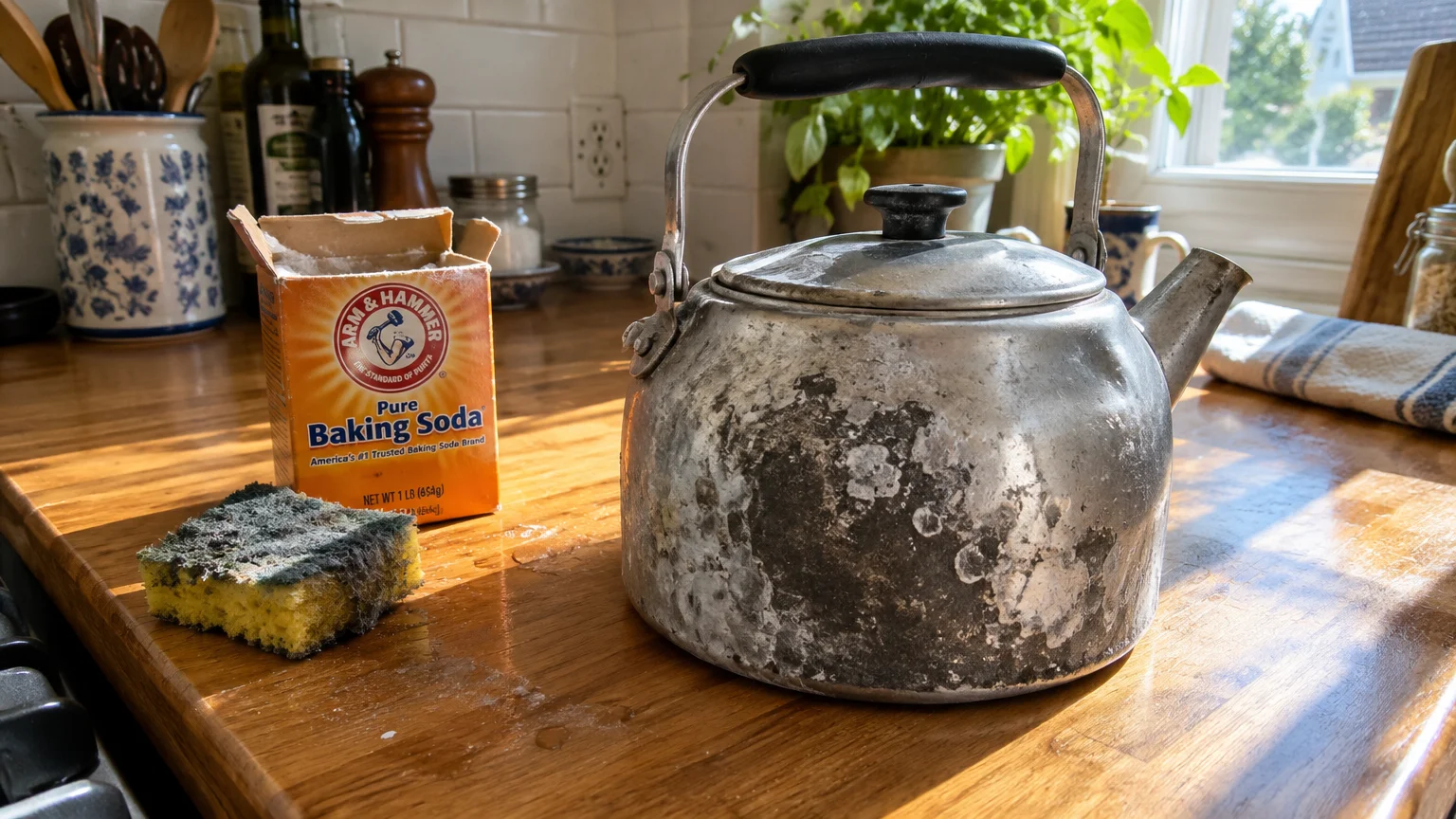
Avoid using this boiling method on bare, unlined aluminum cookware. High alkalinity can react with raw aluminum, causing dark oxidation and surface pitting.
02 Deodorizing and Refreshing Mattresses Naturally
Mattresses trap body oils, ambient humidity, and dead skin cells over time. Because you cannot wash a mattress in a laundry machine, powder deodorizing provides the safest method for regular maintenance.
Baking soda draws out trapped moisture and chemically bonds with acidic odor molecules rather than masking them with artificial fragrance.
Use this simple routine twice a year to keep your mattress fresh:
- Strip all sheets, mattress protectors, and blankets from the bed.
- Run a clean vacuum upholstery attachment across the entire surface to collect loose dust and hair.
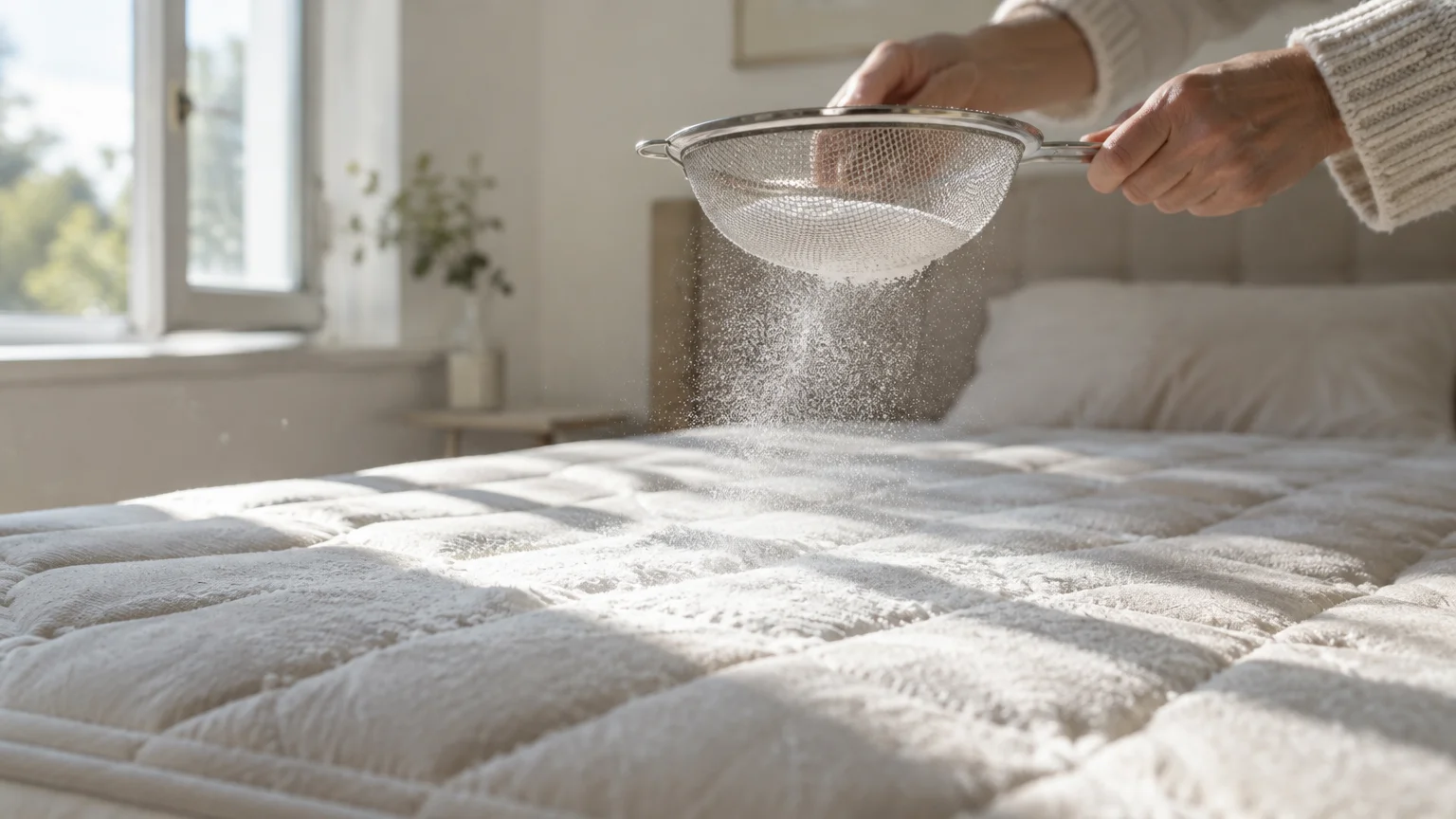
- Distribute one cup of dry baking soda evenly across the mattress using a fine kitchen sieve.
- Leave the powder undisturbed for at least two hours; longer dwell times yield deeper odor absorption.
- Vacuum the mattress thoroughly, making slow passes to lift all powder particles from the fabric weave.
This process improves your sleeping environment without exposing your respiratory system to volatile organic compounds.
03 Brightening Discolored Tile Grout
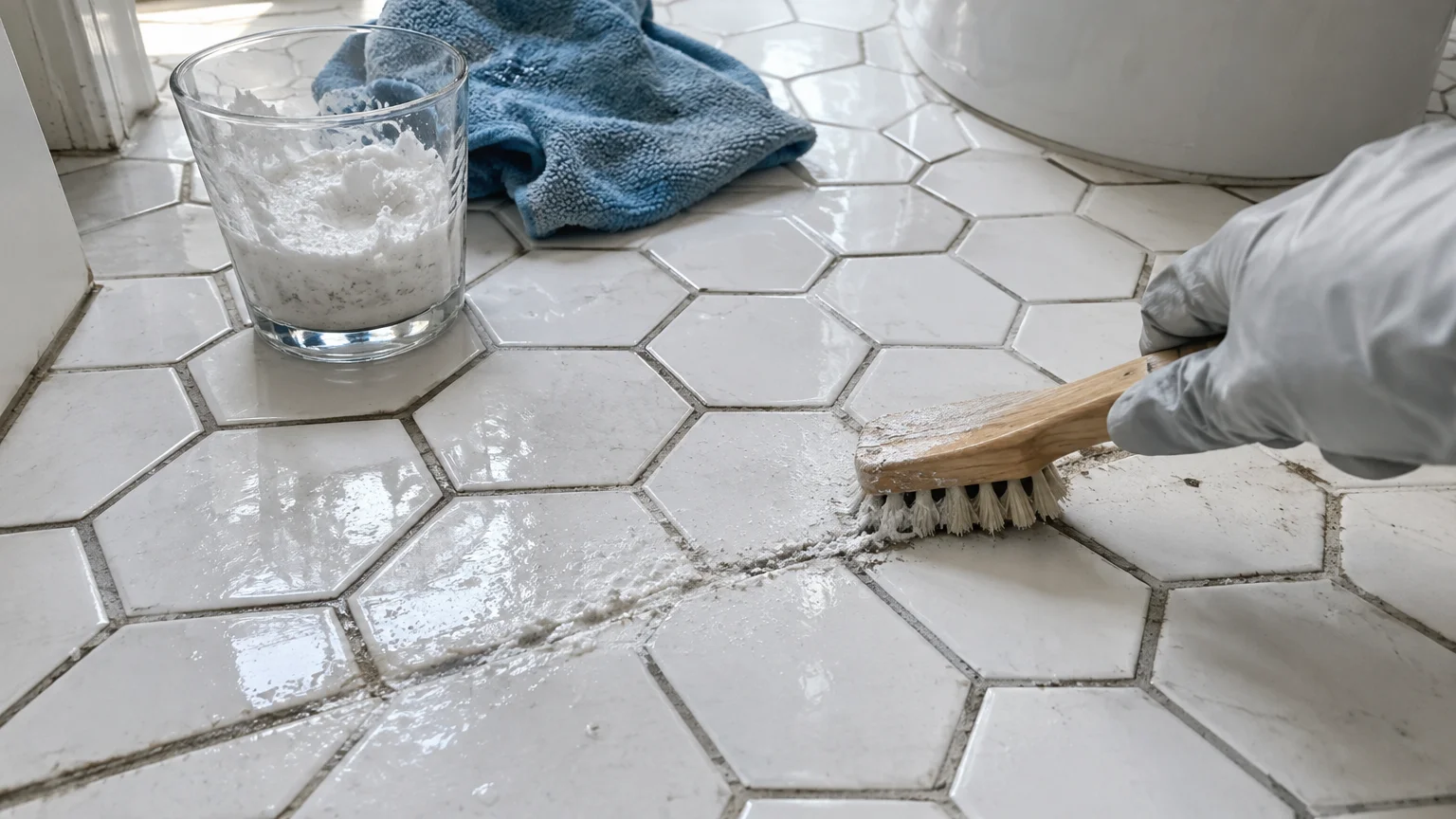
Grout is porous, meaning it readily absorbs dirty mop water, cooking oils, and mineral deposits. Commercial acid cleaners can erode grout sealers and irritate sensitive lungs, but a thick baking soda paste cleans grout lines gently.
The fine crystal structure of baking soda creates mechanical lift that dislodges ground-in dirt from grout crevices.
Mix three parts baking soda with one part warm water until you achieve the consistency of smooth paste. If you are working on oily kitchen floors, add a drop of fragrance-free liquid dish soap to emulsify grease.
Apply the paste along the grout lines with an old toothbrush or a dedicated grout brush. Let the paste rest on the lines for fifteen minutes so the alkaline solution penetrates embedded dirt.
Scrub gently along the lines using light circular motions. Wipe the area with a damp microfiber cloth, rinsing your cloth frequently in clean water to prevent a hazy white residue.
04 Refreshing Kitchen Drains and Garbage Disposals
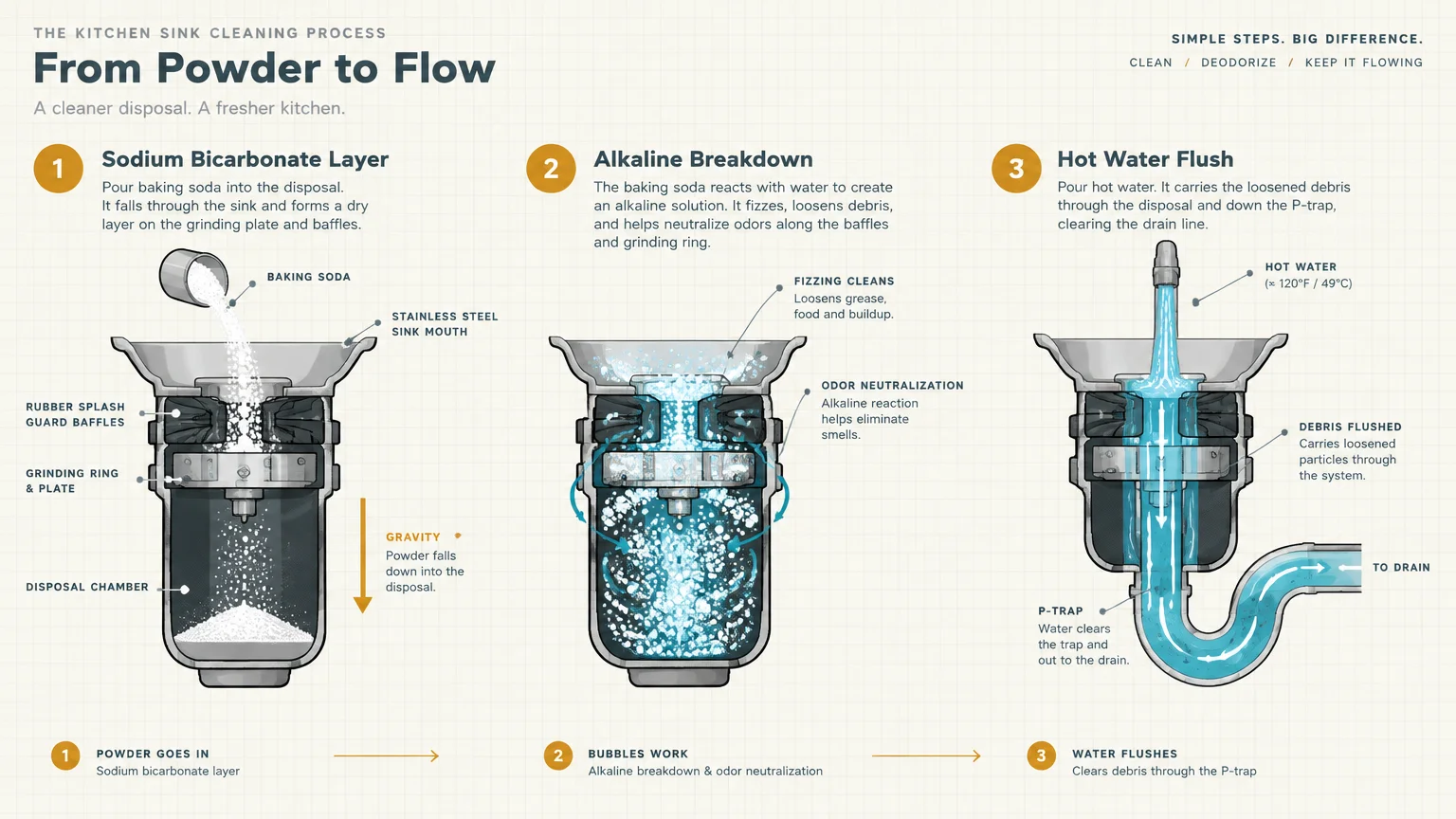
Kitchen sink drains collect decaying grease and trapped food particles, creating foul odors that drift through the kitchen. Baking soda breaks down acidic odor compounds while creating a fresh foundation inside your pipes.
Many cleaning blogs recommend pouring baking soda and vinegar together down the drain to blast clogs. However, chemistry reveals that mixing an acid and a base quickly neutralizes both ingredients into salty water.
While the foaming reaction offers mild mechanical agitation, you achieve stronger grease-cutting results by letting the baking soda work at its naturally high pH.
Keep your kitchen sink clean with this targeted sequence:
- Pour half a cup of dry baking soda directly into the drain opening or disposal chamber.
- Allow the dry powder to sit undisturbed for twenty minutes to absorb foul organic odors.
- Flush the drain with two quarts of boiling water to melt residual fats and rinse the pipes clear.
- For garbage disposals, follow with a cup of cold water and run the motor for thirty seconds.
This simple habit prevents buildup without damaging older plumbing seals or septic bacterial balances. For broader household safety guidelines on green cleaning, the EPA Safer Choice Program provides reliable standards for chemical alternatives.
05 Lifting Baked-On Grease from Glass Oven Doors
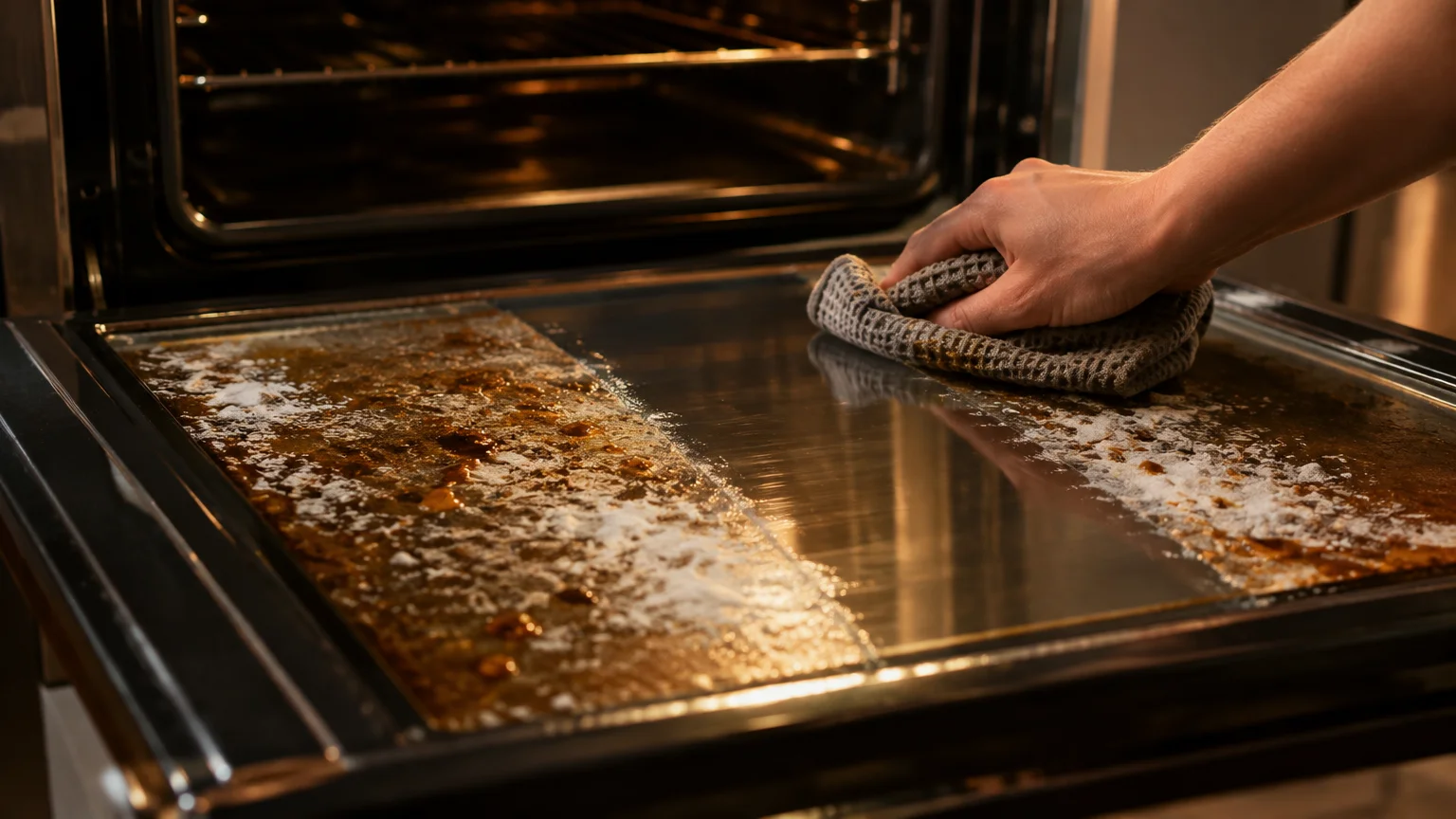
Splattered cooking oils quickly polymerize on oven window glass under high heat, forming a stubborn brown glaze. Standard glass sprays simply bead up and slide off these carbonized grease deposits.
A moisture-rich baking soda paste softens these baked fats without scratching the specialized tempered glass.
Mix half a cup of baking soda with just enough water to create a spreadable paste similar to frosting. Spread the paste generously over the entire glass window, avoiding any heating elements or rubber gasket seals.
Dampen a clean kitchen rag with warm water and lay it flat over the paste to prevent it from drying out prematurely. Let the paste dwell on the glass for forty-five minutes.
Lift the rag and use light pressure to wipe the softened grease away. Buff the glass with a clean, damp cloth, and finish with a dry microfiber towel for a crystal-clear finish.
06 Deodorizing Carpets, Area Rugs, and Runners
Living room rugs and entryway runners absorb everyday foot traffic, pet dander, and cooking smells. Liquid carpet shampoos can leave soapy residues that actually attract new dirt if not thoroughly extracted.
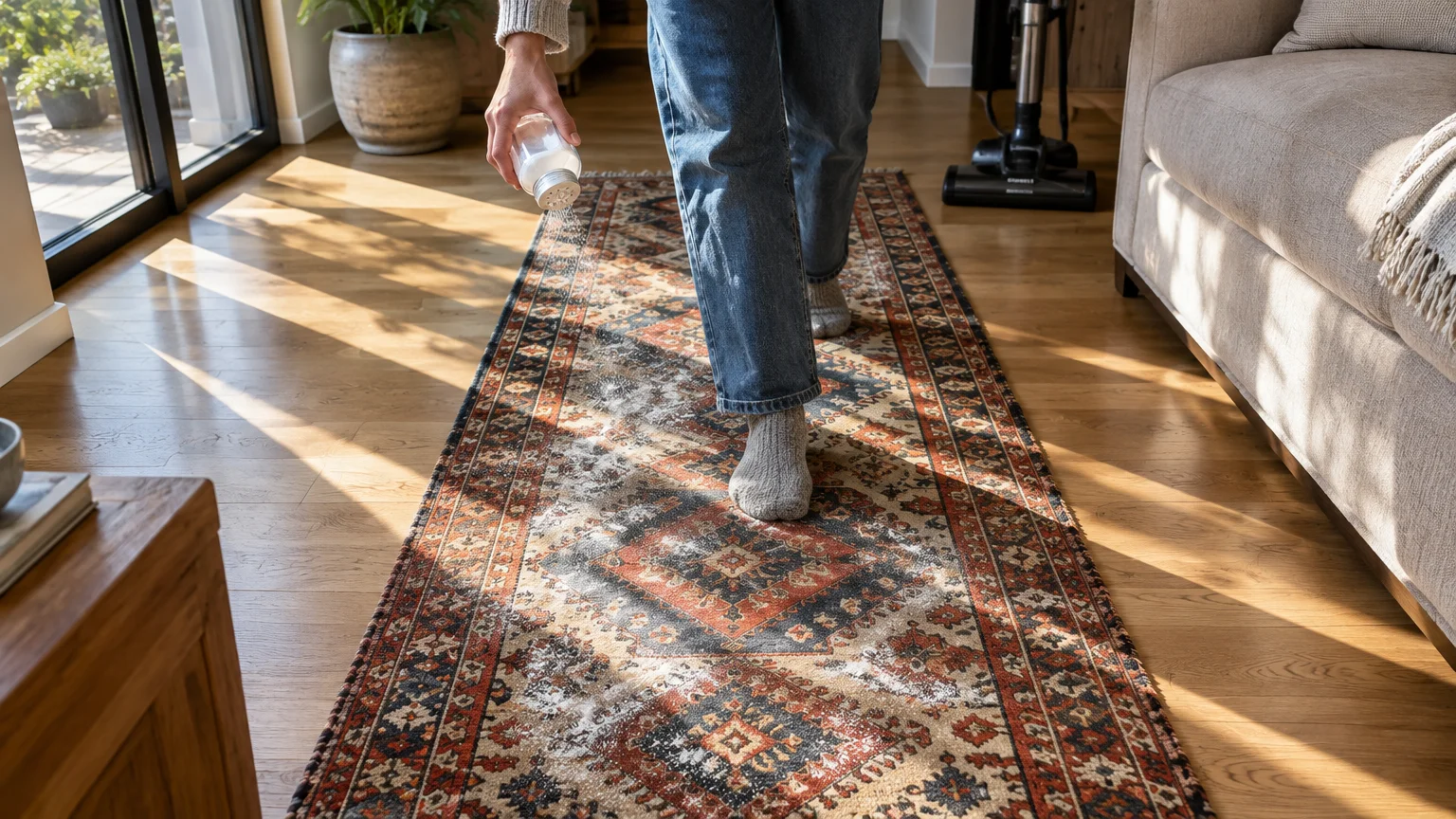
Dry baking soda hacks eliminate this issue by refreshing carpet fibers without saturating the subfloor or carpet pad.
Before applying the powder, make sure the carpet is completely dry. Sprinkling baking soda onto a damp carpet creates a sticky paste that proves difficult to vacuum out.
Lightly dust the carpet fibers with baking soda, using roughly one standard box for an average-sized area rug. Gently work the powder into high-pile fibers using a dry push broom or clean sponge mop.
Allow the powder to rest for thirty minutes to neutralize ambient odors. Vacuum the room slowly using overlapping strokes, ensuring your vacuum filter is clean so airflow remains strong.
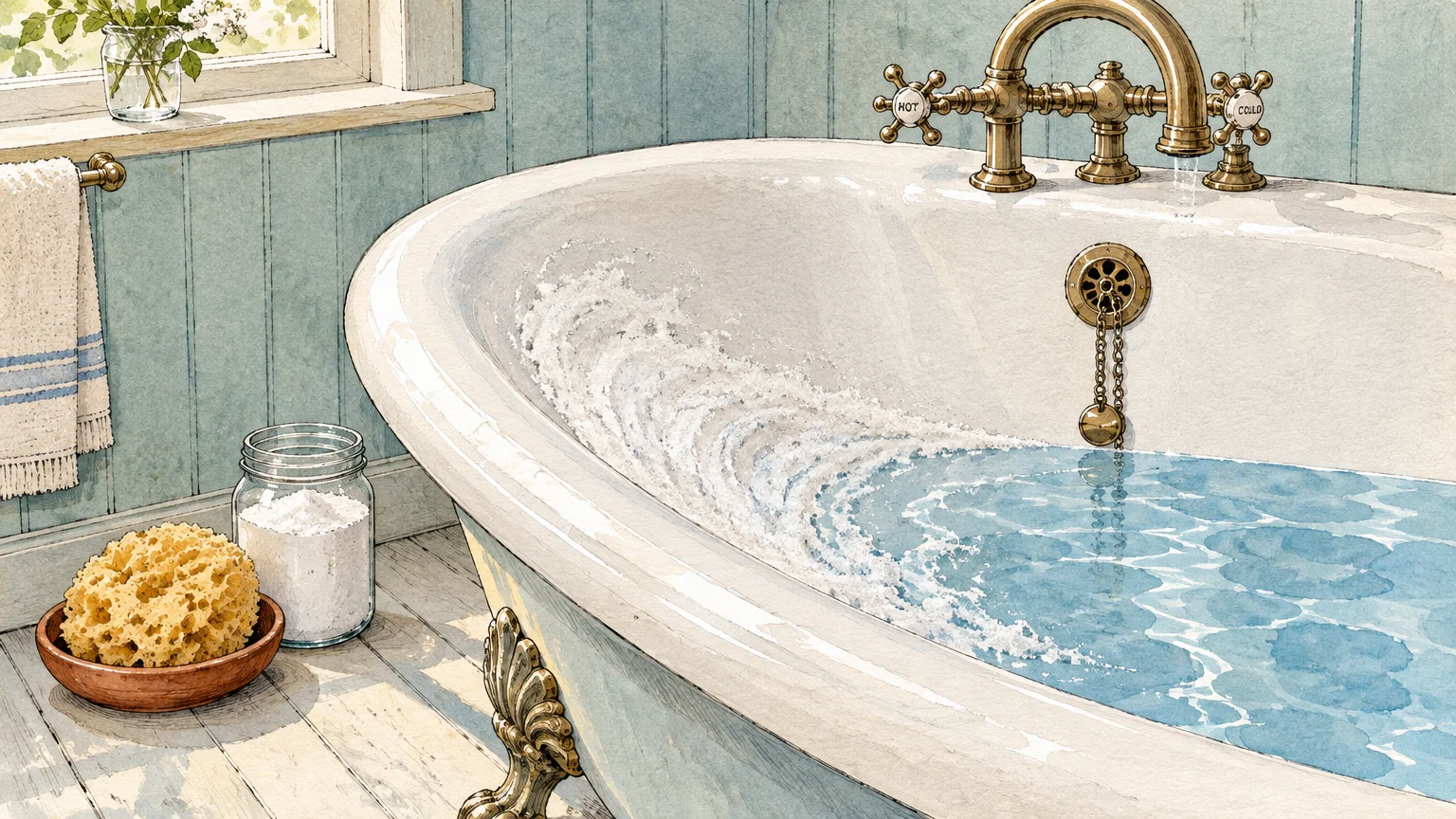
07 Dissolving Soap Scum in Porcelain Tubs and Sinks
Bathroom soap scum forms when fatty acids in bar soap bind with calcium and magnesium minerals in hard water. This stubborn film coats tubs, basins, and wall surrounds, leaving a dull, slippery residue.
Baking soda serves as an exceptional soft-abrasive scouring agent that lifts this mineral film without etching fiberglass or porcelain.
To prepare an effective natural scouring cream, combine the following ingredients in a small bowl:
- One cup of baking soda
- Three tablespoons of liquid vegetable-based castile soap or gentle dish soap
- One tablespoon of warm water
Stir the mixture until it resembles thick cake batter. Scoop a small amount onto a damp cellulose sponge and wipe the tub basin in broad, overlapping circles.
Rinse the surface with warm shower water to reveal clean, shiny porcelain. This paste eliminates the heavy, suffocating fumes associated with conventional commercial tub and tile cleansers.
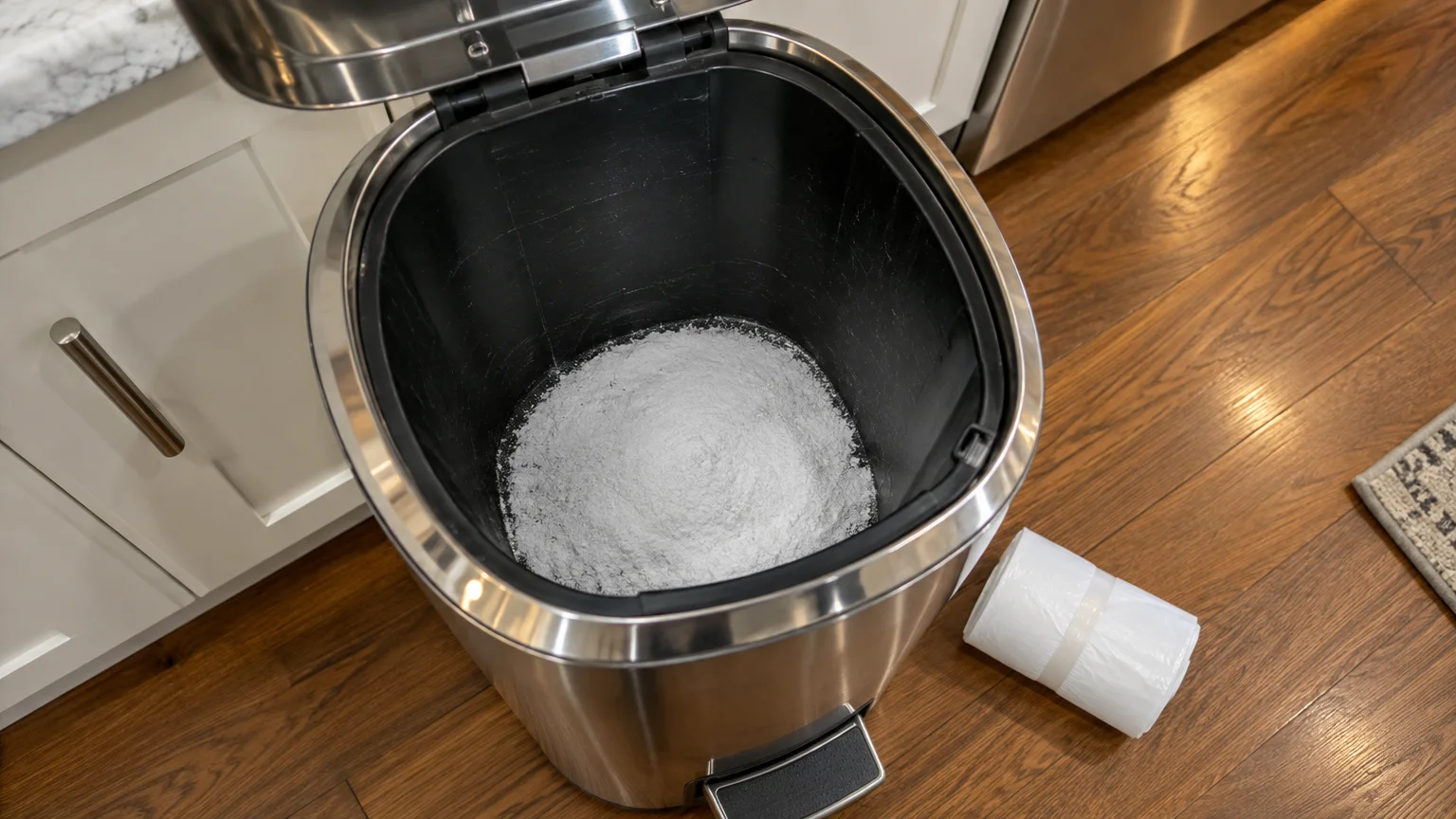
08 Neutralizing Stubborn Odors in Trash Cans and Pails
Plastic trash cans and recycling bins absorb foul odors because plastic resin is naturally porous. Even after you remove the trash bag, unpleasant organic odors often linger inside the container.
Baking soda cleaning neutralizes these acidic odor molecules on contact, leaving your utility zones noticeably cleaner.
Sprinkle two tablespoons of dry baking soda into the bottom of your indoor kitchen trash can before inserting a fresh liner. The powder immediately captures escaping moisture and traps odor molecules throughout the week.
For outdoor recycling bins or heavily soiled pails, mix half a cup of baking soda with two gallons of warm water. Scrub the interior walls with a long-handled deck brush, let the solution stand for ten minutes, and rinse thoroughly with an outdoor hose.
Allow the bin to air-dry completely in the sun before replacing the lid to ensure mold and mildew cannot establish a foothold.
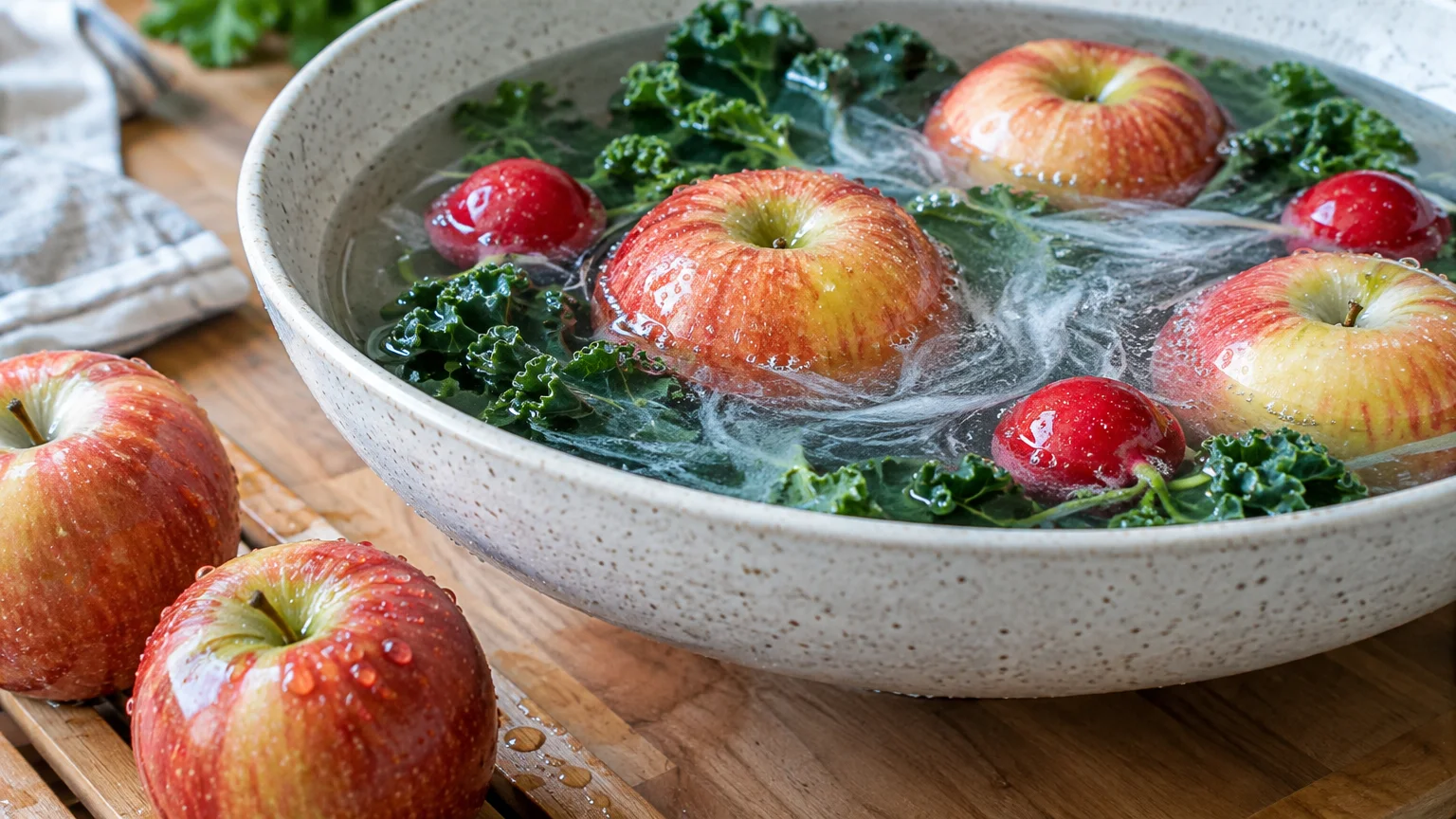
09 Rinsing Surface Dirt and Field Residues from Produce
Commercial produce often carries loose agricultural dirt, field debris, and protective post-harvest waxes. Simple water rinses do not always dislodge stubborn residue from porous skins like apples, melons, or root vegetables.
A mild baking soda bath cleans fruit and vegetable skins gently without altering their natural flavor or texture.
According to research from university agricultural extensions, sodium bicarbonate wash solutions help remove surface residues more effectively than tap water alone. The USDA Food Safety and Inspection Service highlights the importance of thorough washing routines before peeling or cutting fresh produce.
Follow these steps to clean firm produce:
- Fill a large, clean mixing bowl with cold tap water.
- Dissolve one teaspoon of baking soda per two cups of water.
- Submerge firm produce such as cucumbers, apples, or bell peppers in the bowl for twelve to fifteen minutes.
- Gently scrub the outer surfaces using a soft vegetable brush.
- Rinse the produce under cold running water and dry completely with a clean towel before storage.
Do not soak delicate berries or soft mushrooms in this wash. Soft fruits absorb excess moisture quickly, which causes rapid softening and premature spoilage.
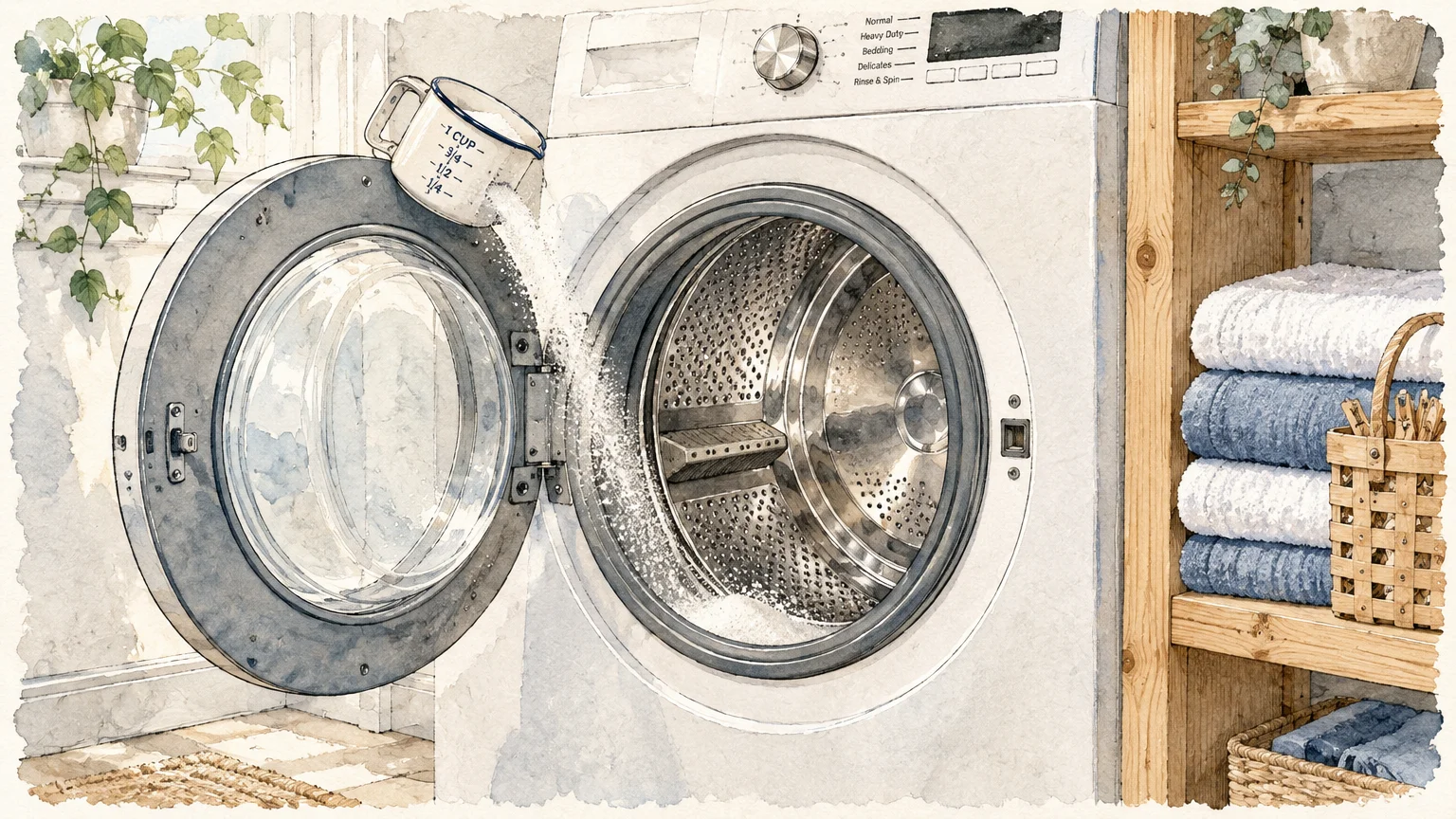
10 Boosting Laundry Detergent and Deodorizing Wash Drums
Hard water contains dissolved minerals that hinder laundry detergent performance, leaving clothes looking dingy and smelling stale. Modern high-efficiency front-loading washing machines also trap residual moisture inside door seals, fostering sour mildew odors.
Adding baking soda to your laundry routine stabilizes water pH and improves detergent efficiency.
Add half a cup of baking soda directly inside the washer drum before loading your regular laundry. The elevated pH softens the wash water, allowing your detergent surfactants to loosen ground-in body oils and dirt more efficiently.
To eliminate lingering mildew odors from your washing machine drum, run an empty cycle using the hottest water setting with one cup of baking soda inside the tub. Wipe the rubber door gasket clean afterward with a dry towel.
Avoid using baking soda on delicate protein fibers such as natural wool or raw silk. The high alkaline level can cause natural animal fibers to become brittle and lose their soft texture over time.
Surface Compatibility Guide for Baking Soda
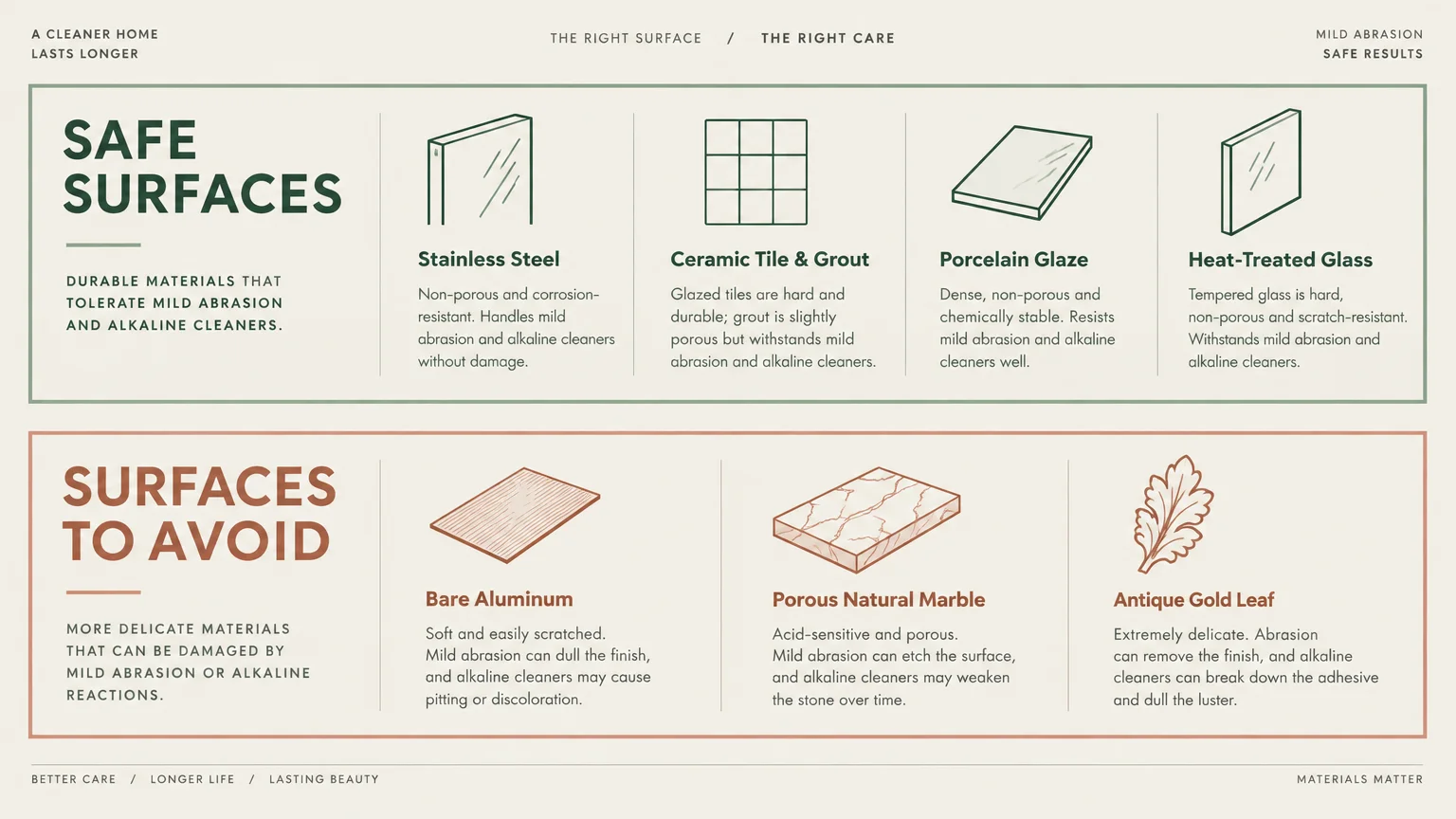
While baking soda is one of the safest household cleaners available, its physical abrasiveness and chemical alkalinity make it unsuitable for certain materials. Use this reference guide to match the right cleaning method to your specific household surfaces.
| Surface Material | Safety Level | Scientific Reason | Recommended Practice |
|---|---|---|---|
| Stainless Steel | Safe | Resists mild alkali; hardness rating exceeds sodium bicarbonate. | Rub paste along the natural metal grain; rinse well. |
| Tempered Glass | Safe | Glass surface is significantly harder than baking soda crystals. | Use wet paste; avoid dry scrubbing with coarse cloths. |
| Glazed Ceramic & Porcelain | Safe | Fired vitreous glazes resist mild friction and pH shifts. | Ideal for sinks, tubs, and standard glazed wall tile. |
| Polished Marble & Limestone | Caution | Calcite stones are soft and can scratch or lose polish. | Avoid; clean only with pH-neutral stone cleaners. |
| Raw / Uncoated Aluminum | Avoid | Alkaline ions trigger surface oxidation and black discoloration. | Use warm water and neutral dish soap instead. |
| Seasoned Cast Iron | Caution | Alkali can weaken polymerized oil seasoning layers over time. | Limit use to brief spot-cleans; re-oil immediately. |
Always perform a discrete spot test on an inconspicuous corner before applying any paste to antique finishes or specialty surfaces.
Common Mistakes to Avoid When Cleaning with Baking Soda
Adopting natural cleaning tips simplifies your home routines, but avoiding common procedural mistakes ensures you achieve the best results. A few minor adjustments will protect your surfaces and save you valuable time.
One widespread mistake involves mixing baking soda and white vinegar in equal parts inside a spray bottle. While the resulting bubbling action looks impressive, this reaction quickly yields water, carbon dioxide gas, and sodium acetate.
Store each ingredient separately and use them sequentially rather than mixing them into an inert liquid.
Another frequent issue is failing to rinse surfaces thoroughly after cleaning. Because baking soda consists of dissolved salts, it leaves a powdery white film on dark countertops and appliances if wiped with a dry cloth.
Always follow any paste application with a damp microfiber cloth, rinsing the cloth in clean water several times to lift all residual minerals.
Avoid using baking soda dry on delicate finishes like high-gloss lacquered wood or soft gold-plated plumbing fixtures. The Colorado State University Extension offers helpful consumer guides on home cleaning chemistry and safe surface care.
Your Practical Next Step
You do not need to overhaul your entire cleaning routine in a single afternoon to enjoy the benefits of green cleaning. Pick one small, manageable task from this list today—such as brightening your kitchen sink basin or deodorizing your kitchen trash can.
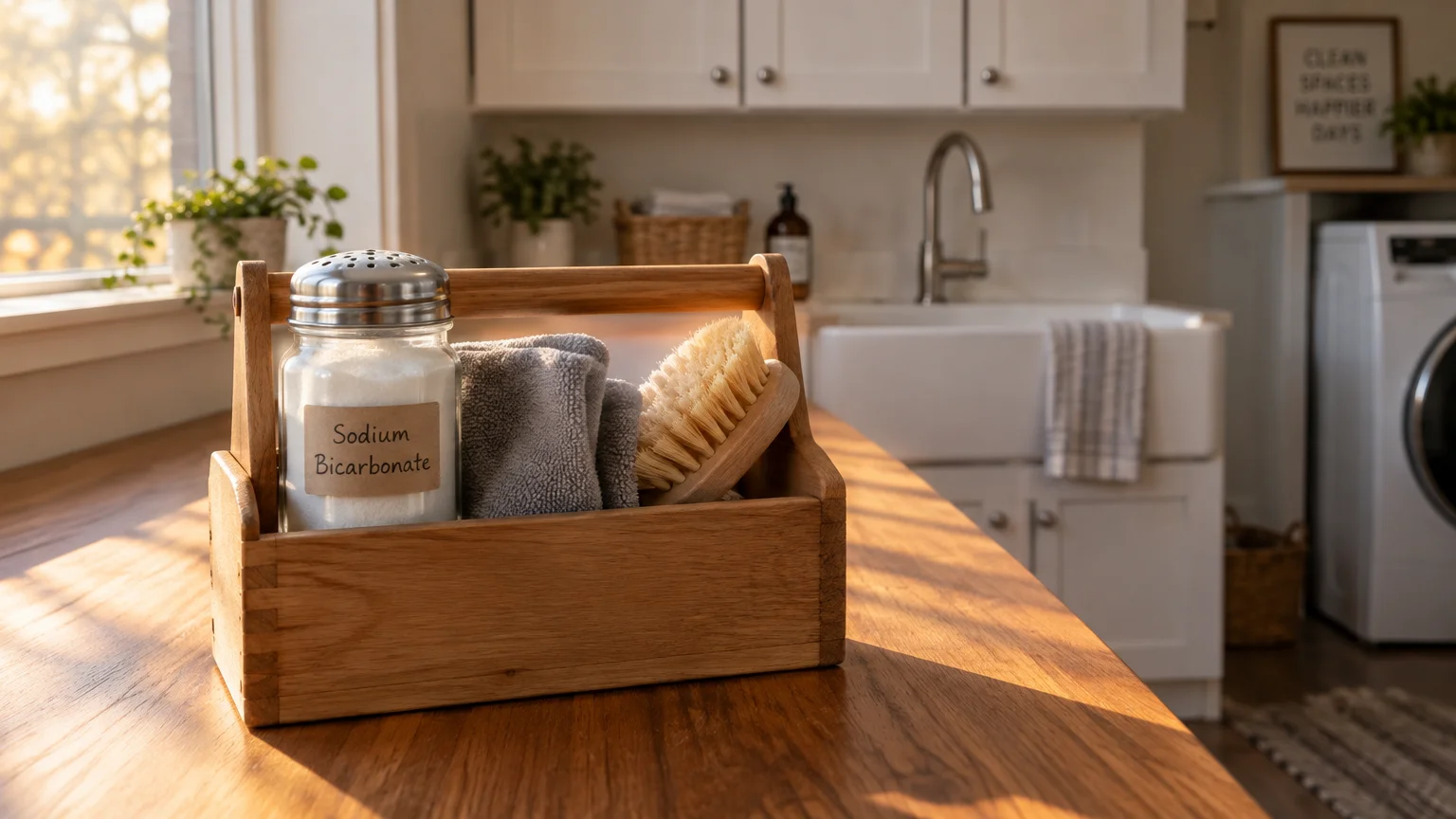
Keep a dedicated, moisture-tight container of baking soda under your sink so it remains accessible whenever an everyday mess occurs.