02 Deodorizing and Refreshing Mattresses Naturally
Mattresses trap body oils, ambient humidity, and dead skin cells over time. Because you cannot wash a mattress in a laundry machine, powder deodorizing provides the safest method for regular maintenance.
Baking soda draws out trapped moisture and chemically bonds with acidic odor molecules rather than masking them with artificial fragrance.
Use this simple routine twice a year to keep your mattress fresh:
- Strip all sheets, mattress protectors, and blankets from the bed.
- Run a clean vacuum upholstery attachment across the entire surface to collect loose dust and hair.
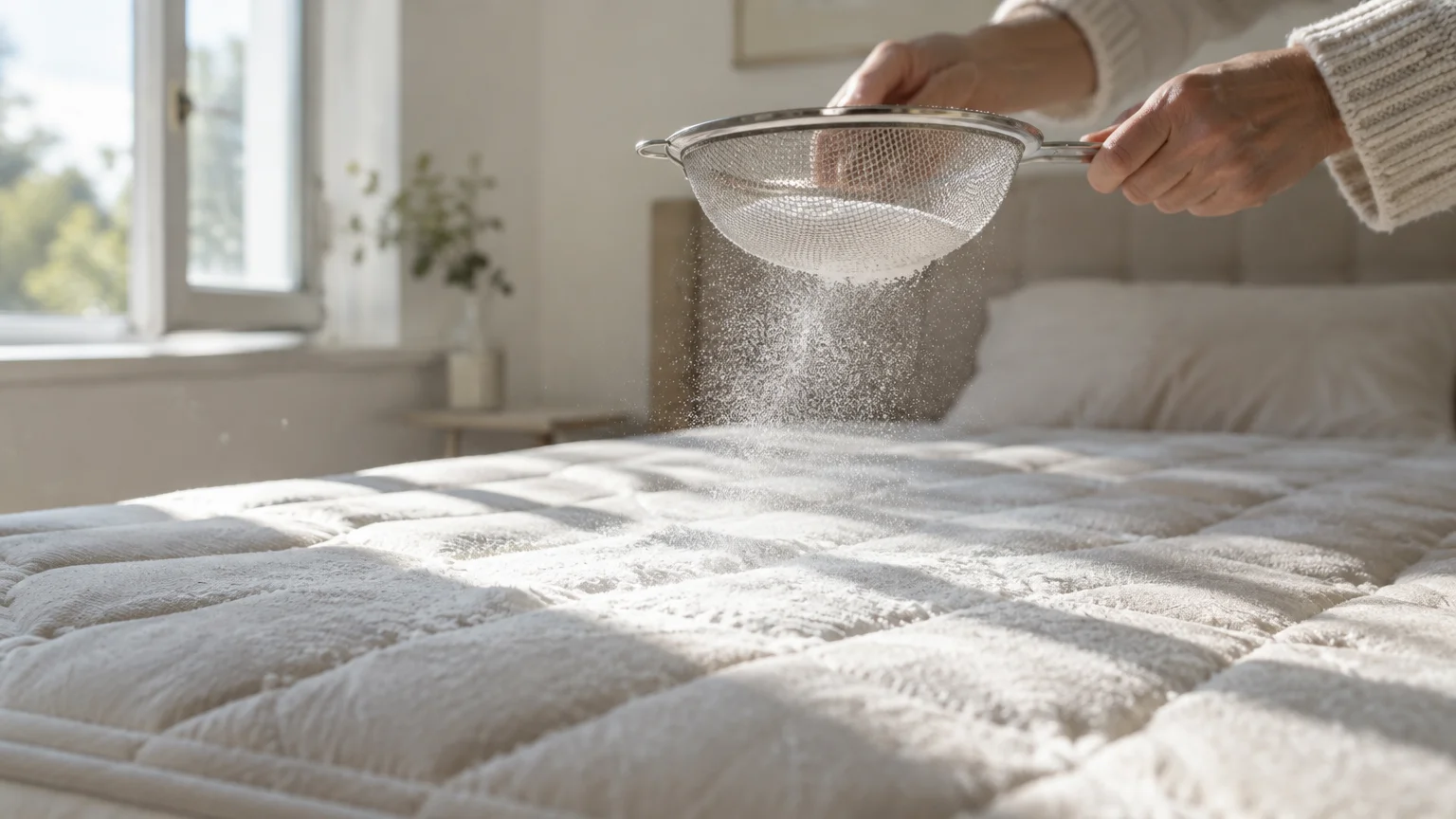
- Distribute one cup of dry baking soda evenly across the mattress using a fine kitchen sieve.
- Leave the powder undisturbed for at least two hours; longer dwell times yield deeper odor absorption.
- Vacuum the mattress thoroughly, making slow passes to lift all powder particles from the fabric weave.
This process improves your sleeping environment without exposing your respiratory system to volatile organic compounds.
03 Brightening Discolored Tile Grout
Grout is porous, meaning it readily absorbs dirty mop water, cooking oils, and mineral deposits. Commercial acid cleaners can erode grout sealers and irritate sensitive lungs, but a thick baking soda paste cleans grout lines gently.
The fine crystal structure of baking soda creates mechanical lift that dislodges ground-in dirt from grout crevices.
Mix three parts baking soda with one part warm water until you achieve the consistency of smooth paste. If you are working on oily kitchen floors, add a drop of fragrance-free liquid dish soap to emulsify grease.
Apply the paste along the grout lines with an old toothbrush or a dedicated grout brush. Let the paste rest on the lines for fifteen minutes so the alkaline solution penetrates embedded dirt.
Scrub gently along the lines using light circular motions. Wipe the area with a damp microfiber cloth, rinsing your cloth frequently in clean water to prevent a hazy white residue.