Loading every dirty pot, knife, and cutting board into the dishwasher feels like an easy shortcut, yet a single cycle can ruin expensive kitchen gear. Avoiding a few common dishwasher mistakes keeps your blades sharp, your pans intact, and your glassware crystal clear.
Modern machines clean aggressively with scorching water, caustic detergents, and high-pressure spray arms. Knowing which items are not dishwasher safe protects your cookware and saves you money on premature replacements.
Keep these seven vulnerable items at the sink instead, and follow a few simple hand-washing habits to make kitchen cleanup fast and stress-free.
Why Your Dishwasher Damages Certain Materials
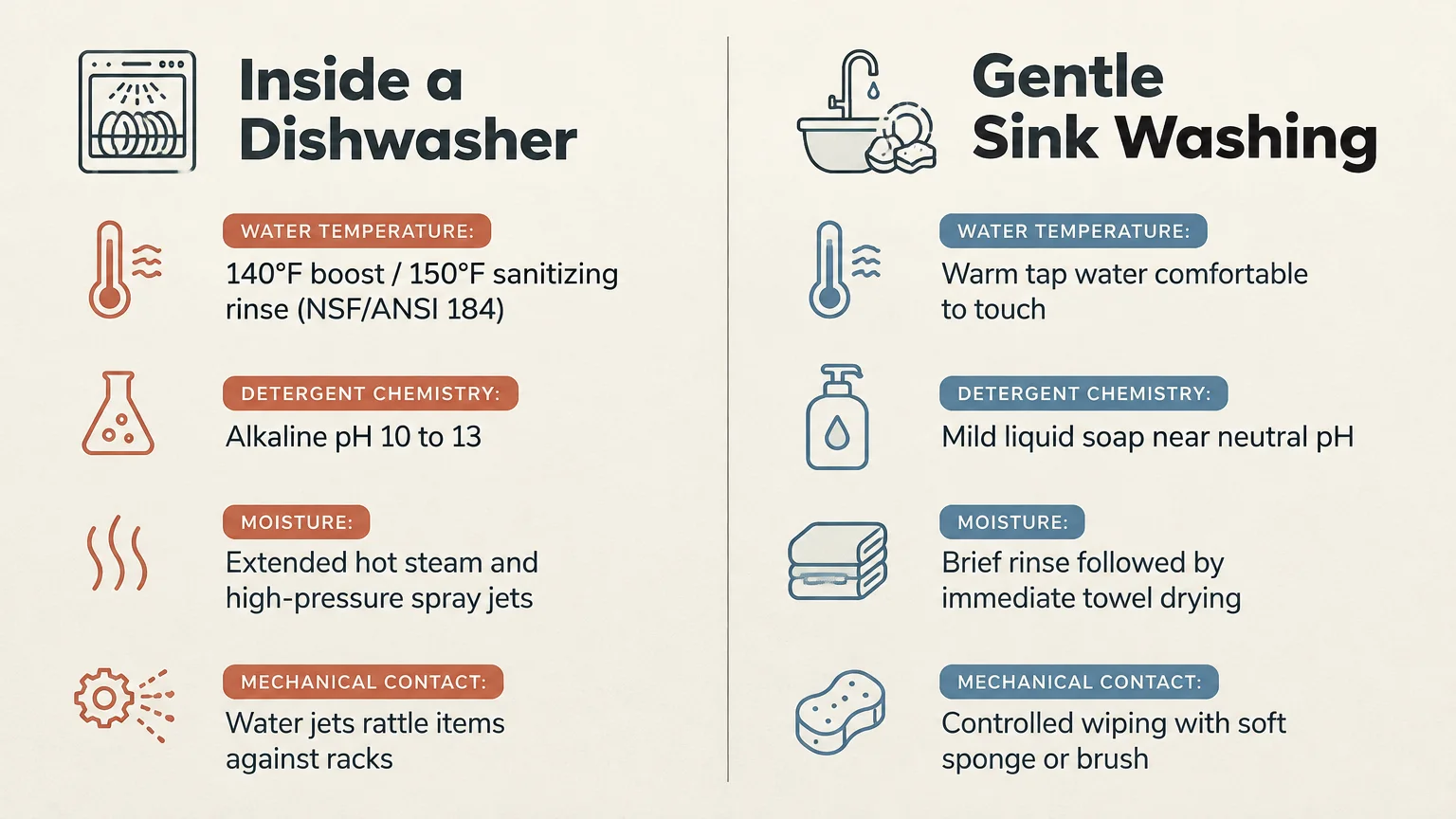
Dishwashers excel at sanitizing everyday plates, flatware, and sturdy glass, yet the very features that erase baked-on food destroy sensitive surfaces. Three forces work together inside every cycle: intense thermal boost, strong chemical alkalinity, and prolonged moisture exposure.
According to ENERGY STAR dishwasher guidelines from the U.S. Environmental Protection Agency (EPA), certified machines boost incoming water temperatures to 140°F. Units equipped with a certified sanitizing cycle under NSF/ANSI Standard 184 reach 150°F in the final rinse.
That 150°F sanitizing rinse achieves at least a 99.999% (5-log) reduction in bacteria; commercial dishwashers under NSF/ANSI 3 run even hotter at 165°F to 180°F. While high heat protects public health, it warps wood, loosens adhesives, and stresses bonded metals.
Automatic dishwasher detergents also pack a much stronger chemical punch than liquid dish soap at your sink. Most dishwasher pods, gels, and powders measure between pH 10 and 13, making them strongly alkaline so they can dissolve grease and protein.
On mild-mannered materials like porcelain or borosilicate glass, high alkalinity works reliably. On reactive metals, cured oils, and natural fibers, that same chemistry strips protective barriers and triggers corrosion.
Even with those exceptions, using your machine wisely remains one of the smartest kitchen cleaning tips available. ENERGY STAR reports that running a certified dishwasher instead of washing everything by hand saves 8,400 gallons of water and over 230 hours every year.
Upgrading to a certified unit also trims utility bills by roughly $220 annually—about $3,300 over the appliance’s lifetime—while using less than half the energy of sink washing. Newer models certified under ENERGY STAR Version 7.0 (effective July 19, 2023) cap standard machines at 240 kWh per year and 3.2 gallons per cycle.
That represents a noticeable improvement over Version 6.0 limits of 3.5 gallons per cycle and baseline U.S. Department of Energy (DOE) limits of 307 kWh per year and 5.0 gallons per cycle set in 2013. Compact dishwashers under Version 7.0 use at most 2.0 gallons per cycle.
| Cleaning Factor | Inside a Dishwasher | Gentle Sink Washing |
|---|---|---|
| Water Temperature | 140°F normal boost; 150°F on NSF/ANSI 184 sanitizing rinse | Warm tap water suited to your hands |
| Detergent Chemistry | Strongly alkaline formulas (pH 10 to 13) | Mild liquid dish soap near neutral pH |
| Moisture Exposure | Extended soaking in hot steam and spray jets | Brief rinse followed by immediate towel drying |
| Mechanical Contact | Water jets rattle items against racks and nearby dishes | Controlled wiping with a soft sponge or brush |
Although the DOE finalized stricter standards in 2024 and proposed rescinding those water-efficiency rules in May 2025 to revert to older Congressional baselines, every modern machine still relies on intense heat and alkaline chemistry. Keeping seven vulnerable items out of the racks gives you the best of both worlds.
01 Cast Iron Skillets and Dutch Ovens
Cast iron cookware thrives on a natural nonstick patina called seasoning, which forms when cooking oil bakes onto raw iron and polymerizes into a hard, slick layer. Putting cast iron in a dishwasher destroys that protective surface in one cycle.
Manufacturer Lodge Cast Iron warns explicitly against dishwashers, calling the combination a recipe for rust. Strongly alkaline detergents strip away the baked-on seasoning layer, exposing bare iron to prolonged steam and hot water.
Once water sits on unprotected iron inside a damp machine, orange surface rust blooms rapidly. Restoring a stripped skillet requires scrubbing away corrosion and re-baking multiple thin coats of oil in your oven.
Safe cookware care for cast iron takes far less time when you handle it right after dinner. Follow these steps while the pan is still slightly warm—never plunge a scorching skillet into cold water, which can crack the metal.
- Scrape away loose crumbs with a flat wooden spatula or a nylon pan scraper.
- Rinse the interior under warm running water and scrub gently with a stiff nylon brush or non-scratch pad.
- For stubborn baked-on spots, sprinkle a spoonful of coarse kosher salt into the pan and rub it with a folded paper towel or damp cloth, then rinse clean.
- Dry the entire skillet immediately with a clean lint-free dish towel, or warm it briefly on a low stovetop burner until every trace of moisture evaporates.
- Rub a tiny drop of neutral cooking oil across the cooking surface with a paper towel, wiping away any excess so the finish looks matte rather than greasy.
If someone accidentally runs your cast iron through the dishwasher, do not panic or throw the pan away. Scrub off the light rust with warm soapy water and a fine steel-wool pad, dry the pan completely, and coat it lightly with oil before baking it upside down in your oven.
Enameled cast iron Dutch ovens require care as well, even though glass enamel shields the iron core from rust. High-pH dishwasher detergents dull glossy enamel glazes over time and can pit exposed cast iron rims along the lid and pot edge.
02 Kitchen and Chef’s Knives
Good kitchen knives represent one of the hardest-working investments in your home, yet tossing them into the utensil basket quickly ruins their performance. Knife makers Wüsthof and Zwilling both advise against dishwashing any culinary blade.
Several damaging reactions happen simultaneously when a sharp knife rides through a full cycle. Even blades stamped from high-grade stainless steel suffer permanent wear inside a dishwasher.
- High water pressure causes blades to knock and rub against forks, metal racks, and ceramic plates, rolling or chipping the delicate cutting edge.
- Harsh alkaline detergents and rinse aids corrode microscopic steel edges, accelerating dullness and leaving tiny rust spots on high-carbon alloys.
- Repeated 140°F to 150°F heat cycles dry out wooden handles, swell riveted scales, and weaken adhesives or polymer tang seals.
- Sharp tips pointing upward in cutlery baskets create serious puncture hazards when you unload clean dishes.
A dull blade does more than frustrate meal prep; it forces you to press harder on dense produce like squash or carrots, increasing the chance of a slip. Hand-washing takes very little effort and keeps edges keen between honing sessions.
- Wash each knife individually right after chopping so acidic juices from tomatoes or citrus never pit the steel.
- Hold the blade facing away from your palm and wipe from the spine toward the sharp edge using warm water, mild dish soap, and a soft cellulose sponge.
- Skip abrasive green scouring pads, which scratch polished blades and thin out fine bevels.
- Rinse thoroughly under warm water and dry the blade and bolster immediately with a clean kitchen towel.
- Store dry knives on a magnetic wall strip, inside an in-drawer slotted tray, or in a clean knife block rather than loose in a utensil drawer.
Never leave chef’s knives soaking at the bottom of a soapy sink either. Submerged blades pose an unseen cut risk to anyone reaching into cloudy water, and prolonged soaking damages handle materials almost as fast as a dishwasher cycle.
03 Laminated Wood and Bamboo Cutting Boards
Wood brings warmth and blade-friendly cushioning to food prep, yet heat and trapped moisture tear constructed boards apart. Understanding the difference between solid wood, glued strips, and pressed grass prevents expensive splitting.
According to the USDA Food Safety and Inspection Service (FSIS), solid hardwood cutting boards can tolerate a dishwasher, whereas laminated wood boards should stay out. Laminated boards consist of multiple wood strips bonded with glue.
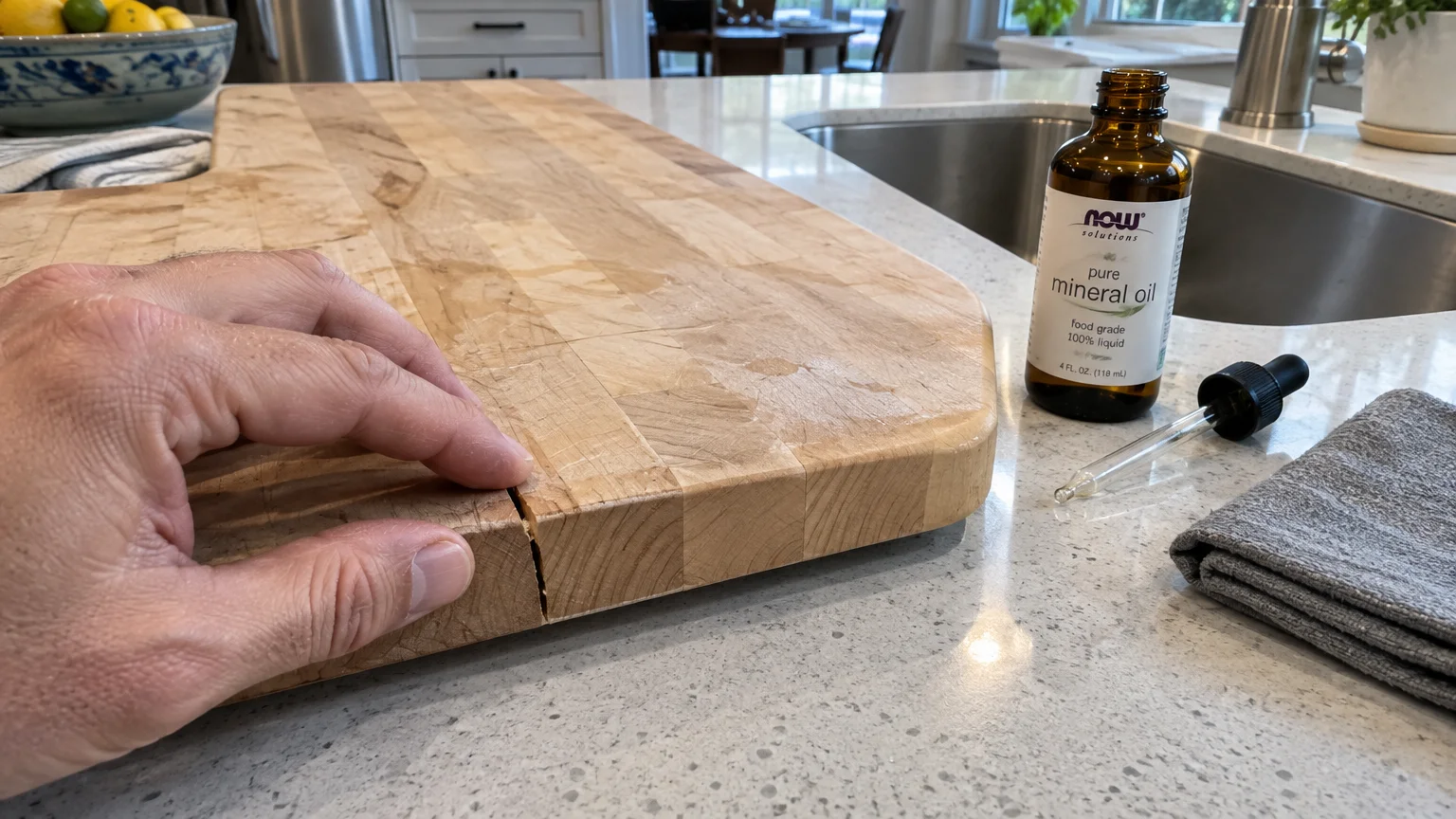
When exposed to steaming 140°F water and harsh detergent, those glued seams swell unevenly, crack, and separate. Once deep fissures open along a cutting surface, food debris and bacteria hide where sponges cannot reach.
Bamboo boards are also poorly suited for automatic dishwashers despite feeling dense and water-resistant. The USDA FSIS recommends washing bamboo boards by hand with hot, soapy water and conditioning them periodically with mineral oil.
Keeping wooden and bamboo boards sanitary at the sink is straightforward when you use the right tools and proportions. Follow this USDA FSIS-aligned cleaning and sanitizing routine after prepping raw meat, poultry, or seafood.
- Scrape off scraps immediately and scrub both sides of the board with hot water, mild dish soap, and a soft nylon brush or sponge.
- Rinse thoroughly with clean water so no soap residue lingers in the grain.
- To sanitize wooden or plastic boards by hand, mix a fresh solution of 1 tablespoon of unscented liquid chlorine bleach per 1 gallon of cool or room-temperature water.
- Flood the board surface with the diluted bleach solution and let it sit for several minutes for effective sanitation.
- Rinse the board thoroughly with clean water, wipe dry with a clean towel, and stand it upright on its edge so air circulates around every side.
Always prioritize chemical safety when mixing sanitizers in your kitchen. Never combine chlorine bleach with vinegar, lemon juice, or ammonia, because mixing those cleaners releases hazardous toxic fumes.
When a wooden or bamboo board looks dry or chalky, rub a generous coat of food-grade mineral oil into the grain with a clean cloth. Avoid vegetable, olive, or canola oils for conditioning, since cooking oils turn sticky and rancid over time.
04 Uncoated Aluminum Bakeware and Pots
Sheet pans, vintage cake tins, stovetop espresso makers, and lightweight stockpots made from uncoated aluminum remain kitchen staples because they conduct heat evenly. Unfortunately, aluminum reacts violently with automatic dishwasher detergent.
Raw aluminum naturally forms a microscopic, clear shield of aluminum oxide on its surface. Strongly alkaline dishwasher formulas—measuring pH 10 to 13—dissolve that thin protective barrier.
Once stripped, bare aluminum reacts with hot water and detergent chemicals to form a dark gray, black, or chalky oxide film commonly called smut. Repeated trips through the machine etch permanent pits into the metal.
The damage does not stay confined to your bakeware either. Chemical patent literature notes that aluminum dissolved into alkaline dishwasher water actually accelerates clouding and permanent surface corrosion on drinking glasses sharing the same load.
Keeping uncoated aluminum out of the dishwasher therefore protects both your sheet pans and your glassware. Gentle sink care preserves the bright finish without heavy scrubbing.
- Wash aluminum pans with warm water, mild dish soap, and a soft sponge or nylon mesh pad—skip steel wool, which gouges soft aluminum.
- Pre-soak baked-on sheet pans briefly in warm soapy water instead of scraping aggressively with metal knives.
- Dry aluminum immediately with a towel to prevent mineral water spots from forming.
- Accept light golden seasoning on cookie sheets as normal; dark baked-on patina actually helps cookies brown evenly.
If an aluminum pan already came out of the dishwasher covered in dark gray residue, wash it thoroughly by hand with warm soapy water and a nylon scrub pad to lift loose oxide film. While cosmetic discoloration often lingers, hand-washing prevents further pitting and protects future loads of glassware.
05 Copper Cookware
Hammered copper saucepans, sauté pans, and mixing bowls deliver unmatched responsiveness on the stovetop, yet they rank high among items not dishwasher safe. Traditional French copper maker Mauviel advises explicitly against cleaning copper cookware in a dishwasher.
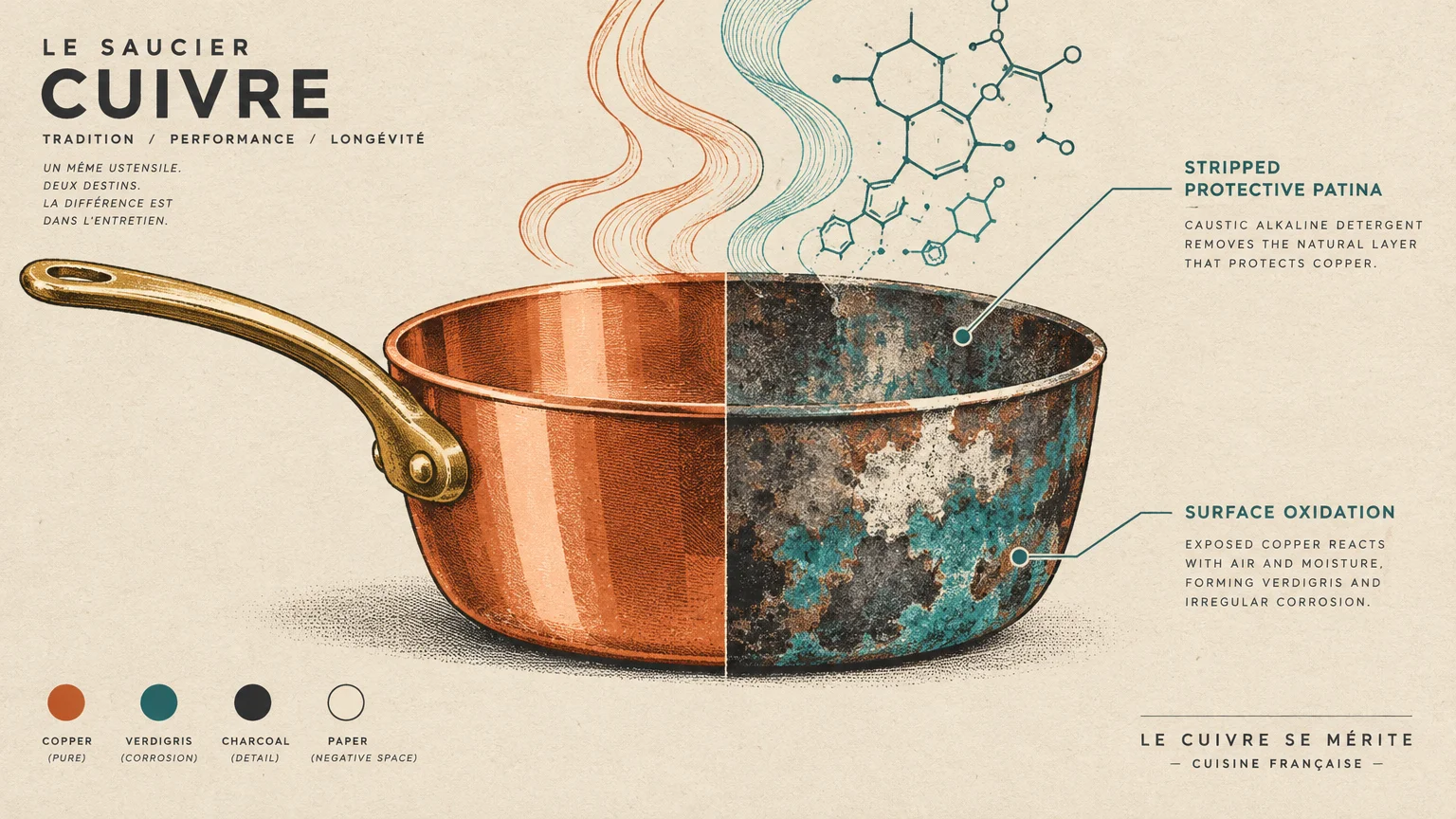
Harsh alkaline detergent chemicals strip copper’s warm rosy luster, leaving blotchy brown tarnish and streaking across the exterior. Even worse, bleach-containing detergents and sanitizers corrode copper directly and cause irreversible pitting.
Many heirloom copper pans also feature hand-wiped tin linings or riveted cast-iron handles that react poorly to prolonged machine moisture. High-heat drying cycles can blister delicate tin linings or cause iron rivets to rust.
Caring for copper by hand preserves its beauty and cooking performance for decades. Treat both solid copper and copper-bottomed stainless steel pans with the following routine.
- Allow the hot pan to cool completely to room temperature before bringing it near the sink.
- Fill the interior with warm soapy water for a short soak if sauces have scorched onto the lining.
- Wipe inside and out using mild liquid dish soap and a soft, non-abrasive sponge—never use metal scouring pads or bleach cleansers.
- Rinse with clean warm water and buff dry right away with a soft cotton towel so hard-water spots cannot etch the exterior.
- When tarnish builds up naturally over time, polish the exterior gently with a manufacturer-approved copper cleaner, then rinse and dry thoroughly.
Some cooks love the muted patina aged copper develops, while others prefer a bright mirror shine. Either way, keeping copper out of the dishwasher prevents structural pitting that no polish can ever erase.
06 Nonstick Cookware and Exposed-Core Clad Pans
Cookware labels often confuse homeowners, especially when high-end pans advertise dishwasher convenience. Two popular categories—exposed-core clad stainless steel and coated nonstick pans—deserve a spot beside your drying rack instead of inside your appliance.
Multi-ply clad cookware sandwiches a heat-conducting aluminum core between durable layers of stainless steel. When the outer rim leaves that aluminum core exposed, strongly alkaline dishwasher detergent eats away at the softer inner layer.
Over repeated washes, corroded aluminum recedes behind the stainless steel, leaving razor-sharp edges along the pan rim. That exact risk triggered major legal consequences for one of America’s best-known cookware brands.
All-Clad agreed to a $4 million nationwide class-action settlement, with a claim deadline of March 27, 2023, over allegations that it misrepresented stainless-steel cookware as dishwasher safe after machine cycles degraded pan edges.
All-Clad’s current warranty exclusions explicitly list cleaning in the dishwasher or soaking in water as failing to follow proper care instructions. Checking pan rims for exposed silver bands before loading saves your fingers and your warranty coverage.
Nonstick skillets and griddles suffer a quieter decline inside dishwashers. Public health agencies—including the FDA, EFSA, and ANSES, as cited by T-fal—confirm that PTFE nonstick coatings remain inert and harmless if accidentally ingested.
Even so, intense thermal swings, jostling against nearby dishes, and caustic pH 10 to 13 detergents wear down nonstick release coatings much faster than gentle handwashing. T-fal’s product warranty similarly excludes damage caused by abrasive cleaners or bleach.
Protect both clad and nonstick pans with simple, repeatable sink habits that take almost no effort.
- Let skillets cool naturally on an unused burner before washing, because sudden temperature shocks warp thin aluminum bases and stress coatings.
- Wipe away excess cooking oil with a paper towel before water hits the pan, keeping grease out of your kitchen drain.
- Wash gently with warm water, mild liquid soap, and a soft cellulose sponge or microfiber dishcloth—avoid stiff bristles and steel wool on nonstick coatings.
- Rinse clean, dry thoroughly with a soft towel, and place felt protectors or folded paper towels between stacked nonstick skillets.
Taking a brief moment to rinse and wipe a cool nonstick skillet extends its slick food release by years. You also free up an entire half-rack in your dishwasher for greasy bowls and prep utensils.
07 Older, Specialty-Finish, and Unassembled Insulated Drinkware
You may have heard an older rule claiming vacuum-insulated travel mugs never belong in a dishwasher because heat ruins their thermal seal. That blanket statement no longer holds true across major modern drinkware brands, though key exceptions remain.
Official care guides for YETI (covering Rambler bottles, tumblers, and caps), Stanley (such as the Quencher ProTour), and Hydro Flask (such as the Flex Sip Lid) state their current double-wall vacuum-insulated stainless steel drinkware is dishwasher safe.
However, all three brands require a crucial preparation step before you load the top rack. You must disassemble removable silicone gaskets and lid components first so wash water reaches every hidden seam.
What actually belongs on your hand-wash list are older unrated insulated bottles, mugs with specialty wood or custom-painted finishes, non-dishwasher-safe lids, and any travel tumbler still clipped together. Leaving lids assembled traps milky coffee residue and dishwater behind tight silicone O-rings.
Older insulated bottles lacking explicit dishwasher-safe stamps can still suffer seal failure or trapped water inside the vacuum chamber in the dishwasher. Decorative exterior wraps, cork sleeves, bamboo caps, and hand-painted finishes also peel or crack under alkaline jets.
Use this quick inspection checklist before loading any travel tumbler or insulated water bottle into the top rack.
- Check the bottom stamp and manufacturer care guide first; keep older unbranded bottles and specialty wood, cork, or custom-coated exteriors at the sink.
- Confirm whether the lid itself carries a dishwasher-safe rating, since flip-straws, magnetic sliders, and insulated caps vary by model.
- Separate every removable part—straws, mouthpieces, sliders, and silicone gaskets—before loading dishwasher-safe bottles or lids.
- If you wash insulated drinkware by hand, soak removable silicone gaskets in warm soapy water, scrub crevices with a soft bottle or straw brush, and let all pieces air-dry completely before reassembling.
Disassembling lids takes only a few moments and stops musty odors from developing beneath rubber seals. Whether a bottle goes in the top rack or the sink, clean gaskets make every sip taste fresh.
Quick Reference: Dishwasher Risks and Safe Care
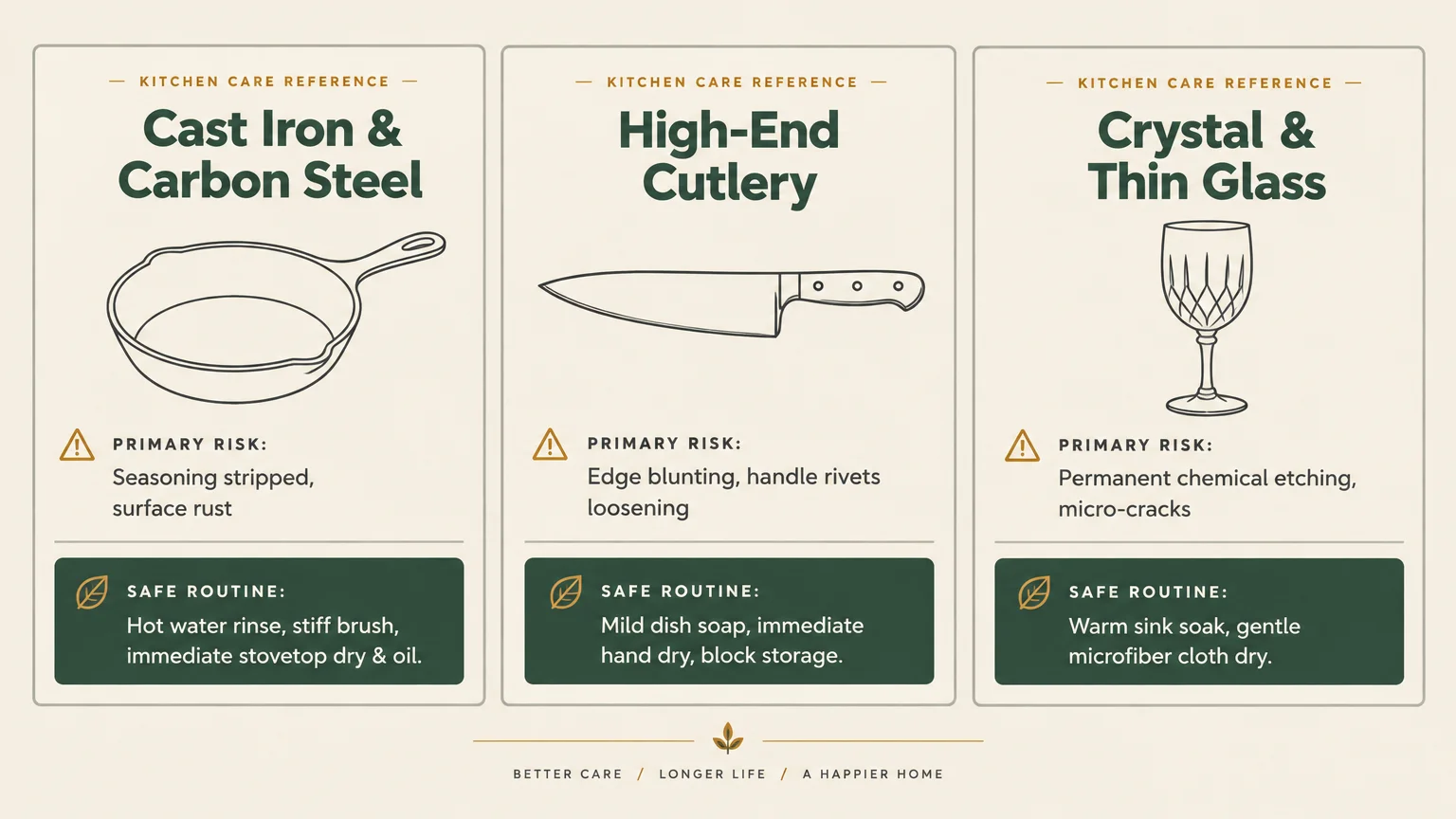
When you are tired after cooking dinner, quick visual answers keep you from making costly dishwasher mistakes. Keep this reference table handy as a guide to material compatibility and safe hand-washing tools.
| Kitchen Item | Dishwasher Risk | Recommended Tool & Cleaning Method |
|---|---|---|
| Cast Iron Skillets & Dutch Ovens | pH 10–13 detergent strips oil seasoning, causing rust; dulls enamel | Stiff nylon brush or coarse salt, warm water, immediate towel dry, thin oil coat |
| Kitchen & Chef’s Knives | Rattling chips fine edges; heat and chemicals degrade handles and steel | Soft sponge, mild soap, warm water, immediate towel dry, safe storage block |
| Laminated Wood & Bamboo Boards | Heat and water crack glued seams and warp fibers | Hot soapy water, nylon brush, optional USDA bleach rinse (1 tbsp/gal), mineral oil |
| Uncoated Aluminum Bakeware | Alkaline wash strips oxide shield, causing dark film, pitting, and cloudy glass | Soft sponge or nylon pad, mild dish soap, warm water, towel dry |
| Copper Cookware | Caustic detergents tarnish finish; bleach cleaners corrode and pit copper | Soft non-abrasive sponge, warm soapy water, immediate soft towel buff |
| Nonstick & Exposed-Core Clad Pans | Corrodes exposed aluminum rims into sharp edges; accelerates nonstick wear | Cool pan first, soft sponge or cloth, mild soap, warm water, towel dry |
| Older or Specialty Insulated Mugs | Damages older seals, peels specialty finishes, traps grime in assembled lids | Check brand label; disassemble gaskets/lids; soft bottle brush and air dry |
Post a quick reminder inside a kitchen cabinet if multiple household members share dish duty. Clear rules prevent well-meaning helpers from tossing your favorite chef’s knife or cast iron pan onto the bottom rack.
Practical Dishwasher Tips for Everything Else
Protecting delicate cookware does not mean giving up the convenience and sanitation of your machine. Smart loading and maintenance habits let your dishwasher work at peak efficiency on everyday plates, mugs, bowls, and sturdy bakeware.
- Skip pre-rinsing dishes at the faucet; U.S. EPA figures cited by AHAM show pre-rinsing wastes up to 20 gallons of water per load, while modern detergents actually need food soil to cling and clean effectively.
- Scrape solid food scraps into the trash or compost bin instead of rinsing, then load plates angled toward the center spray tower.
- Keep all uncoated aluminum well out of your dishwasher, since dissolved aluminum ions in alkaline wash water accelerate permanent clouding on glassware in the same cycle.
- Clean the removable mesh filter at the bottom of your dishwasher tub regularly with warm soapy water and a soft toothbrush so trapped debris never redeposits onto clean bowls.
- Verify manufacturer care labels on any new travel mug, lid, or clad saucepan before its first wash cycle—especially since warranty terms often exclude dishwasher damage.
- Ensure proper ventilation and never mix household chemicals when hand-sanitizing cutting boards; keep chlorine bleach strictly separate from vinegar, acids, and ammonia.
Balancing machine power with gentle sink habits keeps every piece of kitchen gear performing well without adding chores to your evening. You protect expensive tools, save thousands of gallons of water each year, and spend far less time scrubbing.
Your Next Step at the Kitchen Sink
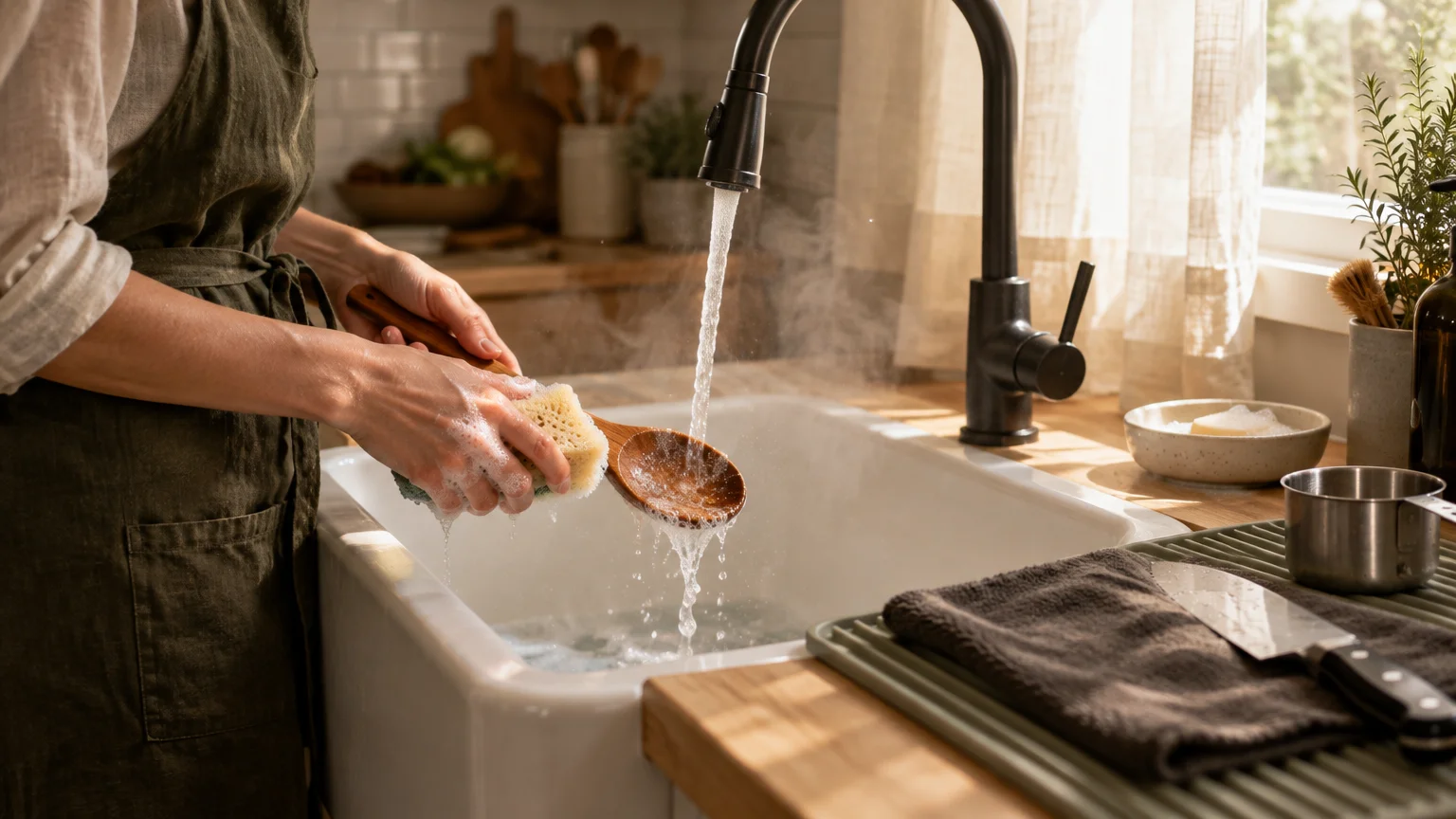
Tonight before you load dinner dishes, spend a few minutes checking your cabinets and dish rack for these seven vulnerable items. Set aside a soft cellulose sponge, a nylon bottle brush, and a dedicated drying towel right beside your faucet so hand-washing a knife or skillet feels effortless.
Once your sink station is ready, loading everything else into the dishwasher becomes automatic—giving you cleaner dishes, longer-lasting cookware, and calmer evenings.