
Range Hood Grease Filters: A Silent Fire Hazard
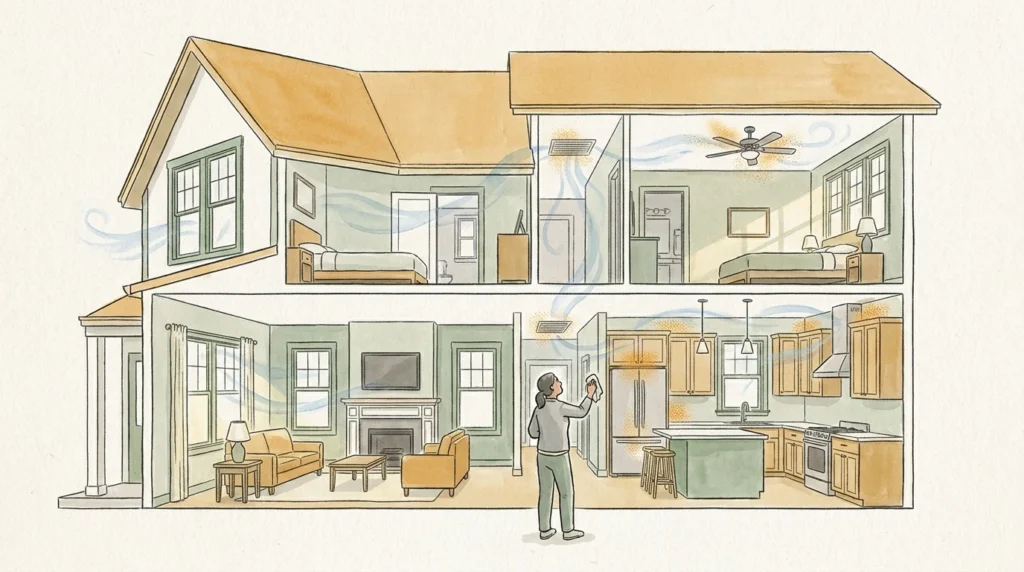
Every time you fry bacon, sear a steak, or sauté vegetables, your cookware releases a plume of steam, smoke, and aerosolized cooking oils. Your overhead range hood captures these airborne particles to vent them safely outside or filter them back into the room. The metal mesh panels sitting directly underneath the hood act as the primary defense line, catching the heavy grease before it coats your kitchen walls.
Over years of daily cooking, these metal filters collect an incredible amount of oil. The heat from your stove causes the trapped oil to undergo a chemical process called polymerization, turning the liquid grease into a hardened, sticky, yellow resin.
Once the filters clog completely, your range hood loses its ability to ventilate the kitchen. Smoke alarms trigger more frequently, and cooking odors linger for days. More dangerously, a neglected, grease-choked filter hovering directly above an open flame serves as a severe fire hazard.
Standard dishwasher cycles rarely generate enough heat or alkaline power to strip polymerized resin. You need a dedicated boiling method to melt the grease away.
- Remove the filters: Push the small release latches on the filters and slide the metal mesh panels out of the range hood.
- Boil water: Bring a large, wide pot of water to a rolling boil on your stove.
- Add the cleaning agent: Slowly and carefully pour half a cup of baking soda into the boiling water. The water will fizz and foam rapidly as the baking soda reacts.
- Submerge and melt: Using tongs, lower the greasy filters into the boiling alkaline solution. Let them sit for three to five minutes. You will immediately see the water turn brown as the sticky resin melts away.
- Rinse and dry: Carefully remove the hot filters, rinse them under hot tap water to remove any lingering residue, and let them air dry completely before reinstalling them.