Housekeeper Techniques vs. Common DIY Habits
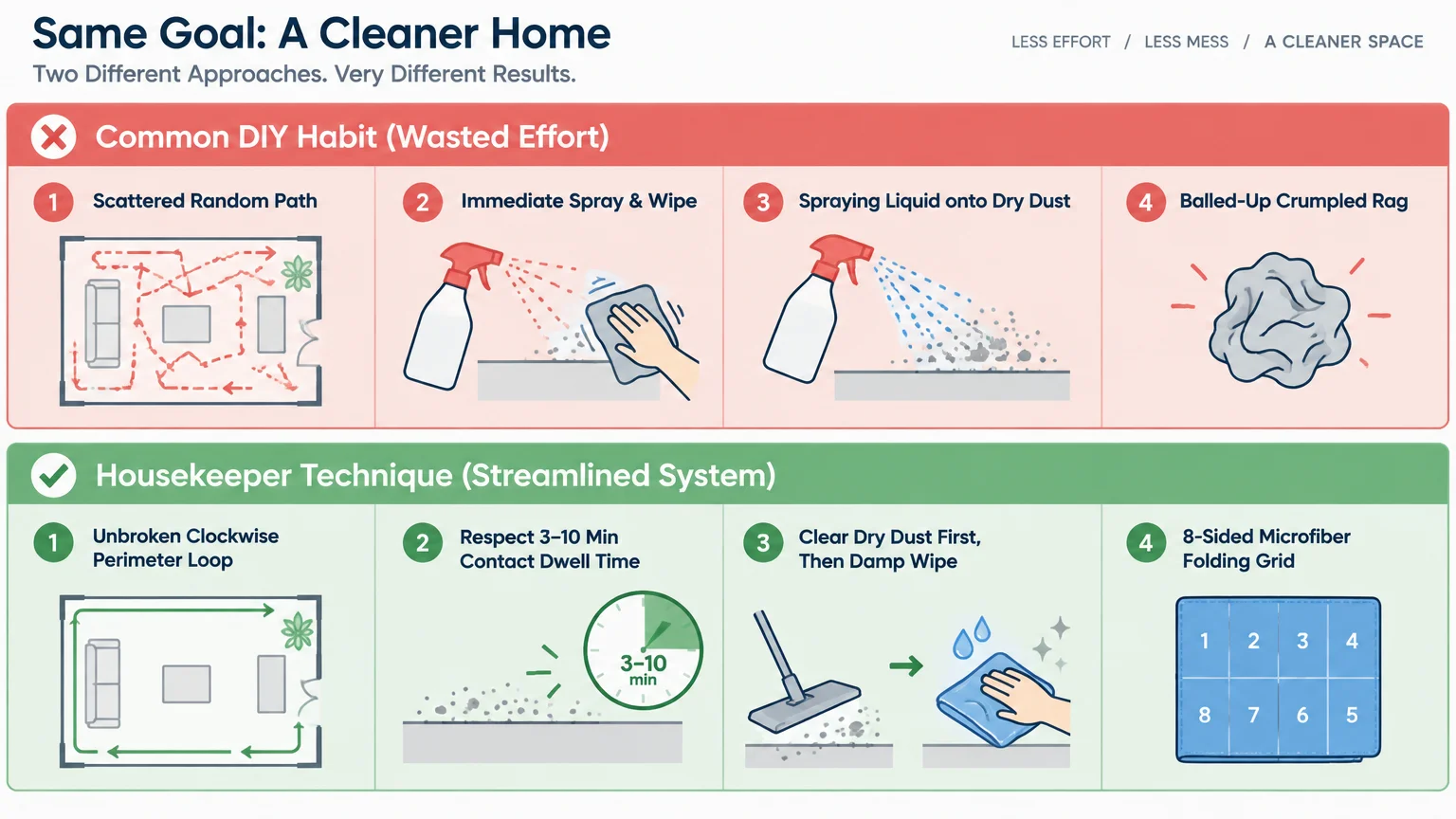
Compare the professional methods used by cleaning teams against traditional cleaning habits. Small adjustments in your tools and timing yield dramatically cleaner surfaces with significantly less physical strain.
| Target Area | Common DIY Habit | Housekeeper Secret Technique | Primary Advantage |
|---|---|---|---|
| Ceiling Fan Blades | Feather duster waving dust down | Pillowcase sliding sleeve | Captures 100% of debris inside fabric |
| Countertop Sanitizing | Spray and immediate wipe-down | Full disinfectant contact dwell time | Neutralizes bacteria and viruses completely |
| Bathroom Soap Scum | Bleach spray and abrasive pads | Warm vinegar and dish soap soak | Dissolves mineral deposits without scratching |
| Baseboard Dusting | Damp paper towels | Anti-static dryer sheet buffing | Repels dust buildup for weeks |
| Embedded Pet Hair | Repeated vacuum roller passes | Rubber window squeegee pull | Extracts deeply woven fur and lifts carpet pile |
| Tight Fixture Seams | Heavy scrub sponges | Soft toothbrush and bamboo skewer | Cleans scale without damaging chrome plating |
Essential Chemical Safety Rules for Home Cleaners
Professional housekeepers understand that mixing household chemicals never improves cleaning power; it creates deadly hazards. Always read manufacturer labels and maintain good ventilation when using cleaning solutions.
Never combine bleach with ammonia, vinegar, or acidic cleaners under any circumstances. According to the CDC Bleach Safety Guidelines, mixing bleach with acids produces toxic chlorine gas, while mixing bleach with ammonia creates dangerous chloramine vapor.
Store your cleaners in clearly labeled containers and never transfer chemicals into unmarked food or beverage bottles. The American Cleaning Institute advises keeping products in their original packaging to ensure you always have emergency first-aid instructions on hand.
- Work with windows open or exhaust fans running to circulate fresh indoor air.
- Wear protective rubber gloves when handling acidic descalers or concentrated detergents.
- Rinse surfaces thoroughly with clean water before switching from one cleaner to another.
Following basic safety practices protects your respiratory health, prevents chemical burns, and preserves the structural integrity of your home fixtures.
Put These Housekeeping Tricks into Practice
Do not attempt to overhaul your entire cleaning routine in a single weekend. Pick two or three of these trade secrets—such as the eight-fold microfiber fold or the pillowcase fan trick—during your next sweep.
Assemble your core mobile caddy, set a timer, and follow a strict top-to-bottom perimeter circle in one room today. Once you experience how much time and energy these professional tricks save, you will never return to random, exhausting cleaning habits again.