11 Emulsify Kitchen Grease Deposits with Boiling Water and Surfactants
Exhaust hood filters, stovetop grates, and range surrounds collect aerosolized cooking oils that turn gummy over time. Cold water and ordinary counter sprays only smear this sticky film across surfaces.
Commercial cleaners use high heat to liquefy hardened fats before applying cleaning chemistry. Boiling water instantly melts greasy binding layers, allowing degreasing agents to lift the residue completely.
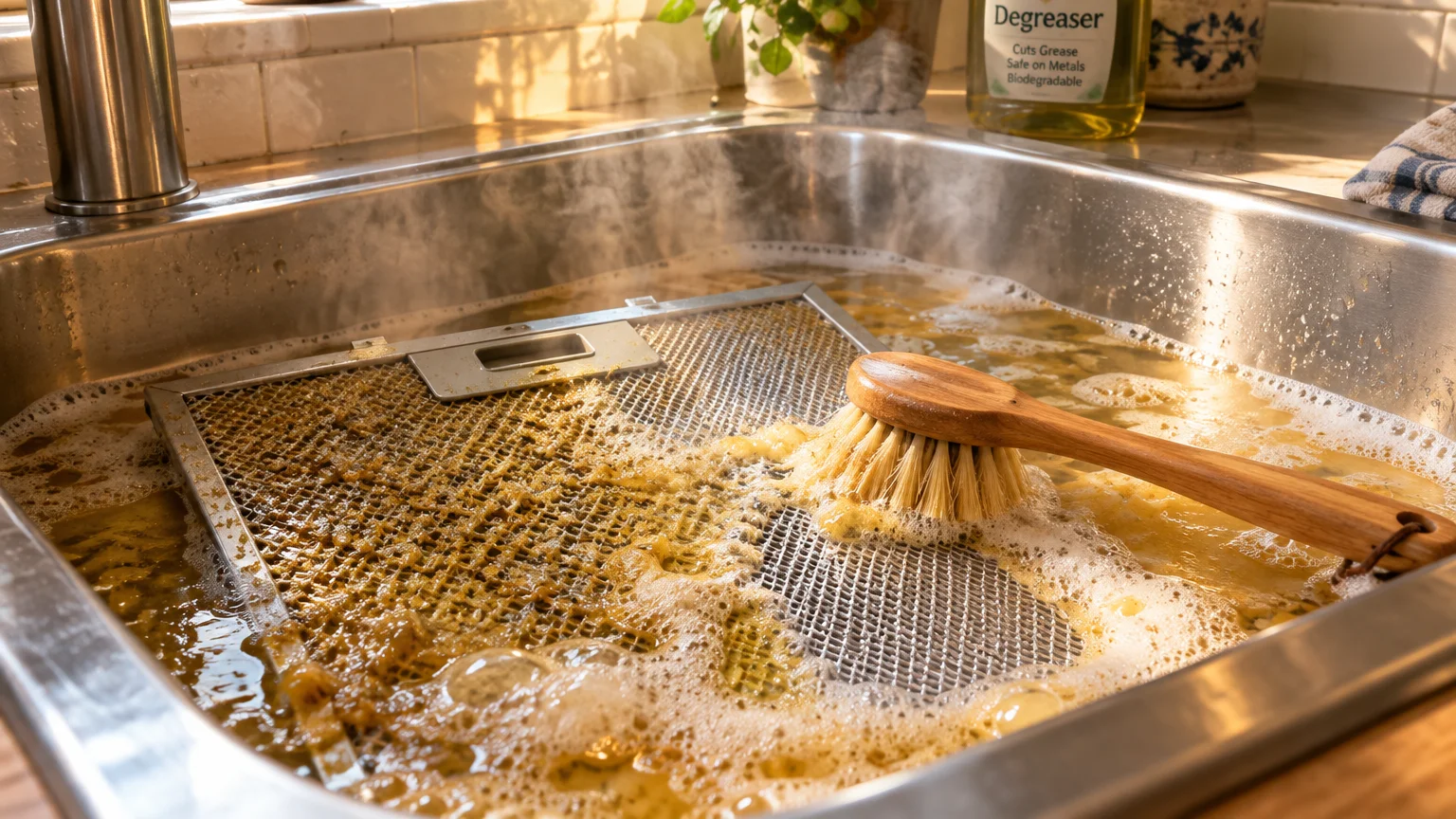
- Remove metal range hood mesh filters and place them flat inside a metal roasting pan or sink basin.
- Sprinkle a generous layer of baking soda across the mesh surfaces.
- Pour boiling water directly over the filters until they are fully submerged.
- Add a few squirts of concentrated degreasing dish soap to emulsify the floating oils.
Let the filters soak for ten minutes while the bubbling water separates the grease from the wire mesh. Rinse with hot tap water and let them air-dry completely before reinstalling them.
12 Buff Baseboards with Anti-Static Dryer Sheets
Baseboards gather dust rapidly because vacuum exhaust vents and household air currents blow loose pet hair along floor perimeters. Traditional wet dusting leaves an invisible residue that attracts new debris within days.
After wiping your baseboards clean, buff the painted wood with a clean dryer sheet. The softening compounds on the sheet leave behind an invisible anti-static barrier that repels airborne dust.
You can wrap a dryer sheet around the head of a flat sweeper mop to avoid bending down on your hands and knees. Glide the mop head along your hallway trim to coat dozens of feet of baseboard in minutes.
This barrier prevents pet fur and lint from sticking to trim for weeks at a time. The room stays fresher, and your regular maintenance passes take a fraction of the time.