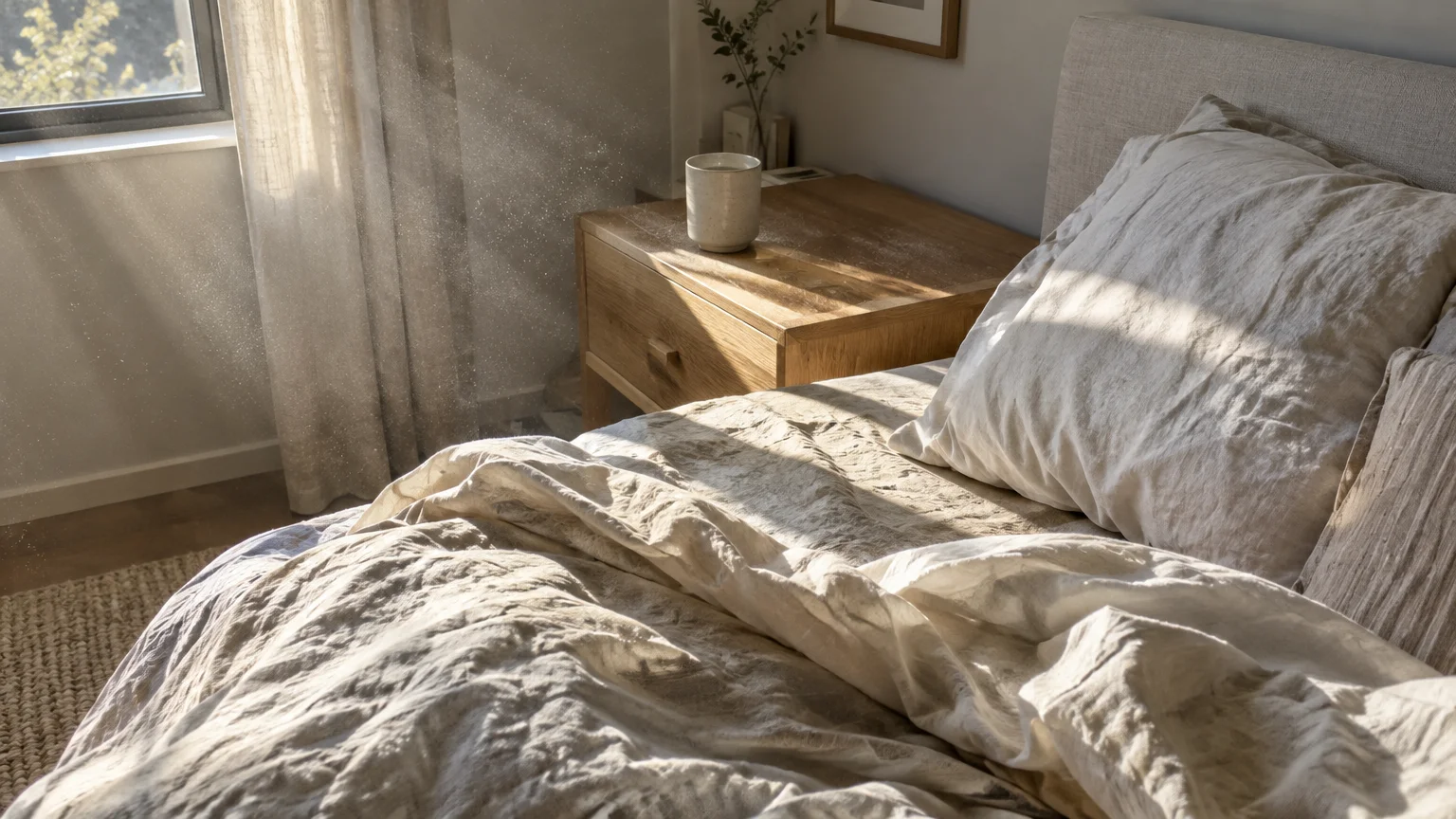
Waking up with congested sinuses, itchy eyes, or a dry cough often points directly to hidden bedroom allergens rather than an illness. Eliminating these quiet culprits clears your morning breathing and restores restful sleep within days.
Everyday soft furnishings, static-charged surfaces, and trapped bodily warmth create an ideal breeding ground where microscopic pests and biological irritants thrive unnoticed.
Identifying the primary allergy triggers at home lets you streamline your cleaning routine and create a genuinely allergy-proof bedroom without wasting unnecessary effort.
01 Mattresses
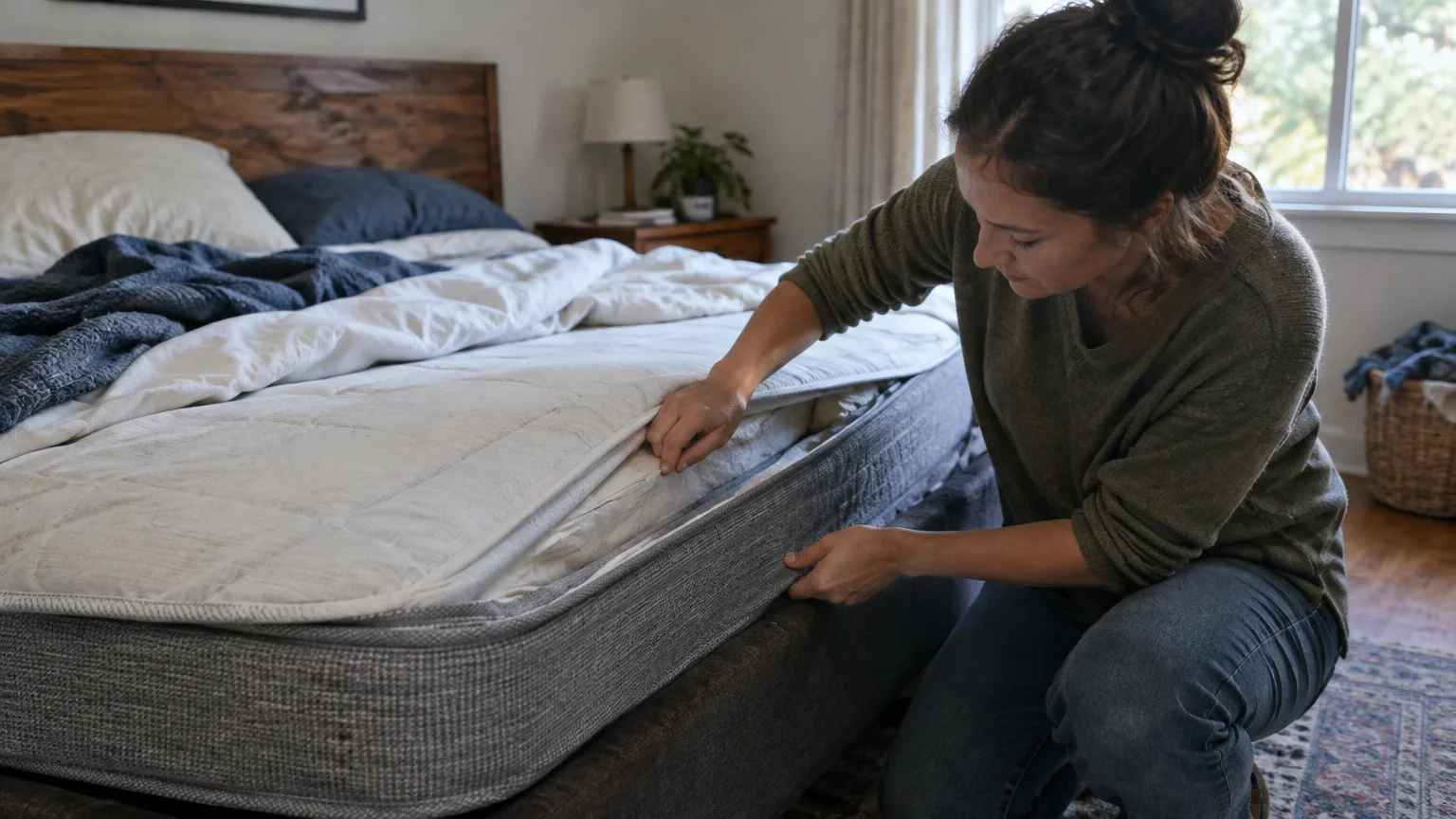
Your mattress serves as the primary reservoir for dust mites in the bedroom; these microscopic arachnids thrive on shed skin flakes and trapped moisture. Without a protective shield, millions of mites settle deep inside the mattress core where household vacuums cannot reach.
According to the Asthma and Allergy Foundation of America, mite waste proteins cause chronic airway irritation, nocturnal wheezing, and morning congestion.
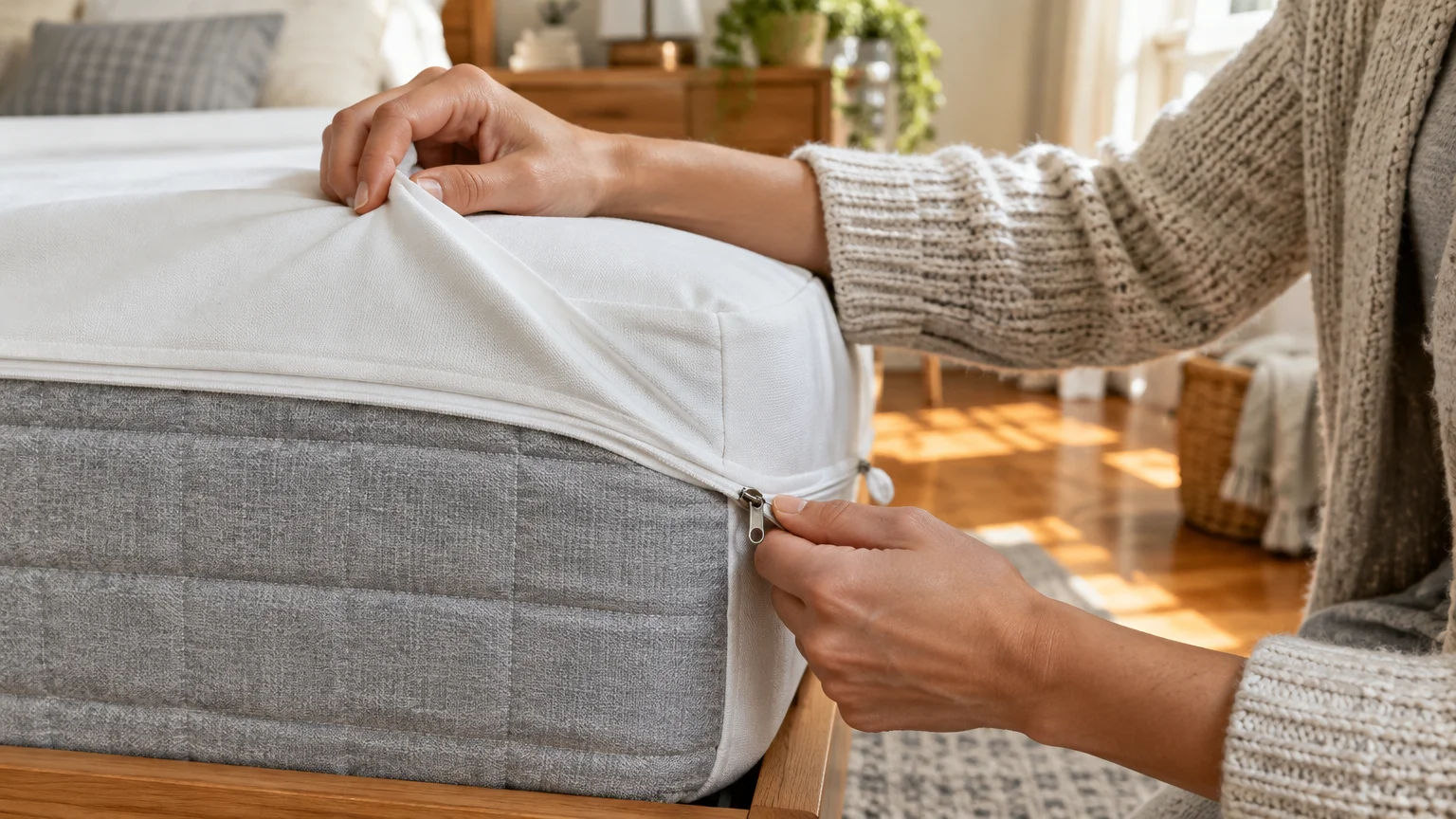
Encase your mattress in a zippered, allergen-proof cover woven with pore sizes smaller than ten microns. Vacuum the surface quarterly using a high-efficiency particulate air (HEPA) vacuum to capture stray skin cells and settling dust.
Avoid wet cleaning or shampooing your mattress without commercial extraction equipment. Lingering interior moisture creates a breeding ground for mold spores beneath the quilting.
02 Bed Pillows and Pillowcases
Pillows rest directly against your nose, mouth, and eyes for roughly a third of your life. Over months of use, an unshielded pillow absorbs perspiration, facial oils, and billions of microscopic dander flakes.
Standard cotton weaves have gaps large enough for dust mites to migrate freely into the filling. Once established inside synthetic or down stuffing, mite colonies produce biological waste that triggers persistent sinus headaches.
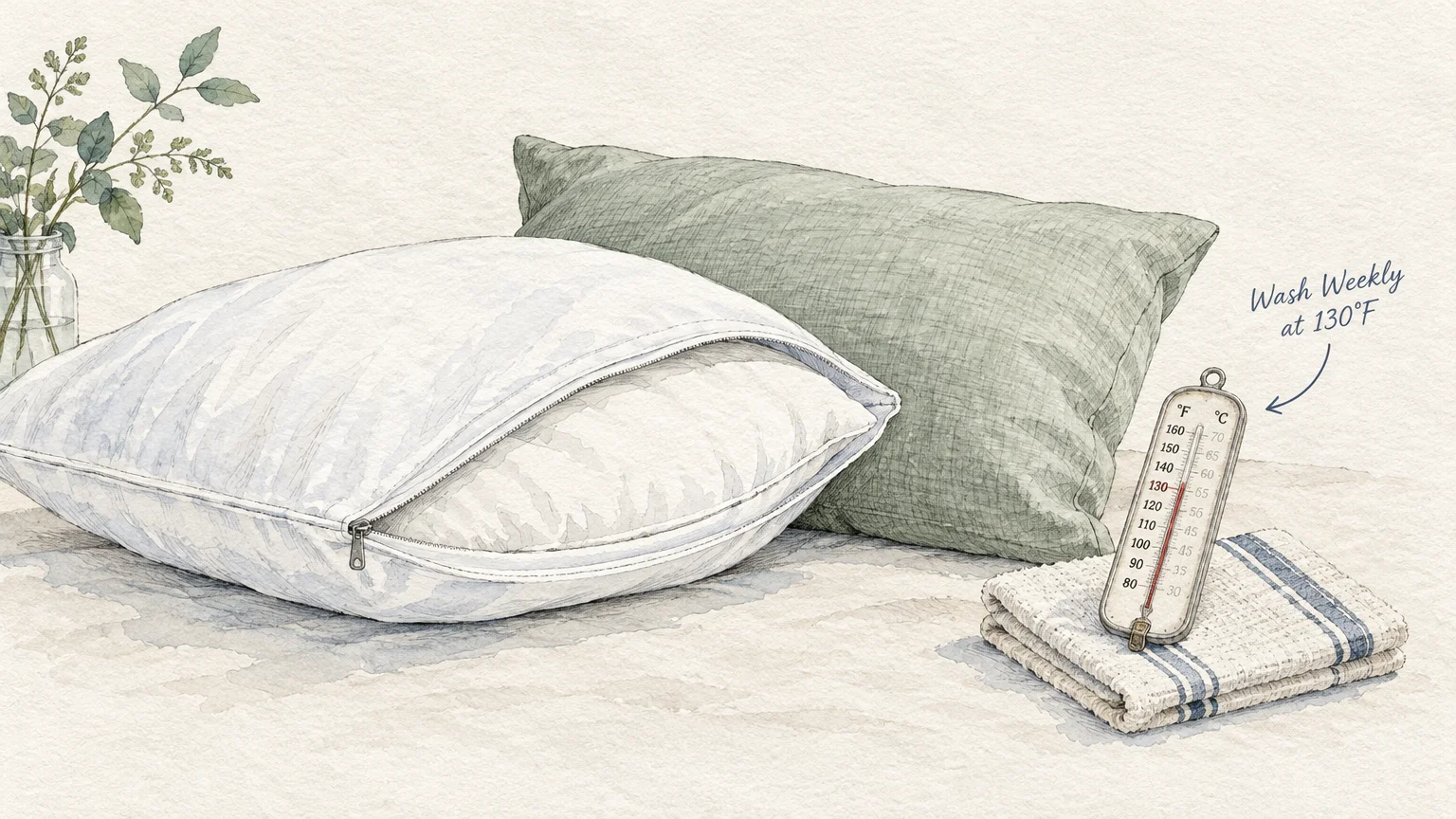
Seal every pillow inside a specialized zippered protector before slipping on your decorative pillowcase. Launder pillowcases weekly in water heated to at least 130 degrees Fahrenheit to eliminate dust mite populations reliably.
Replace standard polyfill and down pillows every two years. Even washed pillows accumulate permanent allergen mass over extended periods.
03 Heavy Draperies and Floor-Length Curtains
Voluminous draperies and textured curtains act as vertical dust collectors that trap pet hair, pollen, and airborne particles. Because fabric panels hang motionless for long periods, light breezes easily dislodge trapped matter into your bedroom air.
Heavy weaves and gathered valances prove difficult to clean regularly, making them prime allergy triggers at home. These thick materials trap rising indoor humidity, which encourages unseen mildew spores to flourish inside the pleated folds.
Switch to lightweight, machine-washable cotton panels or synthetic linen curtains that you can toss into the laundry monthly. If you prefer hard treatments, install flat roller shades or smooth wood shutters that wipe clean easily.
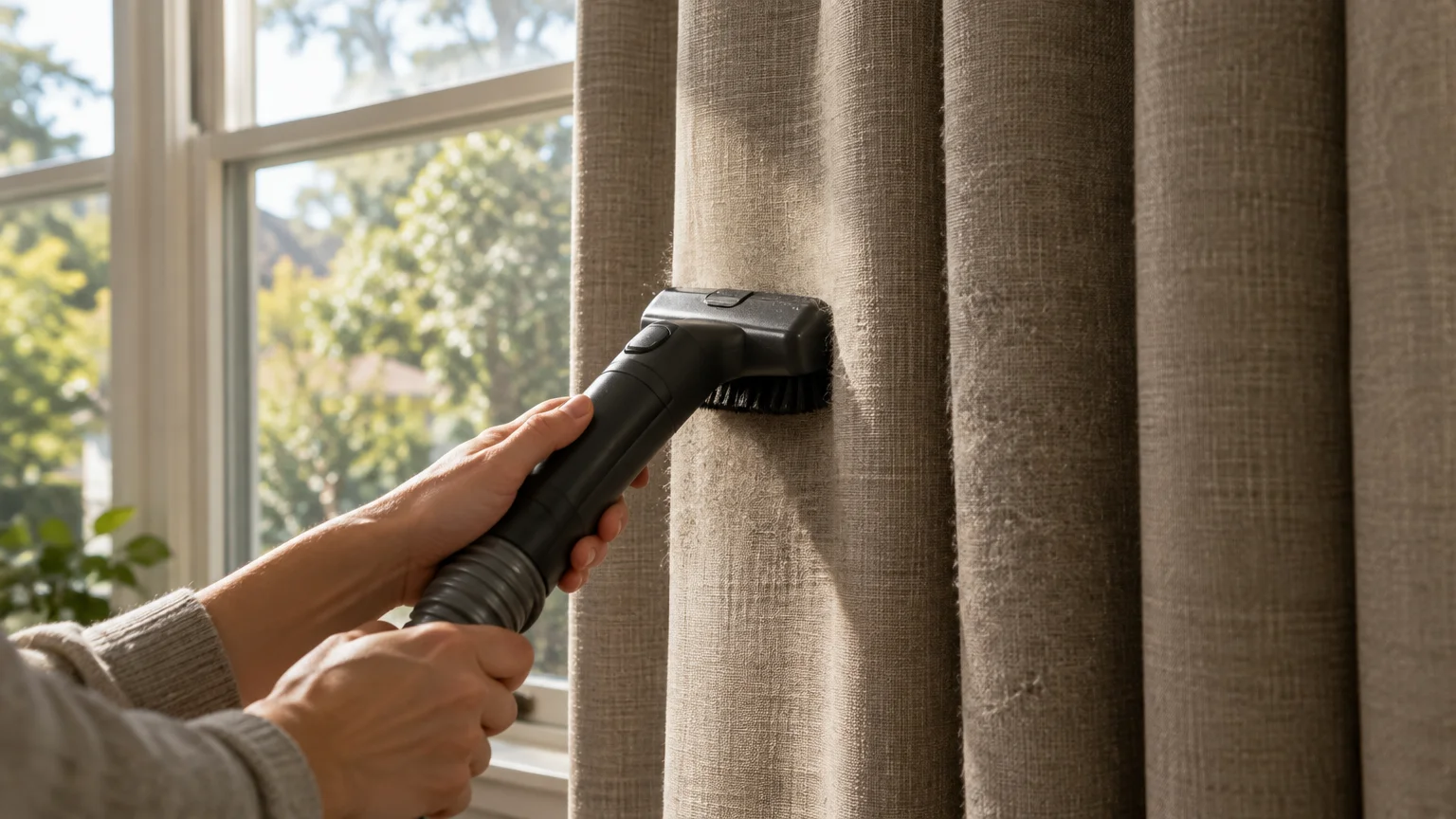
For dry-clean-only drapes, vacuum them monthly with an upholstery brush attachment, working deliberately from top to bottom.
04 Wall-to-Wall Carpeting and Thick Area Rugs
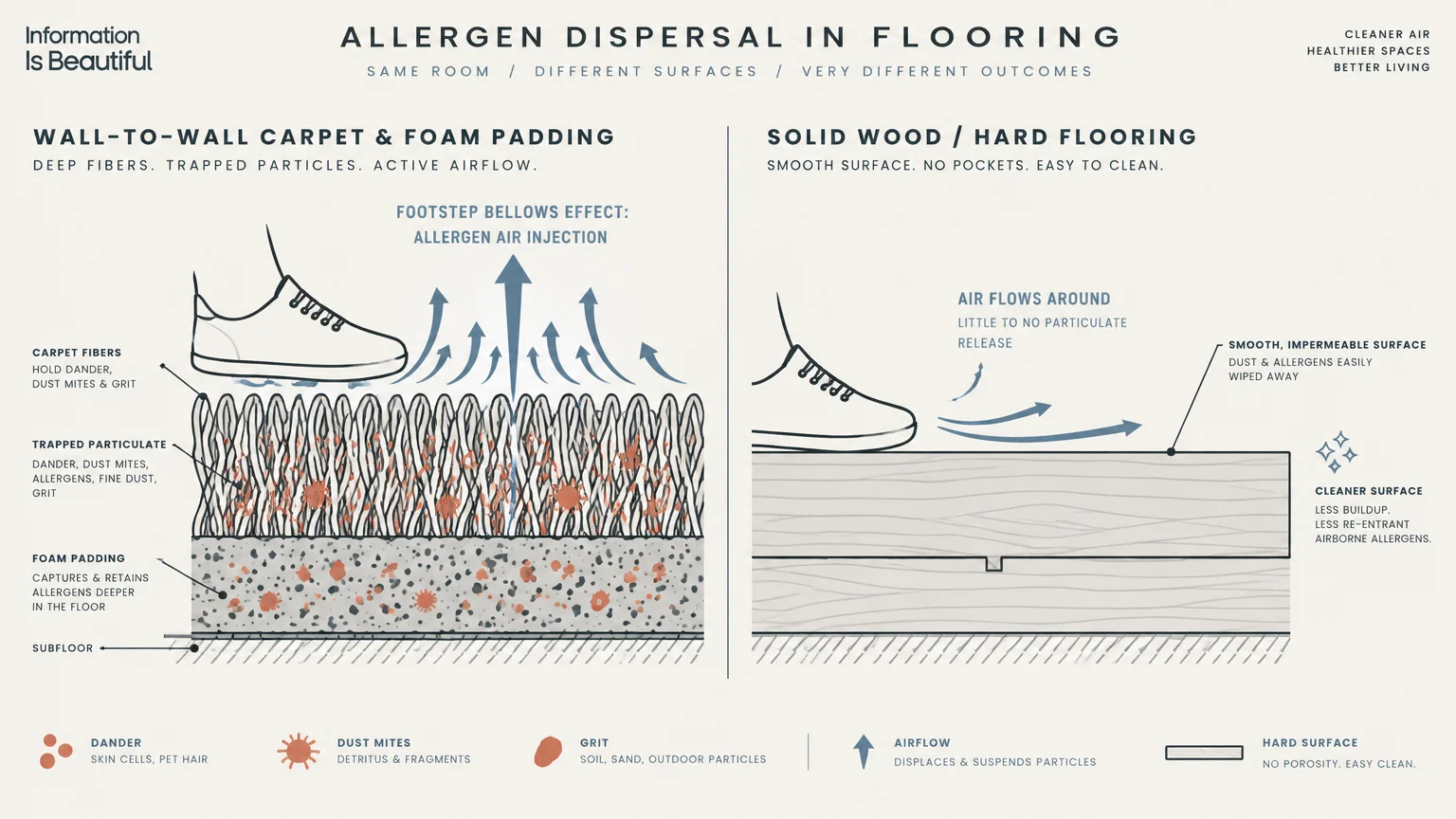
Carpeting harbors dramatically more biological particulate matter than solid flooring. Dense piles and foam padding trap animal dander, outdoor grit tracked on shoes, and deep colonies of dust mites.
Normal foot traffic acts like a bellows, pumping settled allergens straight up into your breathing zone with every step. Guidance from the Mayo Clinic on allergy-proofing urges sleepers to eliminate bedroom carpets whenever possible.
Choose smooth wood, engineered vinyl plank, or tile flooring to reduce indoor allergen reservoirs. Smooth hard surfaces allow you to sweep or damp-mop away settled dander without churning fine dust into the air.
If you keep carpet, vacuum twice weekly with a sealed HEPA machine. Avoid aggressive steam cleaning that leaves backing pads damp for longer than twenty-four hours.
05 Bed Skirts and Decorative Throws
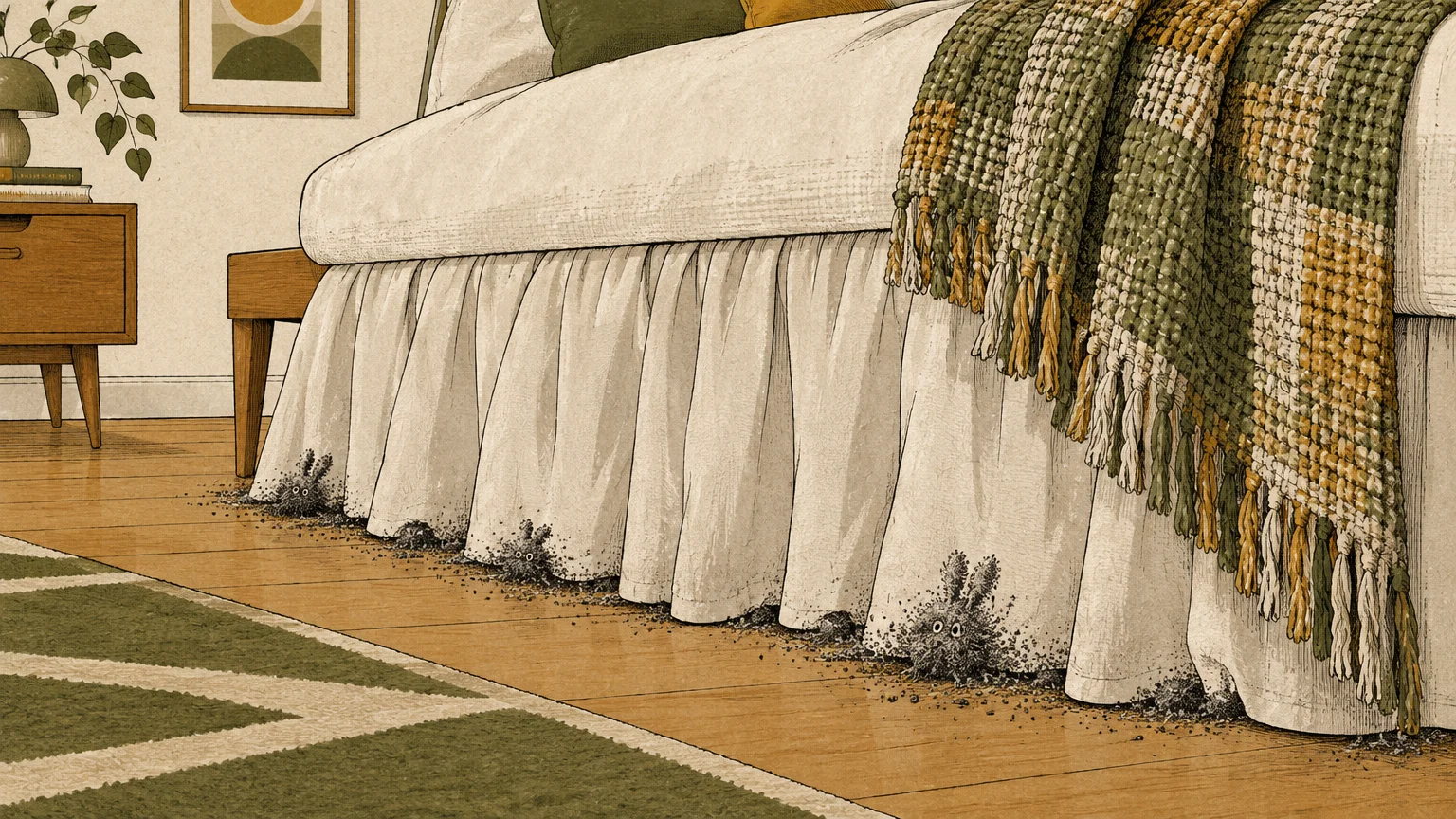
Bed skirts hang directly in the stagnant airflow boundary along the floor, gathering falling dust, pet hair, and lint. Because homeowners rarely launder dust ruffles, these fabrics concentrate irritants right alongside the mattress.
Chunky knitted throws and decorative shams create similar cleaning bottlenecks. These decorative accents sit on top of your sheets during the day, collecting circulating airborne particles that transfer to your face at night.
Ditch traditional gathered bed skirts in favor of sleek box-spring wraps made from wipeable microfiber or faux leather. Keep decorative accent pillows to an absolute minimum to cut down on unnecessary laundry.
If you choose to use decorative blankets, launder them every two weeks alongside your primary bed linens in hot water.
06 Ceiling Fan Blades and Overhead Fixtures
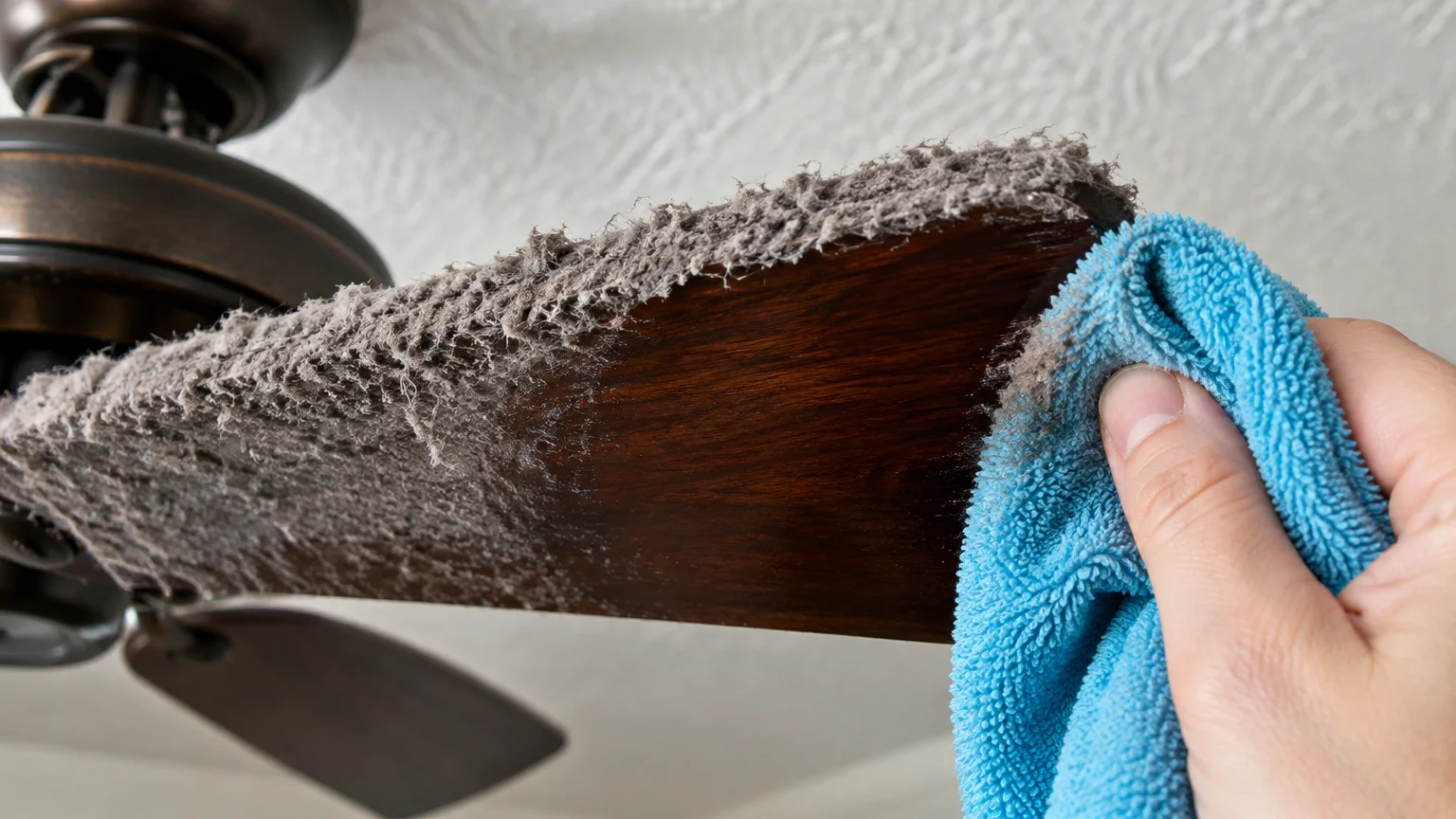
Ceiling fan blades build a static charge as they slice through room air, attracting floating lint, pet fur, and dander. A thick, sticky ridge of dust inevitably develops along the leading edge of each blade.
When you turn the fan on, blade rotation flings concentrated dust chunks across the bedroom. This dispersed debris settles directly across your clean sheets and pillows while you sleep underneath.
Clean fan blades monthly using an old pillowcase. Slide the pillowcase over each blade, press firmly, and draw it backward so all falling grime remains trapped safely inside the fabric sack.
Wipe ceiling light globes and hanging pendant fixtures with a damp microfiber cloth at the same time to prevent static dust showers.
07 Upholstered Headboards and Padded Benches
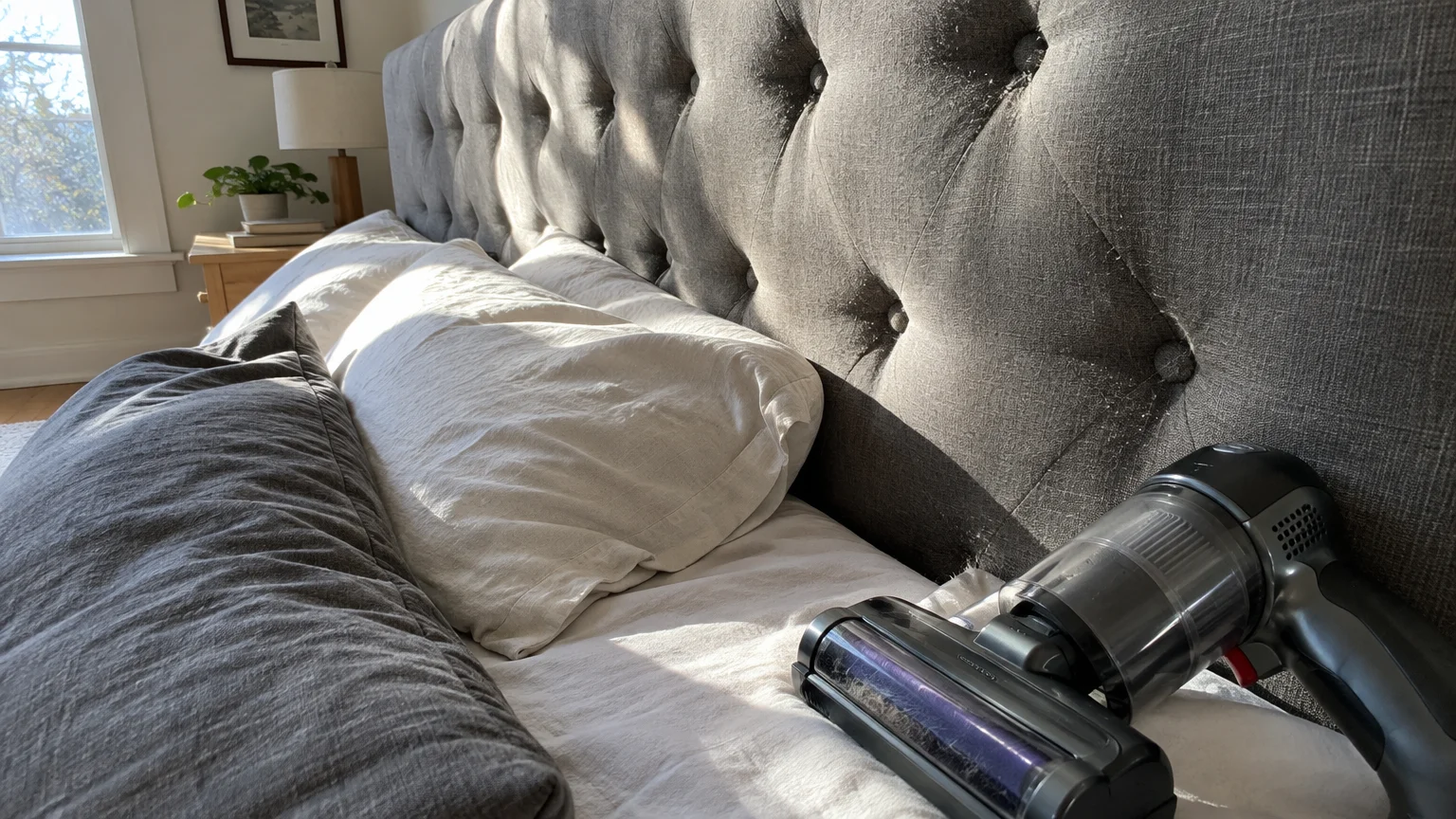
Padded fabric headboards provide cozy aesthetic appeal, but their thick foam padding serves as an absorbent sponge for human oils and dander. The warmth from your head and exhaled moisture create an ideal setting for dust mites.
Sitting against an upholstered headboard crushes these trapped particles, releasing allergen clouds inches from your nose. Padded end-of-bed benches collect identical concentrations of shedding skin cells and settling household dust.
Vacuum upholstered headboards biweekly using your vacuum’s handheld upholstery tool. Apply steady, overlapping strokes across the tufting and seams where dust naturally gathers.
When redecorating, select solid wood, powder-coated metal, or smooth leather frames that you can wipe down with a damp cloth in seconds.

08 Stuffed Animals and Plush Toys
Stuffed toys and novelty plush cushions harbor the exact same allergen profiles as bed pillows. Synthetic fur and fibrous polyester stuffing trap saliva, dander, and shed skin cells, turning cherished toys into hidden dust mite habitats.
Children who sleep with plush toys pull these allergen-dense objects directly against their faces for hours. This prolonged contact often exacerbates nighttime coughing, nasal congestion, and childhood eczema flare-ups.
Wash machine-safe stuffed animals every two weeks in hot water. For delicate vintage toys or plushies that cannot survive hot wash cycles, place them in a sealed plastic bag inside your freezer for twenty-four hours.
Freezing temperatures kill active dust mites effectively without subjecting delicate stitching or plastic eyes to washing machine agitation.
09 Under-Bed Storage Boxes and Clutter
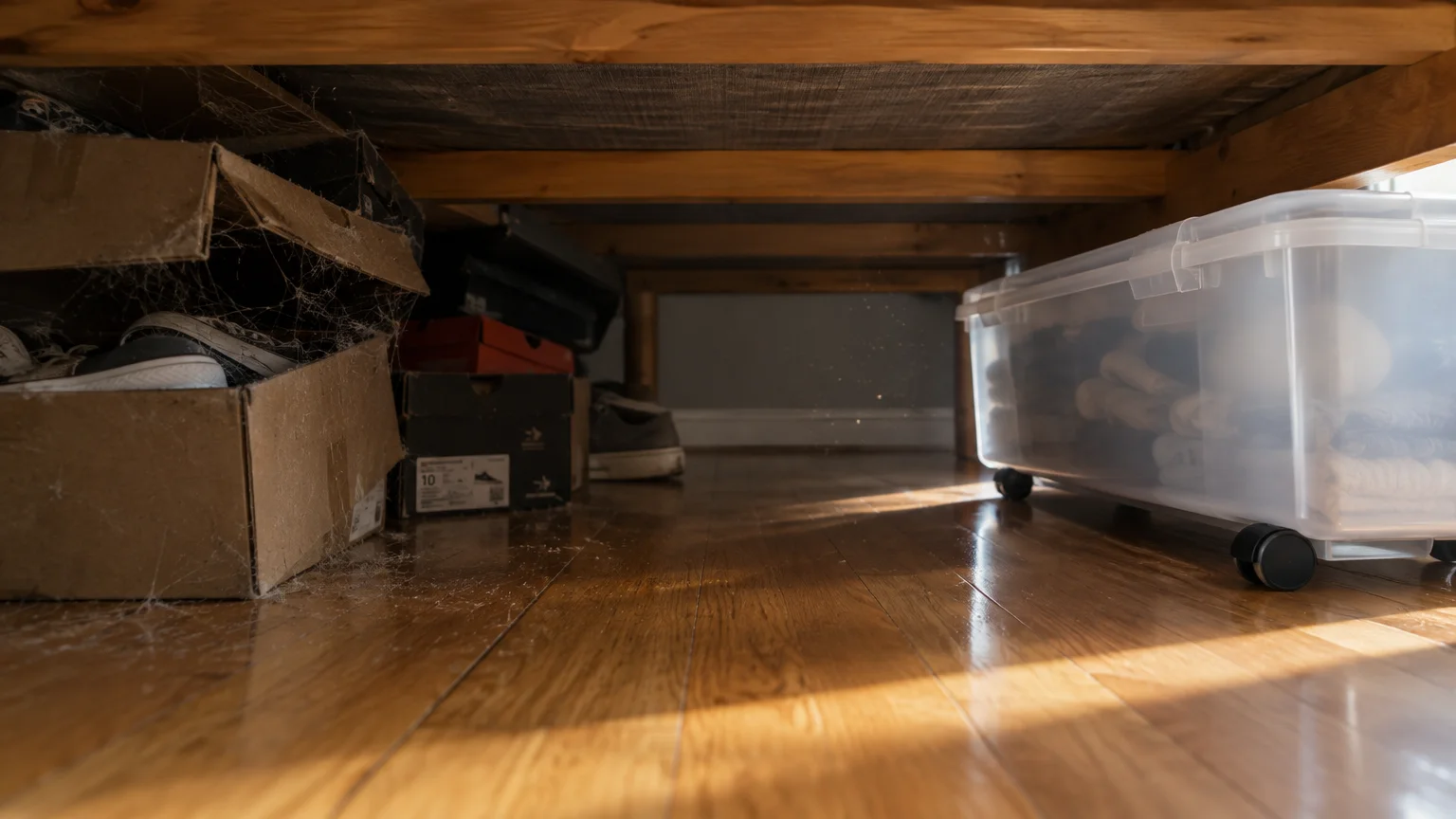
The narrow space beneath a bed frame experiences minimal airflow, allowing dust bunnies and pet hair to accumulate rapidly. Storing cardboard boxes under your bed compounds the danger because porous corrugated cardboard absorbs room humidity.
Damp cardboard provides an ideal breeding environment for mold spores and silverfish. Pulling rough boxes out from under your mattress churns settled dust clumps into the air, spreading particles across the bedroom.
Replace cardboard boxes with smooth, rigid plastic storage containers equipped with secure rubber gaskets. These tight seals prevent fine dust from invading your stored off-season clothing, linens, or shoes.
Keep the under-bed zone completely clear whenever possible. An empty under-bed area allows effortless weekly vacuuming and promotes healthy air circulation beneath the mattress foundation.
10 Window Sills, Frames, and Horizontal Blinds
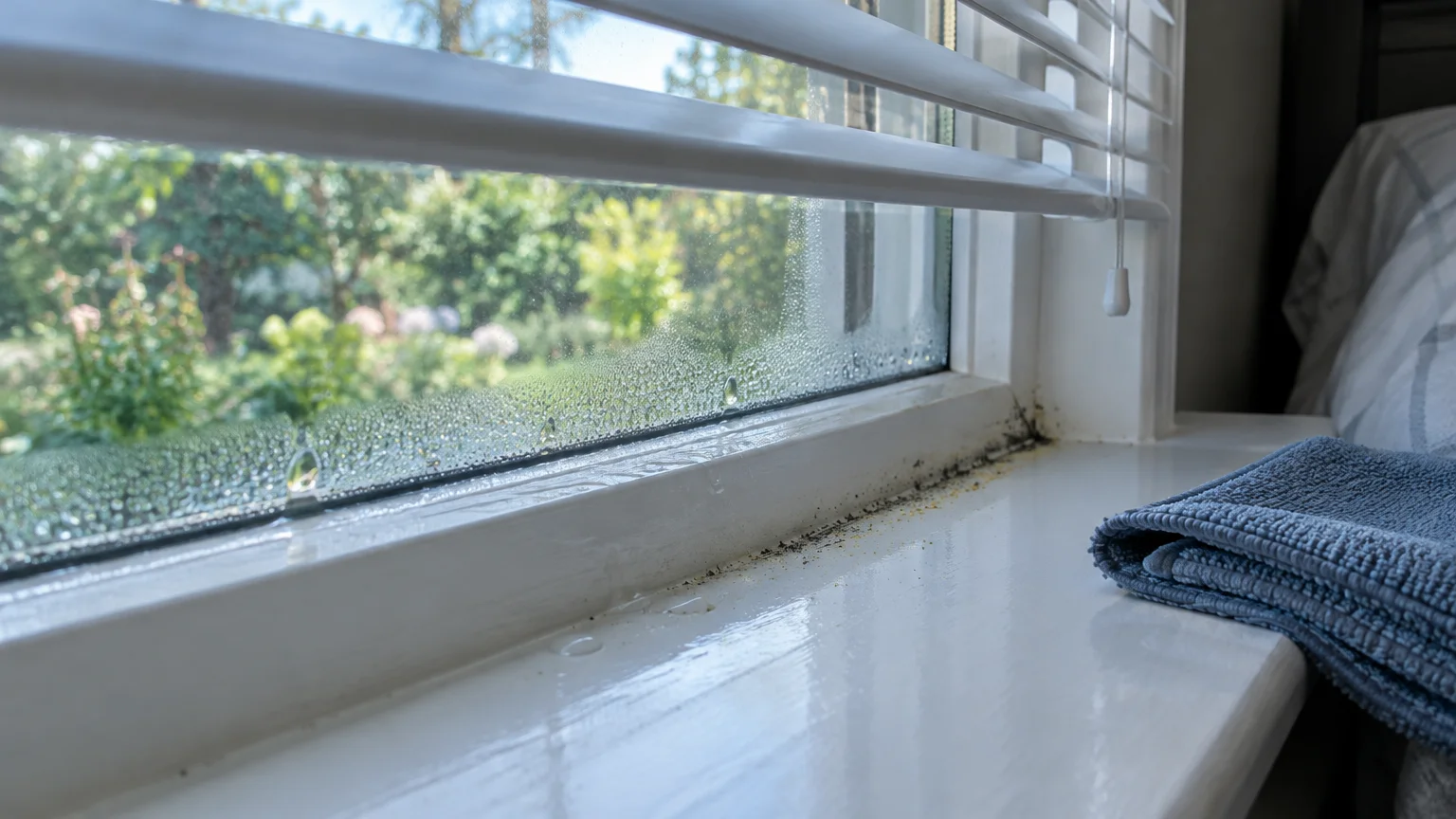
Window sills connect your indoor living area with the outdoors. Cool outdoor temperatures cause condensation to gather on window glass during cold months, leaving moisture pools that support black mold along the sashes.
According to the EPA guidelines on household moisture, damp window materials quickly foster mold colonies that irritate lungs and sinuses.
Horizontal Venetian blinds feature dozens of flat slats that collect incoming pollen and domestic dust. Dusting blinds with dry feather dusters simply knocks irritants into the room rather than trapping them.
Wipe window sills and blind slats weekly with a damp microfiber cloth soaked in warm, soapy water. Inspect caulking regularly to catch window leaks before hidden rot creates indoor mold spores.
11 Heating Vents, Return Grilles, and Space Heaters
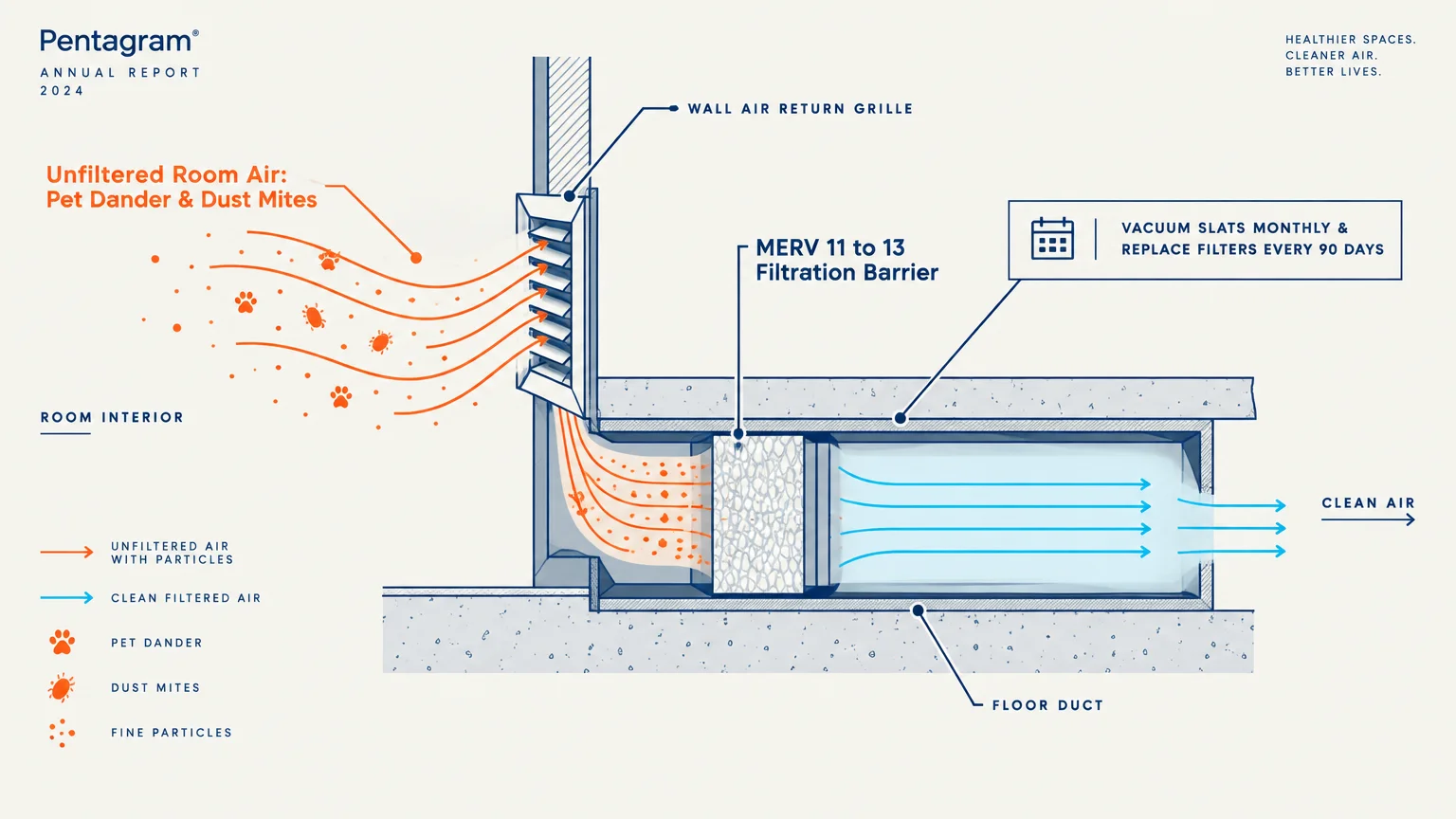
Central heating vents and wall return grilles act as distribution hubs for household allergens. As your HVAC blower kicks on, high-speed airflow picks up debris resting on vent louvers and blows it straight toward your bed.
Portable ceramic space heaters and window air conditioners also collect pet dander and lint across their internal coils. When activated, these appliances scorch trapped dust or spew damp mold spores into the room.
Vacuum supply and return grilles monthly using a narrow crevice tool to clear lint build-up. Wipe down the exterior louvers with a damp rag to catch greasy dust film.
Install high-efficiency furnace filters rated MERV 11 to 13 in your central HVAC system. Replace these filters every sixty to ninety days to keep airborne particulate counts low.
12 Pet Beds and Resting Blankets
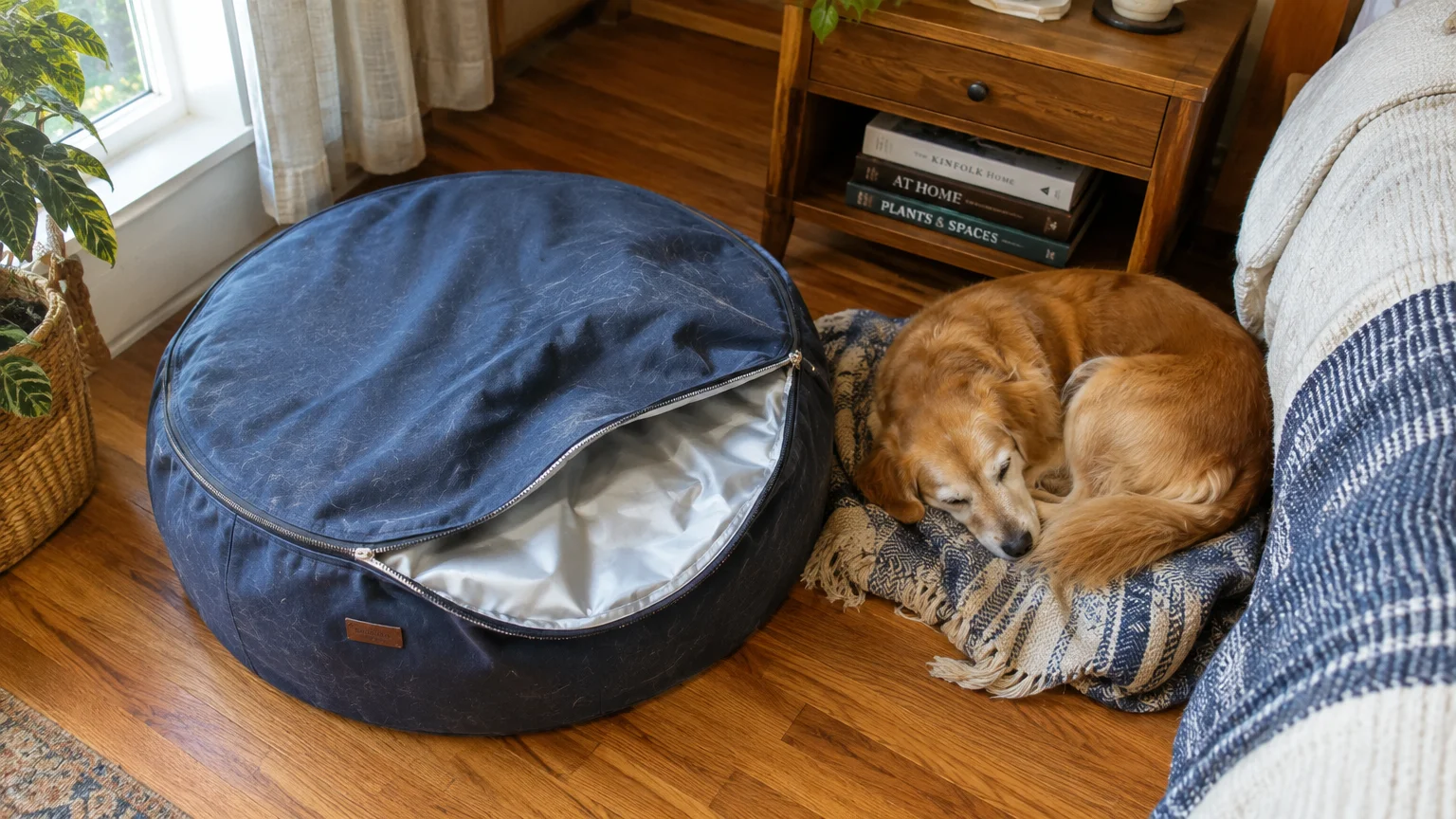
Sharing your bedroom with dogs or cats introduces significant biological allergens. Pet bedding collects concentrated dander, shed fur, dried saliva proteins, and outdoor weed pollen picked up on your pet’s coat.
Research from the American Academy of Allergy, Asthma & Immunology confirms that pet dander remains airborne for hours because of its microscopic, lightweight shape.
Placing a dog or cat cushion right beside your nightstand keeps those volatile irritants next to your head all night. Every time your pet circles or scratches, fresh dander plumes rise into your breathing path.
Position pet beds across the room away from your headboard. Choose pet beds featuring removable, machine-washable covers, and launder them weekly on high heat to strip out oils and dander.

Bedroom Allergen Checklist and Maintenance Schedule
Managing an allergy-free space does not require scrubbing every surface daily. Follow this prioritized schedule to keep dust mites in bedroom furniture and common allergy triggers at home under strict control.
| Bedroom Item | Primary Allergen | Cleaning Action | Recommended Frequency |
|---|---|---|---|
| Mattress | Dust mites, skin flakes | Encase in zippered barrier; vacuum surface | Encase once; vacuum quarterly |
| Pillows & Cases | Mites, saliva, fungi | Wash cases in 130°F water; wash covers | Weekly for cases; monthly for covers |
| Window Blinds & Sills | Pollen, condensation mold | Wipe down with damp microfiber towel | Weekly |
| Ceiling Fan Blades | Static dust, pet dander | Slide pillowcase along blades to wipe | Monthly |
| Floor Carpeting | Deep-seated dander, dust | Vacuum slowly using a sealed HEPA unit | Twice weekly |
| Pet Bedding | Animal dander, outdoor grit | Launder removable covers on high heat | Weekly |
| Under-Bed Area | Dust bunnies, lint accumulation | Clear clutter; vacuum or damp-mop | Biweekly |
Following a structured schedule keeps tasks manageable and prevents dust from accumulating to symptom-triggering levels. Focus on bedding first because proximity to your airway makes clean sheets your most effective defense.
A 4-Step Routine to Clean Your Bedroom for Allergies
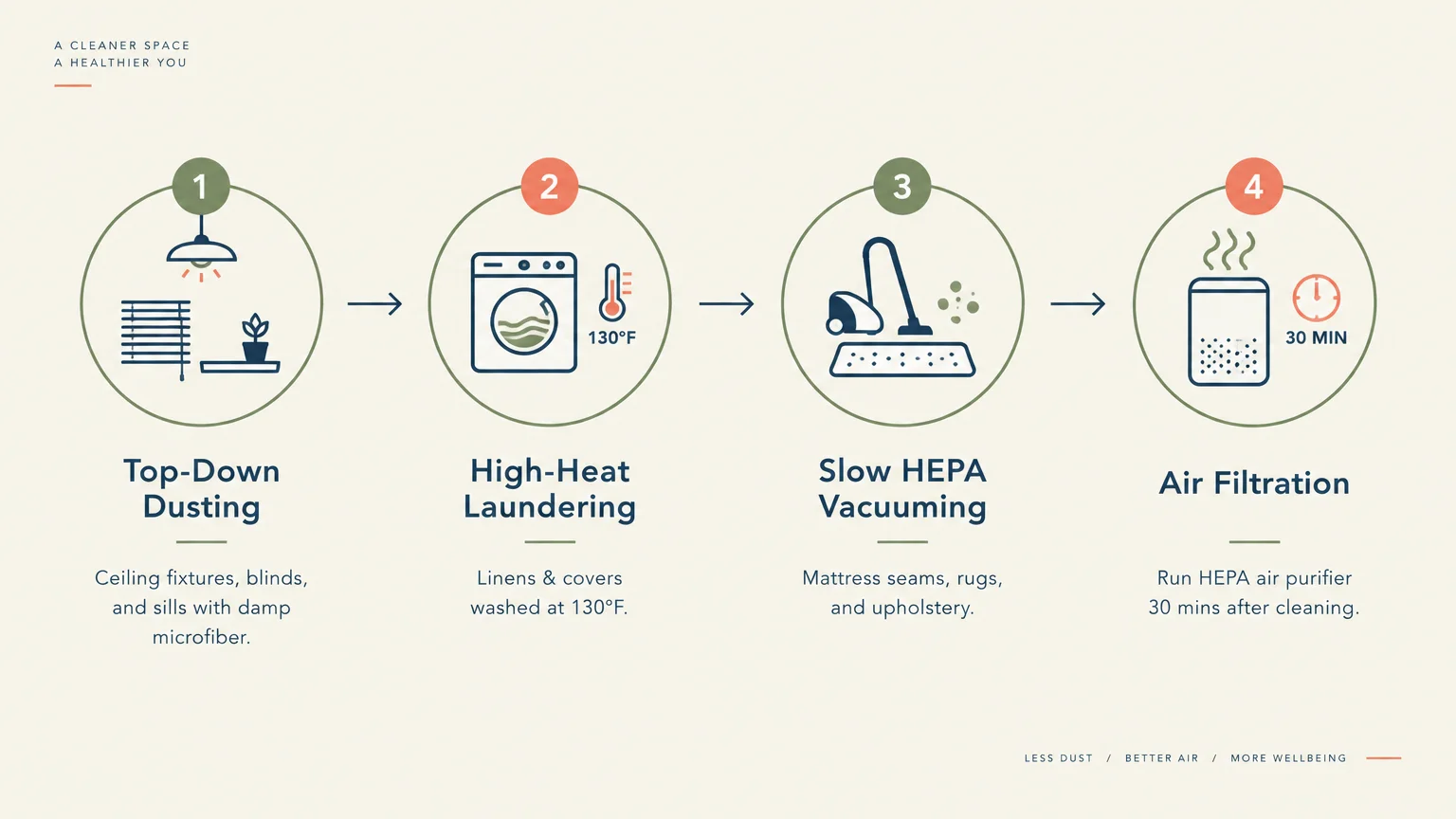
Cleaning an allergy-prone room requires a deliberate sequence to avoid redistributing settled dust into your breathing air. Use this proven four-step system to clean your bedroom for allergies efficiently.
Step 1: Strip and Contain Bedding
Strip pillowcases, flat sheets, and duvet covers before touching any other surface. Roll bedding inward toward the center to contain loose dander instead of shaking particles into the room.
Carry the bundled bedding straight to the washing machine in a laundry basket. Wash all fabrics at 130 degrees Fahrenheit to kill dust mites and denature protein allergens thoroughly.
Step 2: Dust from Ceiling to Baseboards
Always dust from the highest fixtures down to the flooring so falling debris lands on surfaces you have yet to clean. Begin with ceiling fan blades, curtain rods, and upper window molding.
Never use dry dusters or feather wands, which launch fine dust particles into the air. Instead, wipe every surface with a slightly damp microfiber towel that traps and holds particulate matter.
Step 3: Disinfect Sills and Hard Furnishings
Wipe down bedside tables, drawer pulls, and window sills using a warm water solution with mild dish soap. This removes greasy finger oils that bind airborne pollen to furniture finishes.
Dry window sills completely with a fresh cloth to eliminate standing moisture. Leaving damp patches behind invites mold colonies to sprout along wood or vinyl frames.
Step 4: Vacuum Thoroughly with a HEPA Filter
Vacuum floors, area rugs, and baseboards with a certified HEPA vacuum cleaner. Move slowly in overlapping lines to give the machine’s suction time to extract deeply embedded debris.
Pay extra attention to corners, the area behind doors, and the floor directly beneath the bedframe. Finish by damp-mopping hard floors to collect any ultrafine dust that survived vacuuming.
Optimizing Room Airflow and Humidity
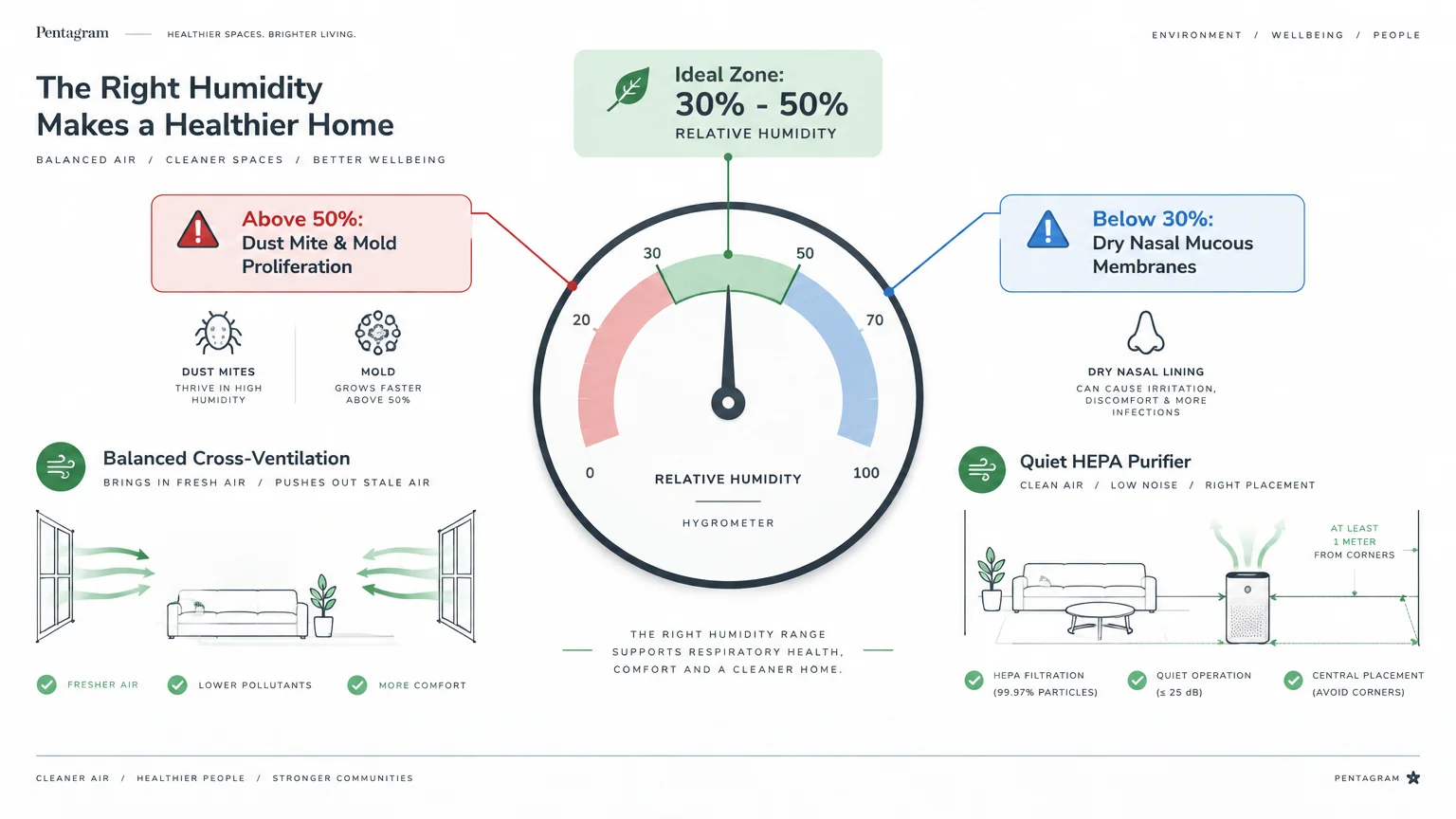
Cleaning physical items addresses current allergen accumulation, but adjusting room climate stops allergens from reproducing. Controlling ambient humidity and air filtration creates an inhospitable environment for biological pests.
Dust mites cannot drink water directly; they absorb humidity from ambient air to survive. Keeping relative humidity between 30 and 50 percent dehydrates dust mites and halts mold spore development.
Set up a small digital hygrometer on your nightstand to track room moisture levels throughout the year. If humidity climbs above 50 percent, run a compact bedroom dehumidifier to protect your fabrics.
Incorporate a standalone HEPA air purifier sized for your bedroom square footage. Run the unit continuously to filter floating pollen, pet dander, and mold spores out of your sleeping space.
Position the air purifier three to six feet away from your headboard with unobstructed intake grilles. This placement creates a clean air envelope around your bed while you rest.
Daily Habits for an Allergy-Proof Bedroom
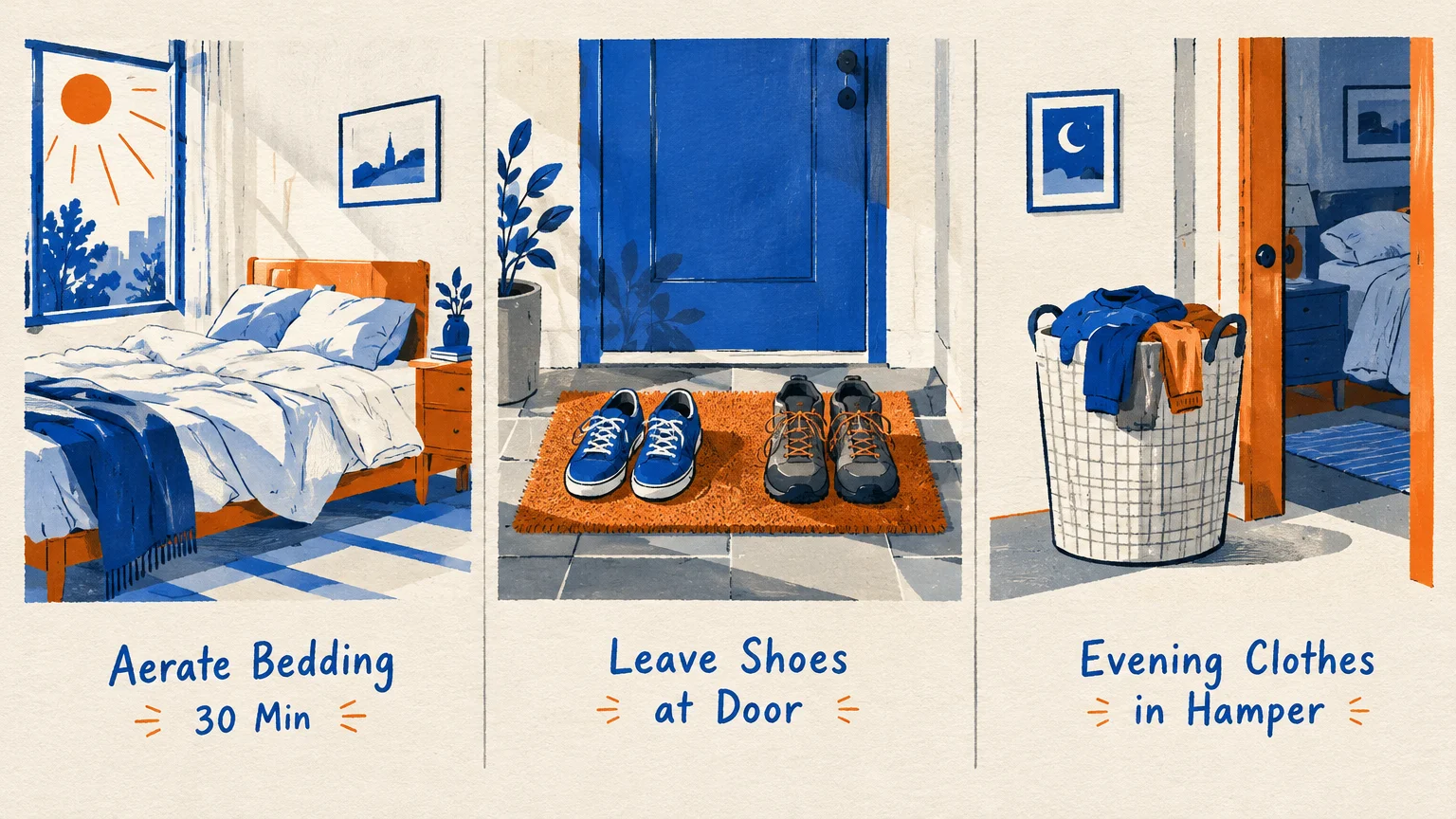
Sustaining an allergy-proof bedroom requires minimal daily effort once you establish smart protective habits. A few low-effort routines prevent outdoor allergens from penetrating your quiet sleeping sanctuary.
Never place outdoor clothing or coats onto your bedspread after returning from outside. Outdoor clothes act as magnets for grass pollen, tree pollen, and street particulate matter.
Change into fresh indoor clothes in your closet or bathroom before relaxing in bed. This simple barrier prevents day-to-day pollen transfer to your clean sheets.
Leave your bed unmade for twenty to thirty minutes each morning after climbing out. Pulling covers back exposes the sheets to dry room air, evaporating trapped sweat before dust mites can feed.
Your Immediate Action Step
Transforming your bedroom into an allergen-free sanctuary does not require discarding all your furnishings today. Focus your energy first on the items touching your airways tonight.
Strip your pillows, pillowcases, and sheets right now and wash them in a hot cycle. Installing zippered, allergen-impermeable pillow and mattress covers this weekend will immediately upgrade your nighttime breathing and sleep quality.