You can eliminate stubborn household odors without releasing synthetic phthalates, artificial musks, or aerosol propellants into your living spaces. Formulating natural air fresheners at home gives you full control over indoor air quality while deploying proven odor-neutralizing compounds.
Commercial room sprays frequently rely on synthetic perfumes that merely mask foul odors and settle onto upholstery as sticky residues. These synthetic compounds can also trigger asthma flare-ups and mucous membrane irritation in sensitive family members.
These twelve professional-grade recipes use kitchen chemistry, botanical extracts, and mineral adsorbents to clear stale air and make your home smell good.
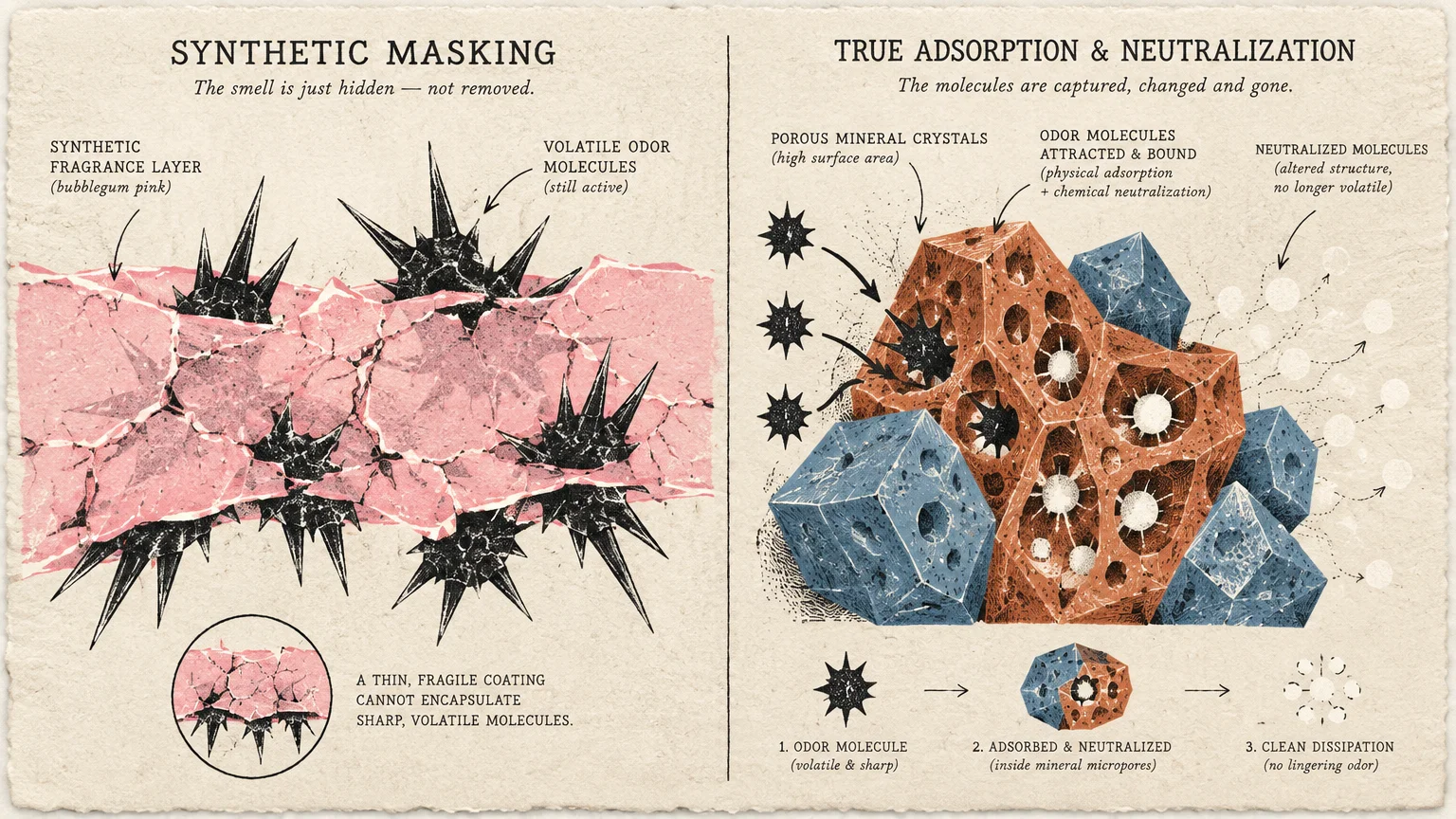
The Science of Natural Odor Elimination vs. Masking
Commercial aerosol fresheners rarely eliminate malodor molecules; they deaden your olfactory receptors or drown the smell in heavier synthetic compounds. True odor management requires either chemical neutralization or physical adsorption.
Adsorption occurs when porous minerals attract volatile organic compounds (VOCs) to their surface through microscopic electrical charges. Chemical neutralization changes the pH of airborne compounds, rendering foul-smelling acidic or alkaline gases odorless.
The EPA highlights volatile organic compounds as major contributors to indoor air pollution. Transitioning to homemade air freshener solutions protects your respiratory tract while creating a genuinely chemical free home.
12 Commercial-Grade DIY Air Freshener Formulas
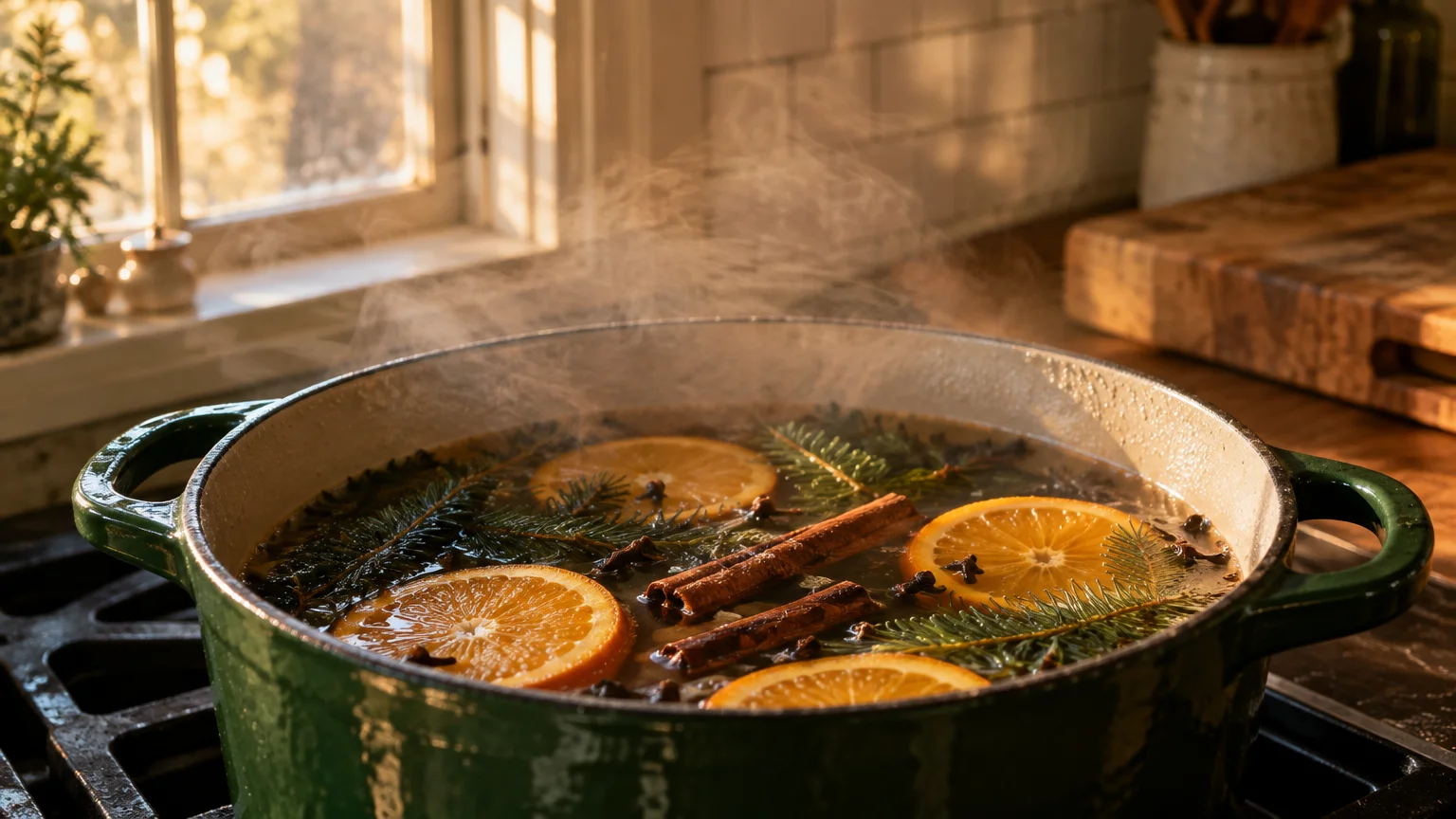
1. Stovetop Simmer Pot with Citrus and Conifers
Stovetop potpourri functions as an active evaporative diffuser and whole-house humidifier. Convective steam lifts volatile botanical terpenes, dispersing them across broad floor plans without chemical solvents.
- 2 fresh organic orange peels
- 3 fresh rosemary sprigs or spruce needles
- 2 whole cinnamon sticks
- 1 tablespoon whole cloves
- 4 cups filtered water
- Place all botanical ingredients into a non-reactive stainless steel or enameled Dutch oven.
- Cover the ingredients with four cups of filtered water.
- Bring the water to a rolling boil over medium-high heat, then reduce the flame to your lowest simmer setting.
- Replenish the evaporated water every forty-five minutes to prevent scorch marks.
Never leave a simmering pan unattended on a gas burner; switch to a small electric slow cooker set to low for continuous unattended diffusion.
2. Active Sodium Bicarbonate Dry Scent Jar
Sodium bicarbonate is an amphoteric buffer that chemically neutralizes acidic volatile organic compounds and basic nitrogenous amines. This dry jar continuously scrubs ambient air while radiating mild botanical aromatics.
- 1/2 cup food-grade sodium bicarbonate (baking soda)
- 15 drops pure steam-distilled essential oil (such as sweet orange or cedarwood)
- 4-ounce wide-mouth glass mason jar
- Breathable natural linen swatch or perforated metal lid insert
- Pour the baking soda into your wide-mouth glass jar.
- Distribute the essential oil drops evenly across the dry powder.
- Stir vigorously with a stainless steel fork until the oil blends completely into the powder without leaving clumps.
- Secure the breathable linen swatch beneath the metal jar ring to permit passive air exchange.
Agitate the jar gently once a week to expose fresh, unreacted bicarbonate crystals to the surrounding room air.
3. High-Proof Ethanol Fine-Mist Room Atomizer
Water-only room sprays fail because essential oils do not dissolve in water; they separate and clog spray mechanisms. High-proof clear grain alcohol acts as an effective solvent, reducing surface tension for flash evaporation.
- 2 ounces 120-proof or higher clear grain alcohol (or 70% unflavored vodka)
- 2 ounces distilled water
- 25 drops pure therapeutic essential oil (such as lavender or bergamot)
- 4-ounce amber glass fine-mist spray bottle
- Pour the high-proof alcohol directly into your glass spray bottle.
- Add your selected essential oil drops and swirl the bottle for thirty seconds to dissolve the oil completely.
- Add the distilled water to the mixture and attach the atomizer pump securely.
- Shake briefly before each misting cycle to ensure uniform droplet suspension.
Direct fine mists toward central room areas; avoid spraying directly onto unfinished wood or shellac finishes, as ethanol softens alcohol-based coatings.
4. Virgin Coconut Shell Activated Charcoal Pouches
Activated carbon operates via deep capillary adsorption, pulling gaseous odors into internal pores through van der Waals forces. This fragrance-free method removes pet odors, cooking grease smells, and musty closet air without introducing any scents.
- 1 cup virgin coconut-shell granular activated carbon (GAC)
- Breathable microporous natural linen or cotton muslin drawstring bags
- Transfer one cup of granular carbon into your muslin drawstring pouch using a dry funnel.
- Cinch the drawstring tightly and tie an overhand knot to secure the fine granules inside.
- Place the filled pouch near stubborn odor sources, such as inside footwear, near litter boxes, or in enclosed closets.
Recharge your activated carbon bags once a month by placing them under direct outdoor sunlight for three hours to desorb trapped VOCs.
5. Low-Viscosity Capillary Reed Diffuser
Commercial reed diffusers rely on synthetic dipropylene glycol to draw fragrance through reeds. You can achieve identical capillary siphon action using low-viscosity fractionated coconut oil blended with volatile botanicals.
- 1/4 cup fractionated coconut oil (MCT carrier oil)
- 1 tablespoon high-proof rubbing alcohol (91%) or high-proof vodka
- 30 drops concentrated pure essential oil (such as eucalyptus or lemongrass)
- Narrow-neck glass bottle (5 to 8 ounces)
- 6 to 8 untreated natural rattan diffuser reeds
- Pour the fractionated coconut oil and the alcohol into your narrow-neck glass vessel.
- Add your essential oils and swirl the container thoroughly to combine the fluids.
- Insert the natural rattan reeds into the liquid, spreading them fan-style.
- Allow the reeds to absorb fluid for two hours, then invert them to initiate immediate top-down diffusion.
Invert the reeds once every seven days; replace the rattan reeds every three months when their internal cellulose channels become clogged with dust.
6. Mold-Resistant Solid Gelatin Freshener Disk
Solid gel air fresheners provide thirty days of continuous passive fragrance without requiring heat or electricity. Adding concentrated sodium chloride prevents airborne mold spores from germinating on the nutrient-rich protein base.
- 2 envelopes unflavored powdered gelatin
- 1 cup filtered water, divided
- 1 tablespoon coarse sea salt or non-iodized table salt
- 25 drops pure essential oil
- 4-ounce heat-resistant glass ramekin or mason jar
- Bring half a cup of water to a boil in a small stainless steel saucepan.
- Whisk the gelatin powder into the boiling water until every granule dissolves completely.
- Stir in the salt until dissolved, then add the remaining half-cup of cold water.
- Remove the pan from the heat, blend in your essential oils, and pour the mixture into your glass jars.
- Refrigerate the jars for three hours until the gel sets firm before placing them in your living areas.
Discard and replace the gel disk after thirty to forty days, or whenever the gel core visibly dehydrates and shrinks.
7. Whole Clove and Citrus Botanical Pomander
Whole-clove pomanders have protected homes from stagnant air and insects since medieval times. Eugenol within clove buds acts as a natural antimicrobial preservative, dehydrating the fruit rind while continuously releasing spicy terpenes.
- 1 firm, thick-skinned Seville or Navel orange
- 1/2 cup whole cloves with intact heads
- 1 wooden toothpick or clean skewer
- 1 tablespoon ground cinnamon combined with 1 teaspoon orris root powder (optional fixative)
- Pierce shallow pilot holes across the orange surface using your toothpick.
- Press whole cloves firmly into each hole, clustering them tightly together until the rind is covered.
- Roll the studded orange in the cinnamon and orris root blend inside a paper bag.
- Let the pomander cure in a cool, dark, well-ventilated spot for two weeks until lightweight and firm.
Once dried, display your pomanders in open ceramic bowls; they will emit subtle warm aromatics for up to a full calendar year.
8. Adsorbent Baking Soda and Botanical Carpet Deodorizer
Carpets trap atmospheric odors, oily sebum, and animal dander deep inside their woven backing. This dry compound neutralizes deep odors on contact, releasing crushed herbal aromas when agitated by a vacuum brush roller.
- 1 cup food-grade sodium bicarbonate
- 1/2 cup organic non-GMO cornstarch
- 2 tablespoons finely crushed dried lavender buds or dried rosemary needles
- 10 drops frankincense or cedarwood essential oil
- Combine the baking soda and cornstarch in a clean stainless steel mixing bowl.
- Add your essential oil drops and whisk vigorously to distribute the moisture evenly throughout the powder.
- Fold in the crushed dried botanicals until uniformly distributed.
- Transfer the dry blend into an airtight shaker container or repurposed parmesan cheese dispenser.
Dust your carpet lightly, let the powder sit for twenty minutes to draw out odors, then clean thoroughly with a HEPA-filter vacuum.
9. Dehydrated Spent Coffee Ground Nitrogen Trap
Coffee grounds contain substantial residual carbon and nitrogen, making them exceptional natural traps for sulfurous gas compounds. This fragrance-free method works well for damp pantries, utility rooms, and refrigerators.
- 2 cups spent, brewed coffee grounds (medium or dark roast)
- Baking sheet lined with unbleached parchment paper
- Wide-rim shallow ceramic ramekin
- Spread your wet coffee grounds into a thin, even layer across your parchment-lined baking sheet.
- Bake the grounds at 200 degrees Fahrenheit for sixty minutes, stirring occasionally until completely dry.
- Cool the grounds completely to room temperature.
- Transfer the dry grounds into an open ceramic dish and set it near your primary odor source.
Ensure the grounds are bone-dry before placing them around your home, as residual moisture can encourage mold growth within damp closets.
10. Aromatic Cedar and Herb Wardrobe Sachet
Natural cedarwood contains natural cedrol, an aromatic alcohol that repels textile pests while neutralizing enclosed fabric odors. Combining cedar with dried culinary herbs creates a sophisticated woodland aroma inside enclosed drawers.
- 1 cup natural, untreated Eastern red cedar shavings
- 1/4 cup dried culinary thyme
- 1/4 cup dried whole lavender flowers
- 3 small breathable cotton or linen drawstring pouches
- Blend the red cedar shavings, dried thyme, and lavender flowers inside a large dry bowl.
- Spoon equal portions of the herbal blend into each of your three fabric pouches.
- Cinch the drawstring cords tightly and secure each bag with a firm double knot.
- Place the sachets between stacked garments, inside linen closets, or over coat hanger hooks.
Squeeze the fabric pouches firmly every three months to rupture the wood fibers and refresh their natural scent oils.
11. Dilute Acetic Acid Deodorizing Spray
Distilled white vinegar contains roughly 5% acetic acid, which neutralizes airborne alkaline amines like tobacco smoke and fried fish odors. The sharp vinegar scent evaporates within thirty minutes, leaving the room completely odorless.
- 1/2 cup 5% distilled white vinegar
- 1 1/2 cups distilled water
- Rind of 1 fresh lemon (washed thoroughly)
- 16-ounce opaque spray bottle
- Place your fresh lemon rinds directly into your spray bottle.
- Pour the distilled white vinegar and distilled water into the container over the peels.
- Seal the spray bottle tightly and let it infuse in a dark cabinet for forty-eight hours.
- Spray the mist upward into rooms suffering from heavy food or ambient smoke odors.
Avoid misting this mixture near natural stone surfaces like marble, travertine, or limestone, as acidic vinegar mist can etch calcite minerals.
12. Hardwood Slat Porous Vent Clip Diffuser
Untreated natural hardwoods absorb concentrated botanical oils into their vascular fibers, releasing them when warm air passes across the surface. This passive clip works without propellants or synthetic plastic carriers.
- 2 natural, untreated wooden spring clothespins (birch or beech)
- 6 drops pure steam-distilled essential oil (such as peppermint or pine)
- Lay your clean wooden clothespins flat on a non-porous ceramic work plate.
- Apply three drops of pure essential oil directly along the grain of each wooden leg.
- Allow the essential oils to absorb into the wood pores for ten minutes until the surface feels dry.
- Clip the wooden pins directly onto forced-air supply vents or automotive dashboard vent louvers.
Re-treat the wooden slats with fresh essential oil every two weeks to maintain continuous, gentle scent diffusion across your living space.
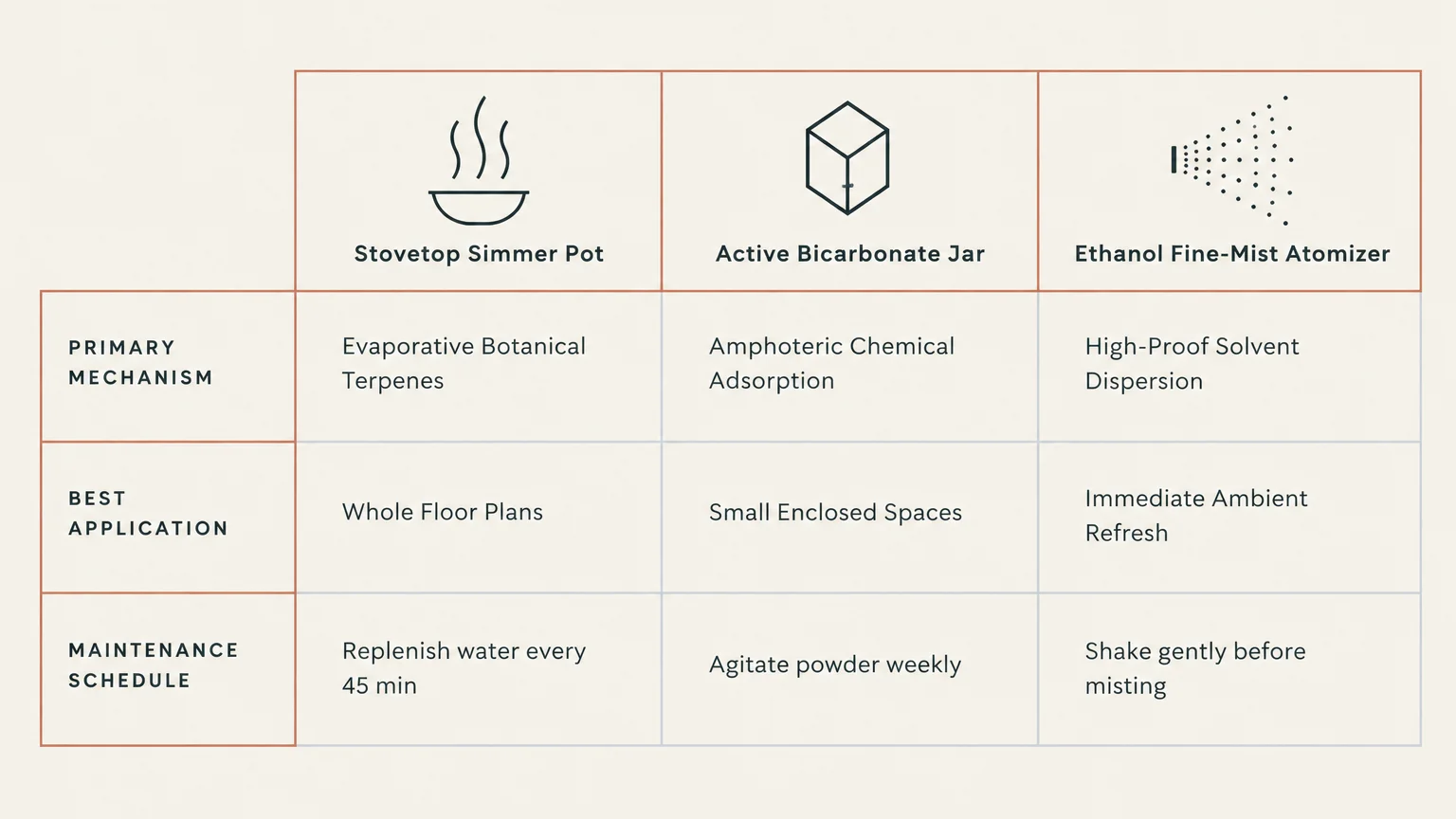
Natural Odor Control Methods Comparison
Different household spaces present distinct odor chemistries. Use this operational guide to select the most effective DIY air freshener for your specific room challenge.
| Air Freshener Type | Active Mechanism | Average Dwell / Lifespan | Best Household Placement |
|---|---|---|---|
| Stovetop Simmer Pot | Thermodynamic Steam Evaporation | 3 to 6 hours per batch | Kitchens, open-concept main levels |
| Baking Soda Scent Jar | Amphoteric pH Neutralization | 30 to 45 days | Bathrooms, laundry utility rooms |
| Ethanol Room Spray | Solvent Flash Evaporation | 1 to 2 hours per misting | Living rooms, guest entryways |
| Activated Charcoal Pouch | Deep Capillary Adsorption | 60 days (renewable in sun) | Shoe closets, litter box stations |
| Capillary Reed Diffuser | Cellular Capillary Action | 60 to 90 days | Bedrooms, home office spaces |
| Preserved Gelatin Disk | Desiccating Protein Matrix | 30 to 40 days | Powder rooms, mudrooms |
| Clove Citrus Pomander | Eugenol Desiccation | 6 to 12 months | Pantry shelves, linen armoires |
| Baking Soda Carpet Powder | Surface Adsorption & Mechanical Extraction | 20 minutes dwell before vacuuming | High-pile carpets, hallway rugs |
| Dry Spent Coffee Grounds | Sulfur & Nitrogen Chemisorption | 14 to 21 days | Inside refrigerators, trash cabinets |
| Cedar Herb Sachet | Passive Terpene Desorption | 90 to 180 days (with agitation) | Dresser drawers, storage bins |
| Dilute Acetic Acid Spray | Acid-Base Hydrolysis | Immediate atmospheric scrub | Kitchen cooking zones, dining areas |
| Hardwood Vent Clip | Convective Forced-Air Stripping | 10 to 14 days | HVAC supply grilles, vehicles |
Essential Safety and Surface Compatibility Protocols
Formulating chemical free home scents requires understanding the reactive properties of concentrated botanical oils and acidic solutions. Even natural compounds demand proper handling around family members, household pets, and delicate furniture finishes.
The American Lung Association warns against synthetic scents for indoor respiratory health. Natural air fresheners provide a safer alternative, provided you follow basic handling guidelines.
Pure essential oils contain potent active compounds that can damage fine domestic surfaces. Undiluted citrus and coniferous oils act as strong solvents that quickly strip polyurethane sealants, clear lacquer coats, and fine wood furniture varnishes.
Always mix your diy air freshener formulations over stainless steel, glazed ceramic, or glass prep surfaces. Wipe away stray oil droplets immediately with dry microfiber cloths to protect your countertops from staining or surface etching.
Pet safety is another vital consideration when working with concentrated plant oils. According to the ASPCA Animal Poison Control Center, several common essential oils are toxic to dogs and cats.
Avoid diffusing tea tree (Melaleuca), pennyroyal, eucalyptus, wintergreen, and citrus oils in enclosed rooms occupied by companion animals. Feline livers lack the glucuronyl transferase enzymes required to metabolize these volatile aromatic hydrocarbons safely.
Use passive, unscented odor sinks—like activated carbon pouches or unfragranced baking soda—in homes with cats, birds, or smaller exotic pets. Always maintain open interior doorways so animals can move to fresh air whenever you diffuse natural botanicals.
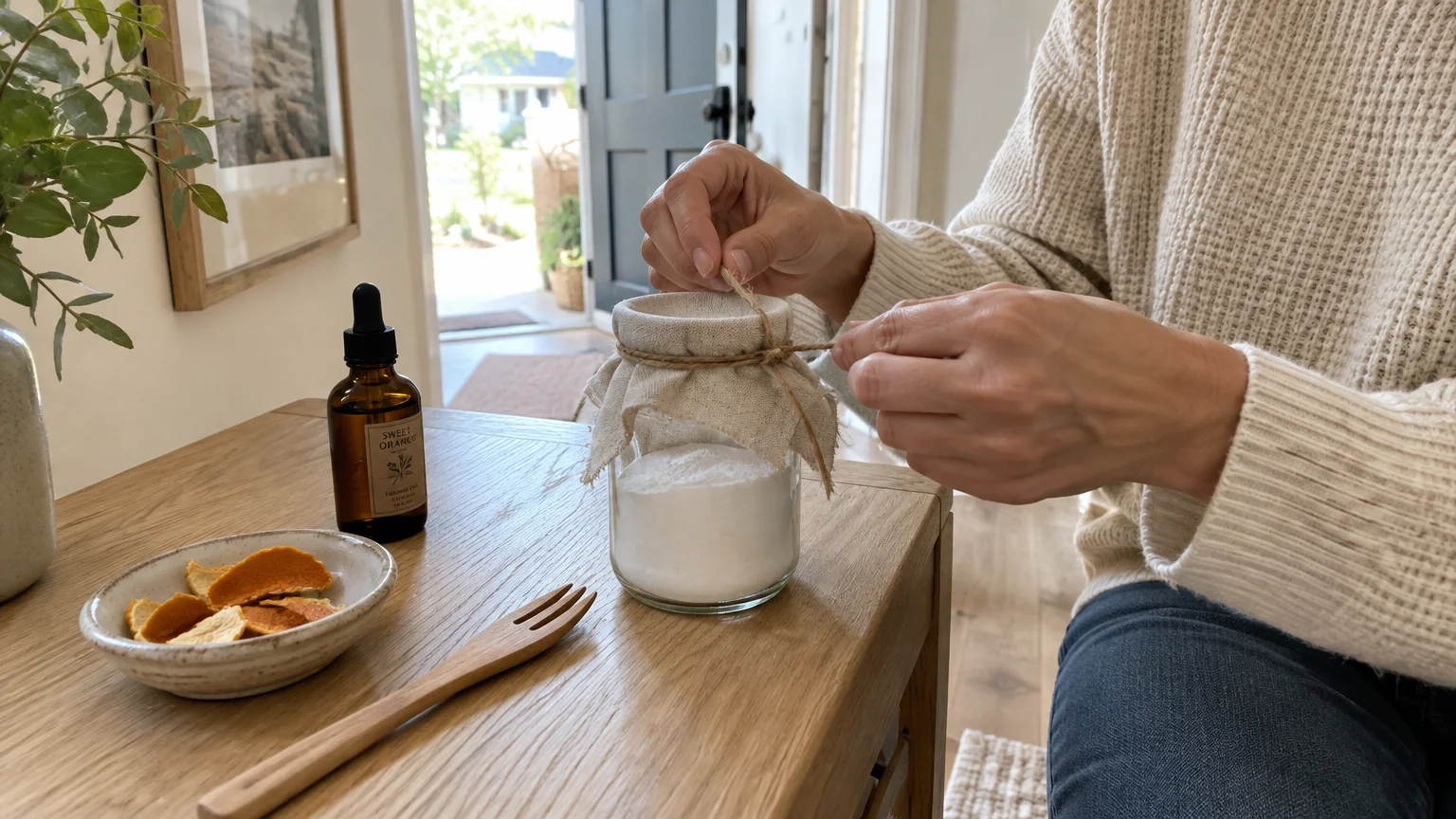
Your Immediate Action Step
Select one high-traffic room in your house and inspect its current odor source before purchasing any single-use commercial aerosol products. Assemble an active baking soda scent jar or set up a small citrus stovetop potpourri using kitchen scraps today.