
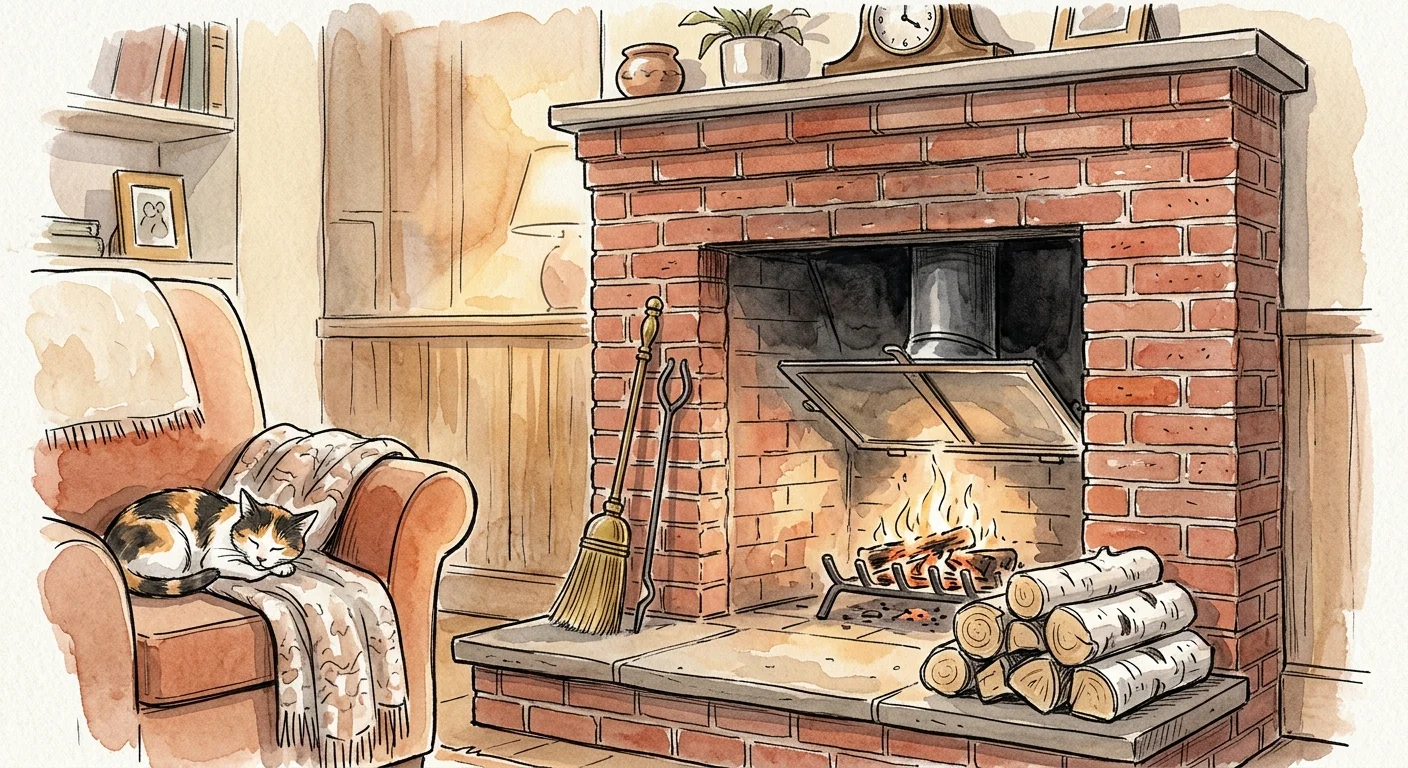
06 Sweeping Fireplace Flues and Inspecting Fireplace Hearth
Lighting your fireplace without thorough autumn preparation introduces serious fire and toxic gas hazards into your home. Burning wood leaves behind creosote—a highly flammable, tar-like byproduct—along the inner lining of your chimney flue. Over time, thick creosote buildup can ignite, causing violent chimney fires that reach temperatures above 2,000 degrees Fahrenheit and easily spread into roof framing.
Furthermore, nesting birds, leaves, or deteriorating brickwork can block your chimney cap during spring and summer months. A blocked chimney prevents combustion gases, including odorless carbon monoxide, from venting safely outside. Incorporating flue inspections into your seasonal cleaning checklist ensures cozy fires stay safe.
Shine a high-powered flashlight up into your chimney flue with the damper locked wide open. Look for animal nests, cracked firebricks, or flaky black creosote deposits. If you observe creosote buildup thicker than one-eighth of an inch, hire a certified professional chimney sweep before lighting your first fire of the season. For basic hearth maintenance, clean glass doors using a specialized soot remover, vacuum cold ash from the firebox with an ash-rated vacuum, and install fresh batteries in all home carbon monoxide detectors.

DO NoT REPLY