
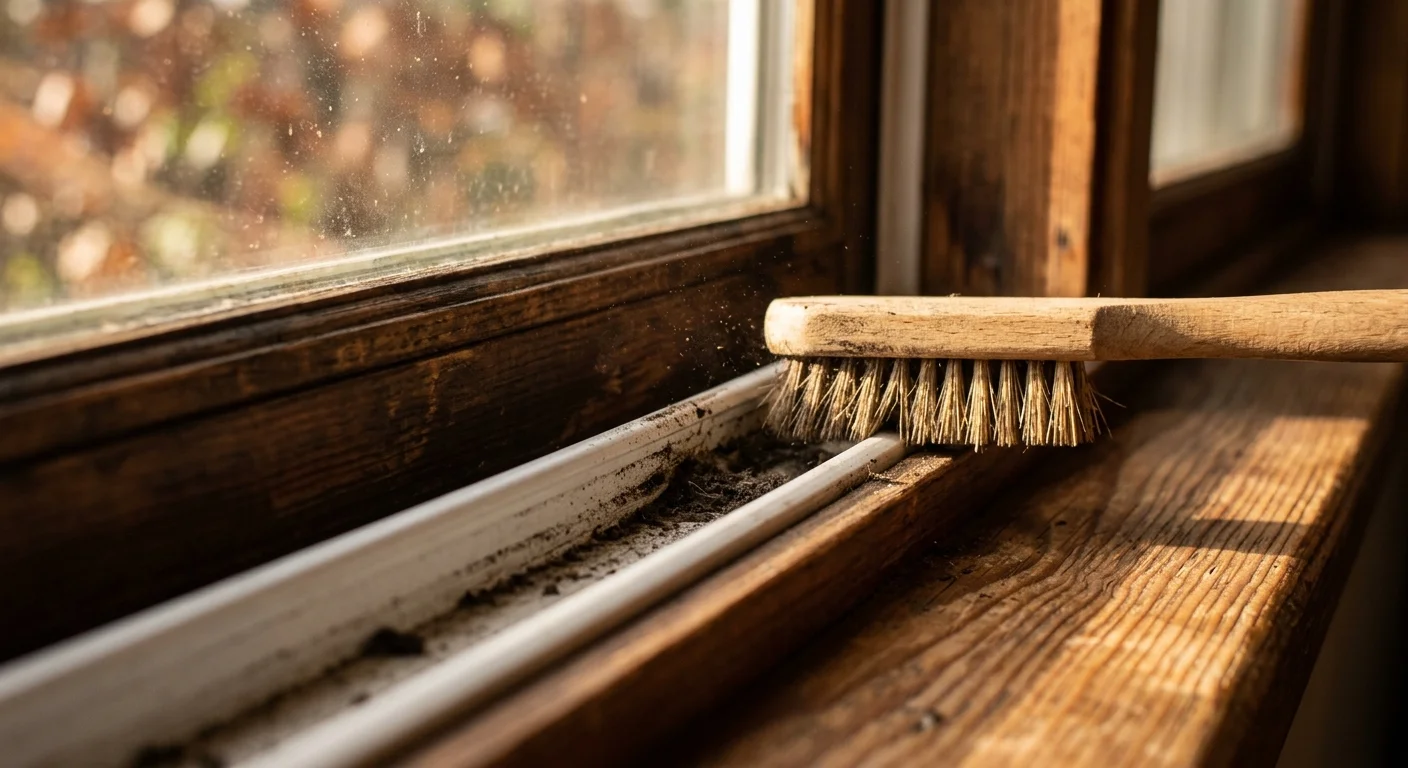
05 Scrubbing Window Tracks and Inspecting Weatherstripping
Closed windows keep freezing winter winds outside, but filthy window tracks compromise window seals and create breeding grounds for indoor mold growth. Throughout spring and summer, dirt, airborne pollen, and insect debris settle inside lower track channels. As winter temperatures drop, warm interior humidity meets cold glass, forming heavy condensation that drips down into these dirty tracks.
This wet sludge creates an ideal habitat for toxic black mold while eroding wooden window frames and corroding metal sliding mechanisms. In addition, torn or flattened weatherstripping allows icy cold drafts to slip indoors—causing your heating system to run constantly to maintain a comfortable indoor temperature.
Begin by vacuuming loose dust and dead insects out of the window tracks using a narrow nozzle. Lightly sprinkle baking soda along the track channel, then spray white distilled vinegar over the powder to create a fizzing cleaning foam. Let the solution sit for five minutes to break down hard grime, then scrub tight corners using an old toothbrush or a stiff detail brush. Wipe the slurry clean with paper towels, dry the track thoroughly, and lubricate sliding tracks with silicone spray. Finally, hold a lit candle or incense stick near window frame edges on a windy day; replace any flattened, torn, or brittle weatherstripping where drafty air makes the flame flicker.






DO NoT REPLY