
03 Flushing Rain Gutters and Verifying Downspout Flow
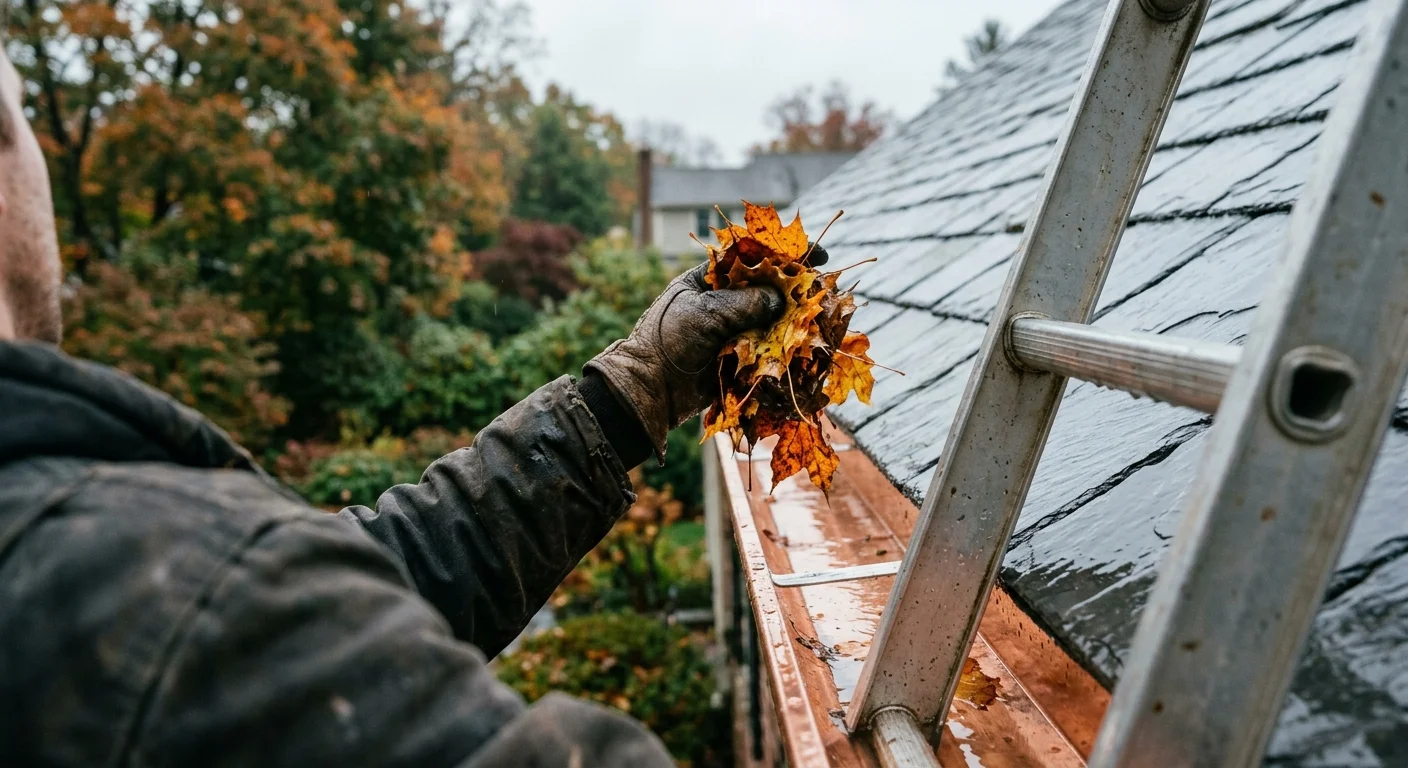
Clearing fallen leaves from gutters is a staple seasonal chore, but simply scooping loose leaves out of top troughs leaves the job half done. Decaying foliage forms a dense, clay-like organic sludge at the bottom of gutter channels that chokes downspout openings. When late autumn rains and winter freeze-thaw cycles hit, blocked gutters overflow; this sends water cascading down exterior siding, behind soffits, and directly toward your home’s foundation.
Trapped standing water also creates massive ice dams during freezing weather. As water freezes along cold roof eaves, it forces melting snow backward underneath asphalt shingles, causing costly ceiling leaks, interior drywall damage, and structural wood rot. Executing this essential task properly requires thorough flushing, not just surface scooping.





DO NoT REPLY