White vinegar offers a cheap, simple way to lift grime, dissolve mineral buildup, and neutralize odors across your home without relying on harsh commercial formulas. Standard white distilled vinegar contains 5% acetic acid, which breaks down tough grease and soap scum naturally while costing only pennies per ounce. You can transform your daily household chores with just a basic gallon jug from the grocery store. Swapping out specialized chemical sprays for this single pantry staple reduces clutter under your sink and makes maintaining your living space more manageable. Below, you will find ten highly practical ways to harness white vinegar to keep your environment fresh, clean, and comfortable.
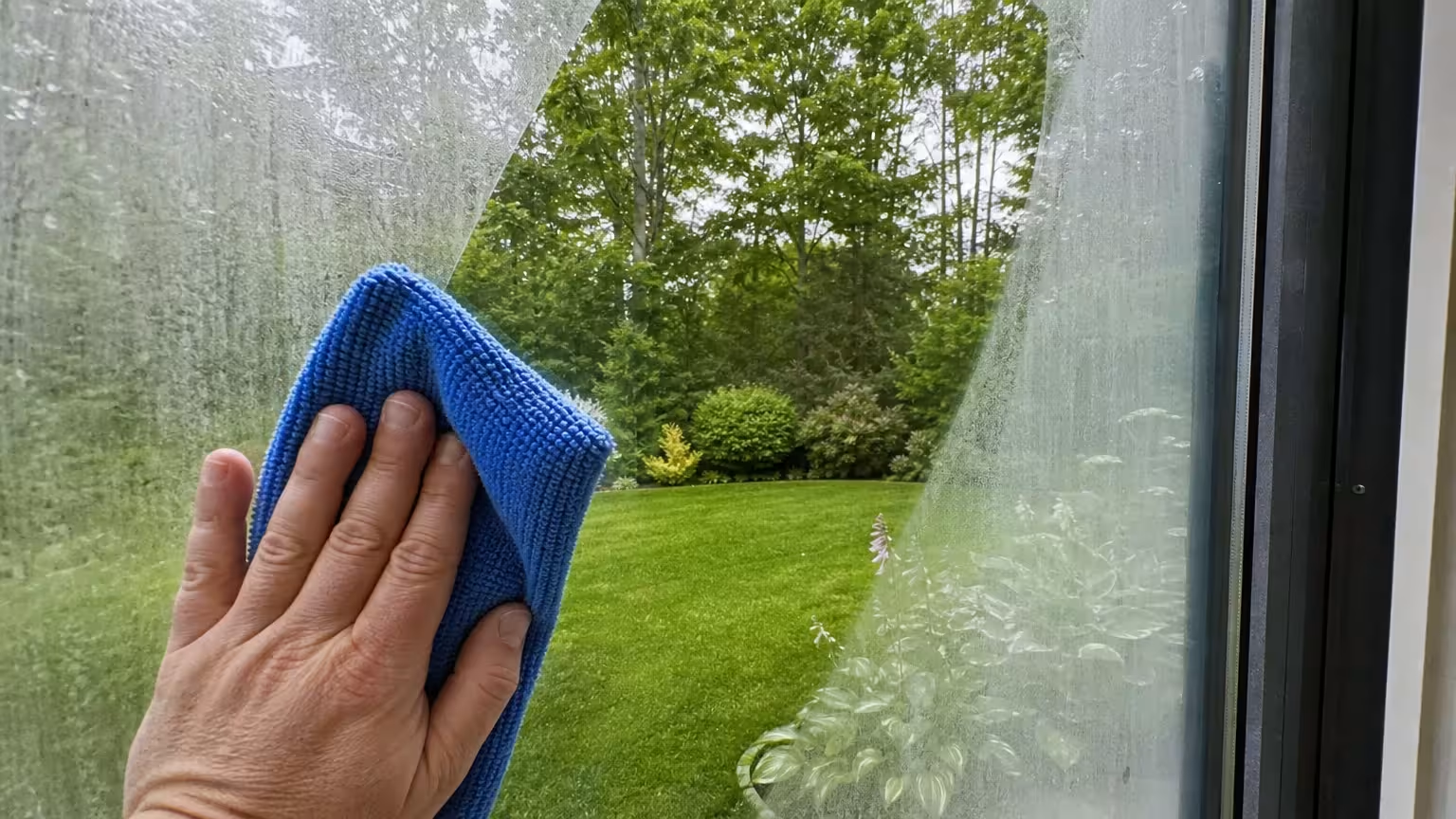
Clarifying Cloudy Glass and Windows
Commercial glass cleaners often rely on ammonia and artificial blue dyes. While they promise a perfect finish, these chemical mixtures frequently leave a frustrating, waxy film on your windows and mirrors over time. White vinegar slices right through that lingering residue. The 5% acetic acid breaks the chemical bonds of the waxy buildup, leaving you with completely transparent, streak-free glass.
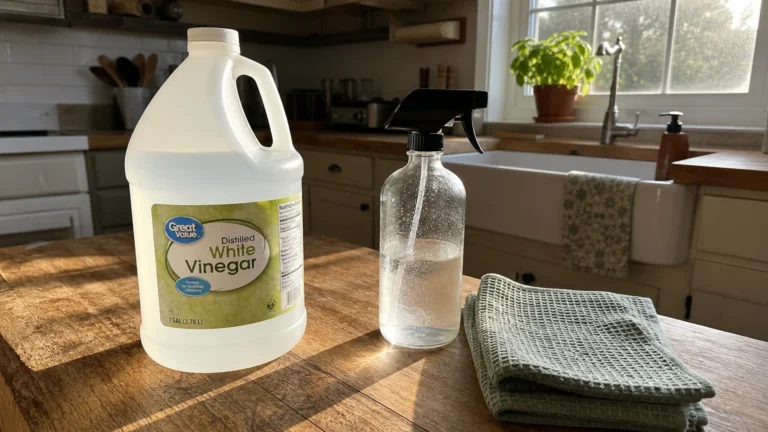
To achieve this, mix equal parts distilled water and standard white vinegar in a clean spray bottle. Using distilled water prevents new mineral spots from forming as the solution dries. Spray the mixture generously onto your glass surfaces, then wipe it away using a flat-weave microfiber cloth or a high-quality squeegee. Work from the top down to catch any drips. If you are cleaning windows that have sustained years of commercial product use, you might notice a few streaks during the very first application. Do not panic; this is simply the vinegar reacting with the old chemical layers. Apply the vinegar solution a second time to strip the remaining wax entirely, and you will uncover a flawless, long-lasting shine.
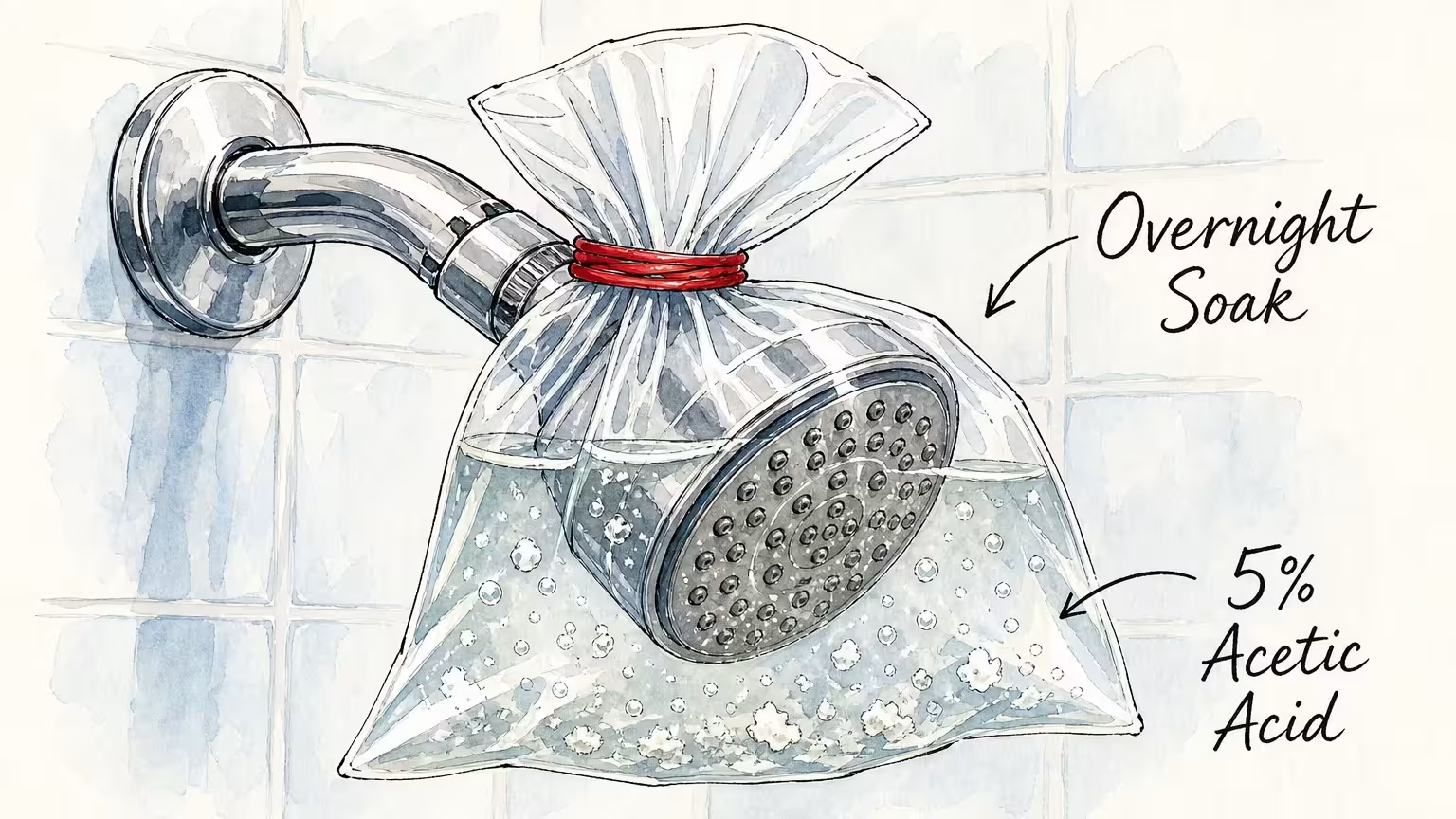
Dissolving Hard Water Stains and Mineral Deposits
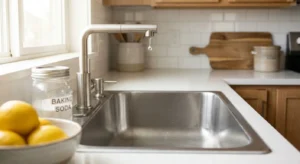
If you live in an area with hard water, you constantly battle crusty white buildup on your bathroom faucets, kitchen sprayers, and sink basins. These unsightly spots are primarily composed of alkaline calcium and magnesium deposits. Because white vinegar is highly acidic, it naturally neutralizes and dissolves these alkaline minerals on contact, saving you from exhausting scrubbing sessions.
For flat surfaces around the base of your sink taps, soak a few heavy-duty paper towels in pure, undiluted white vinegar. Wrap these saturated towels tightly around the hardware and let them sit for at least thirty minutes. The prolonged contact time allows the acid to eat through the calcification; afterward, you can simply wipe the dissolved minerals away with a damp cloth. For a sputtering, clogged showerhead, pour white vinegar into a sturdy plastic sandwich bag. Lift the bag so the showerhead is fully submerged in the liquid, and secure it tightly around the pipe with a rubber band or a zip tie. Leave it to soak overnight. By morning, the vinegar will have broken down the internal scale completely, restoring your shower’s water pressure effortlessly.
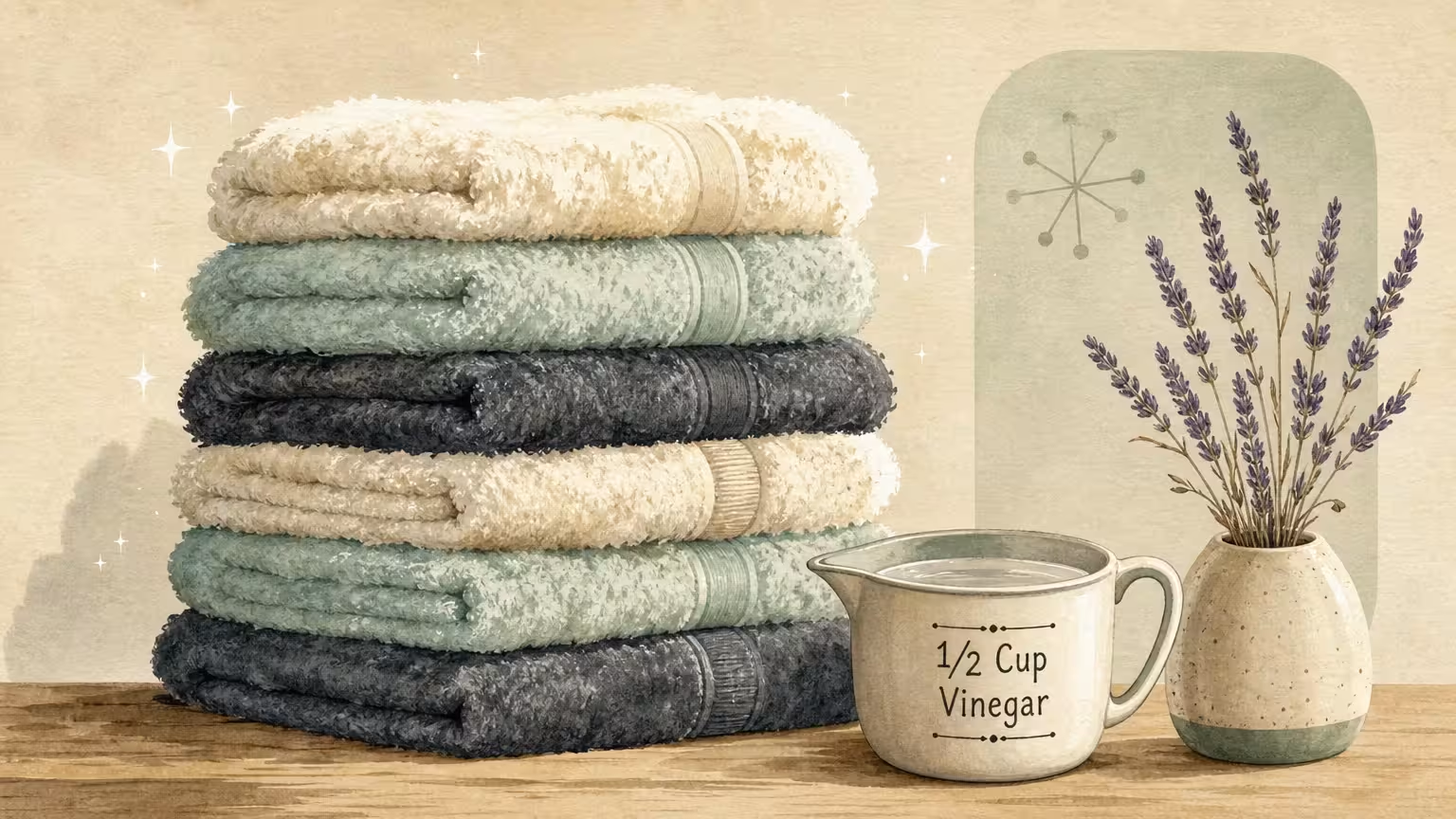
Replacing Commercial Fabric Softeners
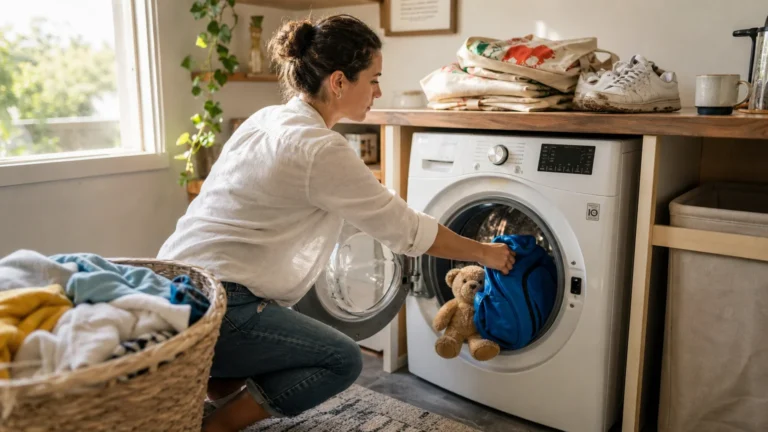
Heavily perfumed fabric softeners and dryer sheets coat your clothing in invisible lubricating chemicals. While these products might initially make your laundry feel smooth, they gradually reduce the absorbency of your bath towels and trap stale detergent residues deep inside the fabric fibers. White vinegar provides an excellent, residue-free alternative that leaves your fabrics naturally soft and breathable.
Adding half a cup of white vinegar to your washing machine’s rinse cycle helps strip away the microscopic leftover soap scum from the threads. This simple step restores the fluffy texture of old, stiff towels and removes the scratchy feeling from heavy cotton garments. Furthermore, vinegar acts as a mild color protectant; it helps set dark dyes, preventing your favorite dark shirts from fading too quickly in the wash. If you have sensitive skin that reacts poorly to artificial fragrances, this swap can drastically reduce irritation. You also do not need to worry about your laundry smelling like a pantry staple. The distinct vinegar odor dissipates completely as the fabric dries, leaving behind nothing but clean, fresh, and perfectly soft clothing.
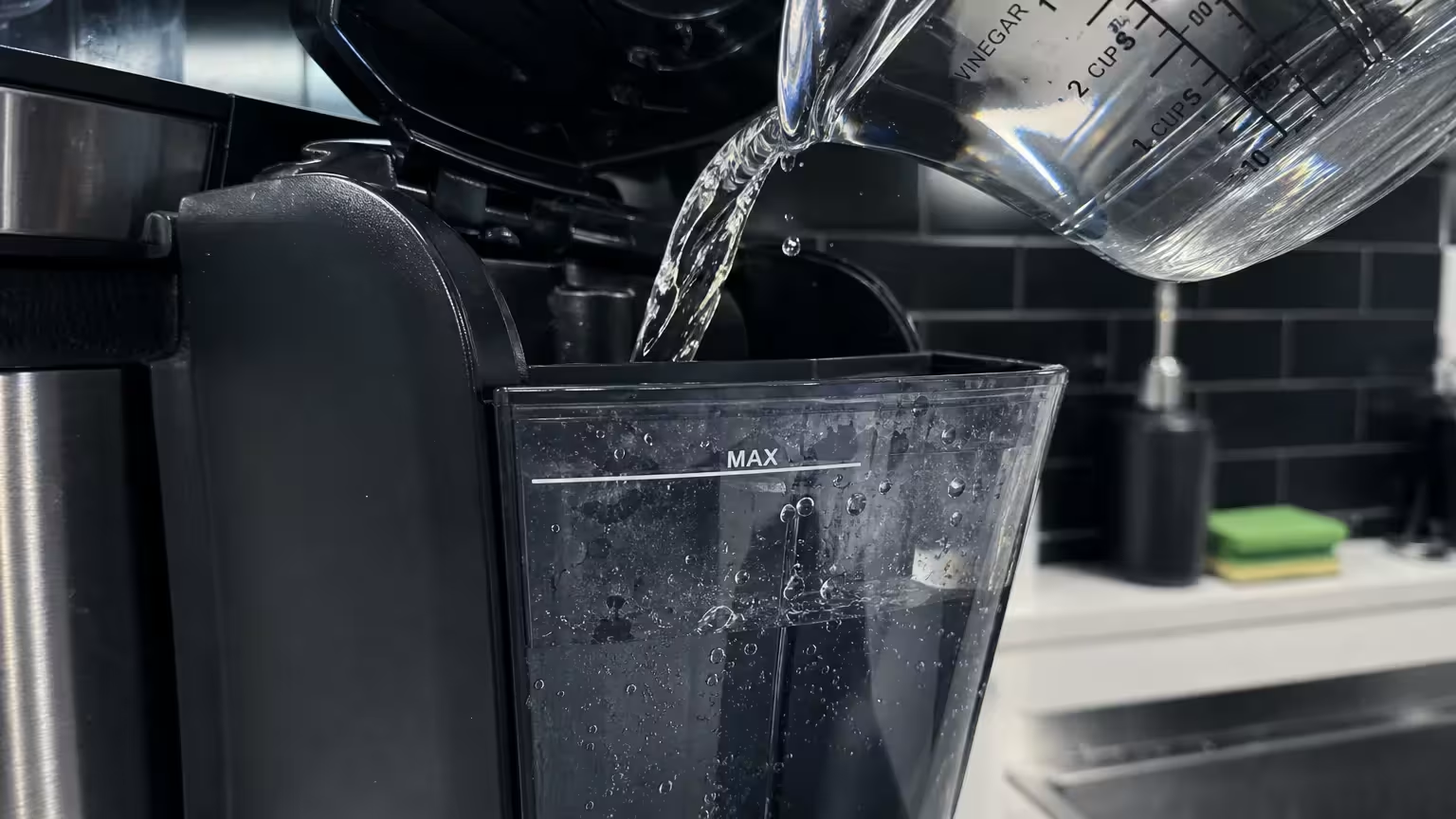
Descaling and Refreshing Household Appliances
Daily use takes a heavy toll on your hard-working kitchen appliances. Coffee makers and dishwashers constantly process heated tap water, which leads to internal mineral scale that hampers their performance and efficiency. Running a dedicated vinegar cycle clears out this hidden debris and extends the lifespan of your expensive machines.
To refresh a standard drip coffee maker, fill the water reservoir with a mixture of half white vinegar and half water. Brew this solution halfway, turn off the machine to let it sit for an hour, and then complete the cycle. Afterward, run two or three cycles of plain water to flush out any lingering taste. For your dishwasher, clear out all the dishes and place a dishwasher-safe bowl containing one cup of pure white vinegar on the top rack. Run the machine on its hottest, heaviest cycle. The vinegar will wash over the internal components, breaking down trapped food particles, dissolving greasy residue on the walls, and clearing the drain hoses. Performing this simple maintenance routine once a month keeps your appliances running efficiently and eliminates the stale, swampy odors that often plague damp machinery.

Lifting Stubborn Soap Scum in the Bathroom
Soap scum forms when the fatty acids in your bar soap react with the heavy minerals in your shower water, creating a tough, water-resistant layer on your tile and glass. Because this grime is highly alkaline, the acidic nature of white vinegar makes it the perfect natural weapon to break it down. For routine maintenance, a simple one-to-one mixture of water and vinegar sprayed on your shower walls after bathing prevents buildup.
However, for thick, baked-on soap scum, you need a solution that clings to vertical surfaces. Warm one cup of white vinegar in the microwave until it is hot but not boiling; then, mix in two tablespoons of grease-cutting liquid dish soap. Pour this mixture into a spray bottle and coat your shower doors, fiberglass tub, and tiled walls. The dish soap thickens the vinegar, allowing it to stick to the grime rather than running straight down the drain. Let it sit for twenty minutes so the acid can penetrate the scum. Scrub lightly with a non-abrasive sponge, rinse thoroughly with warm water, and enjoy your brilliant, scum-free bathroom.
Neutralizing Lingering Odors in Carpets and Rugs
Carpets function like giant fabric filters, trapping everyday odors from cooking grease, muddy shoes, and household pets. While commercial carpet powders mask these smells with overwhelming synthetic perfumes, white vinegar actively absorbs and neutralizes the odor-causing compounds.
If a specific area of your rug smells stale, fill a spray bottle with a mixture of one cup of water and one tablespoon of white vinegar. Lightly mist the surface of the carpet—being careful not to soak the backing, which can lead to structural damage—and let it air dry completely. As the vinegar evaporates, it pulls the trapped odors into the air and dissipates them. For stronger, localized issues like pet urine accidents, vinegar is exceptional at breaking down the ammonia in the urine. After blotting up as much liquid as possible, pour a half-and-half mixture of water and vinegar directly over the spot. Let it sit for ten minutes, blot it dry with clean towels, and sprinkle a little baking soda over the area once it is fully dry to pull out any remaining moisture. Vacuum the spot the next day for a completely refreshed carpet.
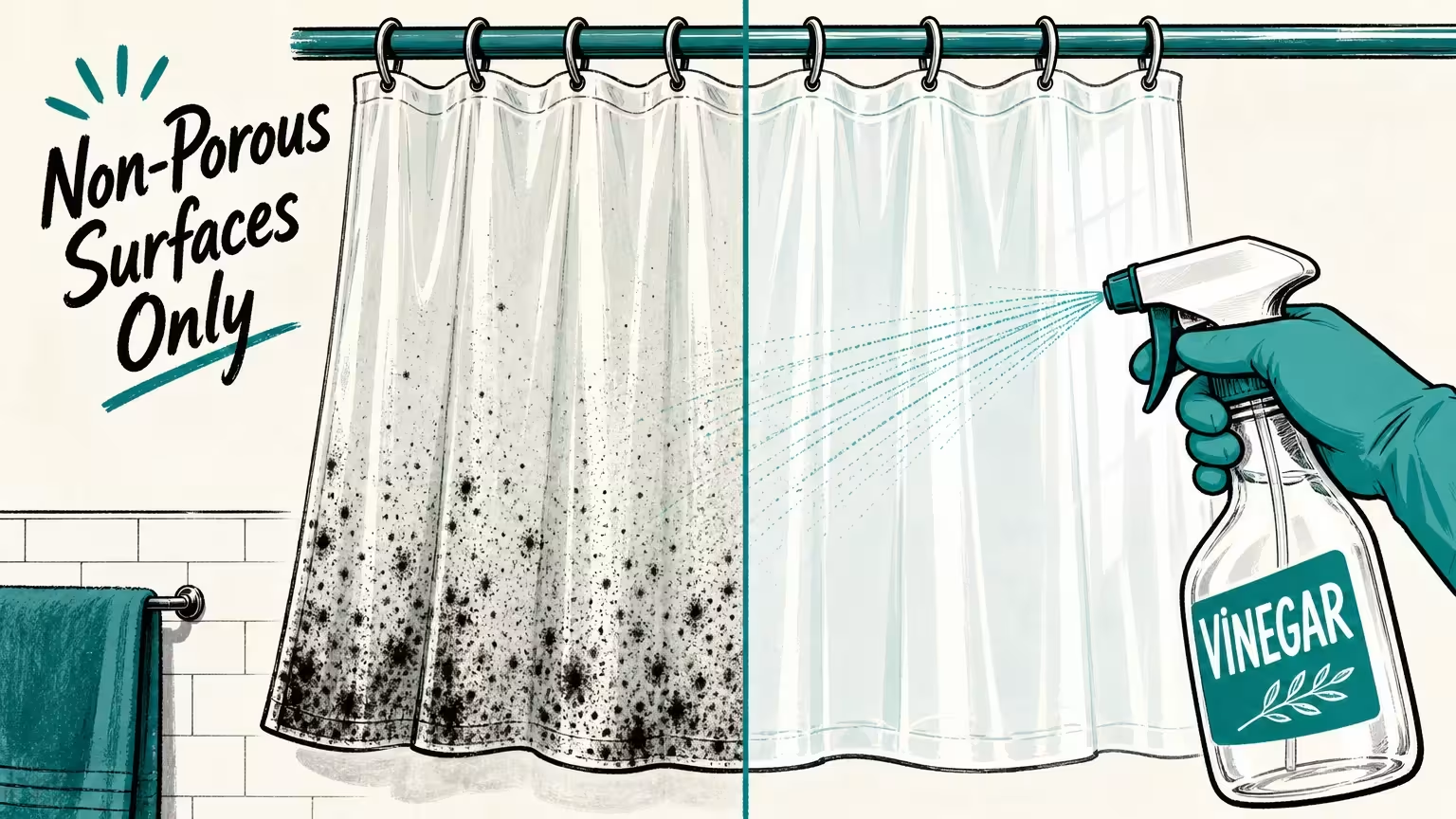
Tackling Mildew on Non-Porous Surfaces
Damp, poorly ventilated areas in your home create the perfect breeding ground for mildew. You will often find these patchy black or pink stains creeping along your shower caulking, window tracks, and basement walls. While many people immediately reach for heavy bleach, bleach only masks the surface color of the mold on porous materials; white vinegar actually penetrates to kill the roots of certain mildew strains.
Keep in mind that for extensive or toxic mold infestations, you should always consult the EPA’s official mold cleanup guidance. However, for everyday bathroom mildew on non-porous surfaces like tile and glass, vinegar is highly effective. Pour undiluted white vinegar directly into a spray bottle and saturate the mildewed area. Do not rinse it immediately; let it sit for at least an hour so the acid can break down the fungal growth. Scrub the area with an old, stiff-bristled toothbrush to lift the debris, then wipe the surface clean with a damp rag. Using vinegar regularly as a preventative spray in your shower will stop new mildew spores from taking hold in the first place.
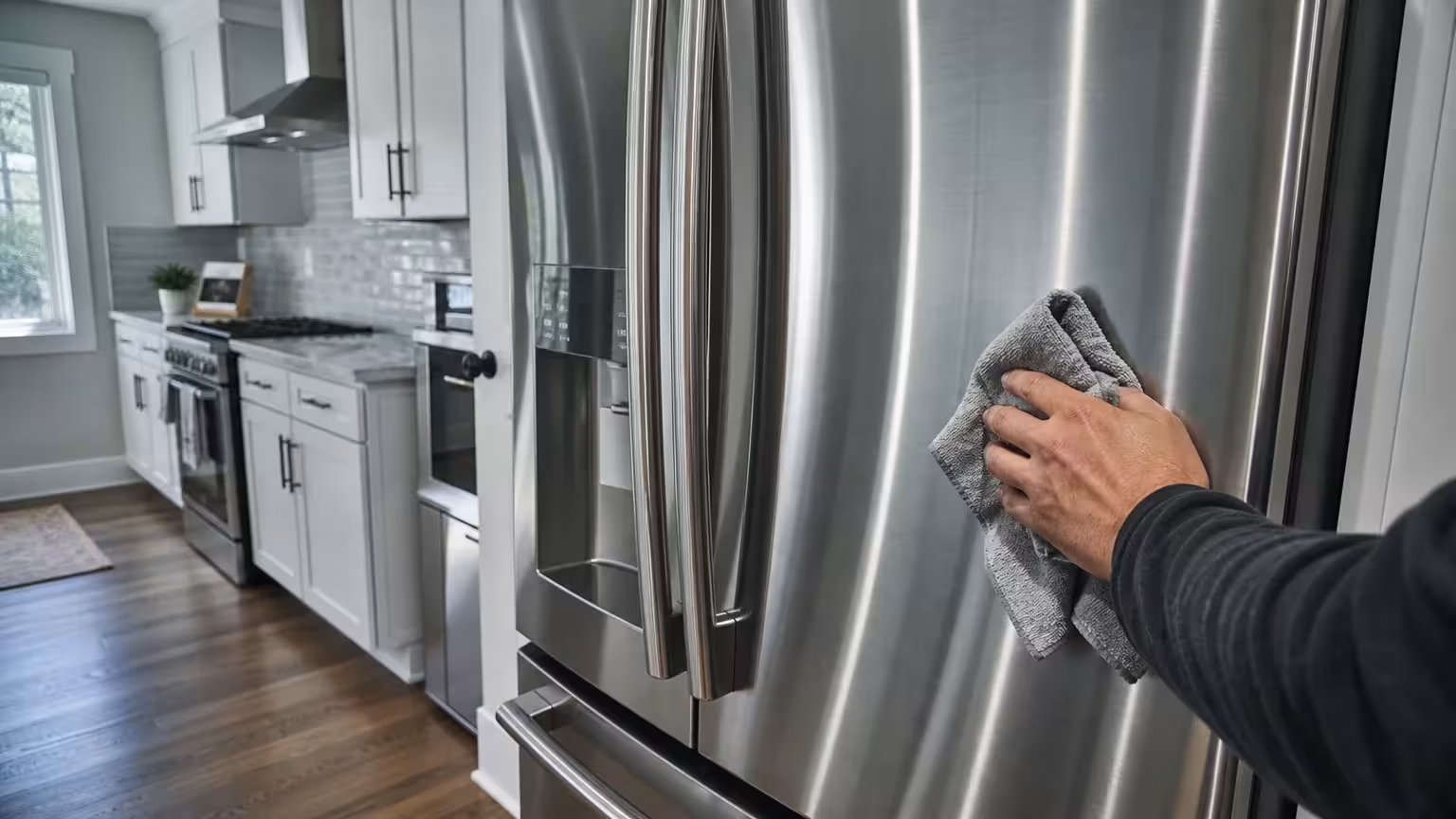
Restoring Shine to Stainless Steel Appliances
Stainless steel appliances bring a sleek, modern look to your kitchen, but they also highlight every single fingerprint, water drip, and greasy smudge. Many commercial stainless steel polishes contain mineral oils that leave a heavy, sticky residue, which paradoxically attracts more dust and dirt over time. You can achieve a flawless, smudge-free finish using just white vinegar and a little bit of friction.
Lightly mist your refrigerator door, oven front, or dishwasher panel with straight white vinegar. Take a close look at the appliance to identify the direction of the grain—the faint horizontal or vertical lines brushed into the metal. Always wipe in the direction of this grain using a clean microfiber cloth. The vinegar cuts instantly through the sticky grease and sanitizes the surface. Once the metal is completely clean and dry, you can buff it to a high shine by applying a single drop of olive oil to a separate cloth and rubbing it gently into the grain. This two-step process leaves your appliances looking brand new without any sticky chemical buildup.
Freshening Garbage Disposals and Kitchen Drains
Your kitchen sink processes a massive amount of organic waste, and over time, rotting food particles build up on the underside of the garbage disposal baffles. This sludge creates a foul, swampy odor that can make your entire kitchen smell unkempt. White vinegar serves as a fantastic, pipe-safe deodorizer that cuts through this hidden grease.
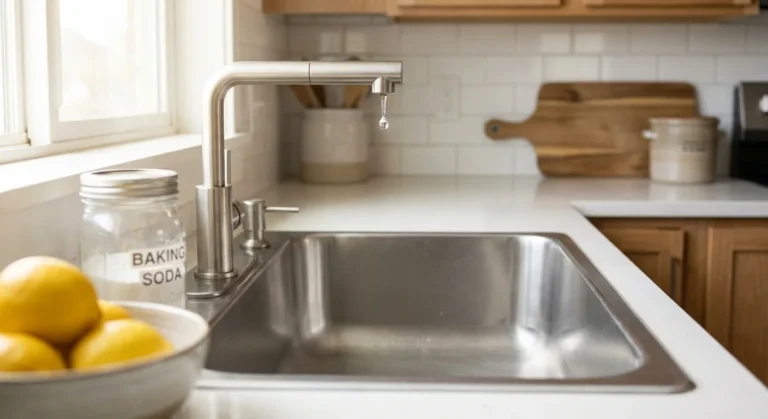
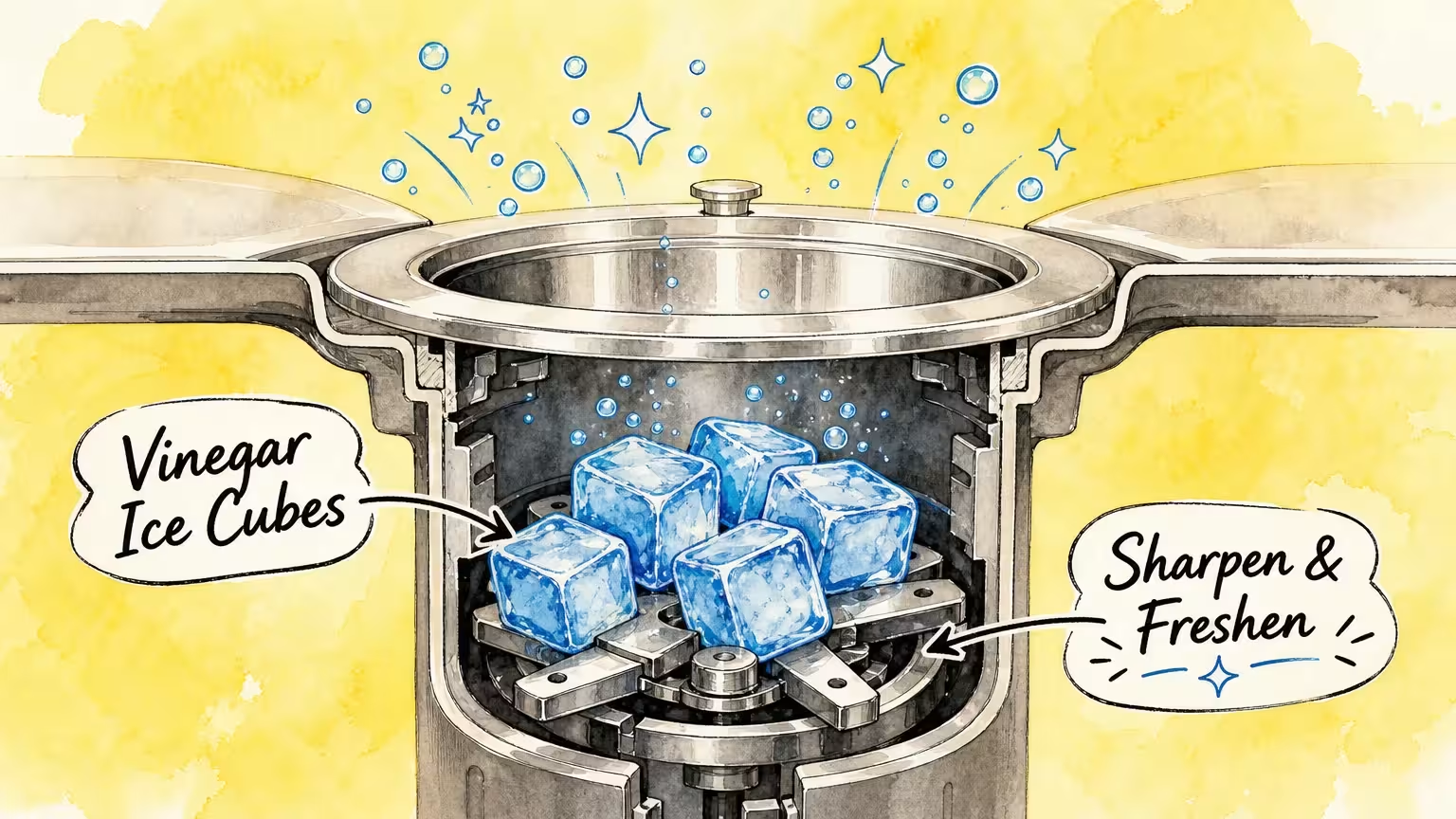
For a quick refresh, pour half a cup of baking soda directly down the drain, followed immediately by one cup of white vinegar. The satisfying fizzing reaction helps mechanically loosen the grime clinging to the sides of the pipes. Let this mixture sit for fifteen minutes, then flush it away with boiling water. For an even deeper clean, create vinegar ice cubes. Pour undiluted white vinegar into an old ice cube tray, drop a small piece of lemon rind into each section, and freeze them solid. Toss a handful of these frozen vinegar cubes down your disposal and turn the machine on while running a trickle of cold water. The hard ice physically knocks debris off the grinding blades, while the melting vinegar and lemon naturally sanitize and deodorize the chamber.
Wiping Down the Refrigerator Interior Safely
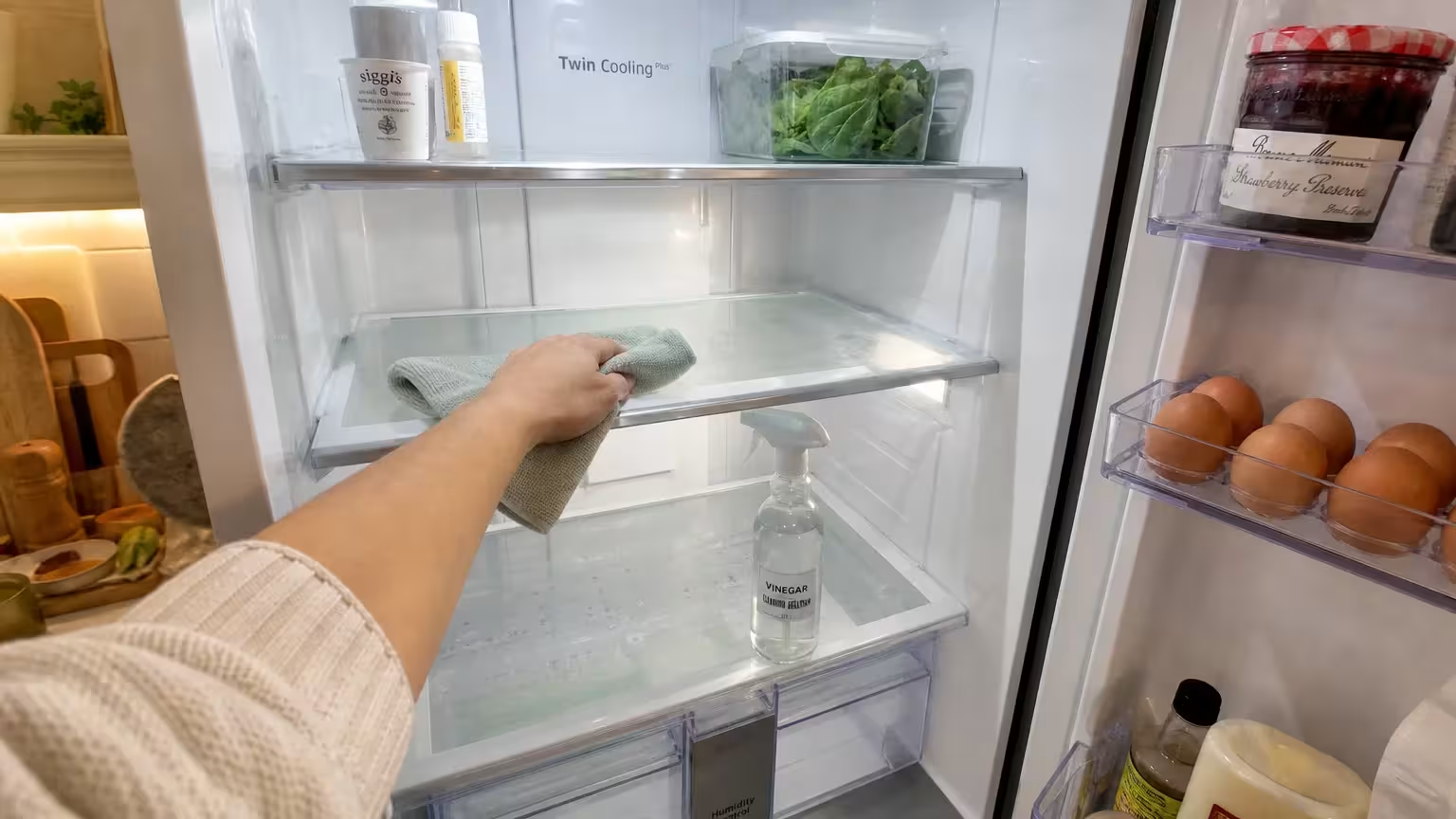
When cleaning the inside of your refrigerator, you must be incredibly mindful of the products you use. Harsh chemical sprays leave behind toxic residues and strong synthetic fragrances that can easily absorb into your fresh produce, butter, and unprotected leftovers. Because standard white vinegar is completely food-safe, it is the absolute best choice for sanitizing crisper drawers and wiping down sticky glass shelves.
Empty your refrigerator completely, throwing away any expired food. Mix a solution of equal parts hot water and white vinegar in a large bowl. Dip a clean cloth into the mixture and wring it out well. The mild heat softens hardened spills like dried syrup or spilled milk, while the vinegar neutralizes the potent odors left behind by old leftovers or pungent cheeses. Wipe down the walls, the door seals, and the shelving units thoroughly. There is no need to rinse the surfaces afterward; simply dry them with a clean towel before reloading your groceries. Your refrigerator will smell crisp and neutral, and you will have total peace of mind knowing your food is resting on safe, chemical-free surfaces.
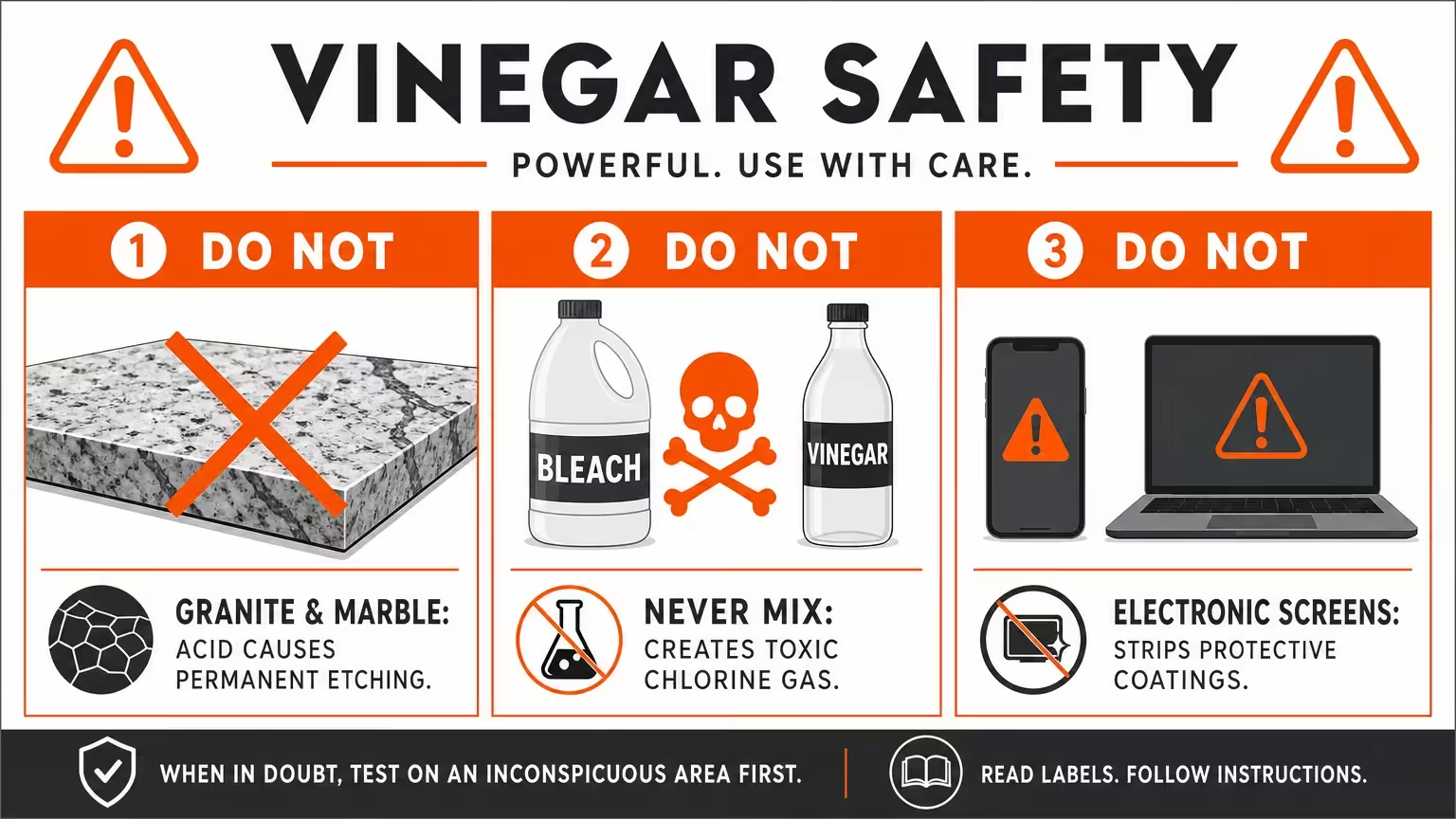
Crucial Safety Limitations: What You Must Never Clean with Vinegar
White vinegar is a powerhouse, but its acidic nature makes it highly destructive to certain materials. The same 5% acetic acid that effortlessly dissolves hard water stains will eat right through the protective sealants on expensive household surfaces. Furthermore, relying on vinegar as a cure-all can pose health risks if you misunderstand its limitations. According to the EPA-registered disinfectants list, white vinegar is not an approved household disinfectant. While independent scientific evaluations of vinegar show it can reduce specific foodborne bacteria like E. coli, it does not reliably kill dangerous viruses like COVID-19 or norovirus. You must use commercial disinfectants when dealing with raw meat spills or severe illness.
Additionally, always check the FDA standard guidelines on vinegar acidity if you buy industrial strength formulas; anything above 5-6% acetic acid requires heavy-duty safety gloves and proper ventilation.
To protect your investments, review the table below before you spray.
| Surface Material | Why You Should Avoid Vinegar | Safer Cleaning Alternative |
|---|---|---|
| Natural Stone (Marble, Granite, Limestone) | Acid eats away the top layer of the stone, causing irreversible dull spots called “etching”. | Warm water mixed with a few drops of pH-neutral dish soap. |
| Hardwood Floors and Waxed Furniture | Vinegar dissolves the protective wax or polyurethane finish, leaving wood dull and vulnerable to moisture. | Dedicated wood cleaners or a heavily diluted, pH-neutral floor wash. |
| Cast Iron Cookware | Prolonged acid exposure strips away the non-stick seasoning and accelerates severe rust formation. | Coarse kosher salt scrubbed with a dry paper towel or a stiff brush. |
| Electronic Screens (TVs, Phones, Laptops) | Acid permanently damages the delicate anti-glare and oleophobic protective coatings on modern screens. | A dry microfiber cloth or a screen-specific isopropyl alcohol wipe. |
| Rubber Gaskets and Hoses | Frequent exposure to acid can dry out and degrade certain synthetic rubbers inside older appliances. | Mild soapy water and a soft cloth for routine wiping. |
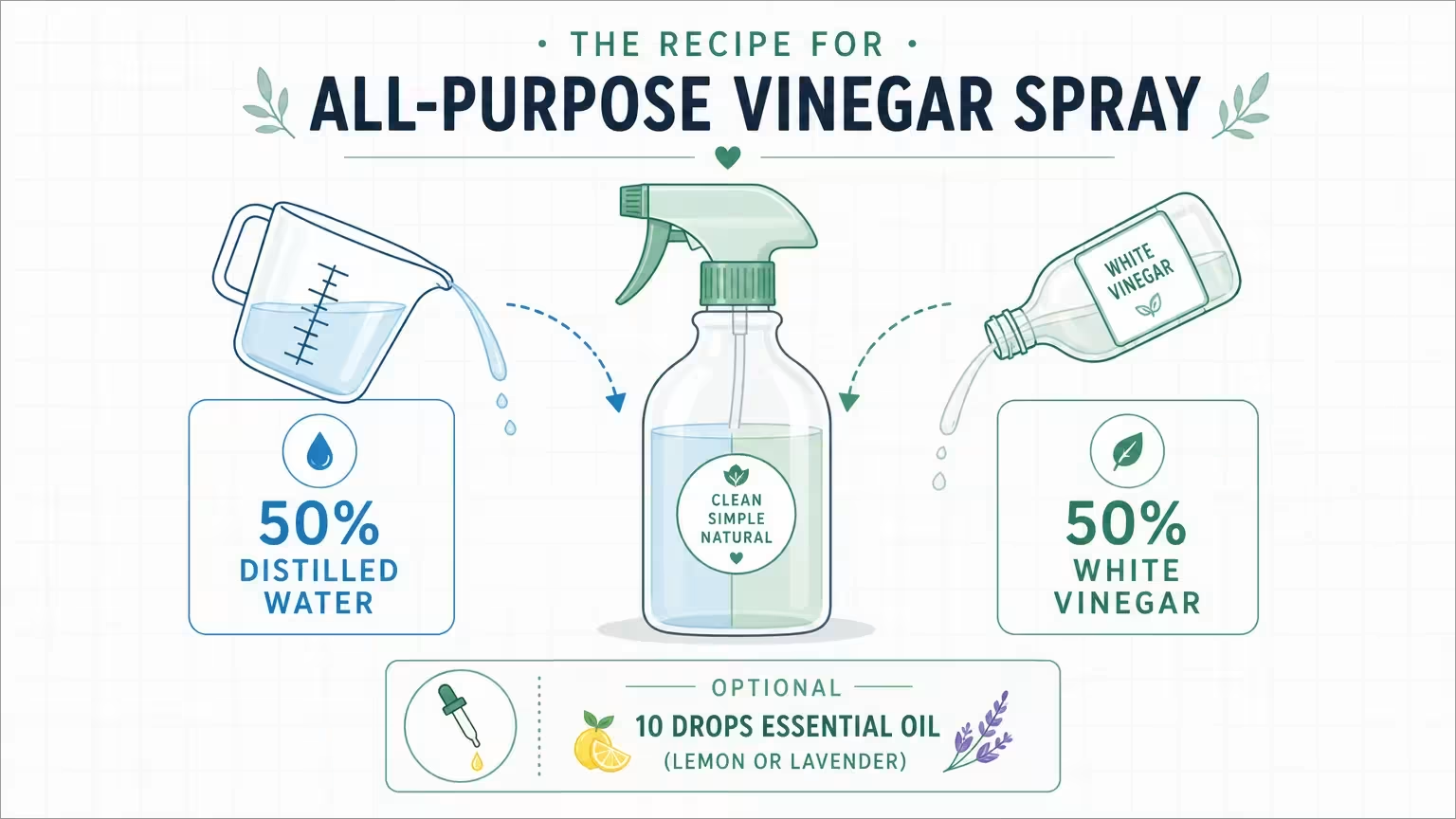
Creating Your Daily All-Purpose Spray
Now that you know where vinegar thrives and where it fails, you can confidently mix your own everyday cleaning solution. This simple task takes less than two minutes, costs only pennies, and can replace three or four expensive plastic bottles under your sink.
Follow this step-by-step process to build the perfect versatile cleaner:
- Select the Right Bottle: Purchase a high-quality, reusable glass or heavy-duty plastic spray bottle. Opaque bottles are best if you plan to add essential oils, as light degrades the oils over time.
- Measure the Vinegar: Pour exactly one cup of standard 5% white distilled vinegar into the bottle using a kitchen funnel.
- Add the Water: Pour one cup of distilled water into the bottle. Distilled water is crucial because tap water introduces new minerals that can cause streaking on glass surfaces.
- Customize the Scent (Optional): Add 10 to 15 drops of your favorite essential oil—like lemon, lavender, or tea tree—to cut the harsh initial smell of the acid.
- Label and Store: Close the spray nozzle tightly and shake the bottle to blend the liquids. Label the bottle clearly so no one confuses it with plain water, and store it in a cool, dark cabinet out of reach of children.
Your Practical Next Step
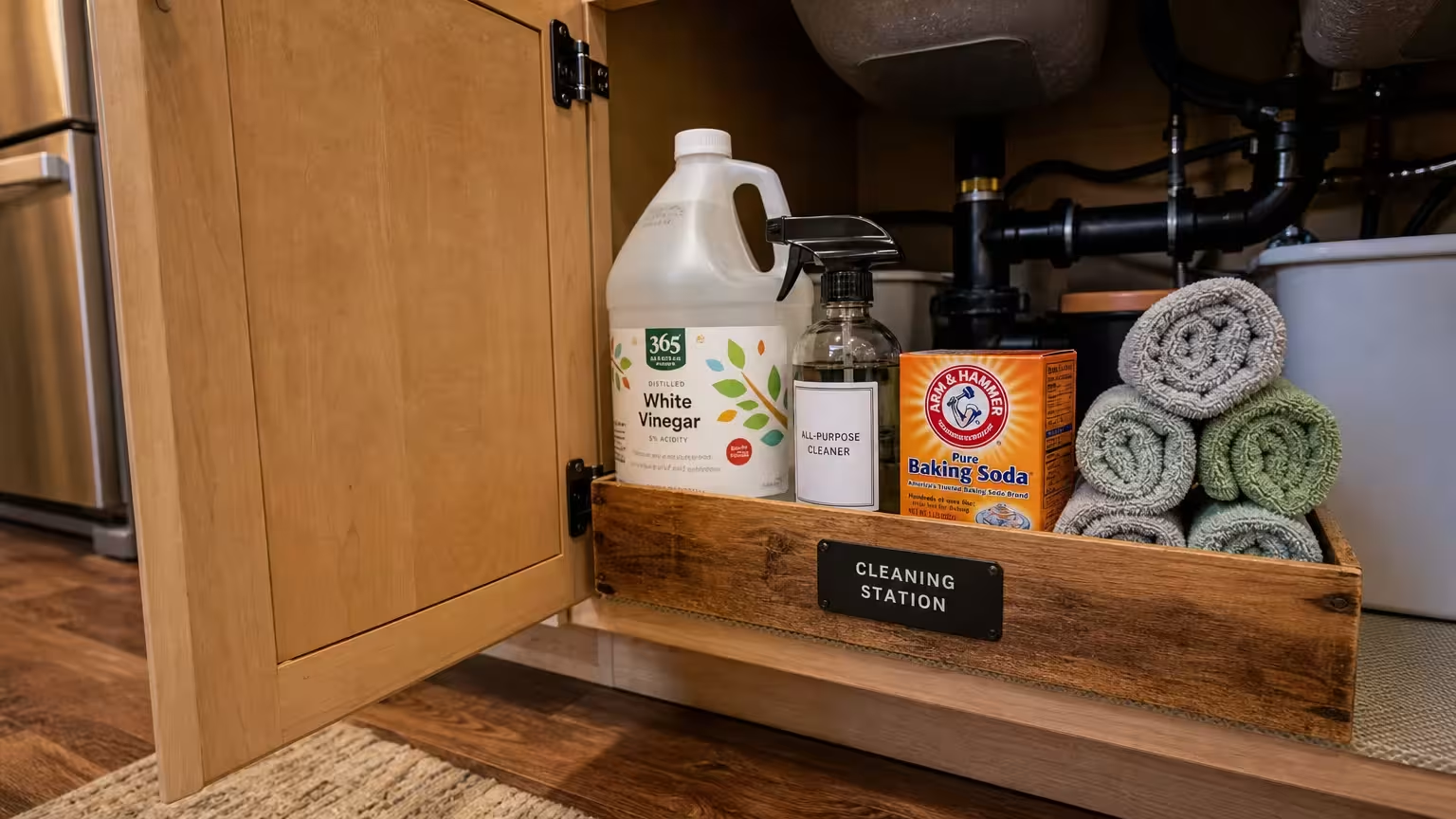
Take ten minutes today to check the labels on the specialized cleaners sitting under your kitchen sink. Identify just one highly perfumed spray—like your glass cleaner or your fabric softener—and replace it with a simple mixture of white vinegar and water to instantly streamline your household routine.