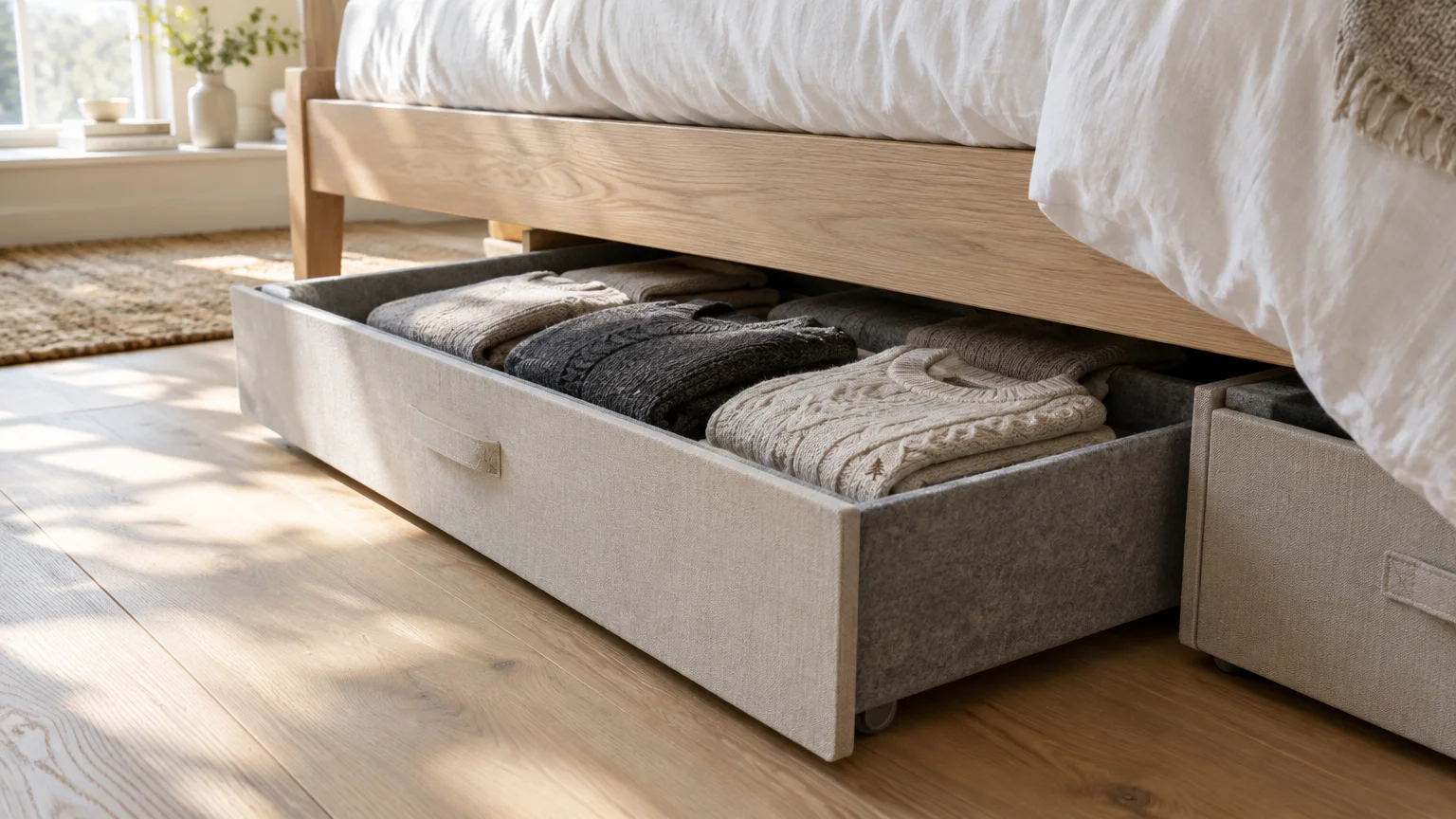
The empty void beneath your bed offers up to forty square feet of prime real estate. Reclaiming this hidden storage solution instantly frees up crowded closets and creates a calmer, more breathable bedroom.
When organizing small spaces, leaving this footprint empty—or letting it collect dust bunnies—wastes valuable square footage. You can turn this dark zone into an orderly system with the right containers.
Professional organizers rely on smart under bed storage ideas to keep low-rotation items accessible yet completely out of sight. Here are ten things that belong under your mattress, plus practical tips to protect them.
Why Maximizing Your Under-Bed Space Changes Everything
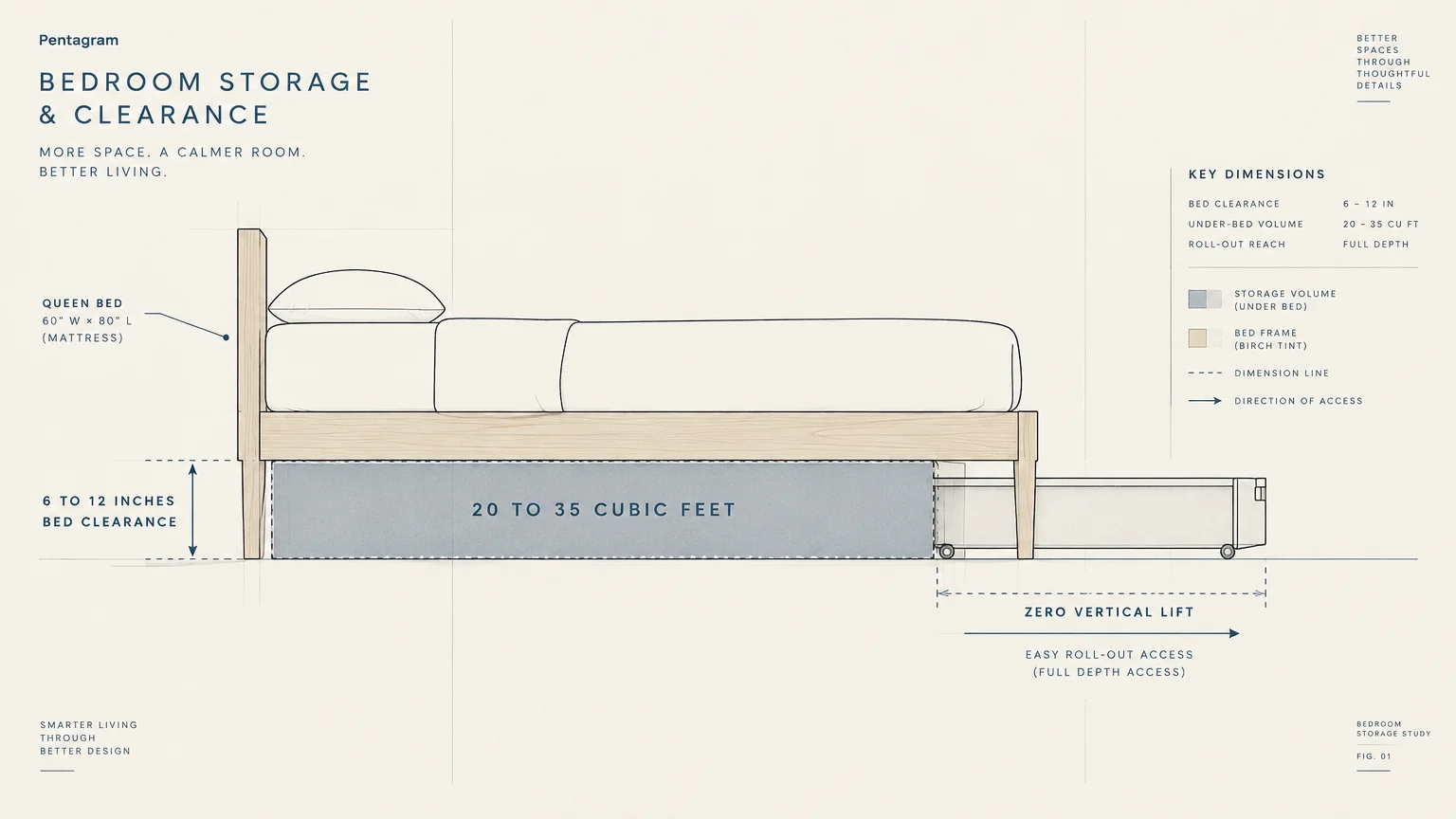
Most standard queen and king beds sit between six and twelve inches above the floor. That clearance provides an average of twenty to thirty-five cubic feet of storage space.
Stashing items beneath your bed keeps visual clutter out of your daily sightline. Studies show that a tidy bedroom lowers stress levels and promotes restorative sleep.
For older adults or anyone simplifying daily routines, this space provides easy, horizontal access. You do not need step stools or high reaches to retrieve what you need.
Low-profile storage bins with smooth-gliding wheels eliminate physical strain entirely. A gentle tug slides your belongings into view without awkward lifting or bending.
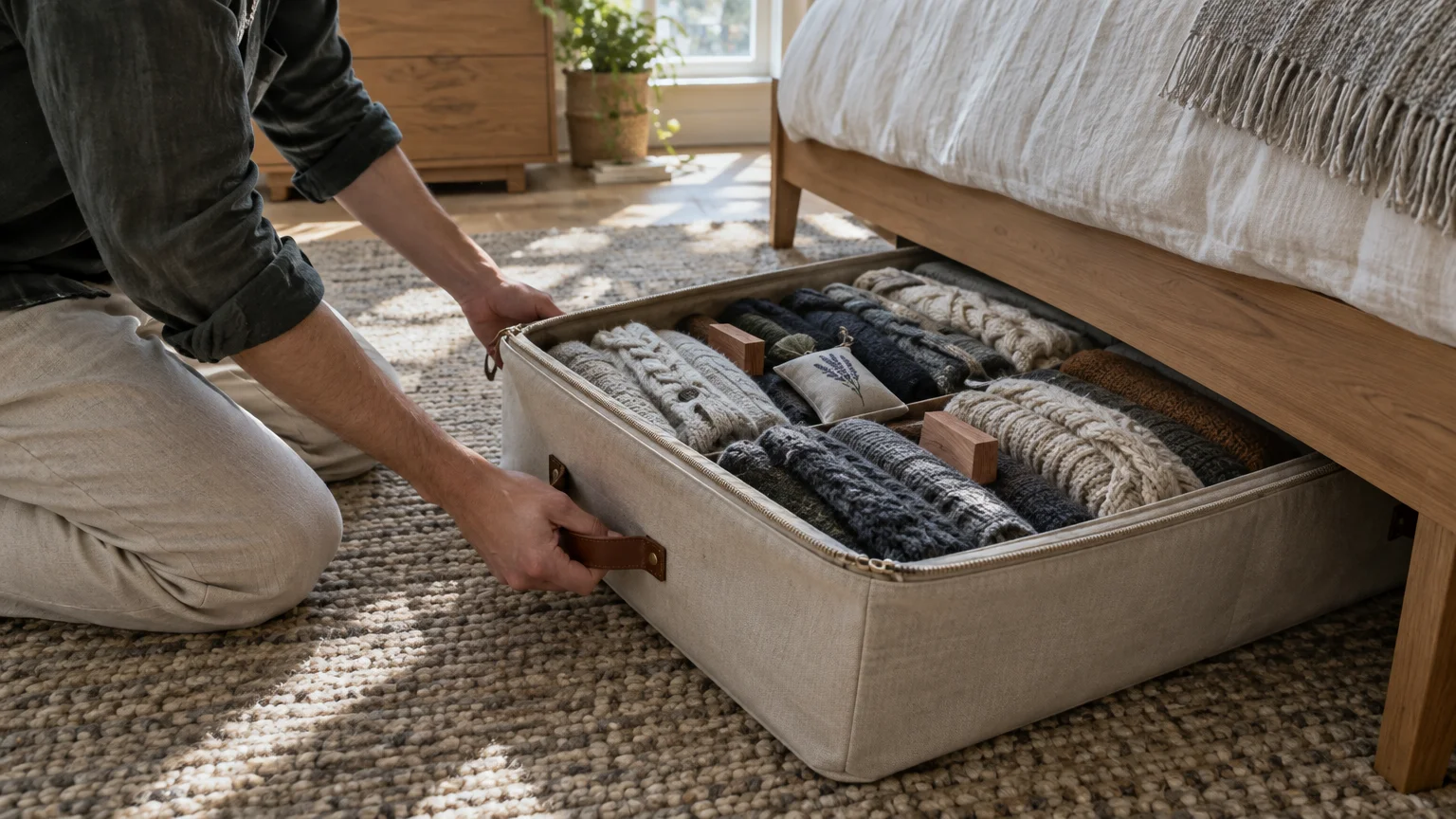
01 Out-of-Season Clothing
Heavy winter knitwear and bulky parkas consume excessive wardrobe space during warm summer months. Moving off-season garments under your frame frees up prime closet hanging rods immediately.
Always fold garments neatly and place them in breathable canvas boxes rather than airtight plastic bins. Natural fabrics need proper airflow to prevent mold and musty odors from developing over time.
Add red cedar blocks or lavender sachets to deter fabric pests naturally. Check the University of Kentucky Entomology guide on clothes moths for best pest-prevention practices.
Rotate these bins twice a year when the seasons change. This simple habit keeps your everyday wardrobe lean and easy to browse every morning.
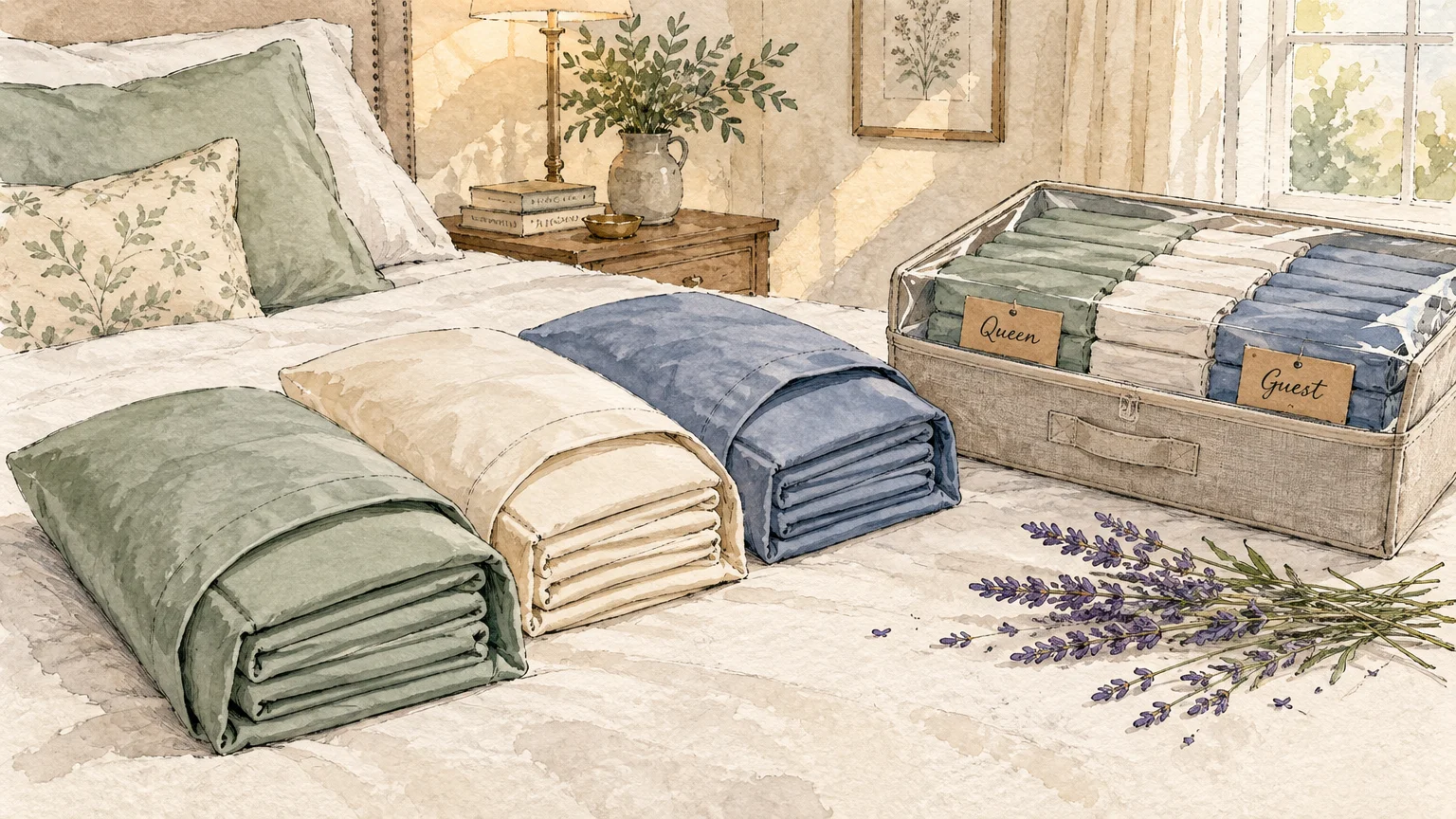
02 Extra Bed Linens and Guest Bedding
Storing extra sheets and duvet covers right where you use them eliminates trips to crowded hallway closets. It also keeps guest linens fresh and ready for immediate bed-making.
Fold matching sheet sets directly inside one of their pillowcases to create self-contained bundles. This tidy method keeps every component together and prevents mismatched bedding chaos.
Choose zippered fabric containers with clear top windows so you can identify sheet sizes at a glance. Label the exterior of each bin by room or bed size for effortless retrieval.
Tuck a fragrant sachet inside each linen bin to maintain a crisp, laundry-fresh aroma. Your guests will appreciate clean, inviting sheets that smell wonderful.
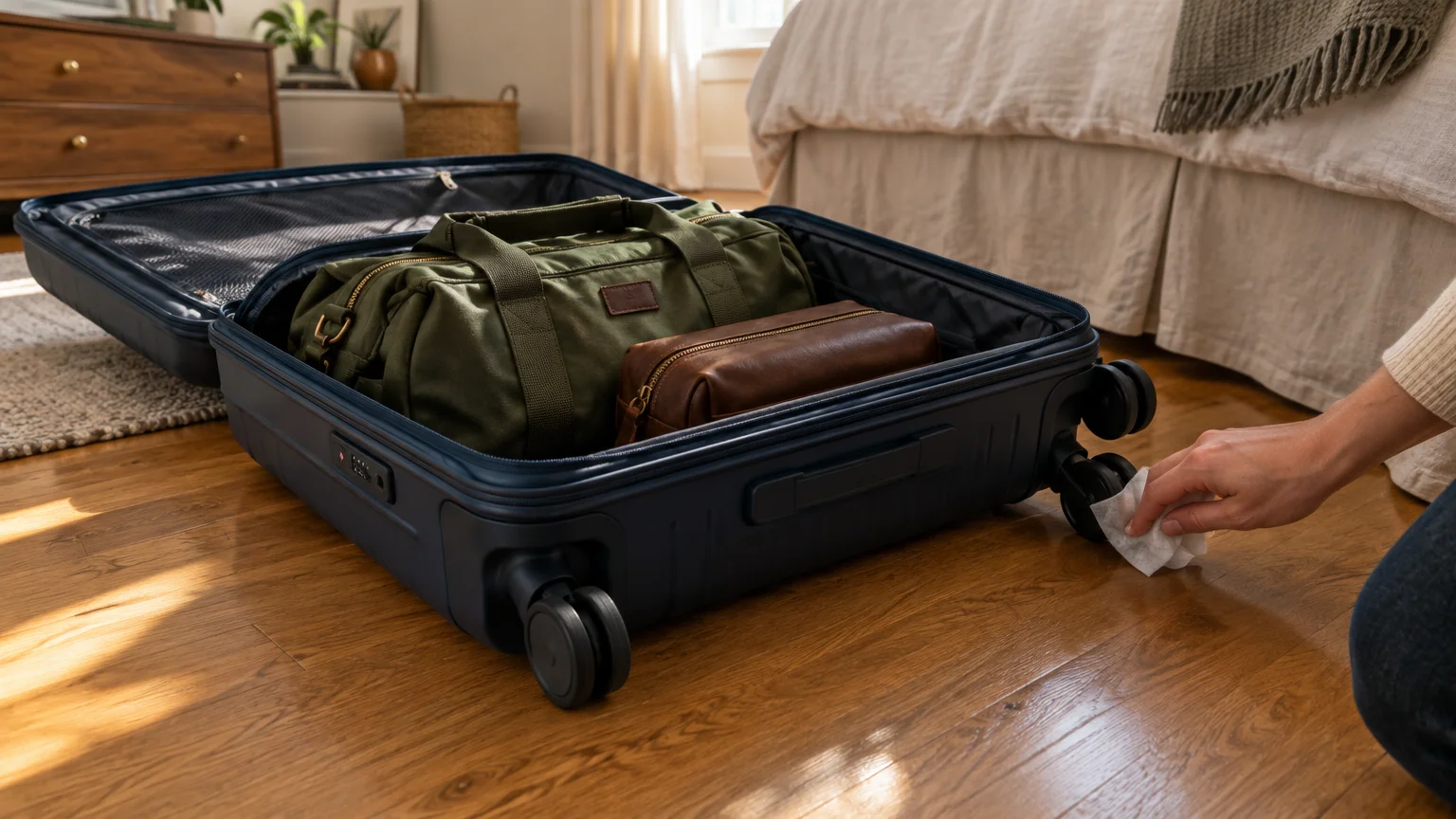
03 Empty Suitcases and Travel Bags
Empty luggage takes up an astonishing amount of closet real estate. Storing hard-shell carry-ons or rolling duffels under the bed puts hollow suitcases to productive use.
Maximize bedroom storage by using the nesting method with your travel baggage. Place small weekend totes and toiletry kits directly inside larger rolling suitcases.
Before sliding bags out of sight, wipe suitcase wheels with a damp disinfectant cloth. This quick chore prevents outside sidewalk grime and street debris from settling into your bedroom carpet.
You can even store off-season outerwear inside the suitcases themselves. This double-duty strategy turns dead interior luggage space into functional storage.
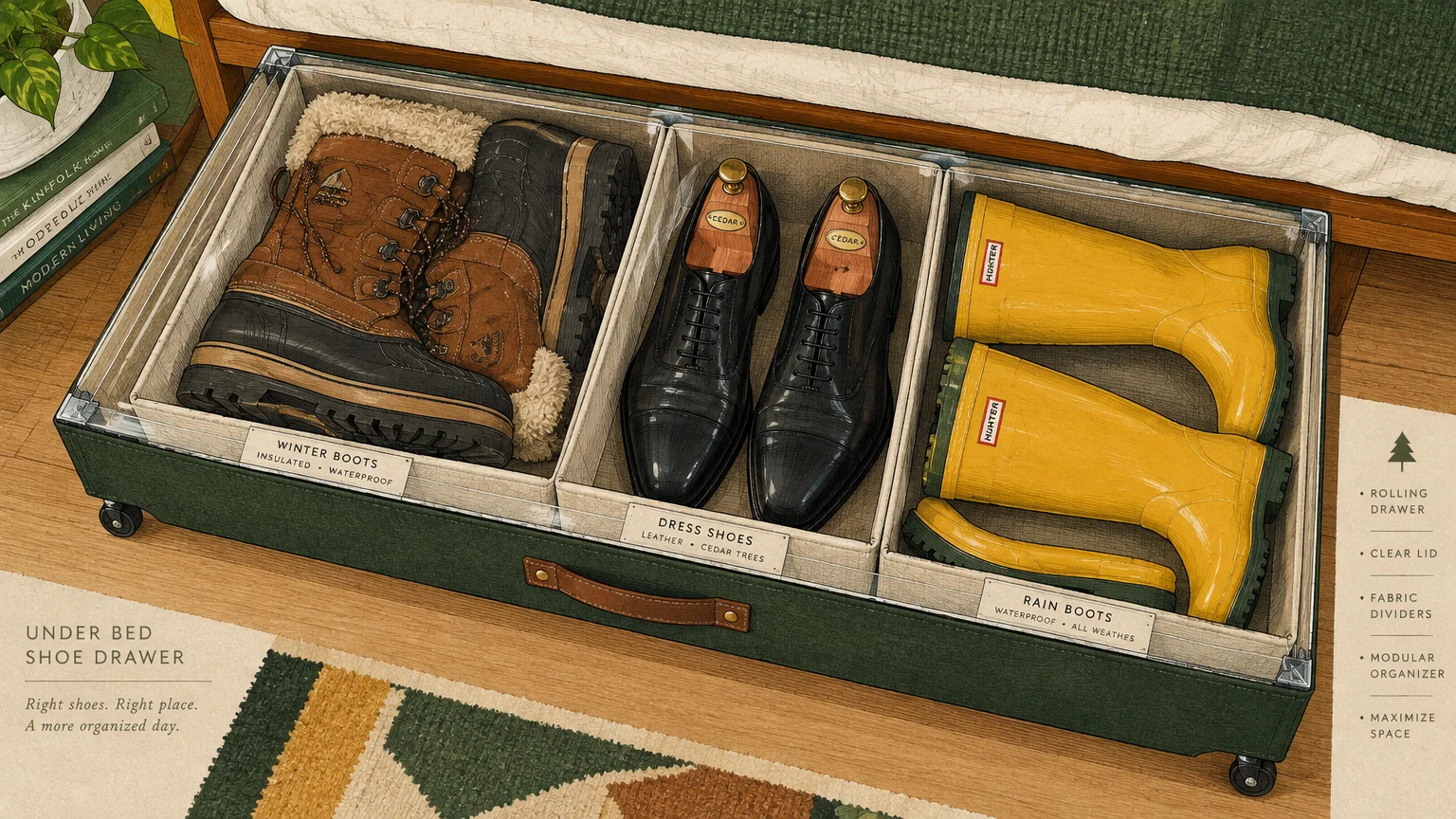
04 Seasonal Footwear and Specialty Shoes
Tall winter snow boots, rain gear, and formal evening shoes take up unnecessary shoe rack space during regular weeks. The floor beneath your bed serves as an ideal holding zone for these pairs.
Use low-profile shoe organizers with adjustable compartment dividers to preserve the shape of delicate footwear. Clear containers with individual drop-front lids offer maximum dust protection and quick visibility.
Always clean and dry shoes thoroughly before tucking them away for the season. Trapping damp footwear inside dark storage containers encourages mildew growth and degrades leather finishes.
Stuff boots with acid-free tissue paper or rolled hand towels to help them keep their structure. Proper upright alignment prevents unsightly creases across the leather or suede.
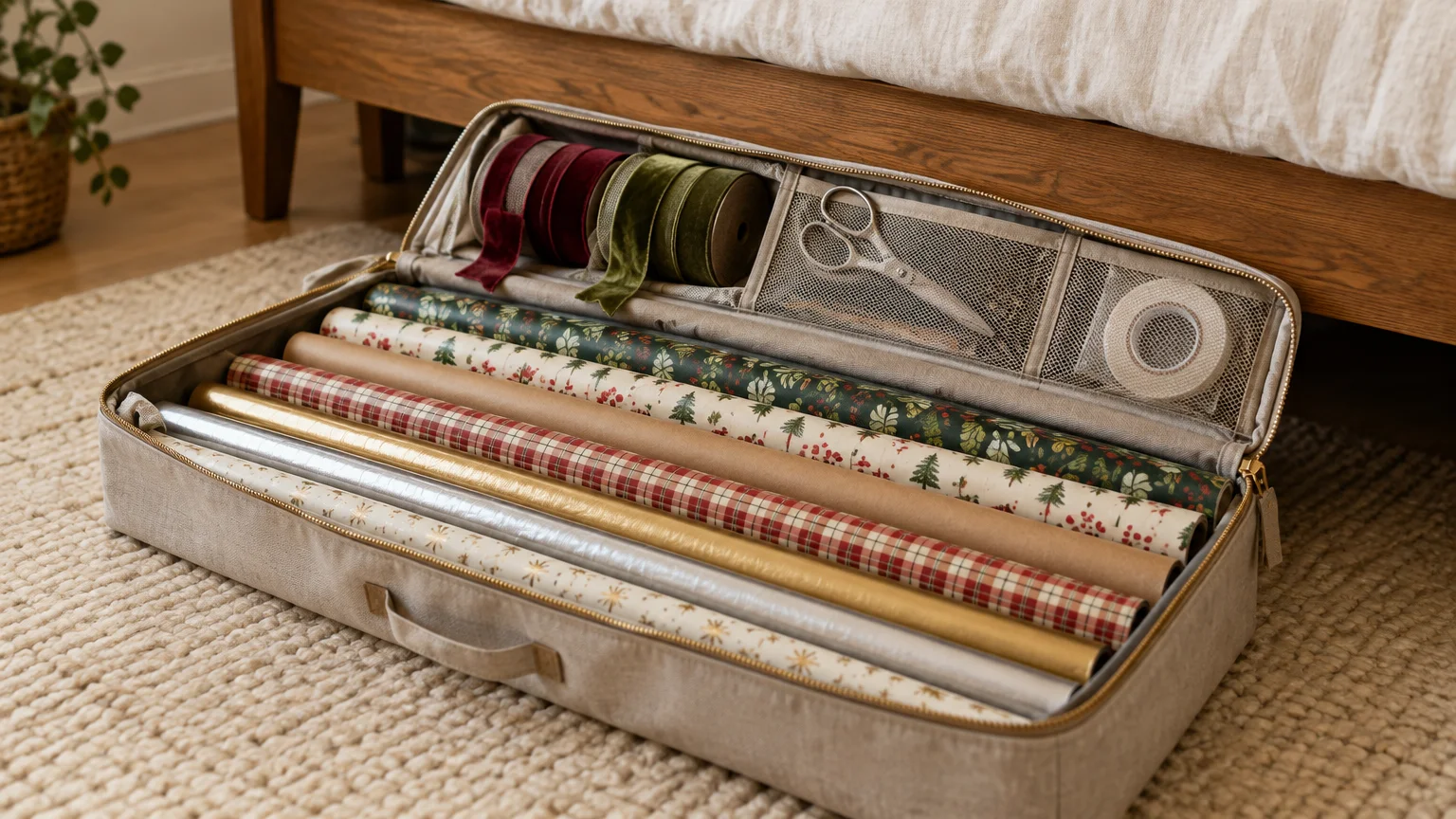
05 Gift Wrap, Ribbon, and Craft Rolls
Long rolls of wrapping paper are notoriously difficult to balance in closets without bending or tearing. A flat under-bed wrapping station provides the length needed to store long tubes flat.
Look for rigid gift wrap storage boxes that include internal dividers for ribbons, gift tags, and scissors. Having all your wrapping accessories in one pull-out container makes holiday prep fast and effortless.
For tight clearances, a zippered fabric gift organizer slips beneath low bed frames with ease. This keeps paper pristine and prevents rolls from unraveling or gathering dust throughout the year.
You can slide the entire organizer onto your bed surface whenever you need to wrap presents. Working at bed height protects your lower back from bending over the floor.
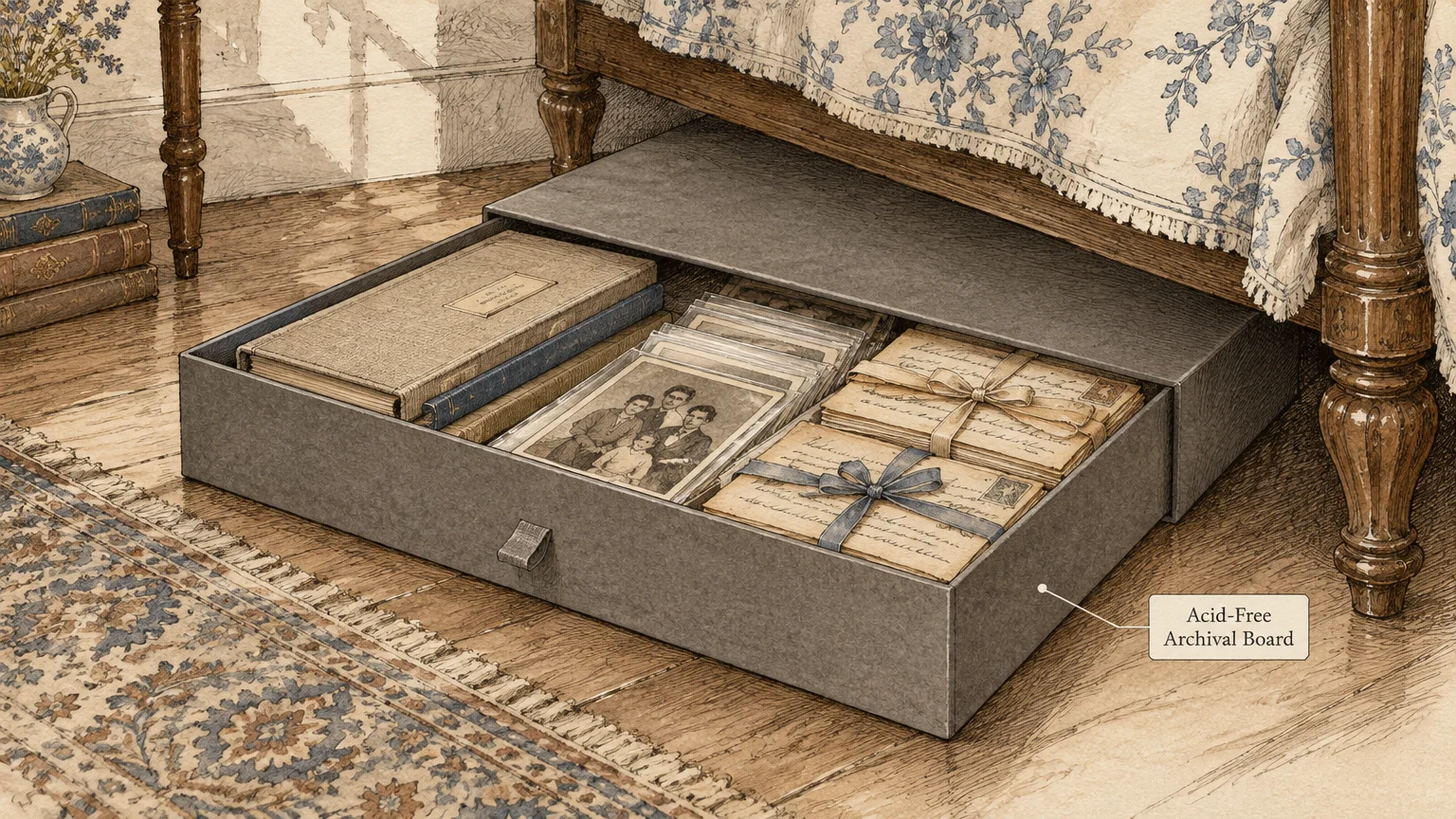
06 Archival Keepsakes and Photo Albums
Heavy photo albums, family scrapbooks, and sentimental memorabilia require flat, level storage to avoid spine warping. Sliding these memories beneath your bed keeps them safe without cluttering your living room shelves.
Keep your precious items preserved inside acid-free, archival-quality storage boxes. The Library of Congress Preservation Directorate recommends neutral-pH materials to protect historical documents from degradation.
Avoid using low-grade plastic containers that release harmful off-gasses near vintage photographs. Solid acid-free cardboard or cotton archival boxes maintain an ideal micro-environment for delicate paper artifacts.
Store boxes away from external walls to buffer them against outdoor temperature fluctuations. Consistent temperatures help prevent photographic paper and vintage inks from cracking.
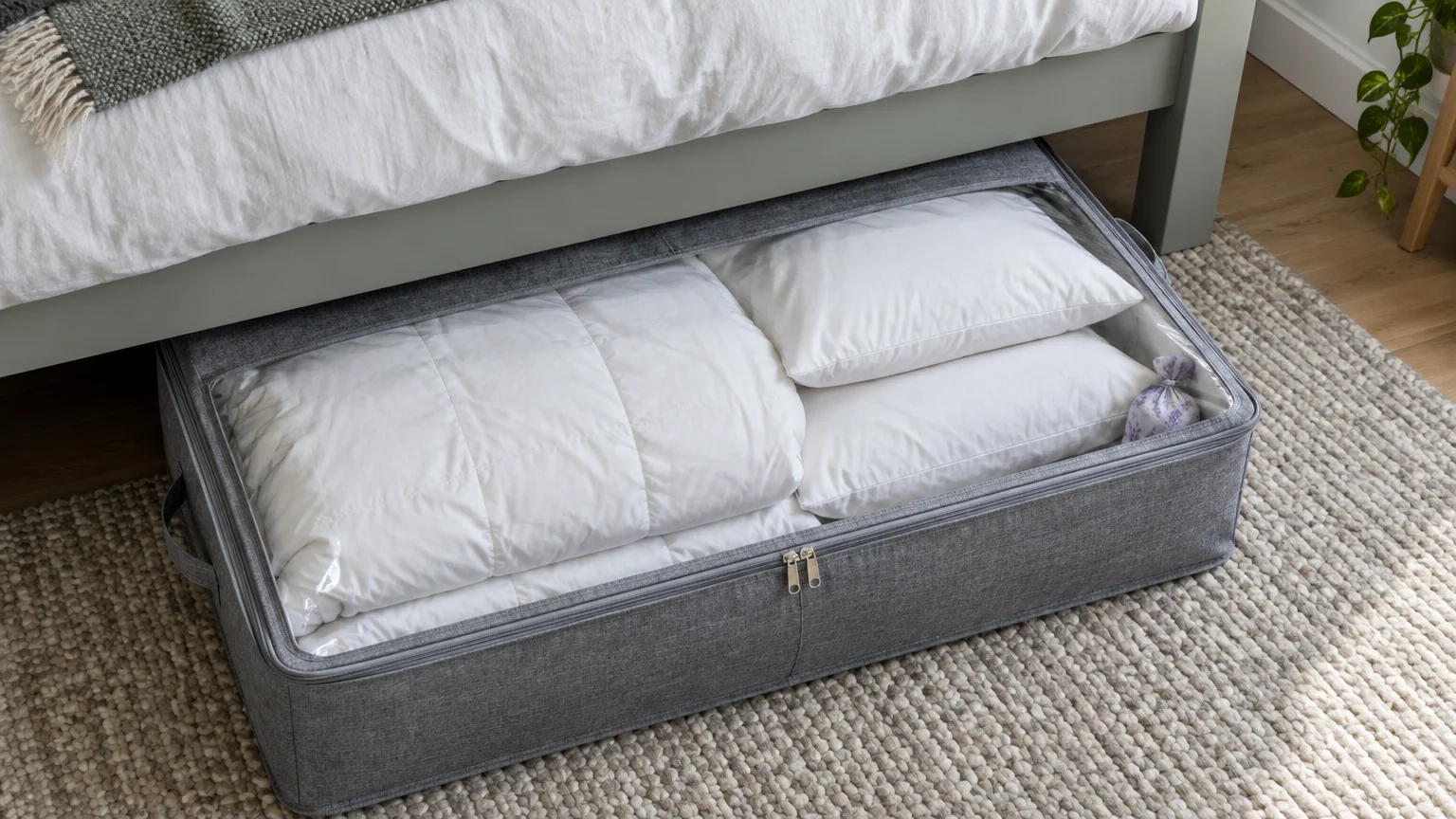
07 Bulky Comforters and Extra Pillows
Extra down comforters, sleeping bags, and spare sleeping pillows occupy entire closet shelves if left loose. Vacuum-compression storage bags compress bulky textiles by up to seventy-five percent for compact horizontal storage.
If you store natural down or feather items, avoid compressing them for more than six months. Extended compression can break down fragile feather quills and diminish natural loft permanently.
For down bedding, opt for structured fabric containers with breathable mesh panels instead of vacuum bags. This approach prevents moisture buildup while keeping dust and dirt away from delicate fibers.
Always wash and dry bulky blankets thoroughly before putting them into storage. Residual body oils attract fabric pests and cause stubborn yellow stains over time.
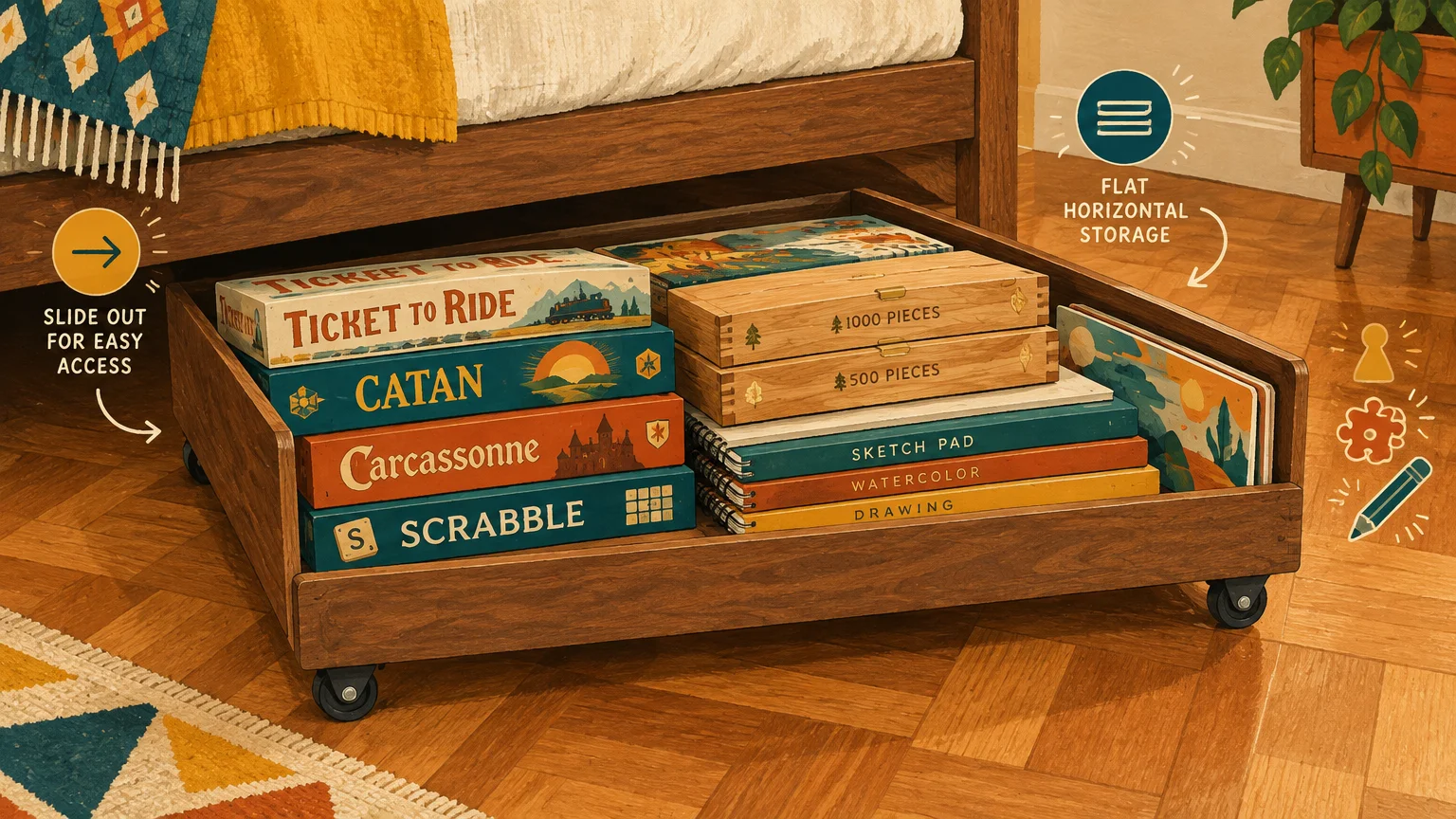
08 Board Games, Puzzles, and Hobby Gear
Board game boxes and large jigsaw puzzles stack horizontally much better than they stand vertically on shallow shelves. The broad footprint under a bed allows you to stack games neatly without crushing box lids.
Consider using a wheeled under-bed cart so children or visiting grandchildren can slide games out independently. Clear containers let you read game titles instantly without pulling out multiple boxes.
You can also reserve this space for flat hobby supplies, such as sewing patterns, quilting rulers, and sketchpads. Keeping creative supplies flat prevents creases and keeps projects organized between crafting sessions.
Group smaller hobby items into transparent pencil cases or zippered pouches before packing them into larger rolling bins. Compartmentalizing your tools ensures that small components never go missing.
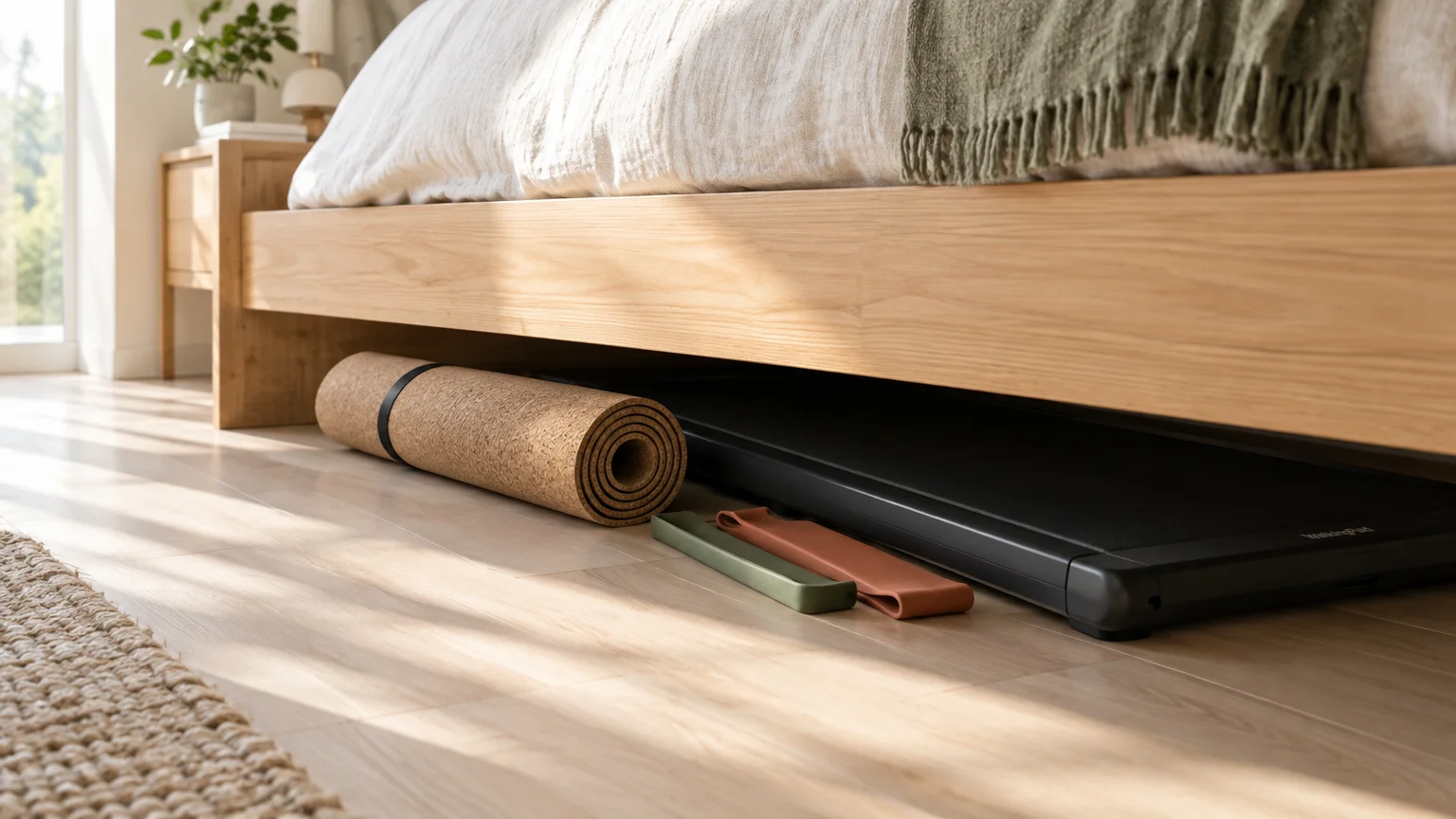
09 Exercise Mats and Flat Workout Equipment
Maintaining a home fitness routine feels easier when your equipment stays accessible yet invisible during the day. Rolled yoga mats, resistance bands, and flat sliders slide effortlessly beneath any bed frame.
A shallow rolling bin keeps foam rollers, hand weights, and workout bands from scattering across your bedroom floor. You can quickly pull the bin out for a morning stretch and tuck it away seconds later.
Wipe rubber mats with an antibacterial spray before putting them away to prevent unwanted odors. Allowing gear to dry completely ensures your sleeping environment stays fresh and clean.
Keeping exercise equipment in your bedroom creates a discreet wellness station. It encourages regular physical movement without turning your sanctuary into a disorderly commercial gym.
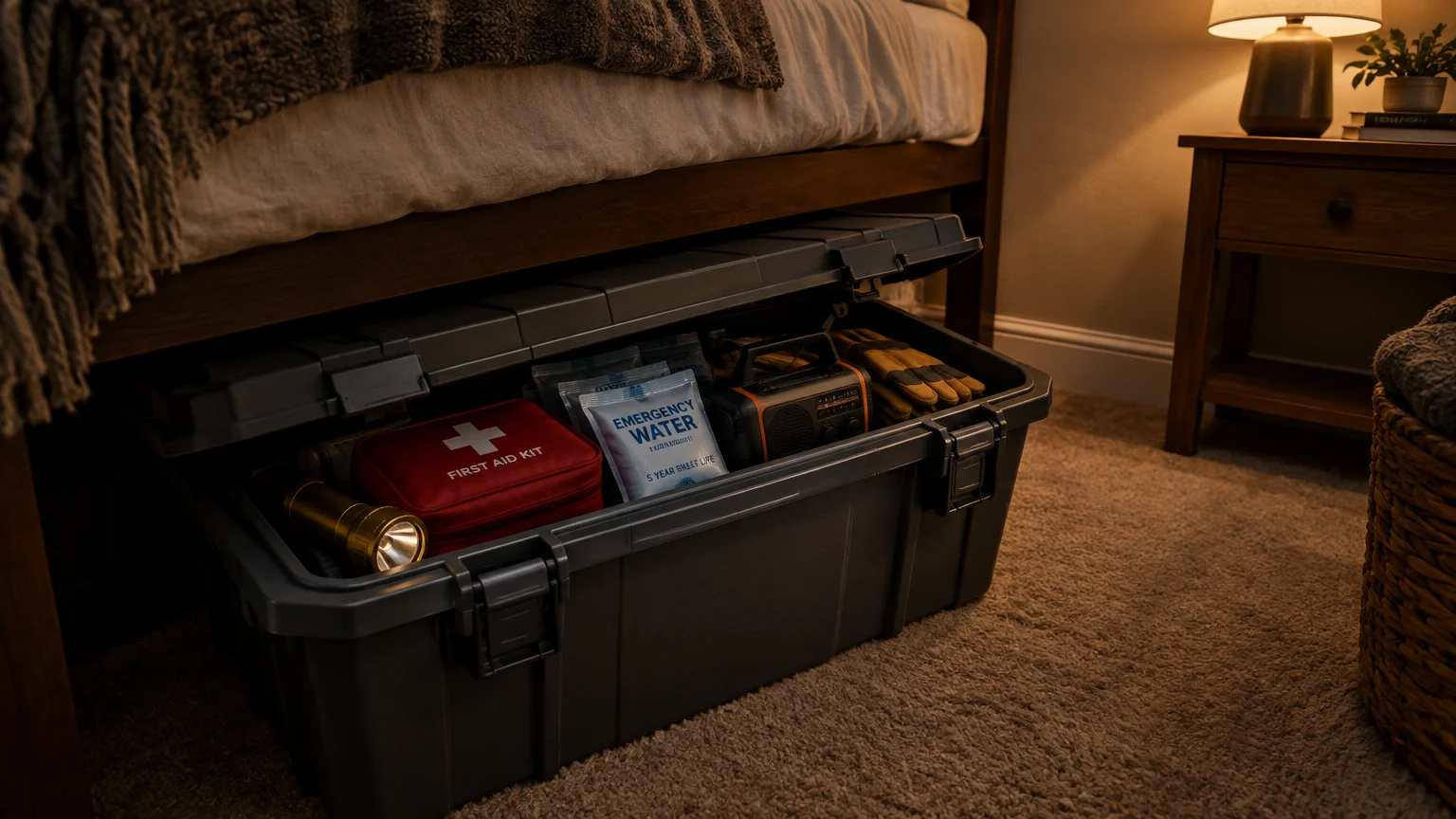
10 Emergency Preparedness Supplies
Disasters and power outages often happen during nighttime hours when you are asleep. Storing emergency gear within arm’s reach ensures immediate access to safety equipment when seconds count.
Keep a sturdy flashlight, extra batteries, a basic first aid kit, and sturdy walking shoes under your side of the frame. In an emergency, broken glass or sudden darkness will not leave you stranded.
The National Fire Protection Association stresses having accessible emergency plans and escape supplies ready in bedrooms. Place supplies in a distinctive bright container so you can locate it instantly by touch or sight.
Include a sealed bottle of drinking water and any critical backup medications in this kit. Rotate these consumable supplies twice a year to guarantee freshness and safety.
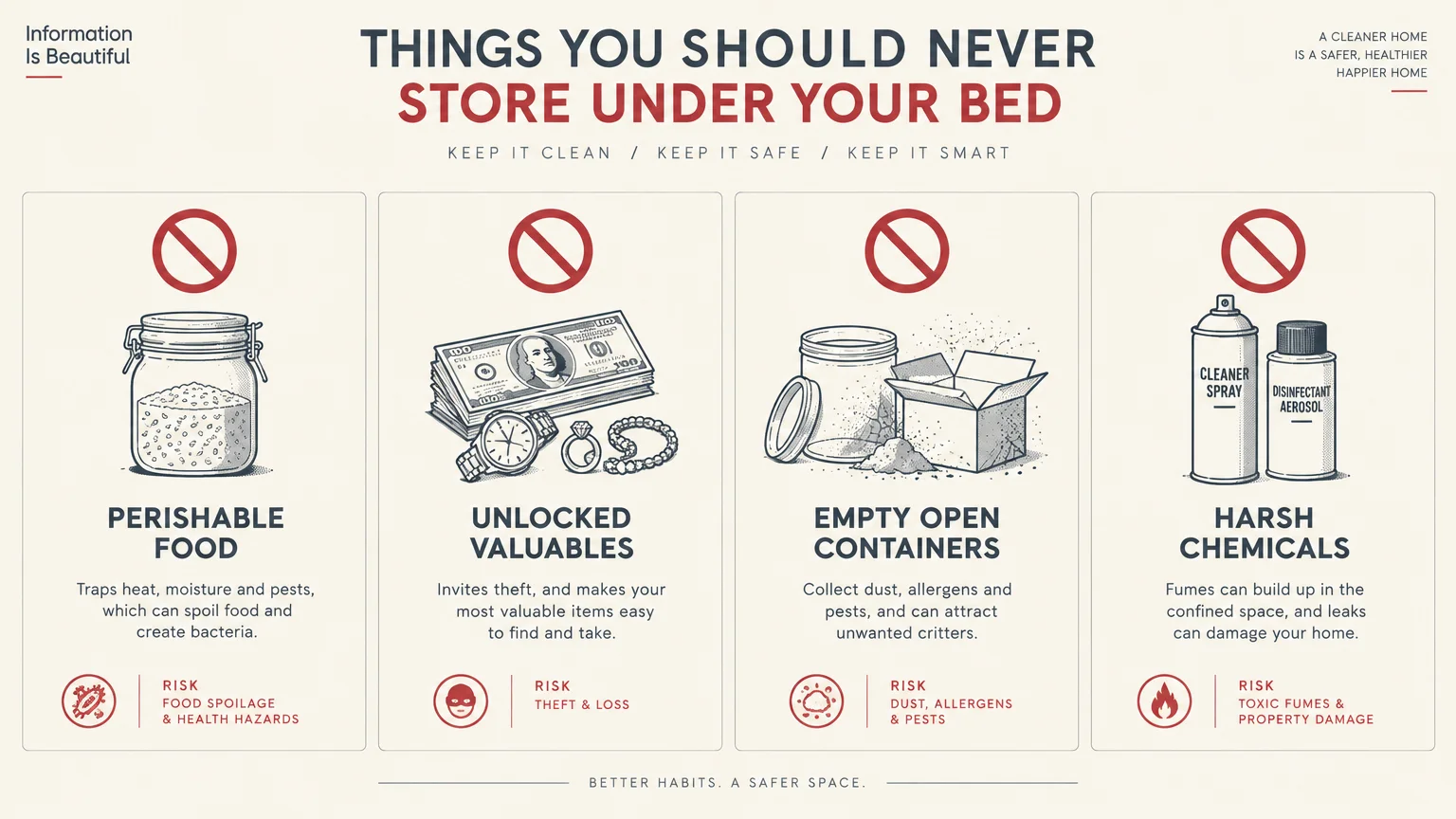
What to Never Store Under Your Bed
While under-bed storage provides incredible convenience, certain items do not belong in this dark environment. Avoid storing anything that attracts pests, releases odors, or requires delicate atmospheric control.
Never store unsealed food, pet snacks, or edible treats under your bed. Even tightly wrapped dried goods can attract ants, mice, and other pests directly into your sleeping sanctuary.
Steer clear of storing genuine leather jackets, boots, or purses in sealed plastic containers under the bed. Leather requires steady ambient air circulation to prevent mildew, drying, and irreversible cracking.
Resist using this space as a dumping ground for random clutter or broken household items. What to store under your bed should remain intentional, categorized, and clearly labeled for purposeful retrieval.
Finally, avoid storing heat-sensitive electronics or volatile chemicals like spray paints beneath your mattress. Mattresses trap ambient warmth, which can degrade lithium batteries and aerosol canisters over time.
The Health Factor: Managing Dust Mites and Bedroom Allergens
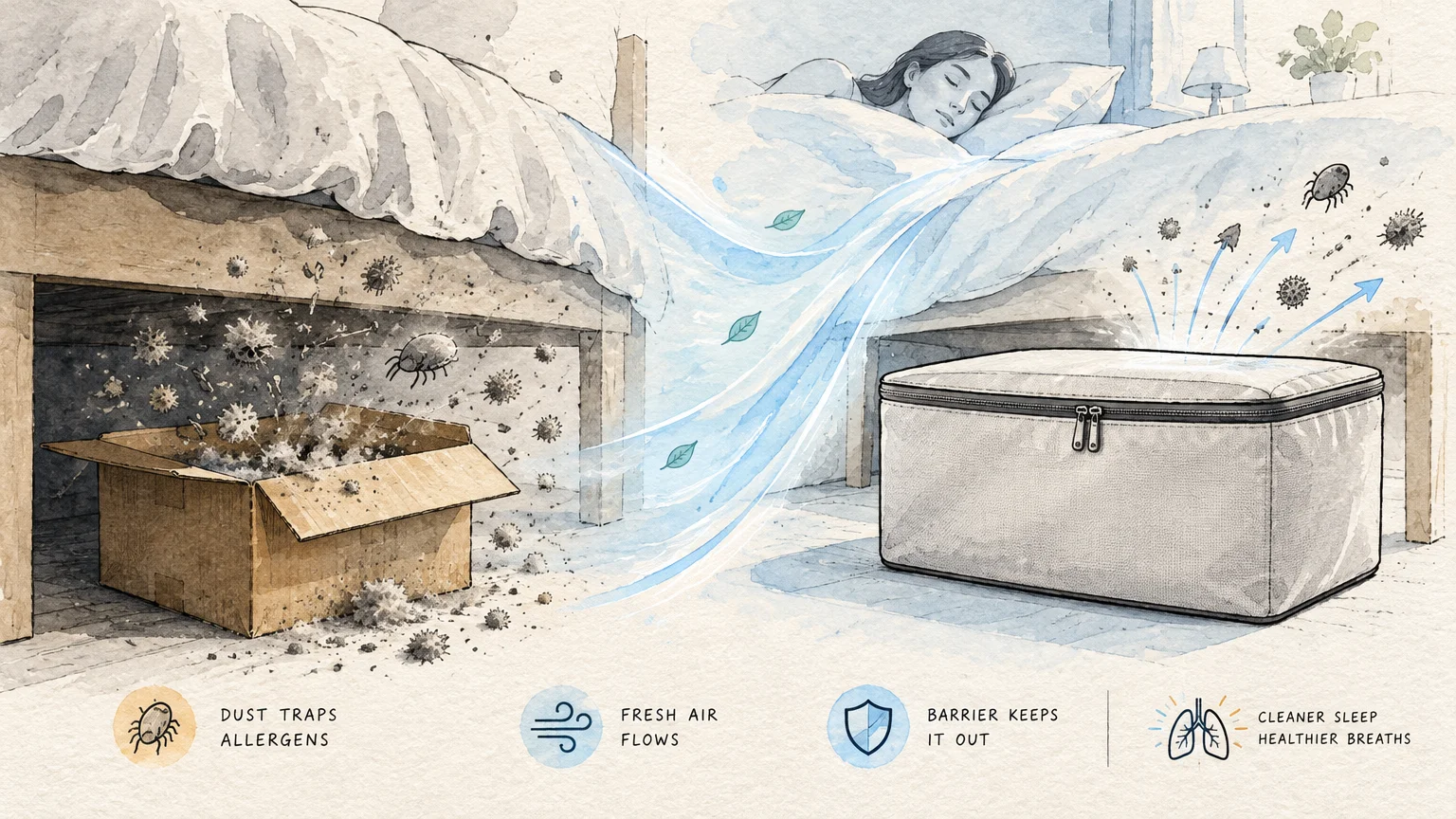
Dust mites thrive in warm, dark bedroom spaces where shedding skin cells settle naturally over time. Storing open boxes or loose items underneath your bed creates an ideal breeding ground for these common allergens.
The Asthma and Allergy Foundation of America notes that dust mites represent a primary trigger for chronic indoor allergies. Protecting your stored items with fully zippered covers shields both your belongings and your respiratory health.
Select storage containers equipped with rubber gasket seals or tightly woven canvas shells. These physical barriers keep microscopic dust particles and pet dander from settling onto stored clothing and clean linens.
Establish a routine to vacuum under your bed thoroughly at least once every month. Rolling bins with smooth wheels make clearing the floor quick and physically effortless for anyone with limited mobility.
If you have wall-to-wall carpeting, sprinkle baking soda over the area before vacuuming to neutralize trapped odors. A clean under-bed perimeter directly enhances overall indoor air quality while you sleep.
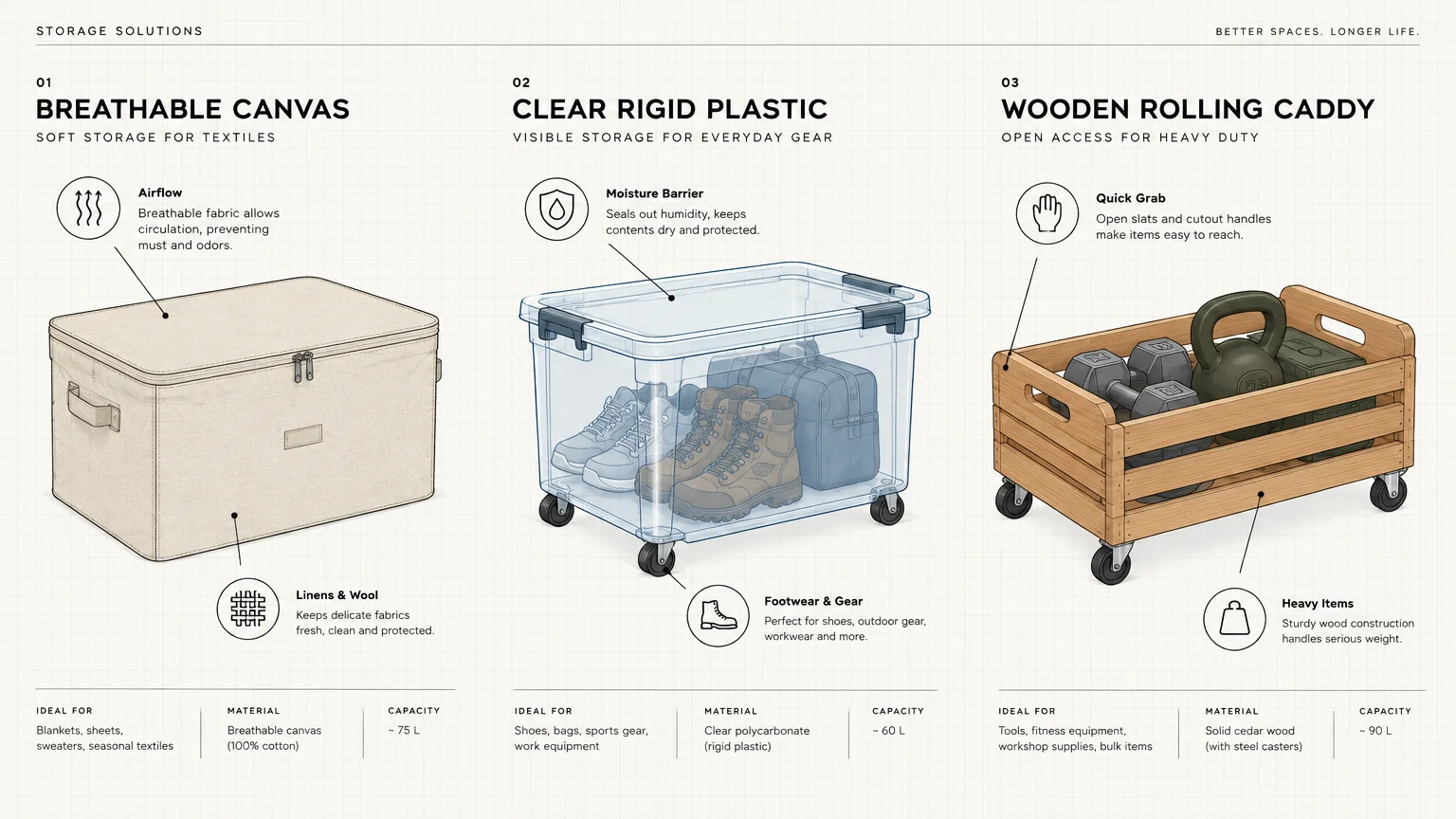
Container Comparison: Choosing the Best Under-Bed Organizers
Selecting the correct container material determines how well your belongings survive seasonal storage. Different items require specific airflow, durability, and moisture resistance to stay fresh.
| Container Type | Best Used For | Main Advantages | Key Considerations |
|---|---|---|---|
| Rigid Plastic with Wheels | Shoes, hand weights, emergency kits | Glides smoothly, resists moisture, durable | Rigid heights require exact frame clearance |
| Breathable Fabric Bins | Sweaters, duvet covers, extra linens | Allows airflow, flexible sides fit tight spots | Offers less structural protection against crushing |
| Vacuum Compression Bags | Bulky synthetic blankets, winter coats | Reduces volume by up to 75%, dust-tight | Not suitable for natural feathers or down |
| Archival Acid-Free Boxes | Photo albums, scrapbooks, family papers | Prevents paper discoloration, chemical-free | Not water-resistant; requires careful handling |
| Long Divided Cases | Gift wrapping paper, crafting rolls | Keeps long tubes unbent, holds tape and tools | Requires full-length clearance alongside the bed |
Match the container style directly to the weight and material composition of the items you store. Balancing durability with ease of access guarantees a storage system you will actually maintain.
Opt for clear lids whenever possible so you can verify contents without unzipping or unlatching containers. Visual confirmation saves valuable minutes when hunting for a specific item in a hurry.
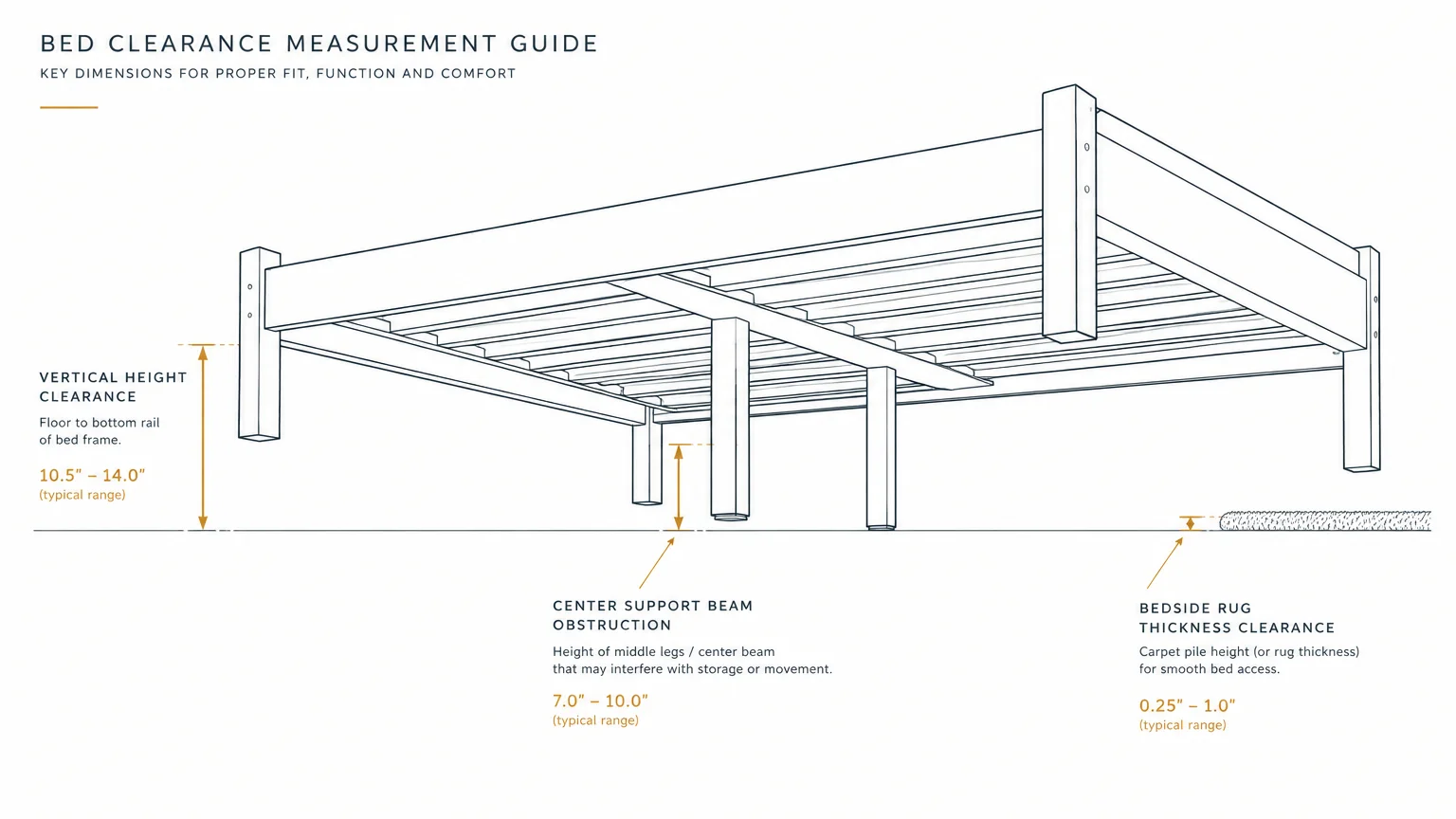
How to Measure and Prepare Your Under-Bed Space
A successful under-bed organizing project starts with exact measurements rather than guesswork at the store. Follow this practical checklist before purchasing any storage bins or bags.
First, measure the vertical clearance from the floor to the lowest point of your bed frame. Keep in mind that support beams, center legs, and mattress drop rails often reduce available clearance.
Next, calculate the width and depth of the open footprint between all structural bed support legs. Many king frames feature center support posts that divide the floor space into distinct quadrants.
If you need additional clearance, install heavy-duty bed risers under your frame posts. Sturdy composite risers can safely add two to five inches of vertical height for deeper containers.
Thoroughly deep-clean the floor space before sliding any containers under your mattress. Vacuum the carpet with a HEPA filter or mop hard floors to remove lingering dust buildup.
Finally, inspect the underside of your bed frame for protruding screws, loose slats, or sharp wood splinters. Sand down rough spots or cover exposed hardware with heavy tape to protect storage container covers.
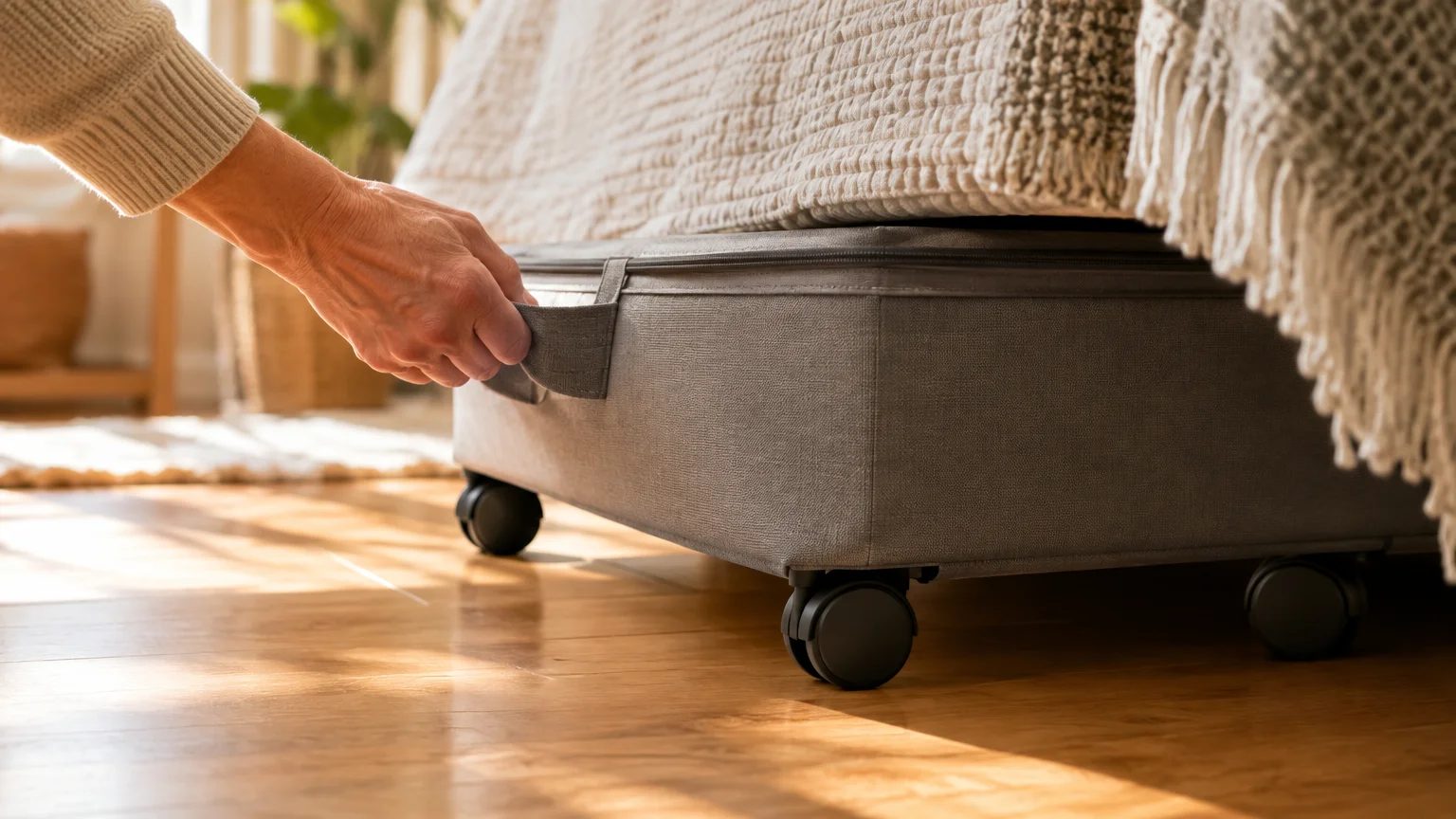
Ergonomic Tips for Easy Access and Maintenance
Storing items low to the floor should never strain your back or create physical frustration. Implementing ergonomic habits ensures your storage setup remains easy to use for years to come.
Attach braided cord pulls or fabric handles to the outer corners of each storage container. These extensions allow you to slide bins out smoothly with minimal forward bending.
Place your most frequently used items along the outer perimeter of the bed frame. Reserve the hard-to-reach center area for deep-seasonal goods that you only access once or twice a year.
Use a long-handled reaching tool or a lightweight swiffer pole to retrieve containers that slide too far inward. This prevents unnecessary kneeling on hard bedroom floors.
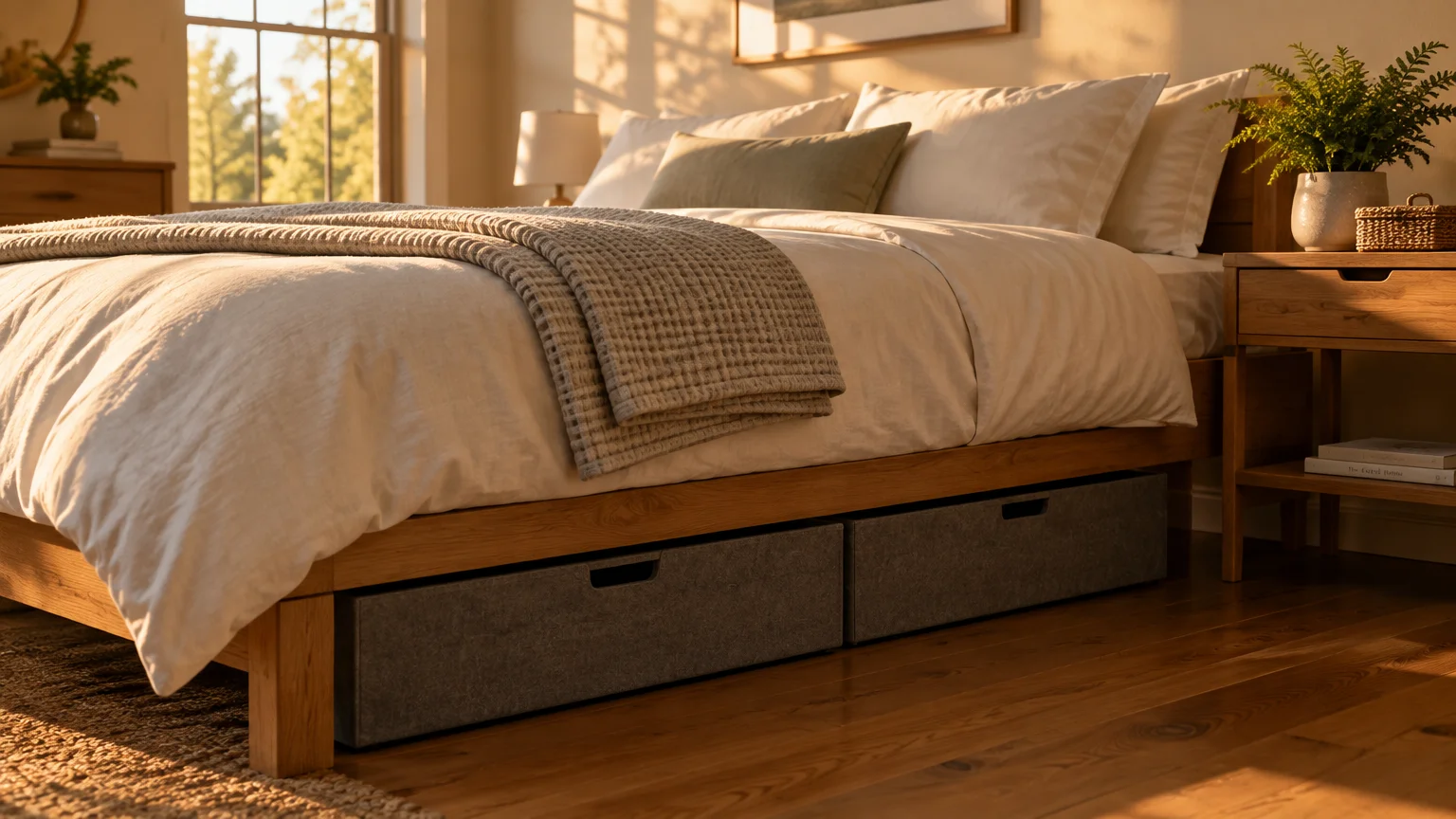
Take the First Step Today
Grab a tape measure right now and check the exact vertical clearance underneath your bed frame.
Choose just one category from this list—like your off-season coats or spare guest linens—to relocate this weekend.
Reclaiming this quiet space will instantly lighten your closets and bring lasting calm to your bedroom routine.