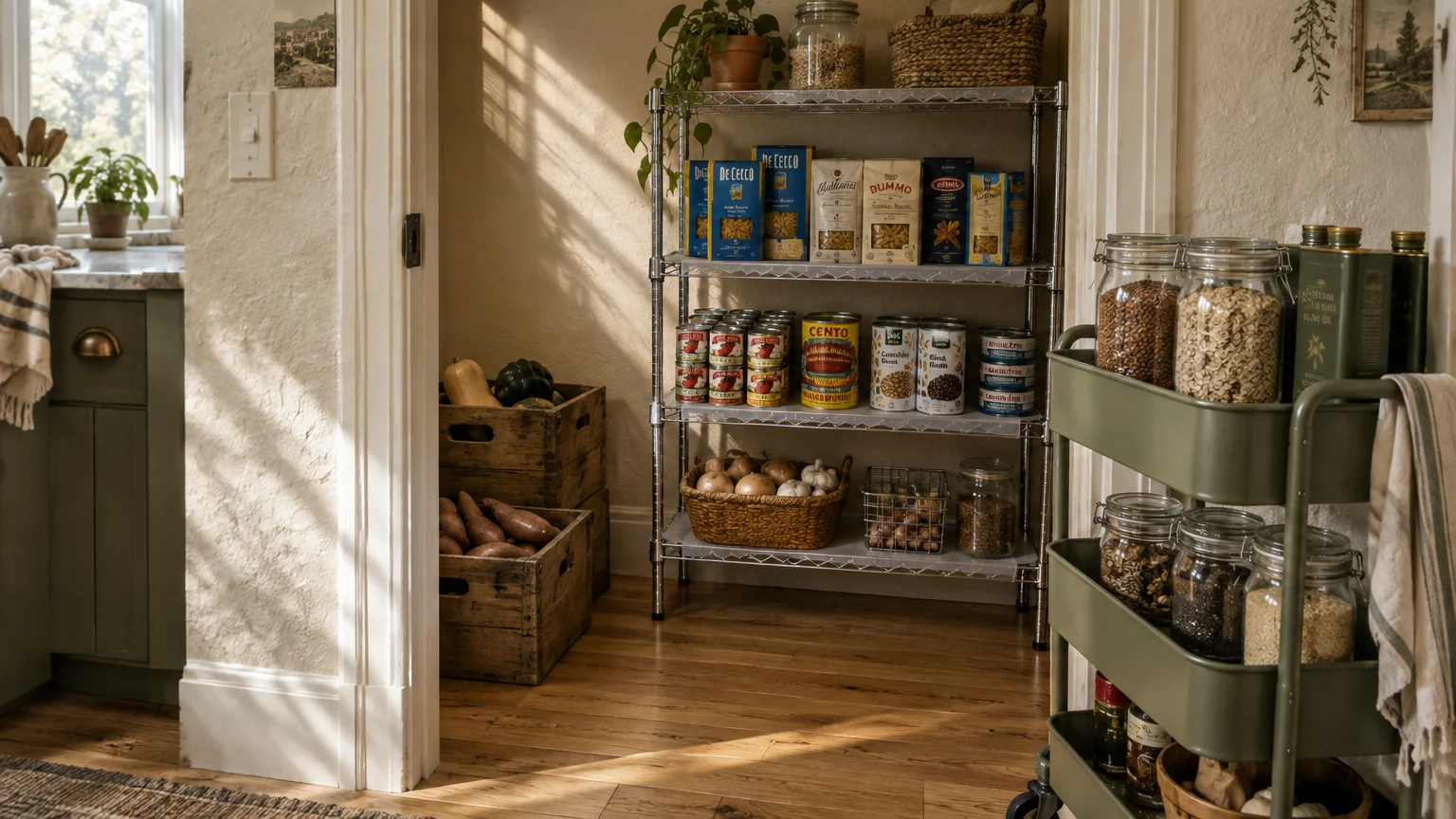
A shelf-free pantry might feel like a frustrating storage dilemma, but an open closet or bare alcove offers complete layout freedom. You can customize every vertical inch to match your groceries rather than struggling with rigid, poorly spaced shelves.
Transforming an empty closet into practical small pantry storage requires vertical tools that hold weight securely and keep ingredients visible. Smart modular systems prevent deep floor clutter and keep daily essentials within comfortable reach.
These eight pantry organization ideas turn bare floors and blank walls into a functional, highly efficient kitchen space.
01 Multi-Tier Rolling Utility Carts
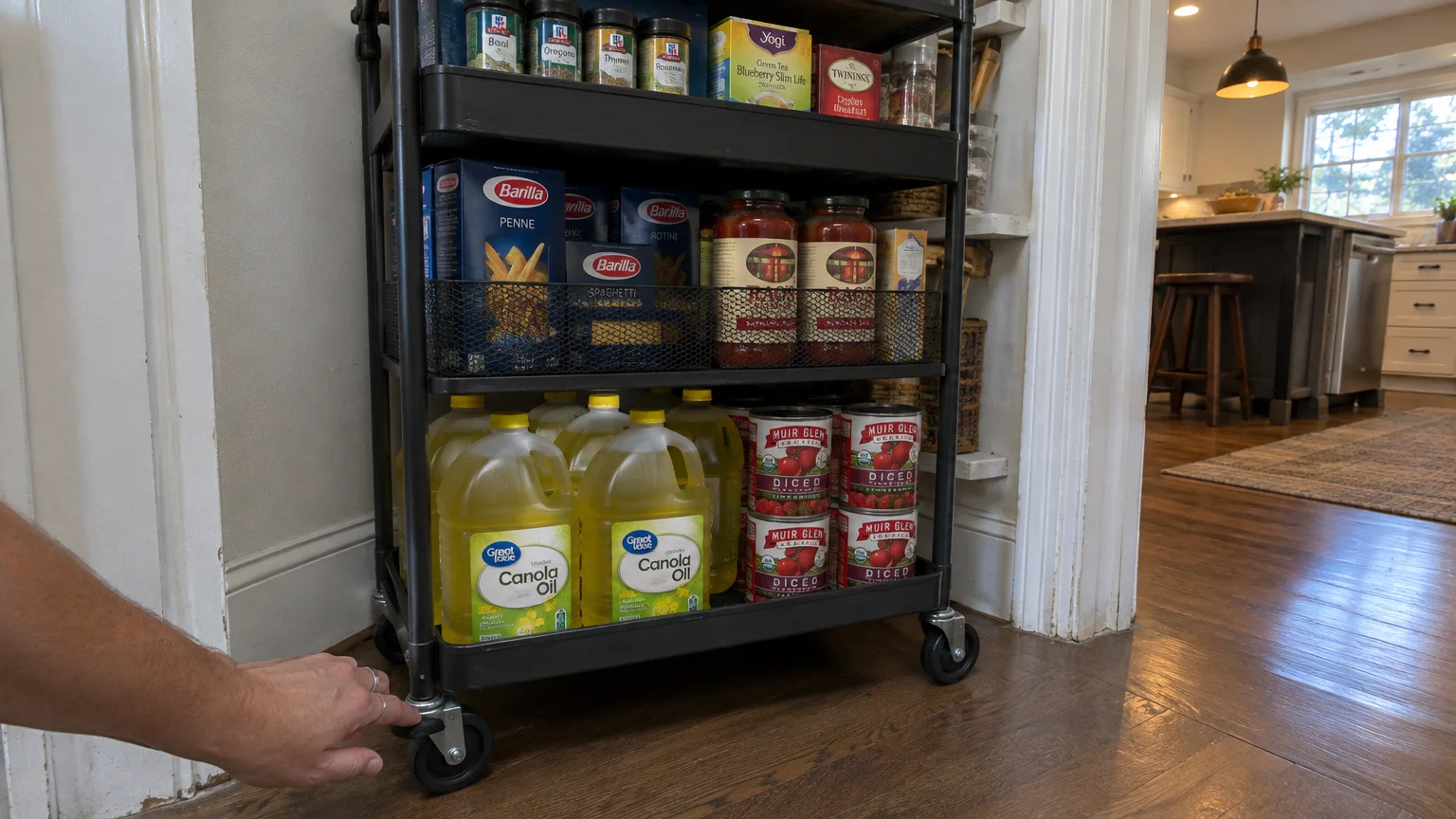
Heavy-duty metal utility carts provide immediate structure on open pantry floors. You can easily roll them toward your prep counter during meal prep and slide them back inside when finished.
Select carts with three or four tiers to maximize vertical capacity. Narrow, three-tier carts work particularly well in tight corners or narrow reach-in closets.
Assign each level a distinct category to streamline your kitchen organization. Use the bottom tray for heavy items, such as large oil bottles and canned goods, to stabilize the cart.
Dedicate the middle tray to daily lunch items or pasta boxes. Reserve the top tier for lightweight baking spices, snack bars, or everyday seasoning blends.
Look for carts with locking caster wheels. Locking the wheels prevents the cart from shifting whenever you pull heavy items from the lower baskets.
02 Freestanding Wire Shelving Units
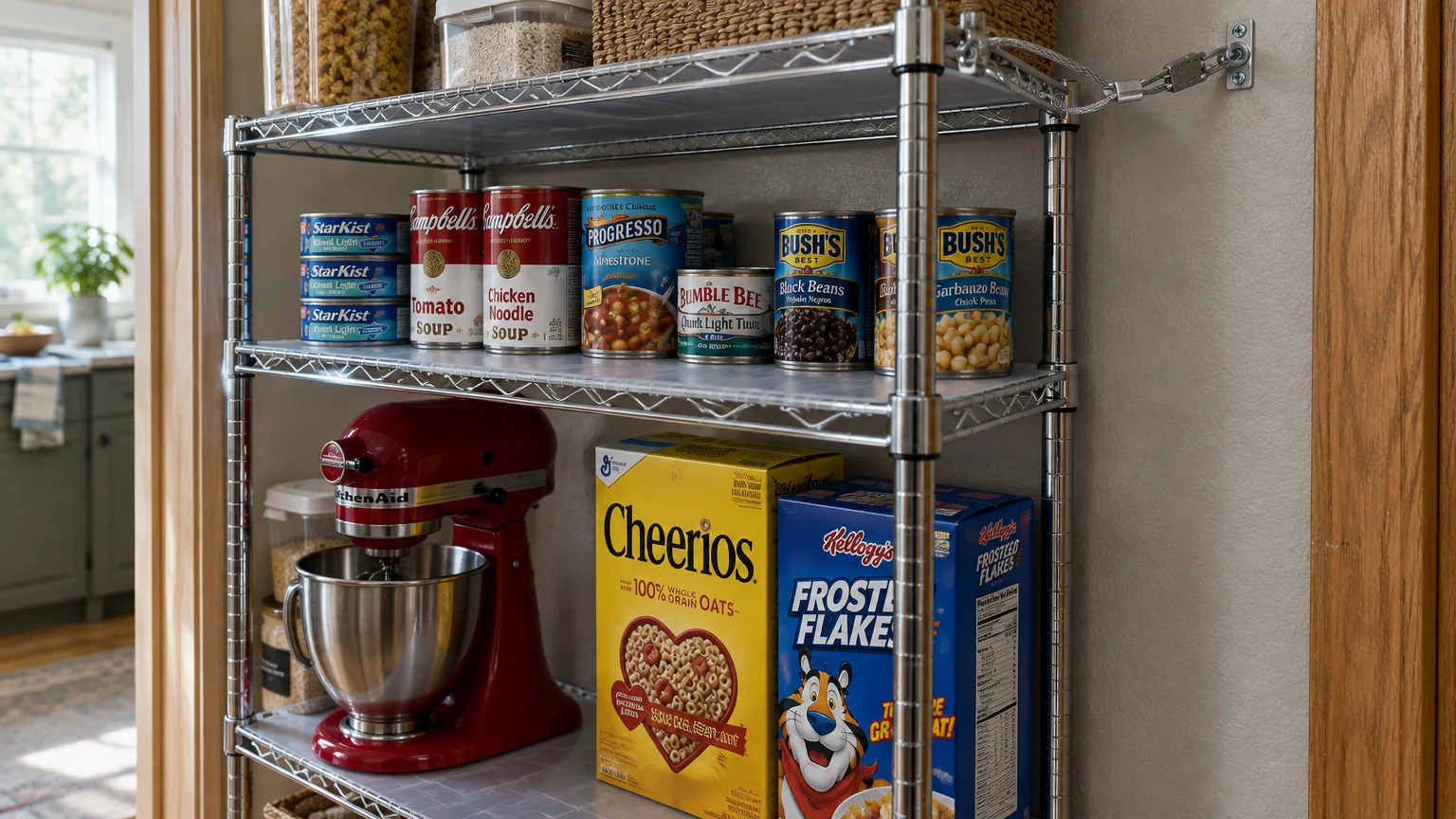
Freestanding commercial wire racks give you heavy-duty storage without requiring permanent wall anchors or carpentry skills. These units assemble quickly using slip sleeves and withstand hundreds of pounds of dry goods.
Adjust the wire shelves to fit your specific grocery inventory. Space lower tiers wider apart for tall cereal boxes and small kitchen appliances.
Position upper tiers closer together for short soup cans and tuna tins. This tight spacing prevents wasted vertical headroom across the entire unit.
Add rigid translucent shelf liners across the open wire grates. Liners prevent skinny spice jars from tipping over and catch sticky spills before they drip onto lower tiers.
Always secure tall freestanding units using heavy-duty furniture anchors. The U.S. Consumer Product Safety Commission recommends anchoring tall storage units to wall studs to prevent accidental tip-over injuries.
03 Front-Opening Stackable Storage Bins
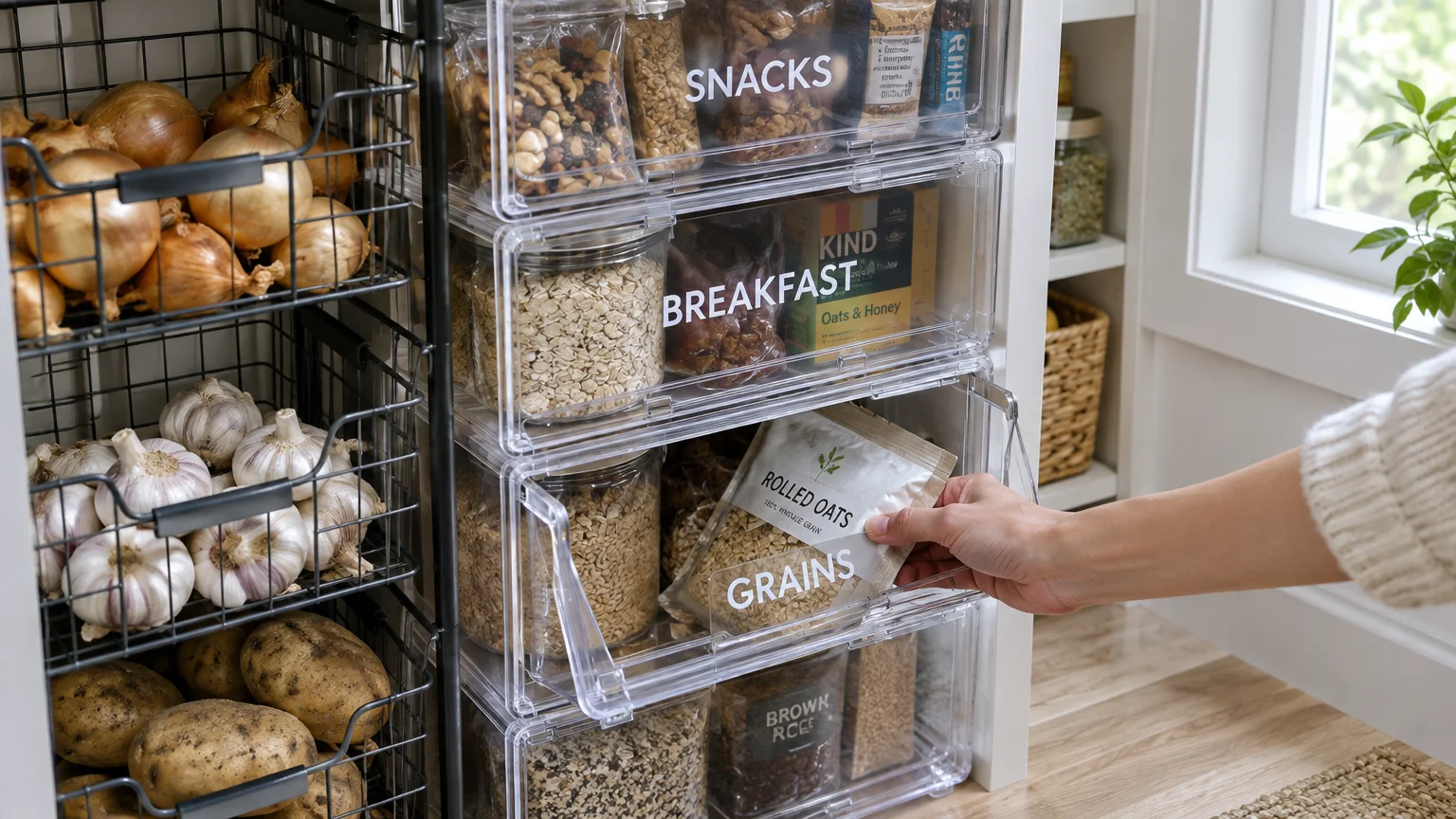
Standard storage tubs with top-fitting lids make poor pantry shelves because accessing the bottom tub requires unstacking everything above it. Front-opening or drop-front modular bins solve this problem by turning stackable containers into pull-out cubbies.
Clear acrylic drop-front bins let you see inventory levels instantly. You can slide your hand inside the front hatch to grab a can without moving the containers above it.
Stack sturdy wire baskets with fold-down handles to create an open modular tower. Wire designs allow air circulation, making them great for bagged onions, garlic bulbs, and citrus fruits.
Organize like items together inside individual bins. Keep savory snack pouches in one container, breakfast oatmeal packets in another, and boxed side dishes in a third.
Apply bold, printed labels across the front panel of each bin. Clear labels remind family members where items belong and make grocery unloading faster.
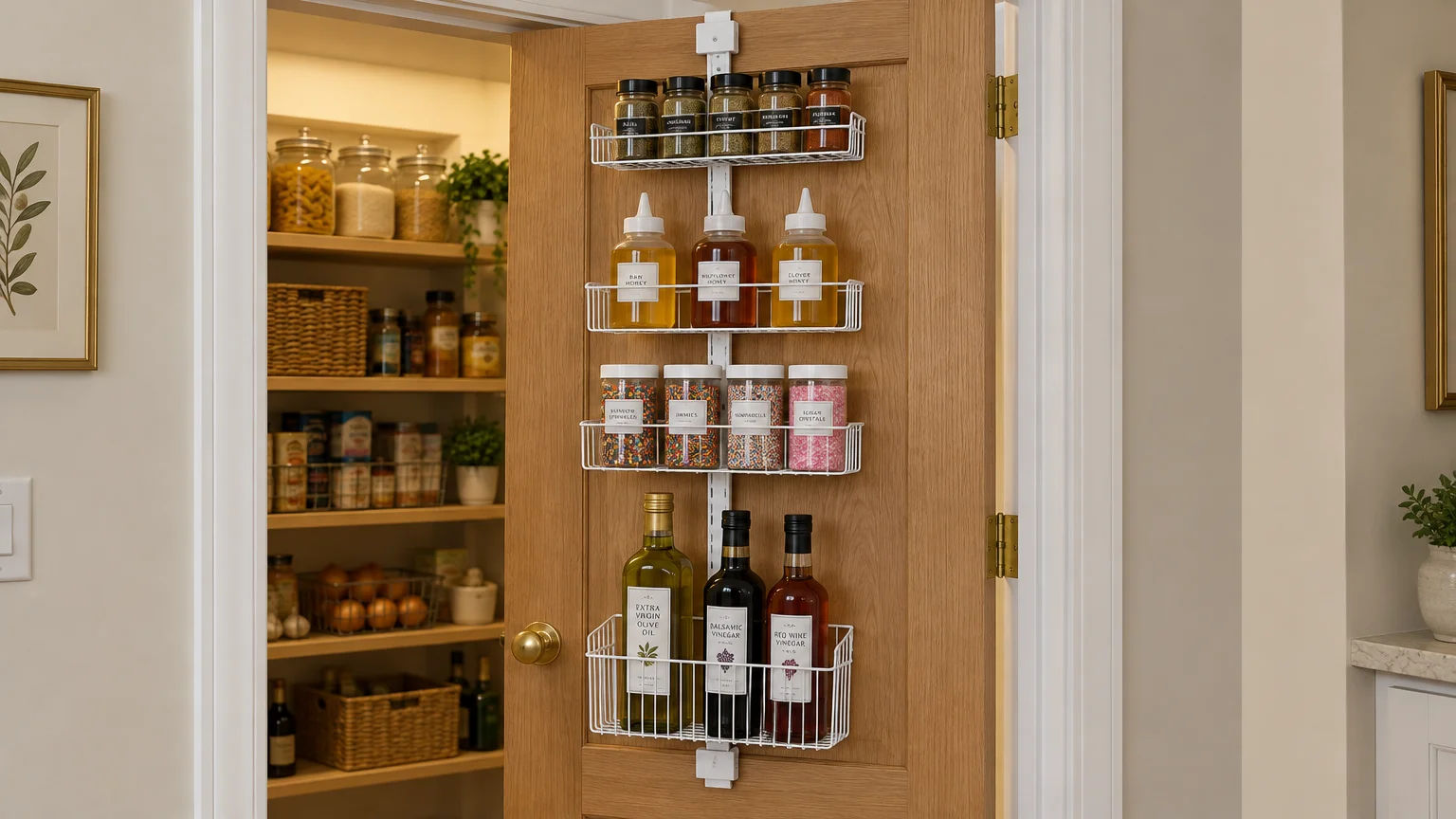
04 Heavy-Duty Over-the-Door Organizers
The interior face of your pantry door is prime vertical real estate. Installing an over-the-door hanging system instantly adds the capacity of several shallow shelves without taking up floor space.
Choose steel track systems that clamp securely to the top and bottom edges of the door. Clamped systems stay steady and silent when you open and shut the door.
Avoid flimsy fabric shoe organizers for heavy jars and cans. Instead, choose systems with powder-coated wire or solid acrylic baskets that resist sagging under substantial weight.
Arrange your baskets by bottle and jar height. Reserve shallow top tiers for small spice jars, sauce packets, and baking extracts.
Use deep lower baskets for vinegar jugs, peanut butter jars, and condiment squeeze bottles. Keeping these small containers on the door clears substantial space on your primary floor storage units.
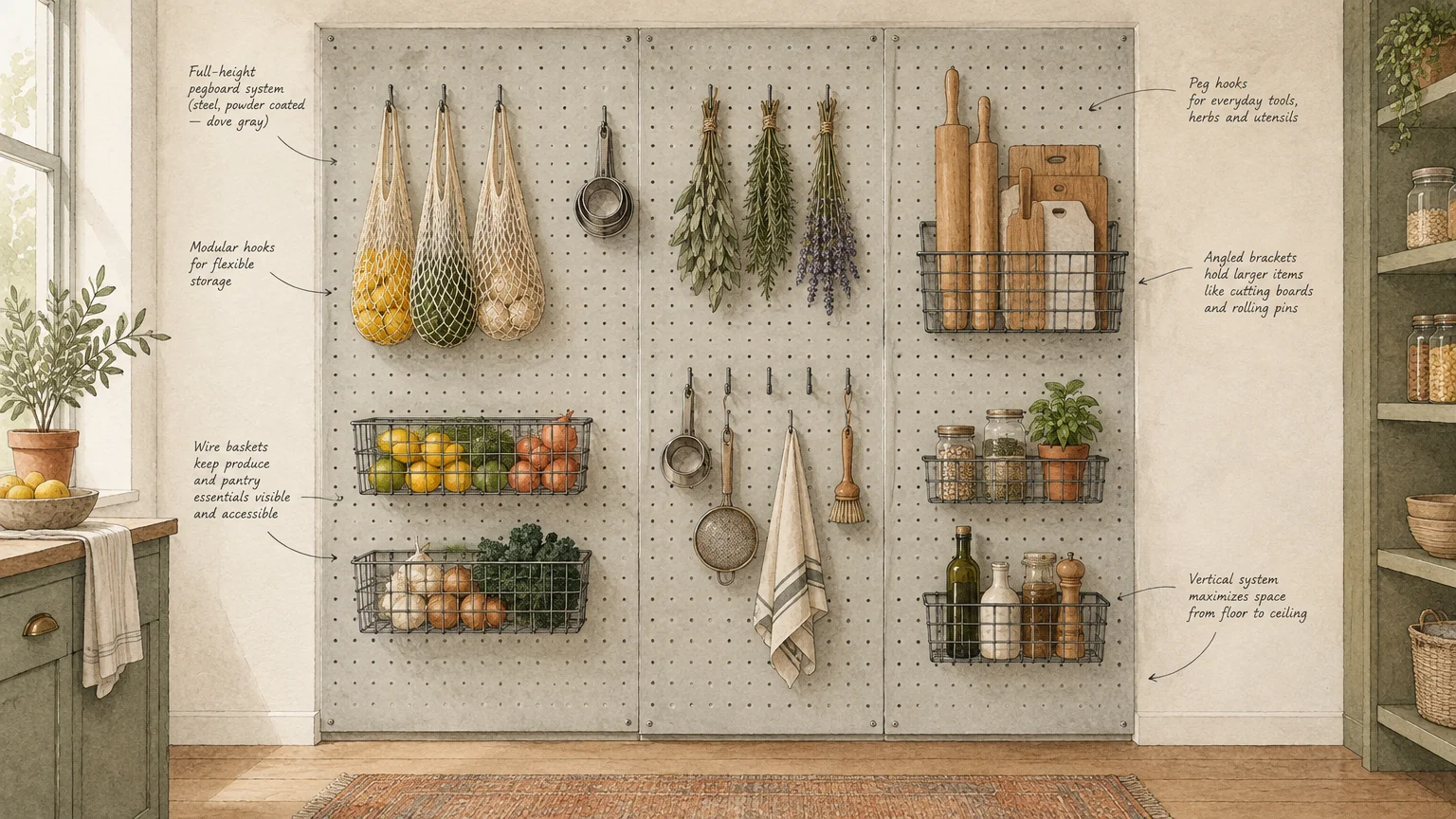
05 Wall-Mounted Heavy-Duty Pegboards
Covering a bare pantry wall with a steel or treated wooden pegboard turns blank drywall into an adjustable hanging system. Pegboards allow you to reposition baskets, hooks, and mini ledges whenever your grocery habits change.
Mount the pegboard directly into wall studs using sturdy spacers. Spacers keep the board slightly off the wall surface so peg hooks slide in smoothly.
Hang deep wire pegboard caddies to hold snack bags, spice bottles, and dry seasoning envelopes. Add sturdy utility hooks beneath the caddies for hanging aprons, reusable shopping totes, and measuring cups.
This layout keeps lightweight dry goods visible at eye level. It acts as an open display that prevents forgotten items from hiding in dark corners.
Use outline shapes or label tags beneath each hanging basket. Visual cues help you maintain order and ensure every item returns to its designated hook.
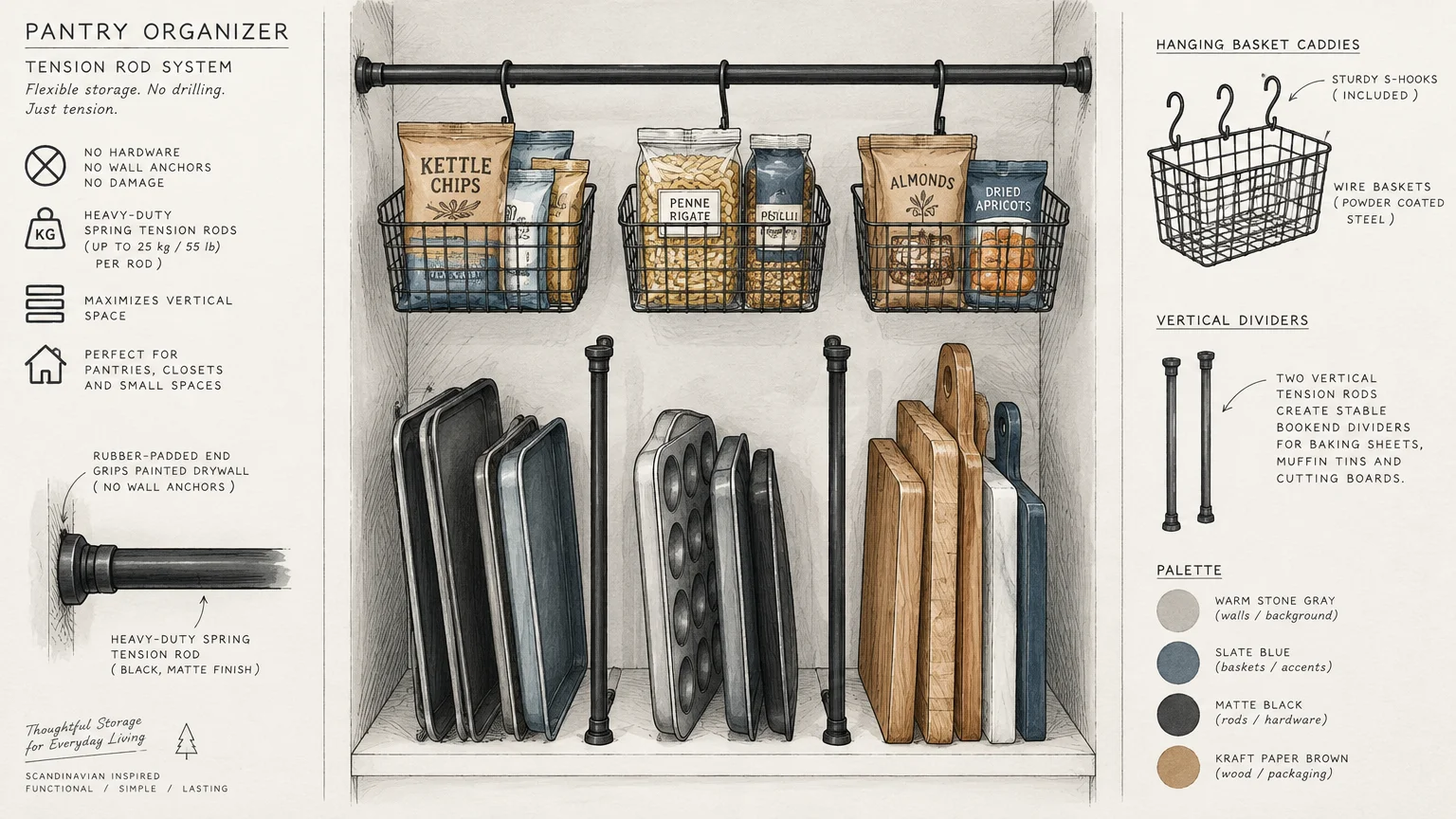
06 Tension Rod Systems with Hanging Baskets and Dividers
Heavy-duty tension rods offer one of the fastest, damage-free pantry hacks for rental properties. You can install them between two solid walls without drilling holes or applying adhesives.
Position two parallel tension rods horizontally near the bottom of your space. Stand baking sheets, cutting boards, and shallow platters vertically between the rods to create upright slots.
Alternatively, install a thick, rubber-tipped shower tension rod across the upper section of your pantry closet. Hang durable S-hooks and wire hanging caddies along the rod.
Clip chip bags and pretzel pouches to the rod using sturdy hanging ring clips. This floating storage frees up floor and basket space below for heavier bulk items.
Verify that your walls are solid before tightening heavy-duty tension rods. Avoid over-tightening against unbacked hollow drywall to prevent surface indentations.
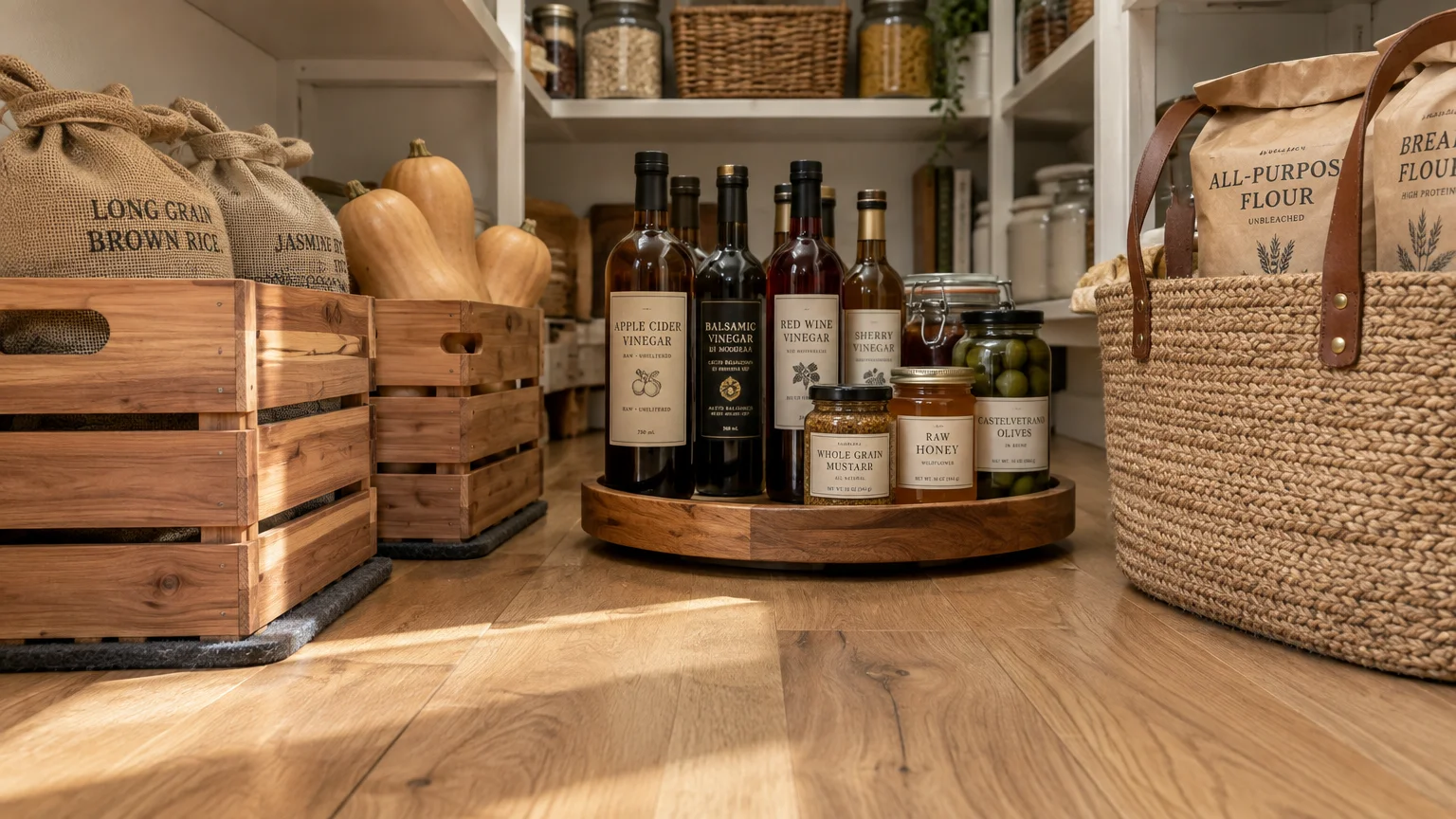
07 Floor Crates, Heavy Bins, and Giant Turntables
The pantry floor must support your heaviest groceries, but setting items directly on floorboards quickly creates messy clutter. Using wooden crates, rolling floor dollys, and large turntables organizes heavy items into manageable zones.
Slide slatted wooden crates directly onto the floor for root vegetables. Slats allow air circulation, keeping potatoes and squash dry and fresh.
Never store raw potatoes directly adjacent to whole onions. Onions release ethylene gas that causes nearby potatoes to sprout and spoil quickly.
Place a heavy-duty, ball-bearing lazy Susan directly on the floor or on a low platform. A wide turntable lets you spin heavy liquid containers—like olive oil jugs and vinegar bottles—without lifting them.
Elevate bottom containers slightly above floor level using low risers or castor platforms. Elevation protects dry goods from dust, pet hair, and accidental floor spills.
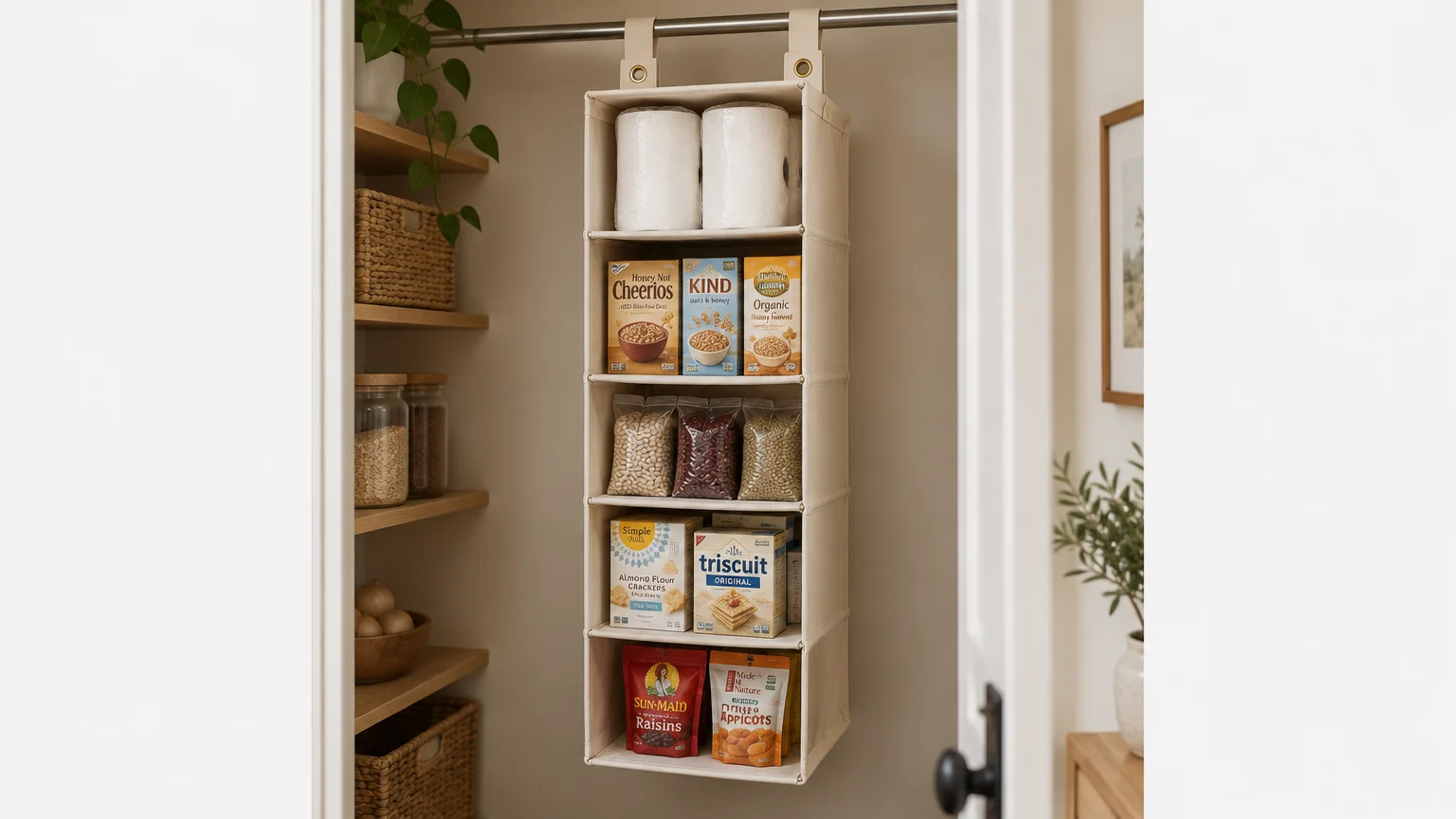
08 Hanging Canvas Closet Organizers with Reinforced Bases
Many shelf-free pantries start out as standard bedroom or hallway closets containing a single clothes rod. You can repurpose that hanging closet rod immediately by hanging fabric or canvas organizer cubbies.
Standard closet organizers often sag when loaded with heavy groceries. Prevent sagging by sliding cut sheets of rigid cardboard, thin plywood, or acrylic sheets into the bottom of each compartment.
Reserve hanging fabric cubbies for lightweight, bulky grocery items. They provide ideal compartments for paper towel rolls, loaf bread, cracker boxes, and chip bags.
Avoid loading glass jars or heavy canned food into hanging canvas units. Excessive weight stretches the seams and pulls the hanger attachments out of shape.
Pair hanging fabric organizers with slim S-hooks on the remaining closet rod. Use the extra rod length to hang mesh produce bags filled with lightweight dry snacks.
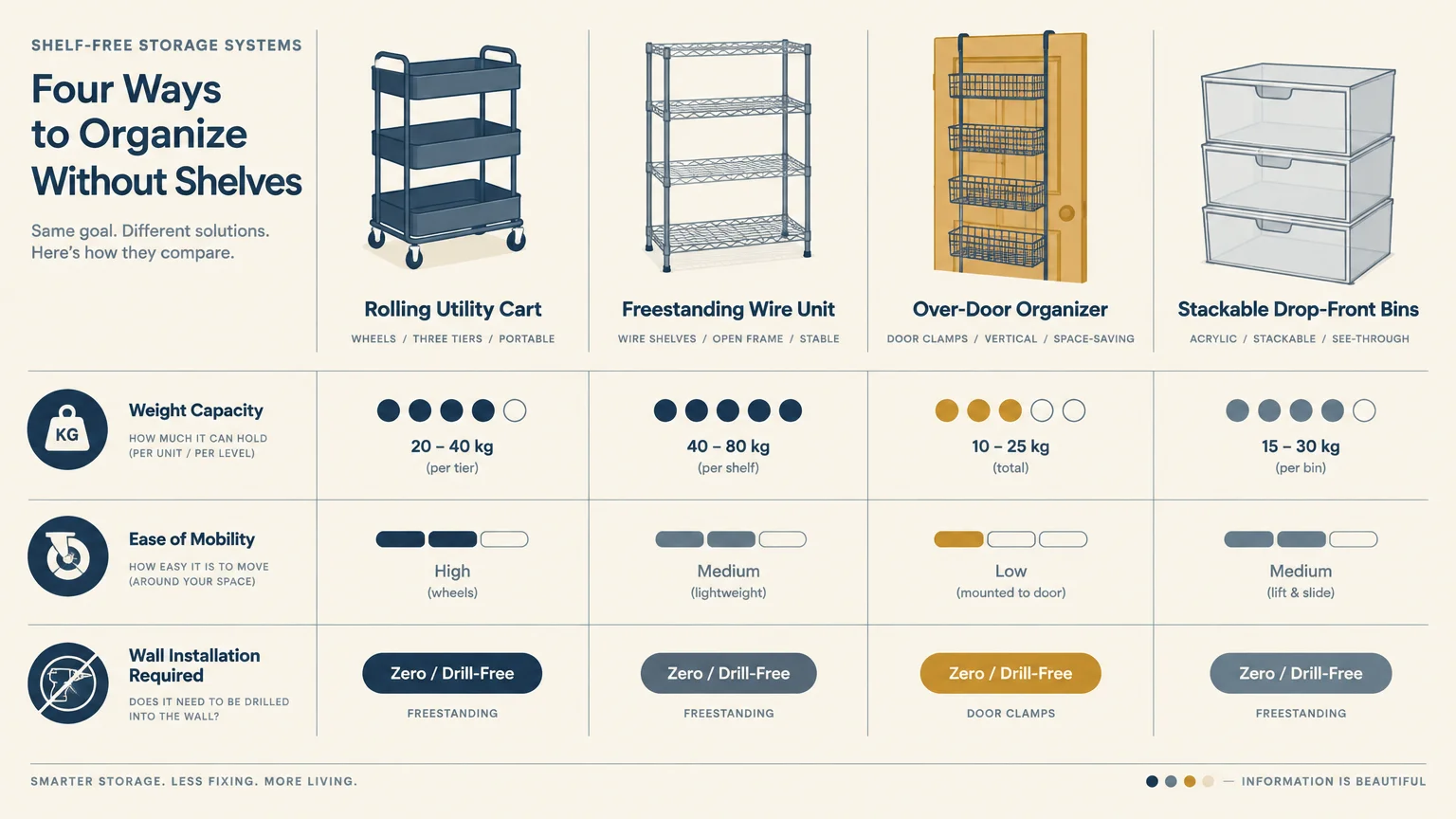
Comparing Shelf-Free Pantry Storage Solutions
Choosing the right combination of storage tools depends on your available floor footprint, wall structure, and budget. The table below outlines how these solutions compare across key practical factors.
| Storage Method | Best Food Categories | Weight Capacity | Installation Needs |
|---|---|---|---|
| Rolling Utility Carts | Canned goods, oils, breakfast staples | Medium to High | Wheel assembly only |
| Freestanding Wire Racks | Small appliances, bulk goods, canned goods | Very High | Wall anchors recommended |
| Stackable Drop-Front Bins | Packaged snacks, side dishes, baking items | Medium | Tool-free stacking |
| Over-the-Door Organizers | Spices, condiments, seasoning packets | Medium | Over-door bracket hooks |
| Wall Pegboards | Dry packets, hanging tools, lightweight spices | Medium | Drill and stud-mounting hardware |
| Tension Rod Hanging Zones | Baking sheets, chip bags, lightweight caddies | Low to Medium | Tool-free pressure twist |
| Floor Crates & Turntables | Root vegetables, heavy jugs, drink cases | High | None |
| Reinforced Canvas Cubbies | Bread, paper products, light snack boxes | Low | Hangs on existing closet rod |
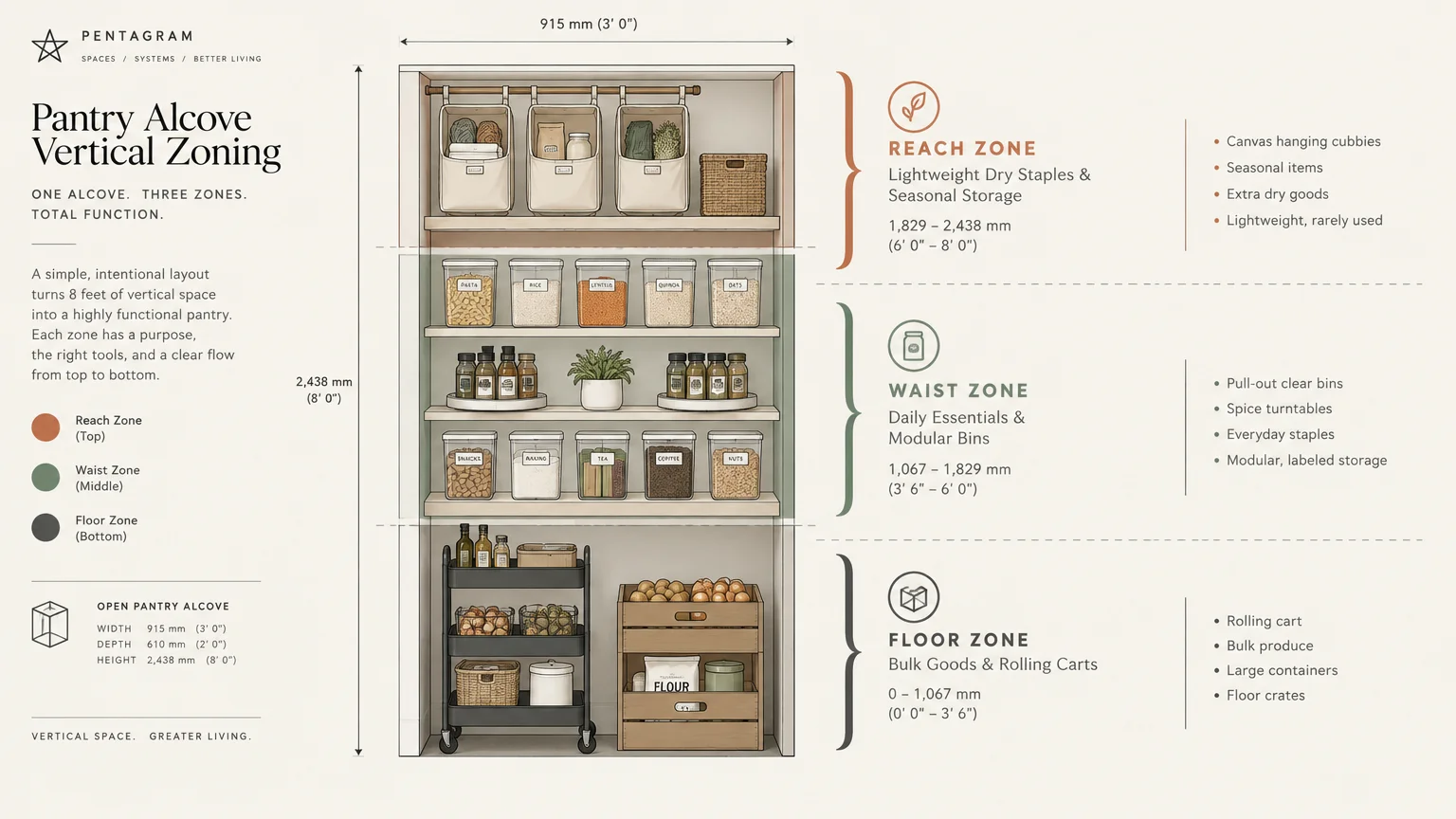
Step-by-Step Guide to Zoning a Shelf-Free Pantry
Organizing a blank closet without built-in shelves requires a clear, methodical zoning strategy. Follow this sequence to establish order and prevent items from piling into messy floor clusters.
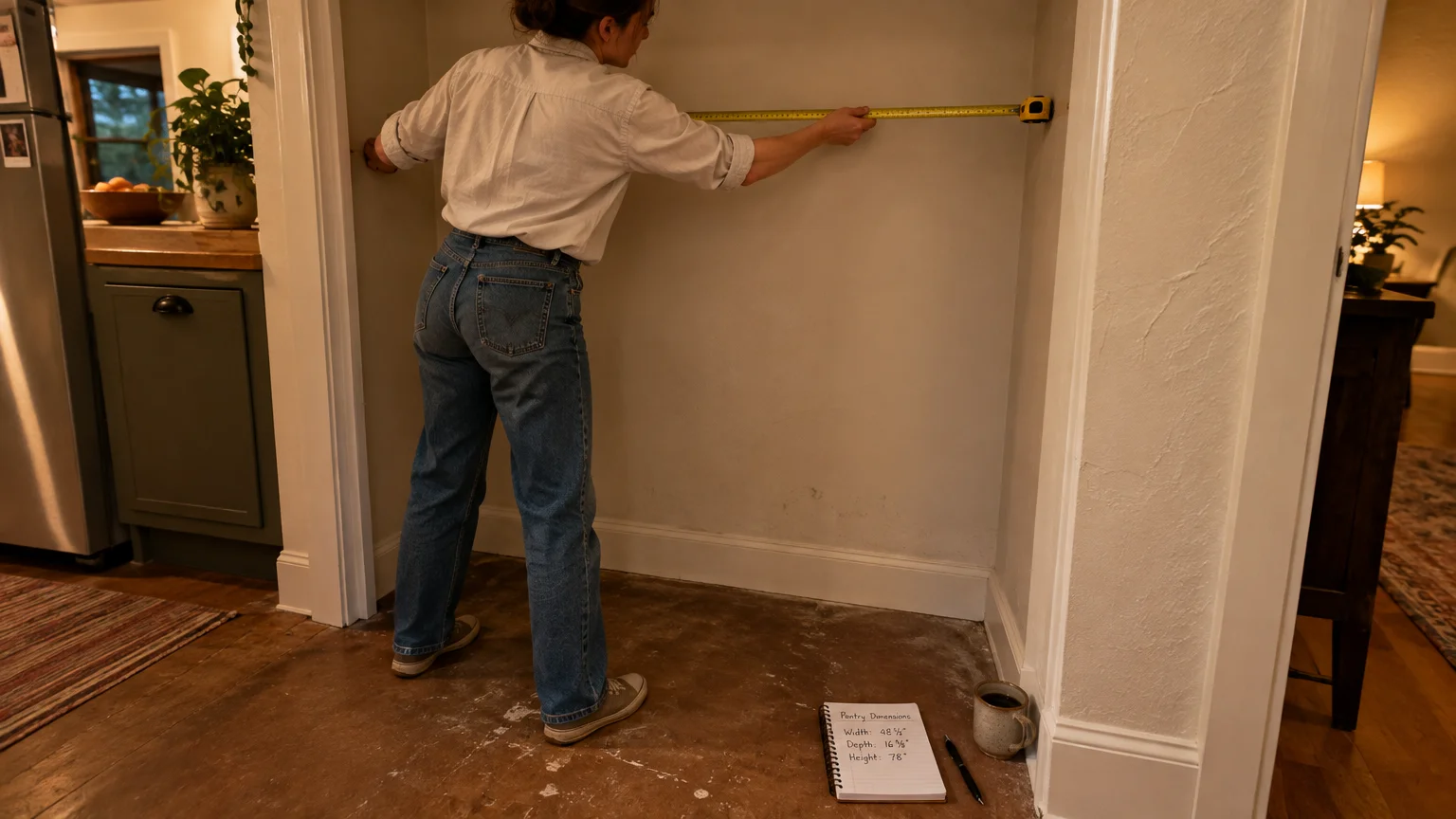
- Clear and Measure: Empty the space completely. Measure the width, depth, and vertical clearance to the ceiling, noting any door swings or floor molding obstructions.
- Group by Weight and Access: Sort your groceries into three categories: heavy bulk liquids, daily mid-weight essentials, and light grab-and-go items.
- Anchor the Base: Place your heaviest solutions on the floor first. Set up wire shelving units, rolling carts, or floor crates for heavy bottles and bulky cans.
- Utilize Vertical Perimeters: Mount over-the-door racks on the door interior and hang tension rods or pegboards across unused wall expanses.
- Insert Modular Bins: Place front-opening clear bins on freestanding shelves or cart trays to group small, loose packaged items together.
- Label All Zones: Affix clear, readable labels to bin fronts and basket rims to keep categories consistent across your entire household.
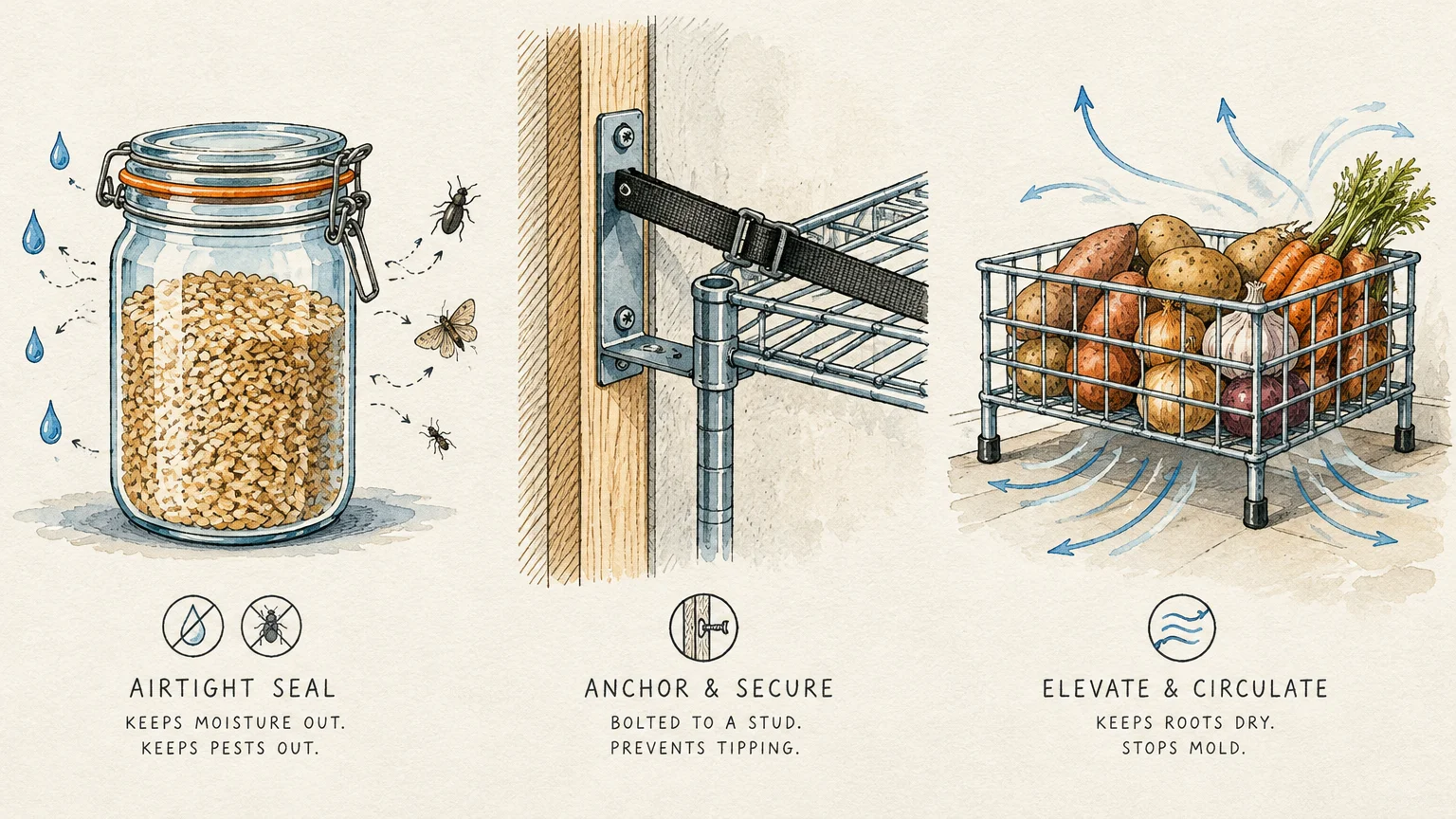
Pantry Safety, Cleanliness, and Food Preservation
A well-organized pantry must keep your groceries fresh and safe to eat. Storing dry goods improperly leads to premature spoiling, pest infestations, and food waste.
Keep your pantry cool, dry, and dark. Exposure to heat sources or direct sunlight degrades the nutritional quality and flavor of dry goods over time.
According to the USDA Food Safety and Inspection Service, shelf-stable canned goods should be kept in a cool, dry place between 50°F and 70°F to prevent bacterial growth and container rust.
Never store food boxes or bags directly flush against cold concrete walls or damp floorboards. Keep dry goods raised slightly above the floor to avoid moisture absorption.
Store open grains, flours, and cereals inside airtight glass or BPA-free plastic containers. Transferring foods into sealed containers blocks moisture and prevents pantry pests from spreading through paper boxes.
The Centers for Disease Control and Prevention highlights that proper food storage containers and clean pantry surfaces prevent cross-contamination and keep food safe from household pests.
Wipe down all storage bins, carts, and crates every few months with warm soapy water. Cleaning up small grain spills and sugar dust immediately eliminates food sources that attract ants and weevils.
Your Next Step
Measure the width and depth of your empty pantry floor right now. Order one sturdy multi-tier rolling cart or a freestanding wire rack that matches those dimensions to begin building your organized pantry today.