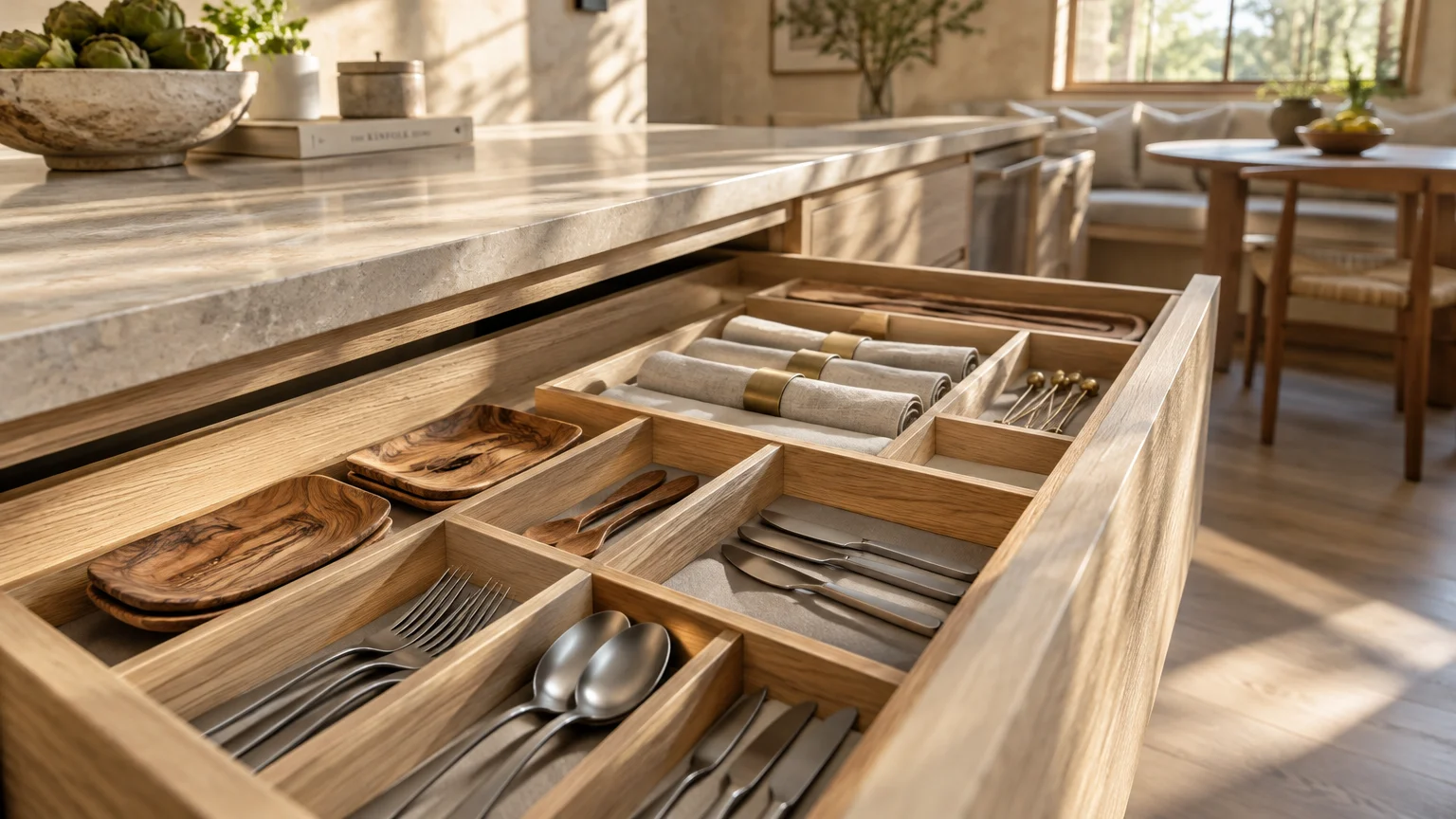
Kitchen drawers descend into frustrating chaos when loose tools shift every time you pull the handle. Creating intentional zones turns messy compartments into efficient work stations that save you time and energy every single day.
Designing setups that endure requires matching each drawer’s depth to your daily cooking routines. When every tool has an exact footprint, drawers stay tidy without constant reorganizing.
Explore these ten proven kitchen drawer organization systems to transform cluttered spaces into calm, functional storage hubs that keep your counters completely clear.
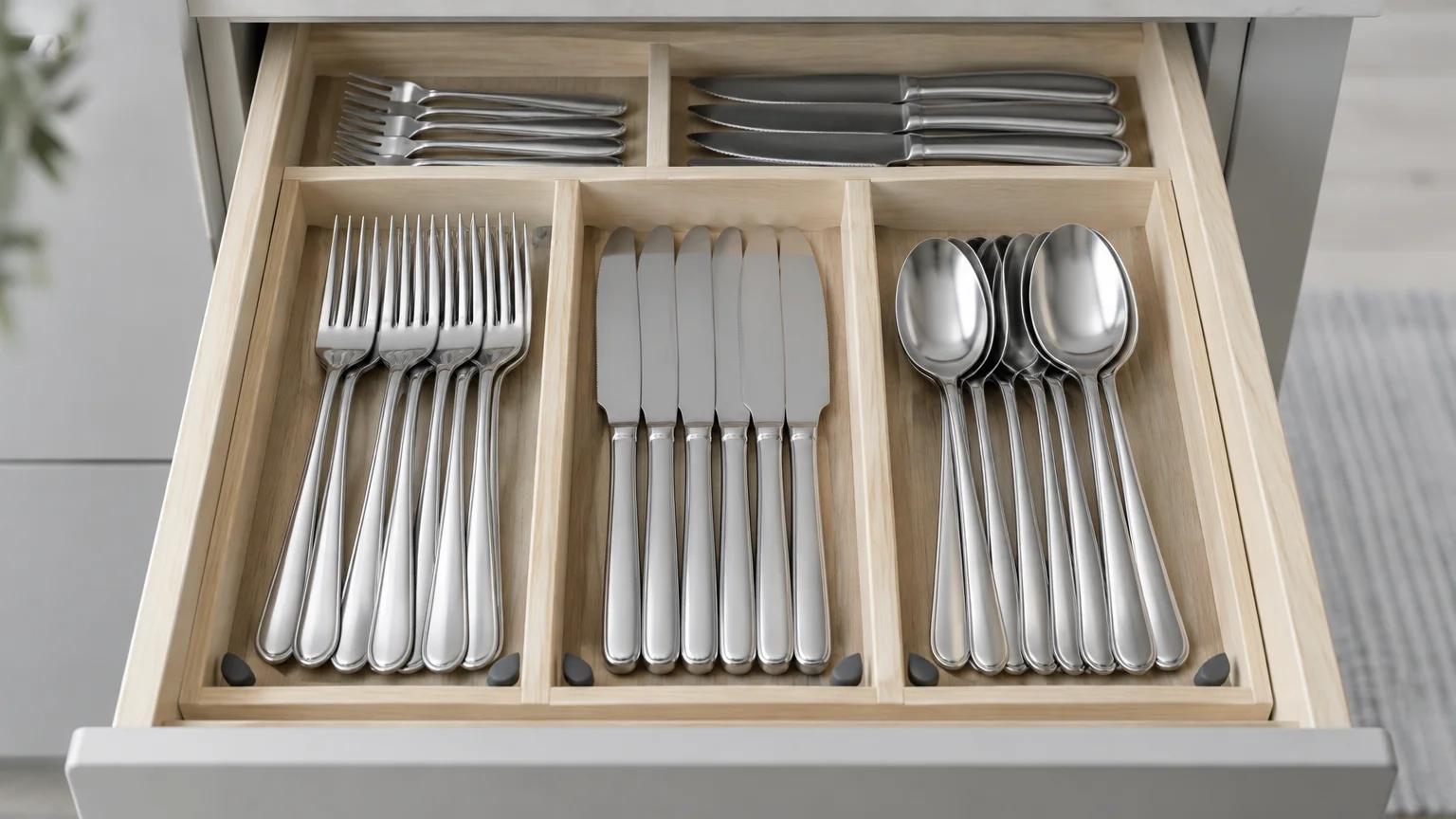
01 The Precision Cutlery Zone with Modular Inserts
Standard one-piece cutlery trays rarely fit drawers snugly; they slide around and leave unusable gaps. Modular dividers solve this problem by expanding to meet your drawer’s exact interior dimensions.
Arrange your forks, knives, and spoons in individual compartments that match your dominant hand’s natural reach. Place your most frequently used utensils in the front slots to speed up daily table setting.
Non-slip silicone feet on the bottom of modular bins prevent shifting when you pull the drawer open firmly. This simple friction barrier protects both your utensils and your drawer box from persistent wear.
Reserve the rear compartments for specialty serving pieces like butter knives, steak sets, and dessert forks. Keeping secondary utensils separated preserves visual clarity for everyday use.
Labeling the bottom of each modular compartment with a label maker guides family members during cleanup. Even visiting guests can put silverware away in the correct slot without guessing.
02 The In-Drawer Knife Block and Prep Station
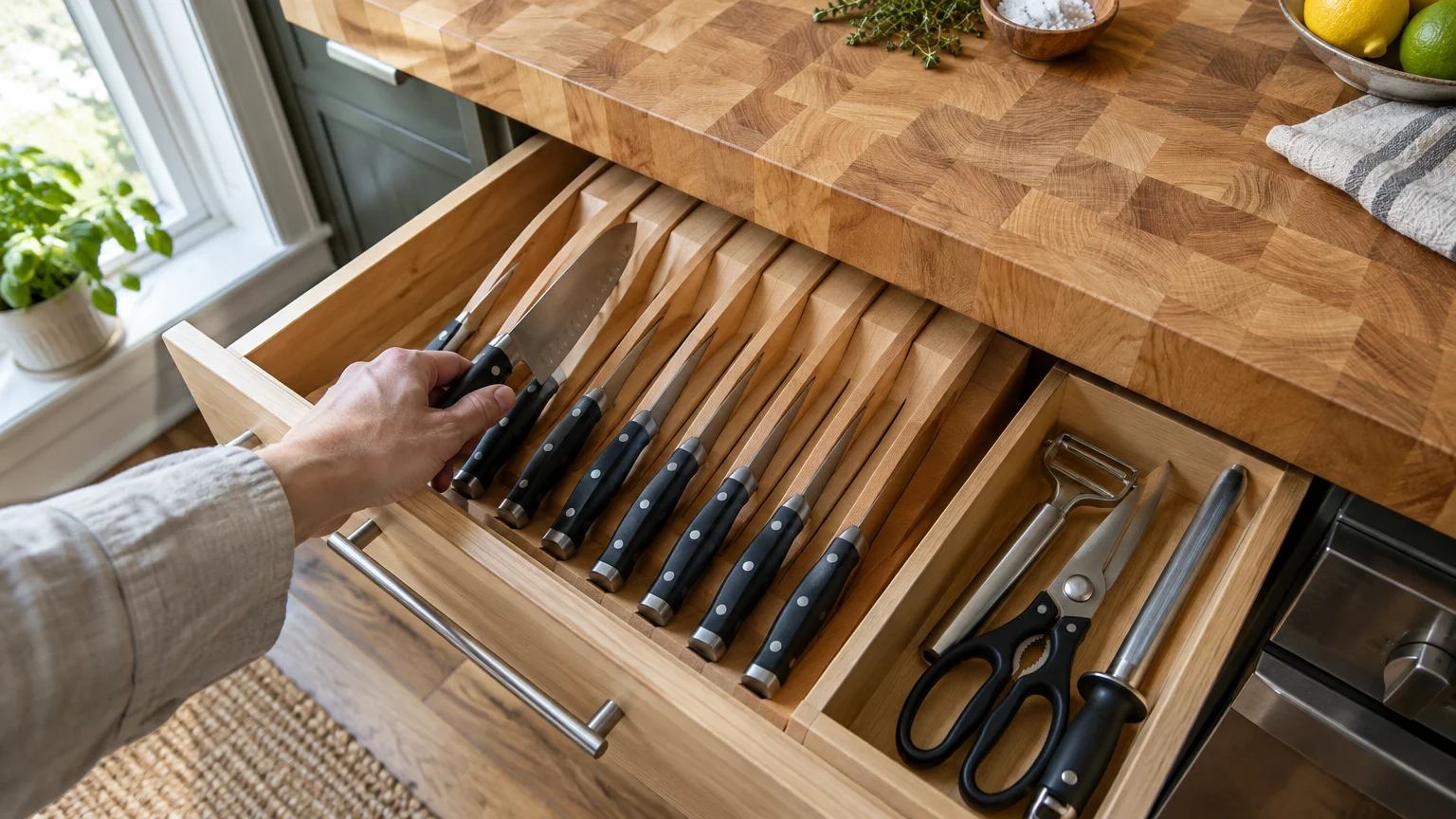
Countertop knife blocks occupy valuable food preparation space and gather dust near cooking splatters. In-drawer knife trays keep sharp blades safely concealed while preserving working counter space.
Exposing knife blades in an unorganized drawer dulls edges rapidly and creates an immediate cut hazard. A dedicated in-drawer block shields your fingers and extends the life of your kitchen cutlery.
The Occupational Safety and Health Administration provides kitchen knife handling guidance emphasizing proper storage to prevent cuts. That same safety standard applies directly to your home kitchen.
Pair your knife block with a row of small compartments for your vegetable peeler, kitchen shears, and honing steel. Grouping your prep tools together streamlines the initial steps of every meal you cook.
Position your knife drawer directly below your primary wooden cutting board station. This proximity ensures you never carry exposed chef knives across a busy kitchen floor.
03 The Tiered Spice Drawer Near the Prep Area
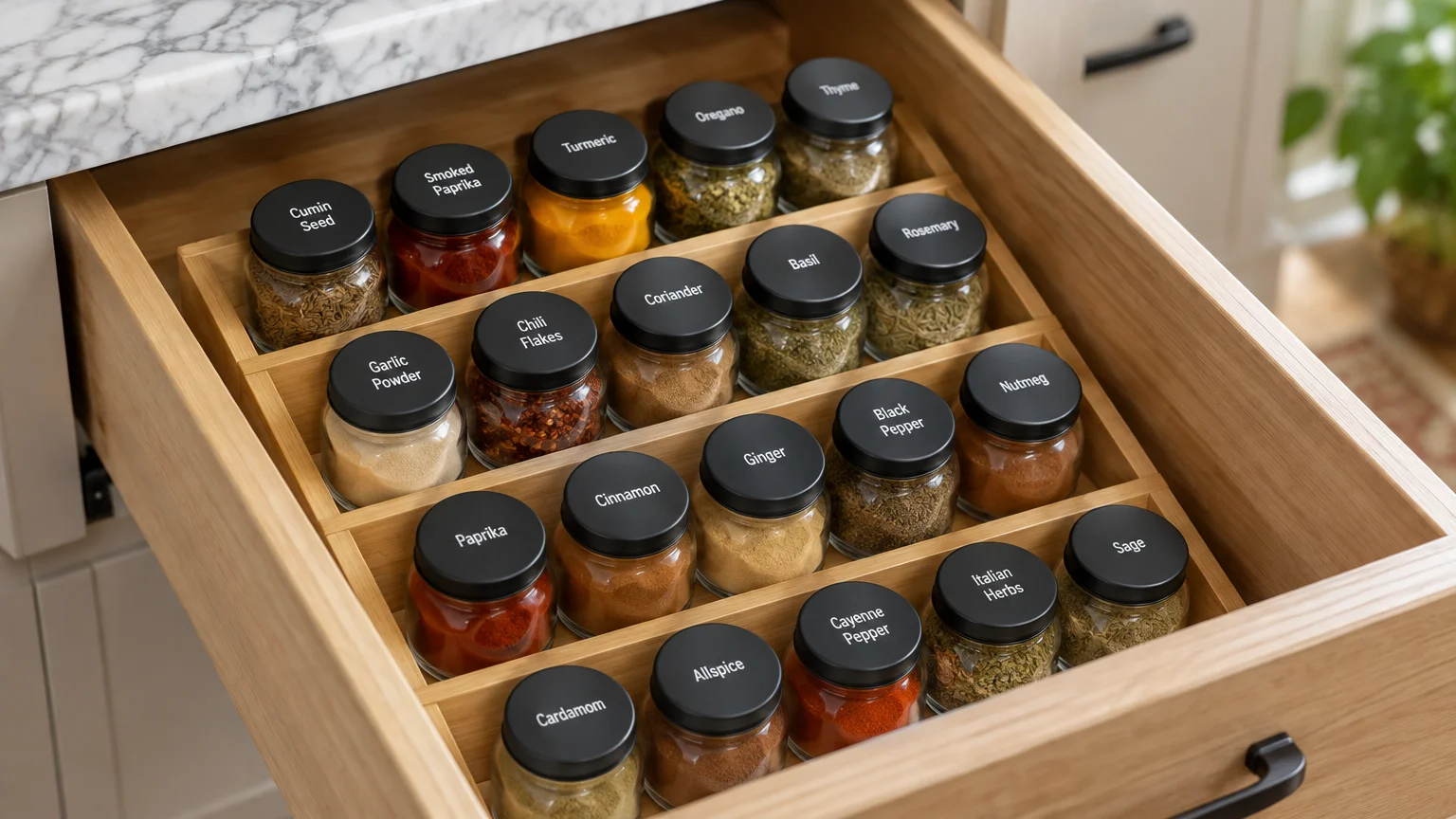
Storing spices in deep upper cabinets often results in lost jars and expired duplicates. A shallow top drawer fitted with angled, tiered inserts puts every label directly in your line of sight.
Transfer bulk seasonings into matching glass jars with standardized top and side labels. Uniform containers prevent mismatched lids from jamming the drawer mechanism as it glides shut.
Keep your spice drawer away from your range or oven exterior to protect flavor integrity. High heat and humidity degrade volatile aromatic oils quickly, according to food storage principles from the USDA Food Safety and Inspection Service.
Alphabetize your collection from front to back, or group spices by cuisine profile like Mediterranean, Mexican, or baking blends. Choose the grouping strategy that matches how your mind naturally plans recipes.
Wipe the jar rims and threads before returning them to your tiered racks. Preventing sticky spice residue keeps containers clean and stops fine powders from settling into drawer seams.
04 The Deep Cooking Utensil Command Center
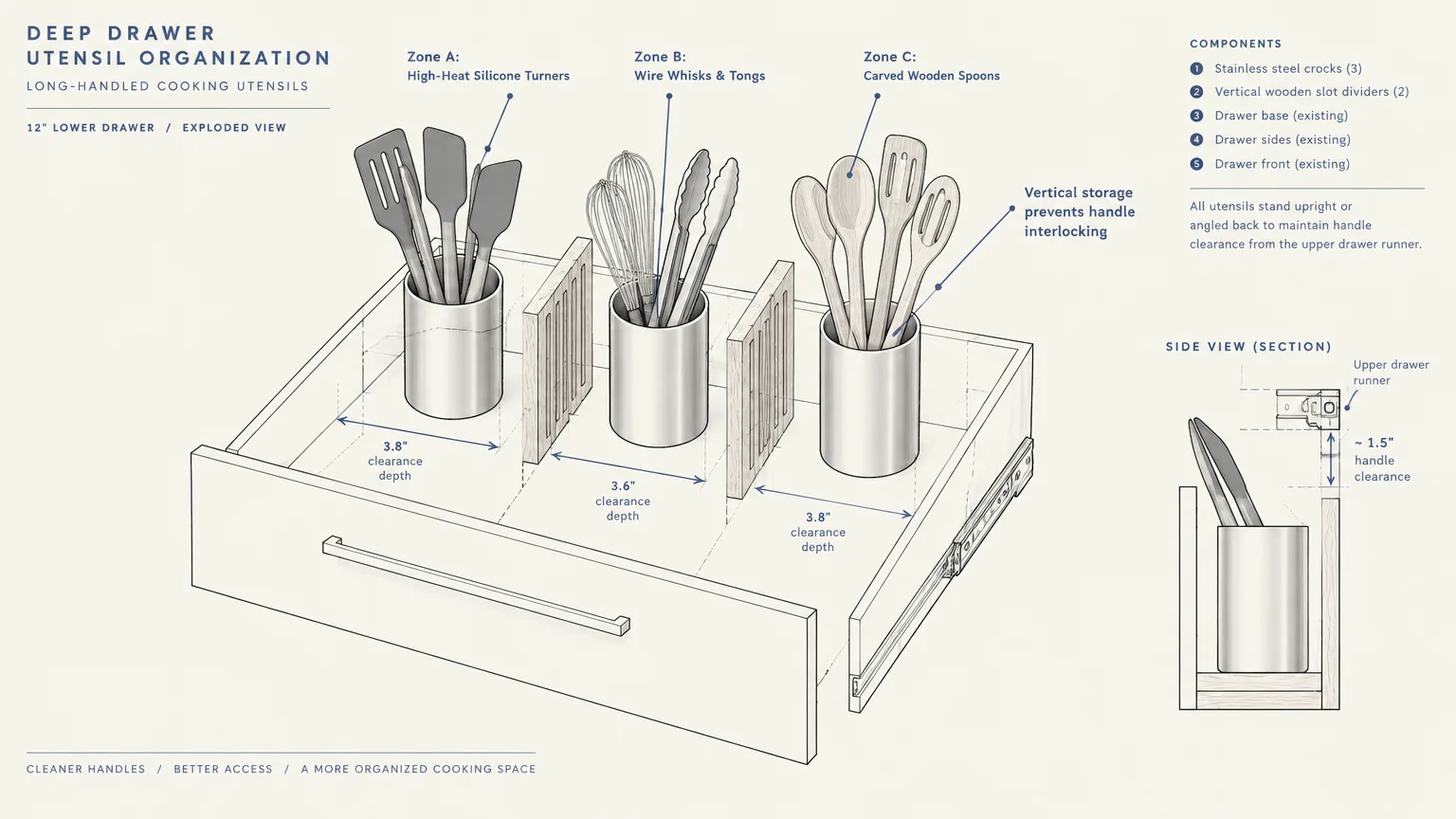
Shallow drawers cannot accommodate bulky items like soup ladles, potato mashers, and locking tongs without snagging. Deep drawers outfitted with vertical divider walls give these oversized tools dedicated standing channels.
Position this drawer directly beside your cooktop to minimize extra steps while stirring hot pots. You can grab a silicone spatula or meat thermometer in seconds without turning your back on the stove.
Use sturdy bamboo or rigid acrylic dividers tall enough to prevent tools from spilling into neighboring sections. Removable dividers allow you to reconfigure slot widths as your cooking gear changes over time.
Group tools by their cooking functions rather than their materials. Keep sauté spatulas in one slot, sauce whisks in another, and tasting spoons in an easily accessible front pocket.
Limit each vertical utensil channel to three or four tools maximum. Overcrowding deep slots leads to tangled handles that trap drawers half-open during intense cooking moments.
05 The Ergonomic Pegboard Dish and Bowl Drawer
Lifting heavy stacks of stoneware into overhead wall cabinets strains shoulders and neck muscles. Moving everyday dinnerware into deep lower drawers creates an ergonomic, waist-height storage solution.
The OSHA ergonomic guidelines for material handling highlight the benefits of storing heavier objects between mid-thigh and waist level. This placement significantly reduces back strain during repetitive loading tasks.
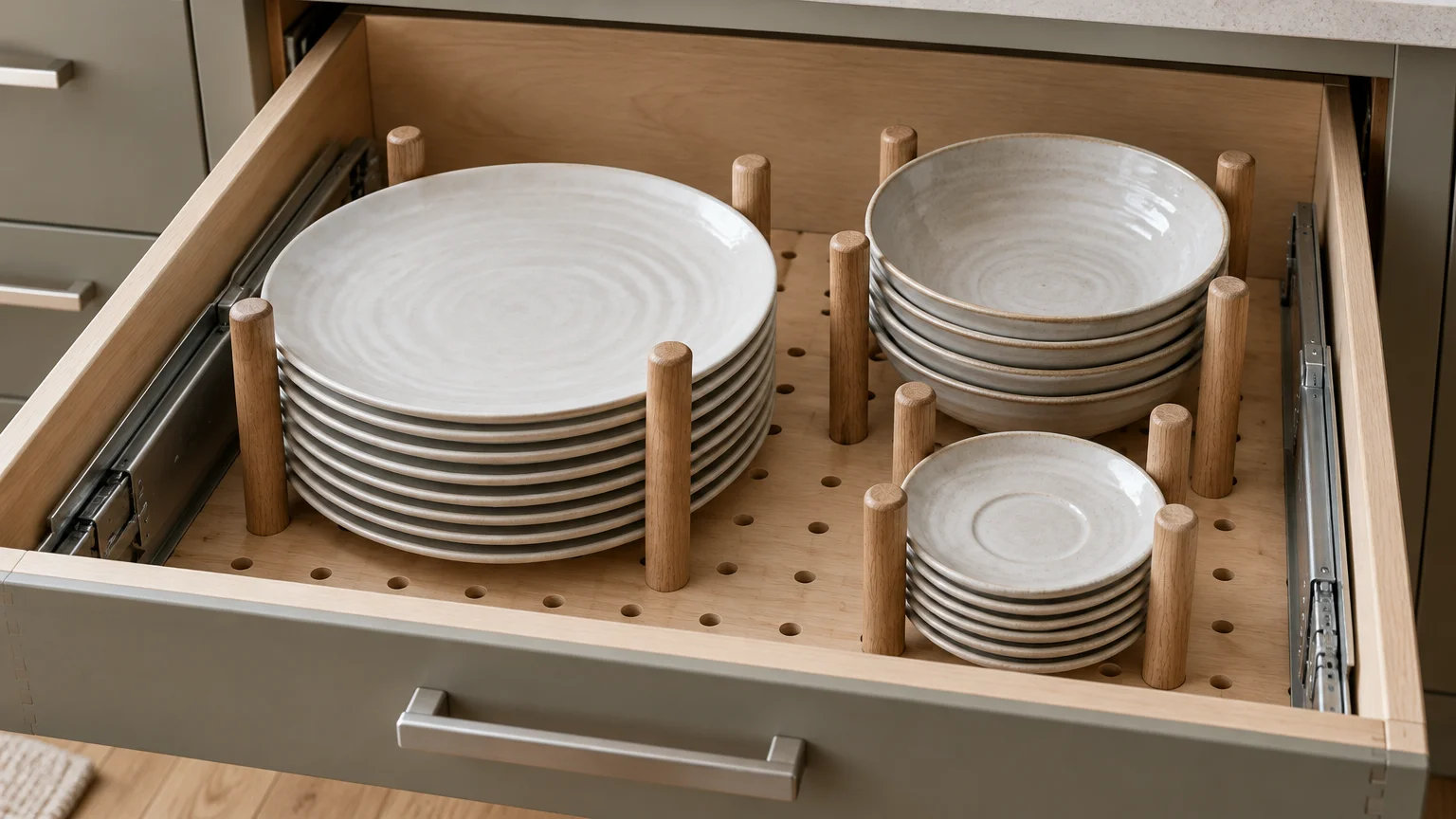
Install a perforated wood pegboard liner across the bottom of a heavy-duty drawer box. Thread smooth wooden dowels into the peg holes to create custom-fit perimeter collars around your plate stacks.
These pegs keep tall stacks of ceramic plates from sliding during rapid opening and closing. Even older family members can safely unload the dishwasher without reaching overhead or lifting heavy loads awkwardly.
Verify that your drawer slides are rated for heavy loads before stacking full sets of ceramic stoneware. Quality ball-bearing drawer glides ensure smooth movement even when carrying dozens of pounds.
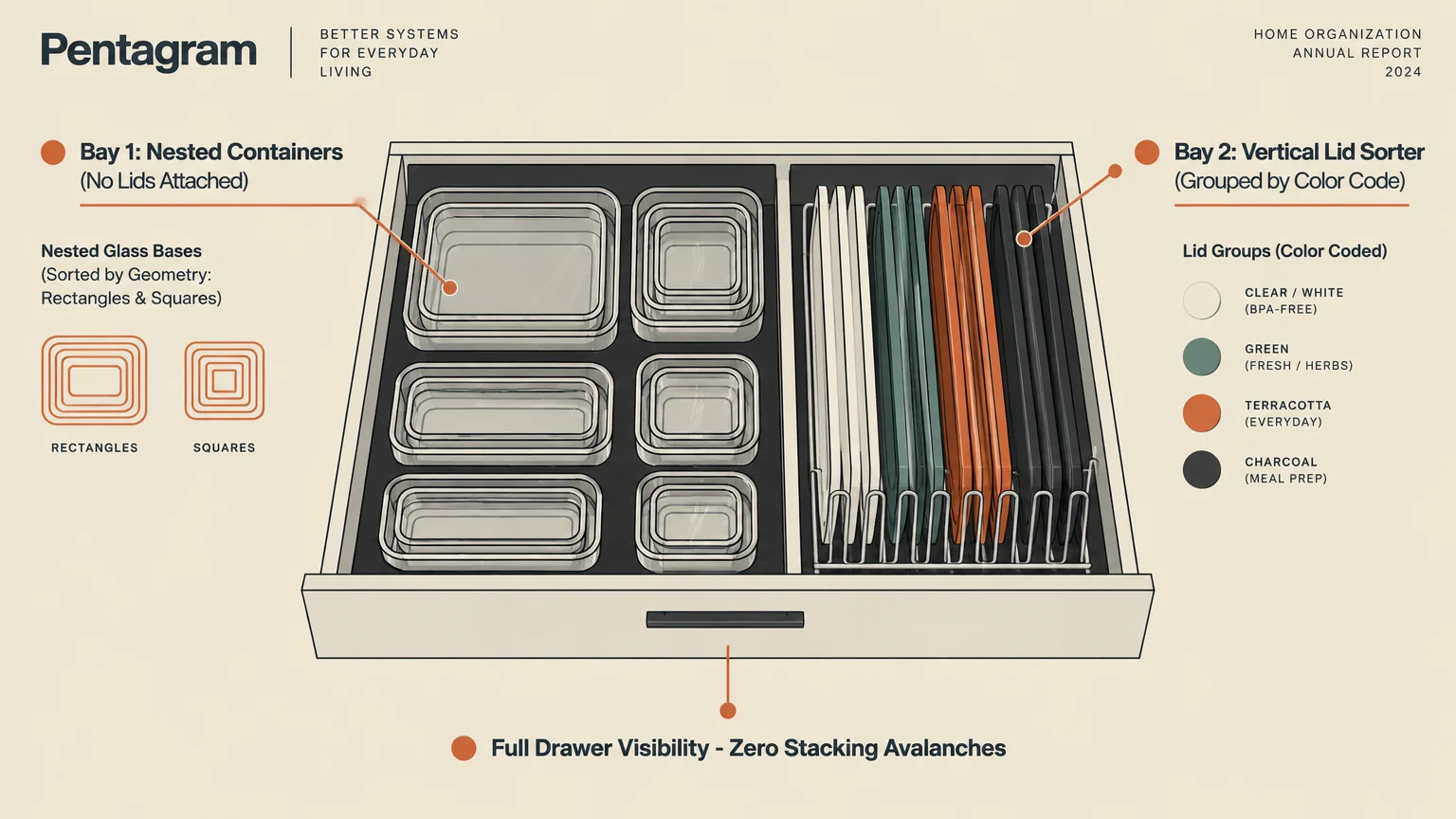
06 The Food Storage Container and Lid Filing System
Food storage containers create chaotic drawer avalanches when lids and bases are tossed together haphazardly. Treating your storage containers like an office filing cabinet permanently ends this common headache.
Nest matching container bases together by size in the largest section of your drawer. Keep your container collection limited to two or three versatile sizes to make stacking effortless.
Store lids vertically in an adjacent narrow organizer or between adjustable tension dividers. Filing lids on their side lets you pull the correct cover without disturbing the remaining pieces.
Discard stained, warped, or lidless containers immediately to preserve valuable drawer real estate. Routine auditing ensures every base you reach for has a fully functional seal ready to go.
Stick to rectangular or square containers rather than round vessels whenever possible. Square containers sit flush against drawer dividers, eliminating wasted corner space and maximizing your total storage capacity.
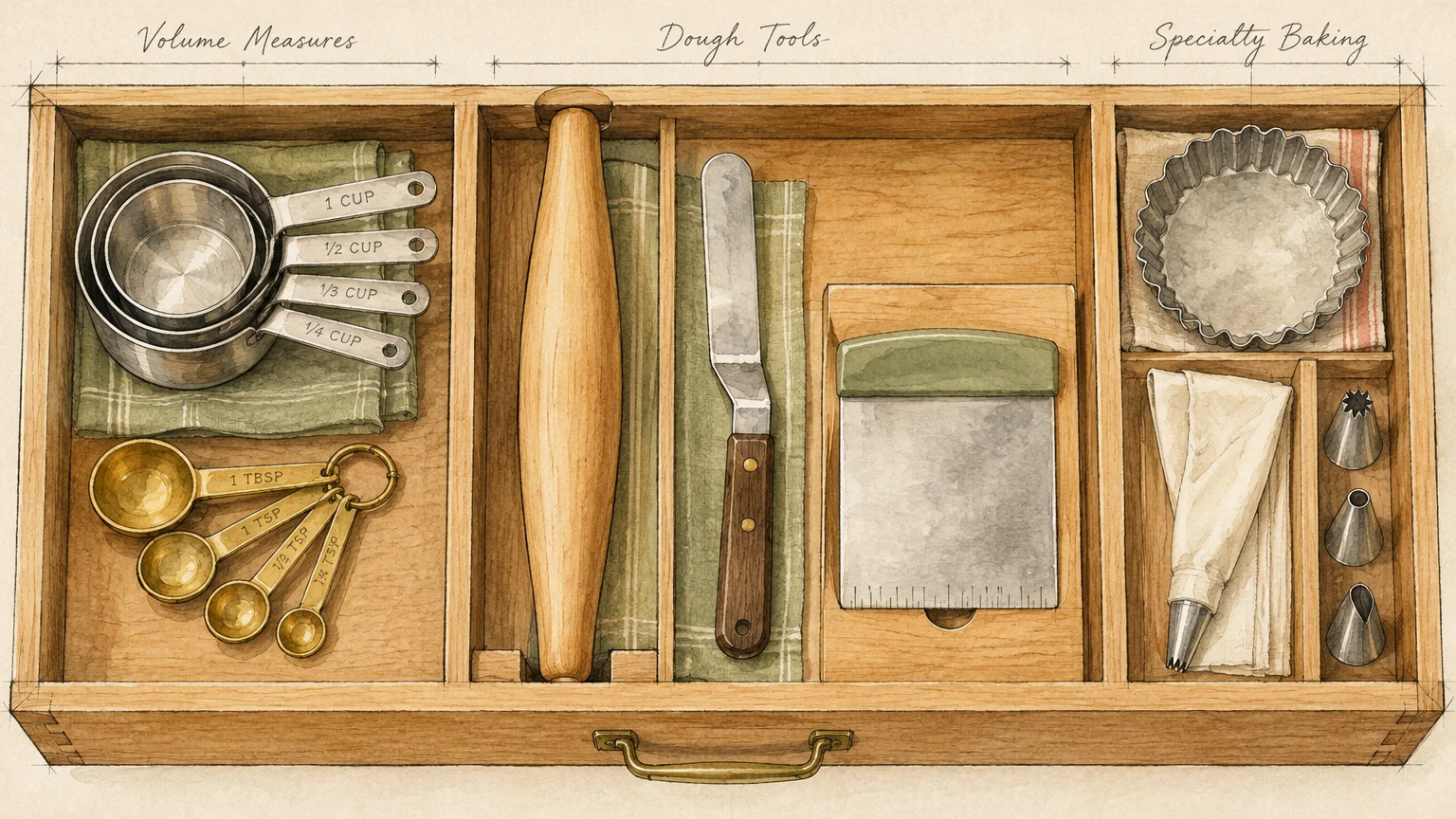
07 The Dedicated Baking and Measuring Station
Baking requires precise tools that often vanish into general kitchen clutter when you need them most. Dedicate a single shallow drawer exclusively to measuring cups, spoons, rolling pins, and bench scrapers.
Mount shallow plastic trays or adhesive drawer hooks to keep measuring spoon sets separated and flat. Unsnapping ringed spoon sets allows you to grab a single tablespoon without washing the whole cluster.
Store parchment paper rolls and silicone baking mats alongside your dry measuring tools. Keeping prep liners right where you measure ingredients speeds up sheet pan preparation for dinners and desserts.
Add a small magnetic strip inside the drawer side wall to hold metal biscuit cutters and timers securely. Taking advantage of vertical sidewalls maximizes your usable volume without crowding the drawer bed.
Place an odor-absorbing box of baking soda in the back corner of your baking drawer. Neutralizing residual spice aromas keeps vanilla beans, cocoa, and extracts smelling pure and fresh.

08 The Morning Beverage and Breakfast Stash
Creating a dedicated beverage drawer beneath your coffee maker or electric kettle establishes a smooth morning ritual. Keep coffee beans, loose leaf teas, honey dippers, and beverage pods organized together.
Use clear, stackable acrylic caddies to separate herbal tea blends from caffeinated morning options. Visual transparency lets you see when your supply runs low before you make your grocery shopping list.
Include a small compartment for coffee filters, reusable pour-over baskets, and your daily stirring spoons. Consolidating these morning essentials eliminates cross-kitchen pacing during the early morning rush.
Ensure all bulk beans and dry tea leaves rest in airtight containers to prevent stale odors. The U.S. Food and Drug Administration guidelines on pantry food storage recommend tight seals to block moisture and pantry pests.
Position your beverage drawer adjacent to your cold water dispenser or fresh water tap. This compact arrangement creates a self-contained morning station that keeps morning foot traffic away from the main cooking zone.
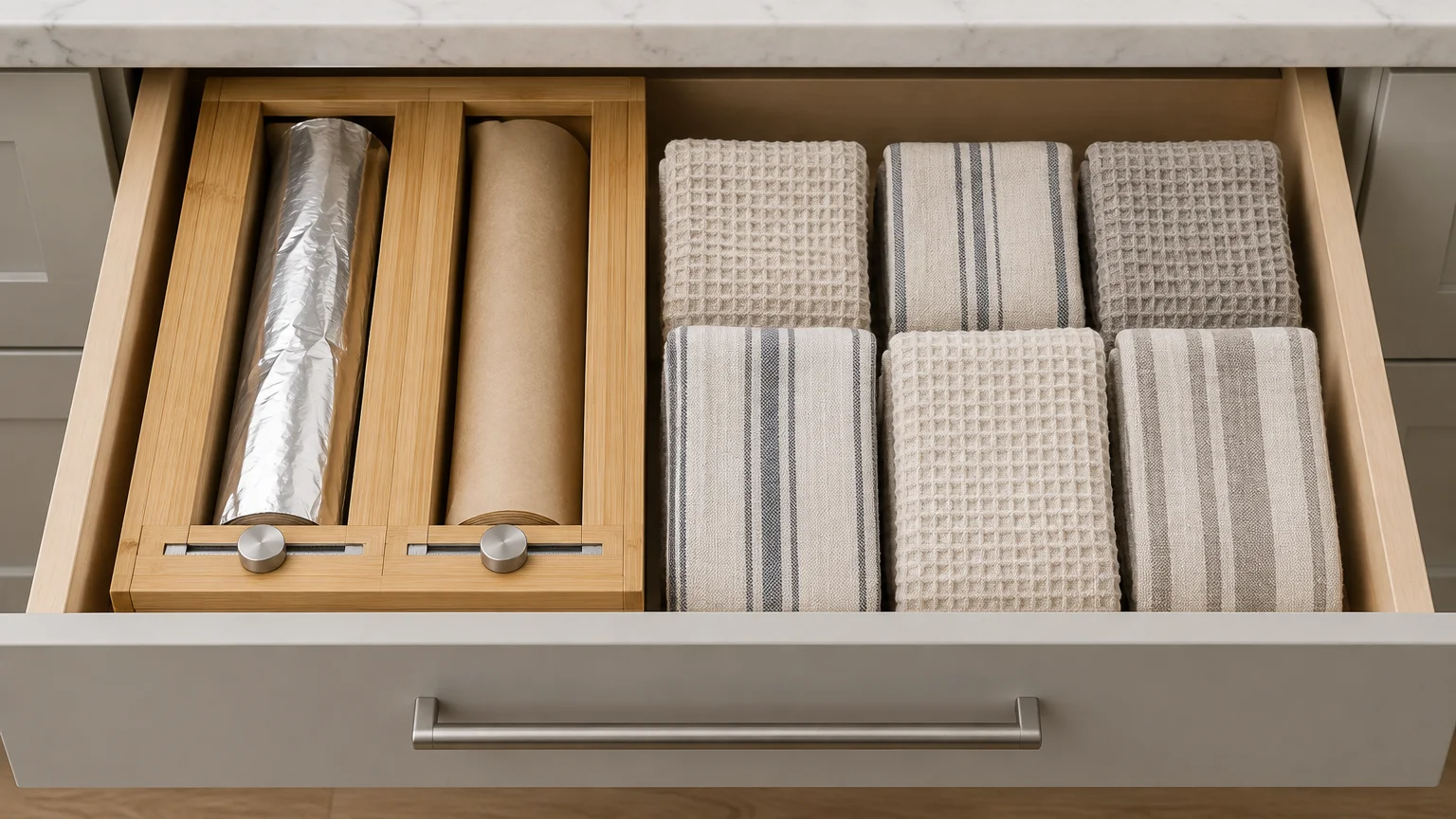
09 The Linens, Wraps, and Dispenser Drawer
Torn cardboard boxes of aluminum foil, parchment paper, and sandwich bags frequently jam drawer frames. Removing commercial packaging and moving products into dedicated wooden or acrylic dispensers creates instant order.
Choose refillable dispensers with integrated slide cutters for plastic cling wrap and baking foil. These cutters eliminate jagged tears and prevent flimsy foil edges from crumpling inside the drawer.
Use the remaining section of the drawer to store folded cotton dish towels and microfiber cloths. Fold your linens into compact vertical rolls so you can select a clean towel without disturbing adjacent stacks.
Keep your backup inventory of bulk trash bags in a bottom cabinet, keeping only one rolled roll here. Overstuffing wrap drawers leads to jammed hardware and frustrating mechanical resistance.
Keep a small pair of utility scissors in this drawer to open vacuum-sealed packaging cleanly. Having cutting shears right beside your food storage bags saves unnecessary steps across the kitchen.
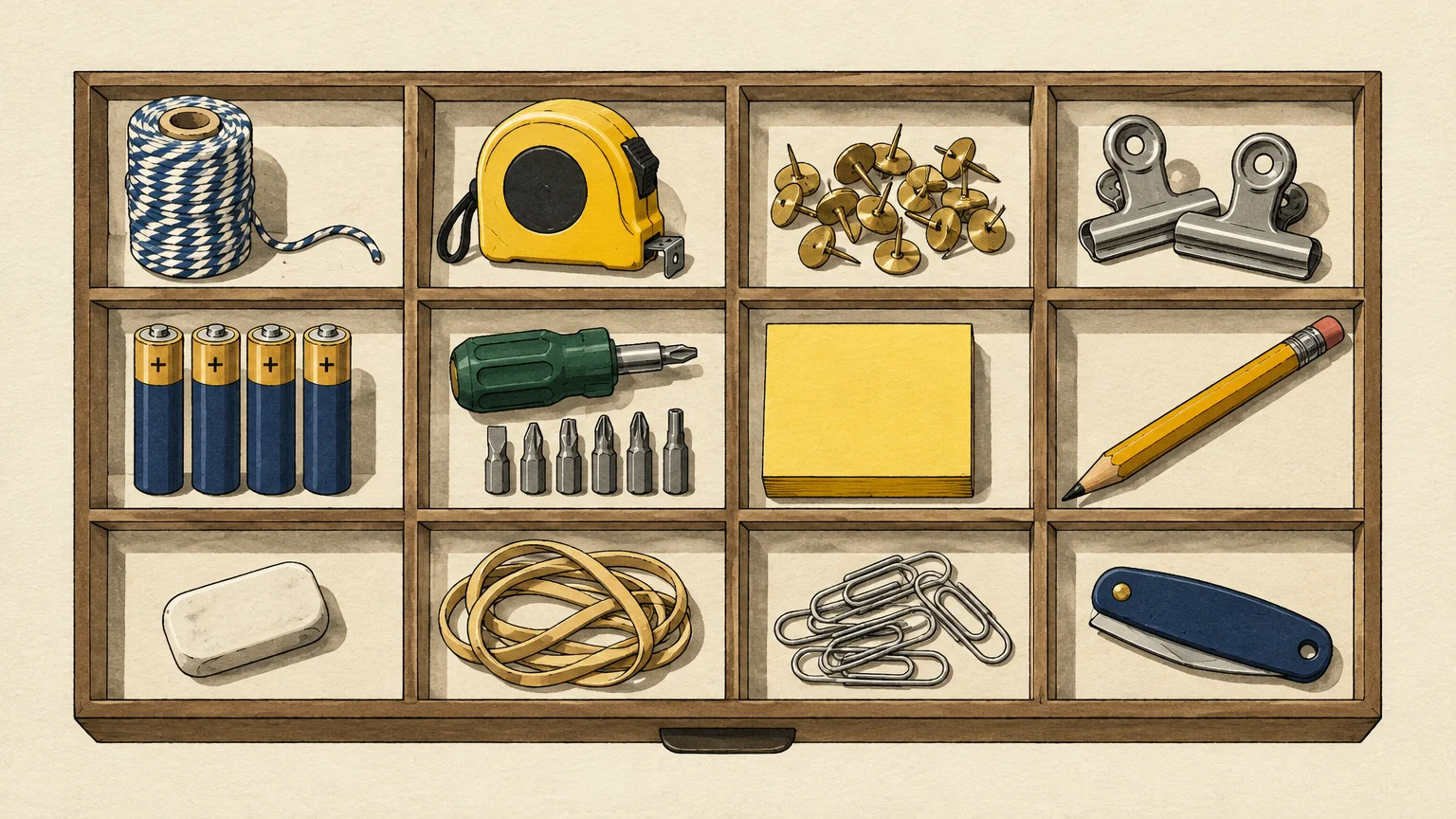
10 The Micro-Compartment Household Utility Drawer
Every home needs a central location for minor household utilities, but it should never become an uncontrolled junk drawer. Micro-compartment drawer trays bring absolute order to small, loose domestic items.
Select an interlocking tray system with varied small cup sizes to hold pens, rubber bands, and twist ties. Giving every miscellaneous object a discrete container prevents items from sliding into a tangled mass.
Include dedicated slots for home maintenance basics like a compact tape measure, scissors, and a small flashlight. You will always know where to look when quick household repairs or package deliveries arrive.
Store household batteries in a specialized terminal-protecting organizer rather than letting them roll loosely. Loose metal contacts touching in a crowded drawer create a genuine fire hazard that proper organization prevents.
Review the utility drawer every three months to discard dried-up markers and expired receipts. Regular maintenance keeps this high-use compartment from devolving into an unmanageable catch-all space.
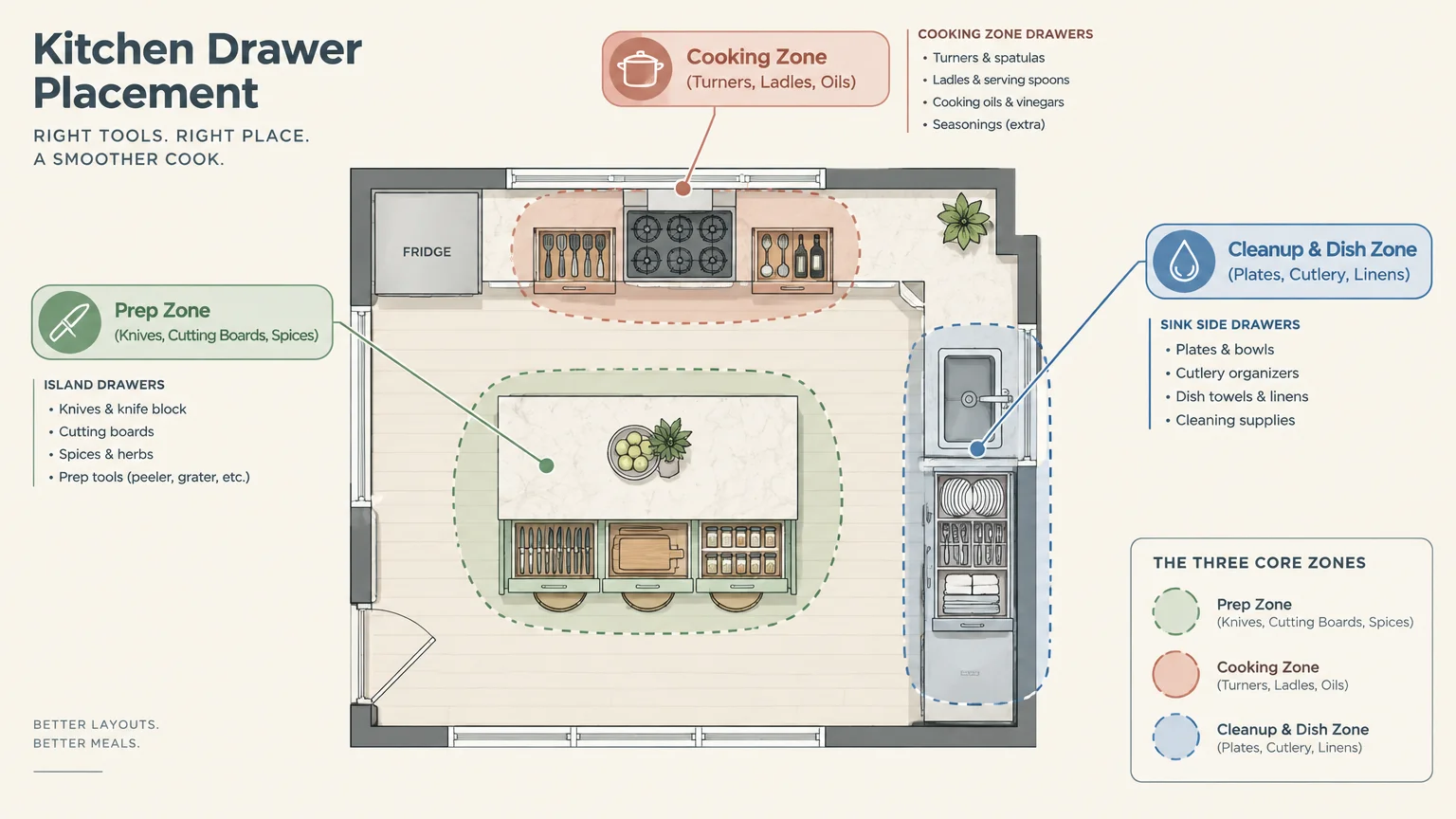
Mapping Drawer Setups to Your Kitchen Work Zones
Kitchen storage functions best when placed near the appliances and counter areas where you perform specific tasks. Organizing drawers without evaluating your kitchen work triangle leads to wasted footsteps and frustration.
Establish three primary operational zones: preparation, cooking, and cleanup. Assigning drawer functions to match these specific work zones keeps tools exactly where your hands expect them.
The prep zone surrounds your main cutting board and sink, where you need peelers, knives, and measuring tools. The cooking zone centers around the range, demanding spatulas, ladles, spices, and pot holders.
The cleanup zone centers around your dishwasher and trash receptacle, where silverware, dish towels, and food storage containers belong. This logical grouping streamlines the routine chore of putting clean dishes away.
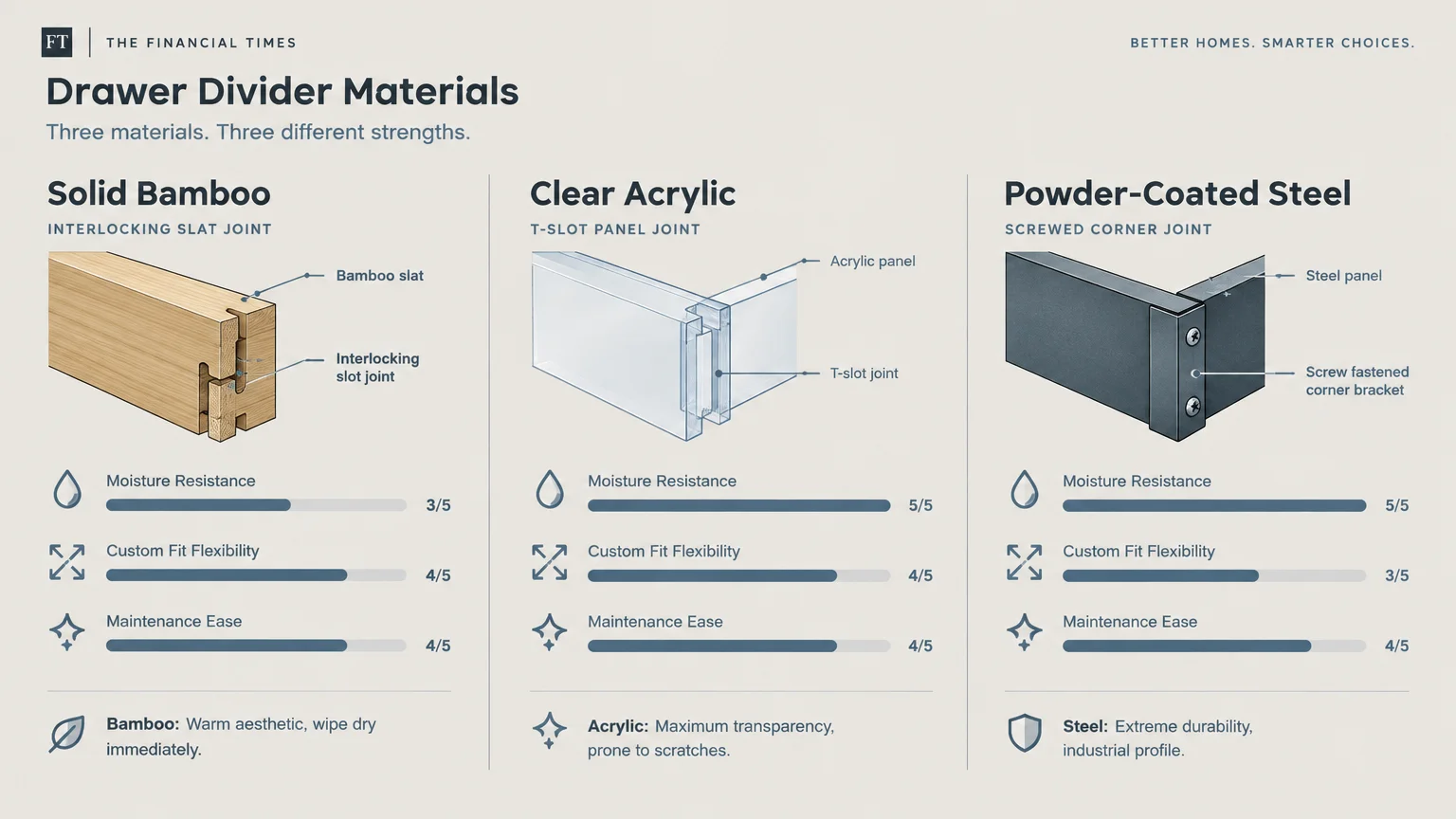
Comparing Drawer Divider Materials and Systems
Selecting the right organizational materials ensures your drawer systems hold up against daily friction and moisture. Different drawer contents require specific divider characteristics for maximum stability.
Use the comparison guide below to match your kitchen drawers with the best organizing materials for your budget and lifestyle.
| Organizer Type | Best Kitchen Drawer Setup | Primary Functional Advantage | Recommended Maintenance |
|---|---|---|---|
| Expandable Bamboo Inserts | Cutlery and shallow baking drawers | Rigid borders and warm, custom aesthetic | Wipe clean with a damp microfiber cloth |
| Clear Modular Acrylic Bins | Beverage stations and utility drawers | Complete visual visibility and modular layouts | Hand wash with warm, mild soapy water |
| Spring-Loaded Tension Dividers | Deep utensil and food container drawers | Tool-free installation with adjustable widths | Dust periodically with dry microfiber cloth |
| Perforated Wood Pegboards | Lower dish, bowl, and cookware drawers | Prevents heavy ceramic plate stacks from sliding | Vacuum debris out of peg channels quarterly |
| Molded Silicone Insets | Knife stations and prep tool drawers | Dampens loud impact noise and protects edges | Rinse under warm water or top-rack dishwasher |
Natural bamboo organizers bring warmth to your cabinetry while offering rigid wall support for heavy tools. Wipe bamboo down with a damp cloth rather than submerging it in water to avoid warping.
Clear acrylic bins provide clean visual sightlines, making them ideal for snacks, tea bags, and small utility items. Look for bins with non-skid rubber feet to prevent internal sliding when opening the drawer.
Spring-loaded tension dividers create instant custom channels in deep drawers without tools or permanent modifications. Ensure the tension springs feature rubber end pads to protect your interior cabinet finishes from scuffs.
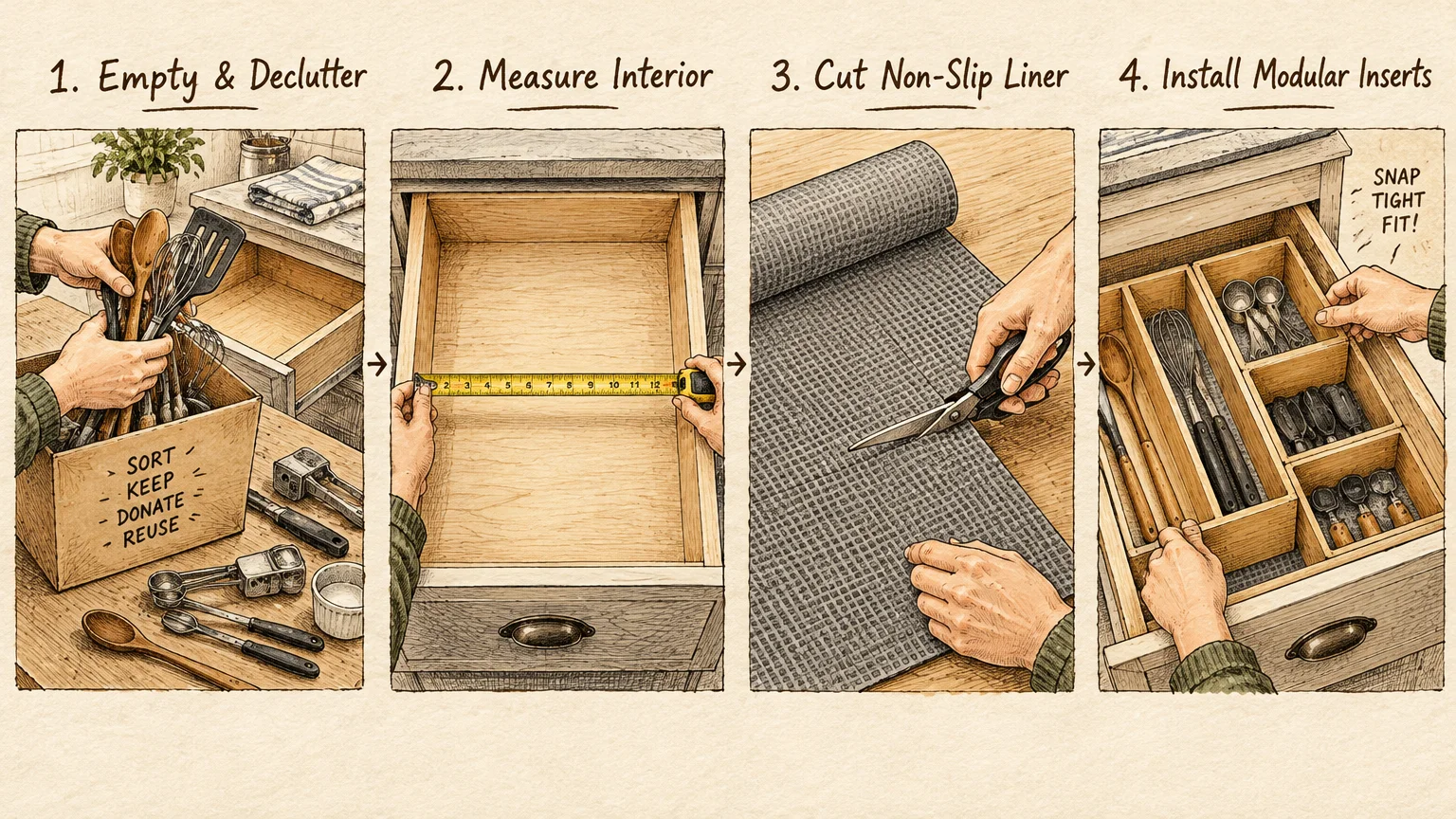
Step-by-Step Guide to Rebuilding Any Kitchen Drawer
Transforming a cluttered drawer into an orderly setup requires a structured, deliberate method. Follow these five sequential steps to achieve long-lasting drawer organization in any kitchen space.
- Empty the drawer completely: Place every item onto a clear dining table or countertop. Never organize inside a partially filled drawer box.
- Deep clean the interior: Vacuum out crumbs and wipe surfaces with a damp microfiber cloth and mild dish soap. Allow the drawer box to dry completely before installing liners.
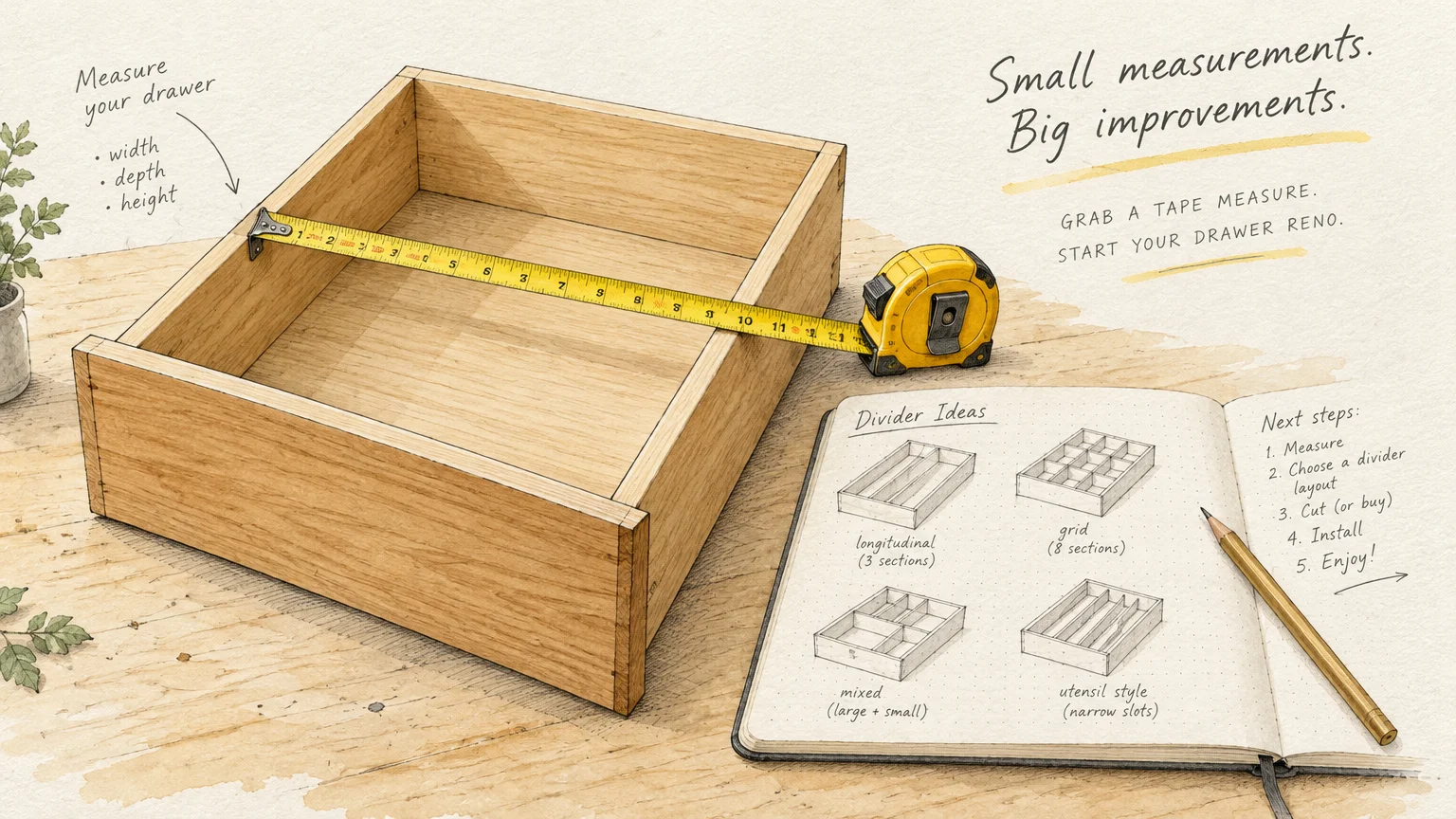
- Measure three interior dimensions: Measure the interior width, depth, and height using a stiff metal tape measure. Note any interior hardware, screws, or drawer slide tracks that reduce clearance.
- Purge duplicates and broken items: Group identical tools together and discard worn, damaged, or unneeded duplicates. Retain only the tools you reach for regularly during normal meal preparation.
- Install dividers and load by frequency: Place non-slip liners and structural dividers into the empty drawer box. Return high-frequency items to the front zones and store secondary tools in the back.
Testing your layout before committing to permanent placement prevents unexpected drawer jams. Slide the drawer open and shut quickly to verify that tall utensils clear the face frame cleanly.
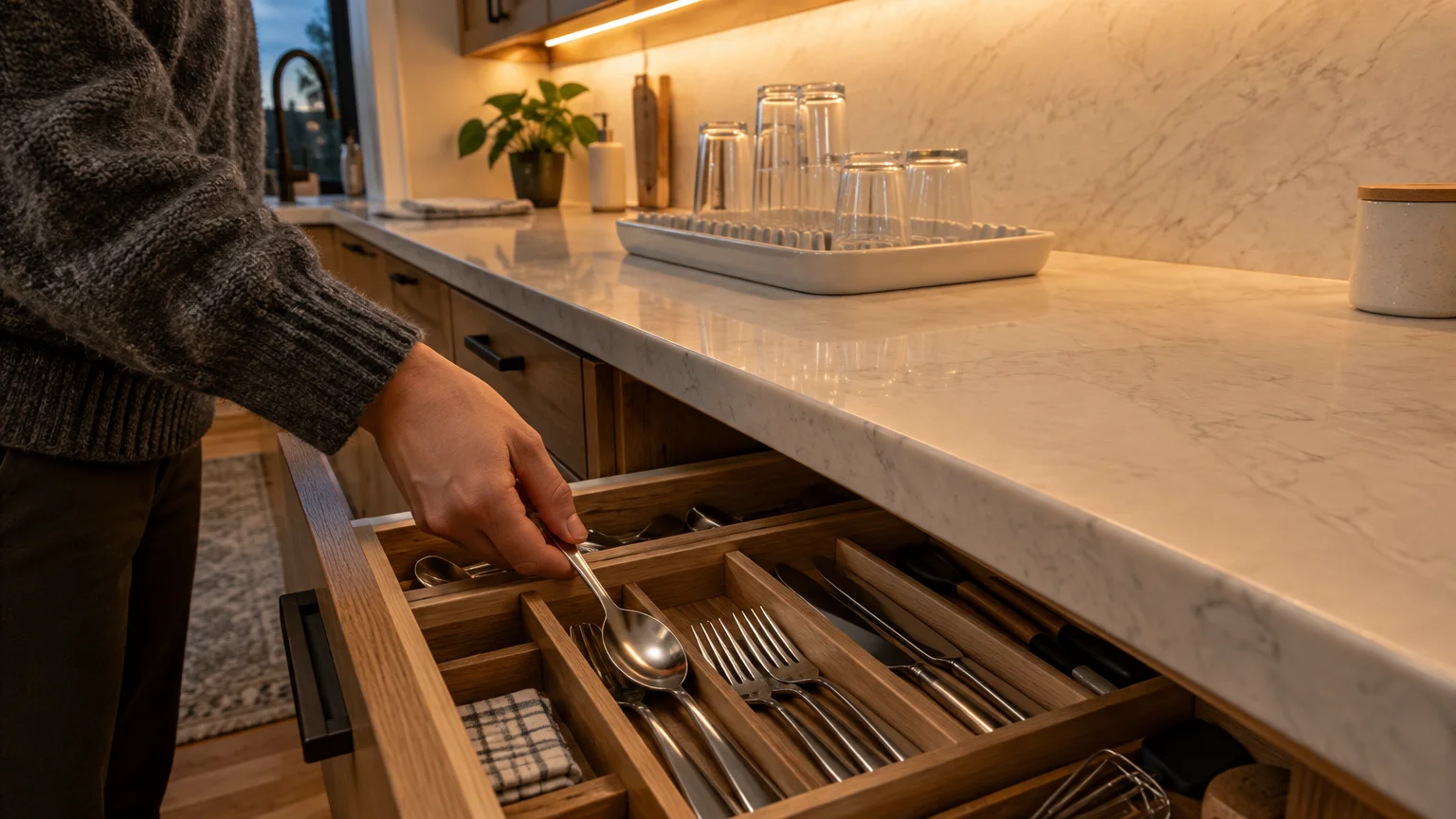
Four Daily Habits That Keep Drawers Organized Long-Term
Even the most sophisticated drawer organizers fall apart without simple daily maintenance routines. Consistent micro-habits prevent clutter from accumulating over weeks of busy family meal preparation.
Implement the one-touch rule whenever you unload your dishwasher or wash cookware by hand. Return items directly to their assigned compartments instead of setting them temporarily on your counter.
Practice a weekly visual scan before you write your grocery shopping list. Reset any stray utensils that wandered into neighboring bins during hectic dinner prep sessions.
Enforce strict capacity limits for every drawer in your home. When a compartment begins to overflow, discard worn items rather than cramming extra utensils into adjacent zones.
Your Practical Next Step
Choose just one high-friction kitchen drawer to overhaul this afternoon. Tackling a single silverware or cooking utensil drawer builds immediate momentum and delivers instant daily satisfaction.
Measure your chosen drawer interior, select modular dividers that fit its dimensions, and enjoy the calm of effortless kitchen storage.