Proper cleaning product storage protects your household and preserves the chemical potency of your supplies. Storing everyday cleaners in the wrong spots can ruin active formulas, damage cabinetry, or trigger serious safety emergencies.
Most homeowners tuck spray bottles wherever extra room exists without assessing ambient heat, humidity, or child accessibility. Moving these items to secure, dedicated zones takes only minutes and simplifies your daily housekeeping routine.
Here are five places where you should never store cleaning products, the scientific reasons behind each hazard, and simple organizing upgrades you can apply immediately.
The Hidden Risks of Everyday Cleaning Product Storage
Household chemicals make daily sanitizing fast and efficient. When stored carelessly, however, these staple items quickly become domestic hazards.
Data proves this risk remains widespread across modern households. You must treat everyday cleaners with the same respect as prescription medication.
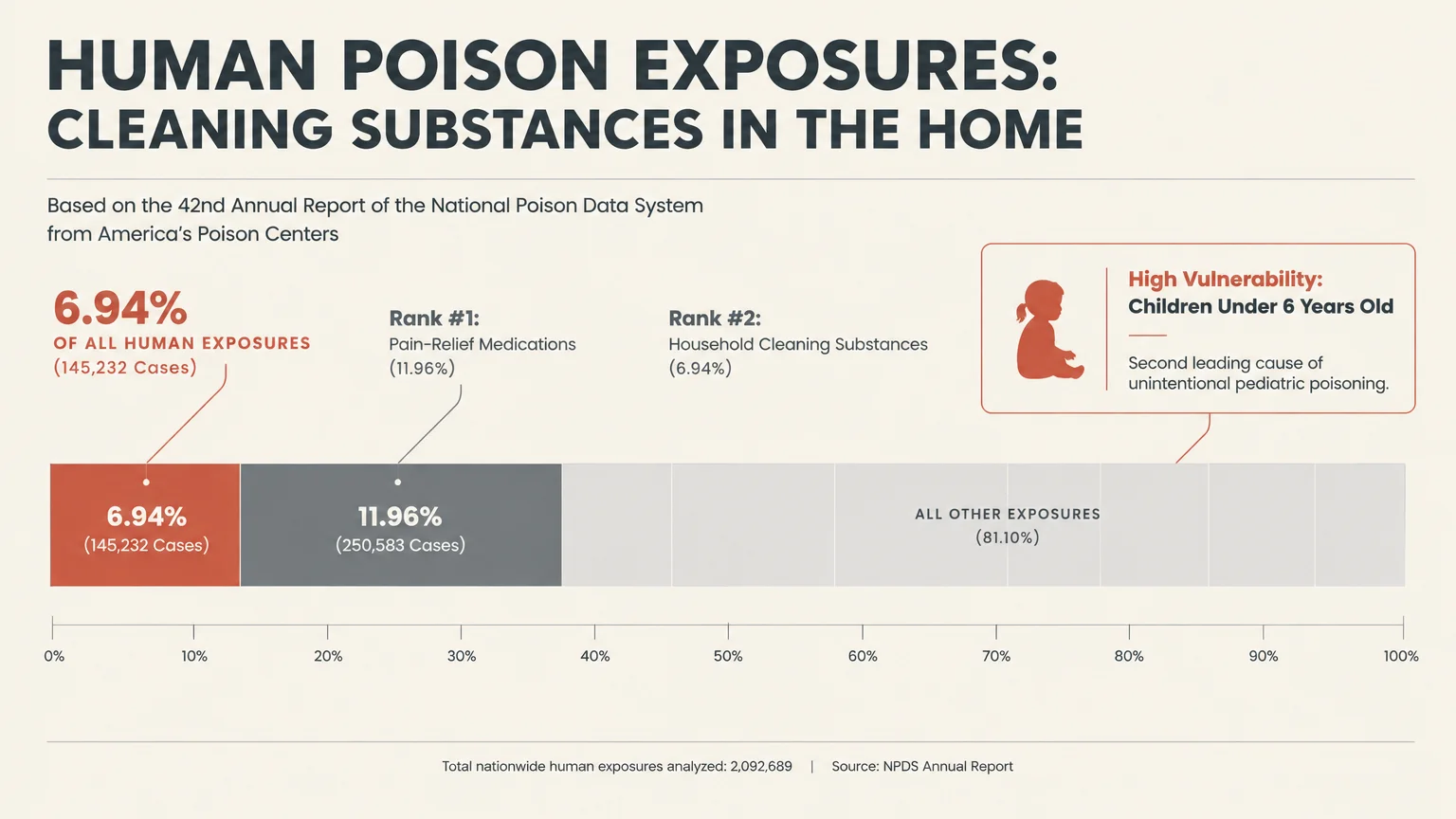
According to the 42nd Annual Report of the National Poison Data System, published by America’s Poison Centers, household cleaning substances represent the second most common substance class involved in all human poison exposures.
These products accounted for 6.94% of all reported poison cases out of 2,092,689 total human exposures nationwide. They trailed only pain-relief medications in overall incident frequency.
The danger spikes dramatically for young families and visiting grandchildren. Routine kitchen cleaners and liquid laundry packets represent the second most common cause of unintentional poisoning in children under six years old.
Curious toddlers explore low cabinets, while older adults may grab the wrong bottle due to declining eyesight. Improving your storage habits immediately eliminates these unnecessary risks.
Improper storage also ruins the cleaning supplies you pay good money to buy. Heat, light, and moisture rapidly degrade active ingredients, leaving you with weak formulas that fail to sanitize your surfaces.
Understanding household chemical safety transforms your home into an orderly, calm, and secure environment. Let us examine the five storage locations you should avoid at all costs.
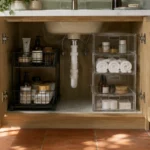
01 Unsecured Under-Sink Cabinets in Kitchens and Bathrooms
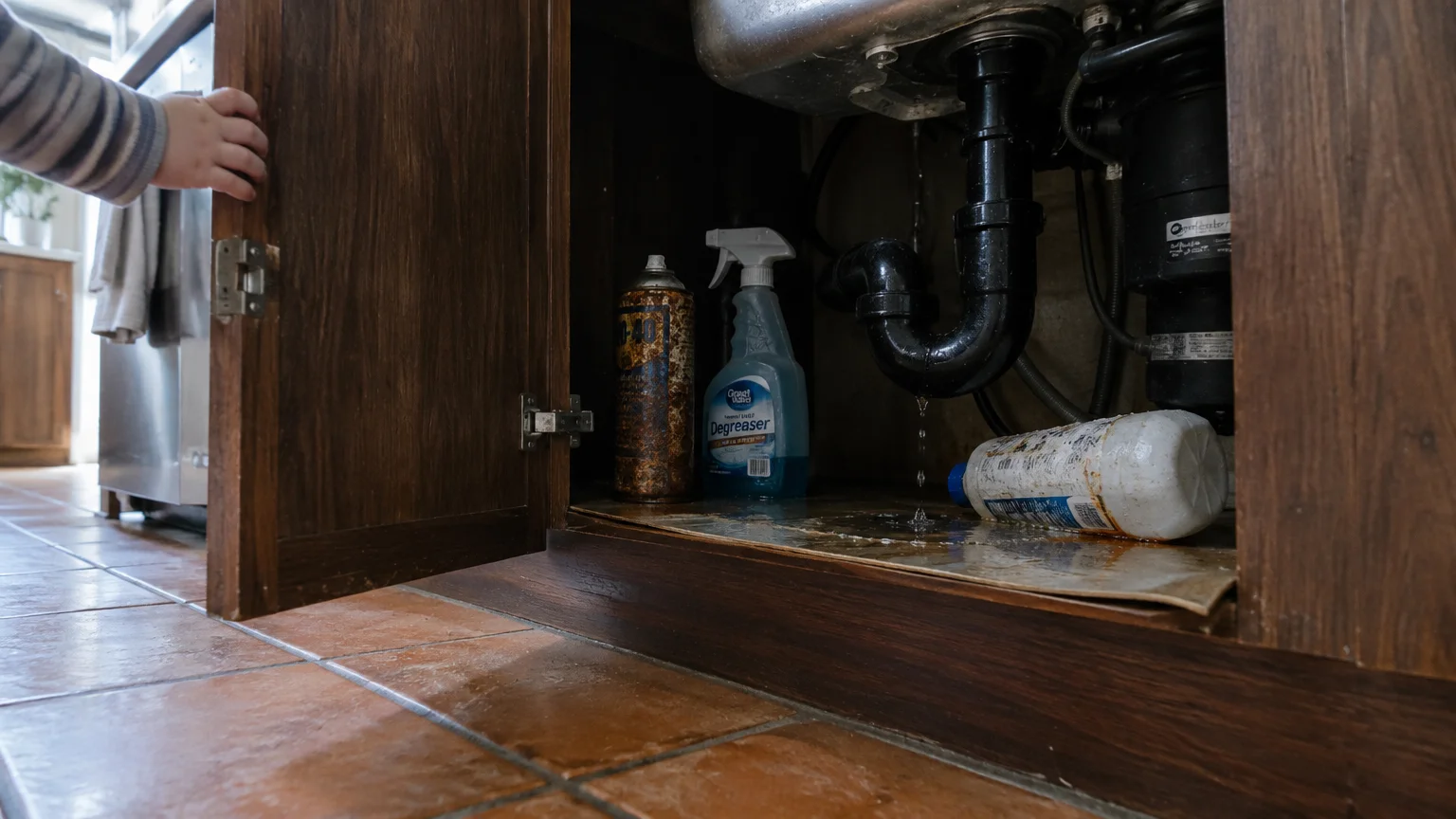
The dark cabinet under the kitchen or bathroom sink serves as the default storage spot in most homes. While this spot keeps bottles tucked away, an unsecured under-sink cabinet presents serious safety threats.
First, under-sink spaces sit directly at floor level. Crawling infants, energetic toddlers, and curious pets can nudge open these lightweight doors within seconds.
Standard sink cabinets lack built-in locks or latches. Placing concentrated degreasers, oven cleaners, and drain openers at knee height invites accidental poisonings and severe chemical burns.
Second, plumbing fixtures leak unexpectedly. Even a minor pipe drip or loose P-trap connection pools water directly beneath your stored bottles.
Standing water destroys paper labels, dissolves cardboard packaging, and rusts the rims of metal containers. Once a label peels off, you lose critical safety instructions and poison emergency details.
Worse, water can seep into powdered cleaners containing sodium percarbonate or chlorine compounds. Unintended moisture triggers localized chemical reactions, releasing noxious fumes inside an enclosed cabinet.
Third, kitchen sinks often share cabinet space with powered appliances. Garbage disposals vibrate violently, and nearby dishwashers vent hot, humid air through adjoining cabinet walls.
Mechanical vibration can knock loose caps open or tip tall bottles onto their sides. Meanwhile, electrical wiring behind disposals introduces a spark hazard near pressurized aerosol cans or alcohol-based disinfectants.
You can still utilize under-sink space efficiently without creating hazards. Reserve this area strictly for clean spare rags, silicone scrubbers, empty spray bottles, and uncharged cleaning tools.
If you must keep a mild surface spray under the sink, install a sturdy magnetic safety latch immediately. Place every liquid bottle inside a high-sided, leak-proof plastic bin to catch accidental spills.
02 Garages, Attics, and Outdoor Storage Sheds
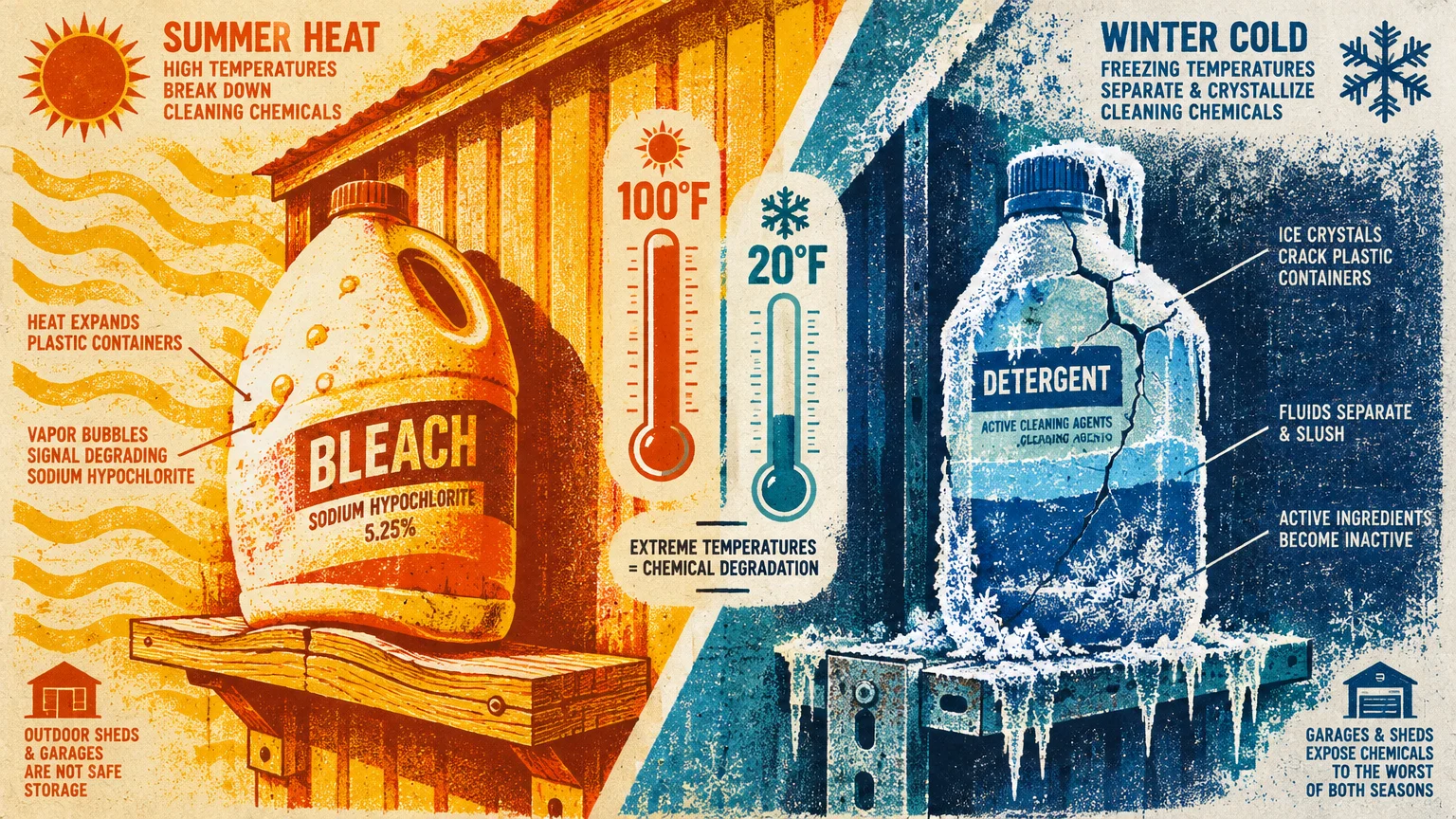
Garages and outdoor sheds seem like logical overflow zones for bulky cleaning jugs. However, unconditioned outbuildings subject your supplies to punishing temperature swings that ruin chemical formulations.
Most standard household cleaning products have a shelf life of 18 to 24 months under normal indoor conditions. Storing them in high-heat spaces accelerates their chemical breakdown and cuts their usable lifespan drastically.
Summer heat inside an uninsulated garage or attic frequently exceeds 100 degrees Fahrenheit. Excessive thermal energy breaks down the active chlorine in liquid bleach into simple salt water, destroying its sanitizing capability.
Extreme heat also degrades hydrogen peroxide, specialized enzymes, and surfactant blends found in laundry detergents. You end up spraying inactive chemicals across your counters that fail to kill bacteria.
High temperatures pose an acute physical danger to pressurized aerosol cans. Cans of furniture polish, air freshener, and spray disinfectant experience rising internal pressure as temperatures climb.
When internal can pressure surpasses structural limits, the metal container can rupture violently or explode. If flammable propellants leak near a water heater pilot light, a catastrophic fire can ignite instantly.
Freezing winter weather causes equal damage to stored cleaning products. Water-based liquids expand as they freeze, warping plastic bottles and cracking spray triggers.
Sub-freezing temperatures destabilize emulsion formulas, such as liquid floor waxes and cream cleansers. Once these products freeze and thaw, their chemical ingredients permanently separate into unusable sludges.
Store your surplus cleaning products inside your primary living footprint instead. A dedicated shelf in a hallway linen closet or a utility room cabinet provides the stable climate these products require.
03 Food Pantries and Kitchen Food Storage Areas
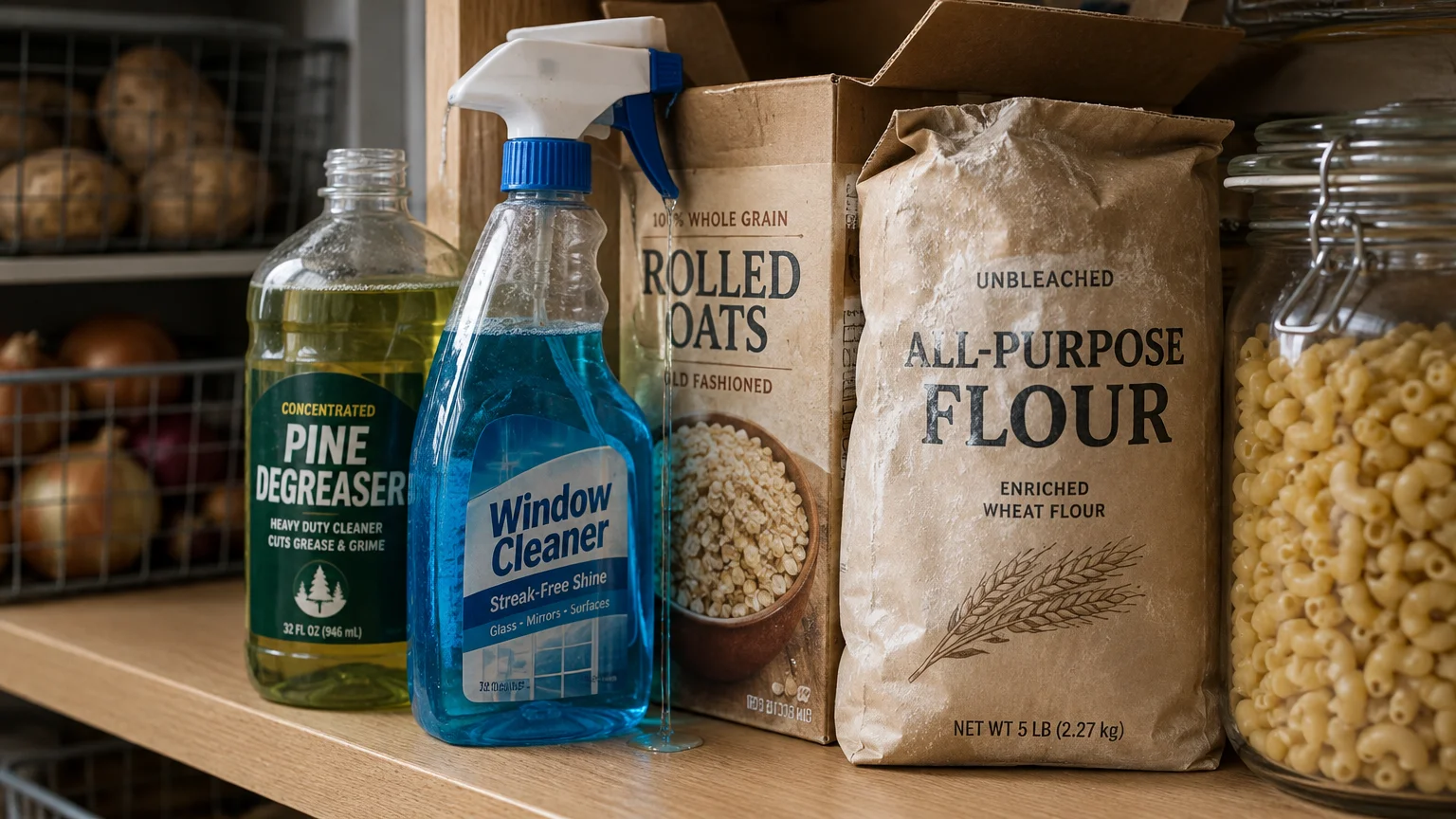
Pantry shelves provide convenient storage space, but mingling cleaners with your groceries creates serious cross-contamination hazards. You should never store household chemicals on the same shelving unit as edible goods.
Liquid cleaners can leak through defective trigger seals or cracked bottle bases. If a bottle of all-purpose cleaner drips from an upper shelf, it can saturate bags of flour, sugar, or cereal resting below.
Many industrial cleaning chemicals absorb directly through porous paper and cardboard packaging. You might consume harmful residues without noticing visible liquid staining on your food.
Furthermore, volatile organic compounds evaporate continuously from tightly closed trigger sprays. Porous foods like bread, rice, and cooking oils absorb these airborne chemical fumes, altering their taste and making them unsafe to eat.
Mistaken identity creates another severe poisoning hazard in food storage areas. Bleach, white vinegar cleaner, and cooking vinegar look identical when poured or stored in similar containers.
An older family member with lower vision can easily mistake a spray bottle of degreaser for non-stick cooking oil. In a busy, low-light pantry, grabbing the wrong bottle takes only a fraction of a second.
Children face similar risks when bright cleaning fluids sit near snacks. A bottle of blue glass cleaner resembles sports drinks, while yellow floor cleaner mimics lemon juice or apple cider.
Maintain complete physical separation between edible groceries and household maintenance items. If you must use a shared closet, store cleaning supplies inside a sealed plastic tote on the floor, far away from food shelving.
Never place cleaning supplies on shelves directly above food prep counters or cooking appliances. This physical boundary eliminates accidental drips into simmering pots and meal preparation surfaces.
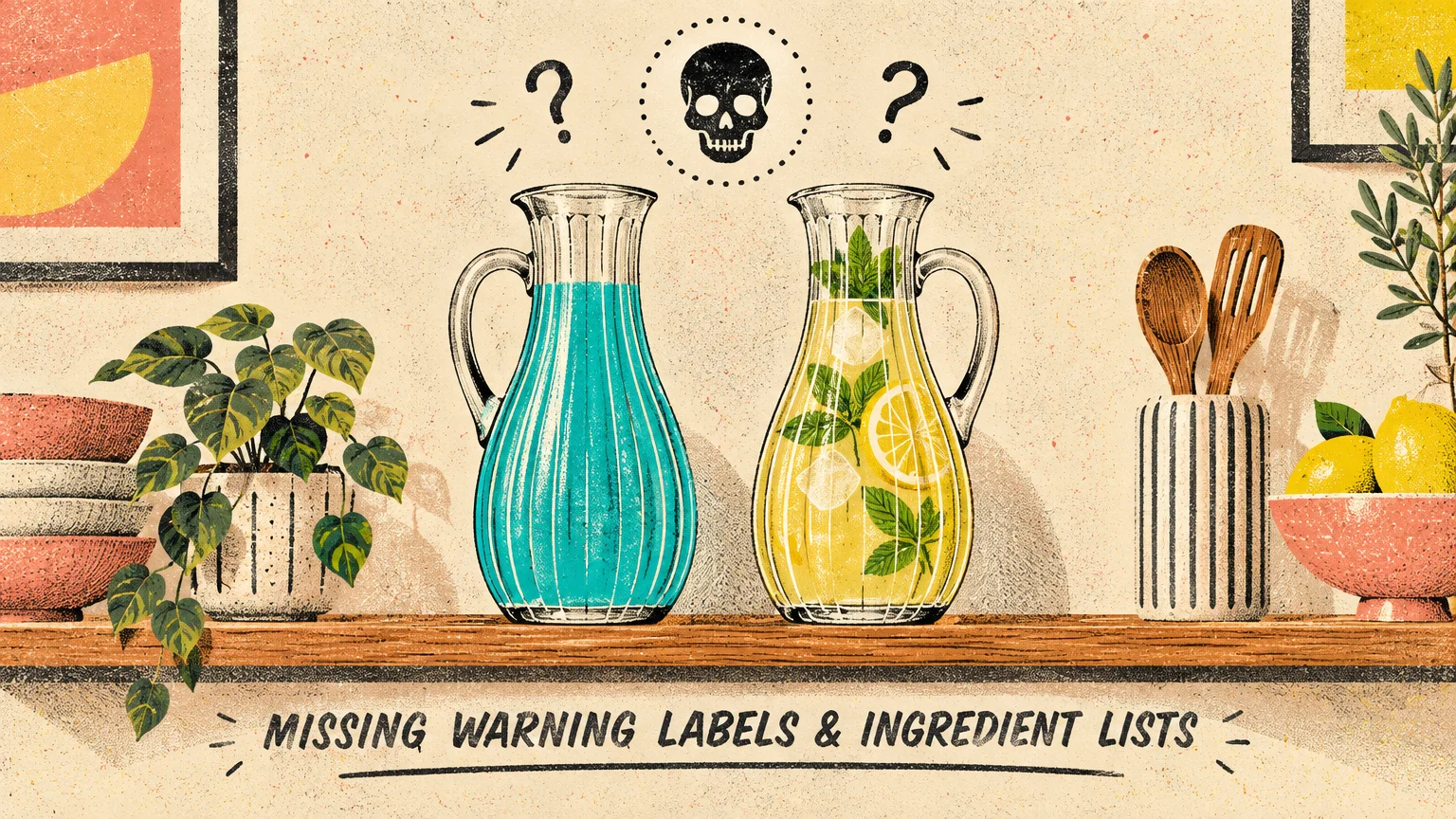
04 Countertops and Open Shelves in Decorative Jars
Social media trends frequently showcase laundry rooms and kitchens styled with clear glass canisters. Influencers decant liquid detergents, colorful laundry pods, and scouring powders into decorative countertop jars to achieve a minimalist look.
This aesthetic practice introduces severe hazards into your home. The American Cleaning Institute launched the national #StoreNotDecor campaign specifically to warn homeowners against treating concentrated cleaners as home decorations.
Decanting household cleaners strips away original child-resistant closures. Manufacturers engineer pod tubs and safety caps with specific dual-action mechanisms designed to keep young children out.
Placing brightly colored laundry packets into clear glass apothecary jars turns concentrated toxic chemicals into tempting visual displays. To an inquisitive toddler, a jar filled with squishy, colorful packets looks exactly like a countertop candy dish.
In addition, removing products from their original packaging eliminates critical manufacturer safety labels. Original labels provide emergency first-aid protocols, ingredient lists, and specific poison control guidance.
If someone accidentally swallows or splashes a product into their eyes, emergency medical personnel need the exact chemical formulation immediately. Scrambling to remember what brand you poured into a decorative jar wastes precious life-saving minutes.
Exposing cleaning chemicals to open ambient light also degrades their cleaning potency. Sunlight and interior lighting break down light-sensitive formulas, such as hydrogen peroxide, bleach alternatives, and natural enzyme blends.
Glass containers introduce an unnecessary breakage hazard into working utility areas. A heavy glass jar knocked off a vibrating washing machine or slick countertop shatters into dangerous shards while spilling concentrated chemicals.
Always keep household cleaners inside their original, labeled packaging. Secure the original lids tightly after every cleaning session, and return the containers to a closed, high cabinet immediately.
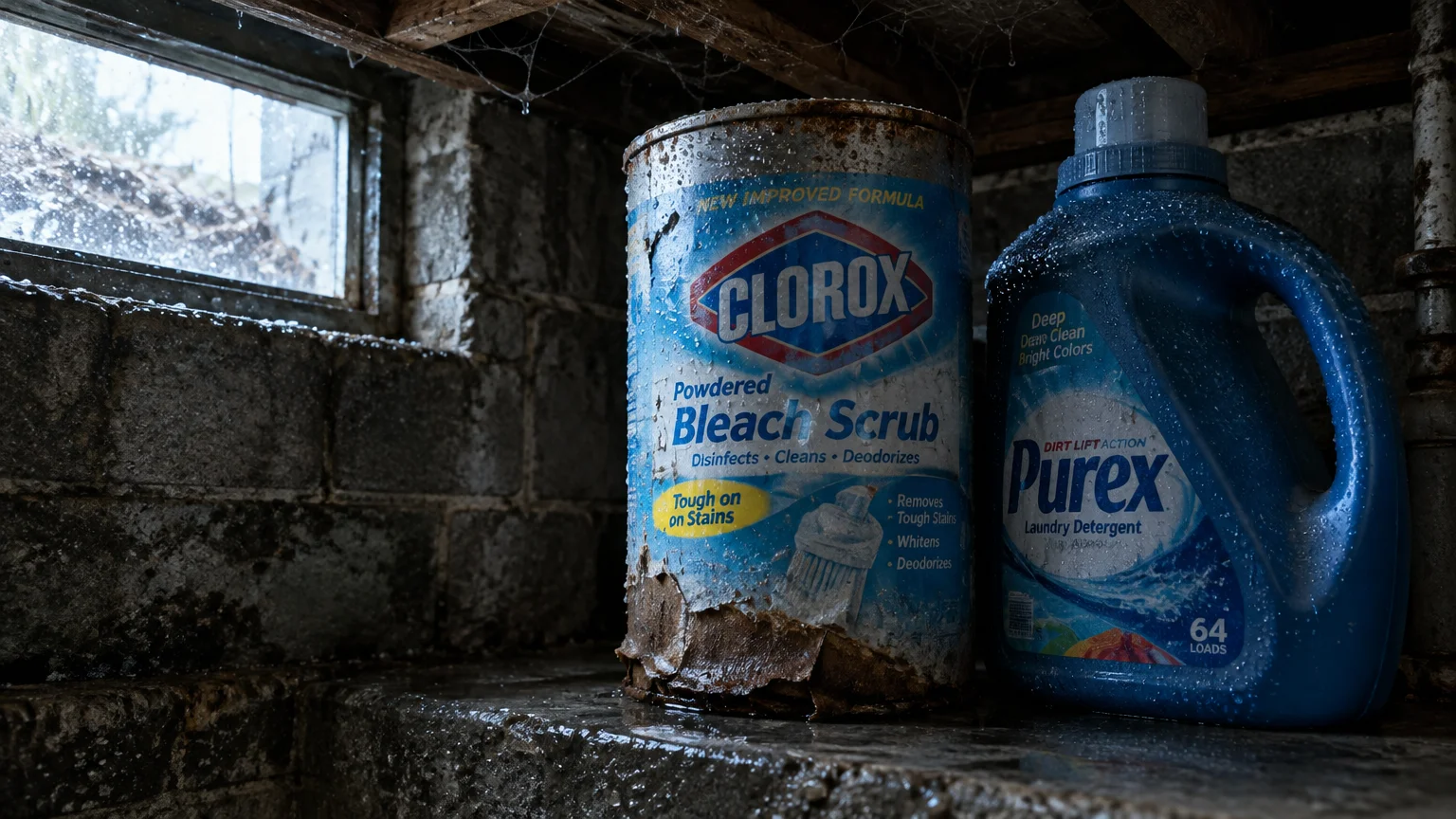
05 Damp Basements and High-Humidity Bathrooms
Basements and bathrooms seem like sensible cleaning stations, but excess airborne moisture creates significant chemical storage hazards. High ambient humidity actively destroys product packaging and promotes unsafe chemical interactions.
Bathrooms generate substantial steam during daily showers and baths. This warm, humid air condenses against cool metal containers, causing aerosol cans of shaving cream, disinfectants, and air fresheners to rust.
Corrosion forms microscopic pinholes along the bottom seam of metal cans over time. These tiny breaches release pressurized propellants and toxic chemical mists into your enclosed bathroom air without warning.
Moisture also attacks powdered cleaners stored in cardboard drums or paper boxes. Scouring powders, oxygen bleaches, and laundry powders absorb ambient moisture, hardening into solid, useless blocks of rock.
Damp basements present identical moisture risks while adding severe ventilation deficiencies. Most residential basements feature minimal airflow, small hopper windows, and enclosed stairwells.
Many cleaning solvents, degreasers, and mineral spirits emit heavy volatile organic compounds. Because these chemical vapors are heavier than air, they sink to the basement floor and pool in stagnant air pockets.
Accumulated chemical fumes pose severe respiratory risks to residents spending time in finished basements or laundry areas. If these concentrated vapors drift toward a basement furnace, boiler, or water heater, open burner flames can ignite them.
Basement sump pump failures and foundation seepage also threaten floor-stored supplies. Floodwaters can knock over chemical bottles, washing dangerous acids, bases, and solvents into local storm drains or back into your living space.
Keep your bathroom cleaning supplies in a dry hallway linen closet rather than beneath the humid bathroom vanity. If you store items in a basement, mount them on raised, well-ventilated wire shelving at least four feet off the floor.
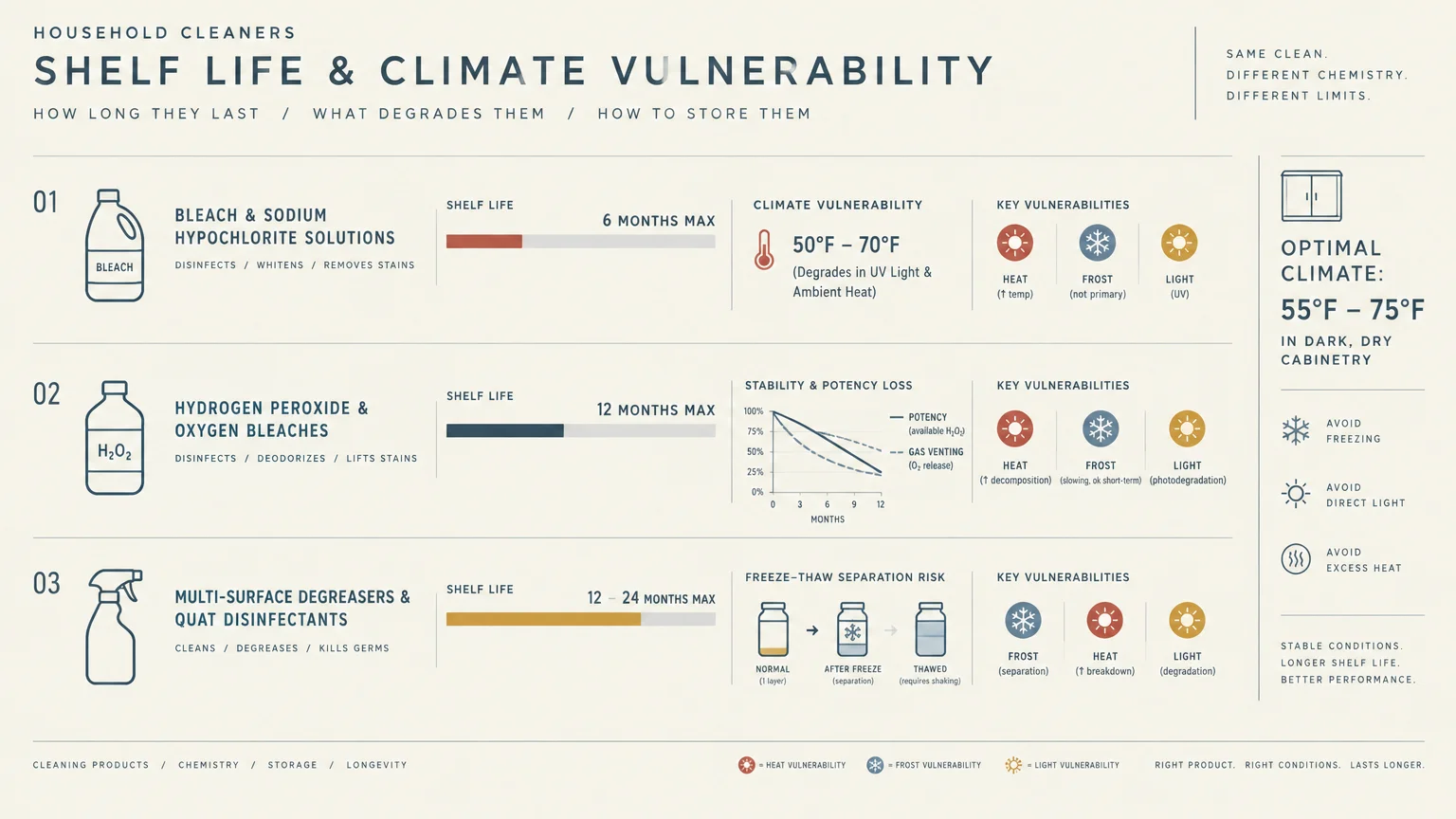
Cleaning Product Shelf Life and Climate Sensitivity Guide
Understanding how environmental exposure degrades your supplies helps you select optimal storage zones. The following reference table outlines typical shelf lives, climate tolerances, and common storage pitfalls for standard household cleaners.
| Cleaning Product Category | Average Shelf Life | Temperature Sensitivity | Improper Storage Hazard | Recommended Storage Solution |
|---|---|---|---|---|
| Liquid Chlorine Bleach | 18 to 24 months | Degrades rapidly above 75°F; freezes below 32°F | Loses sanitizing strength; decomposes into salt and water | Cool, dark utility closet; original opaque container |
| Liquid Laundry Packets | 18 to 24 months | Dissolves in high humidity; bursts under heat | Polyvinyl casing dissolves; extreme ingestion risk for children | High, dry cabinet; original child-resistant outer tub |
| Aerosol Disinfectant Sprays | 24 to 36 months | Pressurizes above 120°F; can rust in damp air | Explosion risk from heat; pinhole leaks from moisture rust | Climate-controlled closet; elevated dry shelf |
| Hydrogen Peroxide Cleaners | 18 to 24 months | Degrades in heat and direct sunlight | Breaks down into ordinary water and oxygen gas | Dark, room-temperature cabinet; original brown bottle |
| Powdered Oxygen Bleach | 24 to 36 months | Reacts with moisture and standing humidity | Cakes into rock; releases gas in sealed wet spaces | Sealed, airtight plastic tote in a dry pantry-free zone |
| Enzyme-Based Stain Removers | 18 to 24 months | Inactivates above 95°F; separates if frozen | Biological enzymes die; formula fails to remove organic stains | Interior hallway linen closet at stable room temperature |
Check the bottom or neck of your plastic bottles for stamped manufacturing codes. If a product shows discoloration, separated layers, or an unusual odor, dispose of it safely according to local environmental regulations.
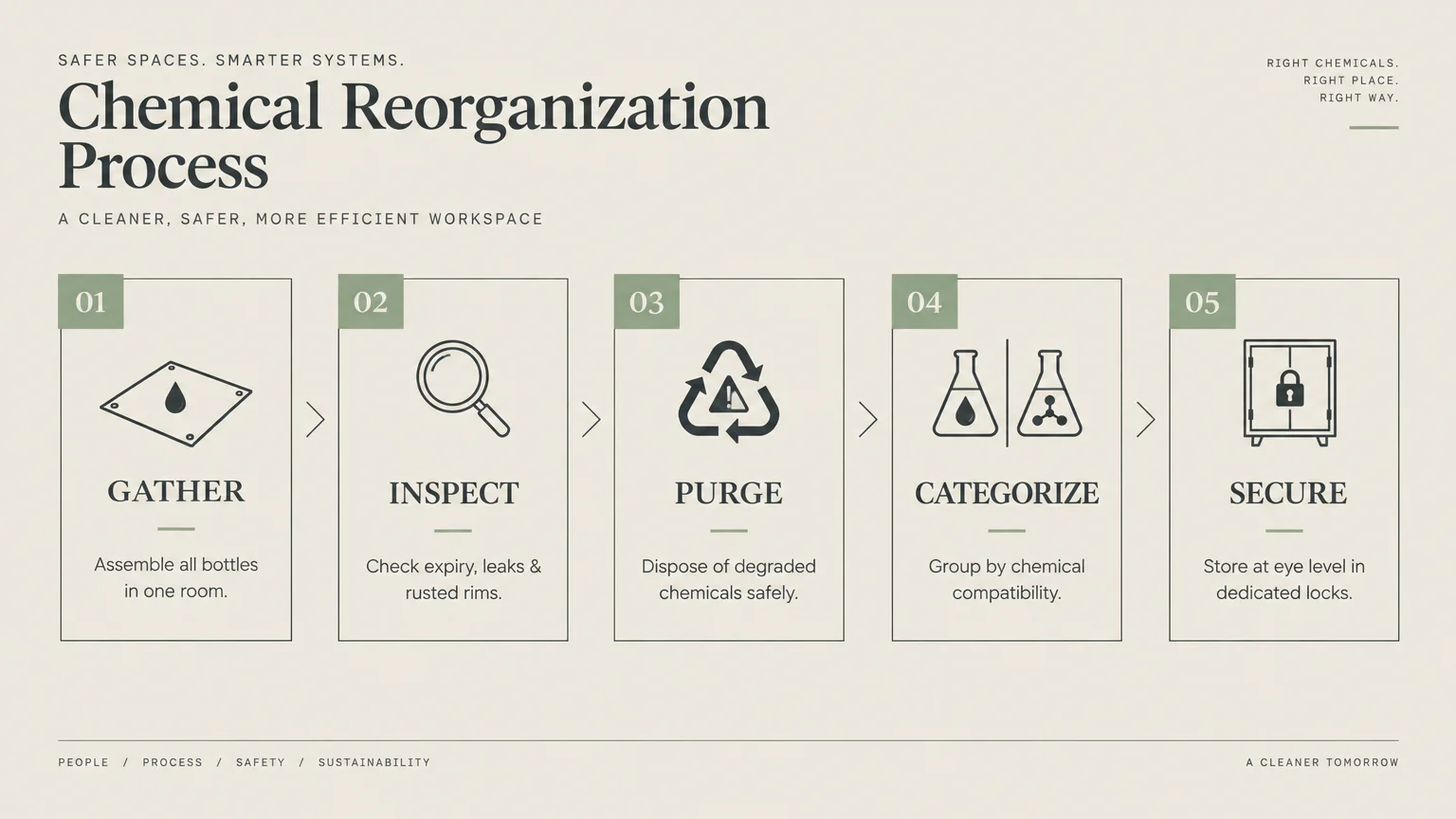
How to Audit and Reorganize Your Cleaning Supplies in 5 Steps
Streamlining your cleaning inventory eliminates clutter and ensures your home remains safe. Follow this systematic process to audit, purge, and safely store your cleaning supplies this weekend.
-
Gather Every Product into a Single Work Area:
Walk through your home with an empty laundry basket. Collect every spray bottle, scouring powder, aerosol can, and specialty polish from bathrooms, kitchens, basements, and your garage. -
Inspect Packaging, Expiration Dates, and Labels:
Examine each container thoroughly for cracked caps, leaking triggers, faded text, or rusting metal seams. Safely discard any cleaner missing its original manufacturer label, along with formulas older than two years. -
Group Your Cleaners by Chemical Family:
Never mix random cleaning products together in the same storage bin. Separate chlorine bleach formulas, ammonia-based glass sprays, acidic descalers, and flammable aerosol polishes into distinct operational groups. -
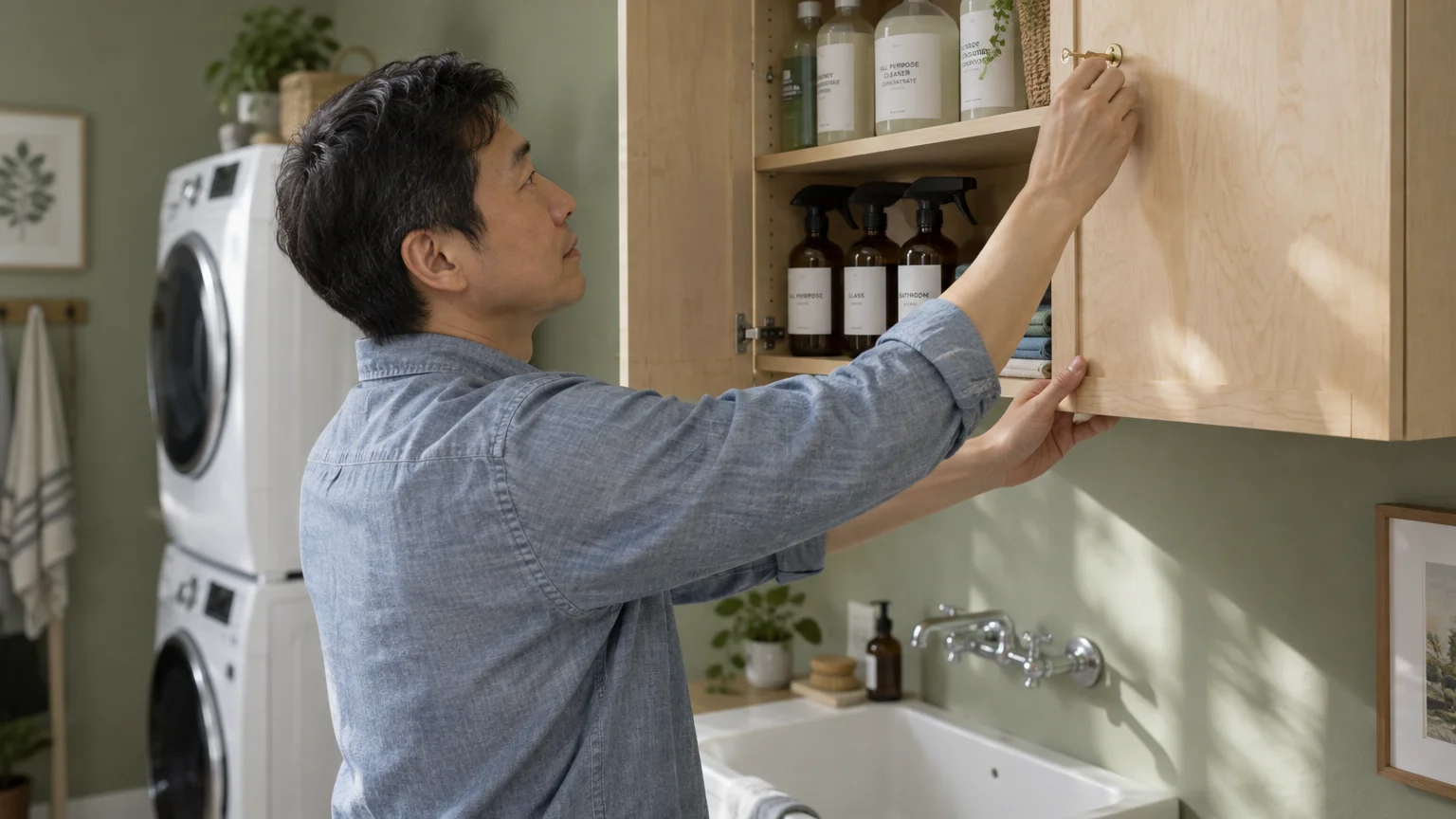
Designate an Elevated, Climate-Controlled Storage Zone:
Choose a secure indoor cabinet positioned between waist and eye level. Ensure this location stays between 55 and 75 degrees Fahrenheit, away from direct sunlight, plumbing lines, and food shelves. -
Install Reliable Childproof Latches and Secondary Containment:
Affix magnetic safety locks or heavy-duty latches to the cabinet doors. Place liquid containers inside wide, high-walled plastic caddies to catch inadvertent drips and simplify transport around your home.
Completing this simple five-step overhaul immediately clears floor clutter and gives you an organized cleaning routine. You will always know exactly what supplies you own and where to locate them safely.
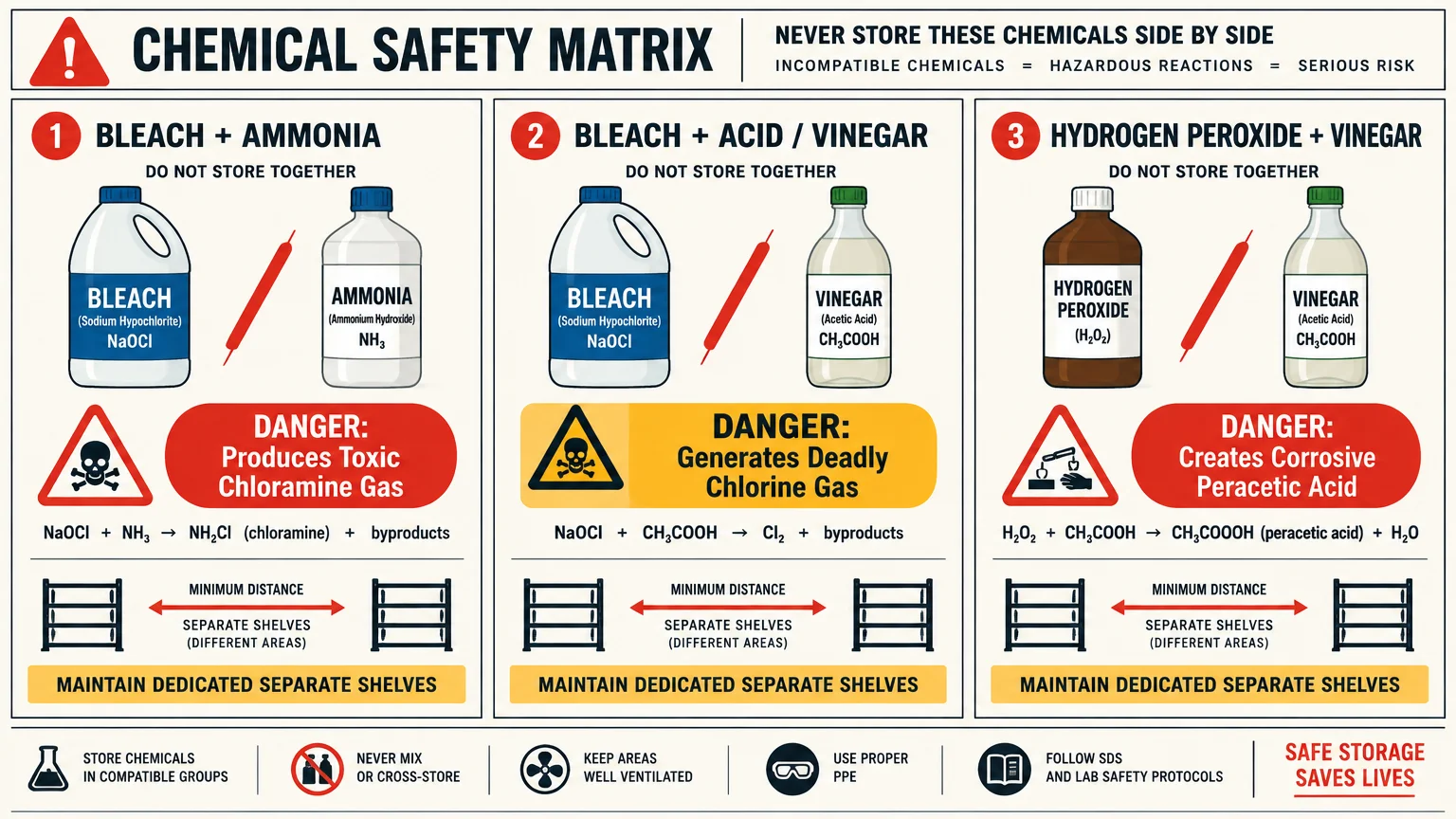
Chemical Compatibility: What Never to Store Side by Side
Organizing cleaning supplies requires more than just picking a dry cabinet. You must also understand basic chemical compatibility to prevent accidental reactions during storage or transport.
Certain household chemicals generate lethal gases if their containers leak or mix together inside a shared caddy. You should always enforce strict physical boundaries between incompatible chemical classes.
Never store chlorine bleach alongside ammonia-based cleaners. When bleach and ammonia mix, they produce toxic chloramine vapor that causes immediate pulmonary irritation, severe coughing, and fluid buildup in the lungs.
Glass cleaners, floor strippers, and multi-surface sprays frequently contain ammonia. Keep these blue and clear formulas completely isolated from bleach jugs and chlorinated scouring powders.
Never store chlorine bleach next to acidic cleaning products. Combining bleach with acids produces toxic chlorine gas, which burns mucosal linings and damages eyes instantly.
Common household acids include white cleaning vinegar, toilet bowl cleaners, limescale removers, and rust eradicators. Store your acidic cleaners on a separate shelf far away from any chlorinated disinfectant.
Hydrogen peroxide and concentrated vinegar cleaners also pose significant hazards when stored improperly. Combining these two liquids produces peracetic acid, a corrosive compound that irritates your skin, eyes, and respiratory system.
Flammable products demand dedicated separation as well. Keep rubbing alcohol, acetone, aerosol sprays, and oil-based wood polishes far away from heat sources and electrical panels.
Adhering to strict household chemical safety guidelines protects your household air quality. Grouping compatible products into separate color-coded caddies provides reliable protection against accidental chemical contact.
Smart Storage Solutions for Small Spaces and Older Adults
Creating safe cleaning storage can feel challenging in compact apartments or homes with limited closet real estate. Fortunately, simple organizing strategies deliver excellent safety even without a dedicated utility room.
Older adults benefit greatly from prioritizing ergonomic access. Storing heavy gallon jugs on high shelves causes shoulder strain, while storing supplies under low sinks demands painful bending and kneeling.
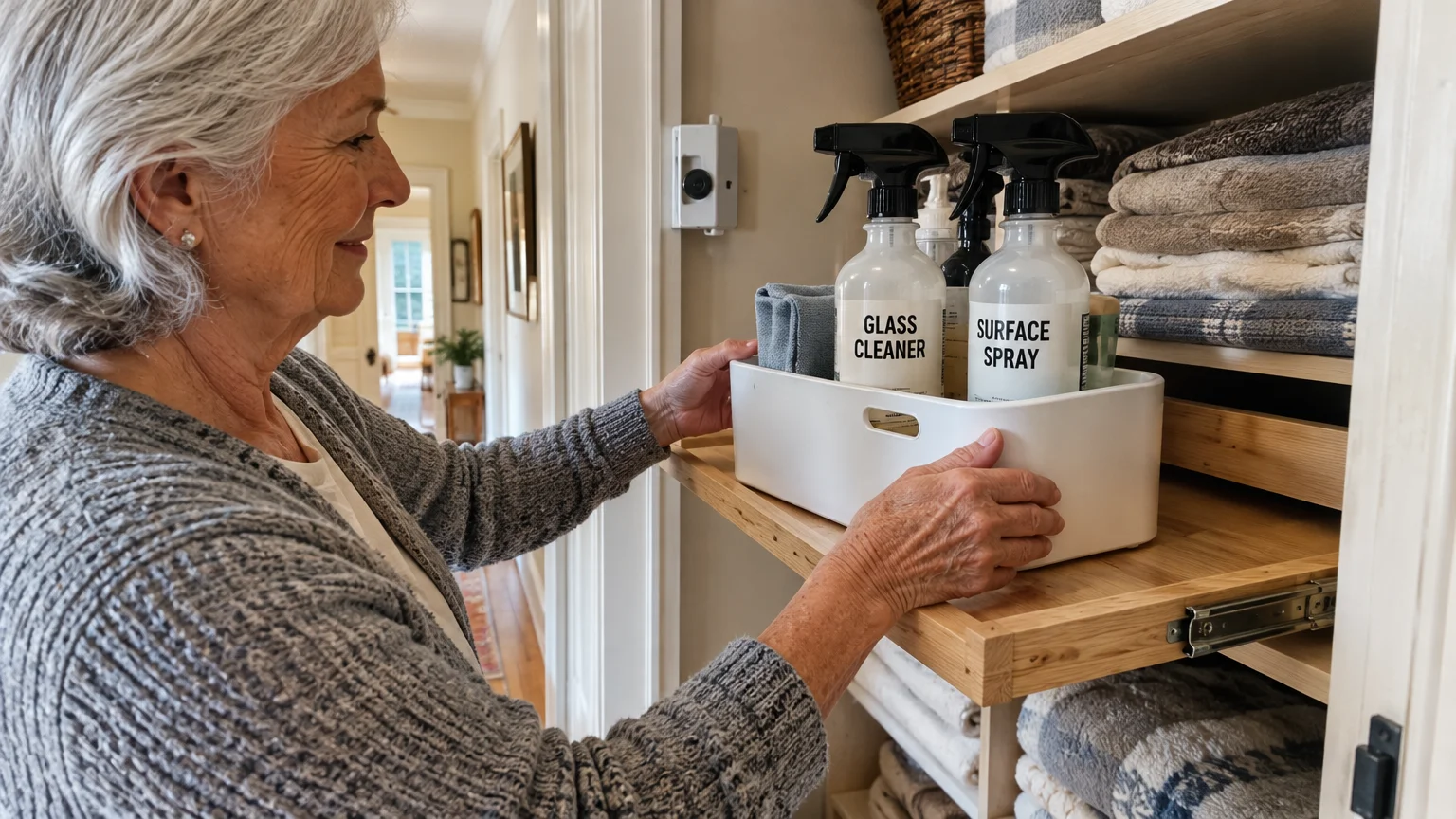
Designate an upper shelf inside a hallway linen closet as your central cleaning station. Position frequently used surface sprays between waist and chest level to maintain comfortable, strain-free reaching.
Portable cleaning caddies offer another exceptional storage solution. Instead of scattering bottles across every bathroom, keep one lightweight, divided caddy stocked with your core essentials.
Store this caddy on an elevated closet shelf behind closed doors. When you clean your home, carry the entire caddy with you, and return it to its secure shelf immediately afterward.
If you live in a small home without spare closet space, consider installing a lockable, wall-mounted utility cabinet. Placing a slim cabinet on an empty laundry room wall keeps dangerous chemicals locked away without sacrificing floor space.
Utilize magnetic safety locks rather than cumbersome childproof straps. Magnetic locks remain hidden from view, open effortlessly with a magnetic key, and relieve joint strain for adults with arthritis.
Always inspect the lighting inside your chosen storage area. Installing a bright, motion-activated stick-on LED light ensures you can read product warnings and labels without straining your eyes.
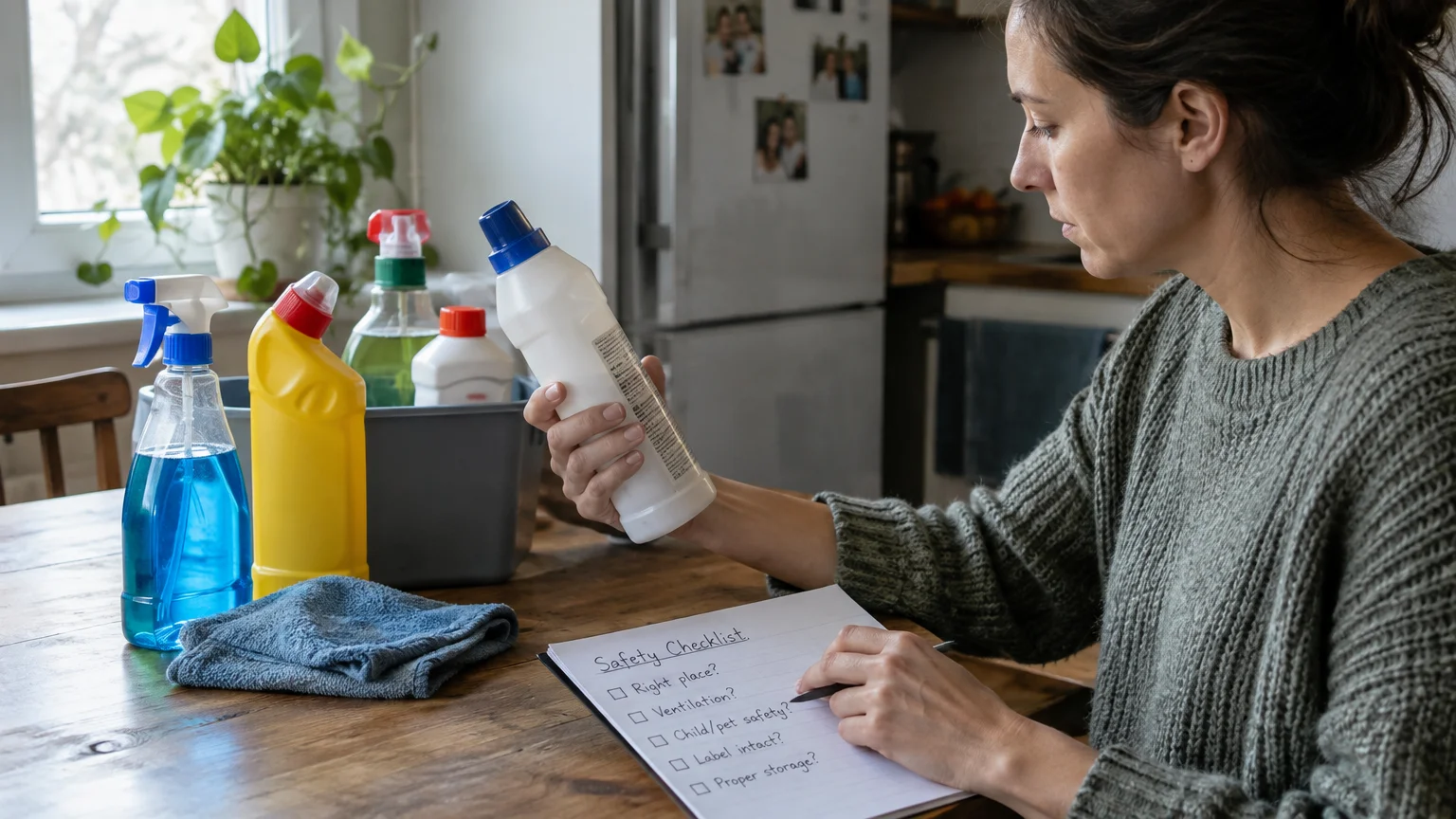
Essential Safety Checklist for Household Cleaners
Review this quick practical checklist before stocking your cleaning shelves. Verifying these core safety rules keeps your household secure and minimizes everyday cleaning hazards.
- Keep all cleaners in their original packaging with factory safety labels intact.
- Ensure caps, pumps, and trigger nozzles remain fully closed and locked between uses.
- Store cleaning supplies out of reach of children and pets, preferably behind locked doors.
- Maintain indoor storage temperatures between 55 and 75 degrees Fahrenheit year-round.
- Position liquid chemicals on lower shelves than powdered cleansers to prevent drip contamination.
- Store chlorine bleach completely separate from ammonia, vinegar, and acidic descalers.
- Never place cleaning chemicals on shelves used for food, beverages, or pet food.
- Avoid storing aerosol cans near direct heat, pilot lights, or damp, rust-inducing air.
- Keep the national Poison Help Hotline number visible inside your supply cabinet.
Following this basic checklist prevents common storage errors. Regular maintenance turns safe cleaning storage into an automatic household habit.
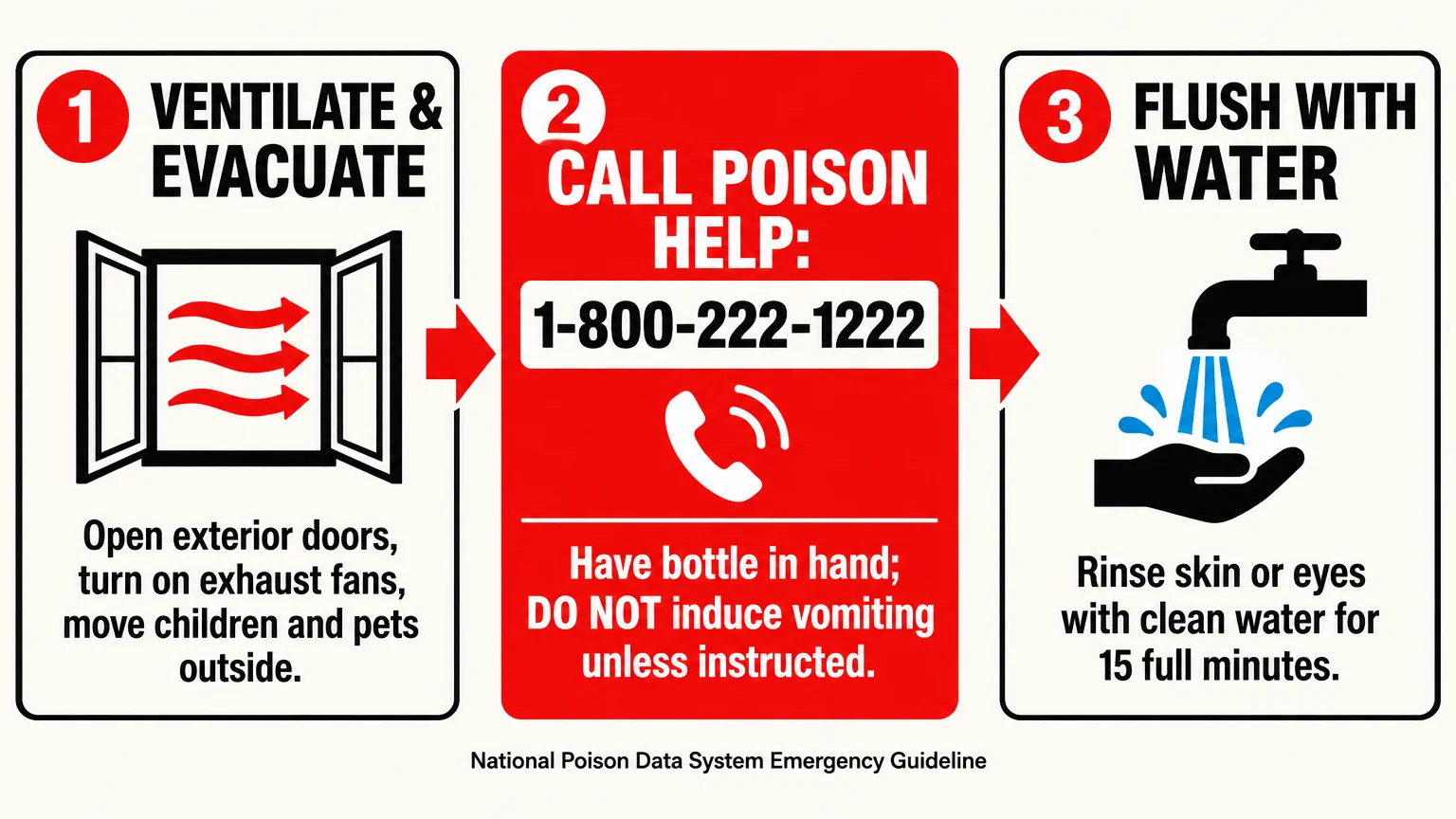
Emergency Protocol: What to Do During a Chemical Spill or Exposure
Even cautious homeowners experience occasional accidents. Knowing exactly how to handle chemical leaks or exposure ensures you can act decisively without panicking.
If a product splashes into your eyes or onto your skin, immediately flush the affected area with cool, running water. Continue flushing for at least 15 to 20 minutes to dilute and remove chemical residues.
If chemical fumes overwhelm a room, exit the space immediately and move into fresh outdoor air. Open adjacent exterior windows and run exhaust fans to clear out trapped vapors before re-entering.
For accidental ingestions or severe exposure, contact emergency medical experts immediately. Call the national Poison Help Hotline at 1-800-222-1222, or consult Poison Help online for instant medical direction.
Never induce vomiting unless a poison control physician or medical professional explicitly instructs you to do so. Corrosive chemicals like oven cleaner or drain opener burn the esophagus a second time if vomited back up.
Keep the product container in hand when speaking with medical personnel. Having the exact brand name, active ingredients, and EPA registration number allows experts to provide accurate life-saving advice.
For liquid floor spills, wear thick rubber gloves and open nearby windows immediately. Sprinkle baking soda or clay cat litter over the puddle to absorb the fluid safely without spreading the mess.
Sweep the saturated absorbent material into a heavy-duty plastic trash bag using a disposable dustpan. Tie the bag tightly, wipe the floor clean with clear water, and dispose of the waste according to municipal guidelines.

Your Next Practical Step
Walk to your kitchen sink and your bathroom vanities right now. Check beneath each basin and remove any unsecured cleaning bottles, bleach jugs, or aerosol cans resting on the cabinet floor.
Move these items to an elevated, climate-controlled closet shelf out of reach of children and pets. This simple five-minute adjustment protects your home, preserves your supplies, and makes your daily routine safer immediately.