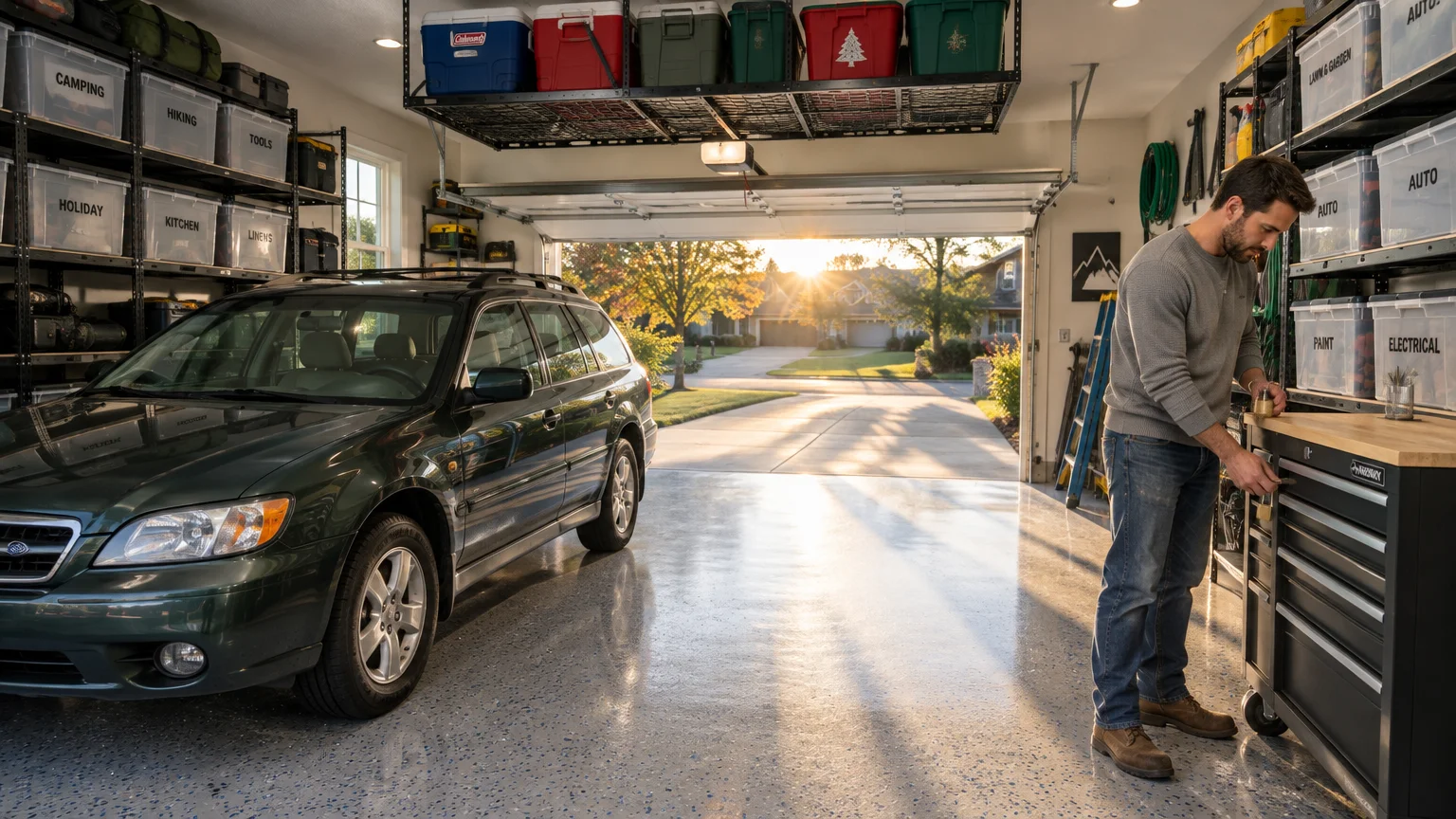
You can reclaim your parking space and clear dangerous floor clutter this weekend with the right storage strategy. Selecting durable, purpose-built gear transforms chaotic piles into accessible zones without draining your savings.
In fact, a consumer survey by CRAFTSMAN revealed that 36% of Americans cannot park inside their garages due to clutter. Even worse, 62% identified the garage as the single most cluttered space in their entire home.
Investing in tested garage organization products protects your equipment and eliminates daily frustration. Here are nine dependable organizers designed to safely restore order to your space.
Why Quality Garage Storage Systems Matter
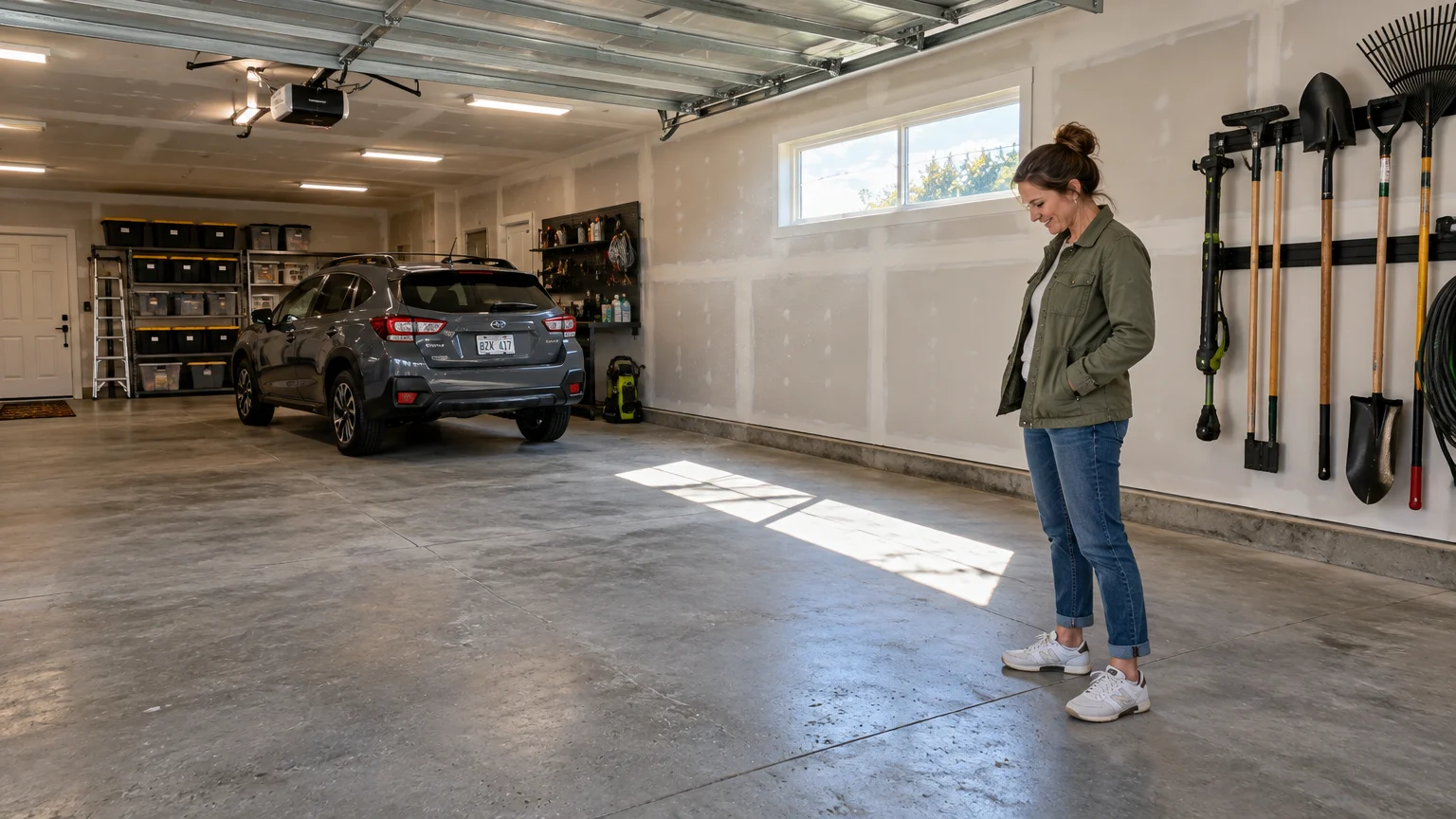
A cluttered garage steals functional square footage and creates genuine safety hazards. A study by Gladiator GarageWorks found that 25% of homeowners with two-car garages cannot park a single car inside.
According to national home improvement data from Angi, the average professional garage organization project costs roughly $1,320 to $1,335. High-end custom cabinetry systems often exceed $2,500 to $5,000.
You can achieve professional results at a fraction of that cost by purchasing modular components yourself. High-grade storage gear keeps seasonal items off damp concrete and protects your property from water damage.
Quality storage hardware also prevents costly damage to vehicles and lawn equipment. When every item has an assigned home, your household runs smoothly.
01 Heavy-Duty Overhead Ceiling Storage Racks
Ceiling space represents the most underutilized real estate in your garage. Overhead ceiling racks suspend bulky, seasonal gear above your vehicle hoods and roll-up garage doors.
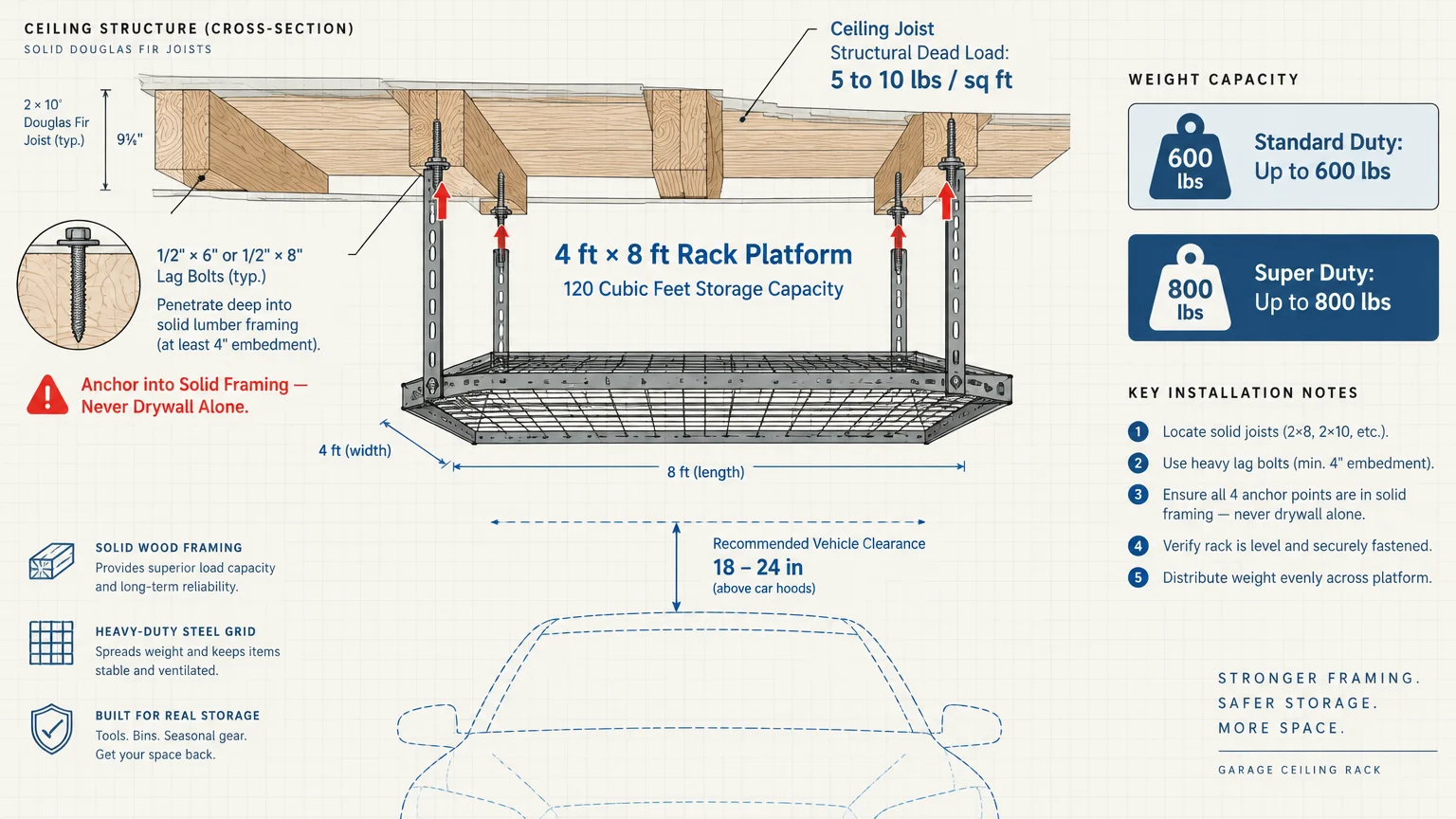
Popular 4-foot by 8-foot racks from manufacturers like SafeRacks and Fleximounts cost between $130 and $250 per unit. These systems provide up to 120 cubic feet of elevated storage.
Standard models safely support up to 600 pounds, while super-duty versions carry up to 800 pounds. They work best for holiday decorations, camping coolers, and empty storage bins.
Always verify your ceiling joist structural capacity before loading an overhead rack. Standard residential ceiling joists and roof trusses carry a bottom-chord dead load rating of only 5 to 10 pounds per square foot.
Fasten mounting brackets directly into solid wood ceiling framing using heavy lag bolts. Never anchor racks into drywall alone, and distribute your bins evenly across the rack surface.
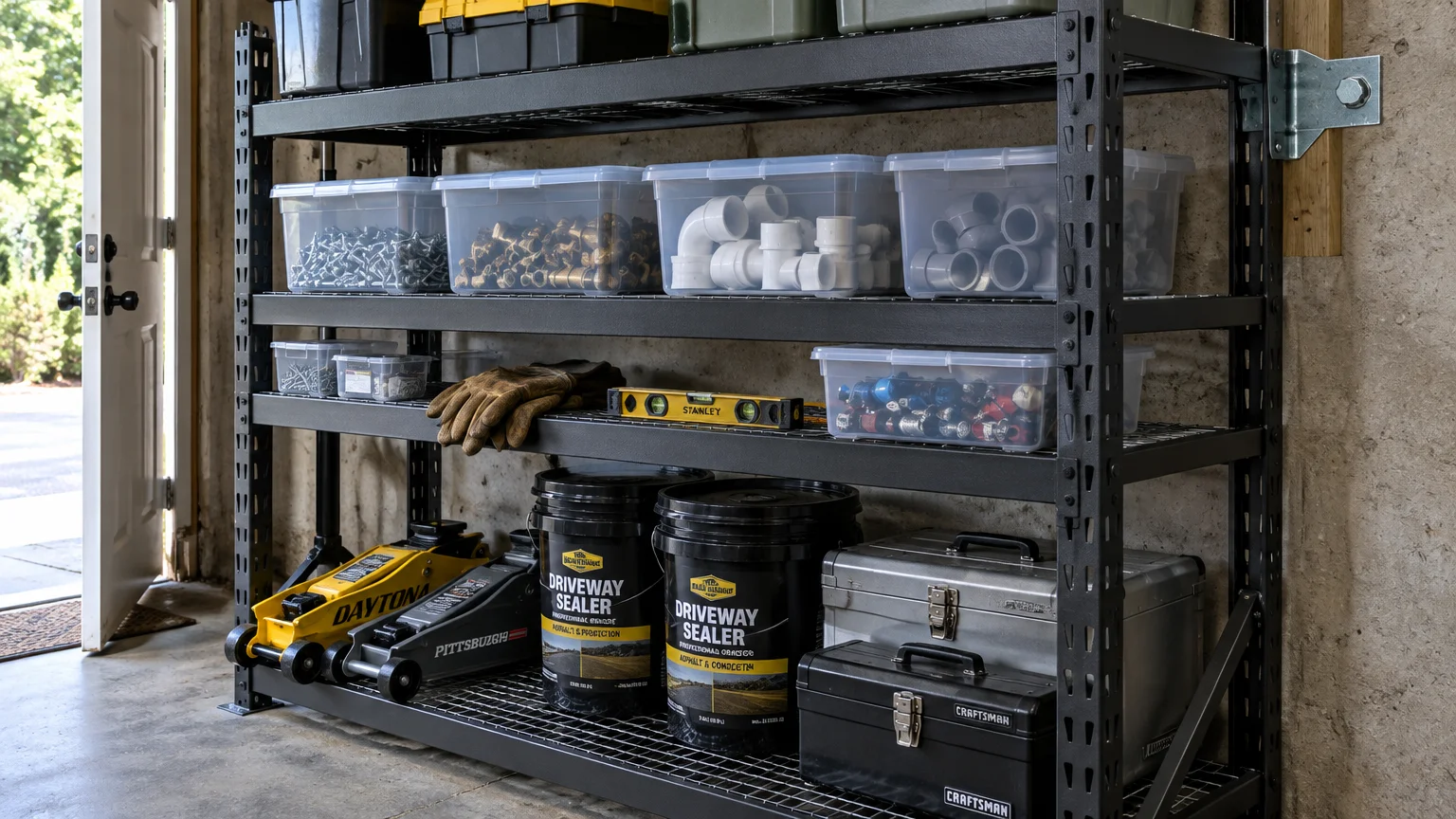
02 Industrial Freestanding Steel Garage Shelving
Commercial-grade freestanding steel shelves provide unmatched load capacity and instant access to everyday gear. These workhorse units eliminate teetering cardboard boxes and fragile plastic shelves that bow under pressure.
Quality units from brands like Husky, Gladiator, and Muscle Rack cost between $80 and $220. Each shelf level safely supports between 600 and 2,000 pounds when you distribute weight evenly.
Choose powder-coated steel finishes to prevent rust from humid garage air. Open wire-mesh decking allows air circulation and prevents dirt from accumulating on your storage containers.
Heavy garage shelving presents a severe tip-over danger if loaded incorrectly or left freestanding. Follow safety guidelines from the U.S. Consumer Product Safety Commission by anchoring every tall rack directly into wall studs.
Place your heaviest items—such as paint cans, toolboxes, and spare automotive fluids—on the bottom tier. Store lighter supplies higher up to keep the center of gravity near the floor.
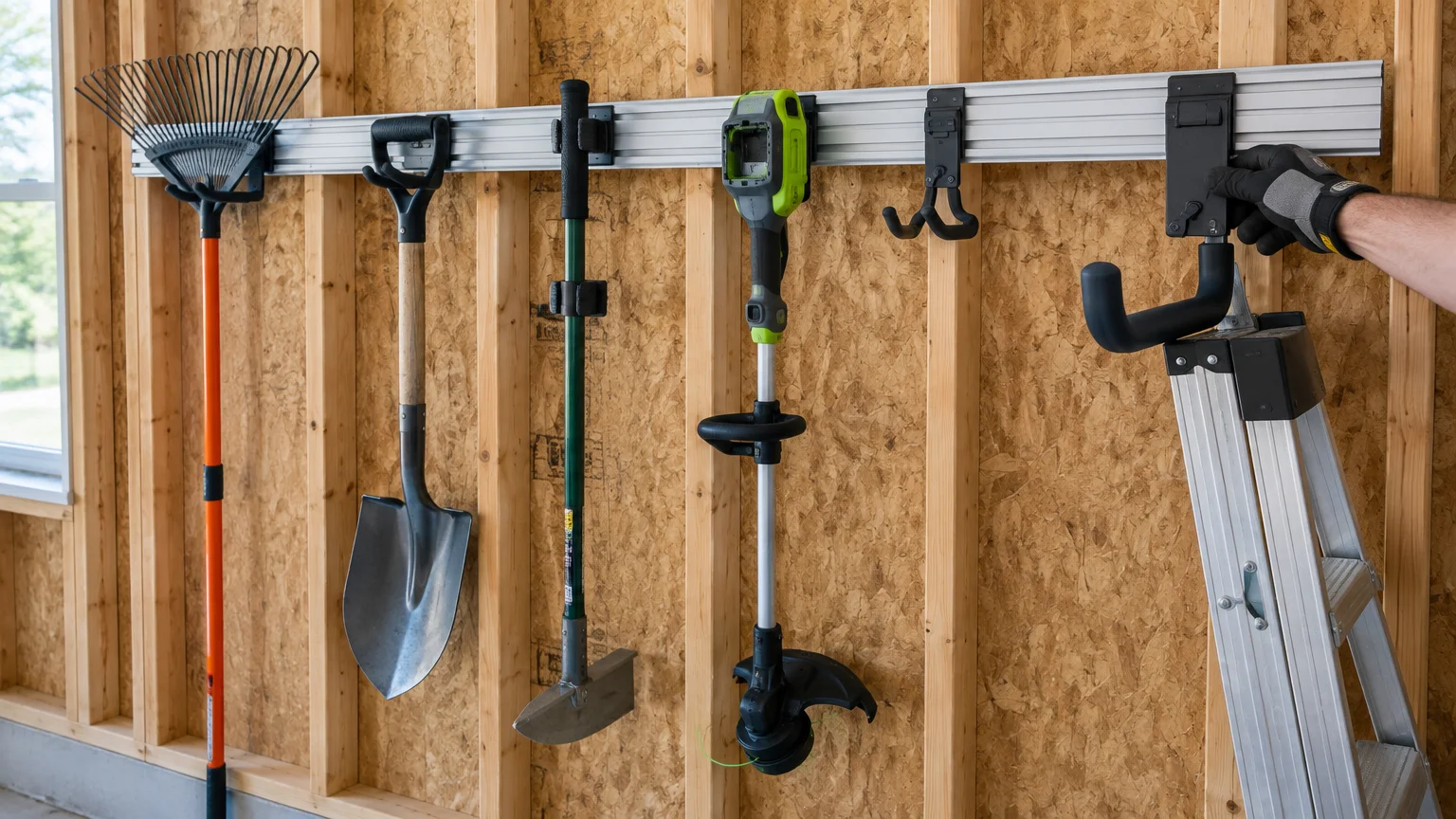
03 Modular Horizontal Wall Track Systems
Horizontal wall tracks get long-handled tools, electrical cords, and ladders off your walking paths. These linear steel tracks mount horizontally across multiple wall studs to support specialized locking hooks.
A starter kit like the Rubbermaid FastTrack system typically costs between $50 and $120. These systems allow you to reposition brackets along the rail as your equipment needs evolve.
A single heavy-duty hook can hold up to 50 pounds when anchored properly into wood framing. You can effortlessly hang string trimmers, extension ladders, leaf blowers, and folding sawhorses.
Mount your tracks at shoulder height to keep tool heads within comfortable reach. This placement prevents unnecessary back strain when you lift heavy rakes or pole saws down for yard work.
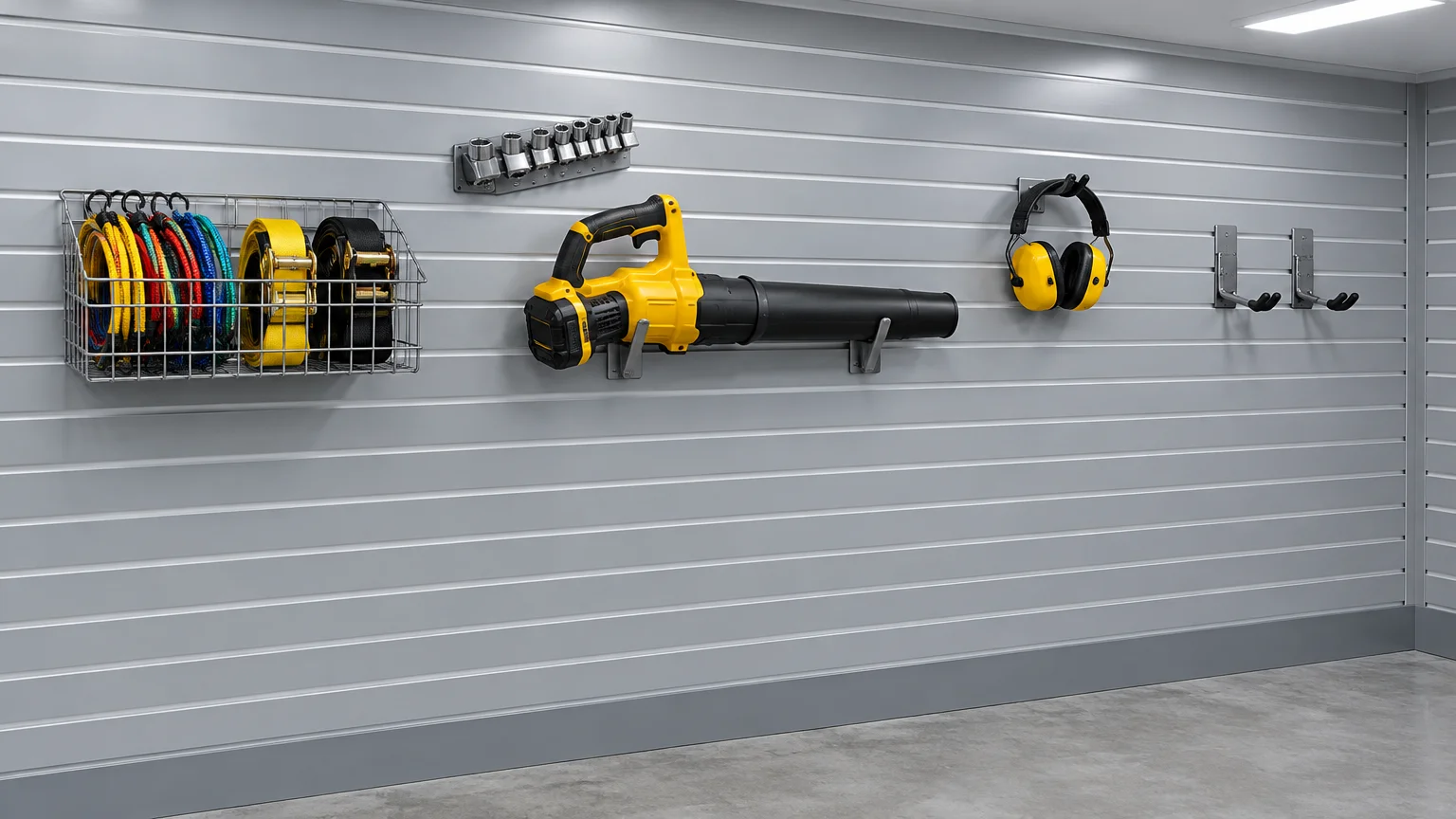
04 Heavy-Duty PVC Slatwall Panels
PVC slatwall systems transform bare drywall or exposed studs into an edge-to-edge vertical storage grid. They offer a clean, finished aesthetic while delivering incredible hanging versatility.
Slatwall panels generally cost between $7 and $12 per square foot before accessories. Unlike wood-based pegboard, industrial cellular PVC resists moisture, vehicle exhaust, and household chemical spills.
You can lock wire baskets, magnetic bars, tilt bins, and heavy utility hooks into the horizontal grooves. Rearranging your layout takes seconds without driving new screws into your drywall.
Install slatwall panels directly above your workbench to organize hand tools, cordless drills, and hardware. The continuous horizontal channels let you align bins and hooks with clean precision.
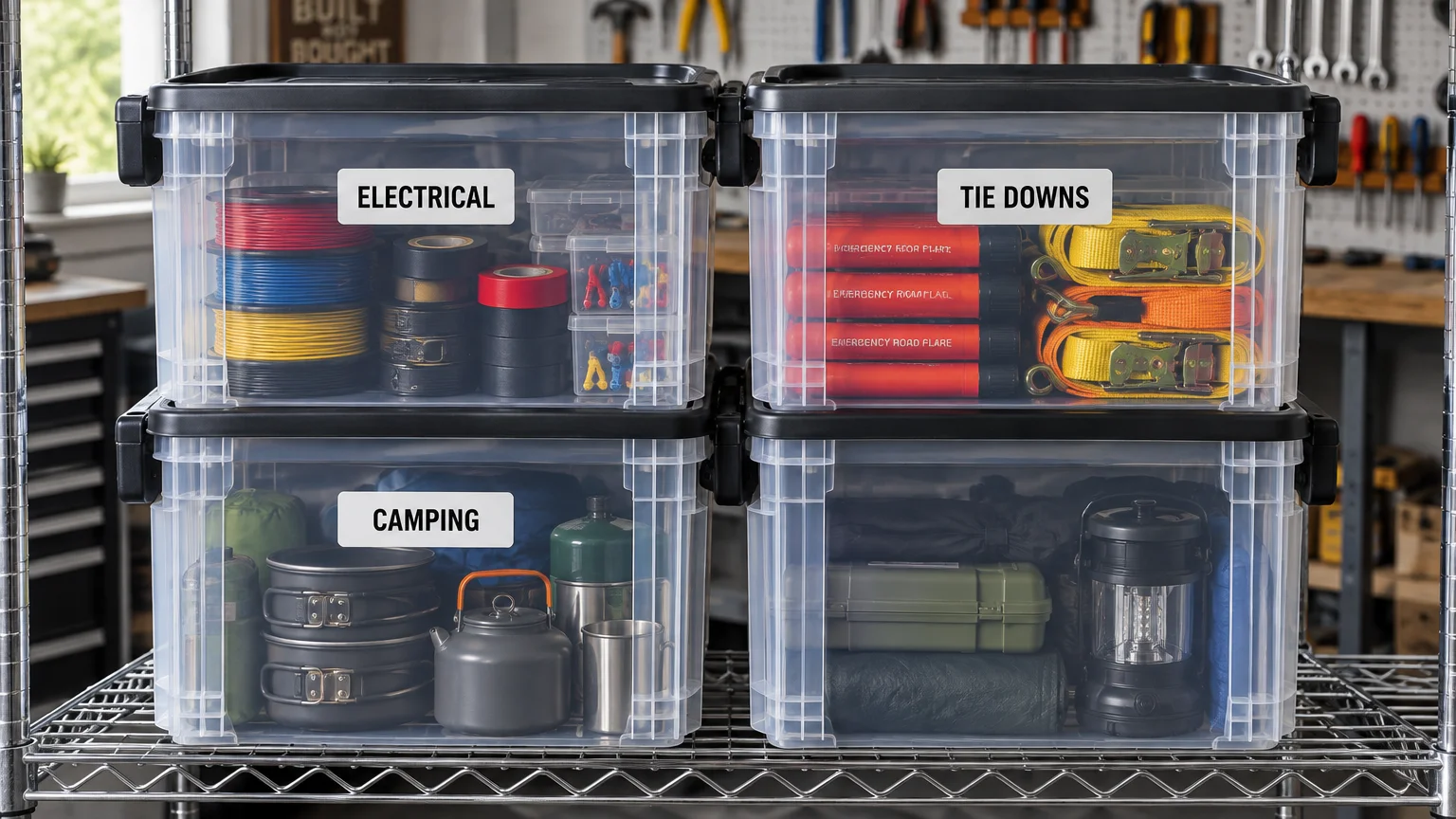
05 Clear Heavy-Duty Stackable Storage Totes
Cardboard boxes invite silverfish, absorb ground moisture, and collapse under minor weight. Replacing them with clear, heavy-duty polypropylene storage bins creates durable, weather-resistant protection.
Transparent plastic allows you to identify contents instantly without cracking open lids or digging through piles. Heavy-duty latching lids seal out dust, moisture, and garage pests effectively.
Choose commercial totes with recessed lids engineered for secure stacking. These interlocking grooves prevent stacks from shifting or sliding off your metal garage shelving.
Label the exterior ends of each tote with bold, dark markers. Group similar items together—such as plumbing fittings, electrical supplies, or car wash towels—to streamline your workflow.
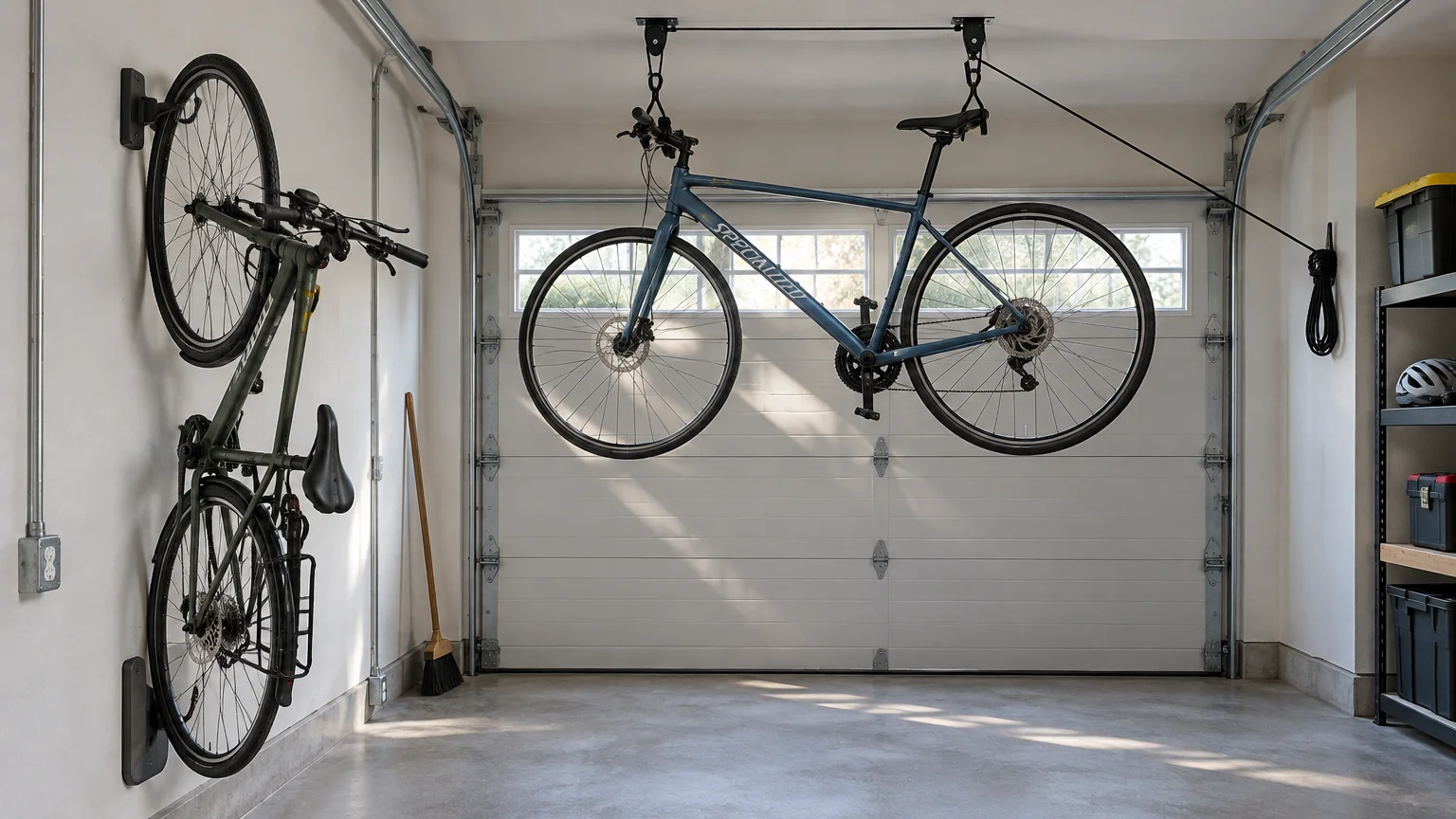
06 Vertical Bike Wall Mounts and Pulley Hoists
Bicycles consume substantial floor space and often block vehicle doors. Installing overhead pulley hoists or vertical wall mounts lifts bikes out of foot traffic paths completely.
Pulley-based ceiling hoists cost between $25 and $60 per set and support 50 to 100 pounds. Integrated locking clutch mechanisms keep bikes suspended safely even if you release the rope.
If your garage has low ceilings, choose vertical swivel wall mounts instead. These wall fixtures hold bikes by the front wheel and swing flat against the wall when parked.
Ensure you screw hoist mounting brackets into solid structural joists. Consult the structural framing standards from the American Wood Council to verify joist integrity before hanging high-tension loads overhead.
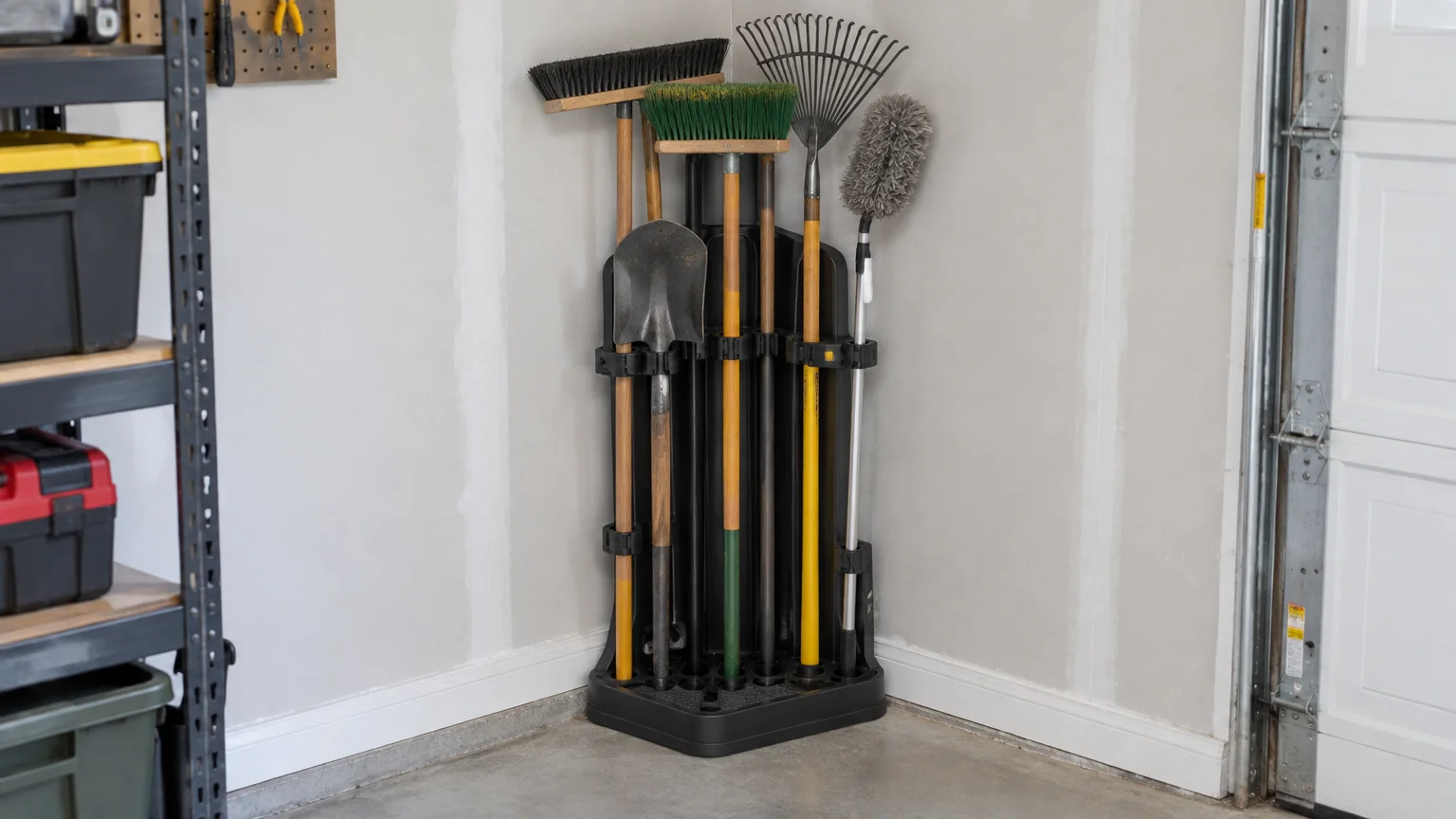
07 Compact Corner Tool Towers
The corners of your garage often become messy dumping grounds for brooms, shovels, and rakes. A corner tool tower captures this dead space efficiently within a footprint under two square feet.
These molded resin organizers cost between $35 and $70. They feature individual slots that hold up to 30 long-handled yard implements upright and tangle-free.
Weighted bases keep top-heavy gardening tools stable without tipping over. Most designs include integrated front clips so you can pull out center tools without disturbing neighboring handles.
Position the tower near your garage door or side entrance. This placement lets you grab garden implements quickly without trekking across your vehicle workspace.
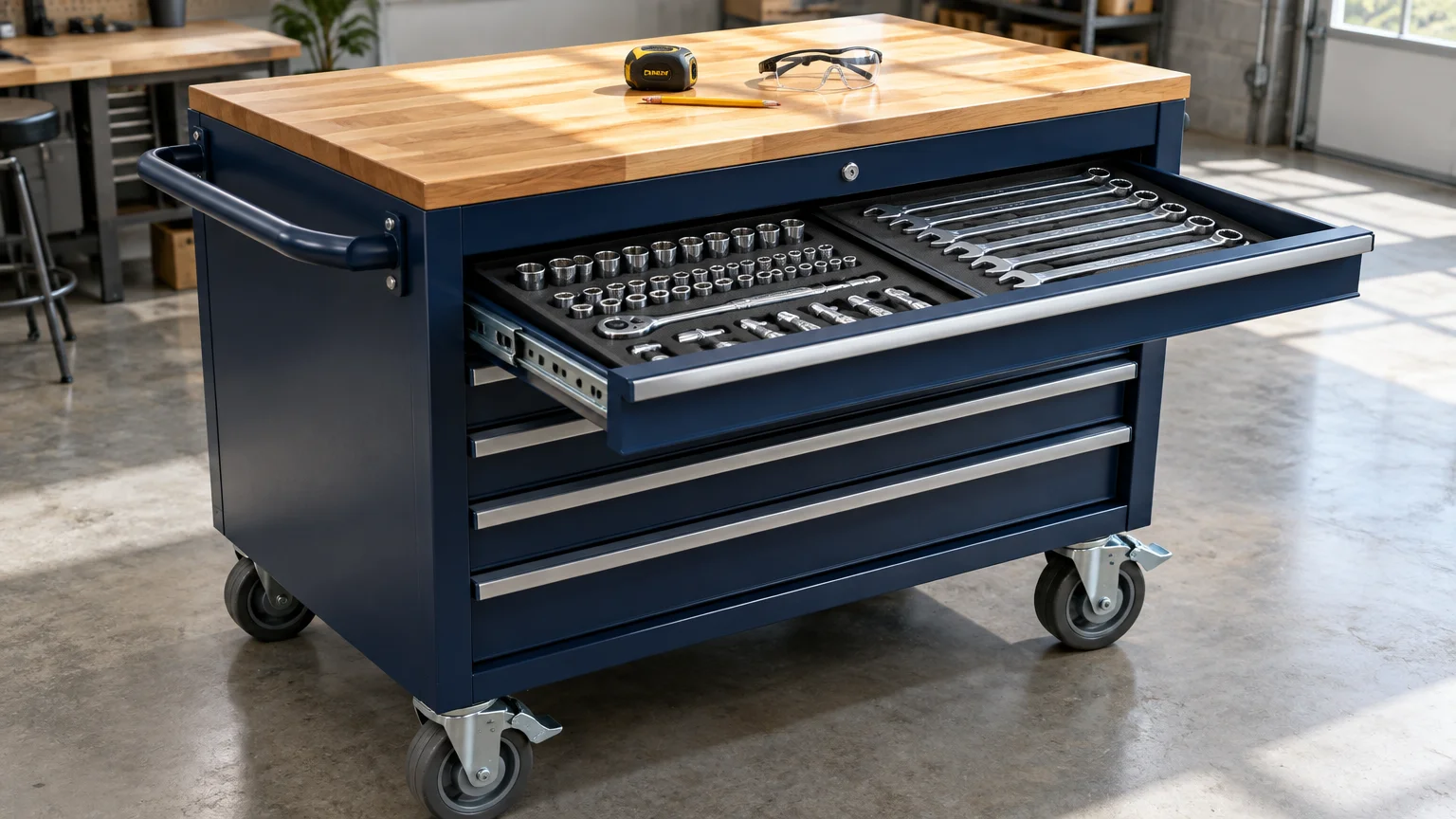
08 Mobile Rolling Tool Cabinets and Workbenches
A mobile rolling cabinet solves two challenges at once: secure tool storage and usable work surface area. Sturdy five-inch polyurethane casters let you roll the unit wherever your project demands.
Mid-range rolling steel tool chests cost between $250 and $600. Look for models featuring ball-bearing drawer slides, keyed locking systems, and solid hardwood butcher block tops.
Full-extension drawers keep wrenches, sockets, and power tools organized in shallow, accessible layers. When your project ends, push the entire station back against the wall to preserve parking space.
Always engage the foot brakes on the swivel casters before working on the wood top. Locked wheels ensure your work surface remains stable and safe during vigorous cutting or drilling.
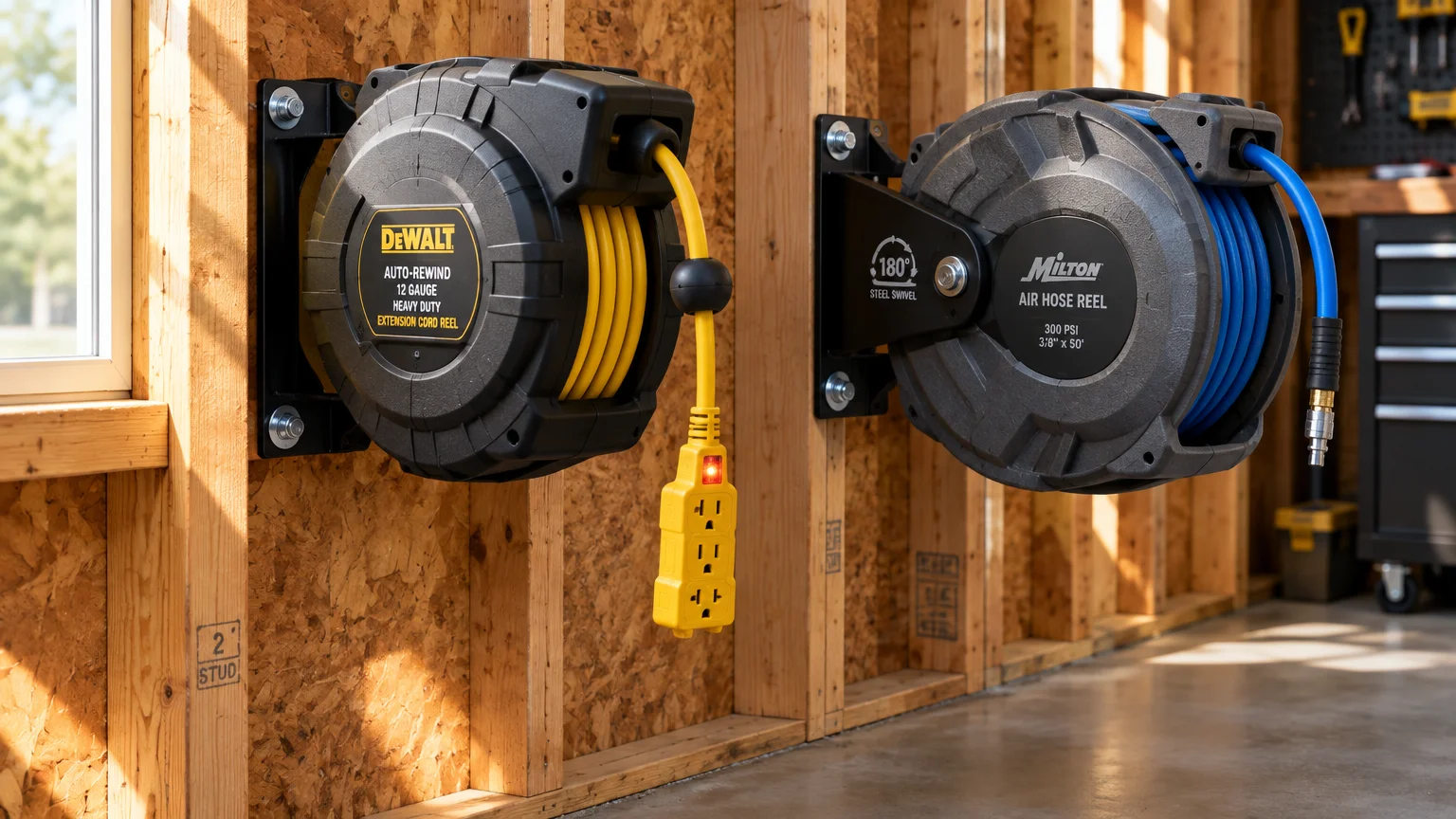
09 Wall-Mounted Heavy-Duty Cord and Hose Reels
Tangled extension cords and garden hoses create persistent tripping hazards on slick concrete floors. Dedicated wall reels tame unwieldy cords and extend the operating life of your gear.
Retractable spring-loaded cord reels cost between $45 and $120. They house 30 to 50 feet of heavy-gauge electrical cord inside an impact-resistant wall-mounted housing.
Manual steel hose reels cost roughly $40 to $90 and keep wash hoses neatly coiled. Storing hoses off the ground also prevents rubber cracking caused by vehicle tires driving over them.
Mount these units directly beside power outlets or sillcocks. This setup minimizes loose cord runs and guarantees you can pull utility lines across the garage with zero resistance.
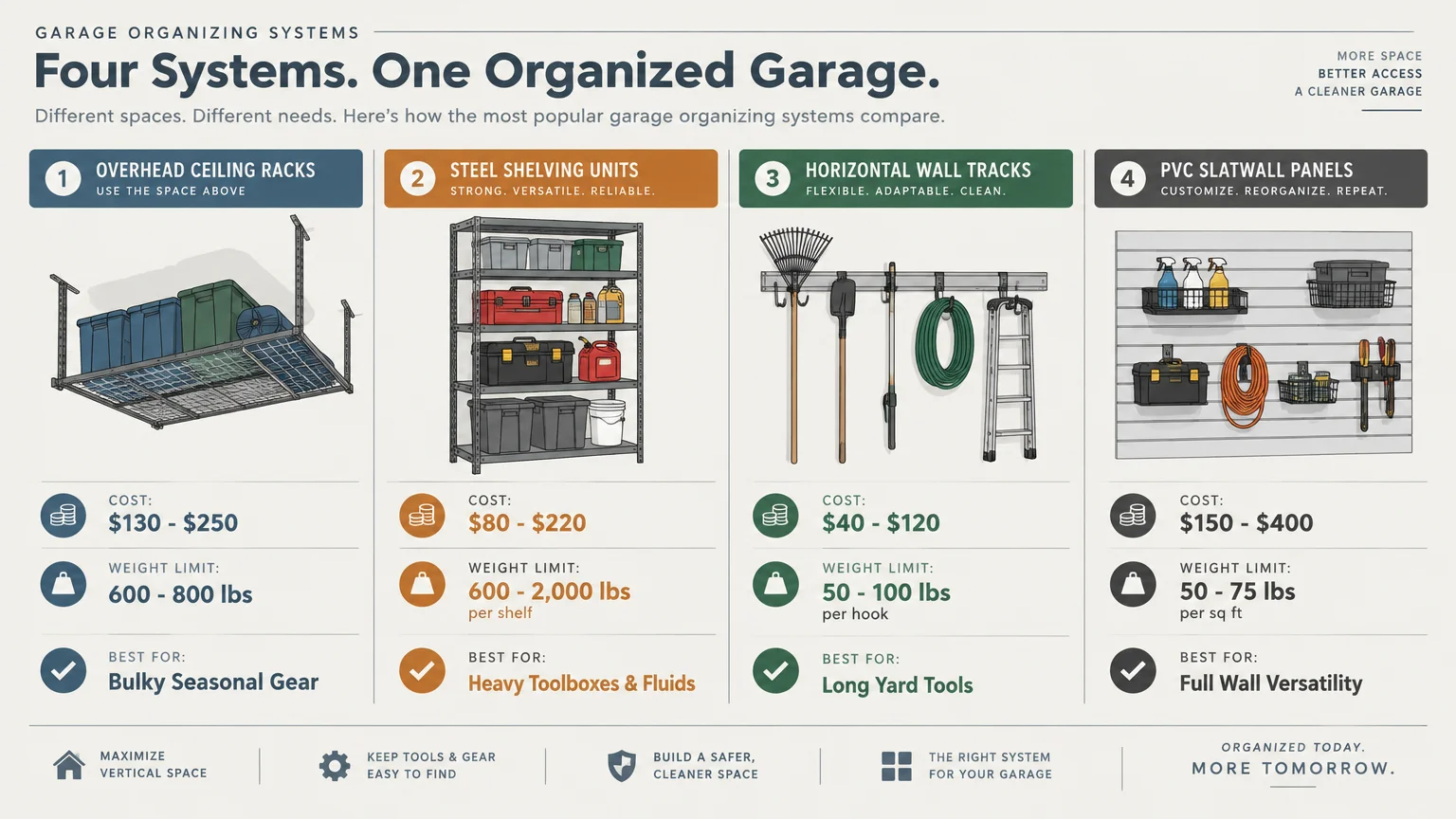
Garage Organization Systems Compared: Cost vs. Capacity
Choosing the best garage organizers depends on your budget, available wall space, and weight requirements. Review this summary table to match each product with your storage goals.
| Storage Product | Average Cost | Weight or Volume Capacity | Ideal Items to Store |
|---|---|---|---|
| Overhead Ceiling Racks | $130 – $250 | 600 – 800 lbs (up to 120 cu. ft.) | Holiday bins, camping gear, luggage |
| Industrial Steel Shelving | $80 – $220 | 600 – 2,000 lbs per shelf level | Paint cans, heavy power tools, fluids |
| Wall Track Systems | $50 – $120 | 30 – 50 lbs per hook | Ladders, weed trimmers, folding chairs |
| PVC Slatwall Panels | $7 – $12 per sq. ft. | 50 – 75 lbs per individual bracket | Hand tools, hardware bins, cords |
| Clear Stackable Totes | $12 – $25 each | 15 – 30 gallons per container | Seasonal clothing, parts, craft gear |
| Overhead Bike Hoists | $25 – $60 | 50 – 100 lbs per hoist assembly | Road bikes, mountain bikes, kayaks |
| Corner Tool Towers | $35 – $70 | Up to 30 long-handled yard tools | Rakes, brooms, shovels, hoes |
| Mobile Rolling Cabinets | $250 – $600 | 800 – 1,500 lbs total capacity | Mechanic hand tools, drills, hardware |
| Retractable Cord Reels | $45 – $120 | 30 – 50 ft. electrical cord length | Shop power cords, air lines, wash hoses |
Combining two or three complementary systems creates a complete garage storage ecosystem. For example, steel shelves paired with clear totes handle small items, while overhead racks clear out bulky gear.
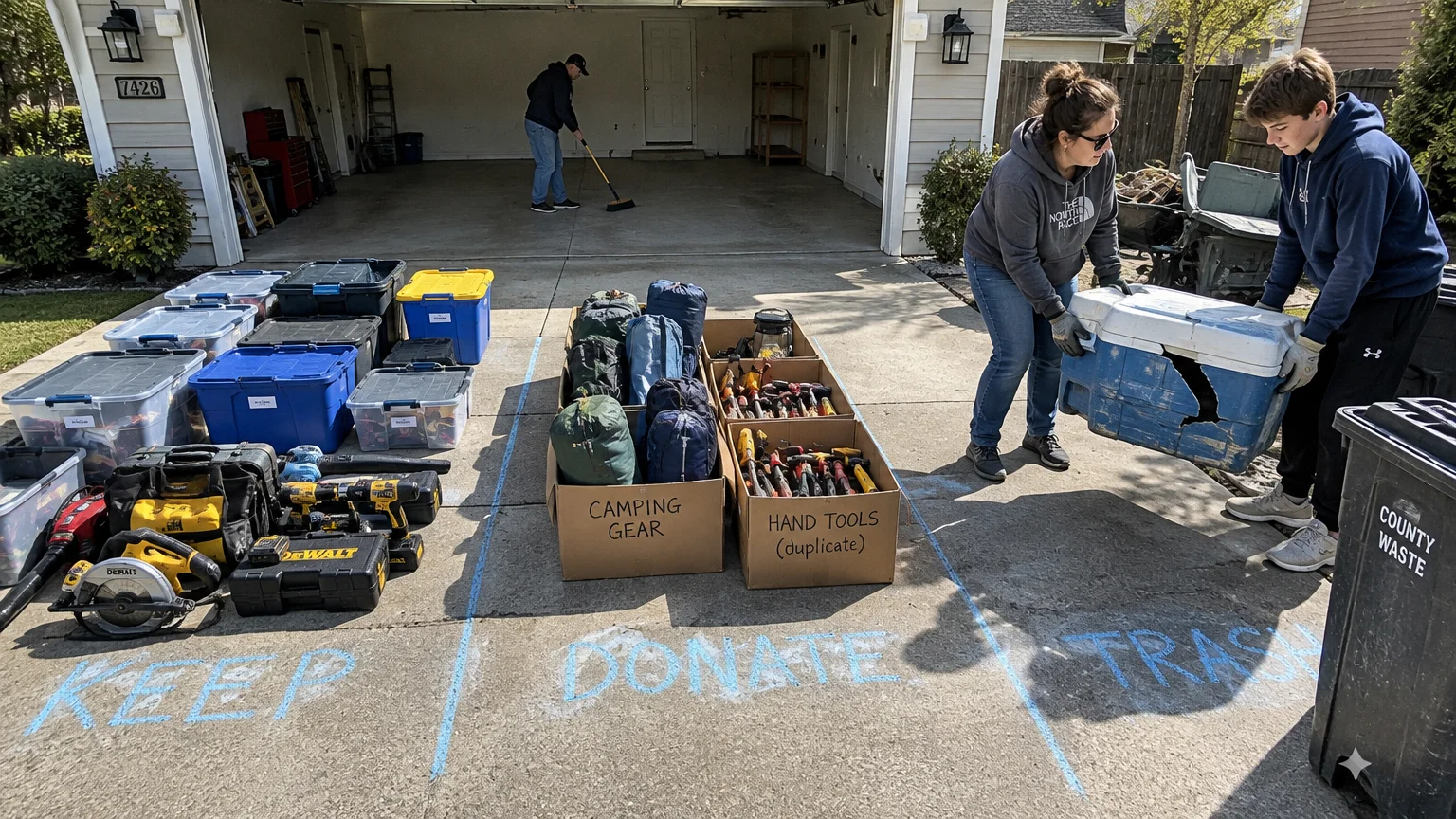
Step-by-Step Blueprint to Organize a Cluttered Garage Safely
Executing your installation in a structured sequence prevents clutter from simply shifting from one corner to another. Follow these five practical steps to organize your space safely.
- Purge ruthlessly before buying hardware: Pull everything out onto your driveway on a dry morning. Discard broken gear, donate duplicate tools, and properly recycle expired automotive chemicals.
- Group your inventory into functional zones: Sort surviving items into distinct categories, such as gardening, automotive, sports gear, and home maintenance. Keep frequently used items near the main door.
- Locate and mark structural studs: Use a magnetic or electronic stud finder to identify wood framing studs and ceiling joists. Mark center lines with a carpenter pencil before drilling pilot holes.
- Install overhead and wall units first: Mount your ceiling racks, wall tracks, and slatwall panels while the garage floor remains clear. Verify that all lag bolts bite firmly into solid structural lumber.
- Load from heaviest to lightest: Position heavy steel shelving units against wall studs and anchor them securely. Place your heaviest storage totes on bottom shelves to establish stable centers of gravity.
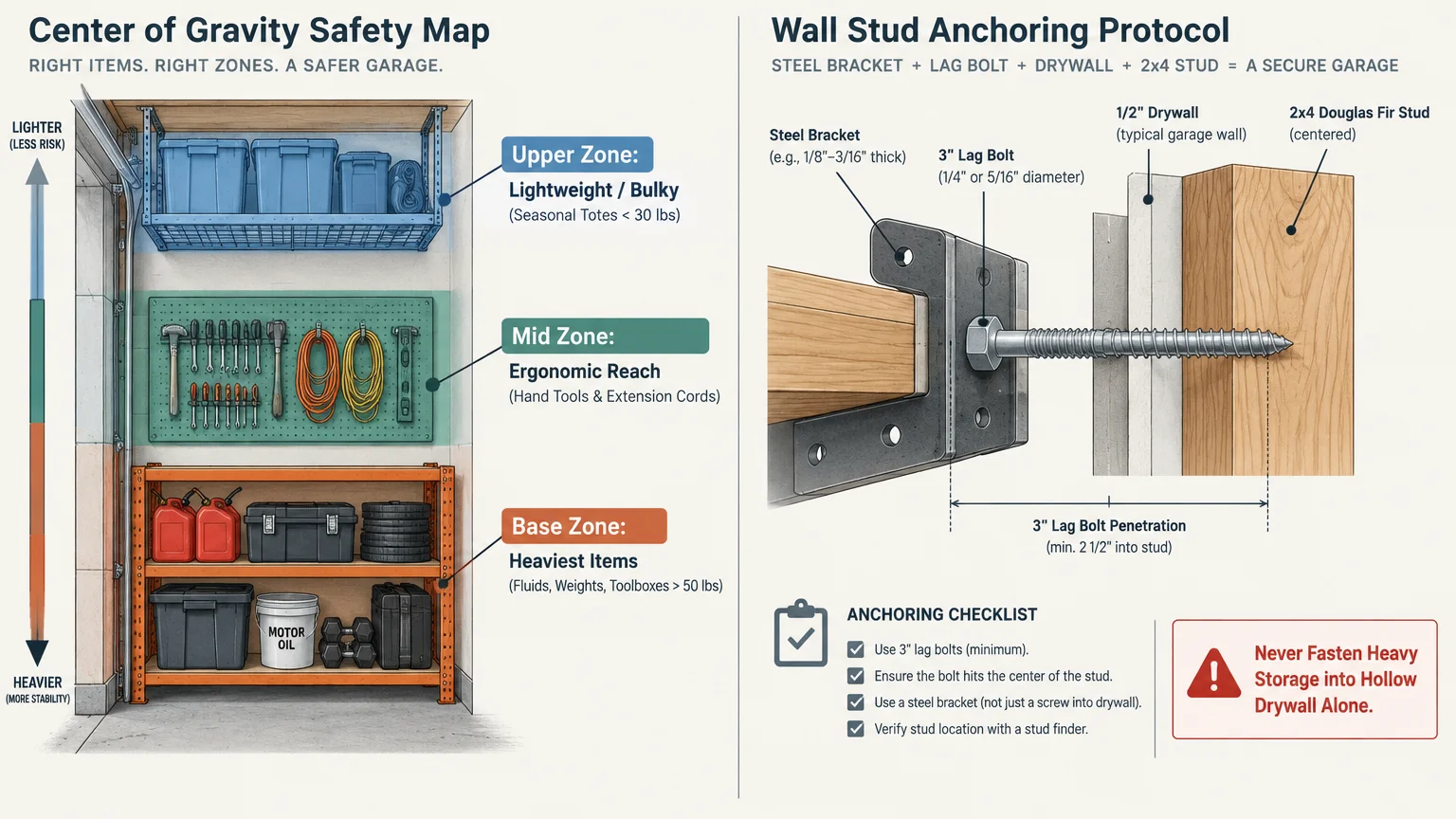
Essential Safety and Weight Distribution Checklist
Safe weight distribution protects both your home framing and your family. Review this safety checklist before loading your newly installed organizers.
- Verify that ceiling rack brackets span across at least two separate solid wood joists.
- Check that ceiling loads do not exceed the structural limit of 5 to 10 pounds per square foot.
- Anchor all freestanding shelving units over 48 inches tall directly into wall studs.
- Keep all storage racks and hooks at least three feet away from your water heater and furnace.
- Maintain a minimum clearance of two feet between overhead racks and automatic garage door tracks.
- Store flammable liquids like gasoline and paint thinners in fire-rated cabinets near floor level.
- Avoid hanging heavy items on overhead tracks using nails or drywall anchors alone.
Regularly inspect lag bolts and hanging brackets every six months. Tighten any fasteners that have loosened due to seasonal temperature swings or building vibrations.
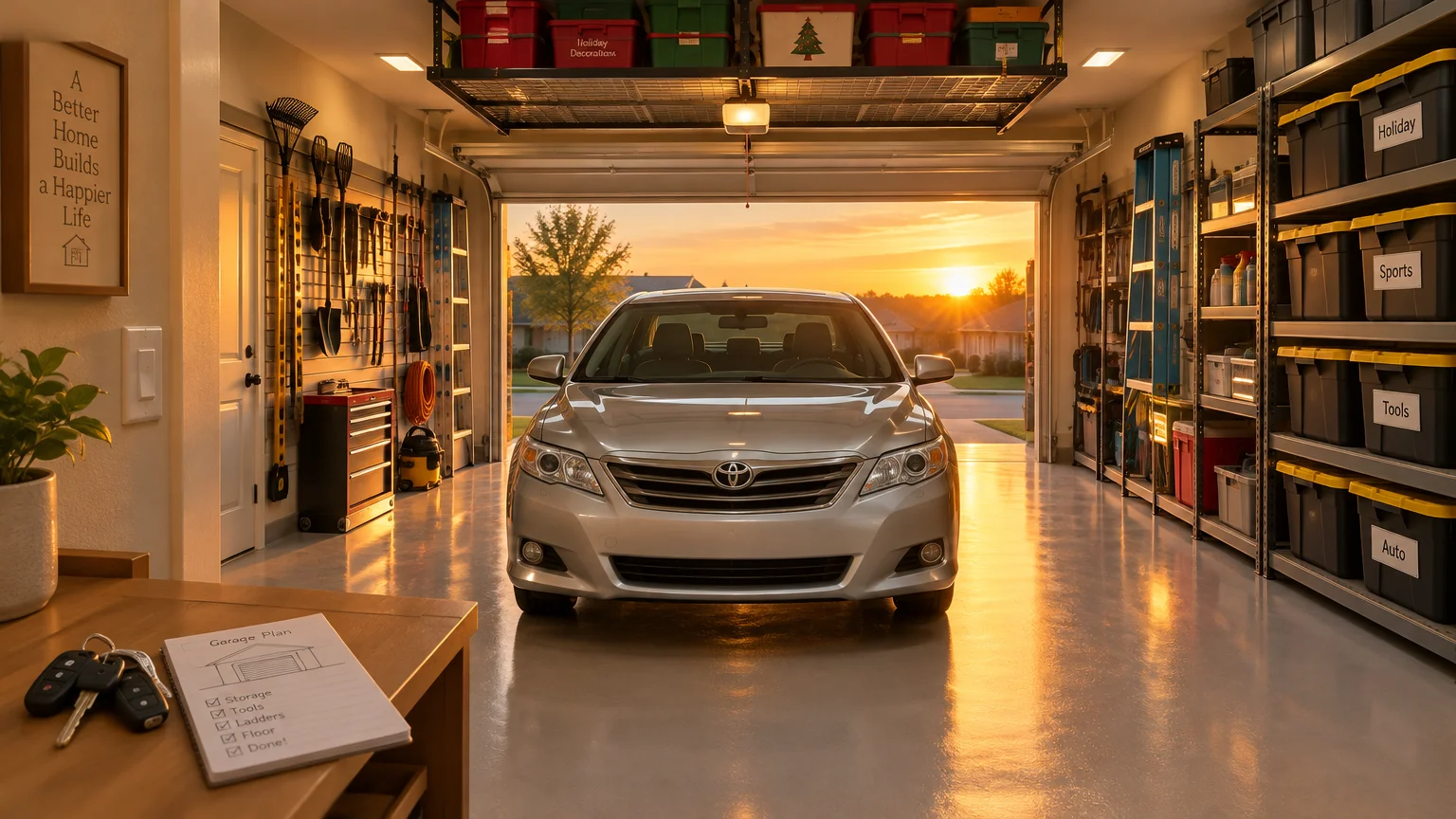
Your Next Step to Reclaim Your Garage
Do not wait for a major renovation to organize your cluttered garage. Pick a single zone this Saturday—such as your lawn tool corner or your main tool wall—and install one foundational organizer.
Mounting a horizontal wall track or assembling a heavy-duty steel shelf delivers an immediate visual win. Once you park your car back inside the garage, you will never look back.