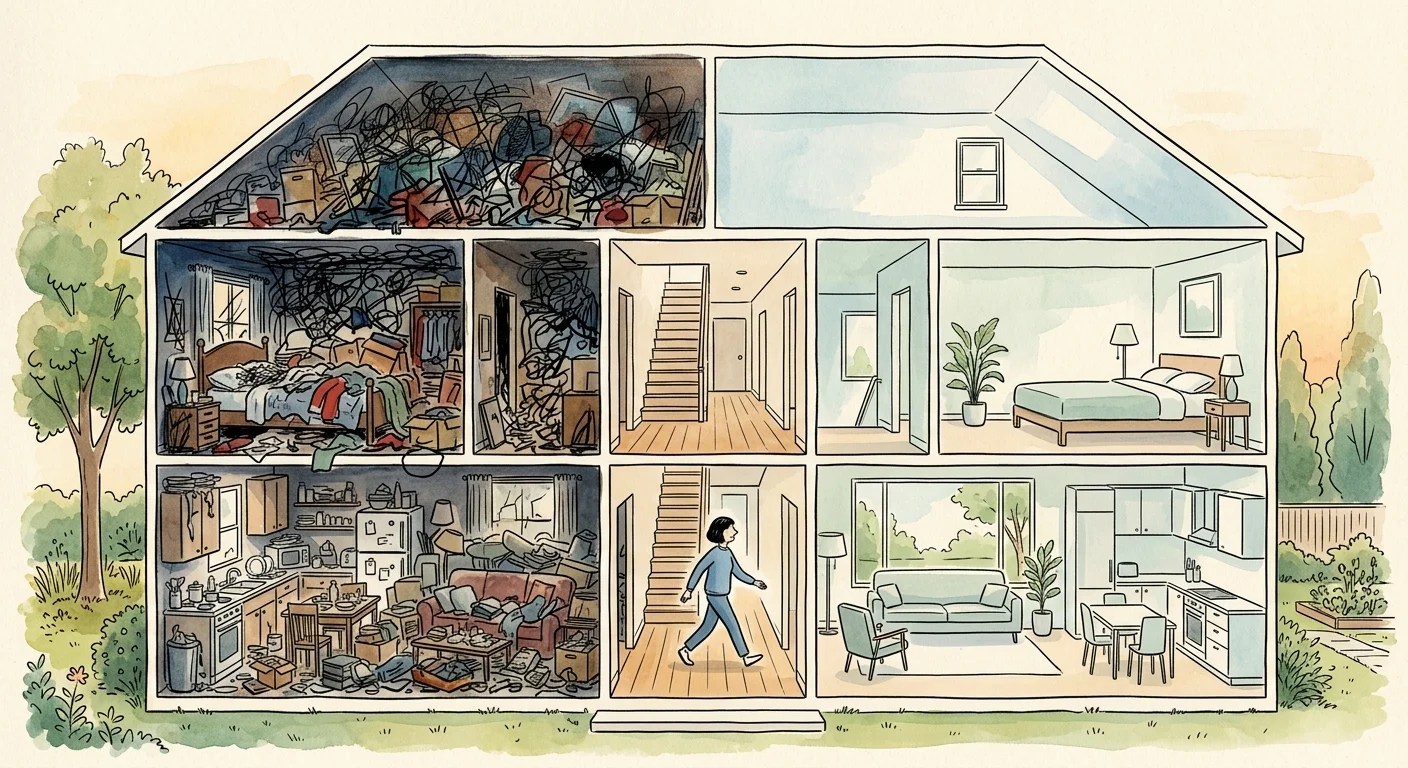
When physical possessions outgrow your living space, your home transforms from a peaceful sanctuary into a constant source of mental fatigue. Recognizing the critical threshold where light tidying no longer solves the problem allows you to reclaim your living environment before clutter impairs your daily productivity and well-being. A structured deep decluttering season provides a targeted reset; it strips away unnecessary belongings, slashes daily maintenance time, and creates an intuitive organizational system that preserves your energy. By identifying the subtle home clutter warning signs early, you can systematically evaluate your rooms, eliminate physical obstacles, and establish a functional, calm space tailored to your current lifestyle.
01 You Spend More Time Searching for Items Than Using Them
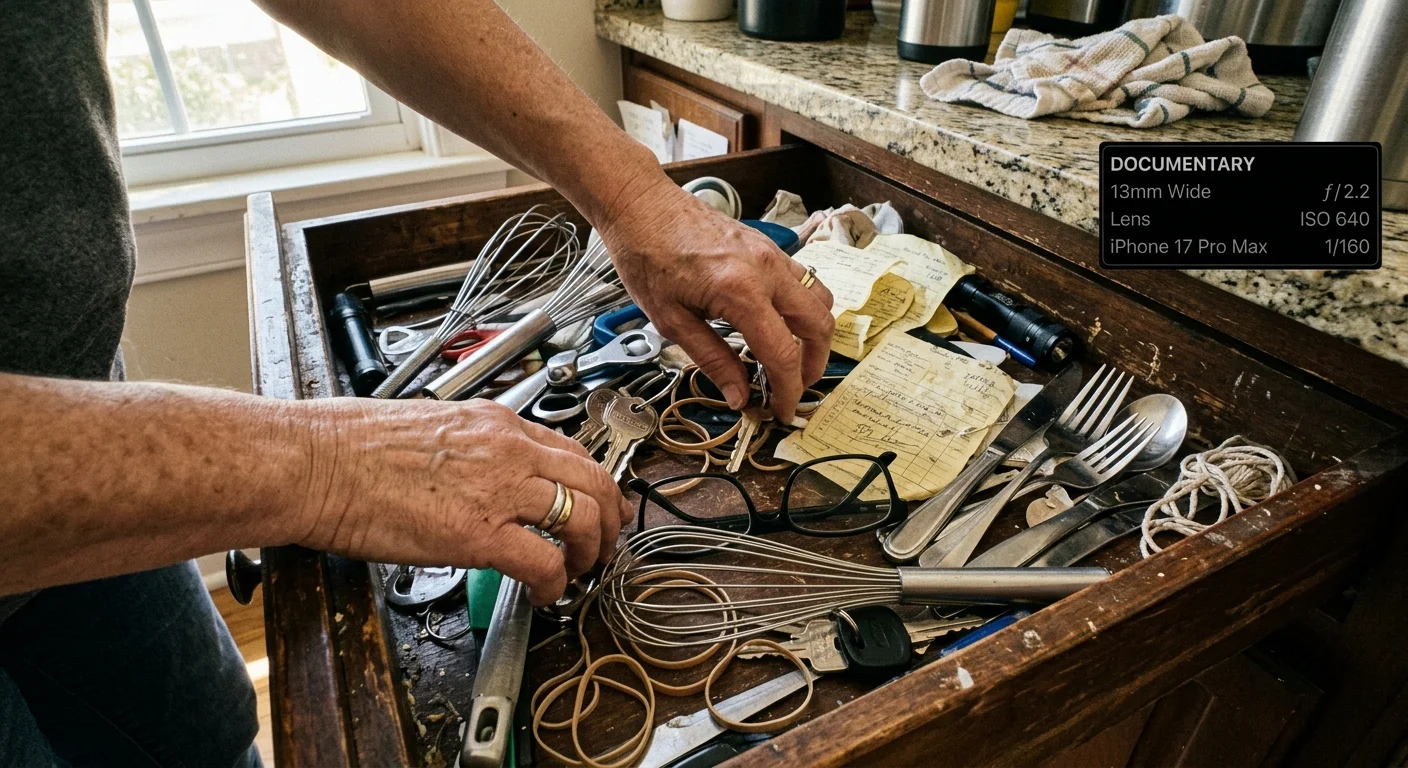
Every morning presents a predictable sequence of micro-frustrations when clutter overwhelms functional spaces. You spend ten minutes searching for car keys; you dig through three jammed drawers to find a pair of reading glasses; or you pull five pots out of a lower cabinet just to locate one lid. Identifying these daily friction points highlights the primary signs you need to declutter your living environment immediately.
When items lack designated, easily accessible homes, daily routines stall. Studies reveal that the average individual wastes up to two and a half days each year searching for misplaced personal items. This persistent searching drains your energy before your day truly begins. If you routinely move five items out of the way just to retrieve one item you use daily, your storage system has surpassed its capacity.
A deep decluttering season restores efficiency by establishing prime real estate in your home. Prime real estate includes drawers, shelves, and cabinets situated between waist and eye level. Reserving these zones strictly for high-frequency items—while purging surplus goods—eliminates searching, streamlines morning routines, and protects your focus throughout the day.
02 Visual Noise Keeps You from Relaxing in Your Own Space
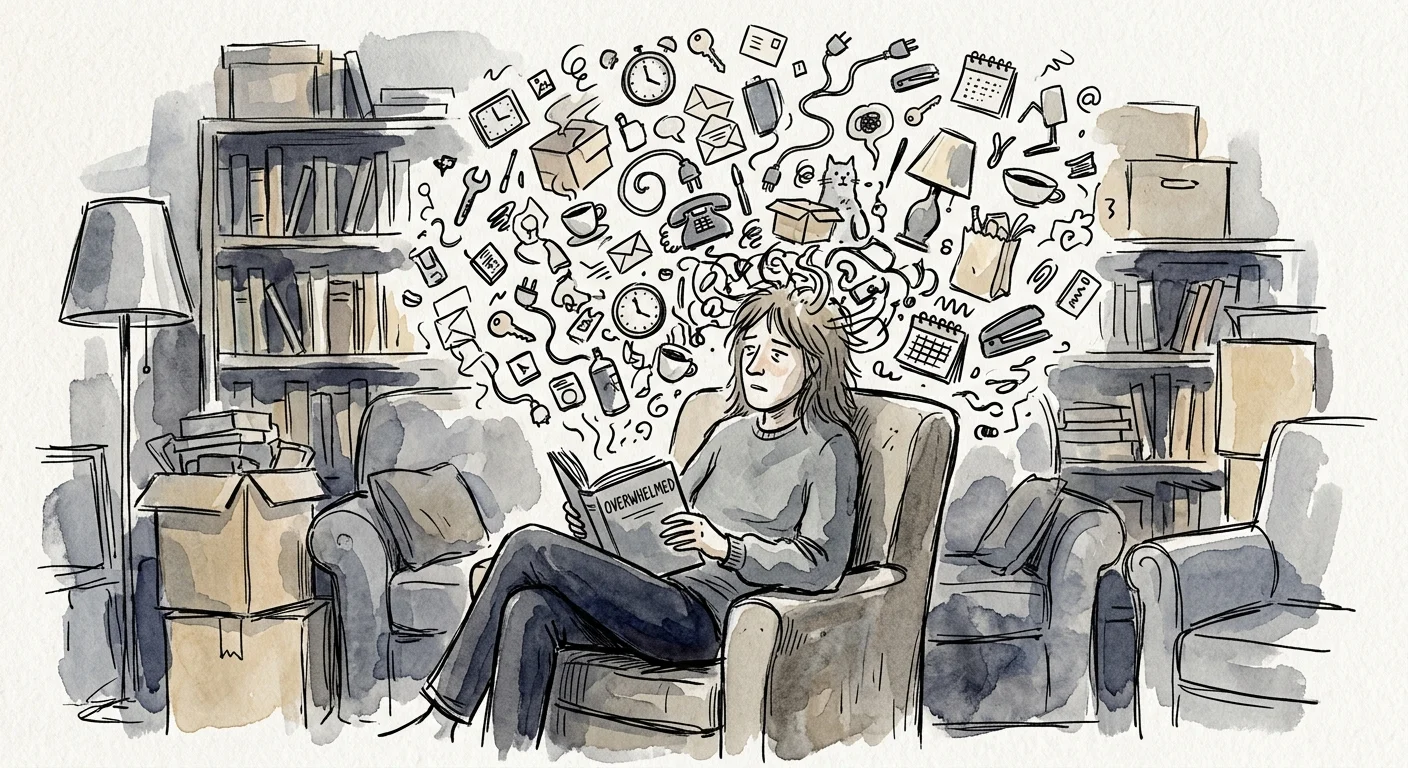
Visual noise describes the subconscious strain caused by overfilled visual fields within a living area. Oversaturated open shelving, stacks of unsorted mail, crowded floor corners, and packed display cabinets force your brain to process non-stop background stimuli. Instead of offering restful refuge, a cluttered room sends active signals of unfinished work to your nervous system.
Recognizing how environmental visual chaos directly impacts human psychology is essential when evaluating home clutter warning signs. Research published by the National Institutes of Health reveals a clear link between high household item density and elevated cortisol levels among adults. When your brain continuously registers surrounding clutter, relaxing after a long day becomes remarkably difficult.
Addressing visual noise requires stripping spaces down to their intentional essentials. Rather than staging decorative accent pieces across every open surface, select a few meaningful, high-value items. Deep decluttering clears physical space, lowers cognitive load, and transforms your home back into an inviting, soothing sanctuary.
03 Countertops and Flat Surfaces Serve as Permanent Storage
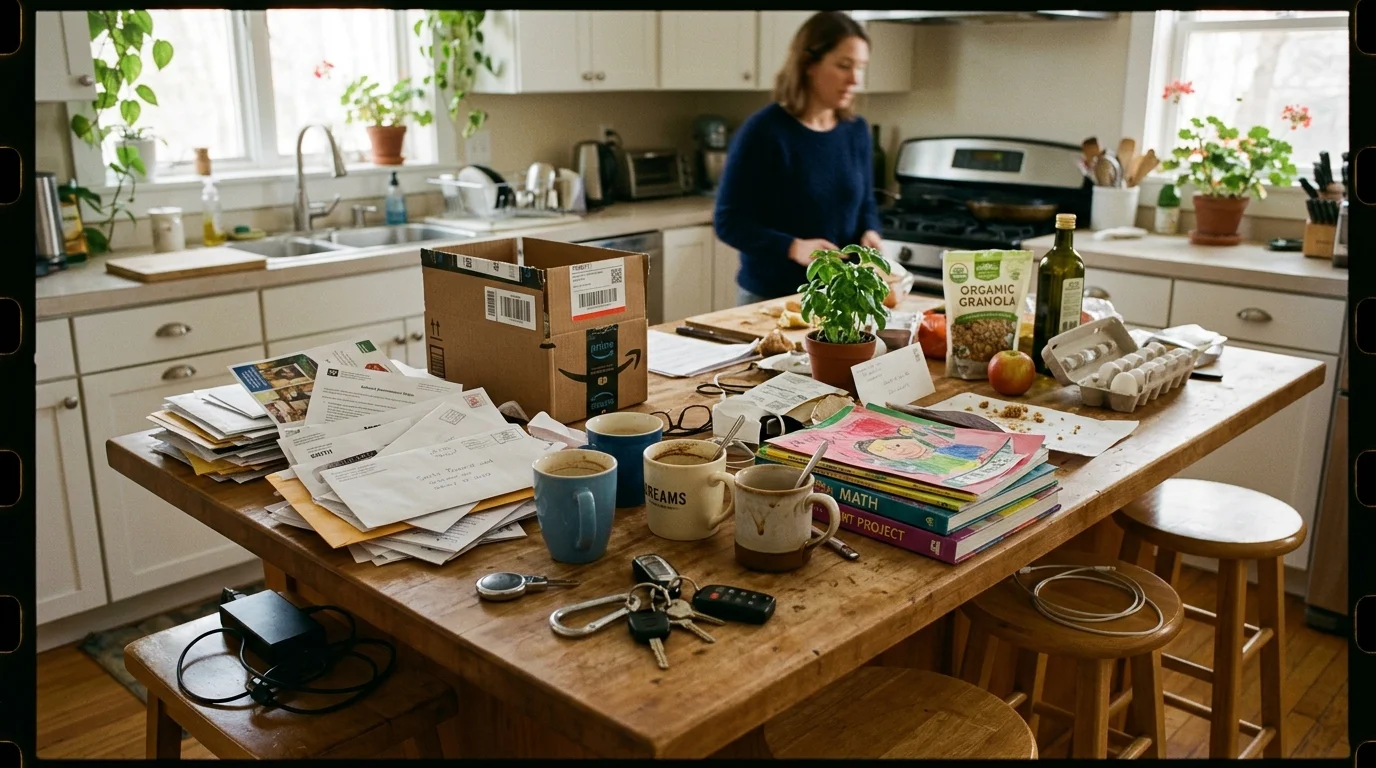
Horizontal surfaces inherently attract stray items. Kitchen islands, dining tables, entry consoles, and bedroom nightstands frequently become catch-all zones for miscellaneous household items. However, when these surfaces serve as permanent storage units rather than active work and dining zones, you have arrived at the exact point when to declutter your home.
Consider the daily functional impact on your living space:
- Kitchen Counters: Small appliances, mail piles, and unreturned items encroach on food prep areas, making daily meal prep cramped and unappealing.
- Dining Tables: Unopened packages, crafting materials, and paperwork subvert the table’s main purpose, forcing your family to eat meals elsewhere.
- Entryway Consoles: Shoes, bags, and loose mail stack up high, creating immediate visual chaos the exact moment you step through your front door.
- Nightstands: Unread books, medication bottles, and cables clutter your bedside, disrupting bedtime routines and peaceful sleep.
Decluttering your house resets flat surfaces for their active, intended uses. By creating specific intake hubs for paper and removing non-essential items from kitchen counters, you establish clean, functional boundaries across every room.

04 You Repeatedly Purchase Duplicate Items
Have you ever bought a bottle of ground cumin at the grocery store, only to return home and discover two unopened bottles hidden in the back of your pantry? Or perhaps you purchased an extra set of safety glasses or tape because your utility drawer was too chaotic to locate your current pairs? Repeatedly purchasing duplicates represents a clear, tangible tax on home disorganization.
When storage cabinets are jammed beyond capacity, visibility drops to zero. You lose full inventory awareness, which prompts unnecessary spending and increases wasted consumption. This cycle wastes financial resources and worsens the physical clutter in your home.
Embarking on a structured decluttering season forces a thorough inventory audit across your whole home. Grouping like items together during a targeted cleanup clarifies exactly what you own. You will eliminate unnecessary duplicates, reduce waste, and save money on future store visits.

05 Dust and Allergens Accumulate in Inaccessible Clutter Clusters
Physical clutter serves as a magnet for dust, dander, and household pests. When items cover floor corners, pack closets, and overflow under-bed storage, routine cleaning becomes nearly impossible. Moving dozens of small knick-knacks off a shelf just to run a duster over the surface transforms ten minutes of tidying into an exhausting chore.
This dynamic impacts indoor health directly. The U.S. Environmental Protection Agency highlights how dust mites, pet dander, and mold spores accumulate rapidly in stagnant household zones with limited air circulation. Deep clutter piles obscure dust accumulation and trap harmful environmental irritants.
Removing excess items opens up blocked physical spaces, making regular cleaning routines simple and efficient. Vacuum cleaner attachments easily reach hidden corners; dusters glide across clear, smooth tabletops; and indoor air quality improves dramatically once dust-collecting clutter piles disappear.
06 Hallways and Walkways Present Tripping Hazards
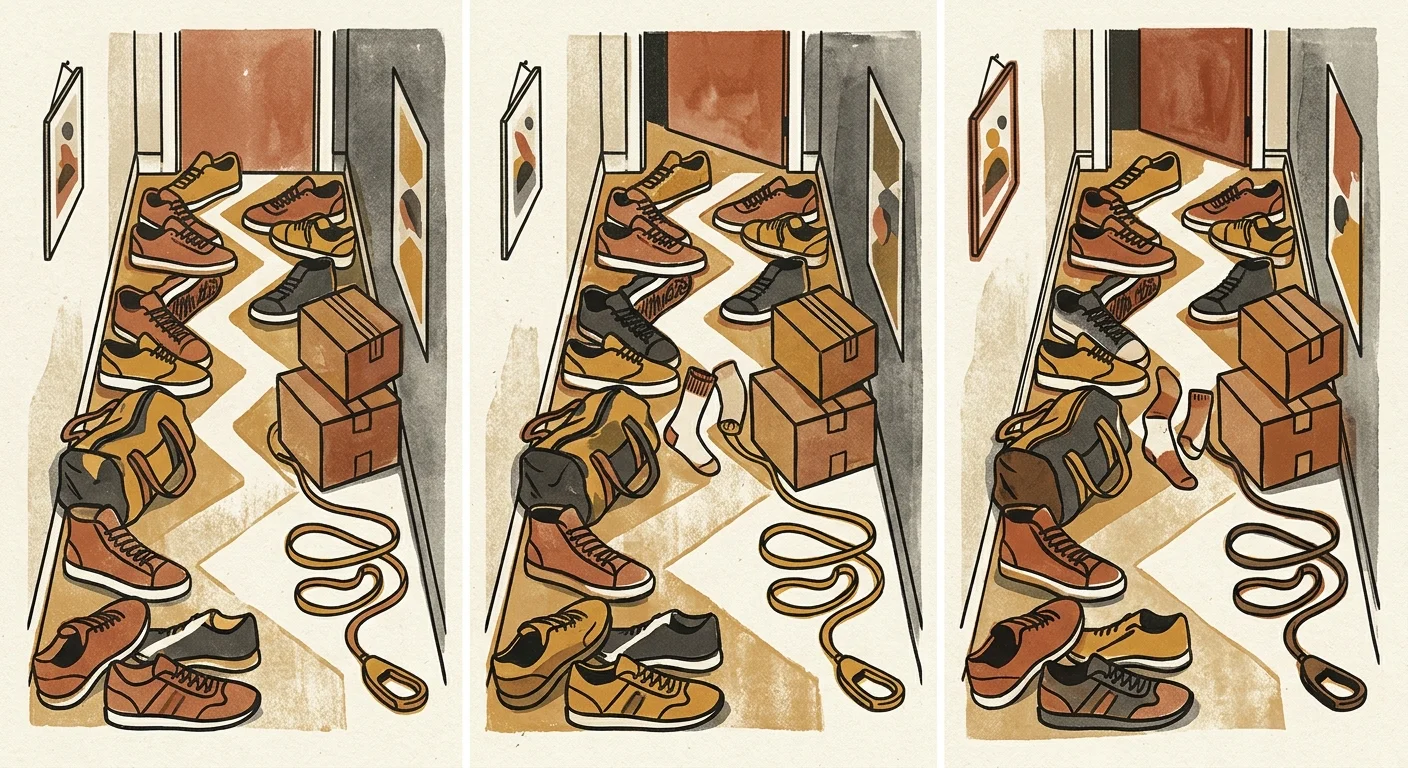
Maintaining completely clear, accessible pathways throughout your home is an essential health and safety priority. For adults of all ages—and particularly for older adults focused on simplifying routines and aging in place safely—clutter on floors creates hazardous obstacle courses.
Overflowing shoe piles along entryways, stacks of books alongside hallway walls, tote bags on stair steps, and loose extension cords represent severe trip risks. According to the CDC fall prevention home safety checklist, removing physical clutter from floor surfaces is one of the most effective, immediate interventions for preventing accidental falls and injuries at home.
A safety-focused deep decluttering session ensures every hallway, doorway, and room transition maintains a wide, clear path. Clearing floor hazards protects your mobility, increases safety, and allows you to move effortlessly through your entire home.
07 Laundry and Dish Cycles Are in a Constant State of Backlog
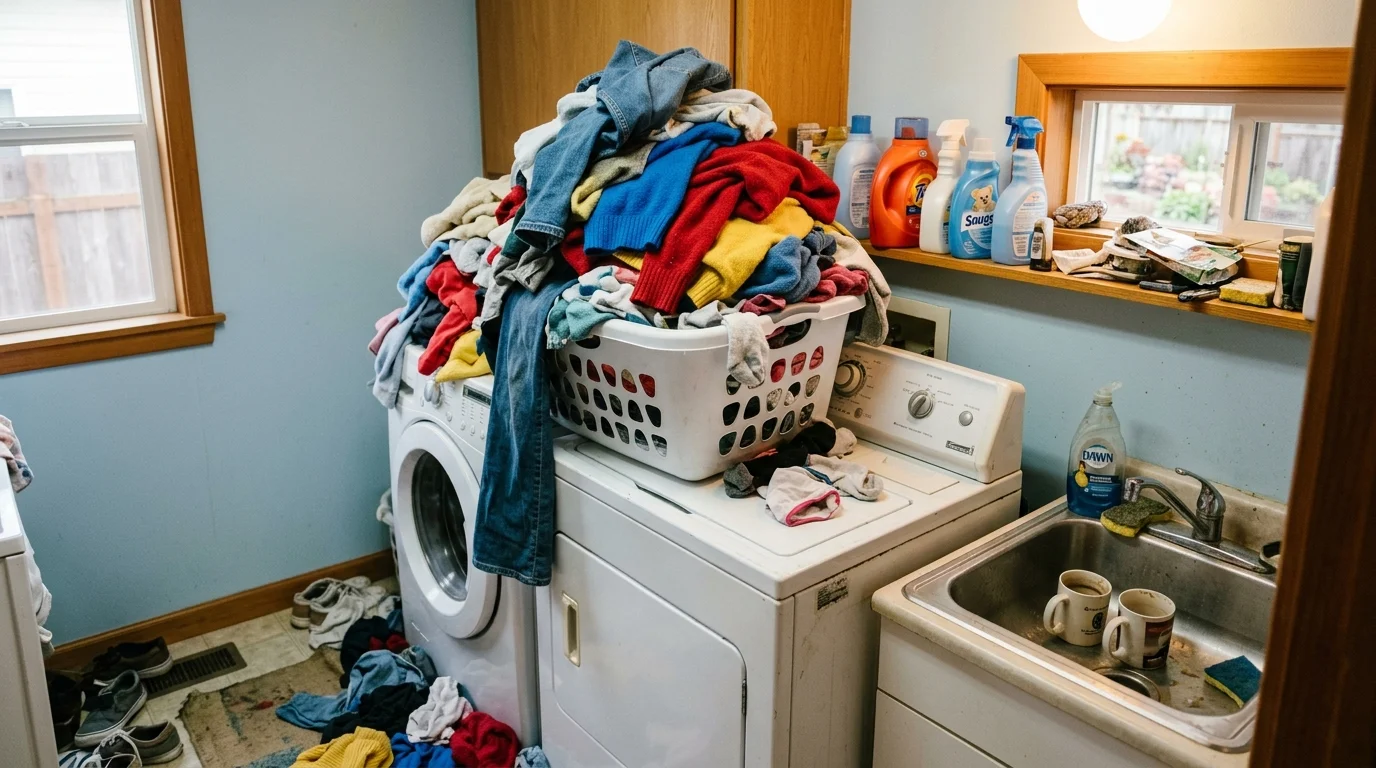
If laundry mountains regularly overflow hampers and dirty dishes fill sink basins despite constant effort, excess inventory is likely the core issue. Owning excess clothing, towels, dishware, and cooking utensils gives a false impression of comfort; in reality, excess inventory simply builds massive, overwhelming cleaning backlogs.
Consider how inventory scale alters daily habits:
- Excess Clothing: Having fifty shirts allows you to delay washing clothes for weeks until you face an overwhelming, day-long laundry marathon.
- Excess Tableware: Having twenty coffee mugs encourages leaving dirty cups on counters instead of spending thirty seconds washing one after use.
- Excess Cookware: Having multiple redundant pots and pans leads to dirty cookware building up in the sink instead of being promptly cleaned after meals.
Trimming your wardrobe and kitchenware inventory simplifies chore management. Lower inventory levels establish natural boundaries; you run small, quick loads of laundry and wash dishes consistently because items circulate actively instead of piling up indefinitely.
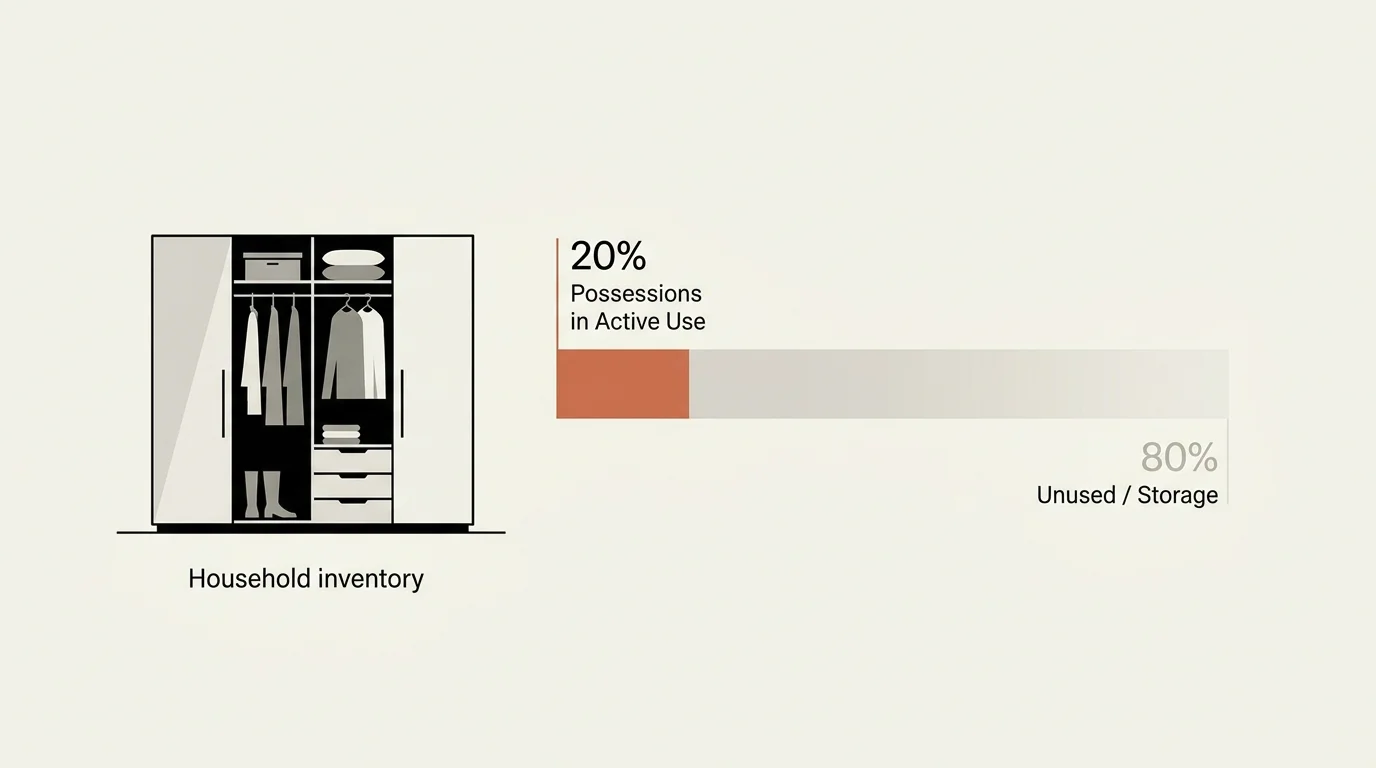
08 Storage Areas Are Maxed Out, Yet You Use Only Twenty Percent of Your Possessions
Attics, basements, storage sheds, and guest bedroom closets often turn into long-term landing pads for items you no longer use. When every home storage zone hits total capacity, living areas start overflowing into functional rooms. Yet despite maxed-out closets, most people wear and use only twenty percent of their belongings on a regular basis.
Retaining physical items out of guilt, speculative future need, or outdated sentimental attachment locks up valuable real estate in your home. Paying mortgage or rent costs to store items you never use depletes financial resources and adds ongoing management stress.
Professional organizers at the National Association of Productivity & Organizing Professionals emphasize that shedding unneeded inventory restores functional space and slashes time spent managing items. Deep decluttering purges unused items, frees up high-value closet space, and makes living with what you truly love effortless.
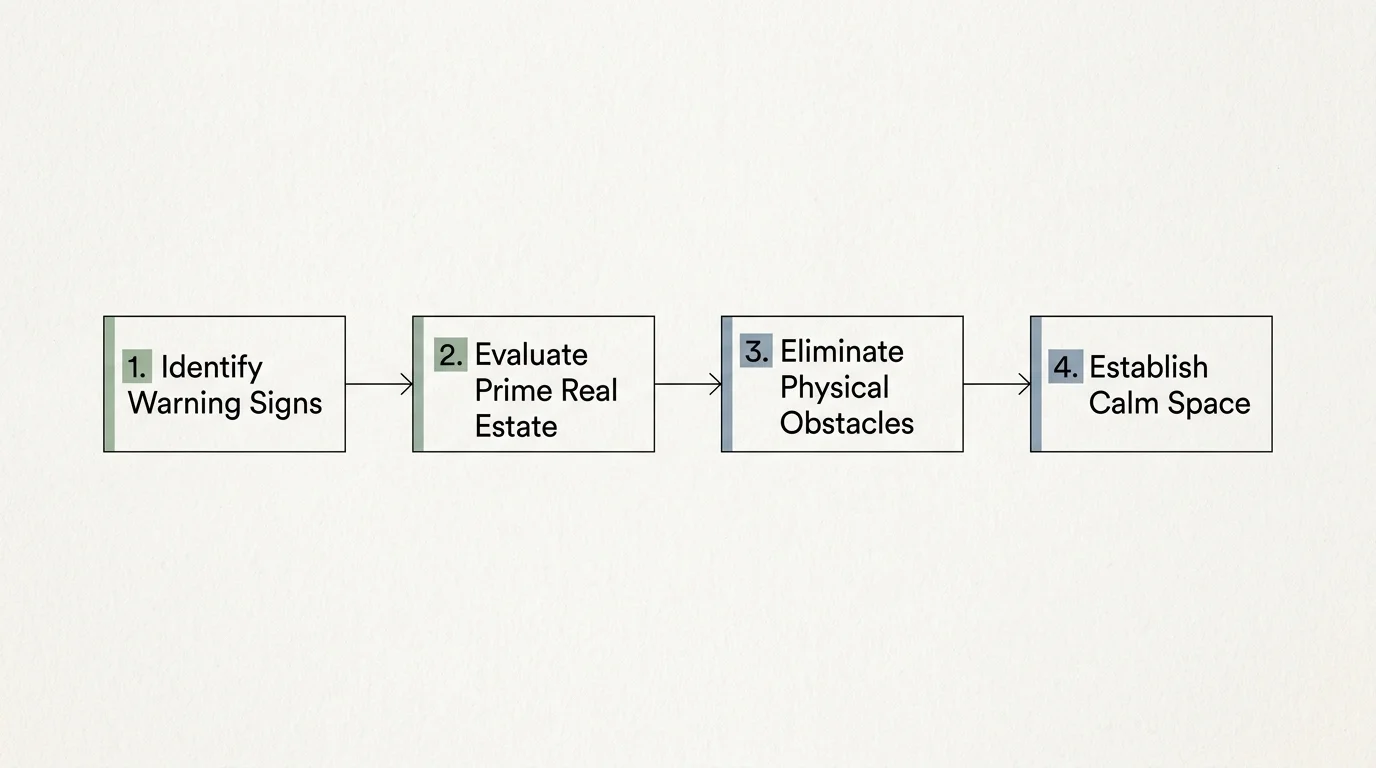
A Strategic Framework for Your Deep Decluttering Season
Once you recognize these signs across your home, shift immediately from passive observation to active, structured execution. Attempting to tackle your entire house in a single weekend often causes severe burnout and leads to abandoned projects. Applying targeted deep decluttering tips breaks down massive home projects into clear, achievable stages.
Follow this step-by-step room reset protocol to maintain daily momentum without overwhelming your schedule:
- Establish a Dedicated Sorting Station: Set up three clear, labeled bins or boxes in a low-traffic area: Keep, Donate/Sell, and Trash/Recycle. Every single item you touch must pass through one of these distinct categories.
- Begin with Low-Emotional, High-Impact Zones: Avoid starting with family photo albums or sentimental keepsakes. Begin in utility zones like pantry closets, medicine cabinets, or coat closets where decision-making is straightforward.
- Apply the Twelve-Month Rule: If you have not worn, used, or accessed an item over the past twelve months, evaluate it critically. Unless it serves as essential seasonal gear or emergency supplies, donate it to free up valuable space.
- Incorporate the One-In, One-Out Policy: Protect your progress during your decluttering season by ensuring every new item brought into your house replaces an existing item.
- Schedule Immediate Removal: Transport donation boxes to local charity drop-off points as soon as they are filled. Leaving donation bags sitting in entryways or car trunks simply moves clutter from one location to another.
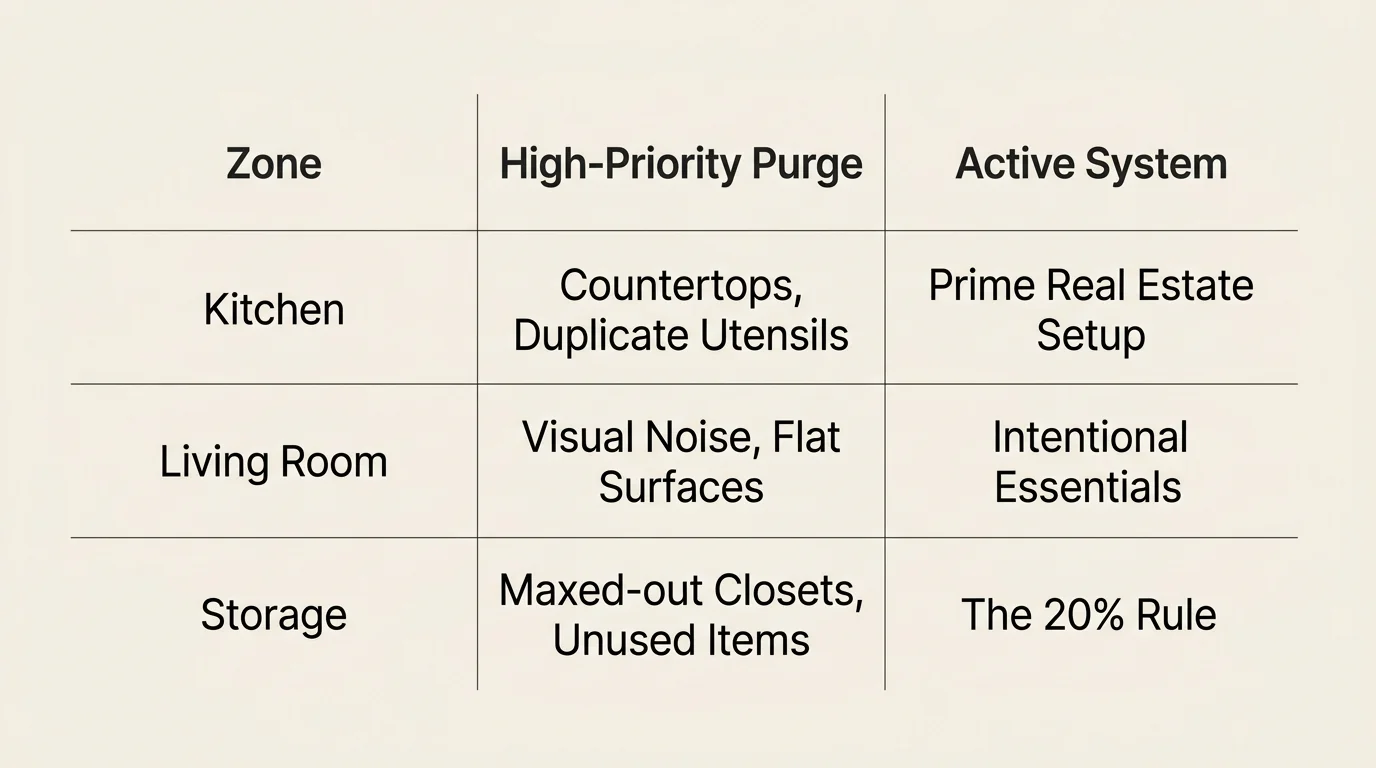
Seasonal Decluttering Matrix by Room Zone
Use this structured matrix to guide your room-by-room assessment during your deep decluttering season. It isolates specific high-impact focus areas, lists primary targets for purging, and sets clear, functional targets for each zone.
| Room Zone | High-Impact Focus | Target Items to Purge | Functional Goal |
|---|---|---|---|
| Kitchen & Pantry | Countertops, low cabinets, pantry shelves | Expired foods, duplicate tools, chipped mugs, unused small appliances | Clear food prep space and full visibility of food items |
| Bedrooms & Closets | Hanging racks, dresser drawers, bedside tables | Unworn clothes, stretched hangers, outdated reading material, excess linens | Restful sleep environment and effortless morning dressing routines |
| Bathrooms | Vanity drawers, medicine cabinets, shower ledges | Expired cosmetics, old medicine, worn towels, sample bottle collections | Clean, hygienic surfaces and streamlined morning hygiene routines |
| Living & Common Areas | Coffee tables, entertainment centers, floor spaces | Old magazines, broken toys, excess accent pillows, redundant charging cables | Clear walkways and a peaceful visual environment for relaxation |
| Garage & Entryway | Coat racks, shoe trays, utility shelving units | Outgrown sports gear, broken tools, duplicate hardware, dried paint cans | Safe floor navigation and structured intake storage for coats and footwear |
Your Next Step to Reclaim a Calm, Functional Space
A deep decluttering season is not about creating a sterile, picture-perfect home; it is about building a functional, supportive space that preserves your energy and simplifies your daily life. By recognizing clutter warning signs early and applying a clear, systematic sorting method, you eliminate friction points and make home maintenance simple and rewarding.
Select one small, contained zone today—such as a single kitchen drawer, a medicine cabinet, or an entryway coat rack—and dedicate just twenty minutes to purging unneeded items. Taking this single practical step builds immediate momentum, opens up physical space, and launches your journey toward a clean, calm, and effortlessly organized home.