Preparing your home for celebratory gatherings should feel exciting rather than exhausting. A streamlined system ensures you locate platters, linens, and drinkware immediately without wrestling with overstuffed, disorganized cabinets.
Proper holiday organization protects valuable family heirlooms from chips and fabric tears. It also cuts your setup time in half on busy event days so you can relax.
Explore these eight practical holiday storage ideas to safeguard your delicate seasonal supplies, simplify annual prep, and make welcoming loved ones completely effortless.
01 Establish a Dedicated Entertaining Hub Outside Prime Kitchen Space
Daily kitchen cabinets should hold items you use every single week. Stashing oversized turkey roasters and punch bowls in prime cooking zones creates unnecessary daily clutter.
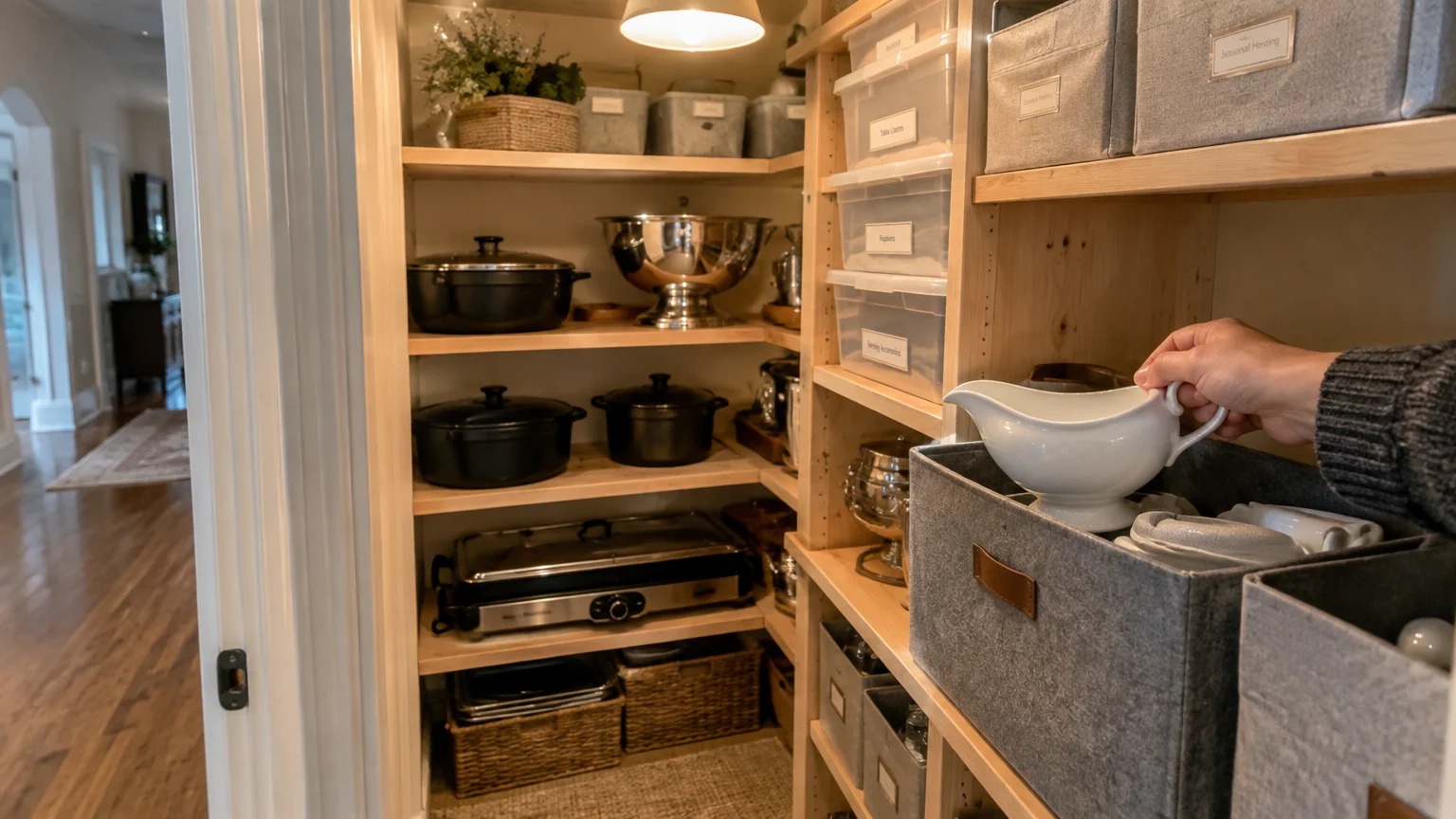
Instead, create a dedicated entertaining hub in an underutilized area of your home. A dining room credenza, clean guest closet, or sturdy basement shelving unit works wonderfully.
Just as you organize holiday decorations into categorized totes, consolidating your seasonal entertaining items in one spot saves immense time. When gathering season arrives, you will avoid hunting through multiple rooms for basic table settings.
Choose a location with steady room temperatures and low ambient humidity. Climate stability protects fine wood finishes, metal platters, and vintage ceramics from warping or glaze damage.
Keep heavier serving pieces on lower shelves to avoid overhead strain. Storing dense items waist-high ensures you can retrieve them safely without risking back injuries.
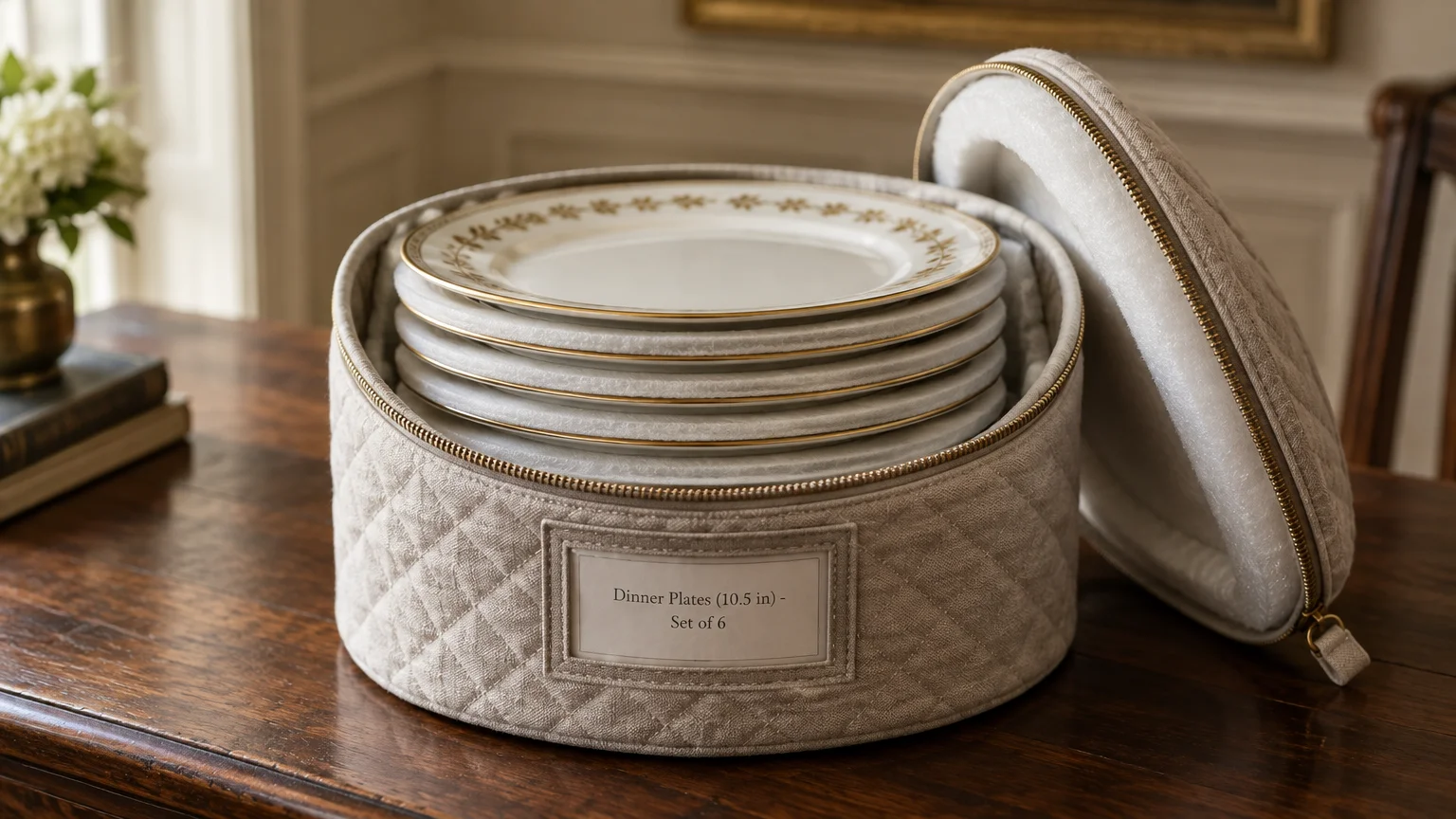
02 Protect Fine China and Seasonal Dinnerware with Padded Organizers
Stacking ceramic plates directly on top of each other creates micro-abrasions along glazed surfaces. Over several years, that constant friction weakens porcelain rims and dulls decorative gilding.
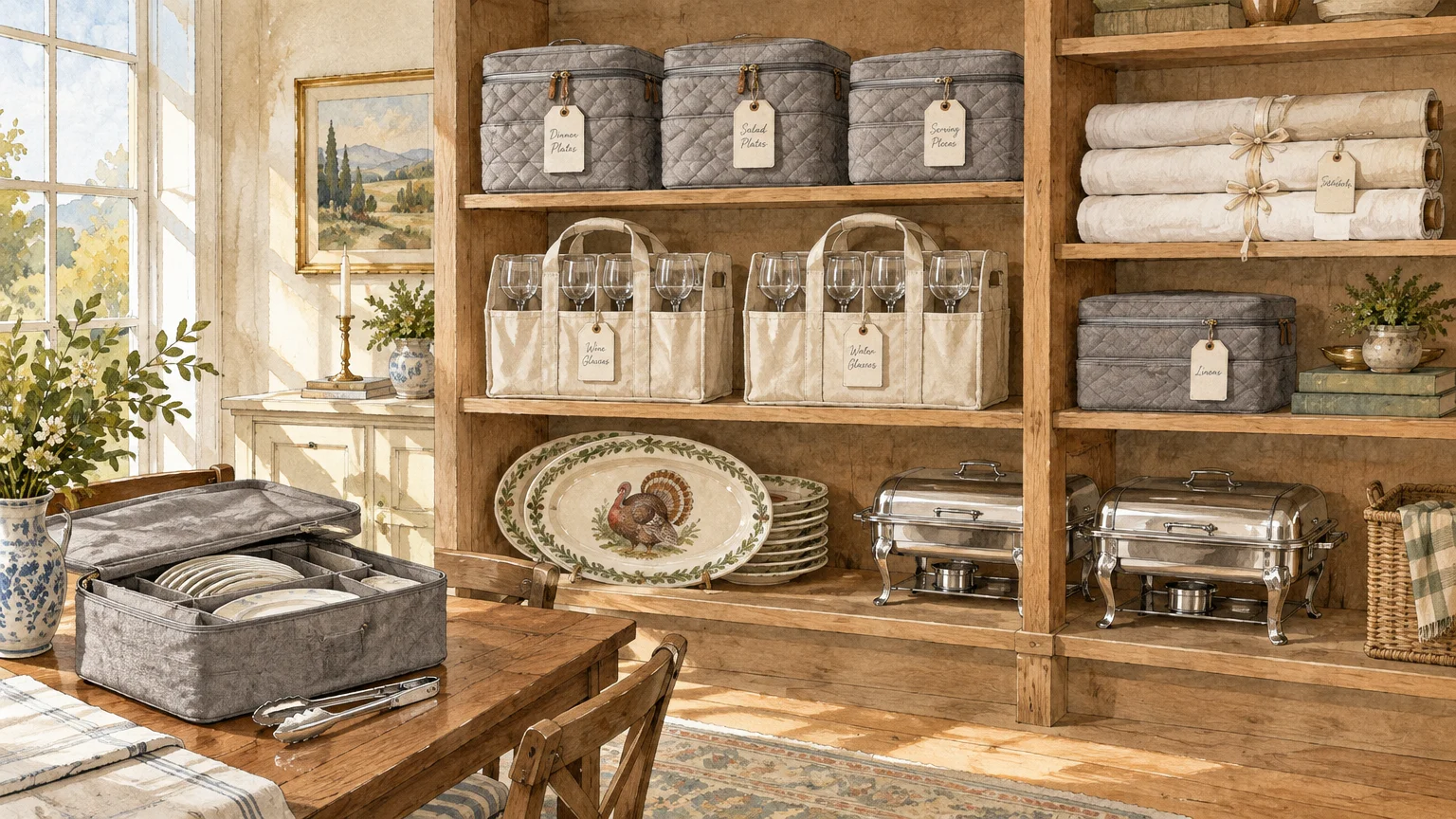
Invest in quilted, zippered dinnerware storage cases equipped with soft felt separators. These fabric containers seal out ambient dust, insects, and accidental impacts during the off-season.
Never stack more than eight to ten dinner plates in a single pile. The combined weight of heavy earthenware can crack the delicate plates resting at the bottom.
For older adults or anyone avoiding heavy lifting, store dinnerware sets in smaller bundles of four to six settings. Smaller stacks remain lightweight and easy to carry safely.
Label each zippered case clearly with plate diameter and service counts. This detail lets you grab the exact dessert or salad plates you need without unzipping every container.
03 Master Table Linen Care and Crease-Free Storage
Storing soiled linens invites destructive pests and causes permanent discoloration. Always wash and dry table runners, cloth napkins, and tablecloths thoroughly before packing them away.
Skip heavy laundry starch prior to seasonal storage because silverfish feed eagerly on starch residues. Inspect every piece under bright natural light to treat stubborn oil spots before they oxidize.
The Clemson University Cooperative Extension service recommends storing heirloom fabrics in acid-free environments to prevent fiber degradation and dark creases.
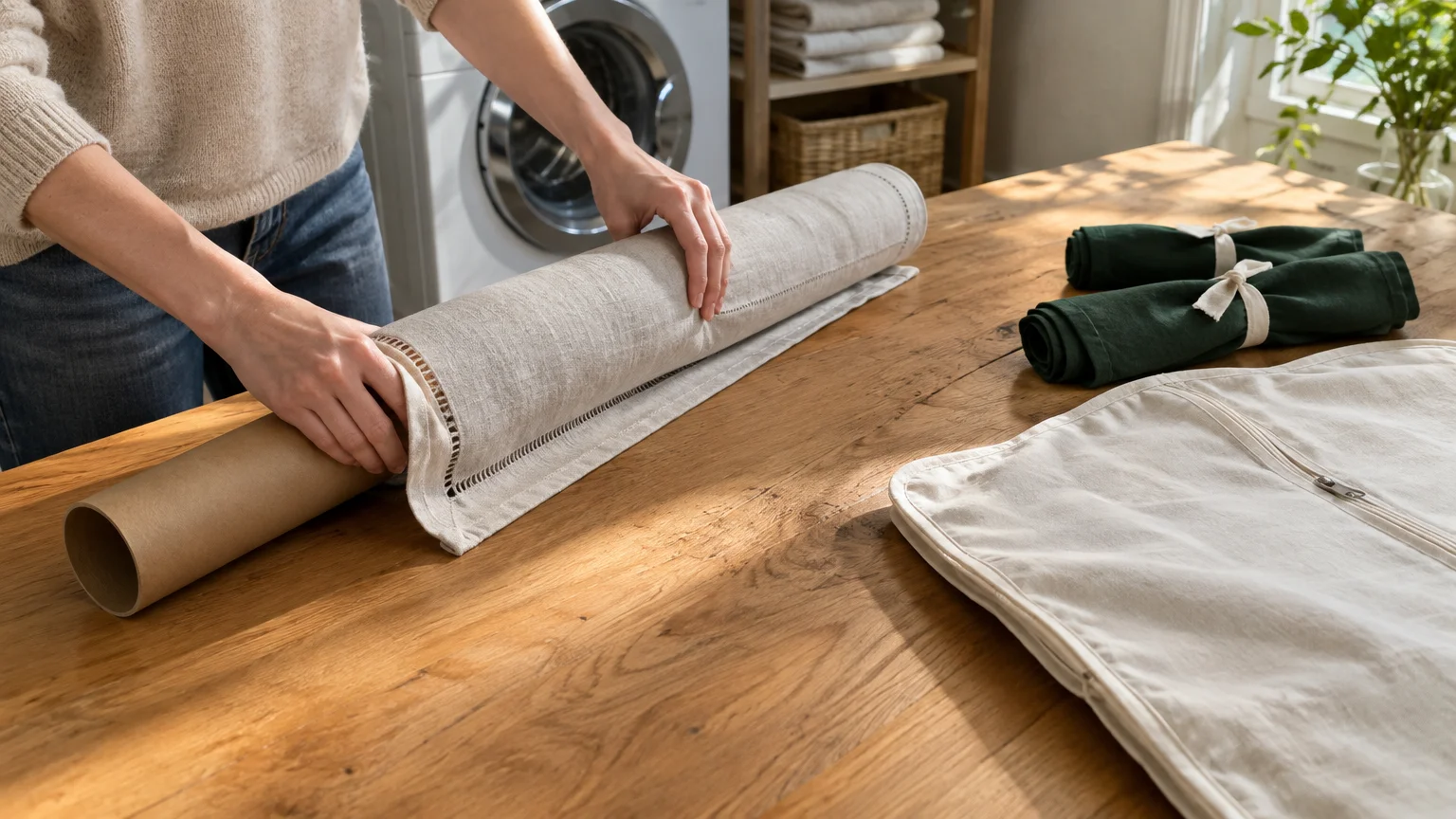
Roll formal tablecloths around acid-free cardboard mailing tubes—rather than folding them into tight squares. This simple rolling method prevents sharp creases, saving you hours of frustrating ironing later.
Alternatively, hang freshly laundered linens across multi-tier velvet trouser hangers inside a breathable cotton garment bag. Breathable cotton permits healthy air circulation while blocking airborne dust and greasy cooking vapors.
Avoid airtight plastic storage bags or vinyl zip cases for natural fiber linens. Trapped moisture inside sealed plastic promotes yellowing, dry rot, and stubborn mildew stains.
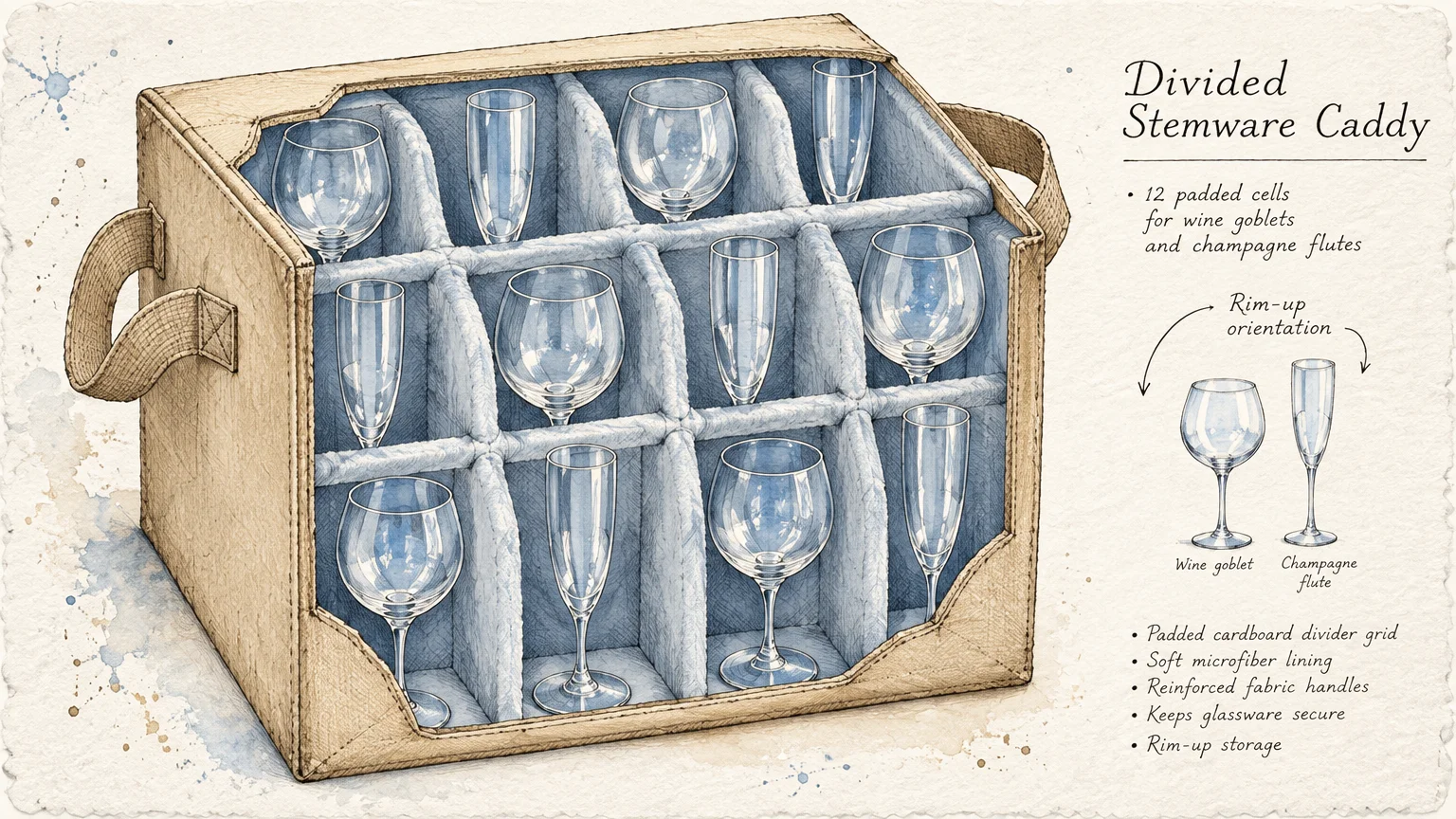
04 Secure Stemware and Glassware with Divided Caddies
Delicate wine glasses and crystal champagne flutes require rigid structural shielding. Flimsy cardboard liquor cartons offer minimal shock protection and degrade rapidly in damp basements.
Select fabric-covered stemware storage chests featuring heavy-duty corrugated internal dividers. These divided compartments isolate each fragile glass so stems never knock together during seasonal movement.
Always place glassware upright with the rim facing upward. The rim represents the thinnest, most fragile portion of any glass; bearing the vessel’s entire weight causes micro-fractures.
Look for storage organizers featuring drop-front magnetic openings or transparent viewing panels. Front-access openings let you pull out bottom glasses effortlessly without unstacking heavy boxes from above.
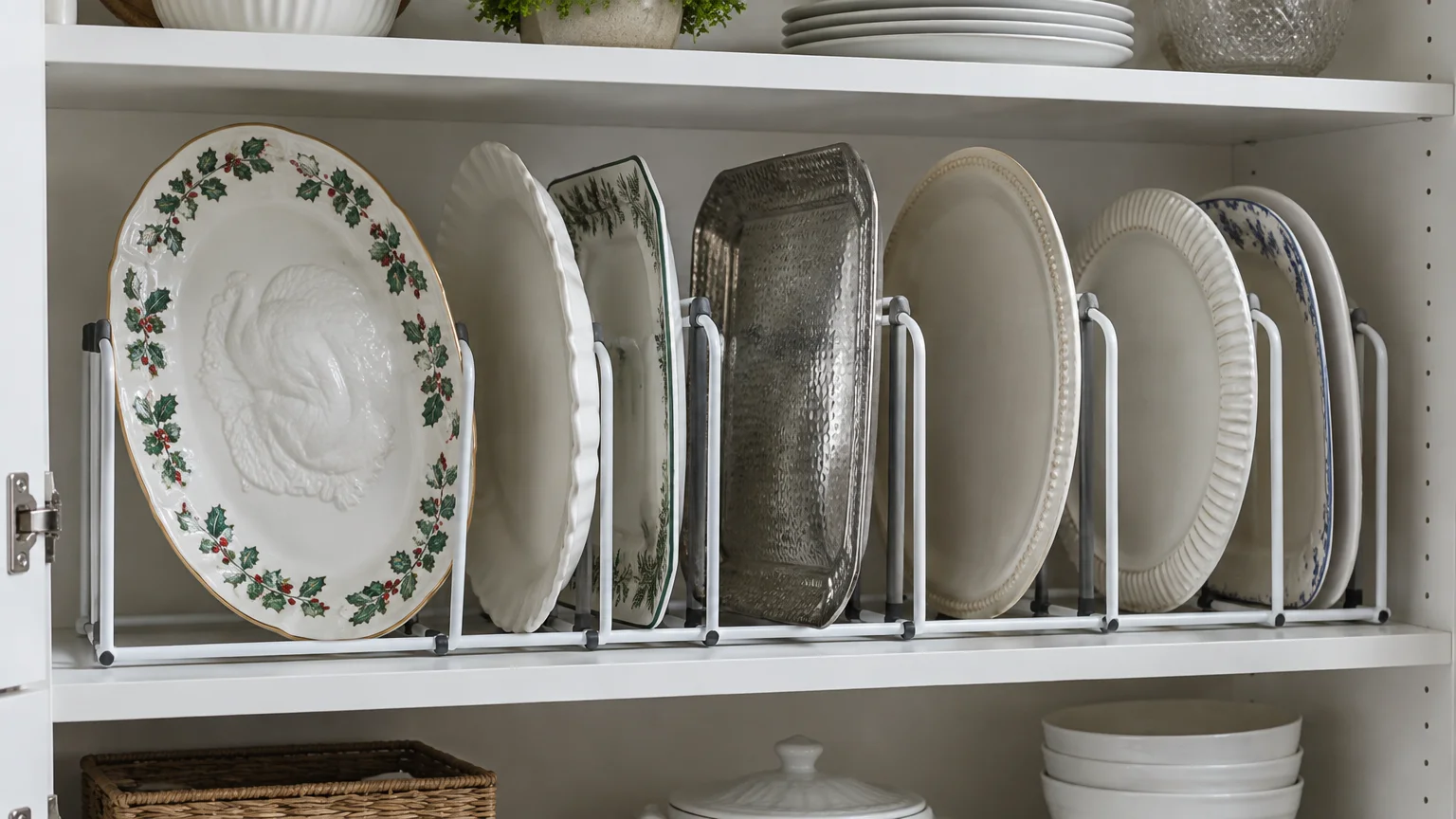
05 Store Bulky Serving Platters Vertically to Maximize Space and Safety
Stacking heavy serving platters horizontally turns dinner prep into an awkward balancing act. You risk chipping delicate rims each time you lift three top platters to reach the largest dish.
When storing serving dishes, install heavy-duty vertical pan organizers or deep slotted dividers inside your lower kitchen cabinets. Vertical filing allows you to slide out any tray smoothly with one hand.
Line vertical divider slots with adhesive felt strips to cushion heavy ceramic and cast-iron platters. This protective padding dampens loud clatter and shields delicate hand-painted rims from unsightly scratches.
For sterling silver and silver-plated trays, tarnish protection requires deliberate planning. Wrap silver pieces in specially treated anti-tarnish cotton cloth before storage to eliminate hours of tedious polishing.
Conservation guidelines from the American Institute for Conservation emphasize that barrier wraps prevent ambient airborne sulfur from tarnishing valuable silver alloys.
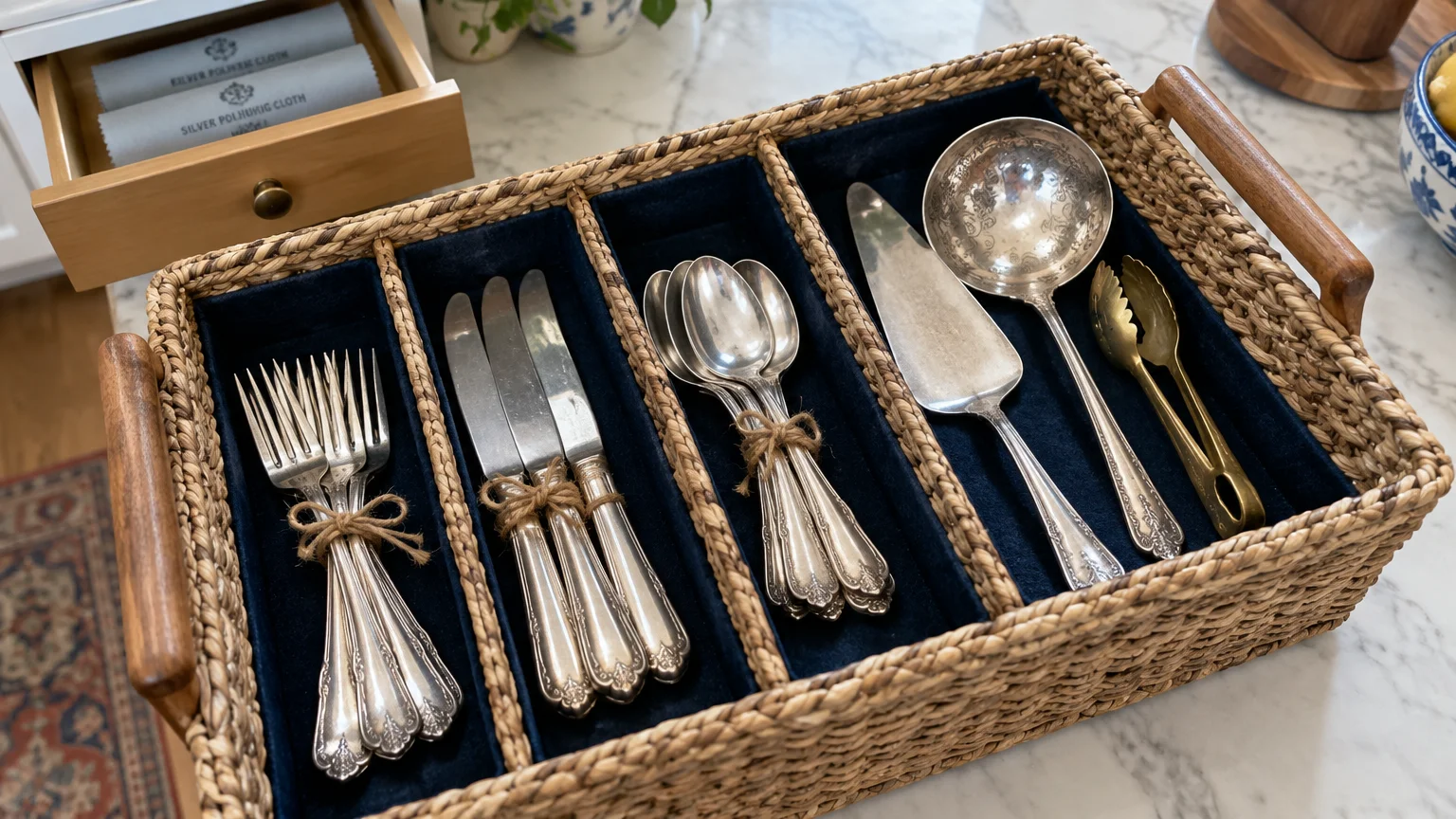
06 Assemble a Ready-to-Serve Flatware and Serving Utensil Station
Searching through everyday utensil drawers for carving sets or gravy ladles causes unnecessary party delays. Keep your specialized serving cutlery completely separate from your daily flatware.
Store formal flatware sets in felt roll-up pouches or divided wooden silverware chests. Individual fabric pockets keep decorative metals from rubbing together and prevent surface scratches.
Dedicate a portable divided caddy strictly to auxiliary holiday tools. Stock it with pie servers, meat carving knives, punch ladles, and silicone-tipped serving tongs.
When meal service begins, carry the entire caddy directly to your buffet staging area. You will keep every necessary tool within arm’s reach without opening a single drawer.
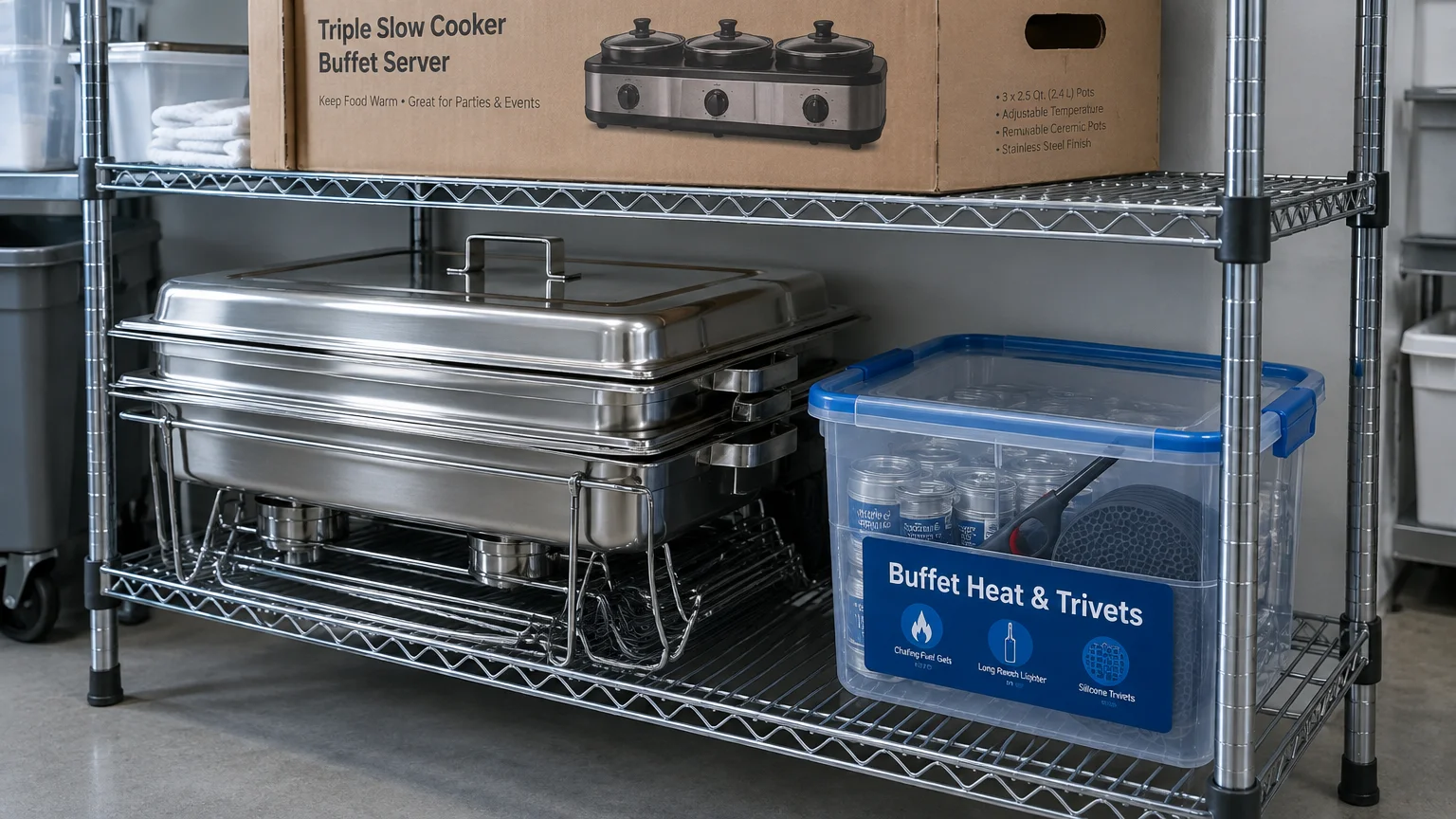
07 Streamline Buffet Essentials and Food Warming Equipment
Essential holiday hosting tips often emphasize food temperature control for guest safety. Electric buffet warmers, chafing dishes, and slow cookers keep festive meals hot, but they require systematic off-season storage.
Clean all heating plates, water pans, and glass covers thoroughly before packing your equipment into storage totes. Lingering grease residues attract unwanted insects and emit unpleasant burnt aromas during subsequent heating.
Bundle electrical cords loosely using hook-and-loop straps rather than wrapping cords tightly around warmers. Tight wrapping stresses delicate internal copper wires, creating dangerous short-circuit hazards.
The USDA Food Safety and Inspection Service confirms that hot buffet foods must stay at 140°F (60°C) or higher to prevent rapid bacterial proliferation.
Test your warming equipment and digital food thermometers a week prior to any major gathering. Confirming working temperatures early avoids frantic last-minute trips to appliance stores.
Store chafing fuel cans in a cool, ventilated container away from heating units and electrical switches. Check consumer guidelines from the U.S. Consumer Product Safety Commission to verify your small appliances have no outstanding safety recalls.
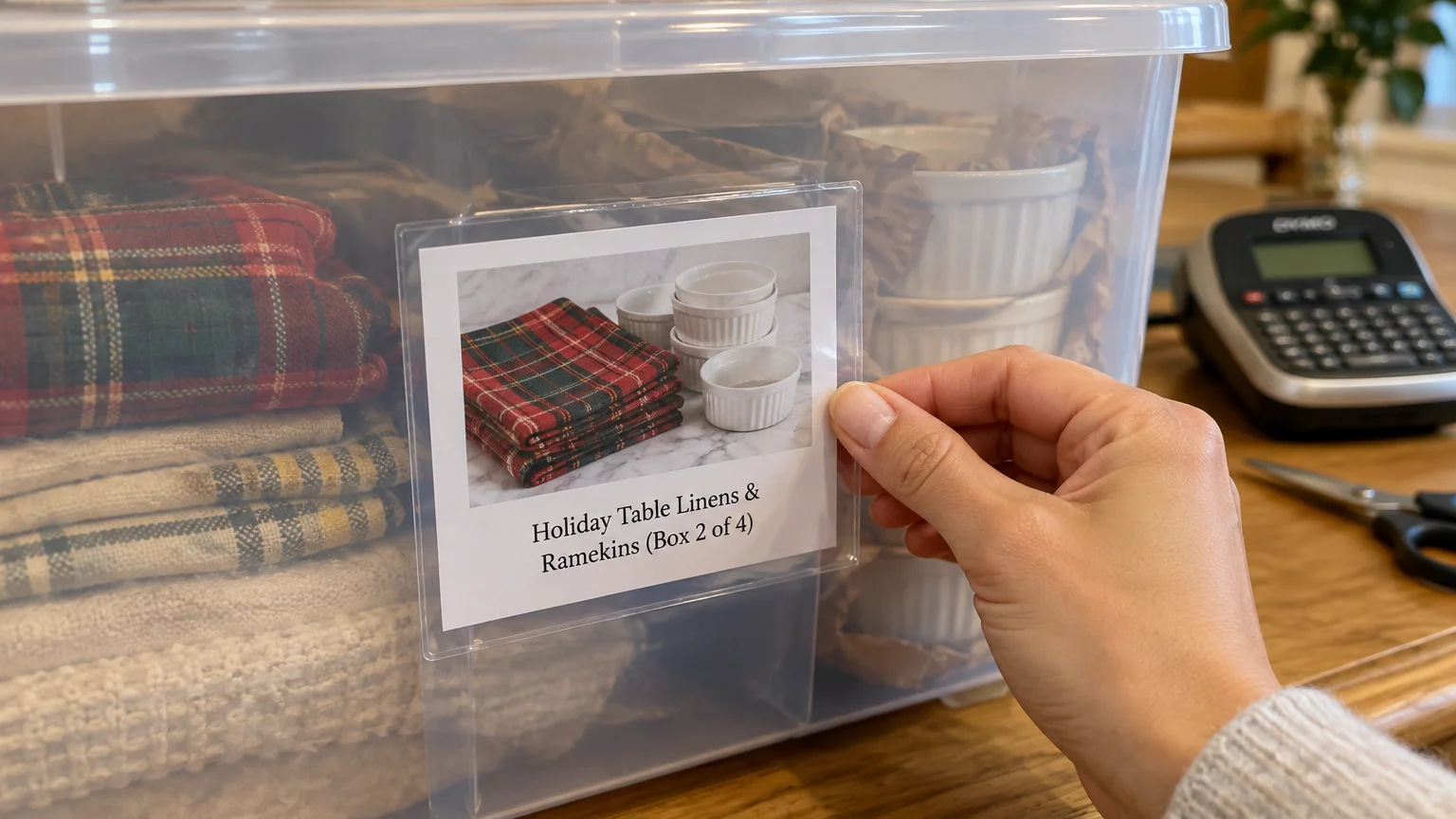
08 Implement a Visual Inventory and Bin Labeling System
Clear plastic storage totes eliminate frustrating guesswork from your holiday organization routine. They allow you to survey your inventory from across the room without popping open tight lids.
Attach self-adhesive clear label pouches to the front and short sides of every storage container. Slide printed index cards inside these pockets so you can update descriptions whenever your collection evolves.
Record both general categories and specific item quantities on your container cards. A label reading “12 Gold Chargers, 2 Gravy Boats” prevents unnecessary unboxing during early table planning.
Snap a clear digital photograph of each packed bin before snapping on the lid. Store these snapshots in a dedicated smartphone album named “Holiday Hosting” for instant reference while shopping or planning.
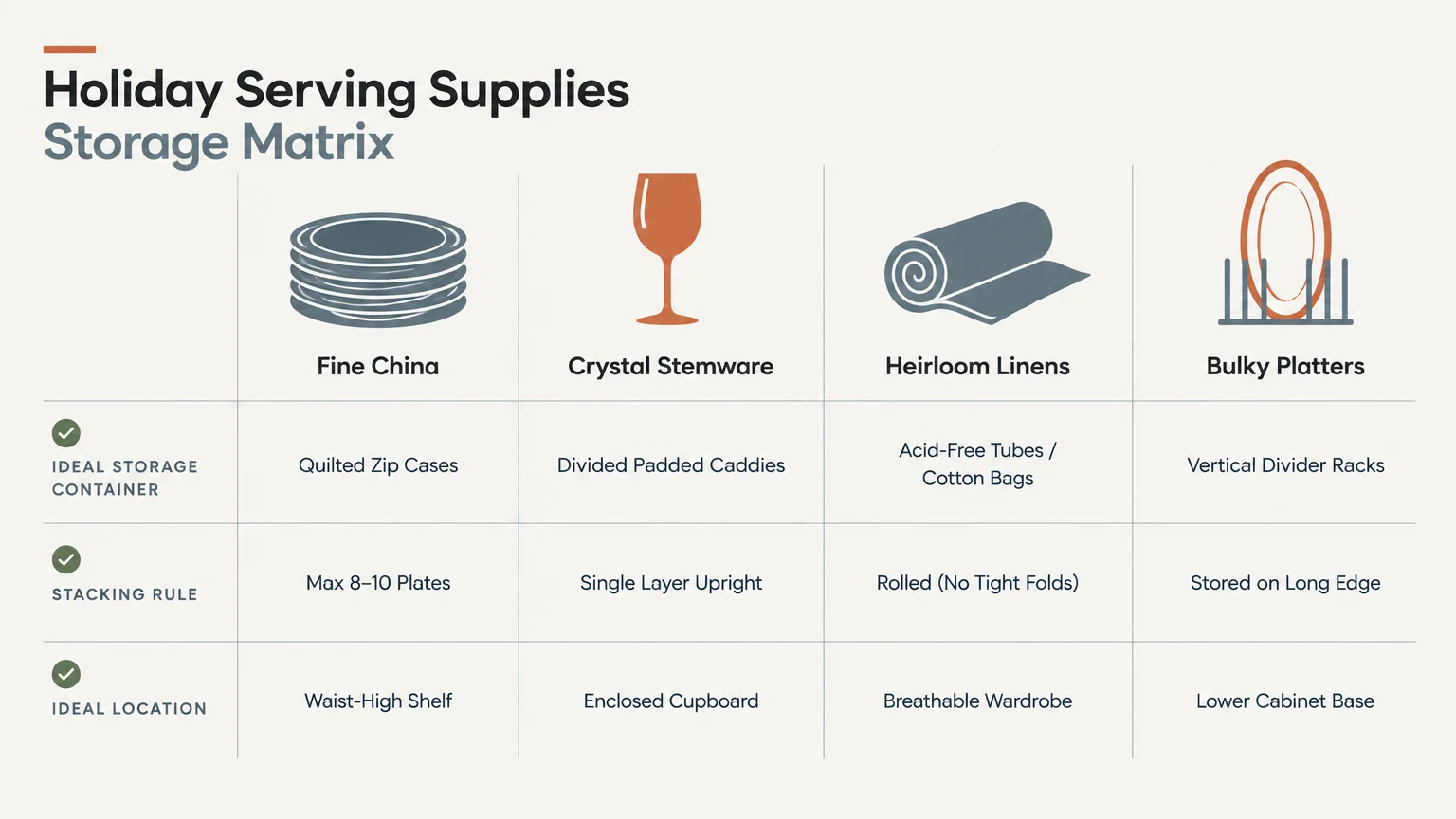
Holiday Serving Supplies Storage Matrix
A structured storage plan prevents damage and ensures every hosting piece remains functional for decades. Use this quick reference matrix to match your holiday gear with ideal containers and care protocols.
| Supply Category | Ideal Container | Optimal Home Location | Care and Safety Best Practice |
|---|---|---|---|
| Fine China & Porcelain | Quilted zippered cases with felt inserts | Waist-height dining credenza or pantry | Stack no more than 8–10 plates to prevent base fractures from weight. |
| Crystal Stemware | Rigid divided chests with drop-front flaps | Mid-level closet shelf or buffet cabinet | Store glasses upright on bases; never rest fragile crystal on its rims. |
| Table Linens & Runners | Acid-free cardboard tubes or velvet hangers | Breathable cotton garment bag in a closet | Wash thoroughly before storing; avoid starch that attracts insect pests. |
| Heavy Serving Platters | Vertical slotted racks with felt padding | Lower kitchen cabinets or sideboard base | File trays vertically like books to prevent chipping during retrieval. |
| Silver Cutlery & Hollowware | Anti-tarnish silvercloth wraps or lined chests | Climate-controlled interior drawer | Wrap pieces completely to seal out atmospheric sulfur and minimize polishing. |
| Buffet Warmers & Chafers | Heavy-duty clear latching plastic totes | Ground-level utility shelf or storage closet | Verify equipment reaches 140°F; secure cords loosely with cable straps. |
Reviewing this matrix before you pack ensures you never expose delicate heirlooms to moisture, heat, or excessive mechanical weight.
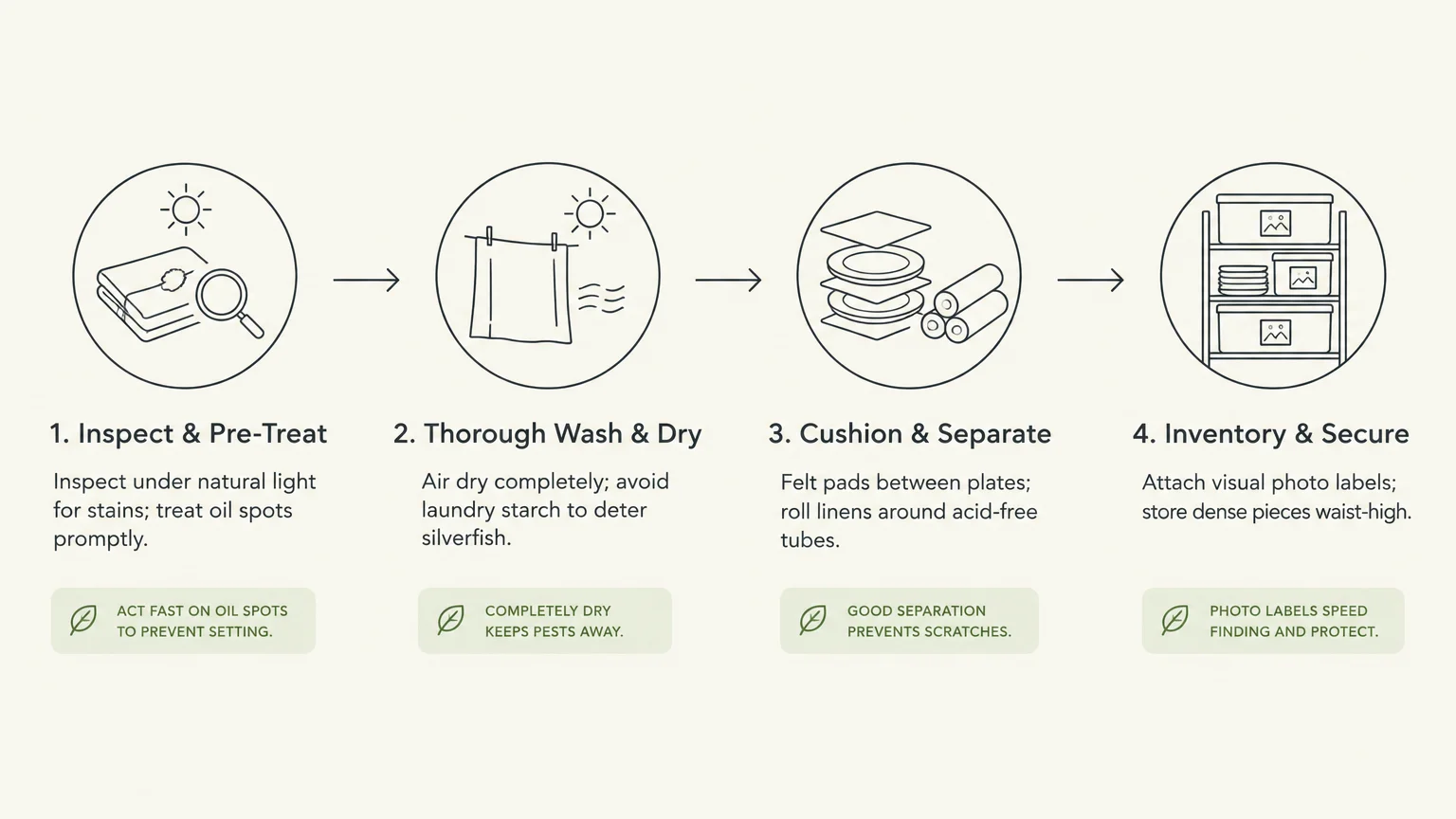
The Step-by-Step Post-Holiday Repacking Routine
Packing up after a joyful gathering often feels like a chore, but an orderly system makes the process fast and painless. Follow this sequential routine to protect your hosting supplies for next year.
- Inspect and deep-clean dishes: Hand-wash fragile gold-rimmed china and inspect every platter under bright task lighting for hairline fractures or grease film before wrapping.
- Launder and thoroughly dry textiles: Treat food stains immediately and ensure table linens are completely dry before rolling them around cardboard tubes.
- Polish and wrap metal pieces: Wipe silver platters with dry microfiber cloths, placing them in anti-tarnish cloth sleeves to block sulfur exposure.
- Pack heaviest items first: Place heavy ceramic platters and chafing dishes at the base of storage bins, layering lighter accessories above them.
- Update inventory labels and restock supplies: Note broken items or depleted chafing fuel cans on your bin cards so you know what to replenish next season.
Completing these steps right after your event guarantees that next year’s holiday prep begins with clean, sparkling, and perfectly organized gear.
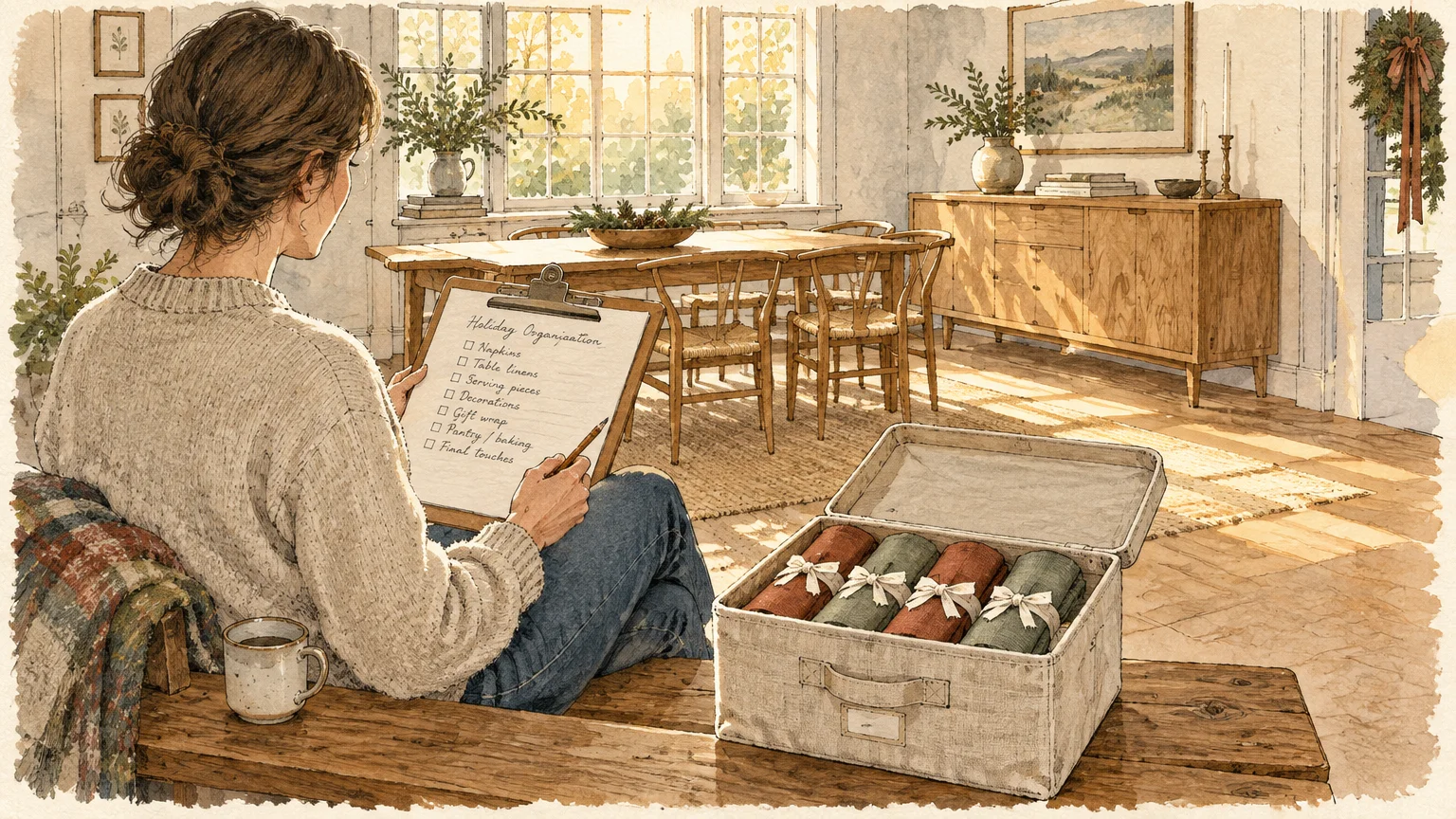
Take Your First Organizing Step Today
You do not need to overhaul your entire holiday collection in a single afternoon. Start by gathering all your serving platters into one location and sorting them vertically using a sturdy rack.
Tackling one category this weekend establishes a reliable foundation that turns future holiday hosting into a smooth, rewarding, and stress-free celebration.