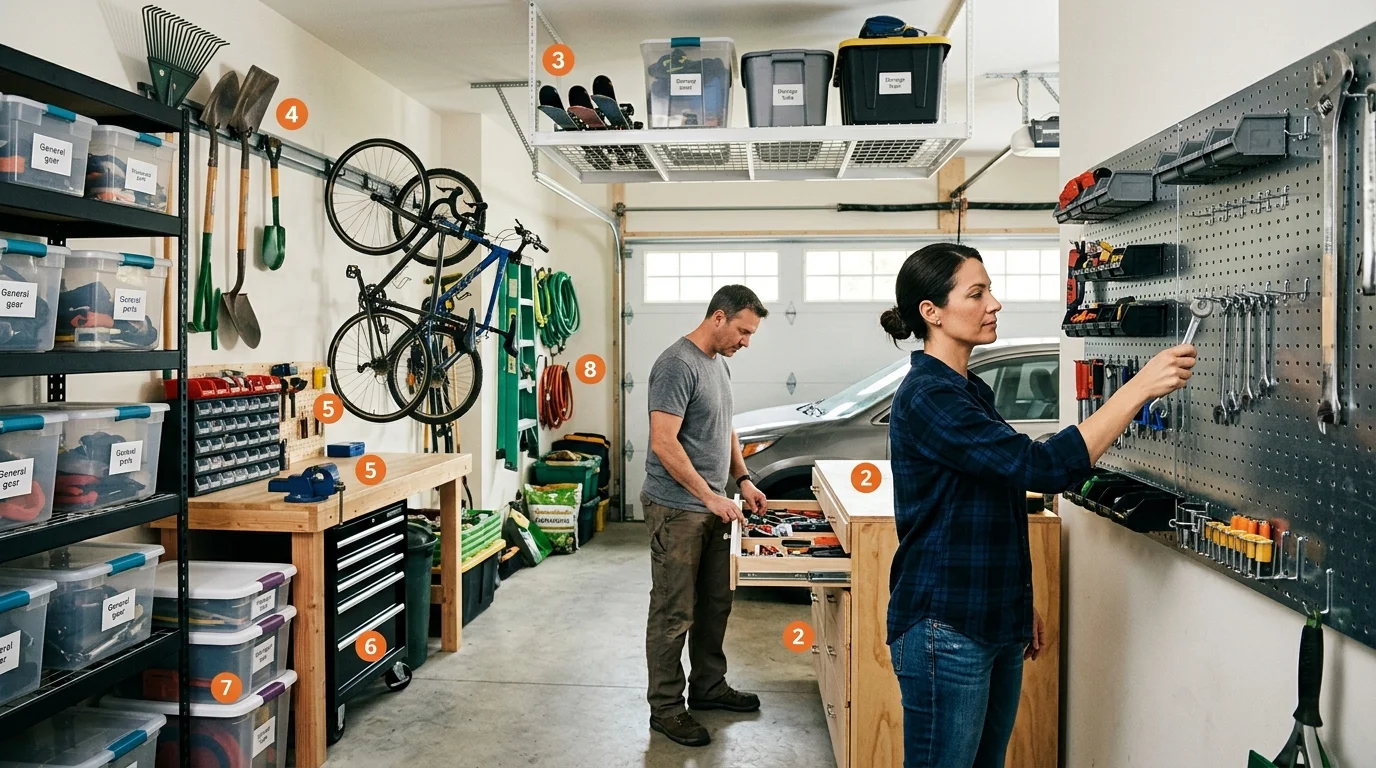
You can reclaim your parking space and eliminate weekend clutter hunts with storage systems designed around your daily habits rather than temporary quick fixes. Garages quickly become dumping grounds when items lack visible, dedicated homes, forcing you to stack cardboard boxes precariously on the floor. When you install durable wall tracks, drop-down ceiling racks, and dedicated zones for high-frequency tools, keeping garage storage tidy long term becomes an effortless routine. By focusing on accessibility, clear visibility, and safety-tested hardware, you will turn a chaotic utility space into a calm, functional extension of your home.
01 Heavy-Duty Wall Tracks and Modular Slatwall Panels
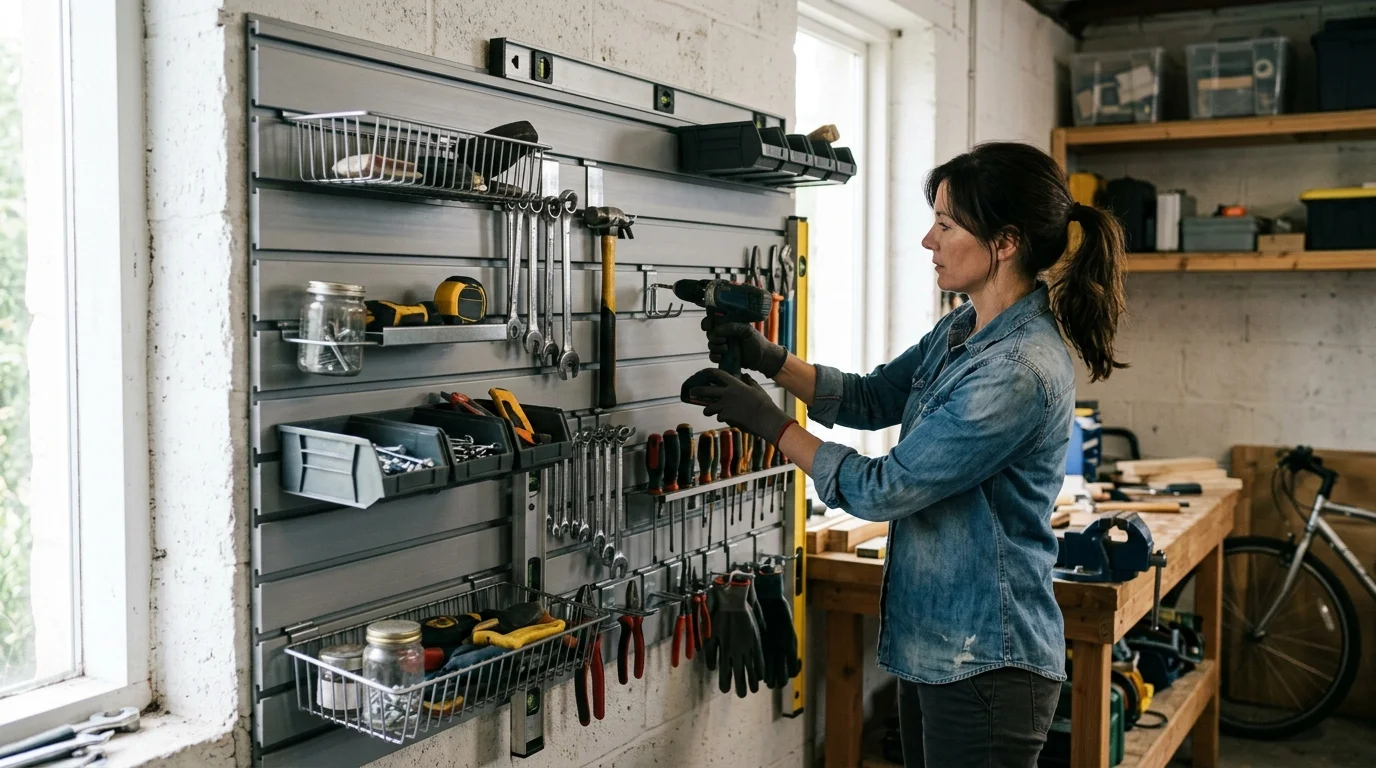
Traditional pegboards frequently disappoint homeowners; standard tempered hardboard warps under humidity, and thin metal hooks pull loose every time you grab a wrench. Heavy-duty horizontal track rails and cellular PVC slatwall panels solve this problem by anchoring directly into your wall studs with rugged structural screws. Slatwall panels hold up to 50 to 75 pounds per square foot, providing an ultra-flexible canvas that accommodates everything from cordless blowers to folding ladders.
To maximize this system, install your track or slatwall panels between 3 and 6 feet from the finished floor. This ergonomic placement keeps your everyday hand tools, garden trowels, and extension cords within arm’s reach without requiring you to bend over or balance on a step stool. Choose locking accessories—such as cam-lock hooks and wire baskets—that stay firmly seated when you lift tools off the wall. As your collection of sports gear or garden tools evolves over the seasons, you can slide and rearrange hooks in seconds without driving a single new hole into your drywall.
02 Ceiling-Mounted Overhead Racks with Structural Lag Anchors
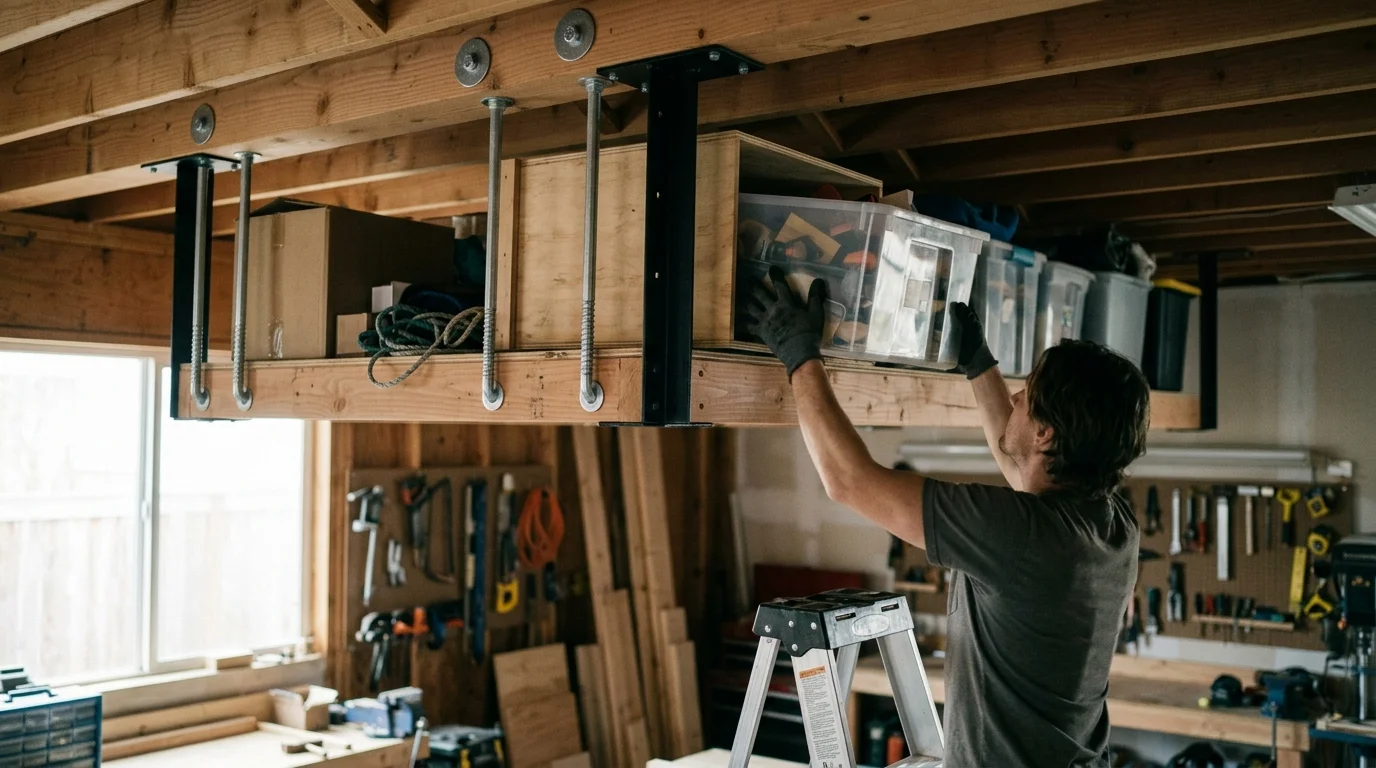
The space directly above your garage doors and along open ceiling joists offers dozens of cubic feet of unused storage real estate. Installing heavy-gauge steel ceiling racks lifts bulky, lightweight items completely off the floor, opening up valuable walkway clearance. This solution works best for seasonal decor, holiday trees, camping gear, and spare luggage that you only access once or twice a year.
Safety remains paramount when suspending heavy loads overhead. Always secure overhead racks into the center of solid ceiling joists using heavy-duty lag bolts, rather than mounting into drywall or decorative strapping. Check consumer product safety guidelines from the U.S. Consumer Product Safety Commission (CPSC) to verify product recalls and hardware specifications before installation. Distribute weight evenly across the platform, place heavier items near the outer support beams, and strictly observe the manufacturer’s static weight ratings, which typically range from 250 to 600 pounds. For added convenience and joint safety as you age, choose ceiling systems equipped with hand-cranked or motorized pulley lifts, allowing you to lower platforms to chest level safely.
03 Commercial-Grade Clear Storage Totes with Large-Format Labels
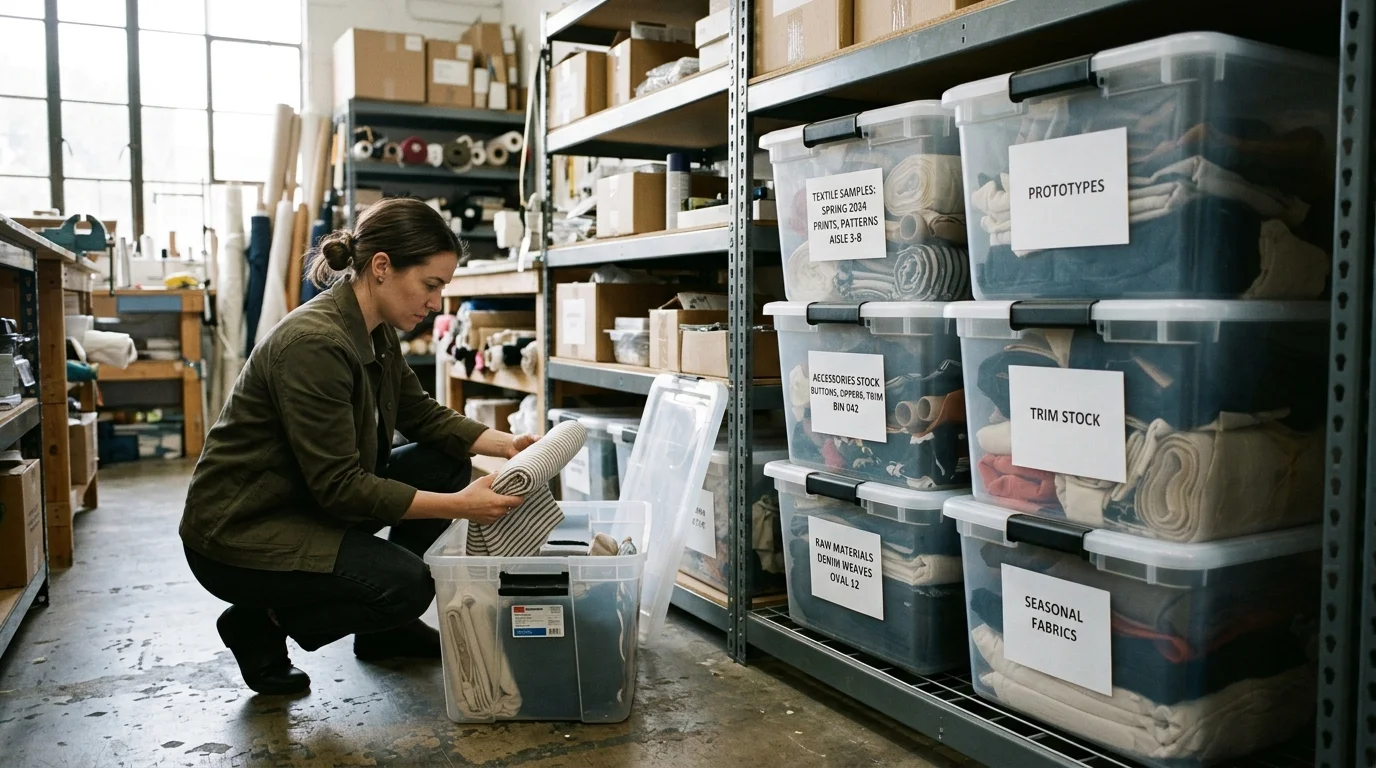
Cardboard boxes attract moisture, harbor silverfish, and collapse under moderate loads. Upgrading to uniform, commercial-grade clear polypropylene totes provides immediate visual access to your belongings while creating a water-resistant, pest-proof seal. Standardizing on one or two consistent tote sizes—such as 18-gallon and 27-gallon capacities—enables neat, secure stacking on industrial shelving units.
Clear plastic allows you to identify contents at a glance, eliminating the need to rummage through half a dozen bins to locate a single paint roller. Take this organization a step further by applying high-contrast, waterproof labels on both the front and side panels of each tote. Group items by strict activity themes rather than generic categories. For example, create specific containers for “Irrigation Repair,” “Car Detailing,” and “Holiday Lighting.” When every item belongs to a clearly designated box, family members can return tools to their proper homes without hesitation.

04 The 6-Zone Functional Layout Strategy
Throwing random shelving units against the nearest open wall creates visual noise and operational friction. Professional organizers rely on garage zoning to group items based on usage frequency, weight, and safety requirements. Organizing a cluttered garage into dedicated zones ensures that daily items remain at the threshold while rarely used supplies move to high shelves or remote corners.
Review the primary zones outlined in the table below to determine the most logical placement for your tools, sports gear, and household overflow:
| Zone Number | Zone Name | Primary Items Stored | Ideal Location in Garage |
|---|---|---|---|
| Zone 1 | Transition Drop Zone | Shoes, raincoats, dog leashes, reusable shopping bags | Adjacent to the interior entryway door |
| Zone 2 | Daily & High-Frequency | Brooms, pet food bins, everyday cleaning sprays | Eye-level shelves near the entrance |
| Zone 3 | Long-Handle Garden Tools | Shovels, rakes, leaf blowers, garden hoses | Side wall with track clips or vertical stands |
| Zone 4 | Large & Rolling Equipment | Lawn mowers, bicycles, wheelbarrows, rolling trash bins | Corners and perimeter floor space away from car doors |
| Zone 5 | Workstation & Hobby Gear | Power tools, hardware drawers, workbench, craft supplies | Dedicated back wall or well-lit corner alcove |
| Zone 6 | Seasonal & Deep Storage | Holiday bins, camping coolers, patio cushions | Overhead ceiling racks and highest shelf tiers |
Implementing this layout establishes clear spatial boundaries. You will instantly know where to walk when taking out the recycling, and you will never need to climb over a lawn mower just to grab a garden trowel.

05 Mobile Rolling Cabinets and Modular Base Carts
Fixed wooden workbenches and stationary low cabinets often become dust magnets that trap debris, sawdust, and lost screws underneath. Mobile base cabinets mounted on 4-inch locking swivel casters offer superior adaptability. You can effortlessly wheel your tool chest directly to your vehicle’s engine bay for weekend maintenance, then roll it back against the wall and lock the wheels in place when you finish.
Mobile modular units make routine cleaning remarkably easy—a vital benefit for homeowners maintaining tidy spaces without heavy physical exertion. Instead of bending awkwardly with a broom to sweep tight crevices, you simply unlock the casters, roll the cabinets forward, sweep the clear epoxy floor, and return the cart to its station. Look for cabinets constructed with powder-coated 18-gauge steel, full-extension ball-bearing drawer slides, and built-in keyed locks to secure expensive specialty tools.

06 Lockable, Ventilated Cabinets for Hazardous Materials
Garages frequently house volatile materials, including aerosol spray paints, motor oils, liquid fertilizers, and propane canisters. Storing these chemical containers loosely on open shelves invites chemical degradation, toxic fumes, and accidental spills. A dedicated, lockable steel cabinet protects your household by keeping hazardous products out of reach of curious grandchildren and household pets.
Follow residential fire safety recommendations from the National Fire Protection Association (NFPA) by keeping all combustible liquids away from potential ignition sources, such as gas water heaters, furnaces, and electrical breaker panels. Ensure your chemical cabinet contains adjustable galvanized steel shelves to catch minor drips and corrosion-resistant vents that prevent hazardous vapor buildup. For older paint cans, lawn chemicals, and spent motor oil that you no longer use, consult the Environmental Protection Agency (EPA) guidelines for local household hazardous waste collection facilities rather than tossing them into ordinary trash cans.

07 Vertical Clamping Racks for Long-Handle Equipment
Leaning shovels, brooms, and weed trimmers haphazardly in corners creates frustrating “tool avalanches” where pulling one rake brings down three other implements. Vertical tool racks equipped with rubber-coated friction cams or gravity-assisted grip hooks secure individual tool handles against the wall, utilizing vertical space efficiently while keeping the floor completely clear.
Mount vertical grip racks at waist-to-chest height on an unobstructed side wall. When arranging your tools, hang the heaviest implements—such as post-hole diggers and steel sledgehammers—closest to the wall studs to minimize torque on your mounting rail. Position lighter brooms and leaf rakes toward the outer clips. By securing each handle with a quick-release rubber clamp, you prevent tripping hazards along your vehicle pathways and protect car door panels from accidental scratches and dents.

08 The Dedicated Fast-Drop Entryway Station
Clutter often originates at the threshold where your garage meets your home interior. Family members kick off muddy boots, drop work gloves on the steps, and stack empty cardboard boxes right beside the doorway. Installing a compact entryway transition station directly adjacent to the interior access door stops this clutter pipeline before it spreads across your garage floor.
Equip this staging station with three core components: a heavy-duty rubber shoe tray to catch dirt and snowmelt, a wall-mounted coat rack for work jackets and gardening hats, and a compact recycling bin for mail and packaging. If space permits, add a narrow bench with under-seat cubbies. This setup gives you a stable, comfortable seat for swapping dirty outdoor work boots for indoor slippers, preventing outdoor grime from tracking into your clean living areas.
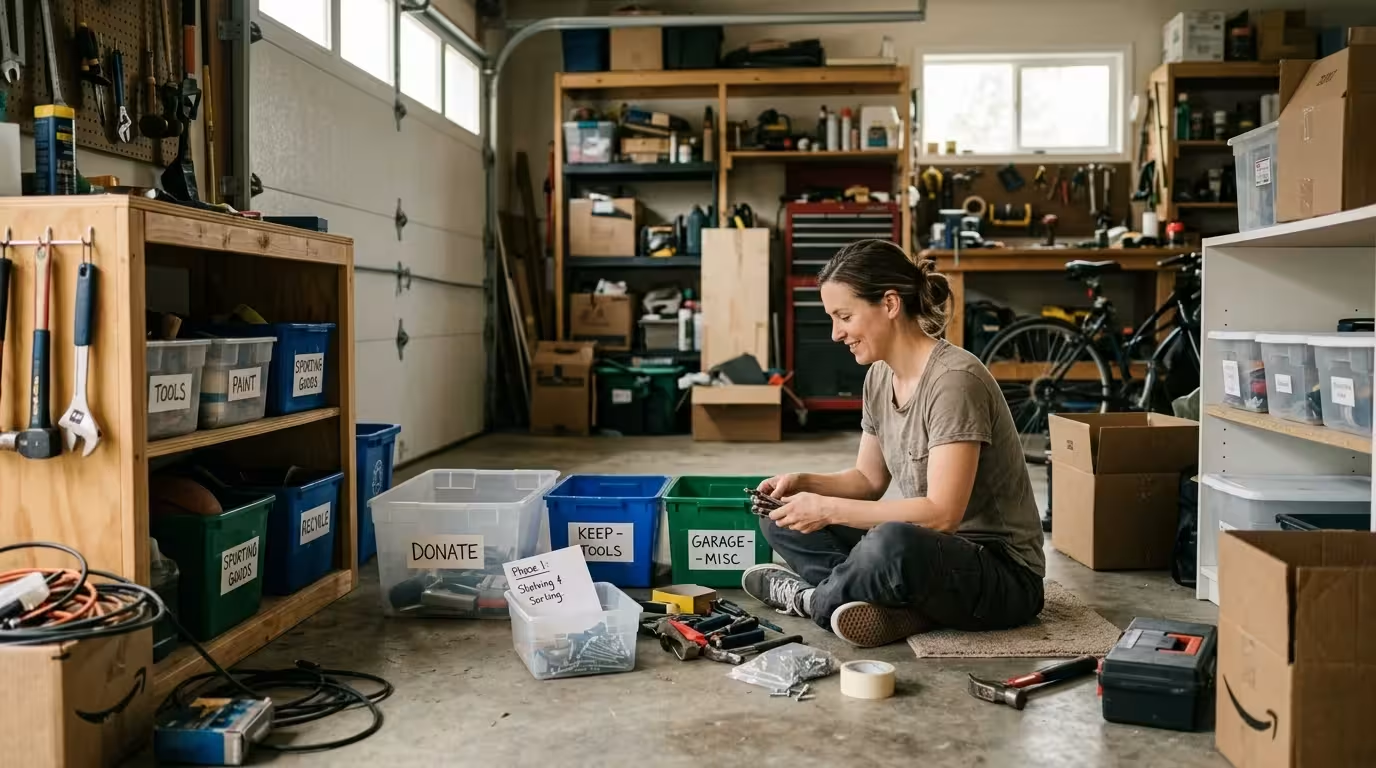
Step-by-Step Implementation: Organizing a Cluttered Garage Without Burnout
Tackling an entire garage in a single afternoon often leads to exhaustion and half-finished piles on your driveway. Use this systematic four-step workflow to execute your garage transformation smoothly over a single weekend.
- The Complete Empty-and-Purge Phase: Pick a clear, dry Saturday morning. Pull every item out of one quadrant of the garage and place it on your driveway on top of tarps. Sort items ruthlessly into four distinct piles: Keep, Donate/Sell, Recycle/Hazmat, and Trash. Discard dried-out adhesives, broken tools, and duplicate items you have not touched in over two years.
- Clean and Surface Prep: With the floor and walls clear, brush down cobwebs from ceiling corners and inspect wall framing for moisture damage. Sweep the concrete slab thoroughly and scrub oil stains using a concentrated degreaser and a stiff bristle deck brush.
- Install Wall and Ceiling Infrastructure: Locate your wall studs and ceiling joists using a reliable electronic stud finder. Install your wall tracks, slatwall panels, and ceiling storage racks first. Always pre-drill pilot holes to prevent splitting wooden framing members. If you use a stepladder during overhead rack installation, adhere to ladder safety practices outlined by the National Institute for Occupational Safety and Health (NIOSH) to ensure three points of contact and proper base leveling.
- Load by Frequency and Weight: Place heavy, rarely used items on overhead racks or lower heavy-duty shelving tiers. Mount medium-weight hand tools on your eye-level wall racks. Place small hardware into labeled drawers and finish by rolling mobile cabinets back into their designated perimeter bays.

Practical Checklist for Long-Term Garage Maintenance
The best garage organization systems only succeed if your household maintains them. Run through this quick operational checklist once per season to ensure your garage stays pristine all year:
- Perform the 5-Minute Sunday Reset: Walk the garage perimeter each Sunday evening. Return loose screwdrivers, extension cords, and gardening shears back to their labeled hooks and bins.
- Check Overhead Anchor Bolts: Inspect ceiling rack mounting brackets twice a year to confirm lag screws remain firmly seated without signs of metal fatigue or sagging joists.
- Wipe Down Chemical Containers: Inspect automotive fluid bottles, herbicide sprayers, and paint cans for leaks or dried residue before locking them in their cabinet.
- Rotate Seasonal Gear: In spring, swap snow shovels and ice melt to higher shelving tiers while bringing lawn mower accessories and garden hoses down to eye level. Reverse this layout in autumn.
- Maintain a 100% Clear Floor Rule: Forbid temporary floor piles. If an item cannot fit on a wall hook, inside a labeled tote, or on a rolling shelf, make room by purging an obsolete item first.

Take Your First Step Today
Transforming your garage does not require an expensive, whole-room renovation all at once. Start small today by clearing a single 4-foot section of wall beside your entryway door. Install one sturdy wall rail with utility hooks for your most frequently used brooms and garden tools. Once you experience the immediate satisfaction of lifting those items off the floor, you can systematically expand your storage solutions across every zone in the room.