A well-maintained utility drawer saves precious time during busy mornings, but a neglected catchall creates daily frustration and wastes money. When you cannot quickly grab a working pen, a strip of tape, or a spare key, that small space acts as a bottleneck in your household routine rather than a helpful resource. Every home benefits from a dedicated spot for miscellaneous household tools, yet there is a sharp difference between organized utility and chaotic overflow. Recognizing the clear junk drawer organization signs allows you to reclaim valuable storage, eliminate hidden safety hazards, and restore order to your living space in under twenty minutes.
01 The Drawer Physically Jams or Refuses to Close Flush
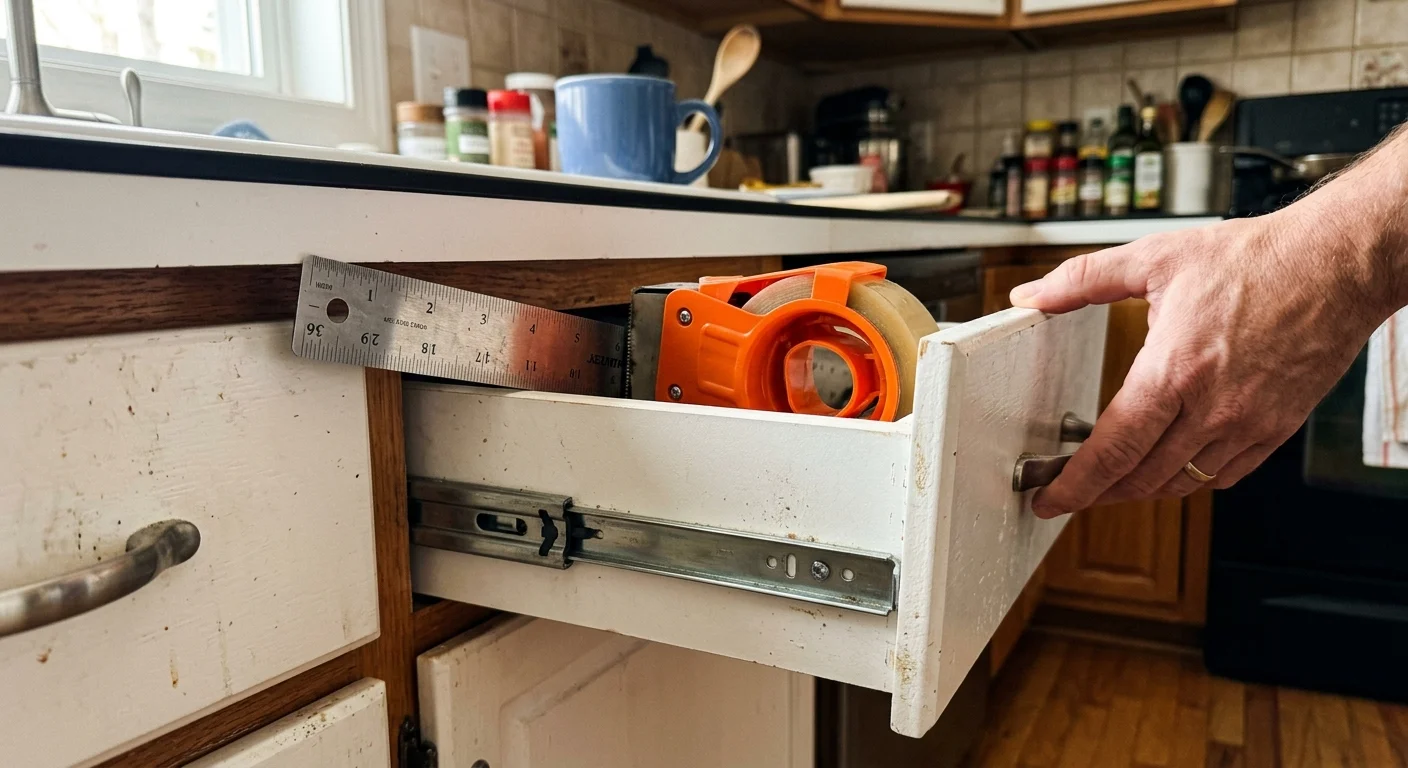
The most immediate physical warning occurs when the drawer resists your effort to open or shut it. When items pile higher than the sidewalls, rulers, oversized scissors, or bulky tape dispensers catch against the upper cabinet rail. Forcing the drawer shut under pressure creates mechanical stress that ruins your cabinetry over time.
Repeated jamming damages drawer slides, bends ball-bearing runners, and loosens mounting screws within the cabinet face. If you must jiggle the handle, push down on the contents with a flat hand, or yank the box to access its interior, you have exceeded the physical capacity of the space. A functional utility drawer should glide open smoothly with a gentle pull and close flush against the frame without resistance.
02 Loose Batteries and Hazardous Items Mingle Unprotected
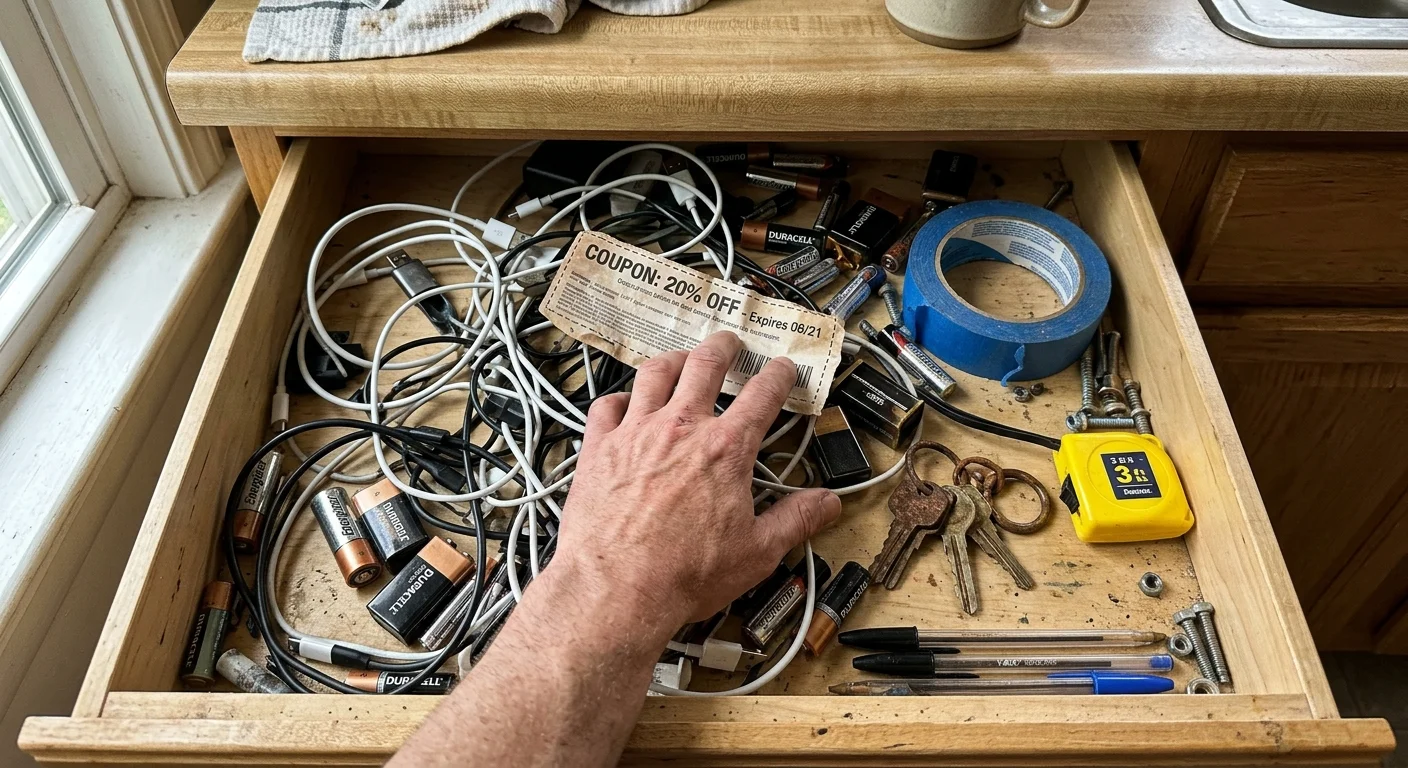
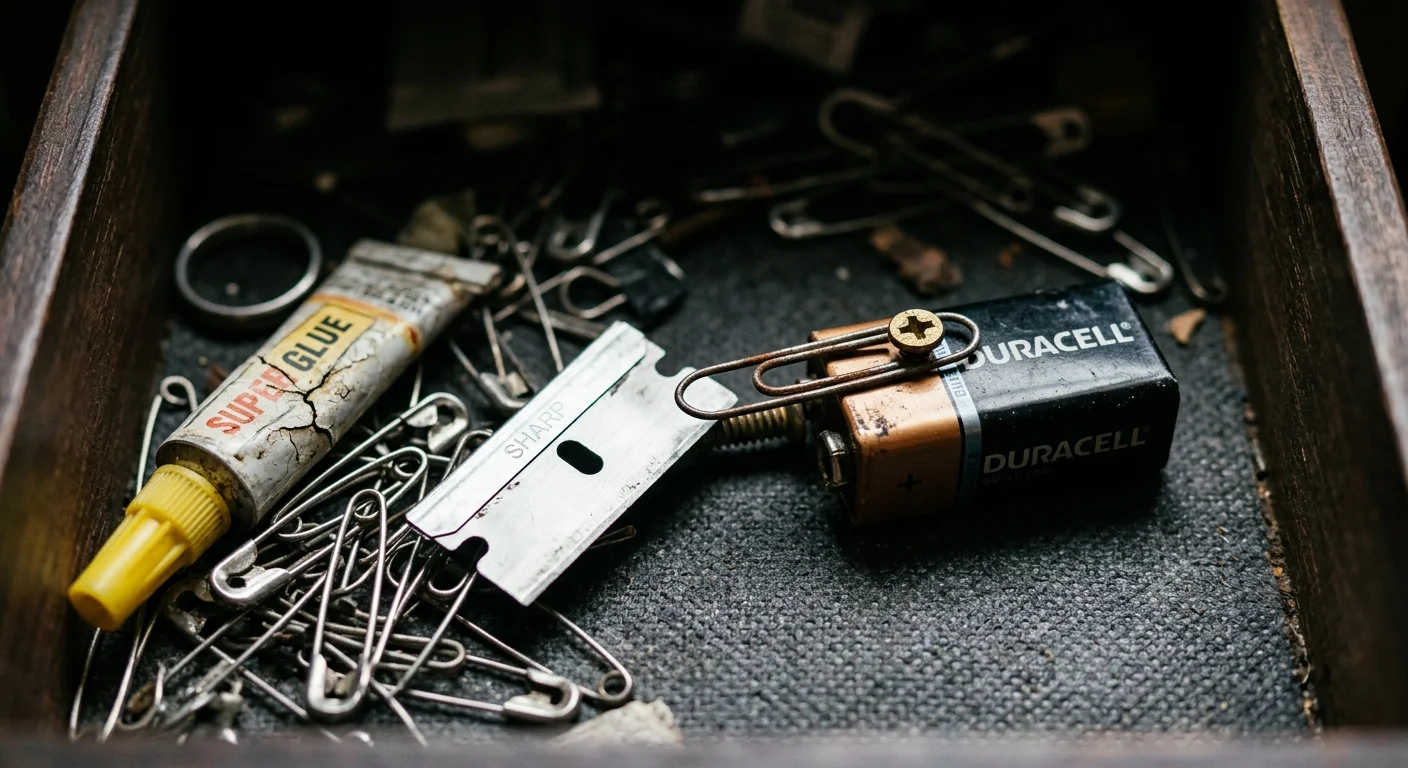
A major indicator of when your junk drawer is out of control is the presence of uncontained safety risks. Tossing loose batteries into a drawer alongside paper clips, coins, and loose screws creates an immediate fire hazard. When conductive metal objects touch both terminals of a standard nine-volt or lithium battery, they can short-circuit, generate intense heat, and ignite surrounding paper debris.
Review the fire safety warnings provided by the National Fire Protection Association regarding proper battery storage and terminal protection. Taping the terminals of nine-volt batteries or keeping them in their original packaging prevents accidental short circuits.
Beyond electrical hazards, unorganized drawers frequently hide other dangerous items:
- Unsheathed utility razor blades, loose sewing needles, or open safety pins that can puncture fingers while you rummage.
- Expired over-the-counter medications, pain relievers, or throat lozenges that degrade over time; consult the U.S. Food and Drug Administration guidelines on medication disposal to clear them safely.
- Cracked button-cell batteries, which pose severe chemical ingestion hazards to visiting grandchildren or pets if dropped.
- Dried tubes of super glue that have leaked onto drawer liners or bonded miscellaneous items together.
Proper battery management also protects your municipal waste stream; review safe household recycling protocols via the Environmental Protection Agency before discarding rechargeable cells.
03 You Repeatedly Buy Items You Already Own
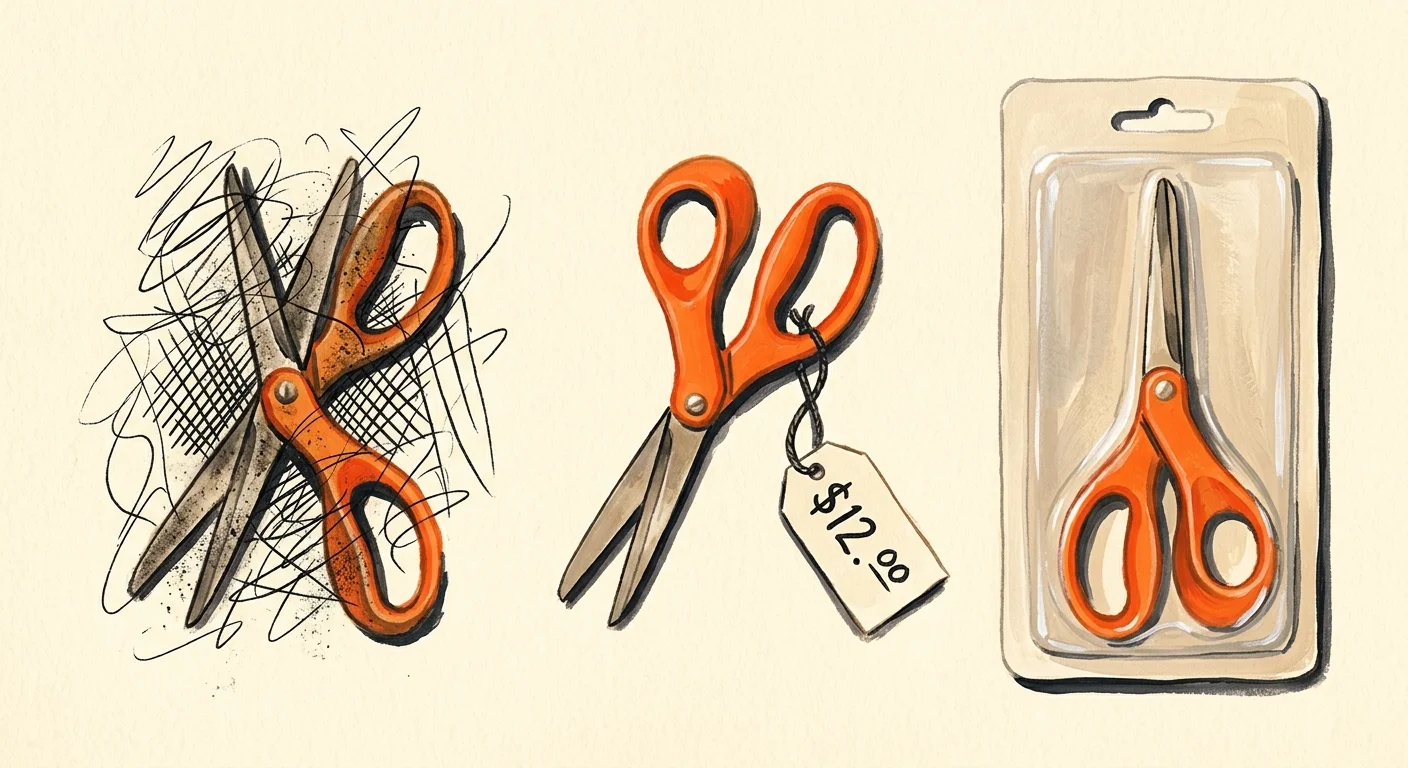
Financial waste is a subtle but quantifiable sign that your catchall has failed. If you head to the store to buy a new roll of painter’s tape, a pair of scissors, a box of birthday candles, or a tube of super glue because you cannot locate the one in your house, your drawer costs you real money. Disorganization forces you to pay a clutter tax in the form of redundant purchases.
When items lack designated slots, they sink to the bottom of the pile. You assume you have run out, make an unplanned trip to the hardware store, and purchase a duplicate. Months later, during a rare cleanout, you discover three identical half-used rolls of electrical tape and four dried-out adhesive bottles buried beneath old receipts. A properly organized storage drawer saves household funds by providing instant inventory visibility.
04 The Clutter Spreads into Secondary “Junk Drawers”
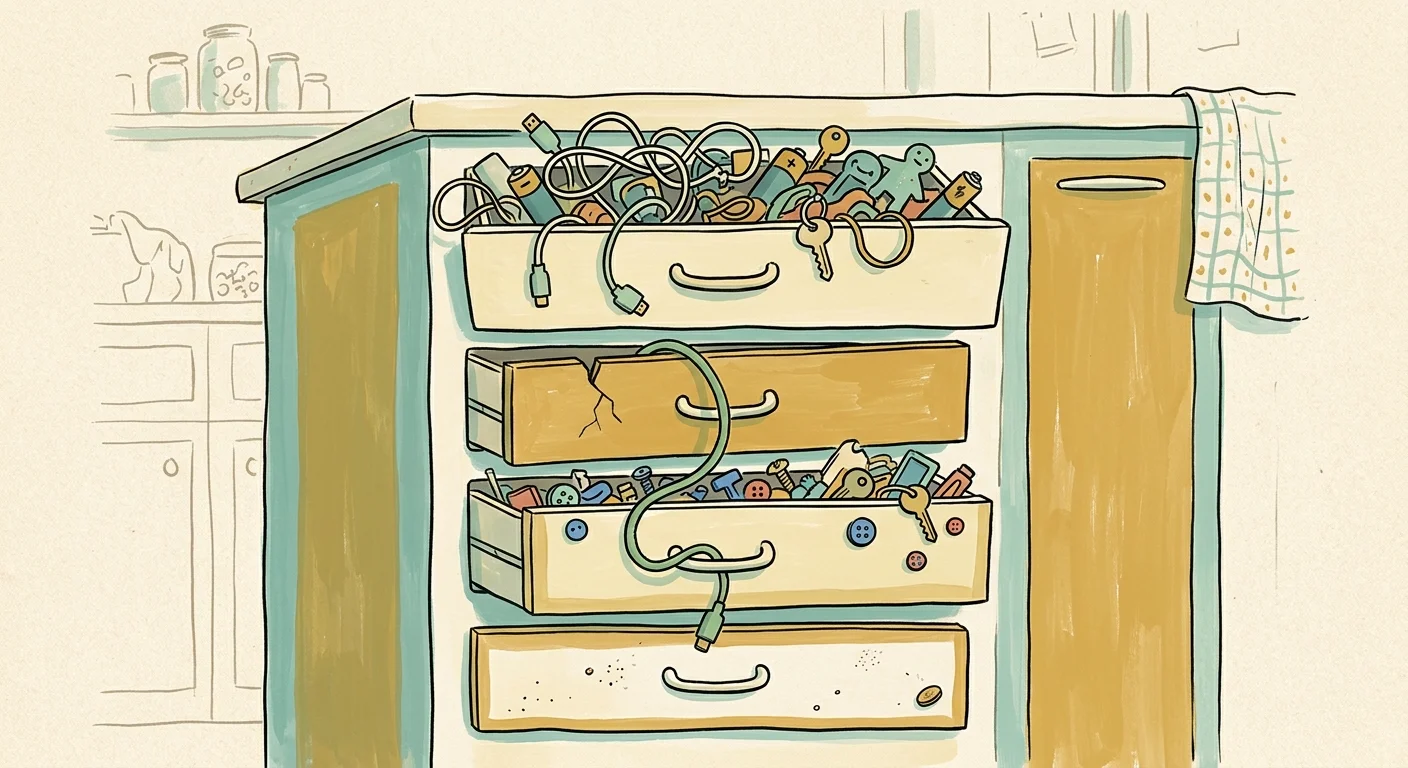
A single, well-regulated utility drawer in a central location—such as the kitchen island or hallway console—serves a practical purpose. However, when your primary catchall overflows, the overflow inevitably colonizes adjacent spaces. This phenomenon, known as junk drawer creep, rapidly degrades whole-house organization.
Take an honest inventory of your home. Do you have a miscellaneous drawer in the kitchen, another in the entryway table, a third in the home office desk, and a fourth in the nightstand? Spreading unclassified objects across multiple rooms destroys household efficiency. You end up checking four separate spots across three rooms just to find a single Allen wrench or postage stamp. Containing your miscellaneous tools to one designated, divided location stops clutter from metastasizing throughout your living areas.
05 Mystery Cords, Keys, and Orphaned Hardware Dominate the Space
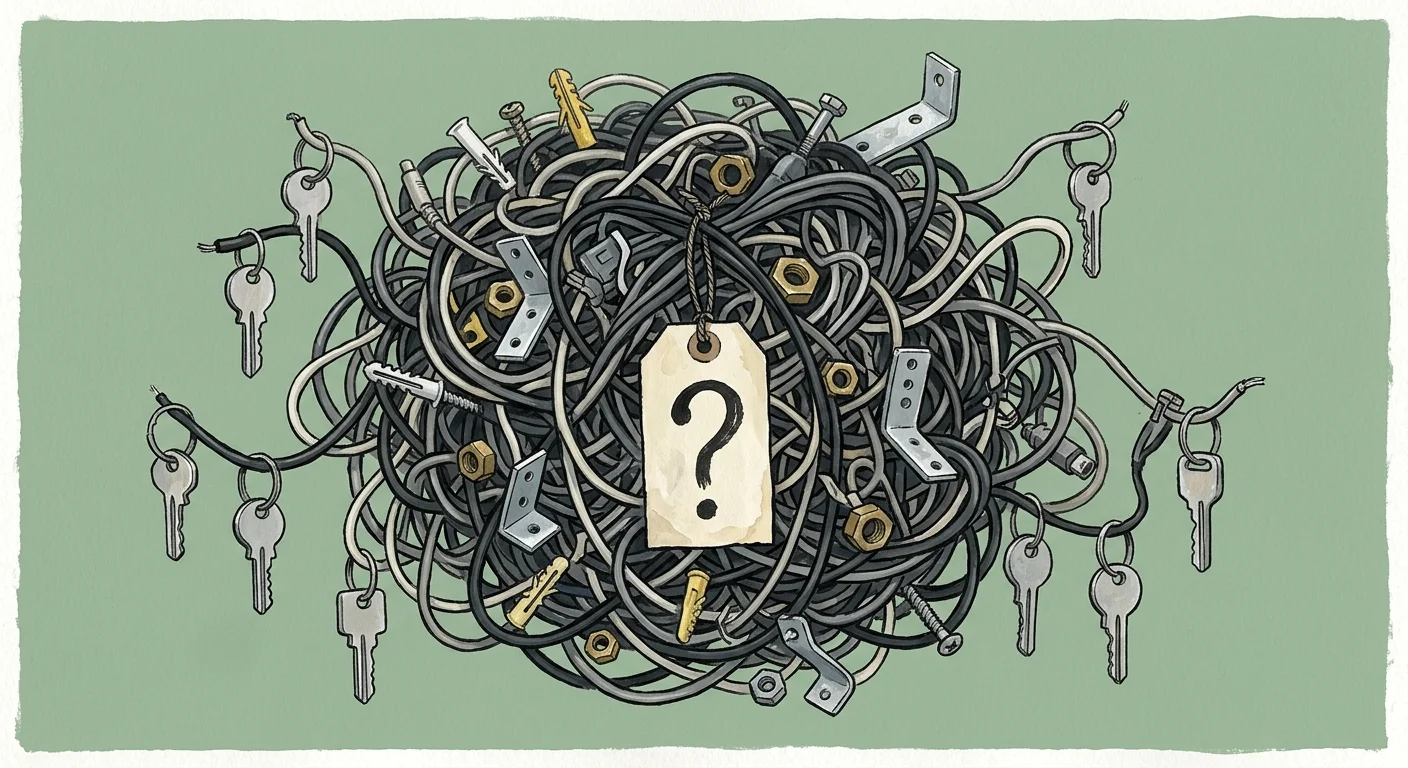
One of the clearest signs it’s time to clean out the junk drawer is the presence of objects you cannot positively identify. Pick through your current collection and examine the hardware. If you encounter proprietary charging cables for devices you no longer own, unlabelled keys to locks long since discarded, or mystery brackets from long-forgotten self-assembly furniture, you are storing trash rather than utility tools.
Orphaned items create visual noise that obscures genuine essentials. Ask yourself these diagnostic questions for every miscellaneous object:
- Do I know exactly what piece of equipment this charging cord powers?
- Can I name the specific door, padlock, or cabinet that this loose key unlocks?
- Have I used this spare plastic part, rubber grommet, or specialty bolt in the past two years?
- Does this remote control correspond to an active television or audio system in the house?
If you cannot answer with certainty, the item does not belong in prime storage real estate. Label mystery items with painter’s tape, place them in a small bag with a six-month expiration date, and store them in the garage or utility closet. If you do not need them by that date, safely recycle or discard them.
06 Finding a Two-Second Item Takes Longer Than Thirty Seconds
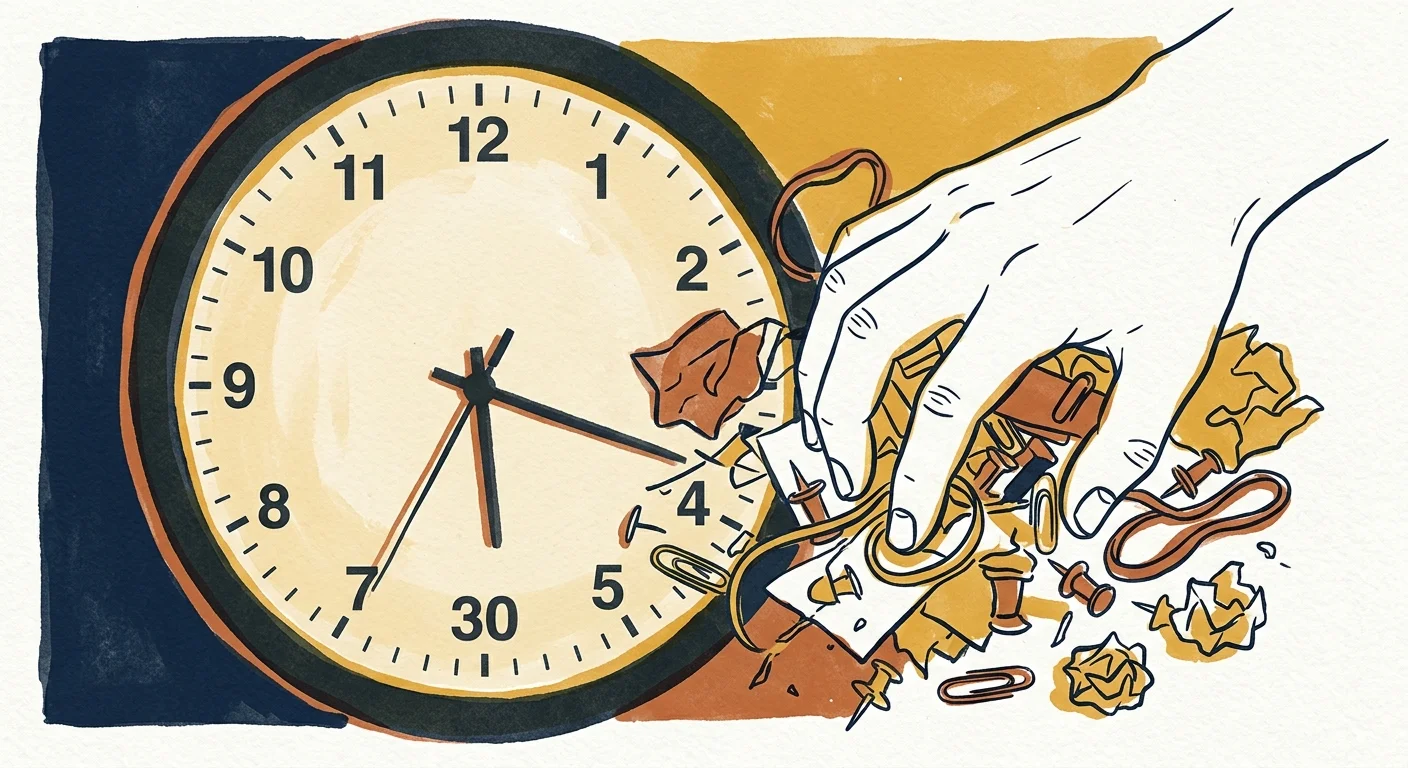
The core objective of a household utility drawer is convenience. When you need a screwdriver to tighten a loose cabinet pull or a marker to address a package, you should be able to reach into the drawer, grasp the tool, and close it in five seconds or less. If finding a functional pen requires digging, rattling, or shifting layers of loose paper, the system has broken down.
Rummaging wastes cognitive energy and creates friction during time-sensitive tasks. When you are rushing out the door and need a pair of sunglasses, a lint roller, or a pocket flashlight, spending three minutes digging through plastic twist ties and restaurant takeout menus introduces avoidable stress into your day. High-frequency utility items must remain instantly accessible on the top layer of your organization system.

07 Opening the Drawer Triggers Emotional Avoidance
Visual clutter exerts a measurable psychological weight. When a drawer is crammed with tangled chargers, loose crumbs, dried rubber bands, and unfiled receipts, opening it triggers a micro-burst of annoyance and stress. You might find yourself avoiding the drawer altogether, leaving everyday items scattered across kitchen countertops or dining tables rather than dealing with the mess inside.
If you feel a sense of dread or irritation whenever you reach for the drawer pull, your brain recognizes that the space is disorderly and dysfunctional. Organizing a chaotic junk drawer eliminates this low-level daily friction, replacing frustration with ease and operational calm.
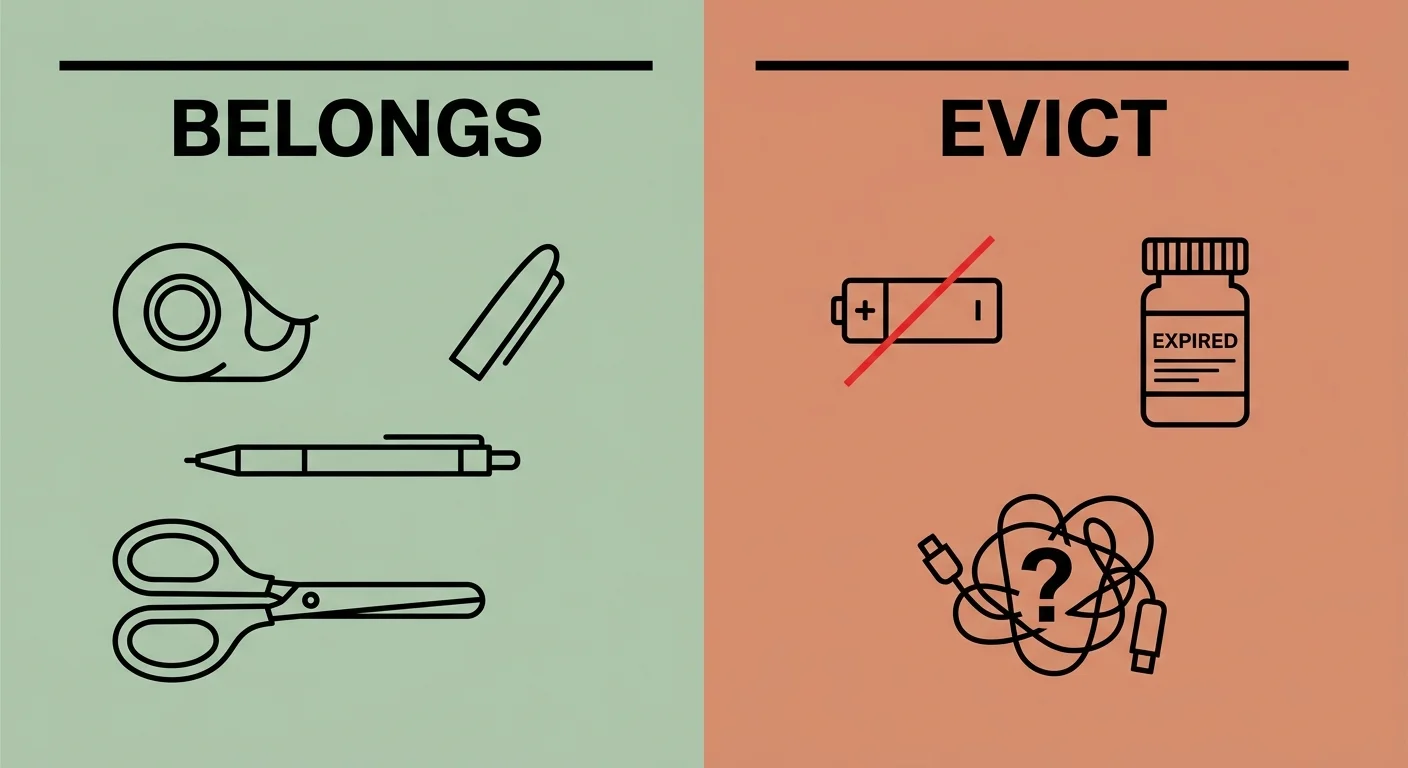
The Utility Audit: What Belongs vs. What to Evict
To establish lasting order, you must distinguish between true utility items and accumulated debris. Use the reference table below to audit the contents of your drawer quickly and decisively.
| Category | Items That Belong (Keep & Divide) | Items to Relocate | Items to Discard or Recycle |
|---|---|---|---|
| Tools & Fasteners | One multi-bit screwdriver, small tape measure, picture-hanging wire. | Heavy hammers, full socket sets, power tools (Move to garage/toolbox). | Stripped screws, rusted nails, broken plastic wall anchors. |
| Adhesives & Fasteners | One roll of clear tape, small roll of blue painter’s tape, fresh rubber bands. | Bulky duct tape stacks, wood glue, hot glue guns (Move to craft bin/shop). | Brittle or dried-out rubber bands, cured super glue tubes, empty tape dispensers. |
| Office Supplies | Two tested black/blue pens, one permanent marker, small pad of paper. | Reams of printer paper, surplus pen boxes, heavy staplers (Move to desk). | Dried-out markers, broken pencils, non-sticky adhesive notes. |
| Electronics | One active multi-head charging cable, small working flashlight. | Backup laptop chargers, external hard drives (Move to tech bin). | Frayed cords, obsolete 30-pin connectors, dead non-rechargeable batteries. |
| Paper & Miscellaneous | Current book of postage stamps, one pair of utility scissors. | Tax documents, paid bills, owner’s manuals (Move to filing cabinet). | Expired coupon circulars, takeout menus easily found online, old receipts. |
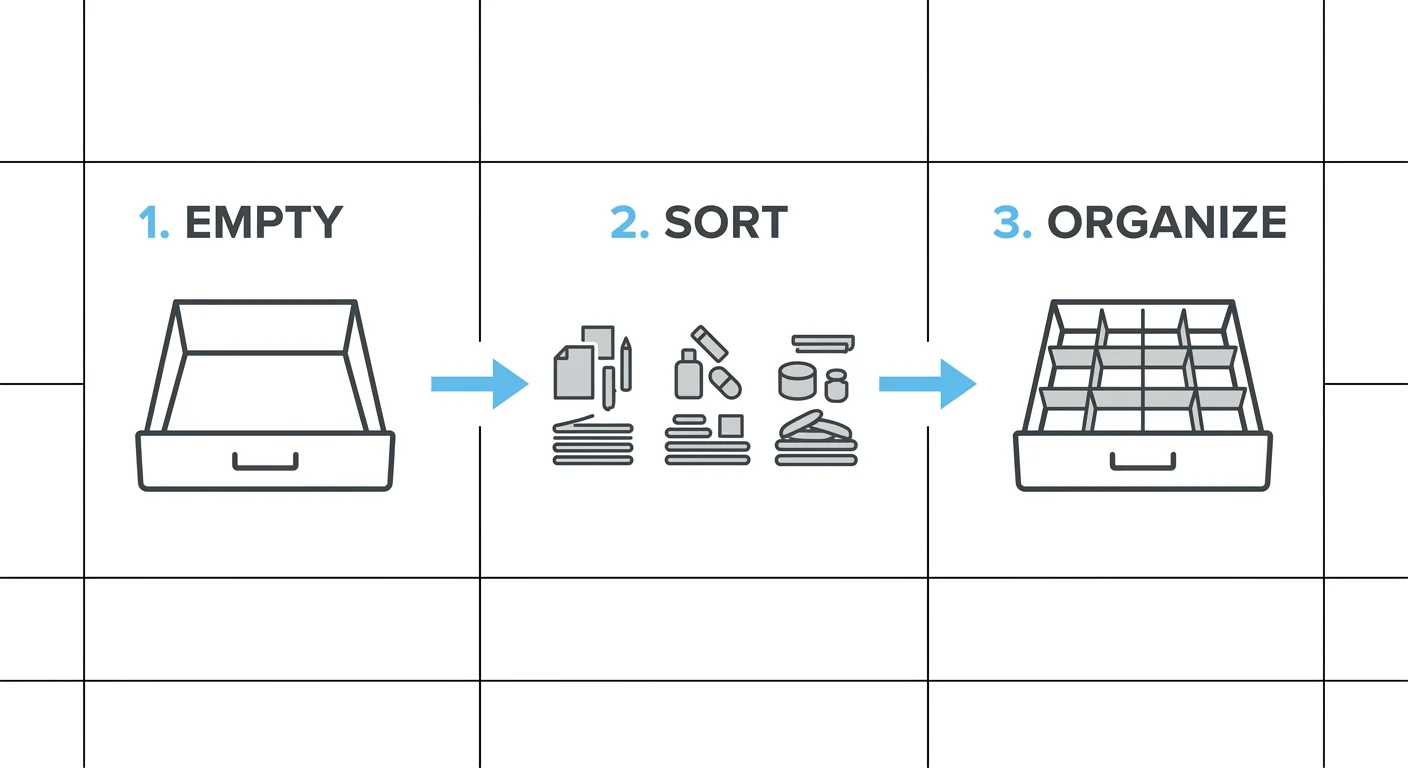
A Step-by-Step Blueprint for Organizing a Chaotic Junk Drawer
Transforming your junk drawer into a streamlined utility station requires a systematic approach. Follow these actionable junk drawer decluttering tips to achieve a clutter-free result in under half an hour.
Step 1: Empty the Drawer Completely
Do not attempt to organize by shifting items around inside the drawer. Clear a clean section of your kitchen table or counter, pull the drawer box completely off its runners if possible, and dump the entire contents onto the work surface. A total zero-base cleanout provides an accurate visual assessment of everything you have accumulated.
Step 2: Clean and Line the Interior
Drawers accumulate dust, crumb buildup, and ink marks over months of use. Vacuum the empty drawer interior with a brush attachment, then wipe the corners and bottom thoroughly with a damp microfiber cloth and a mild grease-cutting cleaner. Allow the wood or composite to dry completely. Insert a non-slip, washable drawer liner; this prevents organizers and small tools from sliding toward the back every time you open the drawer.
Step 3: Test and Purge Ruthlessly
Work through the pile on your table with absolute scrutiny. Grab a scrap piece of paper and test every single pen, pencil, and marker; immediately throw away anything that skips or fails to write smoothly. Test flashlights to ensure the bulbs work and the internal batteries have not leaked acid onto the springs. Consolidate loose paper clips into a single small holder, and recycle every expired coupon, faded receipt, and duplicate restaurant menu.
Step 4: Categorize into Functional Zones
Group remaining items by their actual real-world use. Create distinct piles for measuring and cutting (scissors, tape measure), fastening and adhesives (tape, rubber bands, safety pins), quick writing (pens, notepad, stamps), and electronics (flashlight, active charging cord). Grouping by utility ensures you always know which compartment to target during daily tasks.
Step 5: Install Modular Dividers
Never return loose items to an open, undivided drawer. Unsubdivided drawers inevitably devolve back into clutter within weeks. Use shallow, interlocking plastic bins, adjustable bamboo dividers, or silicone organizing trays to build individual compartments tailored to your items. Ensure every category has an exact, fitted home with clear boundaries.
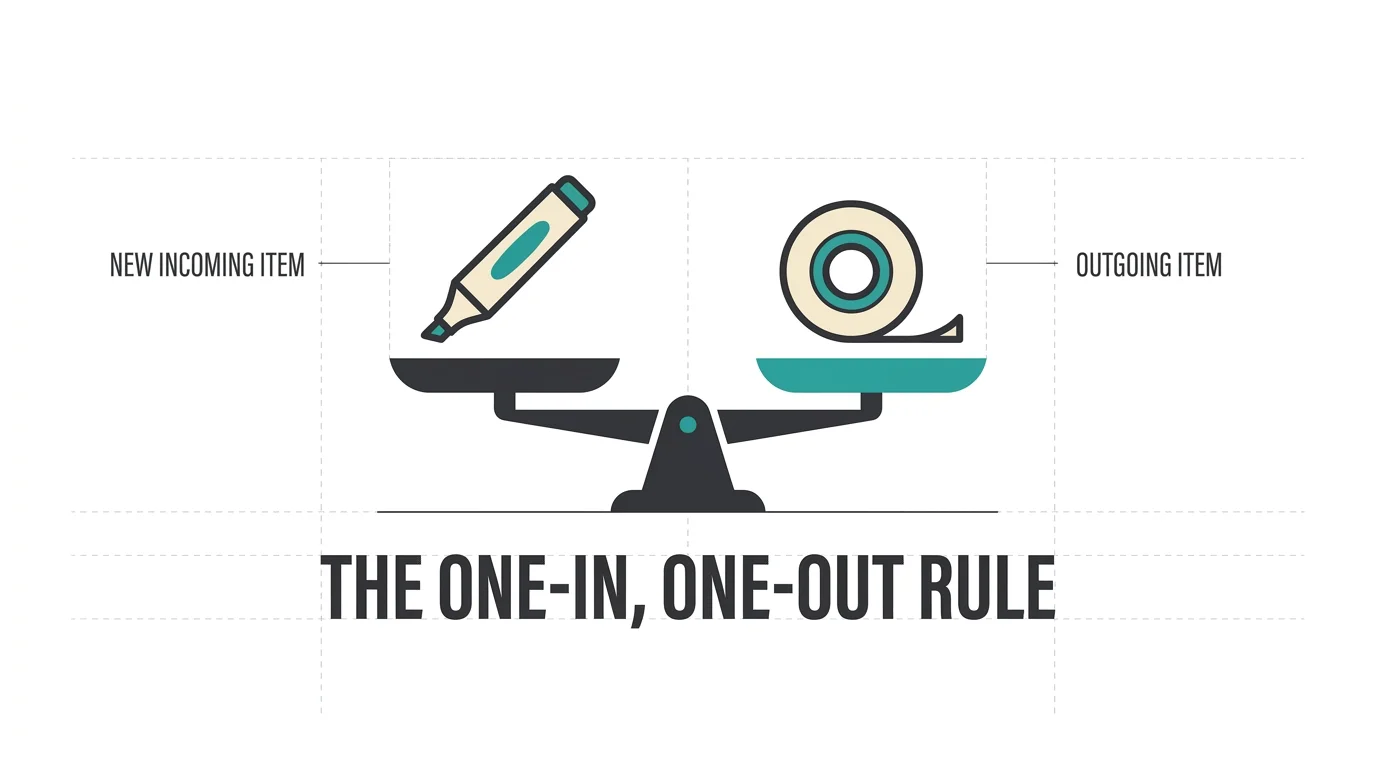
Practical Rules to Keep the Drawer Organized Long-Term
Maintaining a tidy drawer requires minimal effort once you establish strict boundary rules. Implement these habits to prevent clutter from returning:
- The One-In, One-Out Policy: If you add a new pair of heavy-duty scissors or a fresh pad of sticky notes, remove the worn-out predecessor immediately. Never allow duplicate utility tools to share the same compartment.
- The Five-Second Visibility Rule: Every object in the drawer must remain visible without lifting another object out of the way. If you must stack bins or layer items vertically, the drawer is overfilled.
- The Biannual Battery & Pen Check: Twice a year—aligned with daylight saving time changes—take two minutes to scribble-test the pens, check battery expiration dates, and discard any unidentifiable parts that drifted into the organizer trays.
Your Immediate Next Step
Open your primary utility drawer right now and remove three dead pens, two expired coupons or old receipts, and any loose uncontained batteries. Place those batteries in a secure plastic container for proper drop-off, toss the trash, and measure your drawer dimensions so you can pick up the right modular organizers this week.