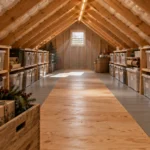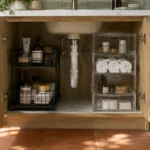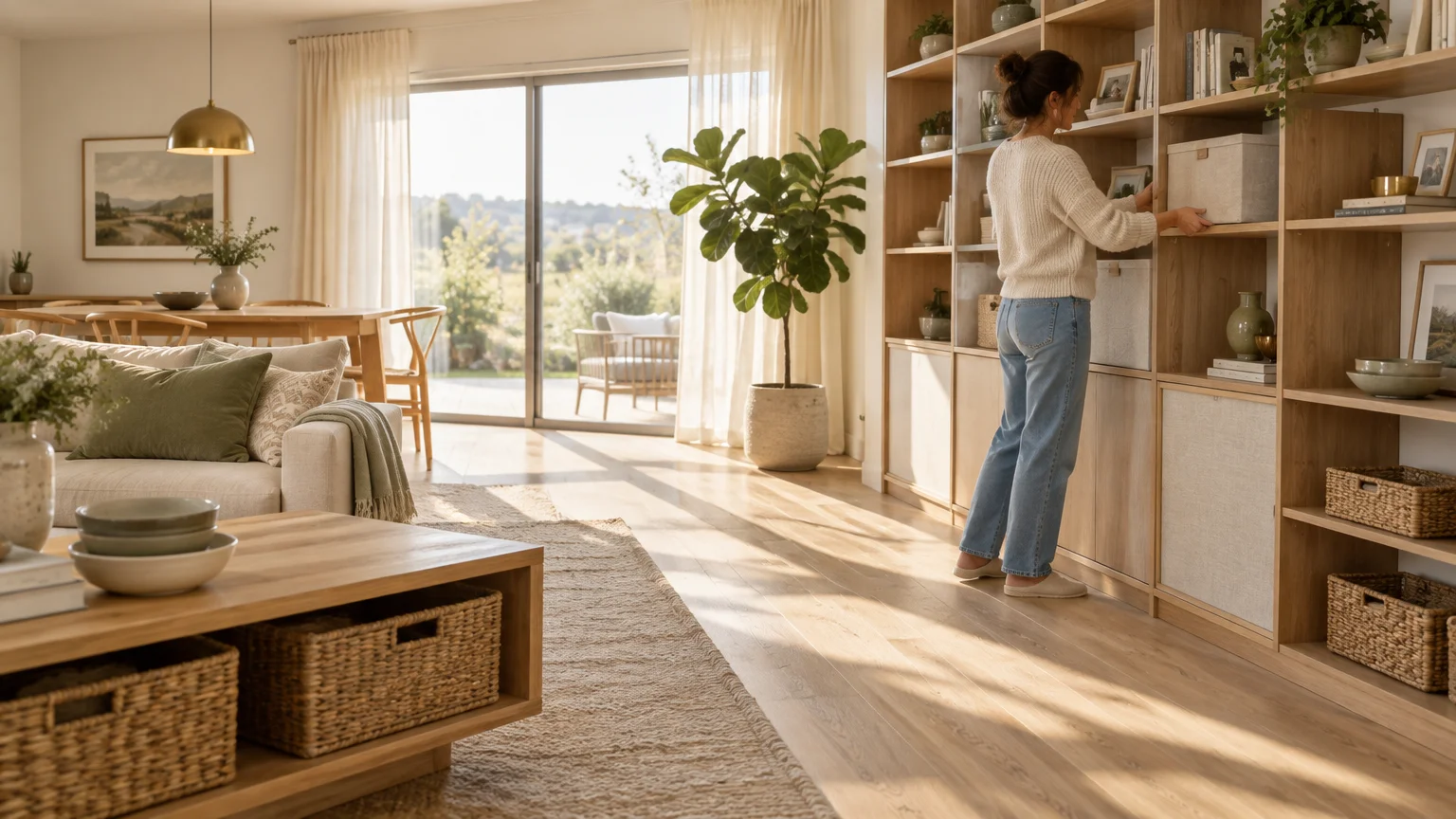
Living in a slab-foundation home or apartment does not mean you must sacrifice order and comfort. With the right basement alternative storage strategies, you can easily reclaim valuable square footage without cluttering your living areas.
When you lack an underground catchall, intentional systems protect your seasonal gear and keep everyday essentials within reach. You will eliminate visual noise and build a simpler, safer routine.
These five practical storage ideas no basement required will help you organize every room efficiently; your home will feel lighter immediately.
01 Capture Vertical Real Estate with Wall-Mounted Track Systems
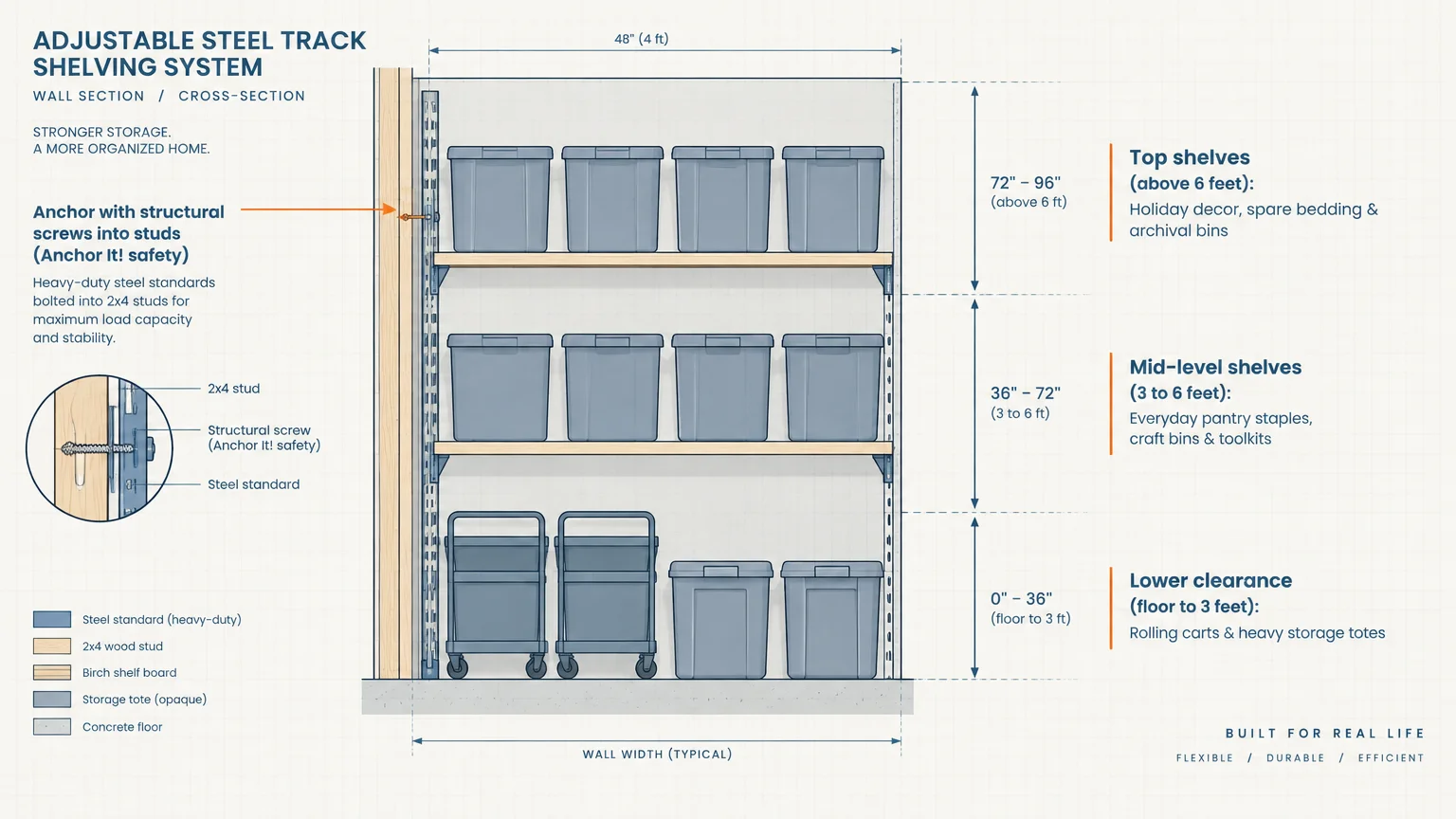
Most homes waste the top third of every wall. When you install adjustable steel track systems, you convert open drywall into dense, versatile shelving.
Unlike standalone bookcases, wall-mounted standards bolt directly into structural wall studs. This design prevents tipping hazards and frees up valuable floor space beneath the bottom shelf.
Anchor your heavy-duty standards with structural screws rather than drywall anchors. The U.S. Consumer Product Safety Commission highlights the critical importance of wall anchoring through their Anchor It! safety campaign to prevent tip-over accidents.
Group your items by weight and access frequency to maximize both safety and convenience. Keep frequently used items at eye level, reserving higher shelves for rarely used bins.
- Top shelves (above 6 feet): Pack holiday decor, spare bedding, and archival paperwork into clearly labeled, matching opaque bins.
- Mid-level shelves (3 to 6 feet): Store everyday pantry staples, craft bins, toolkits, and frequently referenced books.
- Lower clearance (floor to 3 feet): Keep rolling carts, laundry sorting hampers, or heavy storage totes that slide out easily.
Choose translucent or color-coded totes with locking lids. Standardizing your container sizes ensures that your shelves remain uniform, easy to adjust, and simple to wipe down.
02 Unlock Hidden Depth in Architectural Dead Zones
Older homes and compact single-story layouts often conceal untapped pockets of space. Finding effective small home storage solutions requires you to look beyond standard closets.
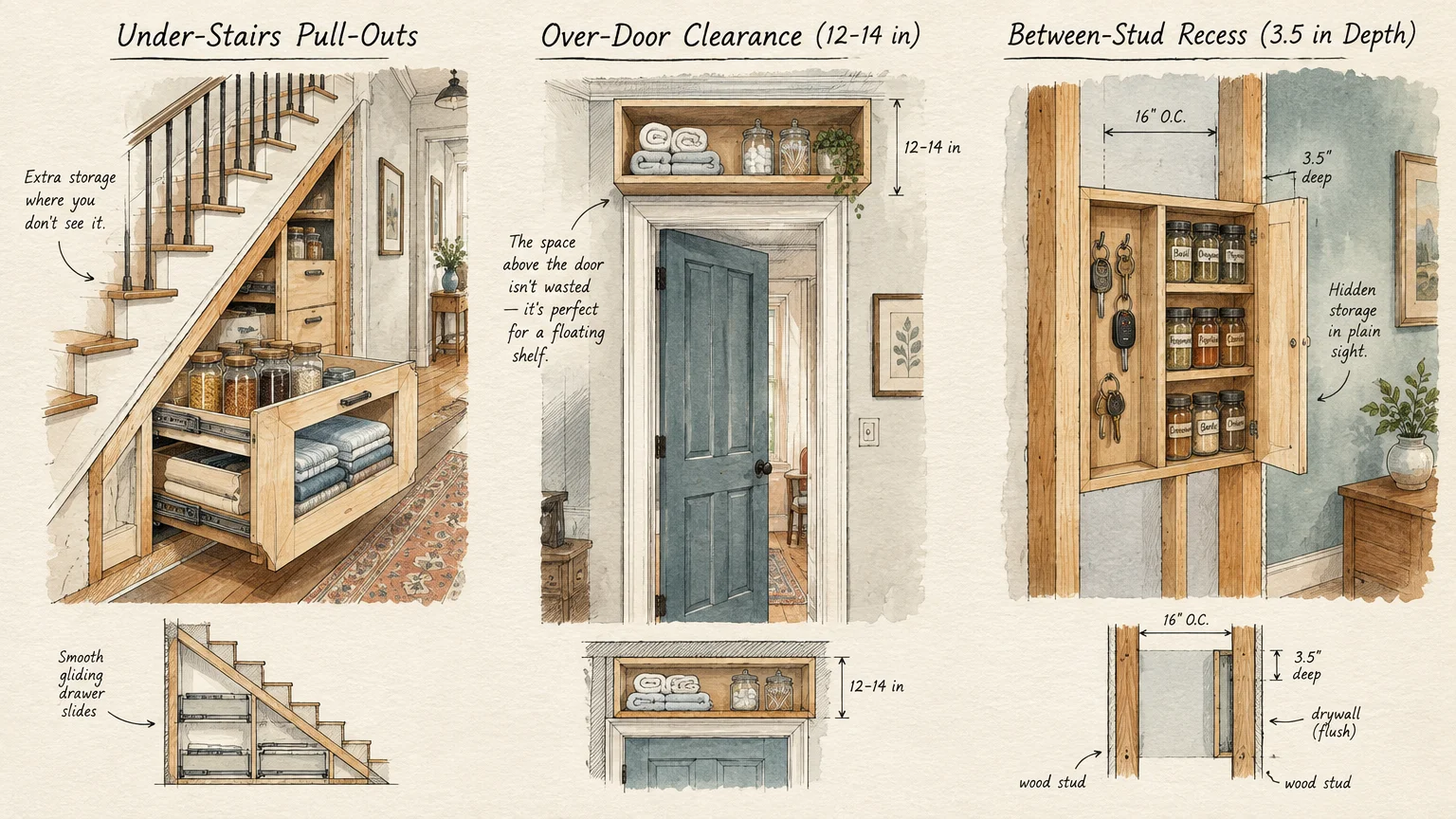
The empty space under a staircase offers massive potential. Instead of leaving it as an awkward hollow cavity, transform it into a pull-out pantry, linen locker, or coat closet.
Contractors can install deep gliding drawer slides that pull straight out into the hallway. This configuration prevents items from getting lost in dark, hard-to-reach corners.
Look above your interior doorways as well. The 12 to 14 inches of clearance between the door trim and the ceiling easily accommodates a floating box shelf.
- Bathroom doorways: Install a painted wooden ledge to hold extra toilet tissue, rolled guest towels, and apothecary jars.
- Laundry alcoves: Mount a wire basket shelf above the washer and dryer for detergent jugs, stain treatments, and garment bags.
- Bedroom entries: Build a high perimeter picture rail to house out-of-season hats, storage boxes, or luggage.
You can also access the hollow space between standard interior wall studs. Studs are typically spaced 16 inches apart on center, offering roughly 3.5 inches of usable cavity depth.
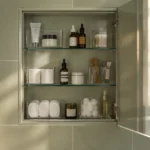
Cut into non-load-bearing drywall to recess a shallow medicine cabinet, spice rack, or key station. You gain functional storage without encroaching on your walking pathways.
03 Deploy High-Capacity Multi-Functional Furniture
When you cannot build outward or downward, make your existing furnishings work twice as hard. Dual-purpose furniture forms the cornerstone of effective storage solutions small house residents rely on.
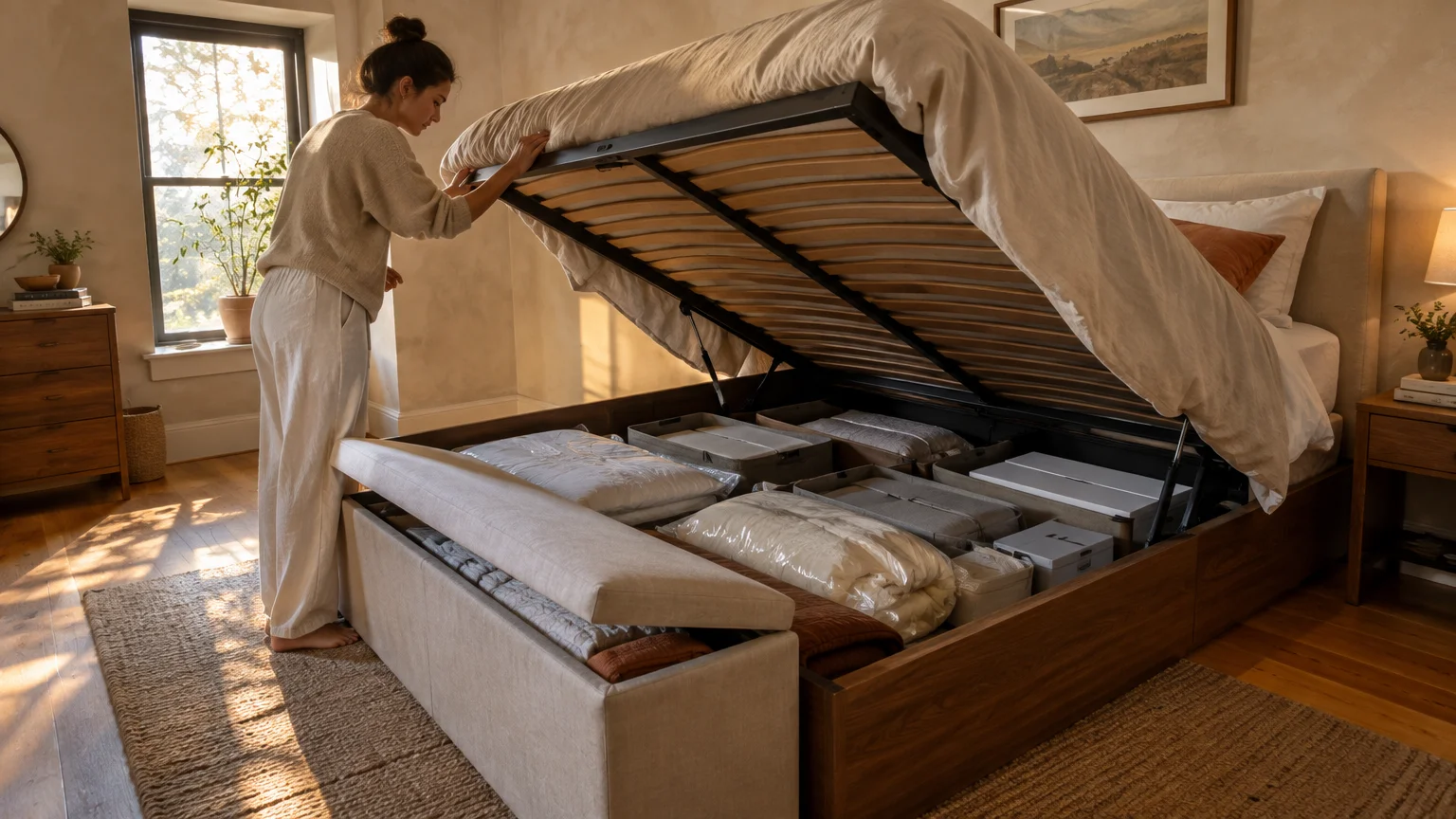
Standard bed frames occupy roughly 35 square feet of floor space while doing nothing more than supporting a mattress. Replace standard frames with gas-lift hydraulic storage beds.
A hydraulic lift frame lets you raise the entire mattress effortlessly with one hand. The vast compartment underneath protects seasonal coats, bulky comforters, and travel suitcases from dust.
For seating areas, choose large storage ottomans over traditional glass or wooden coffee tables. A hinged bench stores spare throw blankets, board games, and fitness equipment while serving as a footrest.
In dining rooms, replace freestanding chairs with an L-shaped corner banquette. The bench seats lift to reveal deep storage wells perfect for small kitchen appliances and holiday serving platters.
Prioritize pieces with smooth slide-out drawers rather than floor-level lids if bending down poses a physical challenge. The National Institute on Aging provides fall-proofing guidance emphasizing that clear walkways and accessible storage drastically reduce tripping hazards.
- Entryway storage benches: Provide a seated staging area to put on shoes while hiding winter boots inside.
- Drop-leaf wall desks: Fold down into a slim 6-inch profile when not in use, housing charging docks and bill sorters inside.
- Modular storage credenzas: House home office files and audio equipment behind solid cabinet doors to minimize visual clutter.
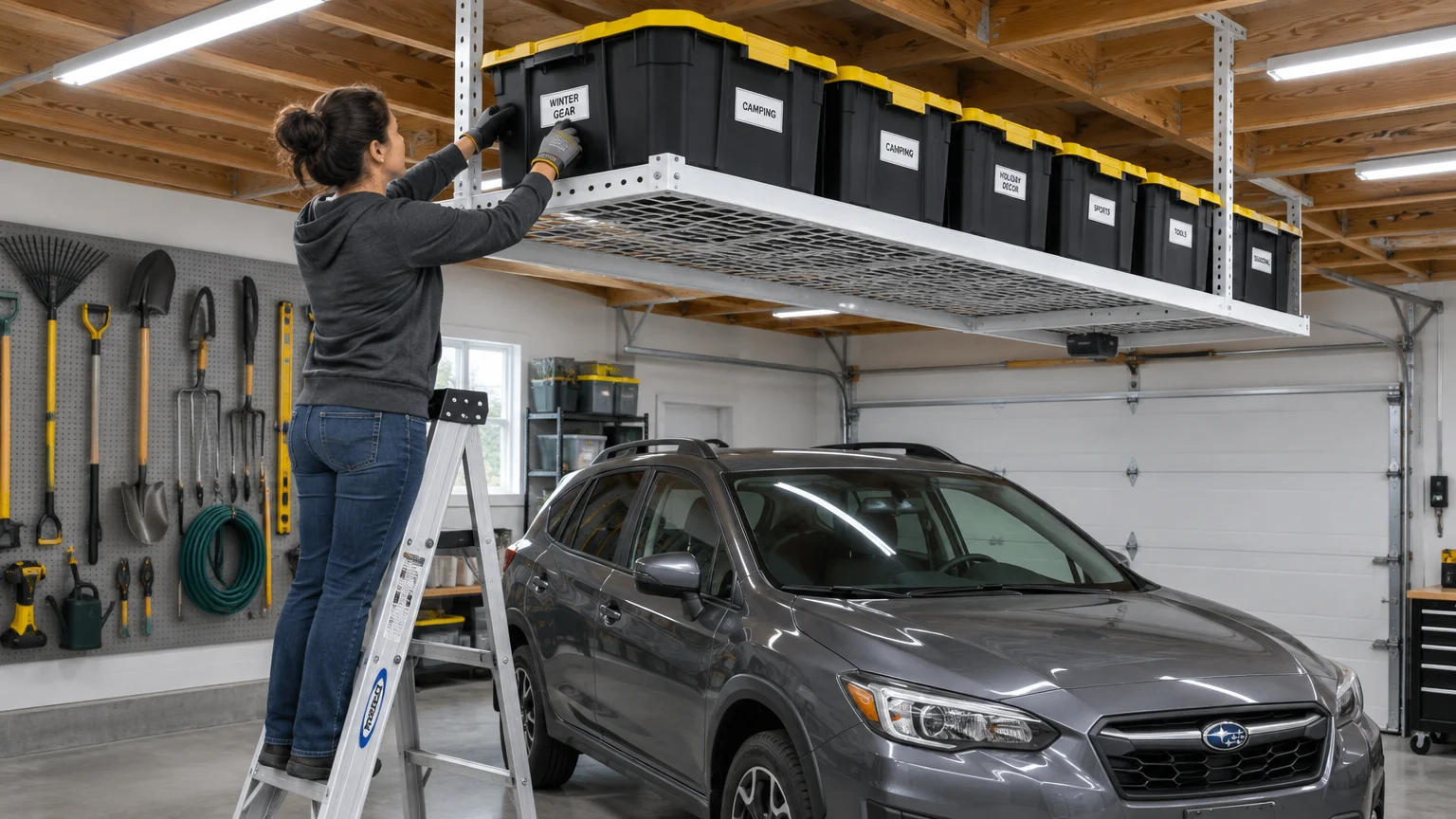
04 Leverage Overhead Garage Storage Safely
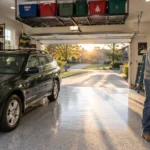
For homes built on slabs, the attached garage serves as the primary basement alternative storage hub. However, parking vehicles often leaves little floor space for tools and storage bins.
Ceiling-mounted overhead steel racks solve this dilemma by capitalizing on unused overhead clearance. These heavy-gauge steel platforms suspend securely from structural ceiling joists.
A standard 4×8-foot overhead ceiling rack can safely support between 300 and 600 pounds when properly installed. Store seasonal camp gear, coolers, and holiday lighting displays up and out of the way.
Always verify the direction and structural integrity of your ceiling joists with a stud sensor before drilling. Use heavy-duty lag bolts that penetrate at least two inches into solid wood joists.
Never mount overhead storage directly above active furnace units, water heaters, or mechanical access doors. The U.S. Fire Administration warns against storage hazards that block egress paths or place combustible materials near heating appliances.
- Locate and mark the center of your ceiling joists using a reliable beam finder.
- Drill pilot holes into the joists to prevent the structural lumber from splitting.
- Fasten the vertical down-brackets securely using heavy-gauge, corrosion-resistant lag screws.
- Assemble the horizontal perimeter frame and drop in the wire decking panels.
- Check the rack with a bubble level and tighten all locking bolts firmly.
- Distribute your storage totes evenly across the surface to prevent uneven structural stress.
Keep a sturdy, non-slip step stool nearby so you can retrieve your items safely. For heavy bins, select a motorized pulley platform that lowers down to chest height at the push of a button.
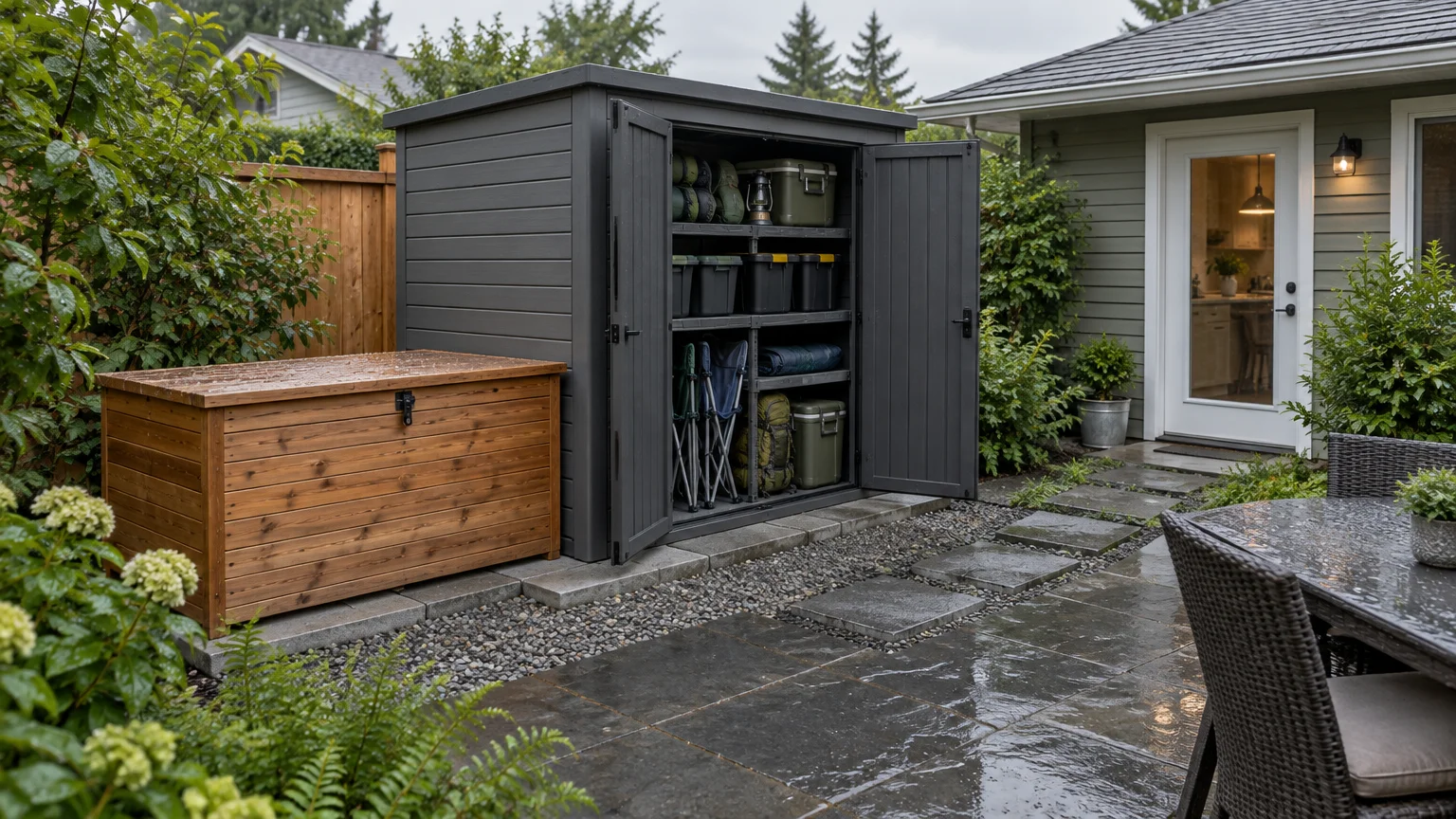
05 Establish a Weatherproof Outdoor Storage Depot
When interior storage maxes out, shift non-climate-sensitive belongings outside. High-density resin storage sheds and deck boxes create a dry, resilient environment for gear that would otherwise overcrowd your home.
Modern resin sheds resist rotting, rust, and insect infestations far better than untreated wood or thin metal alternatives. They require zero painting and assemble quickly on level ground.
Set your shed or outdoor storage chests on a level gravel pad or concrete pavers. Elevating the structure prevents water pooling beneath the base and discourages burrowing pests.
Moisture and temperature swings represent the greatest threat to outdoor storage. Follow the EPA guide on moisture control and mold prevention to protect your property from dampness and humidity buildup.
- Airtight gasket totes: Protect fabric, sleeping bags, and papers inside heavy-duty bins equipped with weather-tight silicone perimeter seals.
- Silica gel packs: Drop rechargeable desiccant packs into every storage box to absorb trapped ambient moisture.
- Raised interior shelving: Keep items off the shed floor using free-standing resin shelving units to guard against accidental water intrusion.
- Cedar blocks: Place natural cedar blocks inside corners to deter moths, spiders, and silverfish naturally.
Store patio cushions, garden implements, power tools, and sports gear in this outdoor footprint. Shifting these bulky items outdoors frees up your interior closets for everyday personal belongings.
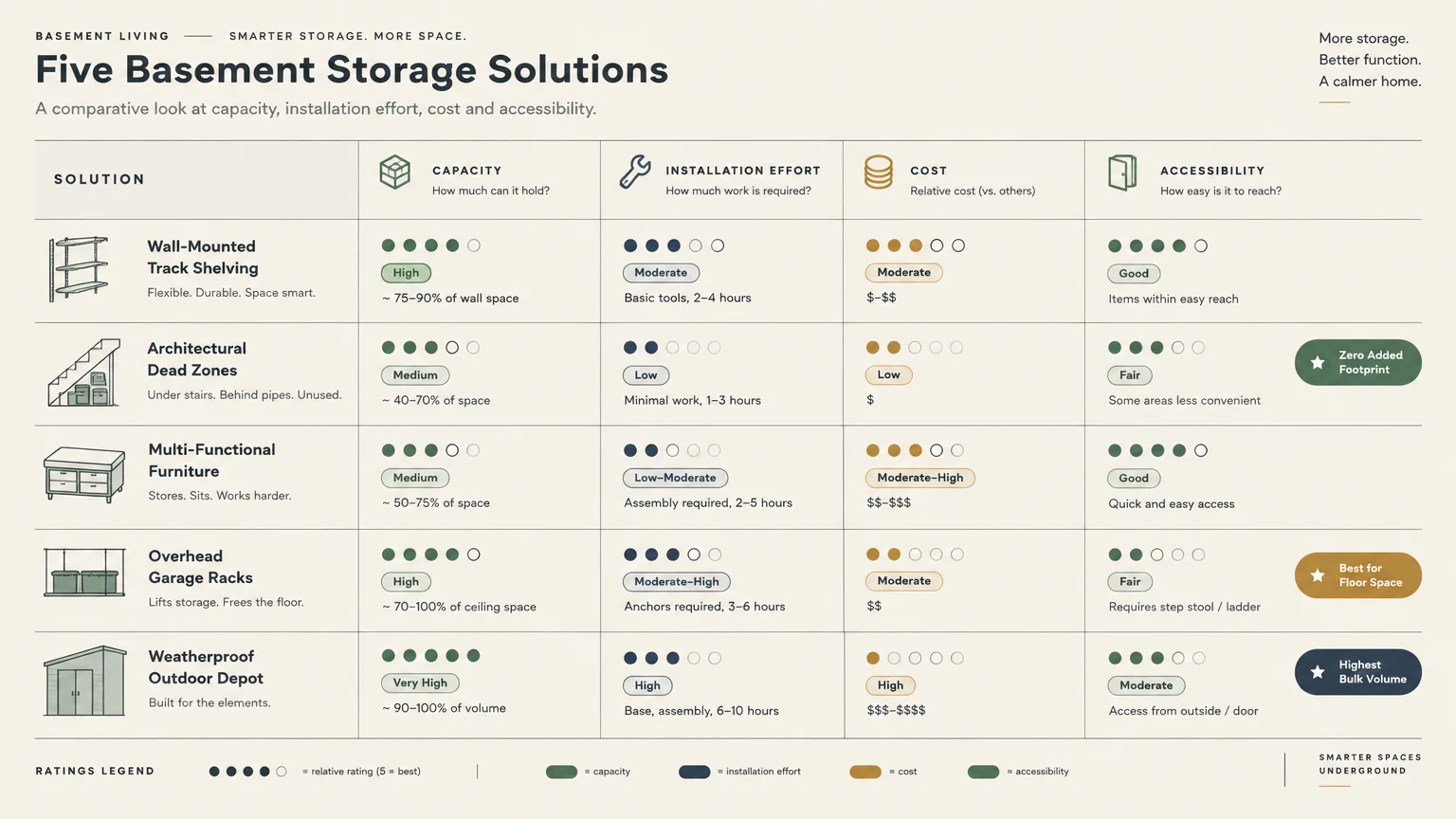
Evaluating Your Options: Basement Alternative Storage Comparison
Every home presents unique structural limits, budgets, and physical demands. Use this comparison table to select the most effective home organization tips for your current space.
| Storage System | Relative Cost | Primary Advantage | Ideal Belongings |
|---|---|---|---|
| Wall Track Shelving | Moderate ($150 – $400) | Customizable layout; zero floor footprint | Pantry overflow, craft bins, tools, file boxes |
| Architectural Dead Zones | Low to High ($50 – $1,200) | Captures wasted structural space | Linens, toiletries, spices, cleaning gear |
| Multi-Functional Furniture | Moderate to High ($300 – $1,500) | Invisible storage inside active rooms | Bedding, winter apparel, board games, luggage |
| Overhead Garage Racks | Moderate ($200 – $500) | Massive capacity above vehicle clearance | Holiday decor, camping gear, seasonal items |
| Weatherproof Outdoor Sheds | Moderate to High ($400 – $2,500) | Removes heavy, dirty items from house | Lawn equipment, sporting goods, patio cushions |
Review your budget and determine which area yields the fastest improvement. Combining two or three of these methods creates a comprehensive storage network throughout your home.
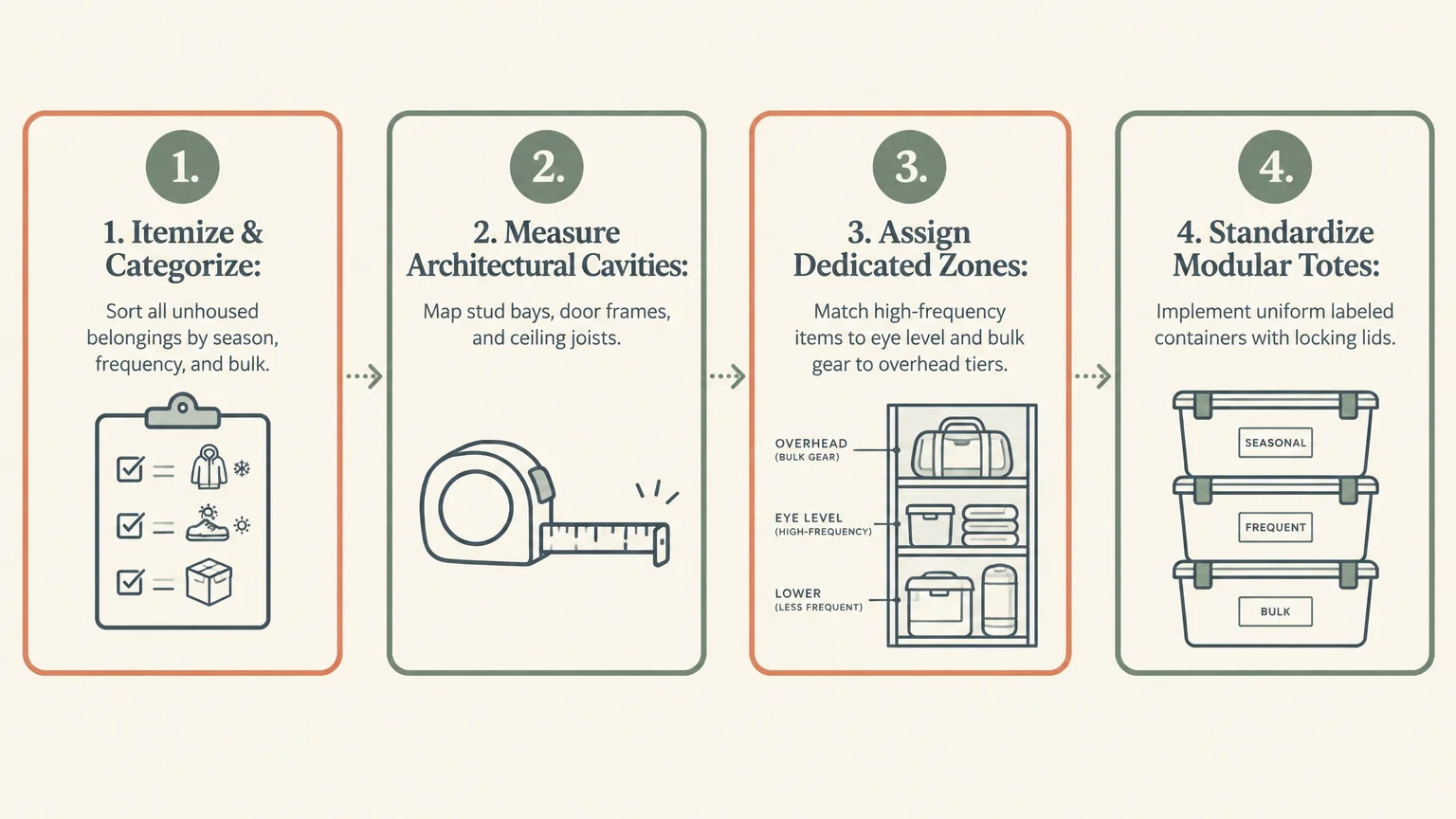
How to Audit and Reclaim Your Space in Four Steps
Executing an organizing project without a clear strategy often leads to half-finished rooms and frustration. Follow this sequential plan to clear out excess items and install your systems smoothly.
- Conduct a rigorous cull: Before buying bins or building shelves, gather items by category and discard broken, duplicated, or unneeded belongings. Do not waste money storing items you no longer use.
- Measure three-dimensional clearance: Measure wall widths, ceiling heights, and door-swing clearances accurately. Note the locations of light switches, electrical outlets, and wall vents before purchasing shelving.
- Designate storage zones: Group your possessions into active daily storage, secondary weekly storage, and deep seasonal storage. Assign your deep seasonal storage to garage ceilings, high shelves, or outdoor sheds.
- Label every container clearly: Print clear, high-contrast labels for the front and sides of all bins. Labeling removes guesswork and guarantees that family members return items to their assigned homes.
Take your time working through one zone before moving to the next. Methodical progress builds long-term habits and prevents your household from feeling disrupted.
Your Immediate Next Step
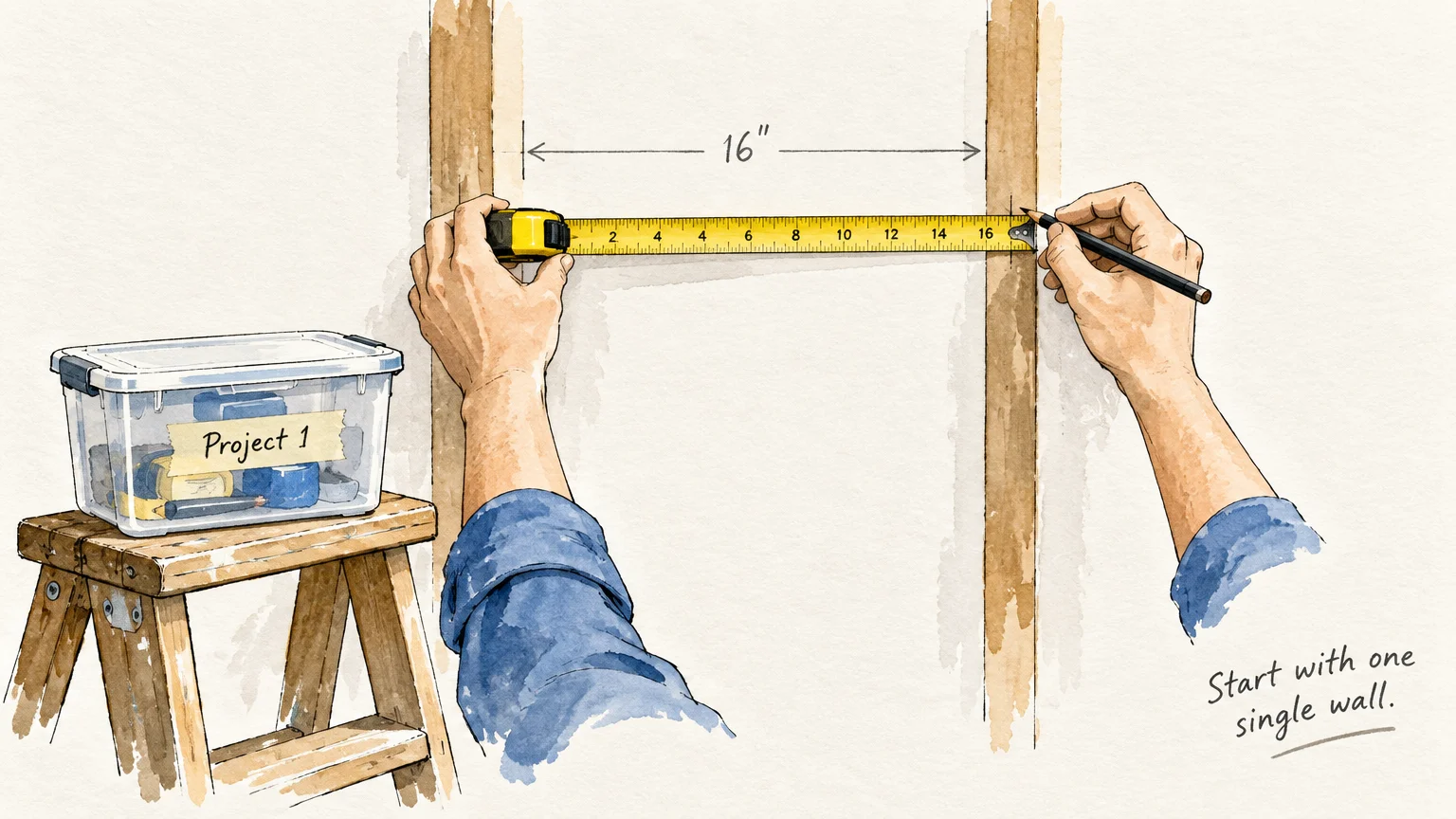
Walk through your home with a tape measure today and identify your single largest unutilized wall or architectural dead zone. Measure its dimensions, choose one targeted storage solution from this guide, and order the mounting hardware to reclaim that lost space this weekend.