Your attic probably holds far more than tangled holiday lights and dusty luggage. Sorting through old storage boxes reclaims cramped floor space while turning overlooked household items into real cash.
The global second-hand products market hit $213.4 billion in 2025, and buyer demand for vintage goods keeps climbing. Knowing which pieces carry genuine collectibles value prevents you from accidentally donating a small fortune.
You will learn five valuable attic items to inspect first, how to sort your space safely, which preservation mistakes ruin resale prices, and where to sell old items for top return.
Why Clearing Your Attic Pays Off Right Now
Decluttering an attic often stalls because you do not know whether old boxes contain junk or antiques worth money. Modern resale demand turns that uncertainty into a clear financial incentive to finally open those sealed cartons.
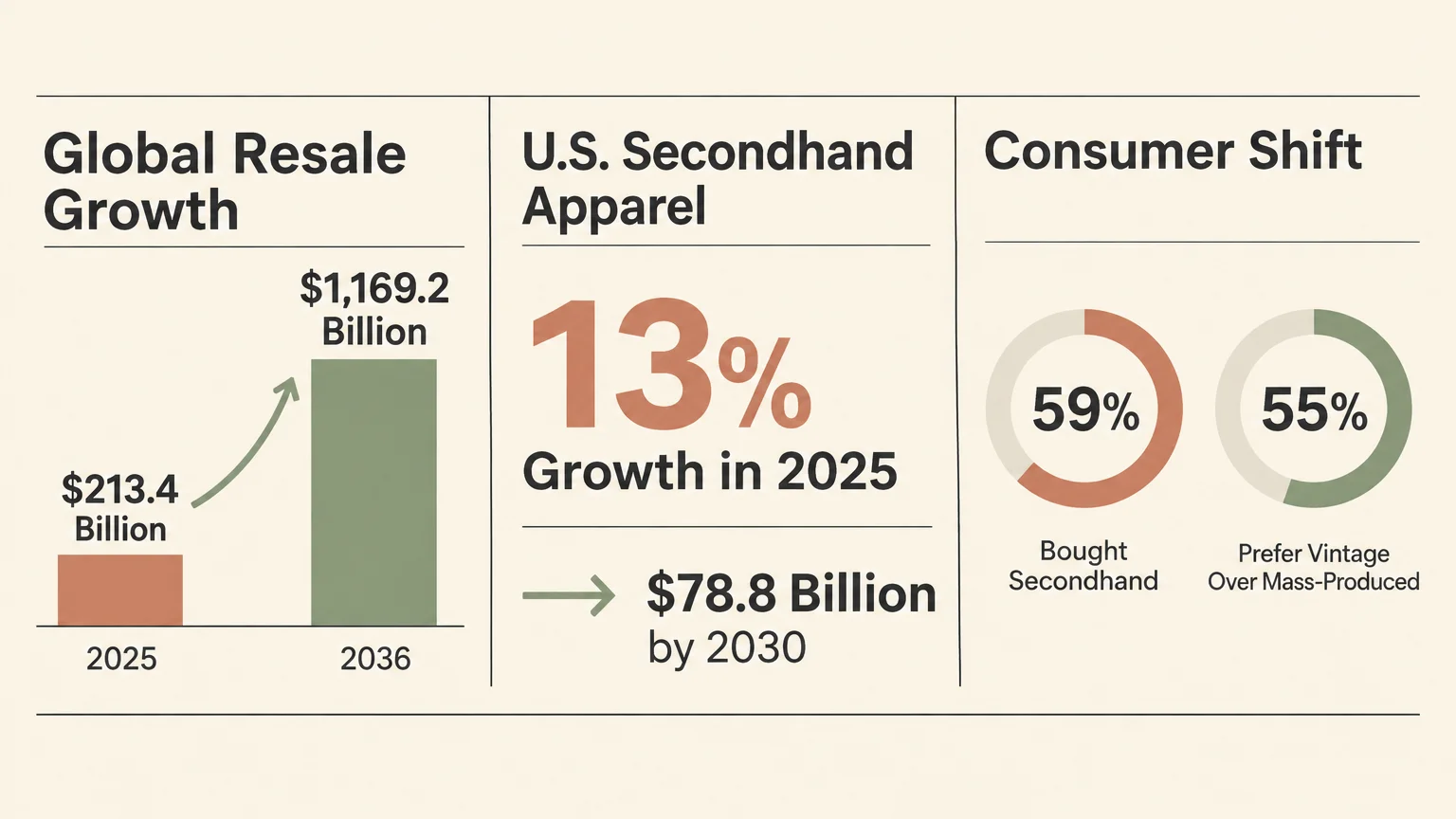
According to Transparency Market Research, the global second-hand products market reached $213.4 billion in 2025 and is projected to climb to $1,169.2 billion by 2036. Everyday buyers actively search online for vintage housewares, toys, clothing, and media.
Apparel and collectibles lead this surge in U.S. households. The ThredUp 2026 Resale Report with GlobalData found that the U.S. secondhand apparel market grew 13% in 2025—nearly four times faster than traditional retail clothing—and is forecast to reach $78.8 billion by 2030.
Consumer habits explain why older items move so quickly online. In 2025, 59% of U.S. shoppers bought secondhand clothing, while 55% reported preferring a unique or vintage item over a brand-new mass-produced product.
Even a single weekend cleanout can fund household goals or offset seasonal budgets. GlobalData survey data from September 2026 shows 30% of U.S. adults have sold or expect to sell used items to help cover holiday spending.
Best of all, pairing resale with a practical sorting system stops clutter from shifting into another room. Once high-value finds leave your home, you gain breathing room in closets, hallways, and garages.
Before You Touch a Box: Attic Safety and Sorting Setup
Rushing straight into an unconditioned attic without checking your surroundings puts both your health and your belongings at risk. Inspect the space visually before lifting heavy totes or sweeping dust off rafters.
Check for Insulation, Mold, and Pest Hazards
Many older homes built or insulated between 1919 and 1990 contain loose-fill vermiculite insulation, often sold under the Zonolite brand. It looks like gray-brown or silver-gold pebble-like flakes poured between ceiling joists.
Over 70% of all vermiculite sold in the United States during those decades came from an asbestos-contaminated mine near Libby, Montana. Because there is no safe level of exposure, the U.S. Environmental Protection Agency advises homeowners to assume vermiculite contains asbestos.
Never disturb, sweep, or rest storage boxes directly on or next to suspect vermiculite insulation. If you spot pebble-like pour-in flakes, exit the attic and hire a licensed asbestos contractor rather than attempting removal yourself.
Dark spots or fuzzy patches along roof sheathing point to another common hazard. Warm, humid indoor air rising into a cold attic creates condensation that feeds molds like Cladosporium, Penicillium, and Stachybotrys.
These molds release spores and microbial compounds that irritate airways and damage cardboard cartons. Review EPA mold guidance if you notice musty odors or discolored rafters before handling damp boxes.
Rodent nests and droppings demand strict handling rules as well. Sweeping or vacuuming dry mouse or rat waste launches hantavirus particles into the air, and Hantavirus Pulmonary Syndrome symptoms can appear one to eight weeks after exposure.
- Ventilate first: Open attic vents or windows to circulate fresh air before disturbing any affected zone.
- Wear protective gear: Put on sturdy gloves and protective clothing, adding a respirator for heavy infestations.
- Wet everything down: Soak droppings and nesting material thoroughly with disinfectant rather than sweeping or vacuuming dry debris.
- Seal and discard: Pick up saturated waste while wet, place it in sealed double bags, and follow full CDC hantavirus cleanup rules.
Set Up a Low-Friction Staging Zone Downstairs
Sorting inside a cramped, dim, or hot attic leads to rushed decisions and broken keepsakes. Carry one manageable box at a time down to a bright garage bay, dining table, or spare room.
Divide your staging floor into three clear zones using painter’s tape or labeled mats so items never pile back together:
- Zone 1 — Keep and Relocate: Sentimental heirlooms and seasonal gear returning to proper indoor storage.
- Zone 2 — Inspect and Sell: Potential antiques worth money, vintage toys, clothing, and media ready for pricing research.
- Zone 3 — Donate or Discard: Damaged goods, stained cardboard, and broken household clutter leaving the house immediately.
Skip matching boutique baskets that look pretty on social media yet collapse or hide contents in tight storage areas. Clear, heavy-duty polypropylene bins with latching lids let you spot what is inside at a glance without unstacking four boxes.
Reserve breathable woven bins or soft fabric totes strictly for clean linens inside finished bedroom closets. Cardboard boxes absorb attic humidity, invite silverfish, and crush easily when stacked more than two high.

5 Valuable Attic Items That Could Be Worth Real Money
Once your staging zone is ready, pull out boxes labeled kitchenware, toys, clothes, or media first. These five categories regularly hide strong collectibles value inside ordinary family attics.
1. Vintage Pyrex and CorningWare Kitchen Gear
Grandma’s casserole dishes often sit forgotten behind camping coolers, yet mid-century opalware commands loyal collector bidding. Corning Glass Works launched clear Pyrex bakeware in 1915 and manufactured patterned opalware from the mid-1940s through the 1980s before selling the consumer line to World Kitchen in 1998.
Look underneath bowls and casseroles for bold 1950s and 1960s patterns like Pink Daisy, Butterprint, and Gooseberry. Rare promotional runs bring dramatic premiums; the limited-release 1959 Lucky in Love pattern can sell for thousands of dollars.
Check heavy white square baking dishes for blue cornflower or floral emblems as well. Vintage Pyroceram CorningWare, introduced in 1957, can fetch up to $10,000 for rare pieces.
Condition determines whether a dish sells for serious money or belongs in a charity box. Chips, hairline cracks, or chalky dishwasher etching sharply reduce resale prices, so hold each piece under direct light before listing.
If you plan to keep or market pieces for daily cooking, know the safety timeline. The FDA began enforcing limits on leachable lead in tableware in 1971, and third-party testing of Corelle and Corning patterns dating back to the 1970s confirmed compliance with modern FDA guidelines.
2. Late-1990s Pokémon Trading Cards
Childhood binders tucked inside plastic totes remain one of the highest-upside surprises in modern attics. However, exact print runs and card condition create an enormous gap between pocket change and life-changing payouts.
Most common cards from the 1999 Wizards of the Coast English Base Set sell for just a few dollars, and worn common holographic cards average around $22. First Edition stamps and Shadowless border variants, by contrast, routinely bring hundreds of dollars or more.
Top-graded examples reach auction records rarely seen in modern collectibles. At Heritage Auctions in June 2026, a complete 102-card 1999 Pokémon First Edition Base Set graded PSA Gem Mint 10 sold for $1,218,750.
Ultra-rare promotional cards sit in an even higher tier. Earlier in 2026, a PSA Gem Mint 10 Pikachu Illustrator—one of only 39 distributed in 1998—sold for $16,492,000, while a PSA Mint 9 copy brought $1,406,250.
Do not overlook odd paper formats rolled inside poster tubes either. In November 2026, an uncut 1999 Fossil sheet uncovered in a UK attic drew an auction estimate of £2,500, or roughly $3,335.
Leave cards inside existing sleeves or binders rather than pulling them out with bare fingers. Edge whitening, corner creases, and surface scratches immediately drop grading tiers when collectors evaluate your photos.
3. Original Kenner Star Wars Action Figures
Plastic toy cases shaped like Darth Vader or plain shoeboxes filled with 3.75-inch figures hold steady demand. Original 1977–1985 Kenner figures cost roughly $1.97 in 1978—about $10.18 in 2026 dollars—making almost any surviving figure a strong return.
As of November 2026, loose 1977–1985 Kenner figures carried a 90-day median eBay sold price of $30 each. Ordinary loose characters typically sell between $7 and $140 depending on character popularity, joint tightness, and paint wear.
Search the bottom of the toy box for tiny gray blasters, vinyl capes, and plastic lightsabers. Complete accessories push ordinary figures toward the top of their price bracket, while missing weapons cut buyer offers substantially.
Unopened packages and early production variants belong in a specialist auction house rather than a yard sale. Mint-on-card figures and rarities like the vinyl-cape Jawa or double-telescoping lightsabers sell from $3,500 to over $200,000.
Prototypes shatter every ceiling in vintage toy collecting. A prototype J-slot rocket-firing Boba Fett holds the world record sale for a Star Wars figure at $1.342 million.
4. Pre-1971 Vintage Levi’s Denim
Old work jeans stuffed inside cedar chests often get tossed into rag bags because they look faded or frayed. Before donating worn denim, flip the back right pocket inside and check the small red woven tab.
Pre-1971 Levi’s 501 jeans carry a capital “E” on that red pocket tab—known to collectors as “Big E”—paired with crisp selvedge outseams. Pairs in solid wearable condition typically sell for $500 to $2,000, and top 1950s 501XX examples exceed $10,000.
Check matching outerwear from the same era on old wire hangers. Pre-1970 Big E Type III trucker jackets regularly bring $300 to $2,000 or more depending on chest size and indigo fade.
Even later pairs deserve a closer look before you decide what to sell from attic closets:
- 1971–1983 “small e” Levi’s 501s: Typically sell for $200 to $1,000 depending on condition and wash.
- 1983–early 2000s USA-made pairs: Usually bring $50 to $300 with clean care tags intact.
- Post-2003 overseas-made pairs: Generally fetch $15 to $40 on everyday resale apps.
Never run vintage denim through a hot wash cycle or toss out original care tags before checking dates. Collectors prize authentic natural fades and untouched stitching over freshly laundered fabric.
5. Vintage Vinyl Records
Milk crates packed with 12-inch LPs and 7-inch singles look promising, yet band popularity rarely guarantees high payouts. Millions of classic rock albums were pressed in huge runs, so condition and exact pressing details separate $2 bin records from rare collectibles.
Discogs and experienced dealers grade both the vinyl disc and cardboard jacket separately using the Goldmine Standard, ranging from Mint down to Poor or Fair. A record graded Very Good Plus (VG+) generally brings about 50% of its Near Mint (NM) value.
Anything below VG+ drops rapidly to a small fraction of Near Mint prices. Deep scratches, split seams, water damage, and missing lyric inserts push most common pressings into low-dollar territory.
To check exact value, look past the album cover art and inspect three details:
- Catalog number: Match the letter-and-number code printed on the jacket spine and center label.
- Mono versus stereo: Early mono jazz, blues, and 1960s rock pressings often carry different demand than later stereo reissues.
- Matrix and runout etchings: Tilt the vinyl under a lamp to read stamped or hand-etched codes in the smooth dead wax beside the label.
Stack records upright like library books inside sturdy crates rather than flat in tall piles. Horizontal stacking warps vinyl discs and creates permanent ring wear across cardboard jackets.
Preservation Mistakes That Destroy Collectibles Value
Good intentions often ruin valuable attic items faster than decades of dust ever did. The urge to make tarnished metal sparkle or tidy up old paper before taking photos can wipe out most of an item’s market price.
Professional numismatists and grading services strongly warn against polishing, scrubbing, or dipping old coins and antique silver. Stripping natural oxidation—known as patina—and leaving microscopic hairlines causes coins to grade as “Genuine-Cleaned” and destroys 30% to 70% of their financial value, or up to 90% in severe cases.
Touch metal antiques, coins, and bare silverware only by their outer edges while wearing clean cotton gloves. Avoid latex gloves entirely, because sulfur compounds inside latex react with silver and accelerate dark tarnishing.
Once you identify high-value finds, relocate them immediately from your hot attic into a climate-controlled room inside your main living space. According to the Canadian Conservation Institute, indoor storage should stay between 35% and 55% relative humidity, or below 30% inside sealed silica-gel containers for corrosion-prone metals.
Organize these relocated keepsakes using sensible closet architecture so nothing gets crushed over time:
- Shelf spacing: Set adjustable closet shelves 12 to 16 inches apart so rigid archival boxes slide out smoothly without scraping lids.
- Weight zoning: Place heavy stoneware and record crates near waist height or on bottom shelves, keeping paper and toys at eye level.
- Protective dividers: Slide acid-free tissue or rigid sleeves between stacked plates, cards, and prints inside clear latching totes.
Where to Sell Old Items: Matching the Platform to Your Find
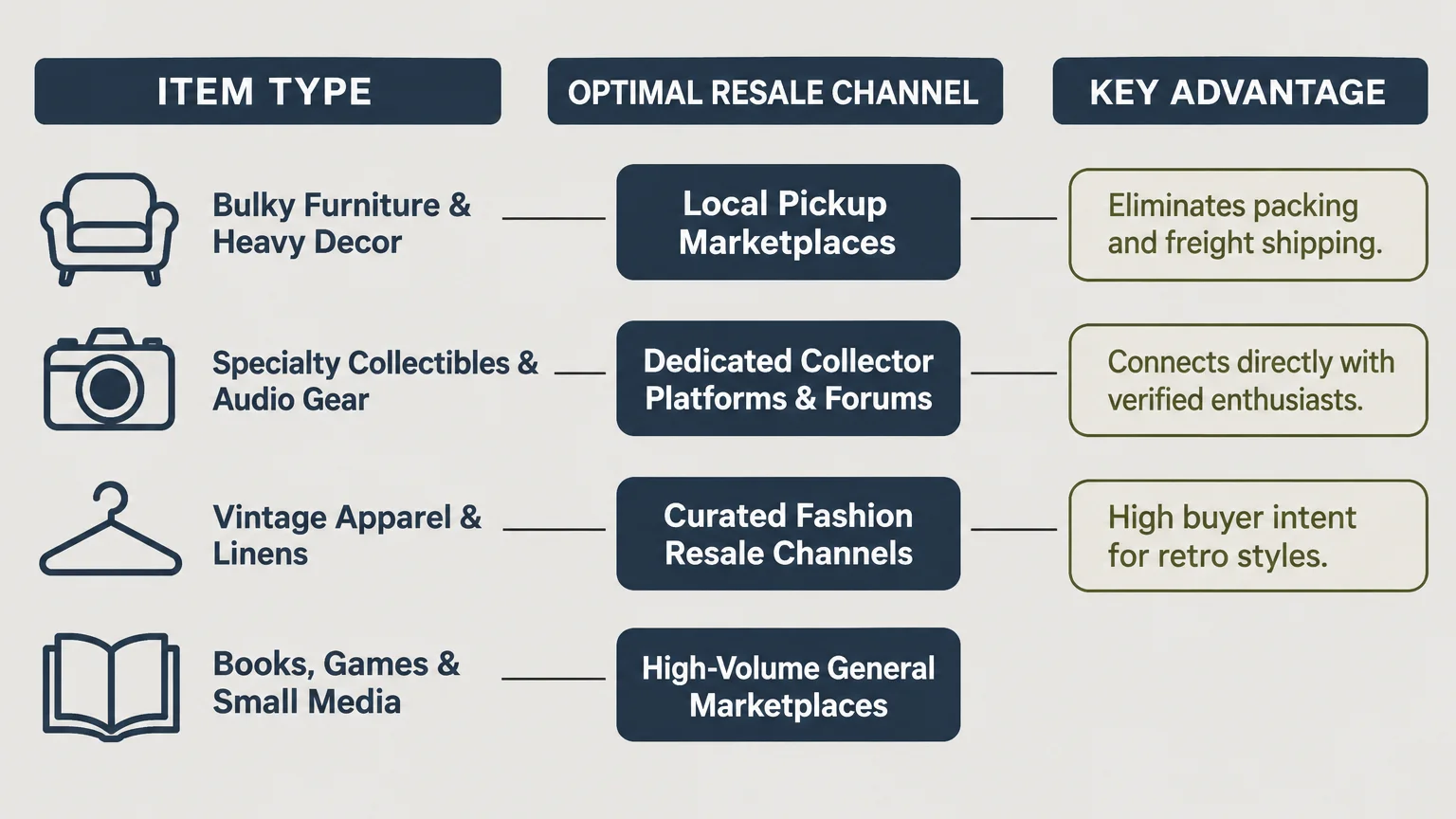
Picking the right marketplace protects your profit margin and cuts wasted shipping trips. Bulky kitchenware performs terribly on national clothing apps, while rare trading cards leave money on the table at a neighborhood garage sale.
Compare current 2026 platform rules, fees, and ideal categories before creating your first listing:
| Platform | 2026 Seller Fees | Best Attic Categories | Key Rule to Watch |
|---|---|---|---|
| eBay (U.S.) | 13.6% in most categories up to $7,500 (2.35% above) + $0.30 ($10 or less) or $0.40 (over $10); 15.3% Books, Movies and Music; 13.25% Select Cards and Collectibles; 6.7% Guitars and Basses | Star Wars figures, mid-tier Pokémon cards, Pyrex, vintage Levi’s, vinyl records | 250 zero-insertion-fee listings monthly for non-store sellers; fee applies to item price, shipping, and sales tax |
| Etsy | $0.20 listing fee + 6.5% transaction fee + 3% and $0.25 processing; mandatory 12%–15% Offsite Ads fee over $10,000 annual sales | Vintage Pyrex, CorningWare, and home decor (20+ years old) | Must include at least one unedited photo per physical item listing as of October 2026 |
| Mercari (U.S.) | 10% selling fee on total sale price including buyer-paid shipping; $0 seller payment processing fee; $3 Instant Pay | Loose toys, casual vintage clothing, common collectibles | Underpaid shipping labels trigger an 8% correction penalty on adjusted postage; buyers pay 3.6% protection fee |
| Poshmark (U.S.) | $0 listing fee; flat $2.95 on sales $15 or less; 20% commission over $15 | USA-made Levi’s denim, vintage jackets, everyday apparel | Simple flat-rate shipping labels simplify packaging heavier denim |
| Depop and Vinted | Depop: 0% U.S. selling fee (3.3% + $0.45 processing); Vinted: 0% selling fee to private sellers | 1990s streetwear, post-1980s Levi’s, retro casual apparel | Buyers on Vinted cover the platform protection fee directly |
| Facebook Marketplace and OfferUp | Facebook: $0 local pickup, 10% ($0.80 minimum) shipped; OfferUp: $0 local in-person sales | Heavy CorningWare sets, bulk vinyl crates, bulky antique furniture | OfferUp operates local in-person only since October 2025 |
| Ruby Lane | $0 listing fee; $45/month maintenance fee (10-item minimum); 9.9% up to $2,500, 5.0% ($2,500–$7,500), 2.5% above $7,500 (applied to shipping; PayPal fees separate) | Curated antiques (100+ years / 1926 or older) and true vintage (20+ years / 2006 or older) | Monthly fee makes sense only if you plan to maintain an active 10+ item storefront |
| Heritage Auctions | Free appraisals and negotiated consignment terms | Graded 1998–1999 Pokémon cards, mint-on-card Star Wars, rare coins, comics | Buys $2 million to $5 million in collectibles weekly for top-tier pieces |
Match your effort level to the payout potential of each box. Selling ten loose $30 Star Wars figures individually on eBay maximizes return, whereas bundling common $15 records locally on Facebook Marketplace saves hours of cardboard packing.
Remember that Etsy requires at least one unedited photo per physical listing, so snap clean daylight shots on a plain neutral tabletop. Honest close-ups of chips, edge wear, or loose joints prevent returns and build buyer trust across every app.
A Simple Step-by-Step Workflow to Sort, Price, and List
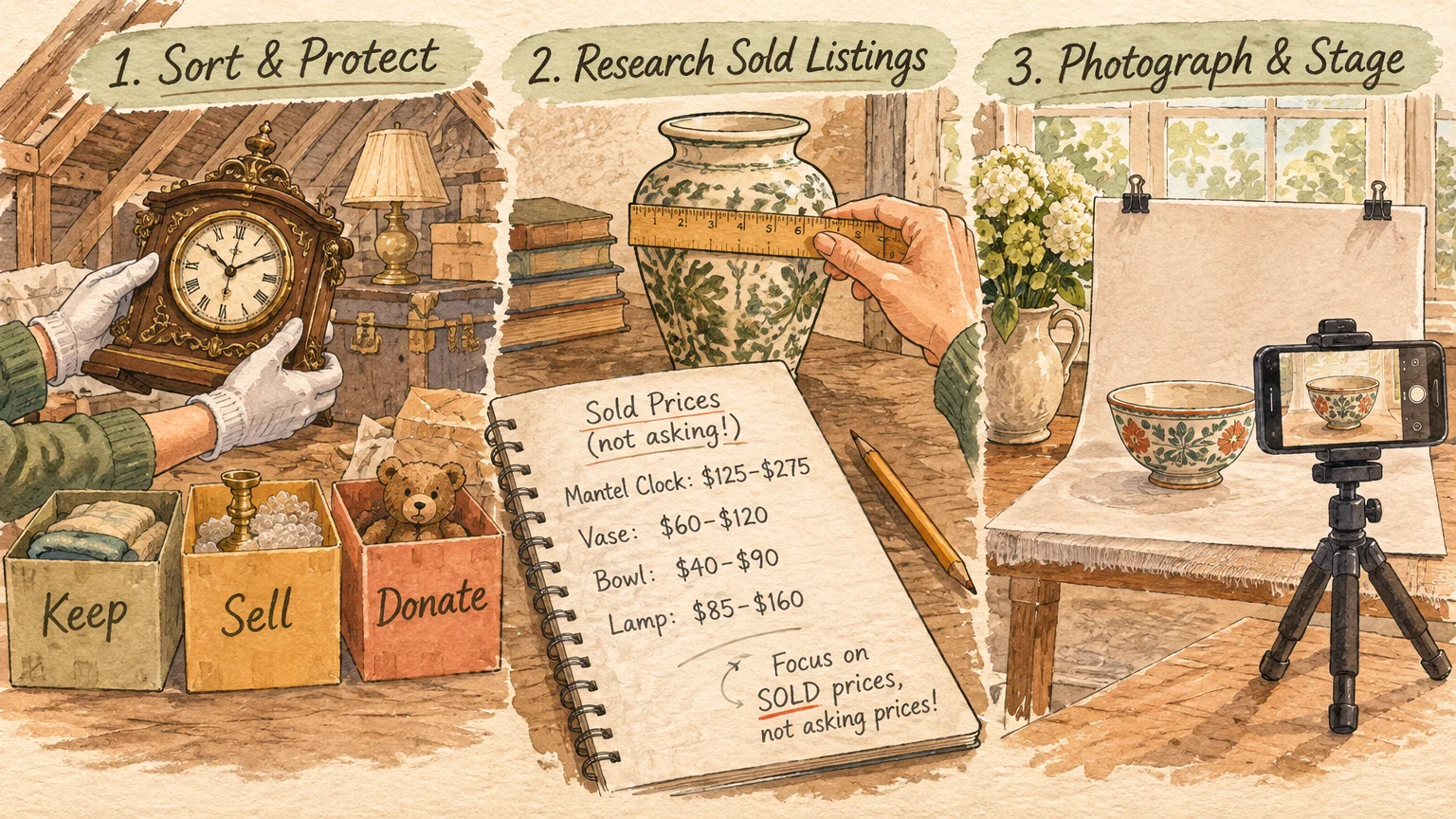
Big attic cleanouts fail when you pull twenty boxes downstairs at once and abandon half-sorted piles across your hallway. Follow a tight, repeatable loop that moves one container cleanly from attic rafter to finished outcome:
- Pull one box per session: Inspect your surroundings for insulation, mold, or pest signs before bringing a single container into your staging zone.
- Check quick identification marks: Scan for red Big E denim tabs, Pyrex backstamps, 1999 Pokémon copyright dates, Kenner foot stamps, and LP runout codes.
- Search sold prices, not asking prices: Filter eBay or Discogs by completed sold listings so unrealistic seller wishes never skew your expectations.
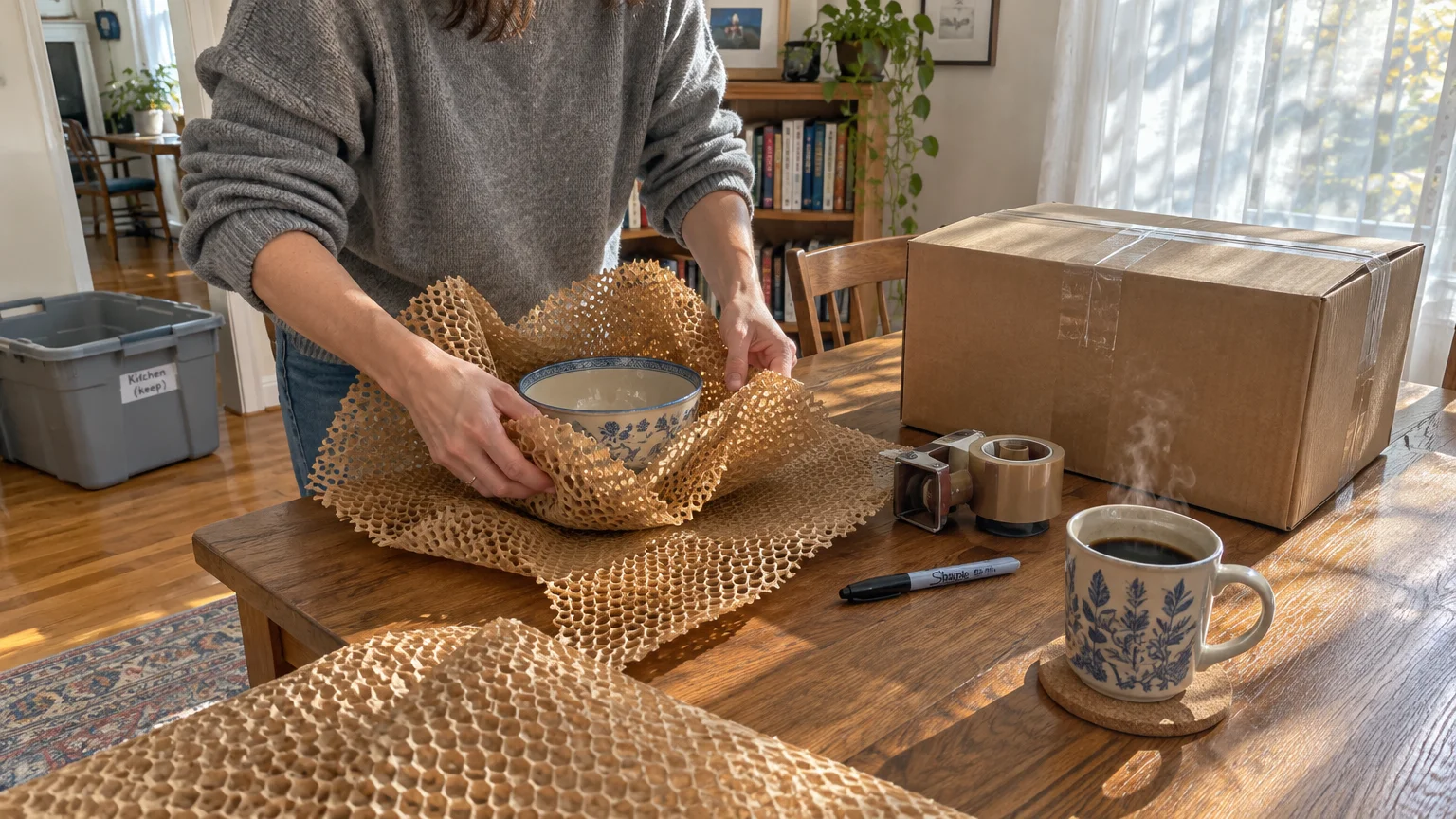
- Weigh before listing: Place fragile items inside double-walled boxes with crumpled kraft paper and weigh the ready-to-ship parcel to avoid Mercari’s 8% underpaid label penalty or surprise postage losses.
- House active inventory in one spot: Dedicate a single labeled clear tote on a closet shelf for listed items so pending orders stay organized and easy to grab when they sell.
- Set a firm exit deadline: If everyday household leftovers sit unsold past your monthly review date, bundle them into a local lot or donate them immediately to reclaim your space.
Keeping an organized “Active Listings” bin prevents resale projects from turning into permanent living-room clutter. Once that bin empties out, your shelf space returns to normal household use.
What You Need to Know About Taxes on Attic Sales
Clearing out high-value collectibles often raises questions about tax forms and marketplace reporting thresholds. Knowing current federal rules lets you track sales accurately without second-guessing every deposit.
Under the One Big Beautiful Bill Act, the IRS retroactively restored the federal Form 1099-K reporting threshold for payment apps and online marketplaces for calendar years 2025 and 2026. Platforms must issue Form 1099-K only when you exceed $20,000 in gross payments AND more than 200 transactions—the previously planned $2,500 and $600 thresholds do not apply.
Receiving or not receiving a tax form does not change how the underlying gain is treated. Selling a used personal item for less than you originally paid is a personal loss and is not taxable income.
However, selling an antique, rare card, or vintage toy for more than its original purchase price creates a taxable capital gain. You generally report profitable collectible sales on Form 8949 and Schedule D.
Review the official IRS Form 1099-K guidance if your attic clearout brings in substantial profits. Keeping a simple notebook or spreadsheet listing each item’s estimated cost basis, final sale price, shipping cost, and platform fees makes tax season painless.
Your Next Practical Step
Set aside fifteen minutes this week, put on sturdy work gloves, and pull just one box of old toys, kitchenware, clothes, or records down from your attic into a bright room. Sort its contents using the three-zone method, check for the five high-value markers above, and photograph your best find before repacking a single item.