Clearing out hazards and excess belongings after age 80 keeps your home comfortable, navigable, and safe for daily living. When you focus on practical decluttering after 80, every room becomes easier to clean and safer to move through.
Roughly 41% of U.S. adults aged 80 and older lived alone in 2021, yet only 10% of U.S. homes feature built-in accessibility upgrades. Thoughtful downsizing helps you close that gap without costly remodeling.
Removing eleven specific hazards and clutter traps lowers your risk of falls, fires, and spoiled supplies while creating simple storage habits you can maintain effortlessly.
Why Decluttering After 80 Protects Your Independence
About 75% of adults aged 50 and older want to stay in their current homes as they age, according to AARP survey data. Basic accessibility modifications typically cost $3,000 to $15,000, compared with assisted living averaging around $64,200 per year.
Staying independent starts with eliminating hidden dangers before they cause an emergency. For adults 65 and older, unintentional home injury death rates are three times higher than for younger adults—60 deaths per 100,000 compared with 20—with falls and fires leading the causes.
More than 1 in 4 adults 65 and older fall each year, and falling once doubles the odds of falling again. By age 85 and older, fatal fall rates reached 339.5 per 100,000 in 2023—more than double the rate recorded two decades earlier.
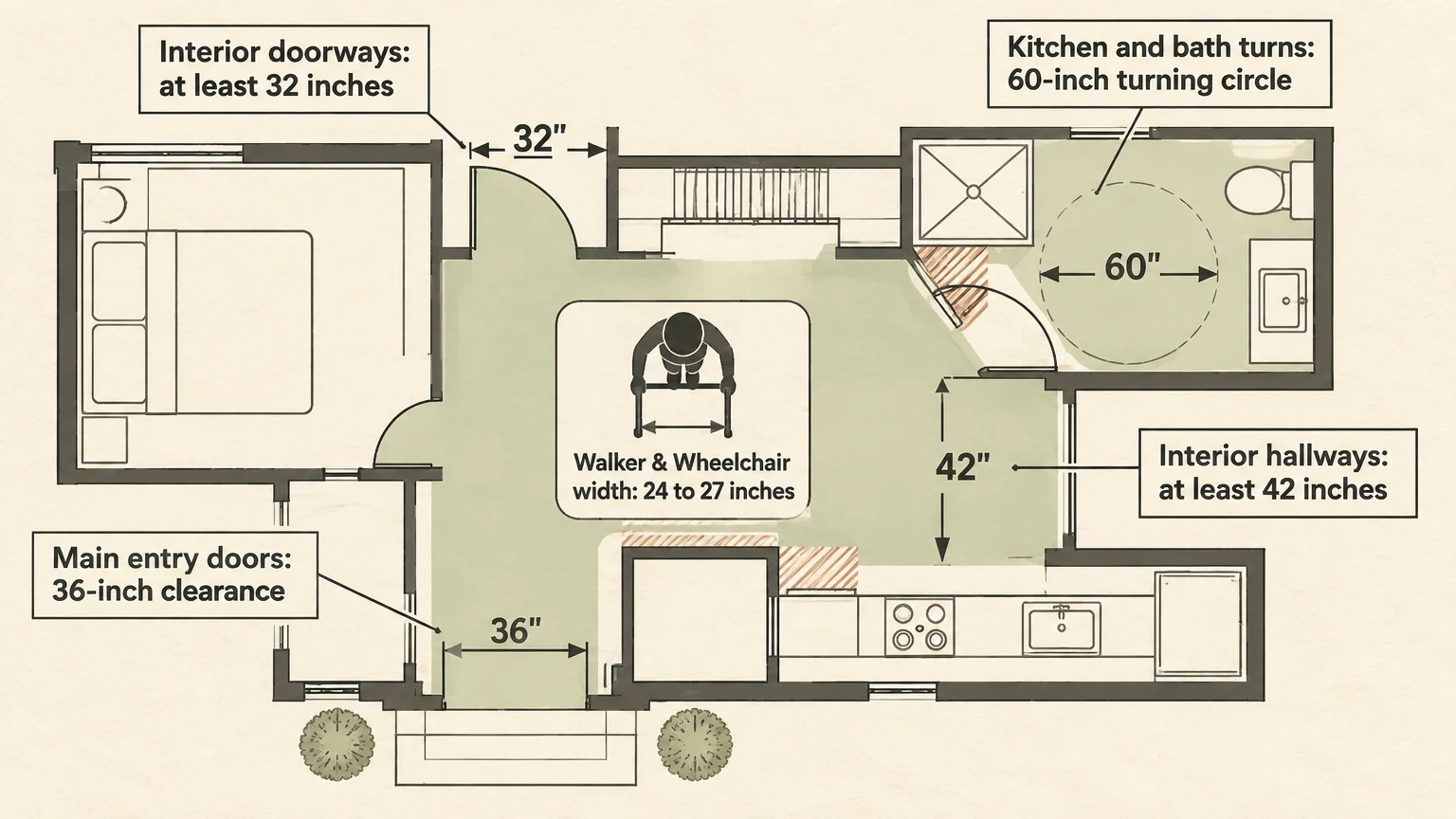
Smart space planning gives you safer pathways without hiring a contractor. Walkers and wheelchairs average 24 to 27 inches wide, so clearing furniture and floor clutter helps you preserve key home clearances:
- Interior doorways: Keep at least 32 inches of clear opening width.
- Main entry doors: Maintain a full 36-inch clearance for easy exits and deliveries.
- Interior hallways: Clear at least 42 inches of unobstructed walking width.
- Kitchen and bath turns: Preserve a 60-inch turning circle for safe pivoting.
Keeping these zones open turns senior decluttering tips into real physical protection. You can find additional fall-prevention checklists through the CDC Older Adult Fall Prevention resource.
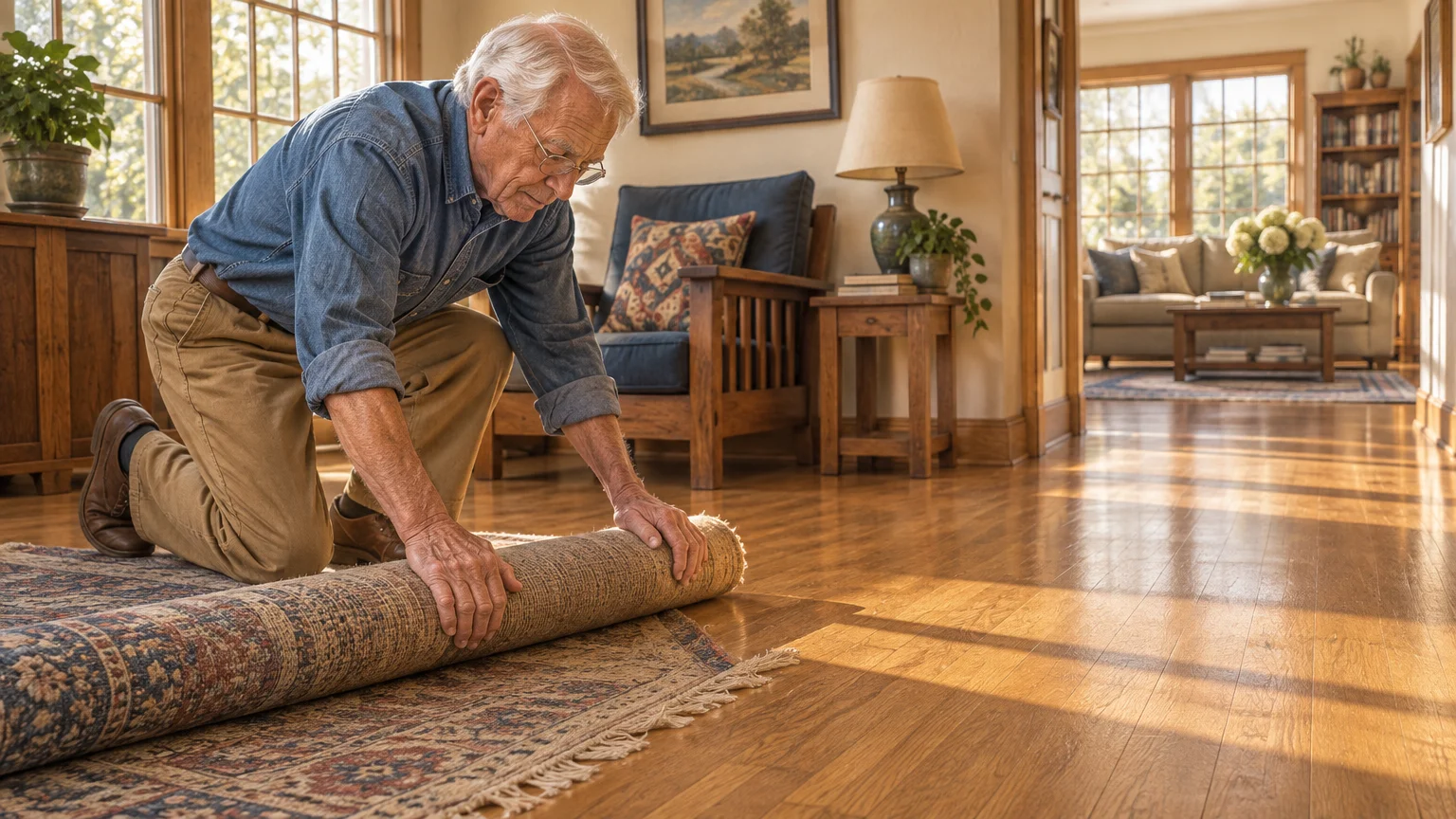
01 Unsecured Throw Rugs and Floor-Level Obstacles
Loose accent rugs, curled runner edges, and decorative floor baskets trip feet far more easily than most people realize. Both the CDC and CPSC specifically recommend removing unsecured throw rugs, low obstacles, and electrical cords stretched across walkways.
Walk each room slowly from the doorway to your favorite chair and pick up anything resting on the floor. Pay special attention to raised thresholds, which should sit no higher than 0.5 inches, and keep exterior paths at least 36 inches wide.
If an interior door feels tight, you do not need to widen the frame. Installing swing-clear offset hinges costs $15 to $30 per pair and immediately adds 1.5 to 2 inches of usable doorway width.
Replace floor-standing magazine racks, woven blanket baskets, and bulky ottomans that pinch your walking lane. Hang a lightweight wall pocket or set a small tray on an end table so remotes, glasses, and reading material stay off the floor completely.
If you want floor warmth beside your bed, swap loose scatter rugs for low-pile, wall-to-wall carpeting or stick-on carpet tiles taped flush around every edge. Keeping floor transitions flat prevents toe catches during nighttime bathroom trips.
02 Wobbly Step Stools and High-Shelf Storage
Climbing onto an unsteady step stool or dining chair to grab a mixing bowl turns routine cooking into a major fall risk. Both the CDC and CPSC advise getting rid of wobbly step stools and makeshift chairs used for reaching.
Use a simple functional zoning rule instead of climbing: move every item you touch weekly into the prime zone between your waist and shoulders. That single shift keeps plates, skillets, coffee mugs, and bath towels at comfortable arm level.
Take down items stored on upper cabinet shelves and sort them ruthlessly before putting anything back. If you have not used an extra roasting pan or holiday platter in two years, donate it so you free up prime shelf space.
Organize mid-level shelves with shallow, clear plastic bins—roughly 10 to 12 inches deep—with built-in front handles rather than deep, opaque totes. Clear containers let you spot ingredients at a glance and slide items forward without stretching or standing on tiptoe.
Adjust pantry and linen shelves to roughly 12 to 14 inches apart so tall cereal boxes and folded towel stacks slide straight in without leaning. When shelves fit standard items snugly, nothing gets shoved onto unreachable top racks.
03 Slippery Footwear and Crowded Entryway Piles
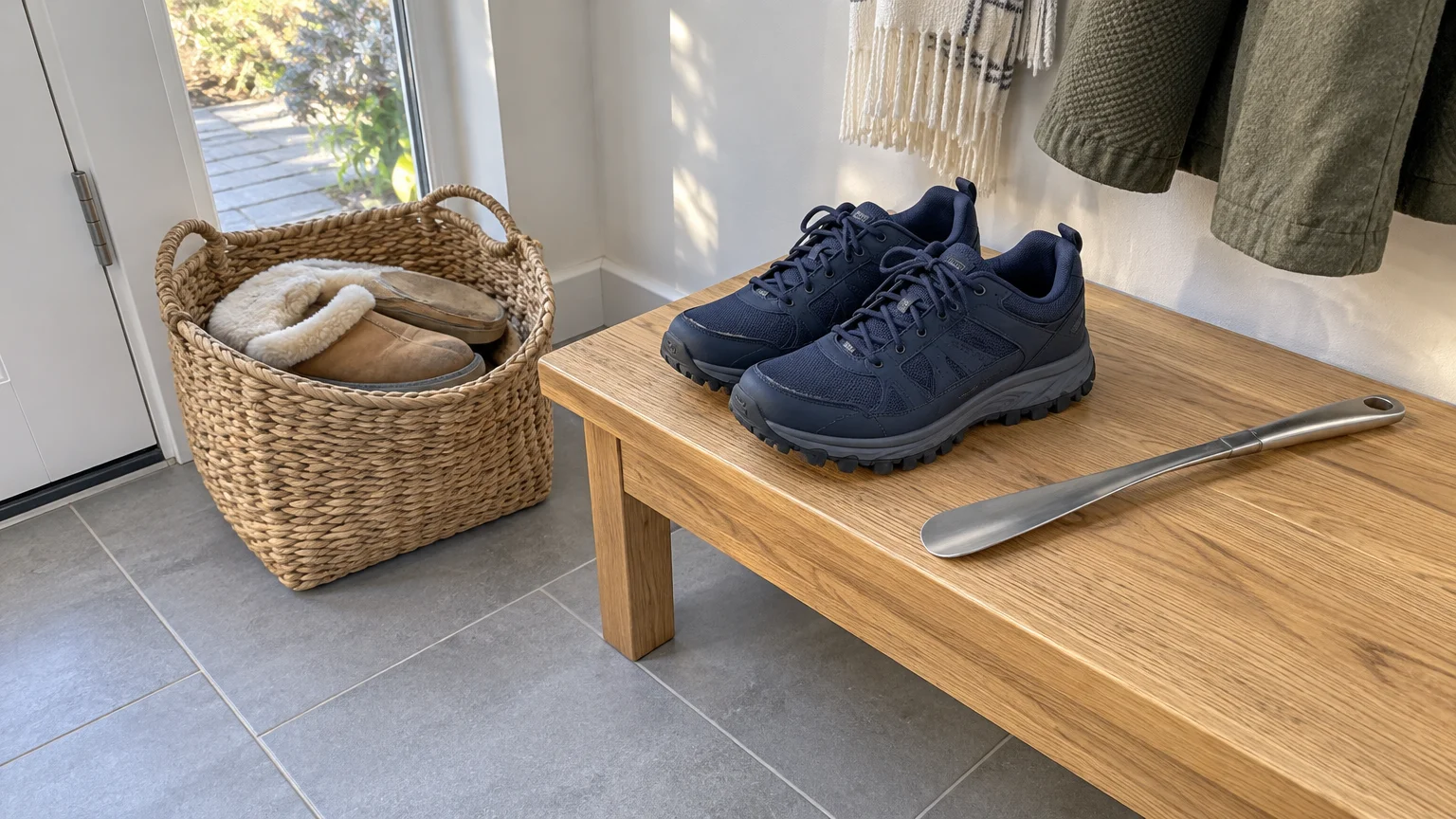
House shoes lose grip quietly over the years, turning smooth hardwood or bathroom tile into a skating rink. Both the CDC and CPSC recommend discarding poor footwear—including slippery soles, loose slippers, flip-flops, and high heels.
Pull every pair out of your entryway and bedroom closet to check the tread on the bottom. Toss anything worn flat, stretched loose around the heel, or difficult to fasten securely without bending sharply.
Keep just two or three pairs of sturdy, closed-heel, non-skid shoes in your daily rotation. Fewer pairs mean zero shoe piles sprawling across the mudroom floor where they can snag a cane or walker wheel.
Bag up outgrown dress shoes, stiff leather boots, and worn sneakers immediately so they do not drift back to the closet floor. Keeping only reliable everyday pairs turns dressing into an effortless, safe routine.
Set a solid, stationary chair beside your front door next to a single open resin shoe tray with a low lip. Unlike tall shoe towers or soft fabric cubbies, a flat tray wipes clean fast and lets you slide shoes on while seated.
04 Old Space Heaters and Frayed Extension Cords
Portable heaters accounted for just 3% of home heating fires from 2017 to 2019, yet the U.S. Fire Administration reports they caused 41% of fatal home heating fires. From 2020 to 2022, portable heaters averaged 1,600 fires, 70 deaths, and 150 injuries each year.
Inspect every portable heater in your home and discard any unit lacking an automatic tip-over shut-off switch. Also throw out frayed extension cords, cracked outlet splitters, and any power cord you have tucked beneath a carpet or rug.
Keep a modern heater plugged straight into a wall outlet—never into a power strip or extension cord—and maintain a clear 3-foot safety zone on all sides. Move curtains, paper stacks, and wicker laundry hampers well outside that perimeter.
Tame remaining lamp and charger cords by gathering slack loops with simple reusable hook-and-loop straps along the baseboard. Securing cords tightly against the wall eliminates both tripping hazards and fire-prone tangles behind furniture.
When winter ends, wipe down approved heaters and store them upright in a dry, accessible lower closet shelf rather than hauling heavy boxes up attic stairs. Labeling the cord plug with masking tape saves confusion next fall.
05 Expired Smoke and Carbon Monoxide Alarms
Smoke detectors quietly lose sensor sensitivity long before their plastic shells look worn. Both the CPSC and NFPA advise replacing any smoke alarm over 10 years old, even if the unit still chirps when you press the test button.
Unclip each alarm from the ceiling—or ask a family member or handyman to help—and check the manufacture date printed on the back. Discard any unit past its 10-year lifespan and install fresh detectors inside every bedroom, outside sleeping areas, and on every level.
Place carbon monoxide alarms outside sleeping areas as well, and consider strobe-light or bed-shaker models if hearing changes make high-pitched tones harder to notice. Testing alarms once a month takes under two minutes and keeps your home protected.
Test alarms on the first day of each month right after paying routine bills so the habit sticks effortlessly. Pairing safety checks with an existing calendar routine keeps your home protected without extra mental clutter.
While checking detectors, clear out loose, expired batteries rolling around kitchen junk drawers. Store fresh replacement batteries inside one small, compartmentalized plastic organizer labeled by size, alongside a sticky note tracking alarm replacement dates.
06 Loose-Fitting Cooking Clothes and Flammable Sleepwear
Everyday clothes can create unexpected burn hazards when you lean across a warm stove or toaster oven. The CPSC recommends avoiding loose-fitting garments while cooking because flowing sleeves easily brush burners and catch fire.
Open your bedroom closet and remove billowing robes, wide-sleeved cardigans, and worn, overly loose cotton nightgowns from your daily rotation. For safer sleeping, CPSC guidance favors flame-resistant or tightly woven sleepwear made from 100% polyester, nylon, or wool.
Narrowing your wardrobe to comfortable, well-fitted pieces also solves overflowing closet clutter. When you can see every hanger without shoving heavy coats aside, getting dressed takes half the effort.
Dedicate a 24-inch section at eye level on your closet rod to fitted, short-sleeved, or snug-cuffed everyday tops on non-slip hangers. Keep safe sleepwear folded inside shallow wire drawer baskets at hip height so nothing piles up on bedroom chairs.
Use simple expandable plastic drawer dividers in bedroom dressers to separate safe sleepwear from daytime layers. Clear boundaries inside drawers stop folded stacks from toppling into messy piles every time you pull out a shirt.
07 Expired Medications and Humid Bathroom Stashes
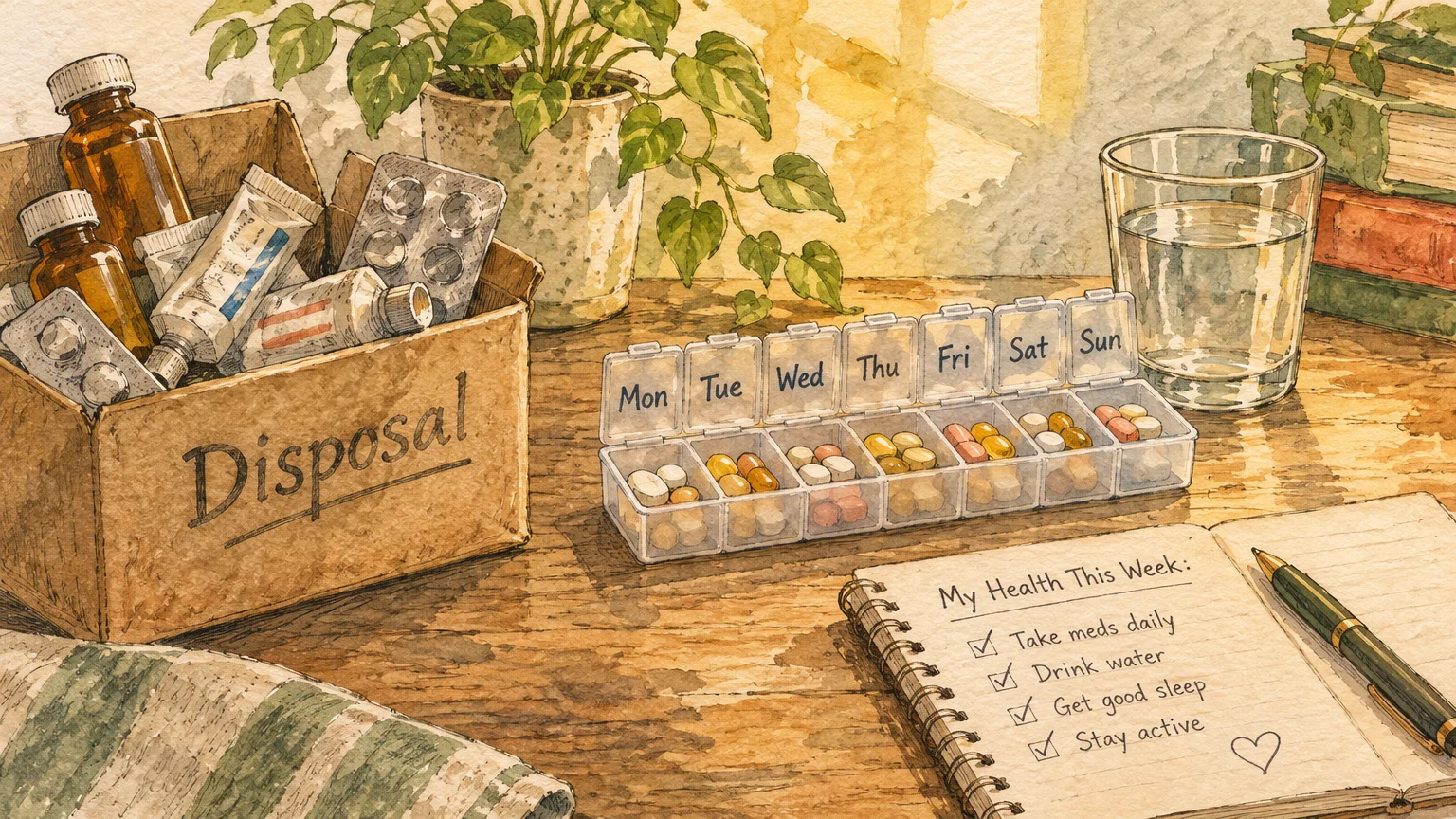
Holding onto half-empty prescription bottles from years past creates dangerous mix-ups and takes up valuable shelf space. The FDA explicitly warns against taking any medication past its expiration date because it can lose effectiveness or cause unintended harm.
Empty your bathroom medicine cabinet too, because heat and humidity from daily showers break down medications faster. Move active prescriptions in their original labeled containers to a cool, dry dresser drawer or high pantry shelf, and review them every 6 months.
Never flush random pills down the toilet unless they appear on the official FDA Flush List. Instead, drop unwanted medicines at DEA-authorized collection sites—including more than 17,000 registered pharmacies—or during National Prescription Drug Take Back Days held every April and October.
Those biannual take-back events collected over 571,000 pounds in October 2025 alone, bringing the total since 2010 past 9,900 tons. If no drop-off site or mail-back envelope is handy, follow the FDA safe medicine disposal guidelines:
- Protect your privacy: Scratch out all personal information and prescription numbers on empty bottles before discarding or recycling them.
- Leave pills whole: Do not crush tablets or capsules before household disposal.
- Mix and seal: Combine unwanted medicines with used coffee grounds or cat litter inside a sealed plastic bag or container before placing them in the trash.
Organize active bottles inside a clear, shallow divided drawer tray rather than an opaque woven basket where small vials tip over and hide. A simple large-print label on each divider keeps morning and evening doses unmistakable.
08 Expired Food, Damaged Cans, and Forgotten Leftovers
Pantry shelves and refrigerator drawers quietly accumulate forgotten condiments, stale dry goods, and questionable leftovers. Households generate 44% of all U.S. food waste, averaging roughly 20 pounds per person every month.
Pull every can off your pantry shelves and toss any tin that is bulging, leaking, rusting, or badly dented along the seam or rim. Stored below 85°F in a dry cabinet, high-acid canned foods like tomatoes and pineapple keep 12 to 18 months, while low-acid meats and vegetables keep 2 to 5 years.
Keep your refrigerator at 40°F or below, eat cooked leftovers within 4 days, and reheat them thoroughly to 165°F. Discard perishables left out over 2 hours—or 1 hour above 90°F—and check the USDA FoodKeeper guide whenever shelf-life dates look unclear.
While checking kitchen temperatures, verify your residential water heater sits at 120°F or lower as CPSC advises. Water heated to 150°F can cause severe tap-water scalds in just seconds.
Place a clear 10-inch lazy Susan on a middle shelf for jars and keep one bright-taped Eat First bin at eye level. Clear acrylic bins beat solid tubs because you spot dwindling supplies before they spoil.
Stick to a short weekly grocery list of fresh staples instead of buying oversized warehouse multipacks that crowd pantry shelves and expire half-used. Smaller, frequent quantities leave plenty of open space so every jar stays visible.
09 Outdated Paper Clutter and Expired Financial Statements
Cardboard banker boxes stacked in closets and hallways turn into heavy tripping hazards and bury vital documents under decades of junk mail. Sorting paper clutter is one of the highest-impact steps among things to get rid of when streamlining your home.
Follow clear IRS and FTC timelines instead of guessing what matters. Keep tax returns, W-2s, 1099s, and receipts for 3 years—or 6 years if over 25% of gross income went unreported, and 7 years for bad debt or worthless securities.
Hold onto home-purchase and home-improvement receipts the entire time you own your house plus 3 to 7 years after selling. You can verify specific audit exceptions on the IRS recordkeeping page.
Use this quick retention table to sort incoming mail and old file cabinets without second-guessing:
| Retention Window | Documents to Keep or Shred | Recommended Storage |
|---|---|---|
| Keep Forever | Birth and death certificates, marriage or divorce decrees, Social Security cards, military records, wills, powers of attorney, pension plans, and vital immunization records. | One fire-resistant document box or 2-inch D-ring binder with clear sleeves. |
| Keep 3 to 7 Years | Tax returns, W-2s, 1099s, tax receipts, and home-improvement records (plus 3 to 7 years after selling a home). | One labeled, portable hanging-file tote stored on a lower closet shelf. |
| Shred After 1 Year | Bank statements, pay stubs, undisputed medical bills, credit card bills, and utility bills (or sooner if accessed online and paid). | Temporary accordion folder emptied once a year. |
| Shred Immediately | ATM receipts, credit or insurance offers, cleared checks after 14 days, expired warranties, and old prescription paperwork. | Home shredder or locked bag for drop-off shredding. |
Retail counters like Staples, FedEx, and UPS typically shred paper starting at $1.49 per pound, while basic home cross-cut shredders cost around $35 and up. You can also watch for free AARP community shredding events if you have several heavy boxes to clear.
10 Broken Electronics and Swollen Lithium-Ion Batteries
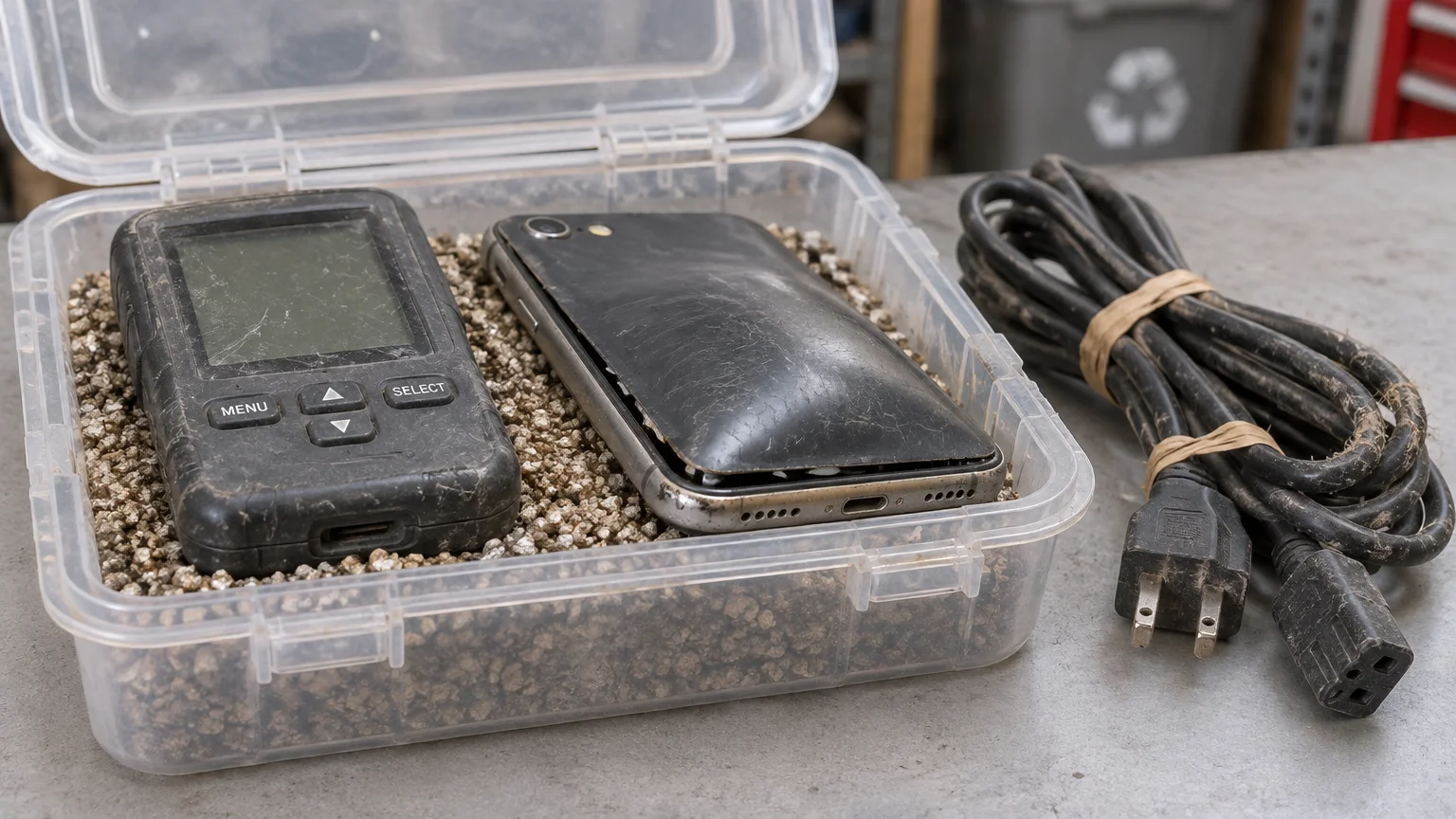
Dead flip phones, swollen laptop batteries, and outdated cordless tools pile up quietly inside spare closets and desk drawers. Both the U.S. EPA and NFPA warn against tossing lithium-ion batteries or electronics containing them into household trash or curbside recycling bins.
Compactors in garbage trucks and sorting equipment crush loose batteries, which can spark intense fires. Stop using and isolate any device whose battery looks swollen, leaking, corroded, abnormally hot, or misshapen.
Tape exposed battery terminals with non-conductive electrical tape—or seal each battery or old device inside its own separate plastic bag—before transporting it. Drop items off at certified retail or municipal centers found through Call2Recycle or Earth911.
Once dead devices leave the house, dump out your tangled cord drawer and match every cable to an item you actually use today. Store only active chargers inside one small zippered pouch or divided tray so cords never spill across tabletops.
Wrap a small strip of white masking tape around active charger plugs and write the matching device name in bold black marker. Clear labels stop you from holding onto spare cords just in case something needs them later.
11 Outdated or Dangerous Cleaning Chemicals
Crowded under-sink cabinets often hide crusty bleach jugs, mystery spray bottles, and half-empty specialty cleaners stacked three rows deep. Reaching past plumbing pipes for heavy bottles strains your back and increases the chance of dangerous chemical spills.
The CDC and Poison Control warn never to mix household bleach—5% to 9% sodium hypochlorite—with ammonia, which creates toxic chloramine gas. Mixing bleach with acids like vinegar, toilet cleaners, or rust removers produces chlorine gas, risking severe lung injury.
Toss unlabeled bottles, leaky caps, and any homemade diluted bleach spray older than 24 hours, because diluted bleach loses disinfecting effectiveness after one day. Check your local municipality for household hazardous waste drop-off days when discarding old solvents or rust removers.
If household cleaners ever mix accidentally, leave the room for fresh air immediately and call Poison Help at 1-800-222-1222—or dial 911 for breathing trouble. Keeping only two or three clearly labeled essentials under the sink prevents accidental grabs.
Place those few active bottles inside a single lightweight plastic cleaning caddy with a sturdy center handle. You can lift the entire caddy straight out onto the counter without kneeling on hard tile or twisting around drainpipes.
Simple Senior Decluttering Tips to Pace Your Progress
Big weekend cleanouts drain your energy and leave half-sorted boxes blocking hallways overnight. Break downsizing into calm, 15-minute sessions that always finish before you feel tired:
- Pick one micro-zone: Choose a single drawer, one pantry shelf, or one square yard of entryway floor rather than an entire room.
- Use three clear targets: Set out one sturdy trash bag, one open donation box, and one small tray for items moving to a safer prime-zone shelf.
- Stop on the timer: When 15 minutes pass, tie up the trash bag, load the donation box into your trunk or near the exit, and wipe the clear surface.
- Review on a schedule: Do a quick medication and pantry scan every 6 months when you test your smoke alarms.
Skip expensive matching woven baskets or heavy glass canisters that look great in catalogs but trap dust and hide what sits inside. Smooth, clear acrylic or polypropylene bins with open handles cost less, weigh almost nothing, and keep daily routines effortless.
If you live alone or manage a multi-story home, ask a relative, neighbor, or professional organizer to carry heavy donation boxes out to the car. Keeping hallways clear at the end of every session protects your balance while you simplify.
Your First 15-Minute Step Today
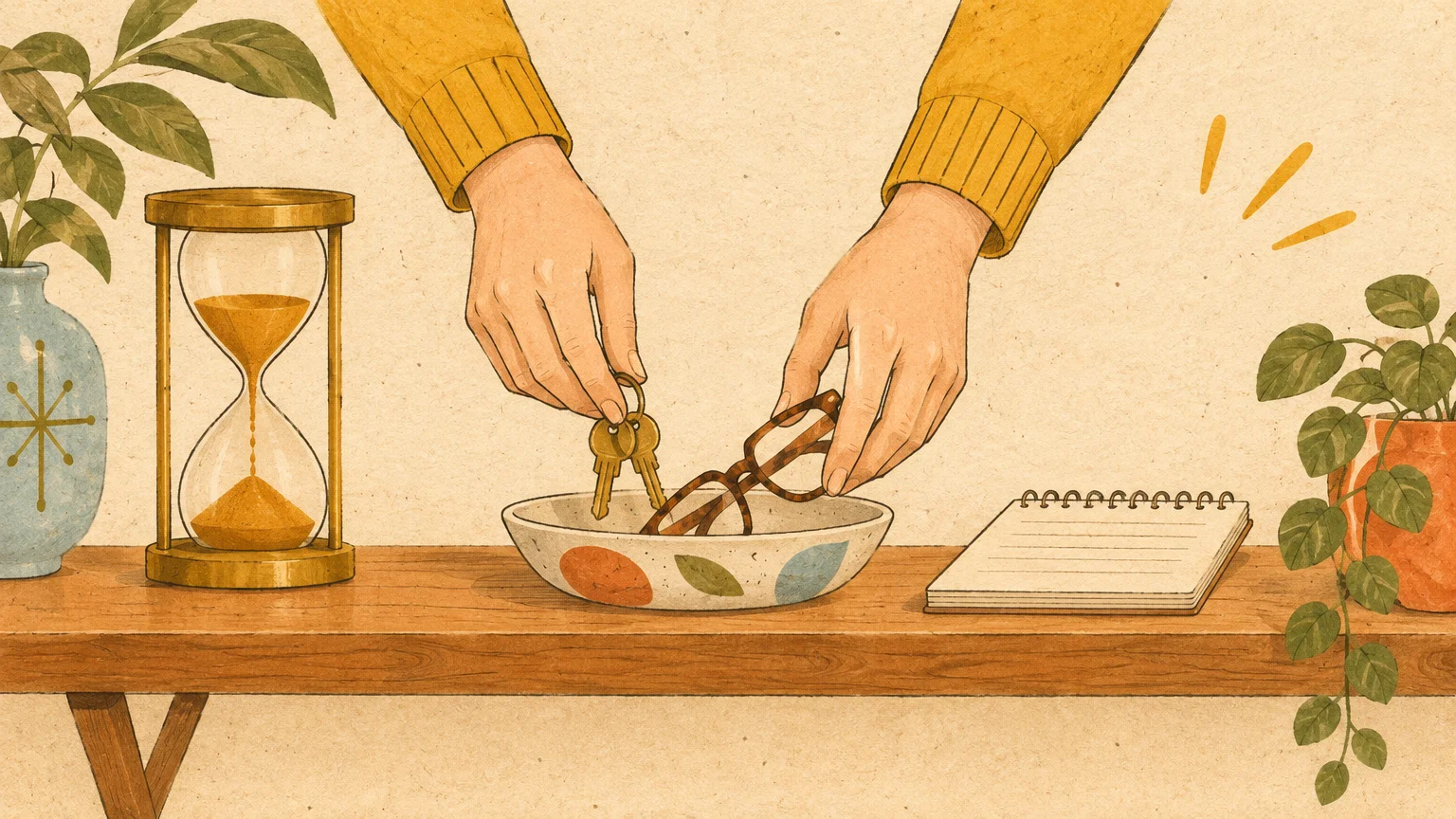
Walk from your front door to your favorite chair right now and pick up every loose throw rug, stray shoe, and trailing cord in your path. Setting one 15-minute timer for that safety lane creates instant breathing room today without tiring you out.
Tomorrow, open one bathroom or kitchen drawer with the same gentle timer, and let steady small wins build a safer, calmer home.