Moving indoor essentials onto your patio creates an inviting living space, but outdoor exposure destroys vulnerable materials within days. Moisture, sunlight, and fluctuating temperatures break down everyday household goods far faster than most homeowners anticipate.
Knowing which things shouldn’t be left outside protects your budget and prevents irreversible damage to your favorite furnishings. You will save hundreds of dollars by recognizing vulnerable materials before weather ruins them.
Here are seven common household items damaged outdoors, along with practical adjustments to safeguard your belongings.
01 Indoor Wood Furniture and Veneers
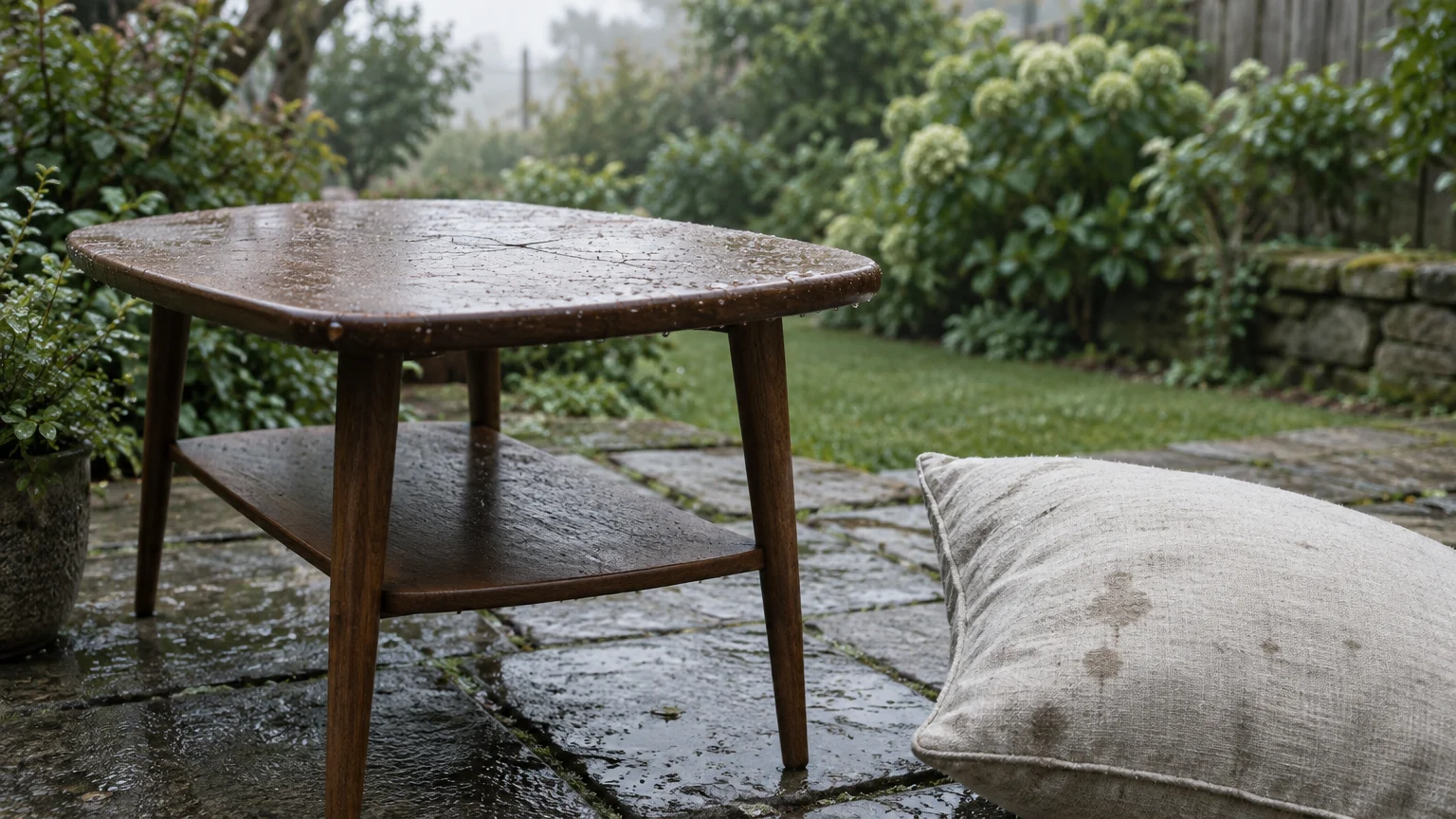
Indoor tables, dining chairs, and dressers rely on glues and finishes formulated strictly for climate-controlled spaces. Leaving them on a covered porch exposes them to rapid shifts in humidity.
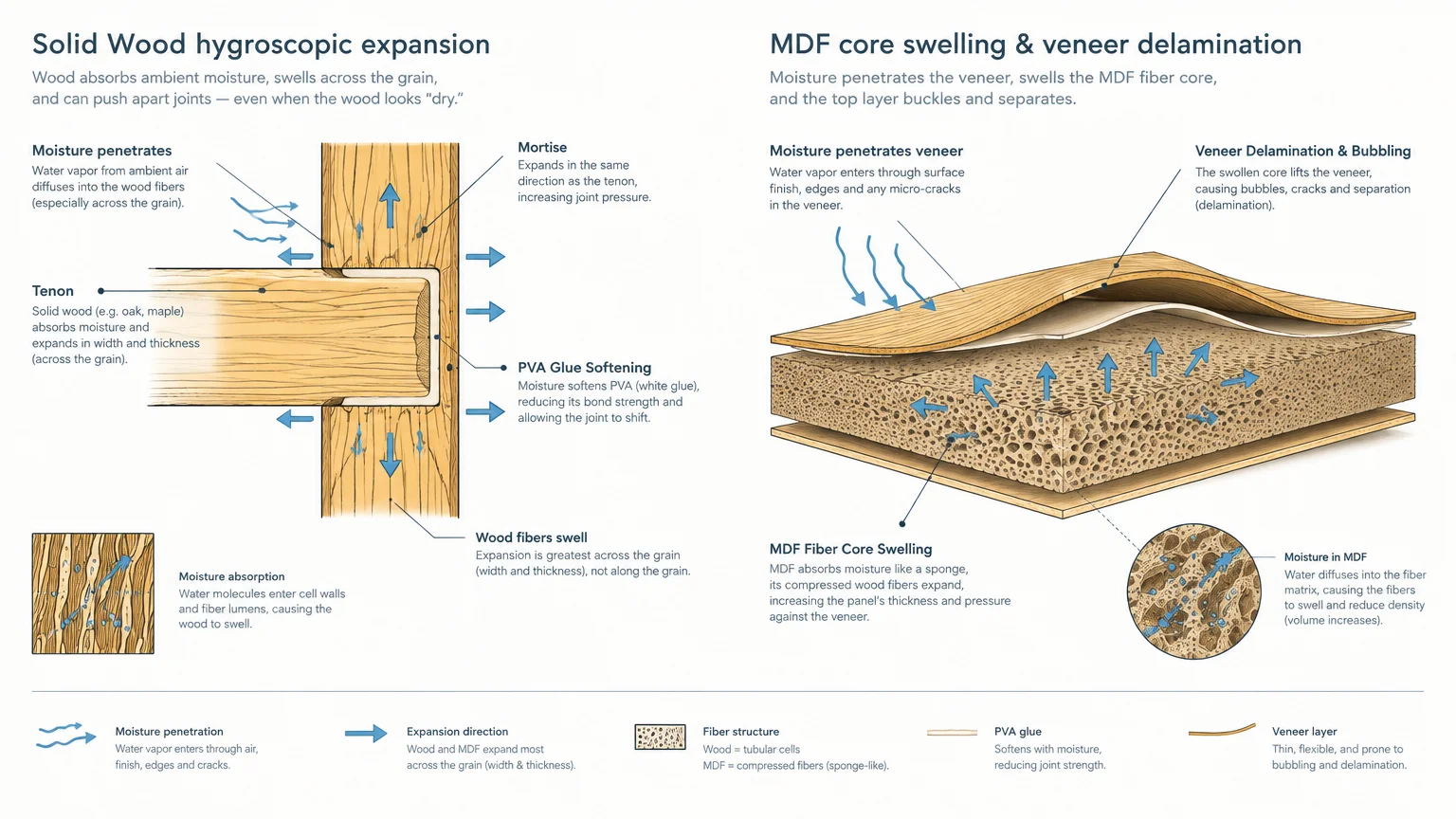
Solid wood is hygroscopic, meaning it constantly absorbs and releases atmospheric water vapor. Research from the USDA Forest Products Laboratory demonstrates that shifting humidity causes wood fibers to expand and contract unevenly.
This continuous cycling cracks protective topcoats, warps flat tabletops, and pops glued structural joints apart. Polyvinyl acetate (PVA) interior wood glue softens when damp, quickly loosening table legs and chair stretchers.
Veneered furniture suffers catastrophic damage when exposed to outdoor moisture. Particleboard or medium-density fiberboard (MDF) beneath the wood veneer swells permanently once exposed to high ambient humidity or night dew.
The underlying fiber core behaves like a sponge, causing the outer veneer layer to bubble, crack, and peel. Once compressed fiberboard swells, you cannot clamp it back to its original shape.
Protect your wooden pieces by keeping all indoor-rated furniture inside conditioned rooms. If you want outdoor wood furniture, invest in naturally resilient species like teak, cedar, or white oak treated with exterior-grade sealants.
02 Lithium-Ion Batteries and Cordless Power Tools
Stashing cordless drills, lawn equipment, or spare battery packs on an open deck or shed workbench creates severe safety hazards. Extreme heat and morning moisture ruin rechargeable cells rapidly.
High ambient temperatures accelerate internal chemical breakdown inside lithium-ion cells. According to safety guidance from the National Fire Protection Association, excessive heat can trigger thermal runaway and create intense fires.
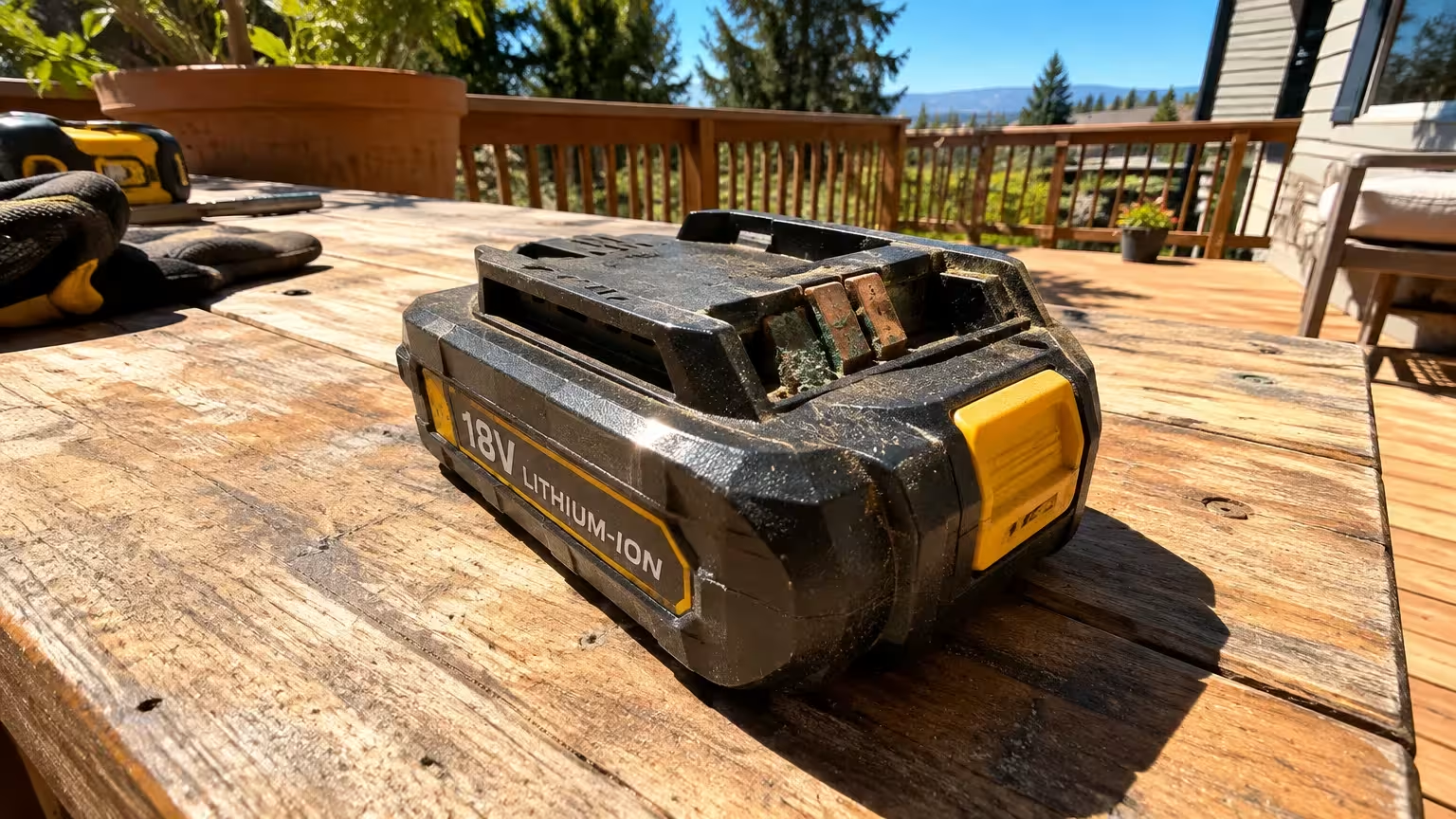
Lithium-ion packs are critical items to keep out of the sun. Direct solar radiation drives internal battery temperatures far past safe operational limits, swelling the casing and permanently destroying energy storage capacity.
Outdoor humidity introduces a second serious threat to sensitive electronics. Morning condensation seeps past plastic seams and corrodes terminal contacts, which can short-circuit the internal battery management system.
Store your power tool batteries inside an interior closet or climate-controlled utility area. Maintain storage temperatures between 50°F and 77°F to protect cell life and keep your household safe.
03 Indoor Upholstered Chairs and Decorative Cushions
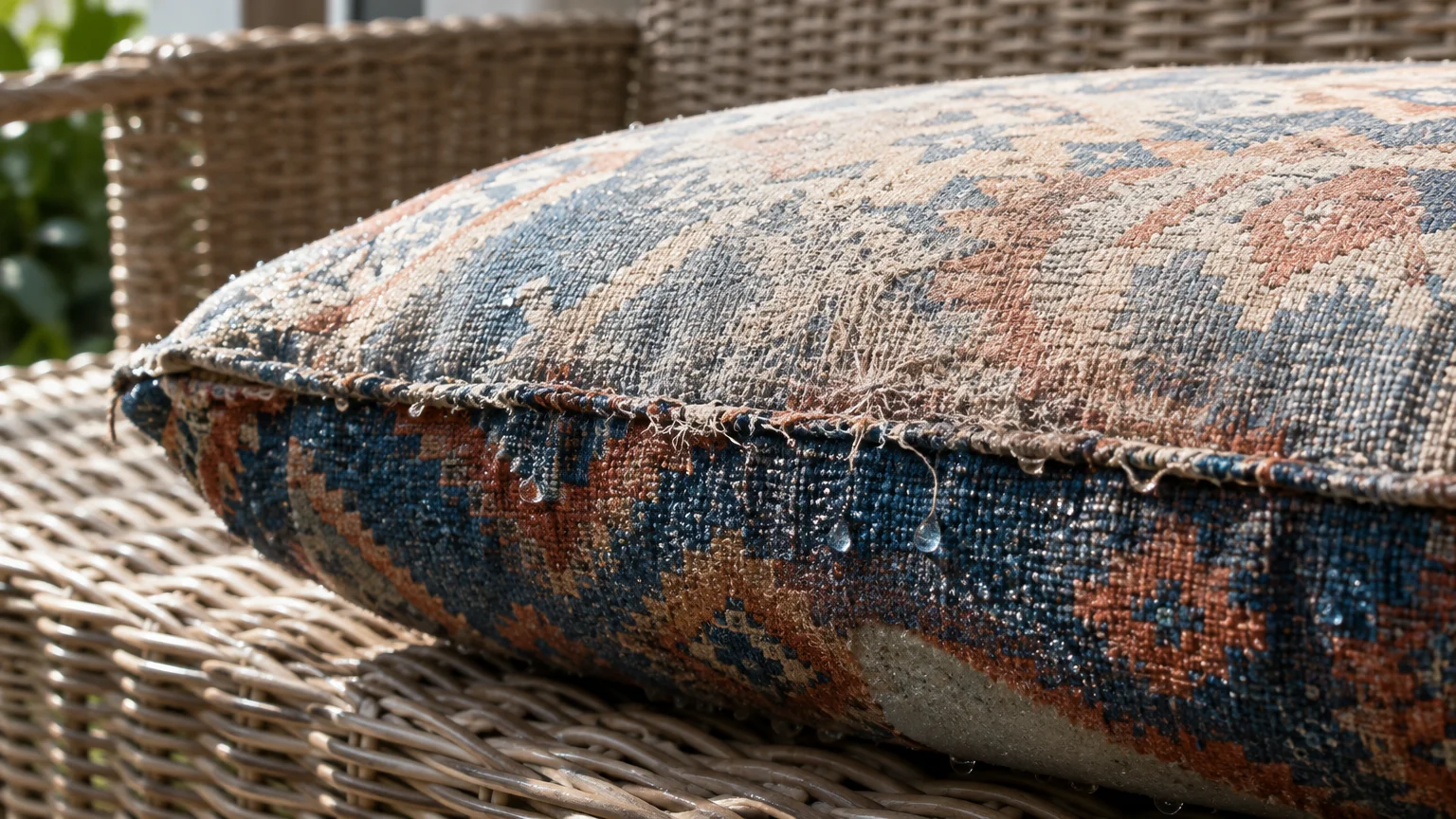
Bringing plush living room armchairs or indoor accent pillows outside creates an appealing patio lounge. However, these pieces represent major outdoor storage mistakes that lead to swift contamination.
Indoor fabrics lack the UV inhibitors found in solution-dyed outdoor textiles. Sunlight oxidizes untreated polyester, linen, and cotton threads, fading rich patterns and shredding structural seams within weeks.
The inner cushion core presents an even more stubborn maintenance problem. Indoor furniture uses open-cell polyurethane foam, which draws in rain showers and evening humidity like a sponge.
Moisture trapped deep inside dense open-cell foam cannot evaporate easily. The Centers for Disease Control and Prevention warns that mold colonies establish themselves in damp materials within 24 to 48 hours.
Once mold infiltrates interior foam, surface wiping cannot remove the hazardous spores. Always choose closed-cell, reticulated foam cushions engineered specifically for rapid outdoor drainage.
Bring indoor cushions back inside immediately after using them outdoors. Store exterior cushions in ventilated deck boxes or breathable protective covers when rain approaches.
04 Household Cleaners, Paints, and Liquid Chemicals
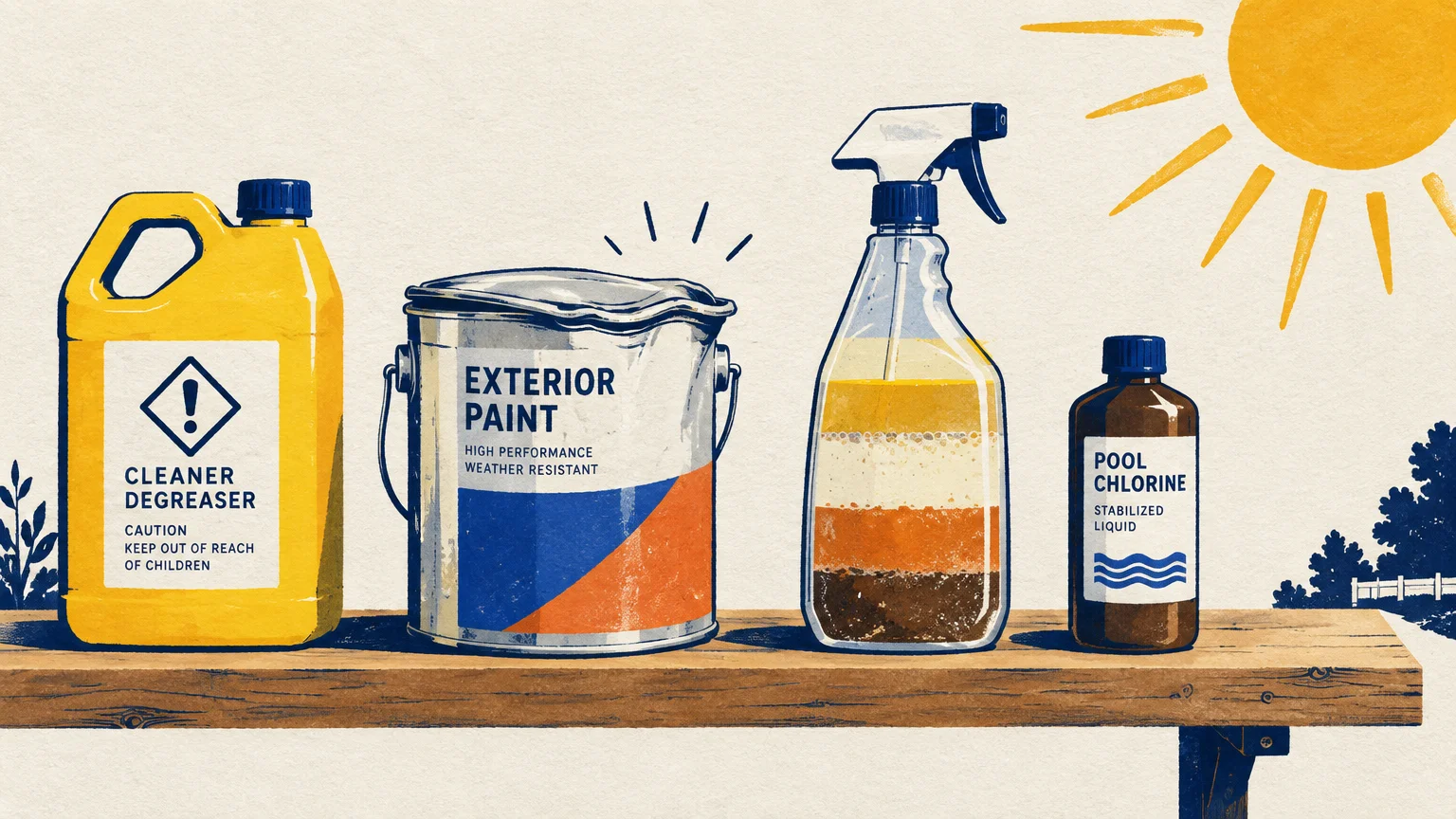
Many homeowners park liquid floor cleaners, leftover latex paint, and garden sprays on open patio shelving. Exposure to temperature swings quickly alters their molecular stability.
Water-based paints and emulsion cleaners curdle if overnight temperatures dip near freezing. Once latex polymers freeze and separate, no amount of mechanical stirring can restore their smooth, protective consistency.
Intense summer heat creates dangerous pressure spikes inside sealed plastic containers. Volatile solvents expand and off-gas rapidly in heat, warping thin plastic jugs and causing threaded caps to fail.
The Environmental Protection Agency advises storing household chemicals in cool, dry, well-ventilated locations away from extreme weather. Storing chemicals in unconditioned outdoor spaces risks chemical leaks and toxic exposure.
Heat-degraded disinfectants also lose their sanitizing power over time. Degraded cleaning formulas will not kill household bacteria effectively, leaving your kitchen and bathroom vulnerable to contamination.
Designate an indoor utility shelf or basement cabinet for all household cleaners and paints. Keep these containers upright, tightly sealed, and safely out of reach of grandchildren and pets.
05 Hardcover Books, Photo Albums, and Paper Records
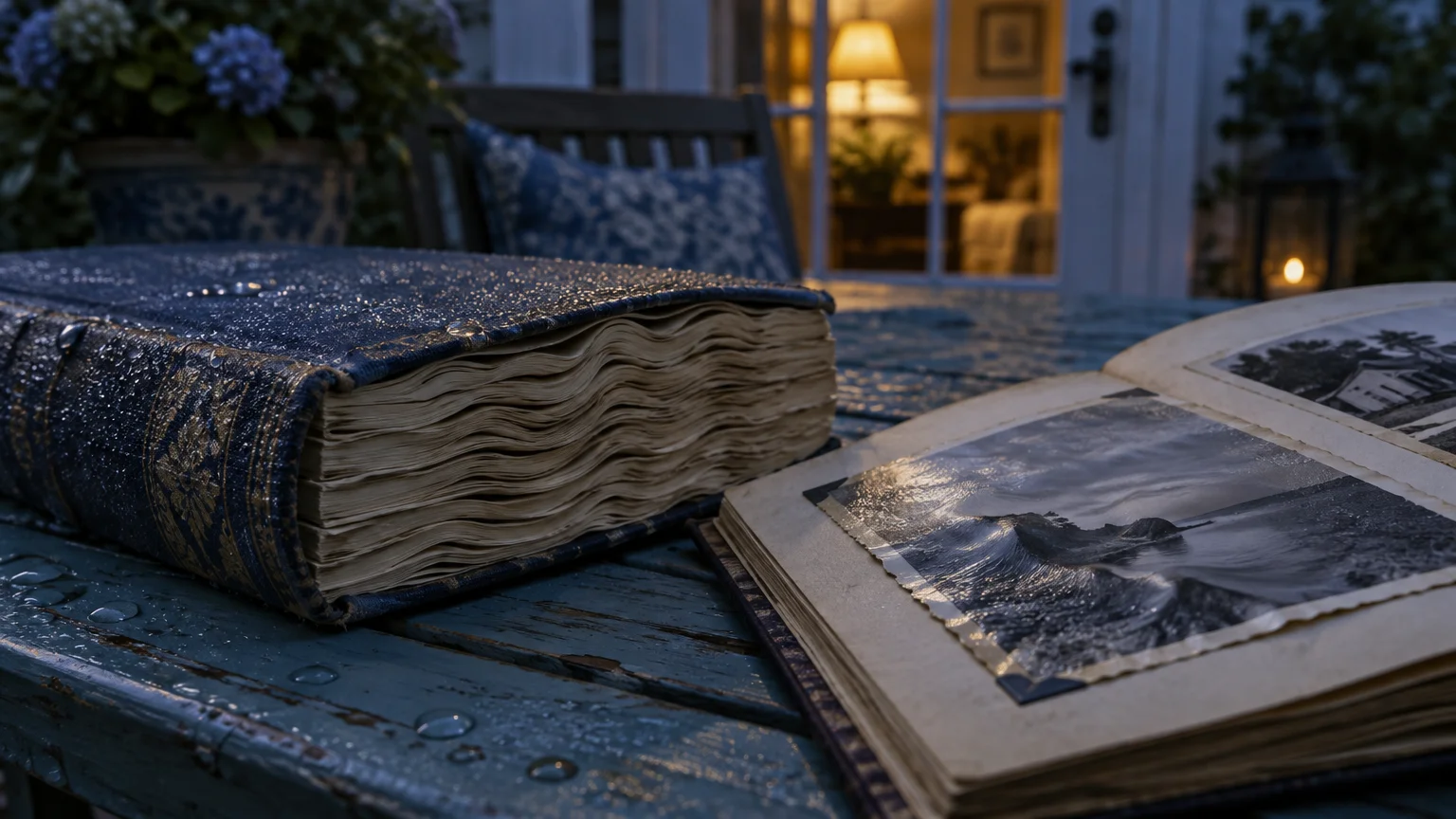
Leaving reading books, magazines, or family photo albums on an outdoor side table invites rapid deterioration. Paper fibers and traditional bookbinding adhesives react aggressively to ambient moisture.
Cellulose paper fibers expand unevenly when relative humidity climbs above 60 percent. This moisture absorption causes cockling—a permanent, wavy distortion along paper margins that pressing cannot undo.
Direct sunlight triggers rapid photo-oxidation in paper, turning lignin-rich wood pulp yellow and brittle within days. Ultraviolet radiation also bleaches color photographs and printer inks permanently.
Damp paper also attracts destructive household pests to your patio space. Silverfish, booklice, and beetles seek out moist paper and consume the starchy animal glues holding book spines together.
Store cherished books and family heirlooms strictly inside climate-controlled living rooms. If you enjoy reading on the deck, bring out a single paperback and return it indoors immediately after use.
06 Musical Instruments and Acoustic Equipment
Strumming an acoustic guitar or playing a keyboard on the porch makes for a relaxing evening. However, leaving musical gear outdoors exposes delicate tonewoods and precision electronics to severe damage.
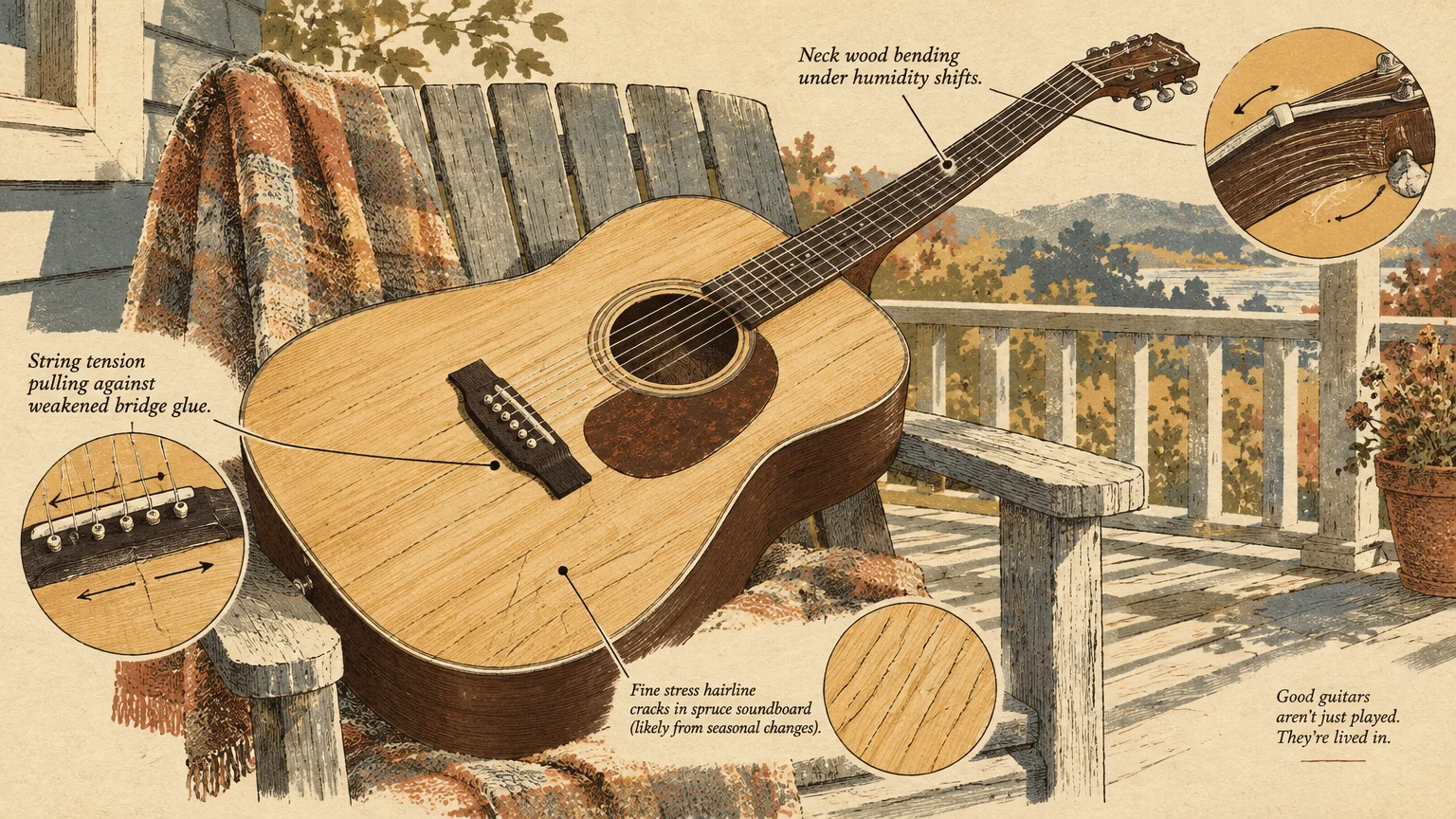
Acoustic instruments use thin tonewoods assembled under constant mechanical tension. Swift humidity swings cause soundboards to swell or shrink, throwing string action completely out of alignment and warping instrument necks.
Summer heat softens traditional hide glues and aliphatic resins inside acoustic bodies. Weakened structural joints permit internal wood braces to detach, causing soundboards to collapse under string pull.
Electronic instruments fare no better in outdoor environments. High humidity creates microscopic condensation across circuit boards, causing erratic key responsiveness, contact corrosion, and complete electronic failure.
Always store musical gear in quality hardshell cases within rooms kept between 45 and 55 percent relative humidity. Never leave valuable instruments outside during meals or overnight gatherings.
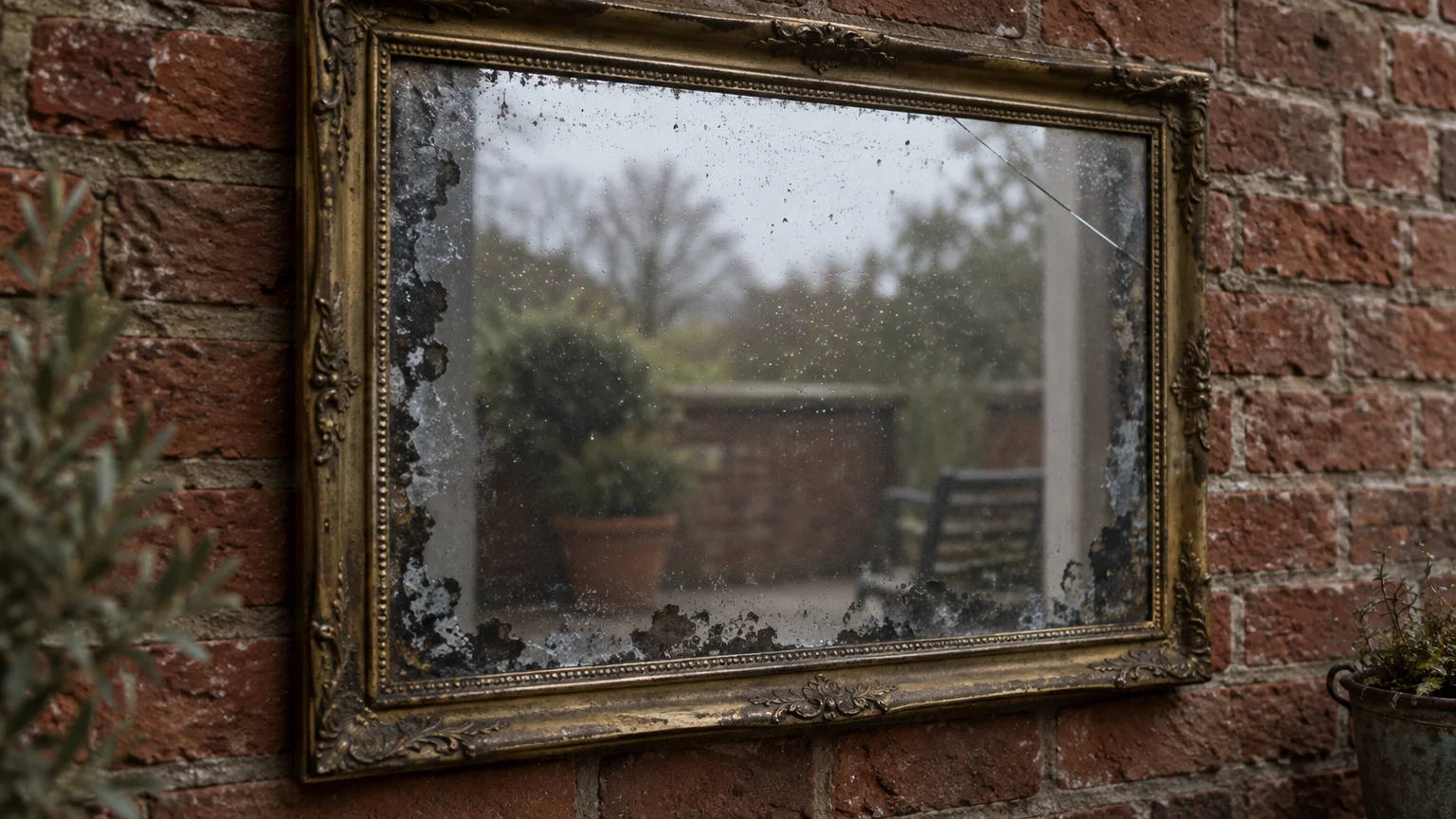
07 Non-Tempered Glass Mirrors and Framed Wall Art
Hanging a vintage decorative mirror or framed canvas art on a patio wall adds visual charm. Unfortunately, indoor decorative accents cannot handle outdoor condensation and thermal swings.
Standard indoor mirrors feature a thin chemical silvering layer protected by thin backing paint. Outdoor moisture penetrates edge seams and oxidizes the silver, causing black spots known as mirror desilvering.
Picture frames trap moisture behind their glass panes through capillary action. When sunlight warms the glass, trapped humidity vaporizes and condenses against the art, causing paper fibers to mold and stick.
Non-tempered picture glass also remains highly susceptible to thermal shock. Rapid transitions from cool morning shade to blazing afternoon heat cause uneven thermal expansion, cracking fragile glass panels without physical impact.
Decorate exterior walls with weatherproof plaques made from treated cedar, powder-coated metal, or outdoor resin. Reserve delicate glass frames and antique mirrors exclusively for interior spaces.
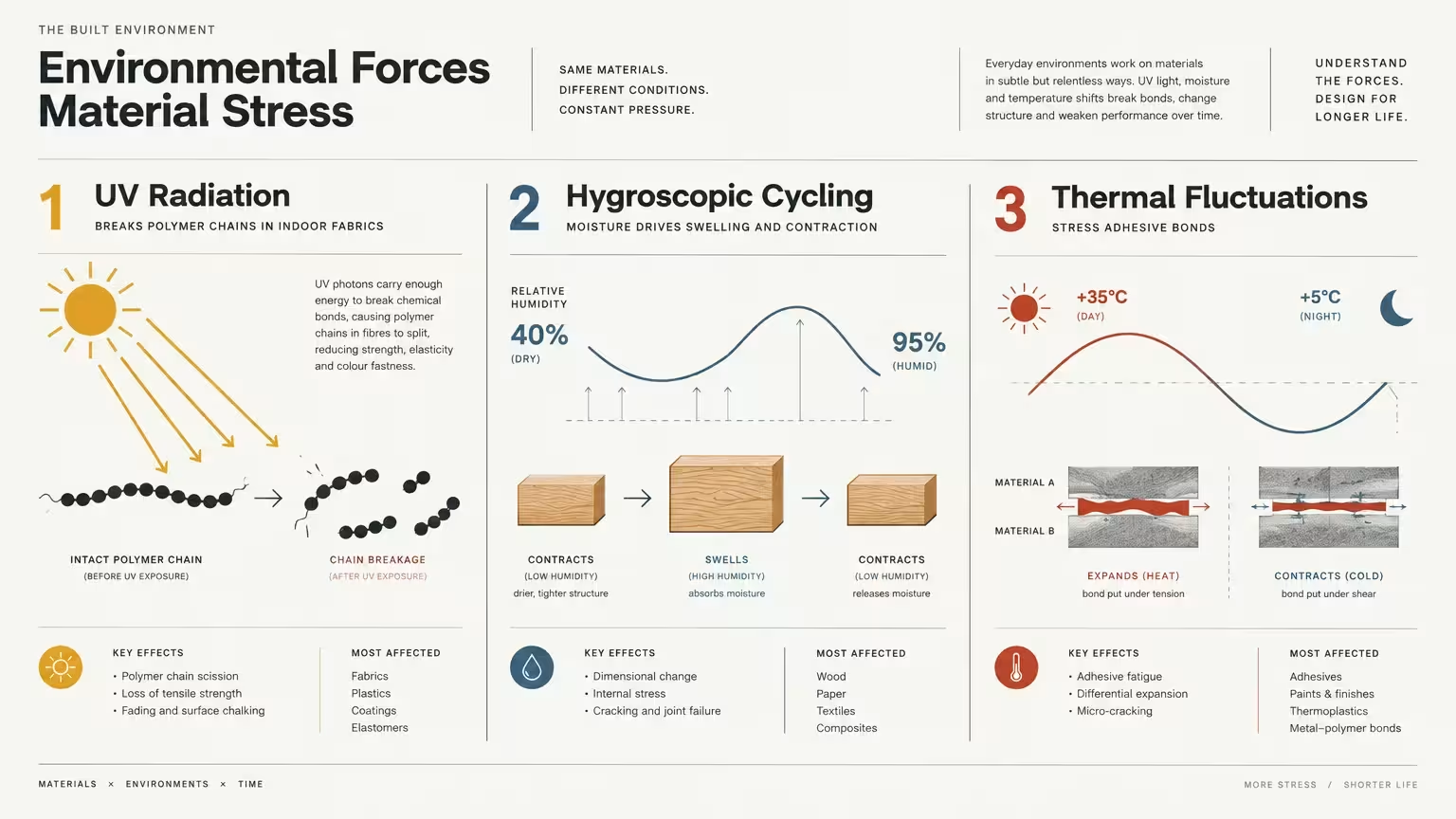
The Invisible Forces: Why Outdoor Air Destroys Indoor Materials
Outdoor air contains environmental stressors that modern indoor climate systems filter out. Understanding these forces helps you make smarter decisions about your outdoor layout.
Ultraviolet radiation breaks down synthetic and organic polymers on a molecular level. This degradation strips synthetic fibers of elasticity, yellowing clear varnishes and splitting plastic chair components.
Daily thermal cycling causes continuous expansion and contraction in solid materials. Because different components expand at unequal rates, glued joints and multi-layer composites sheer apart under internal mechanical stress.
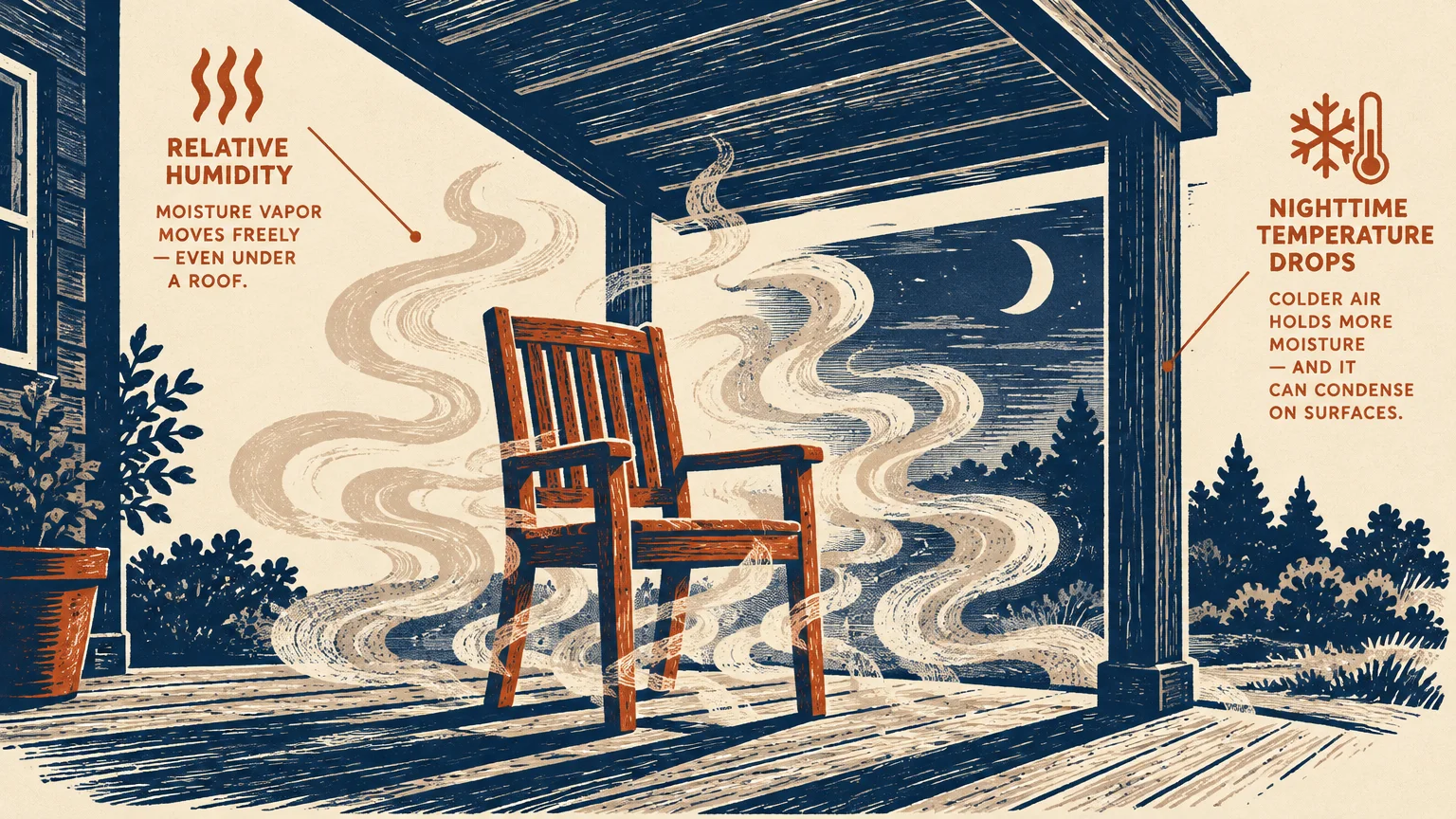
Dew point drops cause liquid moisture to deposit on surfaces every single night. Even under a solid porch roof, ambient dew settles over surfaces, fueling biological fungal growth within hours.
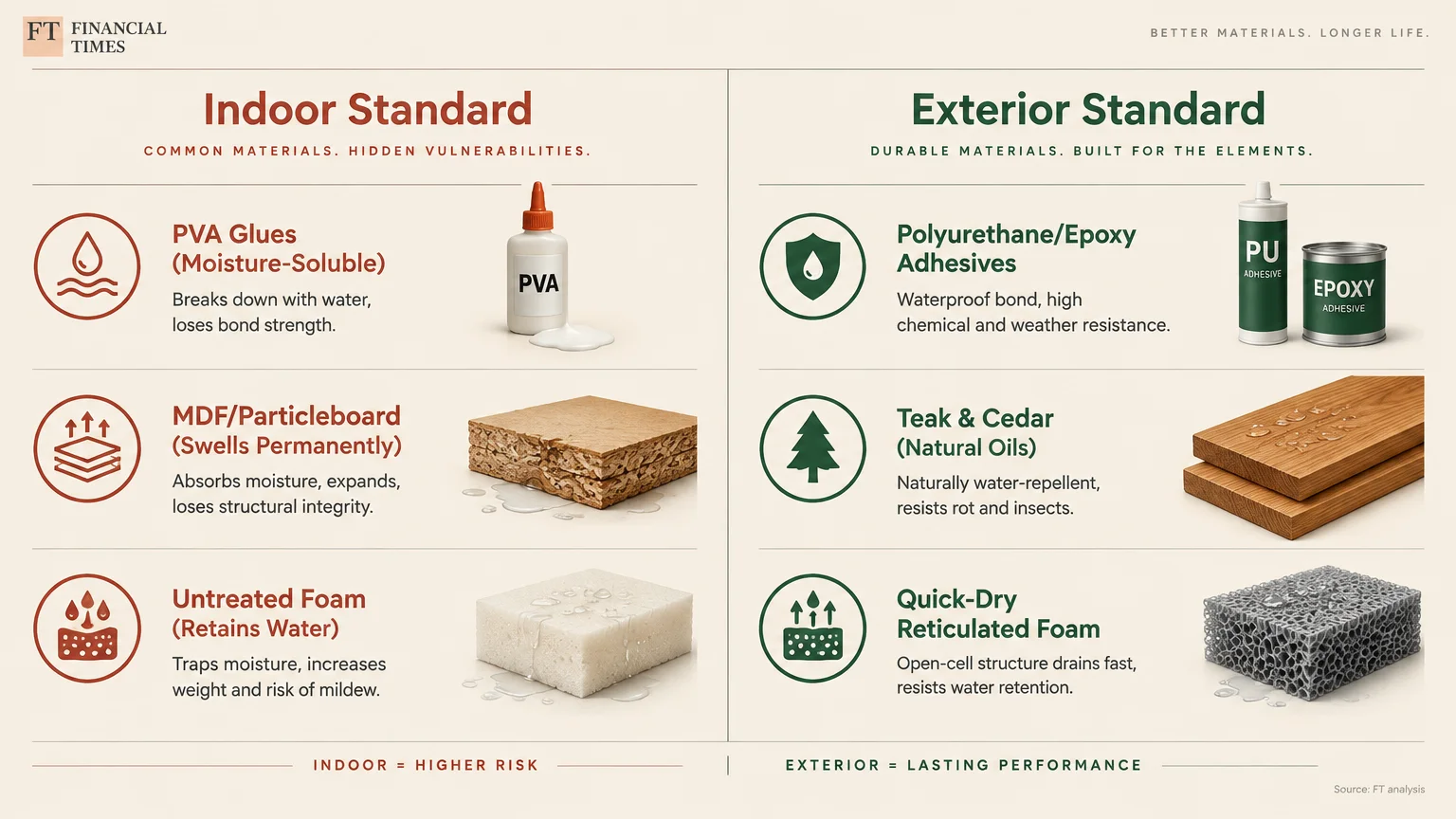
Indoor Materials vs. Outdoor Standards
Manufacturers design indoor and exterior products with fundamentally different engineering standards. This comparison table highlights why indoor components fail when exposed to the elements.
| Product Category | Indoor Standard | Outdoor-Rated Standard | Failure Mechanism Outside |
|---|---|---|---|
| Wooden Furniture | PVA glue; interior varnish; MDF or thin veneers | Waterproof polyurethane glue; marine spar varnish; solid teak or cedar | Joint separation, veneer delamination, rot, and panel warping |
| Upholstery & Foam | Open-cell polyurethane foam; printed cotton or linen | Reticulated dry-fast foam; solution-dyed acrylic (Sunbrella) | Severe mold growth, water retention, fabric fading, and seam rot |
| Hardware & Fasteners | Standard zinc-plated or raw steel screws | Marine-grade 304 or 316 stainless steel; brass | Surface rust, galvanic corrosion, and structural shearing |
| Electronics & Batteries | Unsealed housings; non-conformal coated circuit boards | Gasket seals; IPX water-resistance ratings; conformal coatings | Short circuits, terminal corrosion, and thermal runaway fires |
| Mirrors & Glass | Standard annealed glass; paint-sealed silver backing | Tempered safety glass; sealed marine-grade backing mirror coats | Desilvering, glass thermal shock cracking, and backing rot |
Common Misconceptions About Weatherproofing Household Items
Many homeowners attempt quick hacks to adapt indoor items for outdoor use. Unfortunately, most shortcut weatherproofing methods fail to deliver real long-term protection.
Spraying waterproofing silicone onto indoor throw pillows does not transform them into outdoor cushions. The spray only repels light surface drops, leaving the absorbent open-cell foam inside completely defenseless against soaking humidity.
Draping a plastic tarp over indoor wood furniture often accelerates decay rather than stopping it. Tarps trap evaporating ground moisture underneath, creating a high-humidity greenhouse that breeds mold and rots wood fibers.
Applying a single layer of clear exterior lacquer over indoor furniture rarely prevents wood swelling. Wood breathes through every unfinished underside and screw pocket, drawing in water vapor that lifts the clear coat from beneath.
Relying on porch ceilings for total weather protection remains another frequent mistake. Wind-driven rain and airborne morning moisture penetrate deep under roof overhangs, soaking your furniture just as effectively as direct rainfall.
Outdoor Layout Checklist: Daily Habits to Protect Your Belongings
Use this practical checklist to audit your patio, simplify your routine, and protect your household goods from accidental weather damage.
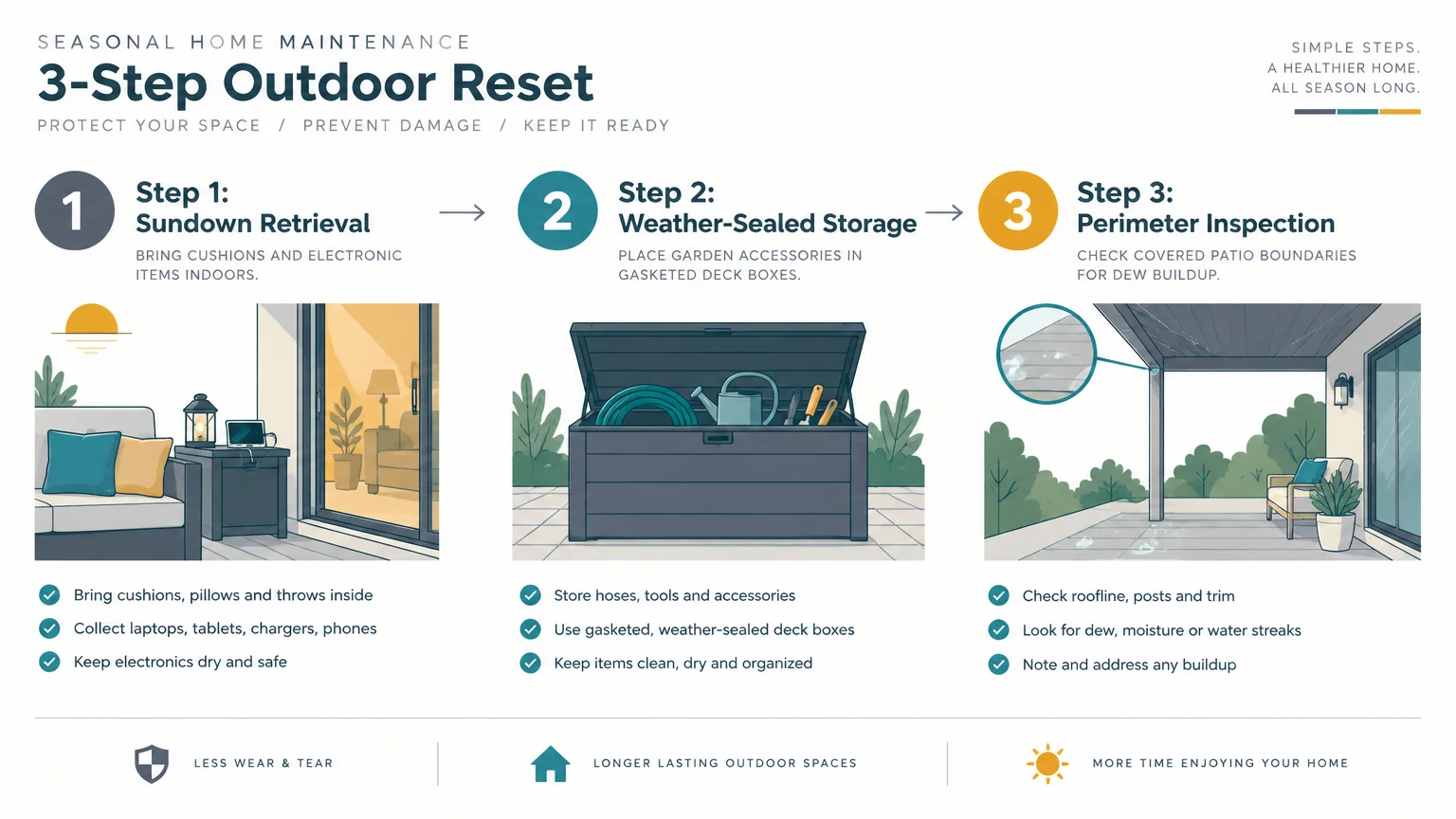
- Conduct a nightly patio sweep: Collect tablets, cordless tools, paperbacks, and indoor accent pillows before turning off exterior lights.
- Verify storage container seals: Check deck boxes to confirm rubber weatherstripping remains pliable and free of dried leaves or grit.
- Inspect under-porch zones: Ensure that indoor furniture kept on screened porches sits at least five feet inward from open screens to dodge wind-blown rain.
- Elevate outdoor storage bins: Place storage boxes on rubber risers or pavers so pooled rainwater cannot enter from beneath drainage holes.
- Check tool battery indicators: Never recharge hot batteries immediately after removing them from an outdoor environment; let them reach room temperature first.
- Install outdoor-rated mirrors only: Verify that any mirror hung on an exterior wall specifies moisture-resistant backing and stainless steel hanging brackets.
Smart Solutions for Comfortable Outdoor Living
You do not have to sacrifice comfort to keep your patio safe from the weather. By selecting items engineered for exterior conditions, you create an inviting space that requires minimal maintenance.
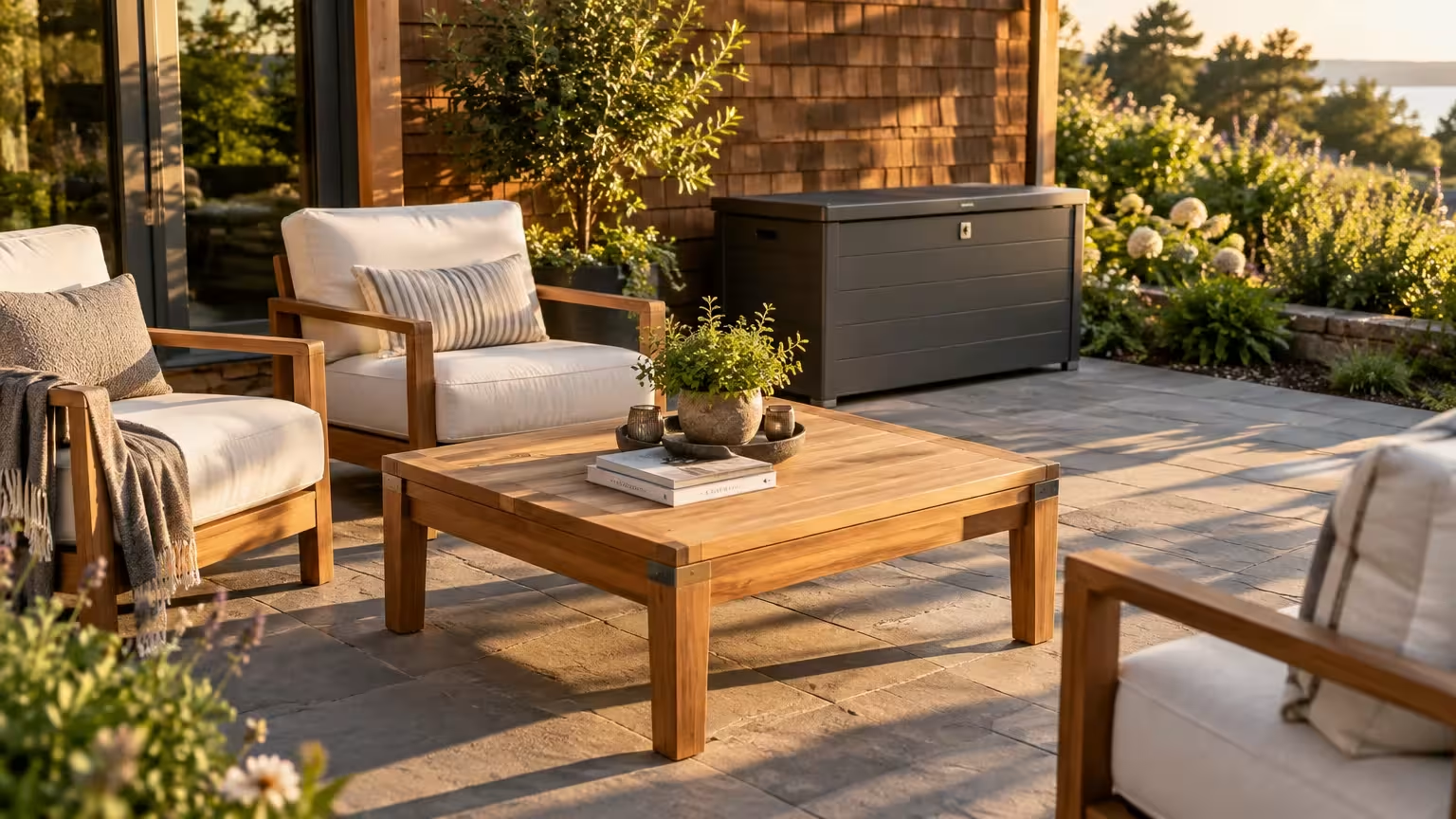
Choose high-density polyethylene (HDPE) lumber for outdoor dining tables and lounge chairs. This recycled material withstands intense sunlight, never requires paint, and washes clean with standard dish soap and water.
Equip your exterior chairs with solution-dyed acrylic cushions containing reticulated foam. Rain passes straight through this specialized foam core, allowing your seating to dry thoroughly within hours of a storm.
Install exterior-grade powder-coated storage cabinets on your covered patio. These secure units protect gardening supplies and outdoor accessories while keeping unconditioned spaces tidy and organized.
Your Next Practical Step
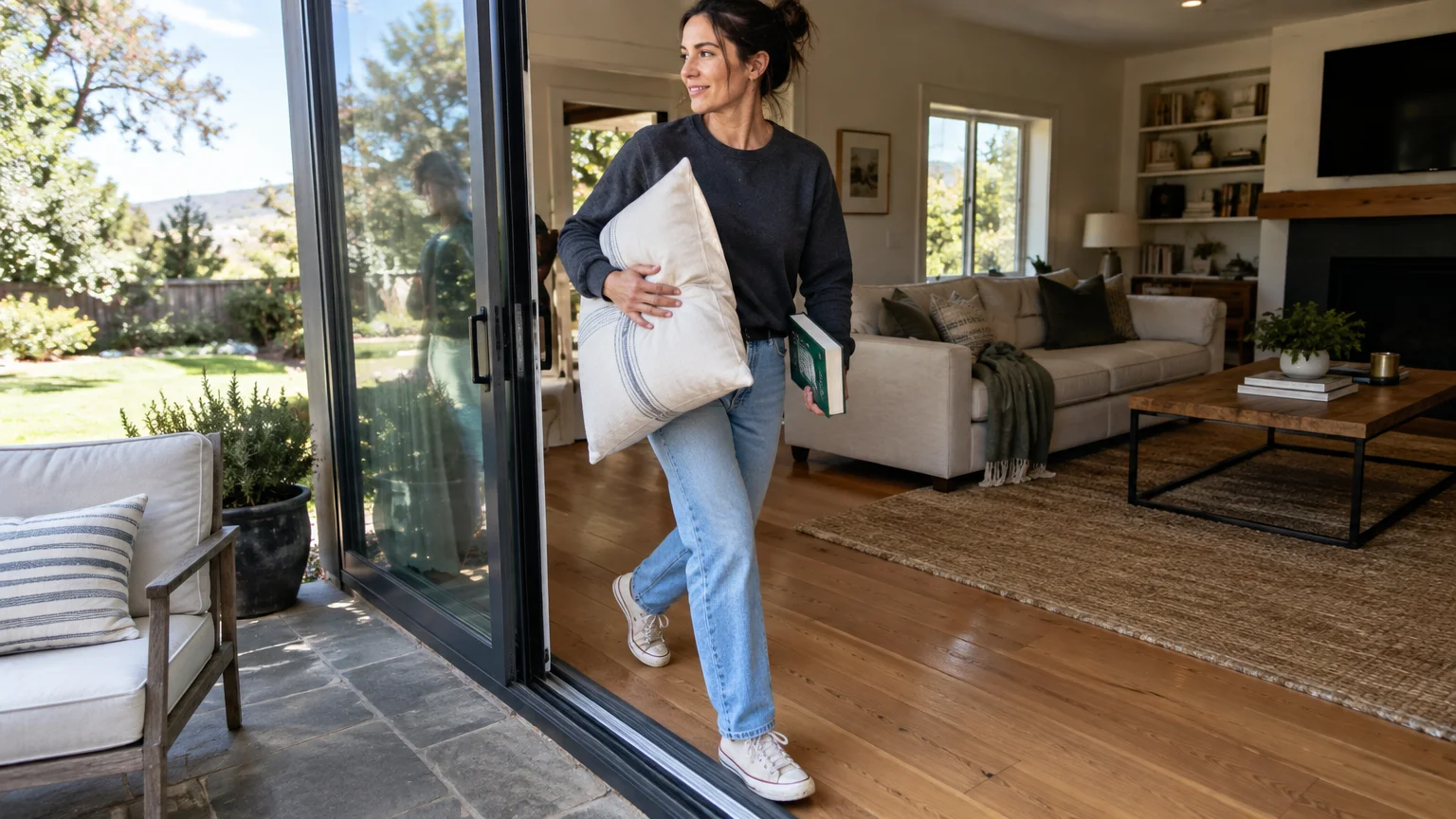
Walk through your porch, deck, and patio right now with a critical eye. Look specifically for vulnerable indoor items—like cordless batteries, indoor pillows, or family books—resting on outdoor tables.
Move those sensitive items back inside your home today. Setting up a dedicated drop tray inside your back door makes returning these goods an effortless, five-second habit every afternoon.