You can solve dozens of stubborn everyday household frustrations using the simple elastic bands sitting in your kitchen junk drawer. Instead of buying expensive single-purpose gadgets, these versatile loops provide instant mechanical grip, tension, and organization across your home.
From gripping stubborn jar lids to stabilizing slippery tools, mastering these household uses for rubber bands saves you time, frustration, and money. They offer fast, low-effort solutions that simplify your daily maintenance and home routines.
Explore these 15 genius home hacks to discover how simple household tricks can transform your everyday cleaning, repair, and storage tasks.
Quick Kitchen Solutions for Grip and Food Prep
1. Slip-Proof Cutting Board Anchors
Smooth countertops offer virtually no friction against plastic or wooden cutting boards. This sudden movement while slicing creates an unexpected slip hazard for your fingers.
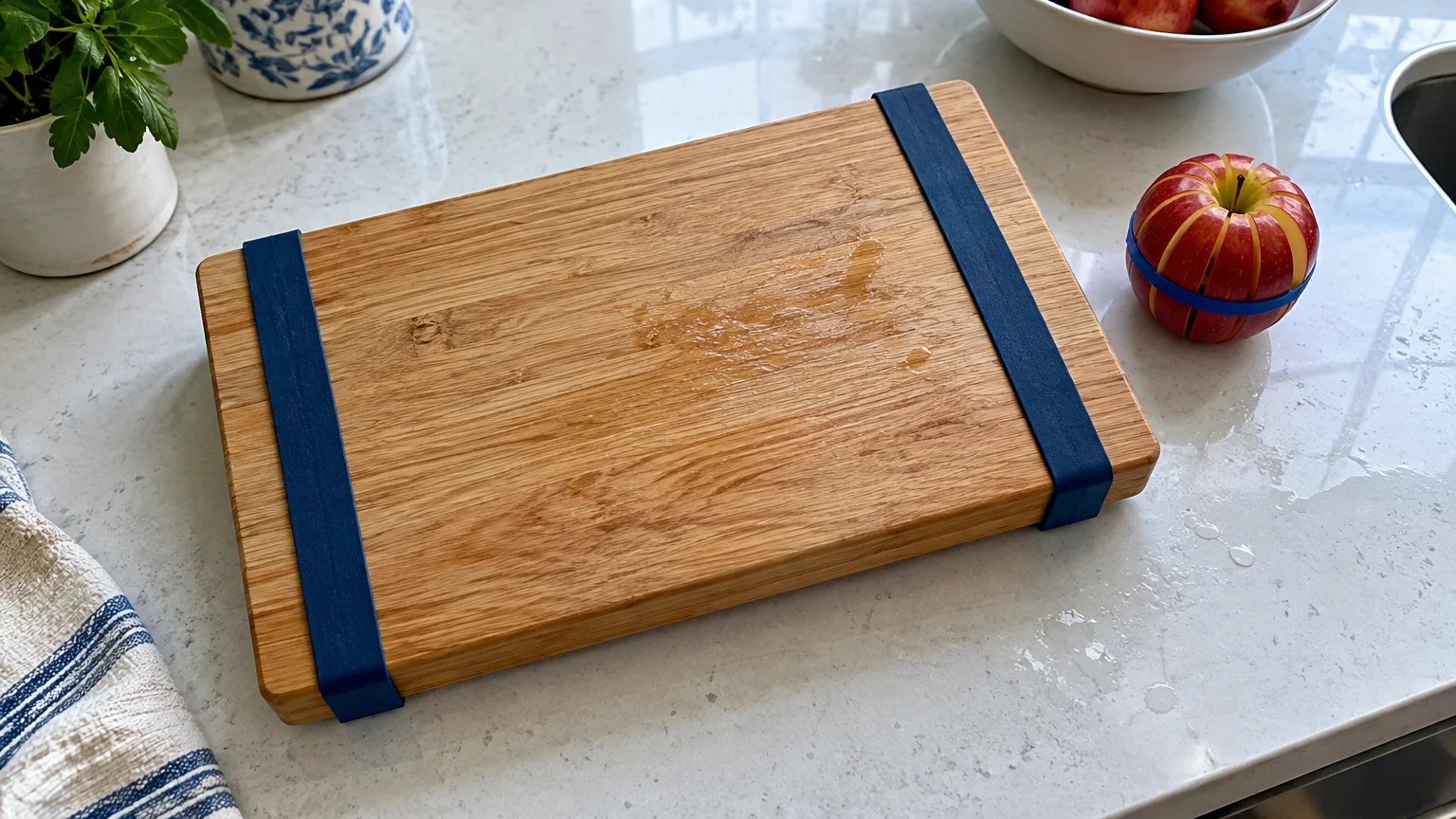
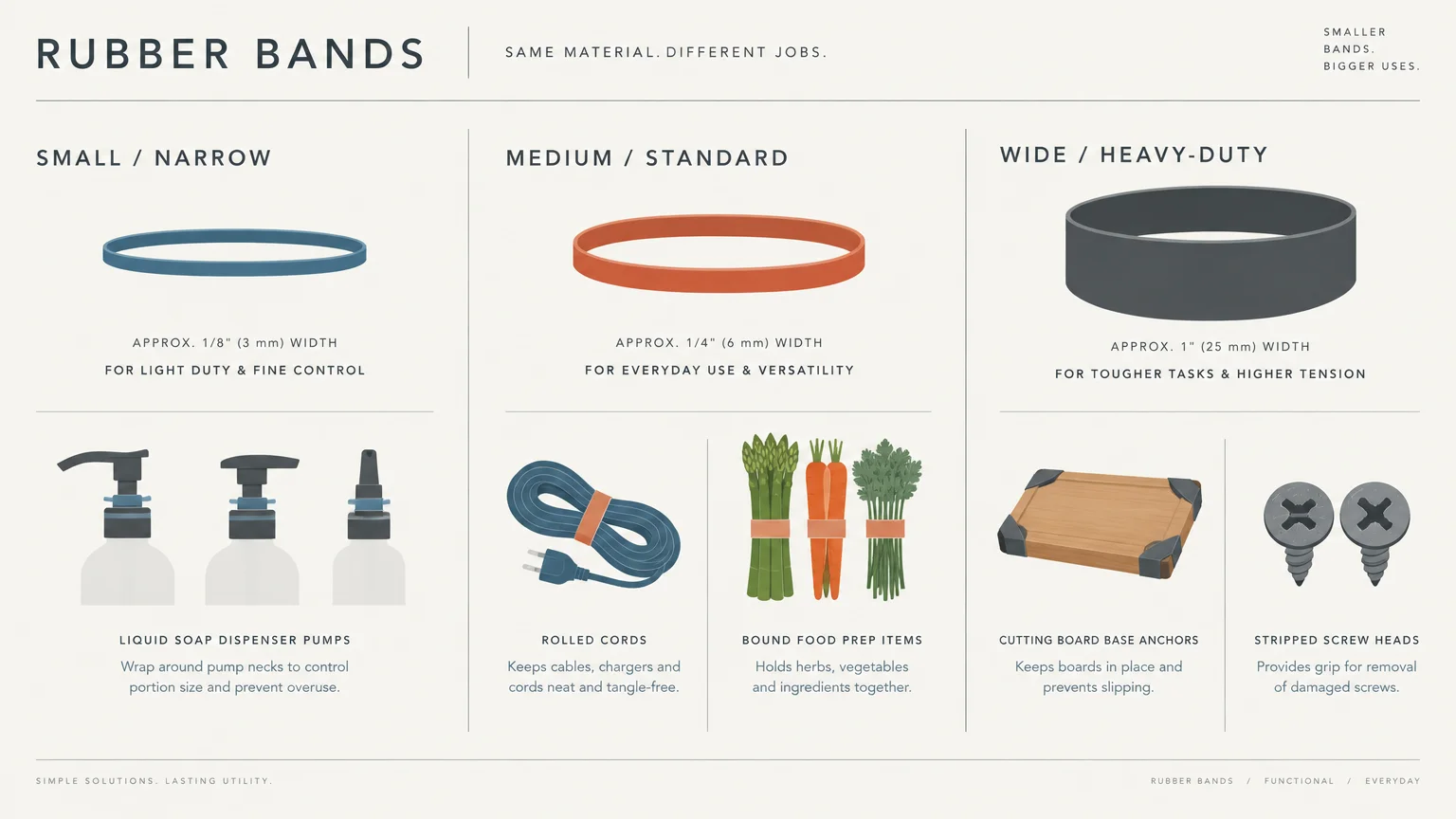
Stretch a wide rubber band around each end of your cutting board. The raised rubber creates high-friction contact points that grip granite, quartz, and laminate securely.
According to food safety guidance from the USDA, stabilizing prep surfaces prevents accidental knife slips and messy spills. You can leave the bands on during washing or replace them whenever they stretch out.
2. Friction Grip for Stubborn Jar Lids
Factory vacuum seals create immense downward pressure on metal jar lids. When your grip slips against polished metal or glass, opening the container becomes painful and exhausting.
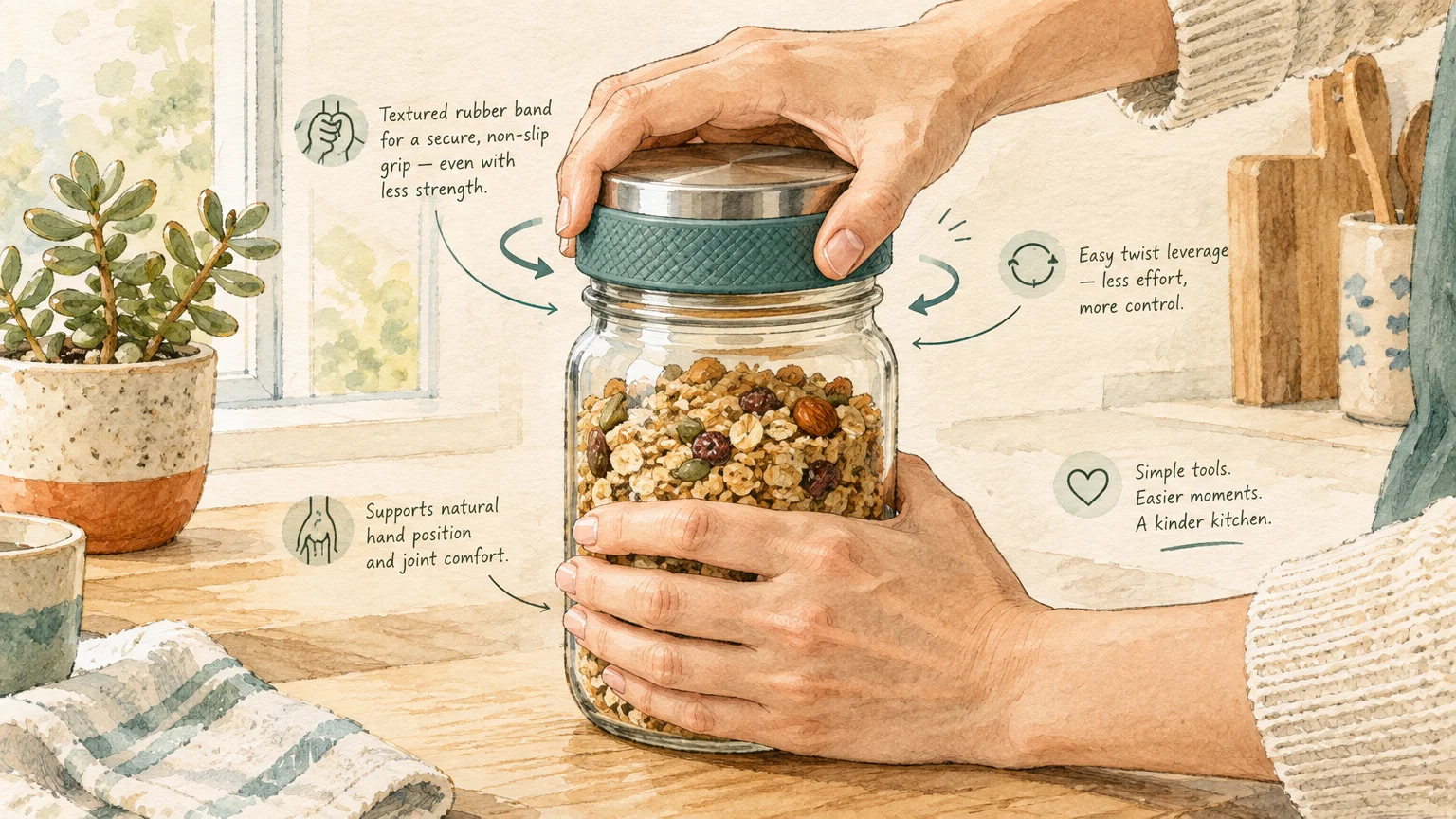
Wrap a thick rubber band tightly around the circumference of the stubborn lid. The elastic material increases your hand traction by multiplying surface friction against the smooth metal.
The CDC NIOSH ergonomics guidelines emphasize reducing extreme mechanical hand strain to protect aging joints. A single rubber band provides the leverage needed to pop stubborn seals without expensive tools.
3. Apple Slice Oxidation Barrier
Apples turn unappealingly brown when polyphenol oxidase enzymes react with atmospheric oxygen. Parents and meal preppers frequently discard oxidized slices that remain completely safe to eat.
Cut an apple into wedges, push the pieces back together around the core, and snap a clean rubber band around the middle. This tight seal keeps air away from the exposed flesh.
Your fruit stays crisp and visually appealing for several hours without adding lemon juice or preservatives. It is an ideal lunchbox solution that reduces avoidable food waste.
4. Liquid Soap Portion Control
Most liquid hand soap and dish soap pumps dispense far more product than you actually need for a thorough wash. Over time, this excess fluid wastes money and leaves messy residue around your sinks.
Wrap a small rubber band tightly around the neck of the dispenser pump mechanism beneath the nozzle. This physical barrier restricts how far downward you can depress the pump.
Each pump delivers exactly half the standard volume—plenty to clean your hands thoroughly. A single bottle easily lasts twice as long without altering your family’s handwashing habits.
Clever Home Maintenance and DIY Repair Hacks
5. Stripped Screw Head Extractor
Few DIY tasks cause more frustration than a screw with a stripped, rounded-out drive recess. Once your screwdriver loses its purchase, turning the fastener without damaging surrounding material feels impossible.
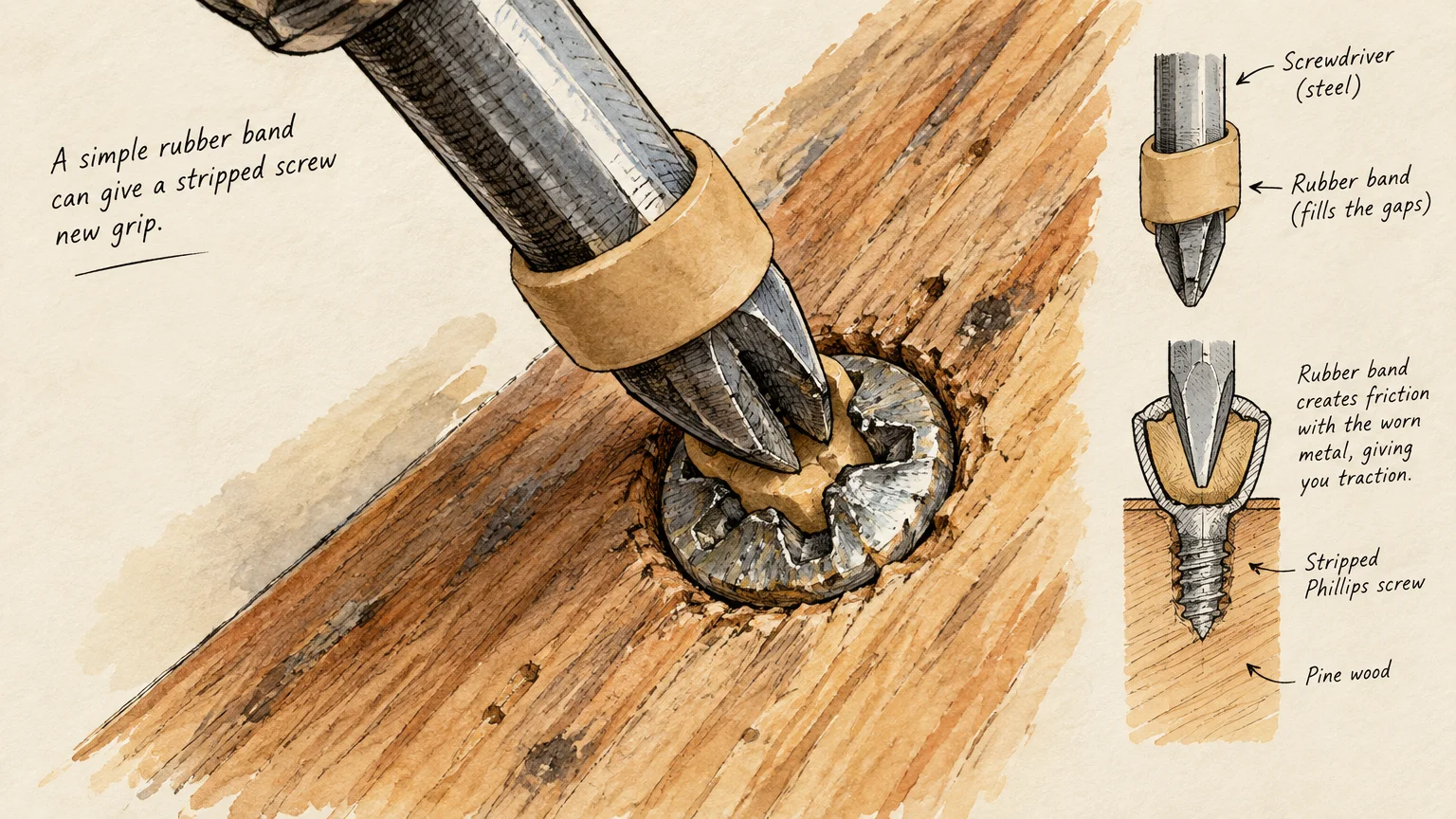
Lay a wide, flat rubber band across the damaged screw head before inserting your manual driver. Press down firmly so the elastic fills the stripped gaps and locks the bit in place.
Turn the screwdriver slowly with steady downward force. The textured synthetic rubber bites into the worn metal, providing immediate torque to back the fastener out cleanly.
6. Dripless Paint Can Wiper
Wiping wet paintbrushes against the inner metal lip of an open paint can quickly fills the rim groove. This pooled paint splatters across your floor and prevents the lid from sealing properly later.
Stretch a large rubber band vertically around the exterior of the open can so it spans across the exposed opening. Scrape your loaded brush bristles against this center rubber band instead of the rim.
Excess paint falls directly back into the reservoir below without dirtying the perimeter. Proper rim sealing also supports recommendations from the EPA regarding airtight paint storage to avoid hazardous solvent leaks.
7. Fluid Level and Freshness Gauge
Opaque plastic jugs and heavy metal cans make it difficult to determine how much chemical, cleaner, or paint remains inside. Shaking the container only provides an imprecise, messy guess.
Slide a durable rubber band around the outside of the container and align it with the liquid level after each use. You can also slip an index card behind the band to record the date opened.
This visual marker lets you inventory your household supplies in seconds. You instantly know when you need to purchase refills before starting a weekend project.
8. Tape Roll Edge Finder and Spool Tamer
Searching for the lost edge on clear packing tape or duct tape wastes valuable project time and ruins your fingernails. The loose ends of ribbon and sewing thread create similar clutter in utility drawers.
Wrap a small elastic band around your tape roll directly across the cut end, or encircle thread spools horizontally. The band secures loose thread tails and marks tape edges for instant access.
When packing boxes or mending clothes, you can peel your tape without scratching or peeling uneven slivers. It eliminates frustrating drawer tangles completely.
Smart Organizing and Wardrobe Hacks
9. No-Slip Clothes Hanger Grippers
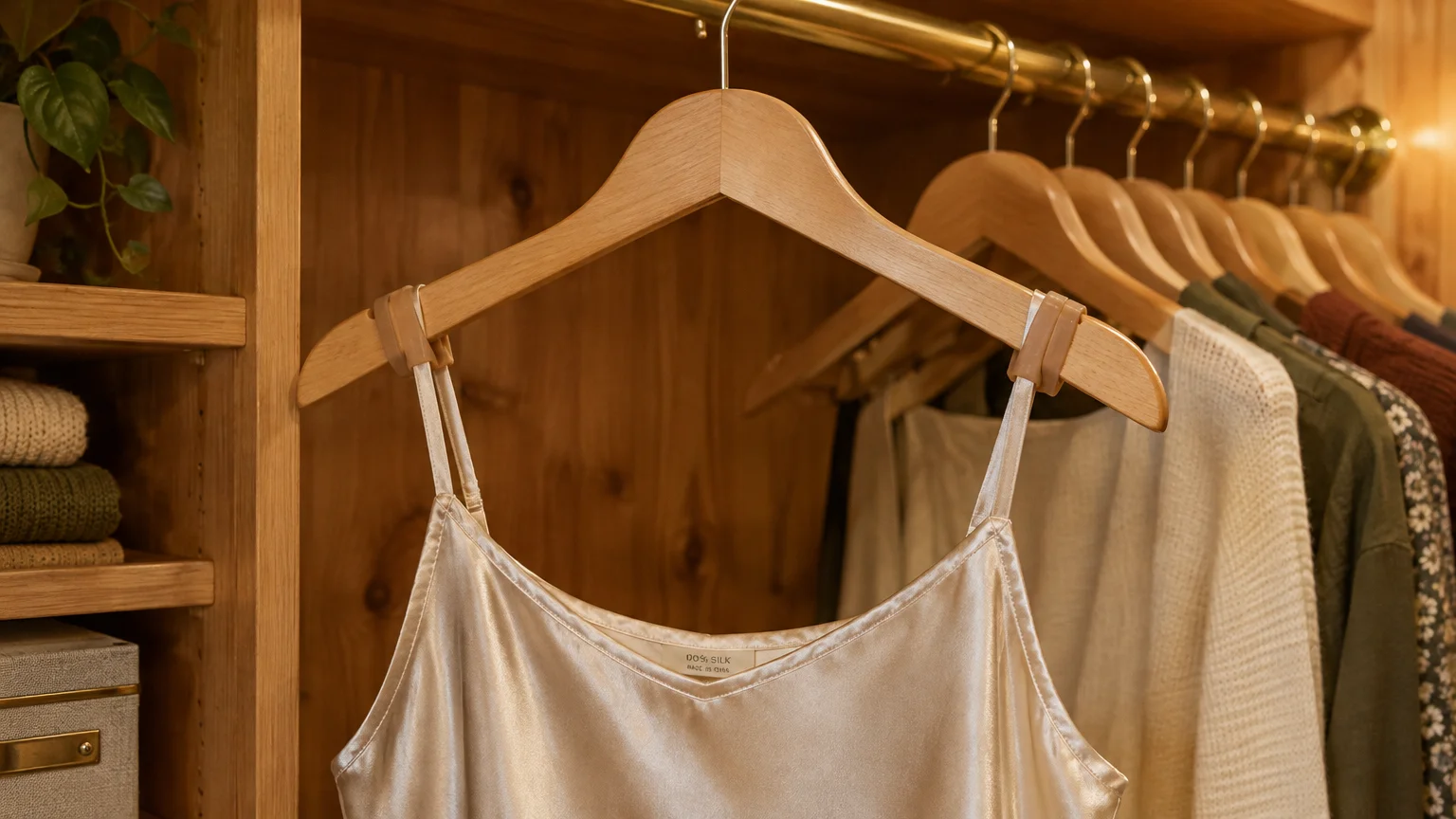
Silk blouses, wide-neck sweaters, and delicate camisoles constantly slide off smooth wooden or plastic hangers onto your closet floor. This leaves clean garments wrinkled, dusty, and hard to find.
Wind two thick rubber bands around the angled shoulders of each hanger. The raised rubber ridge catches smooth fabric instantly, preventing slippery garments from sliding off.
This simple upgrade saves you from buying expensive specialty velvet hangers. Your closet stays tidy, and your delicate clothing remains neatly suspended.
10. Tangle-Free Appliance Cord Bundles
Loose power cords on blenders, mixers, and hair dryers create hazardous tangles inside cabinets and drawers. Stiff cords also unravel easily when tossed into storage bins.
Fold the cord into neat loops and secure the bundle with a sturdy rubber band. Slip the plug prongs through the band to lock the entire assembly tightly against the appliance body.
These rubber band life hacks prevent annoying snarls when retrieving your tools and kitchen appliances. Your storage spaces look instantly more organized and manageable.
11. Remote Control Traction Bumpers
Television remotes and smartphones slide effortlessly off leather couch cushions and polished wood side tables. Repeated falls onto hard flooring can crack expensive screens or dislodge delicate internal components.
Snap two rubber bands around the top and bottom edges of your remotes. The elastic bands act as low-profile shock-absorbing bumpers that grip upholstery and slick furniture tops.
Devices stay precisely where you set them, even on inclined recliner armrests. You will spend far less time searching under couches for lost electronics.
12. Hands-Free Page Anchor
Cookbooks and instruction manuals rarely stay open to the page you need while your hands are covered in flour, grease, or paint. Weighted book stands take up valuable workspace on crowded counters.
Snap a large rubber band across the open pages and around the front and back covers. The band holds your manual flat while leaving the instructional text completely visible.
You can read recipes or repair steps easily without touching the pages with messy hands. It keeps your favorite reference books clean and protected from accidental spills.
Everyday Accessibility and Home Safety Tricks
13. Hands-Free Door Latch Silencer and Lock Bypass
Unloading heavy groceries or carrying laundry baskets through self-latching interior doors requires awkward balancing acts. Constant door clicking can also wake light-sleeping babies or sensitive household members.
Hook a rubber band around one doorknob, twist it across the edge over the latch bolt, and secure it to the opposite knob. The crossed elastic holds the metal latch depressed.
The door pushes open silently with a gentle nudge from your hip or elbow. According to independent living research from the National Institute on Aging, eliminating physical door resistance helps older adults move through living spaces safely.
14. Quick Cabinet Latch for Toddlers and Pets
Curious toddlers and persistent pets frequently paw open low kitchen cabinets containing cleaning supplies or waste bins. Installing permanent child locks often requires drilling holes into fine cabinetry.
Loop a thick, heavy-duty rubber band tightly between adjacent cabinet knobs or handles. The elastic tension holds the double doors firmly shut against inquisitive paws or small hands.
Adults can easily pull off or unloop the band with one hand when accessing supplies. This temporary barrier offers peace of mind without damaging your cabinet woodwork.
15. Easy-Grip Polish and Medicine Bottle Opener
Tiny plastic caps on nail polish bottles, eye drops, and travel toiletries offer minimal surface area for your fingers to grip. Dried residue inside the threads can seal them shut almost permanently.
Wrap a small elastic band multiple times around the slender cap to build up diameter and traction. The increased mechanical advantage allows your fingertips to twist the cap off effortlessly.
These rubber band tips for homeowners save you from straining your fingers or reaching for pliers. Anyone managing arthritis or diminished grip strength will appreciate the effortless torque.
Rubber Band Size and Application Guide
Choosing the correct band size ensures optimal tension without snapping or damaging your household items. Using an undersized band causes premature breakage, while an oversized loop slips off when you need friction.
Refer to this standard size reference table to match the right band with your household chores:
| Band Size | Standard Dimensions | Ideal Household Use | Key Benefit |
|---|---|---|---|
| Size #16 | 2-1/2 inches x 1/16 inch | Medicine caps, soap pumps, sewing thread spools | High elasticity for narrow diameters without breaking |
| Size #32 | 3 inches x 1/8 inch | Remote controls, plastic clothes hangers, sliced apples | Balanced tension that grips without crushing delicate items |
| Size #64 | 3-1/2 inches x 1/4 inch | Jar lids, cutting boards, stripped screws | Wide surface area delivering maximum mechanical friction |
| Size #84 | 3-1/2 inches x 1/2 inch | Paint cans, door latch bypasses, cabinet knobs | Heavy-duty tensile strength resistant to snapping |
| Size #117B | 7 inches x 1/8 inch | Large cookbooks, rolled exercise mats, file folders | Long reach capable of securing thick or bulky items |
How to Preserve Rubber Bands for Long-Term Use
Natural rubber degrades over time through oxidation, ultraviolet radiation, and exposure to ozone. When neglected, elastic bands turn brittle, crack, and snap unexpectedly when stretched.
Follow this step-by-step checklist to keep your rubber band collection pliable and strong for years:
- Store bands inside an airtight plastic container or sealed zip-top bag to limit ongoing exposure to ambient oxygen.
- Place your storage container inside a dark drawer or opaque utility bin to prevent ultraviolet light damage.
- Avoid storing bands in areas prone to excessive heat, such as uninsulated attics, garages, or cabinets beside ovens.
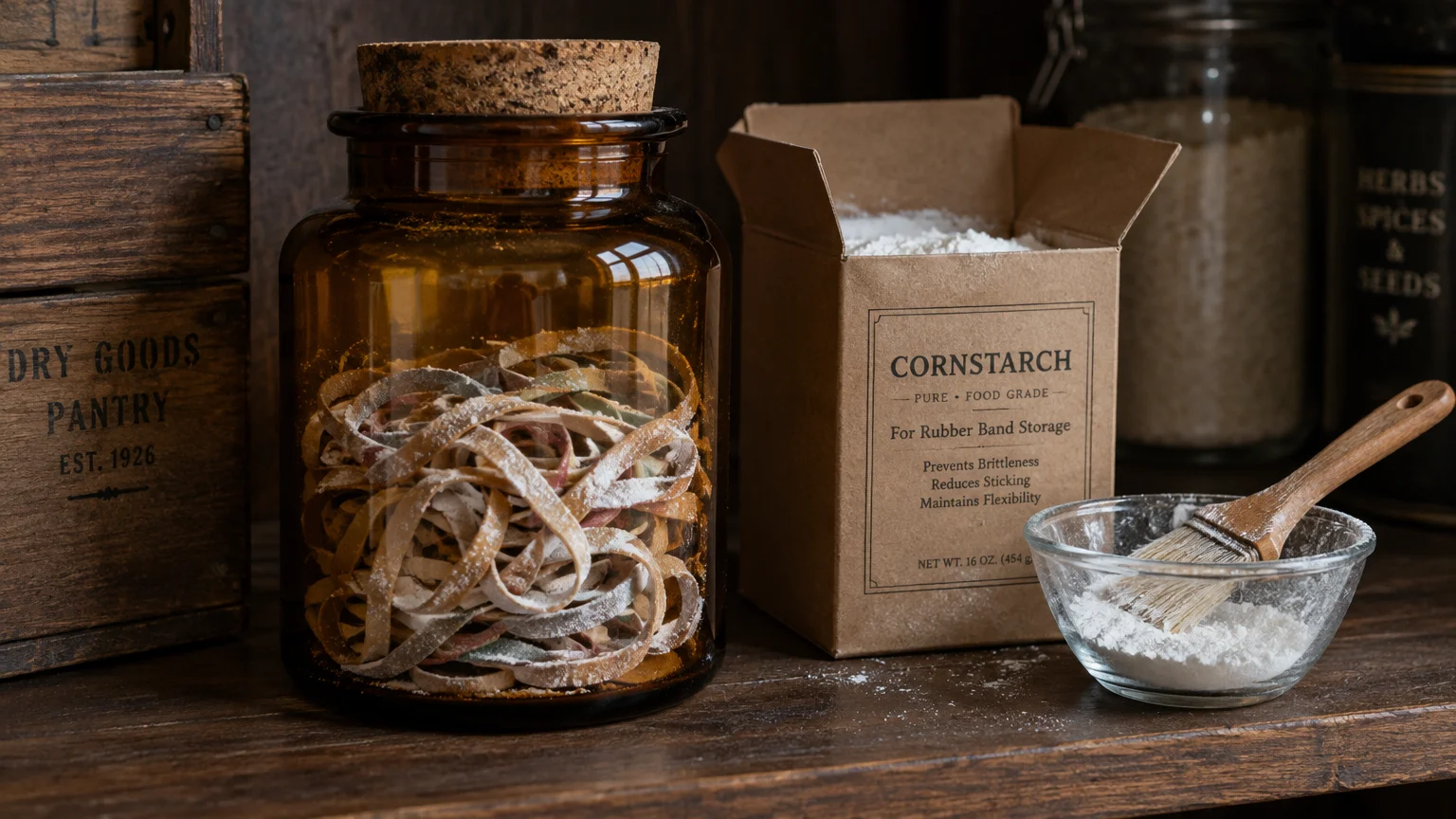
- Add a light dusting of cornstarch or talcum powder to the container to stop individual bands from sticking together over time.
- Inspect and discard brittle, sticky, or cracked bands immediately to prevent sudden snaps during household tasks.
Put These Simple Rubber Band Tips into Action
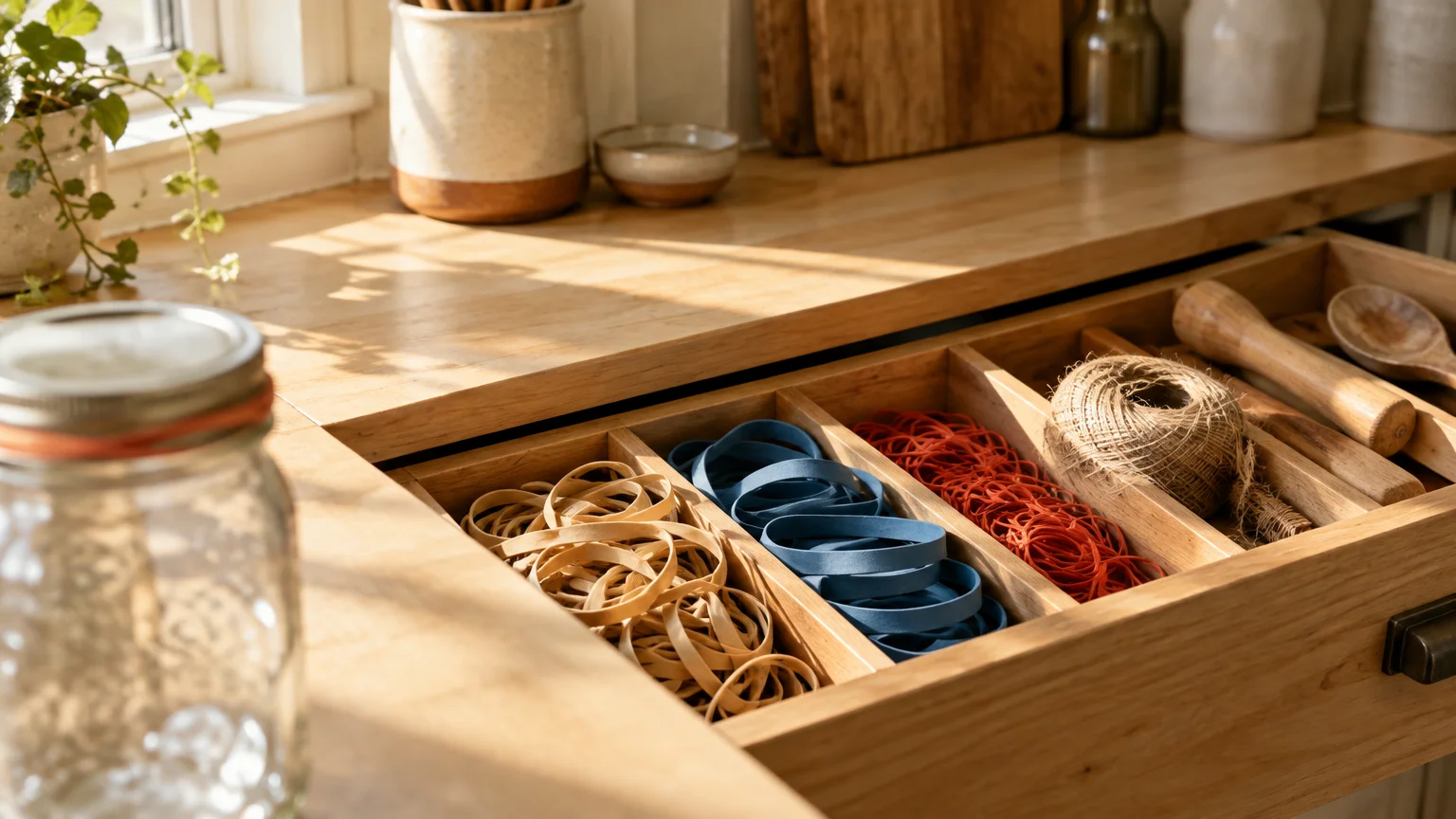
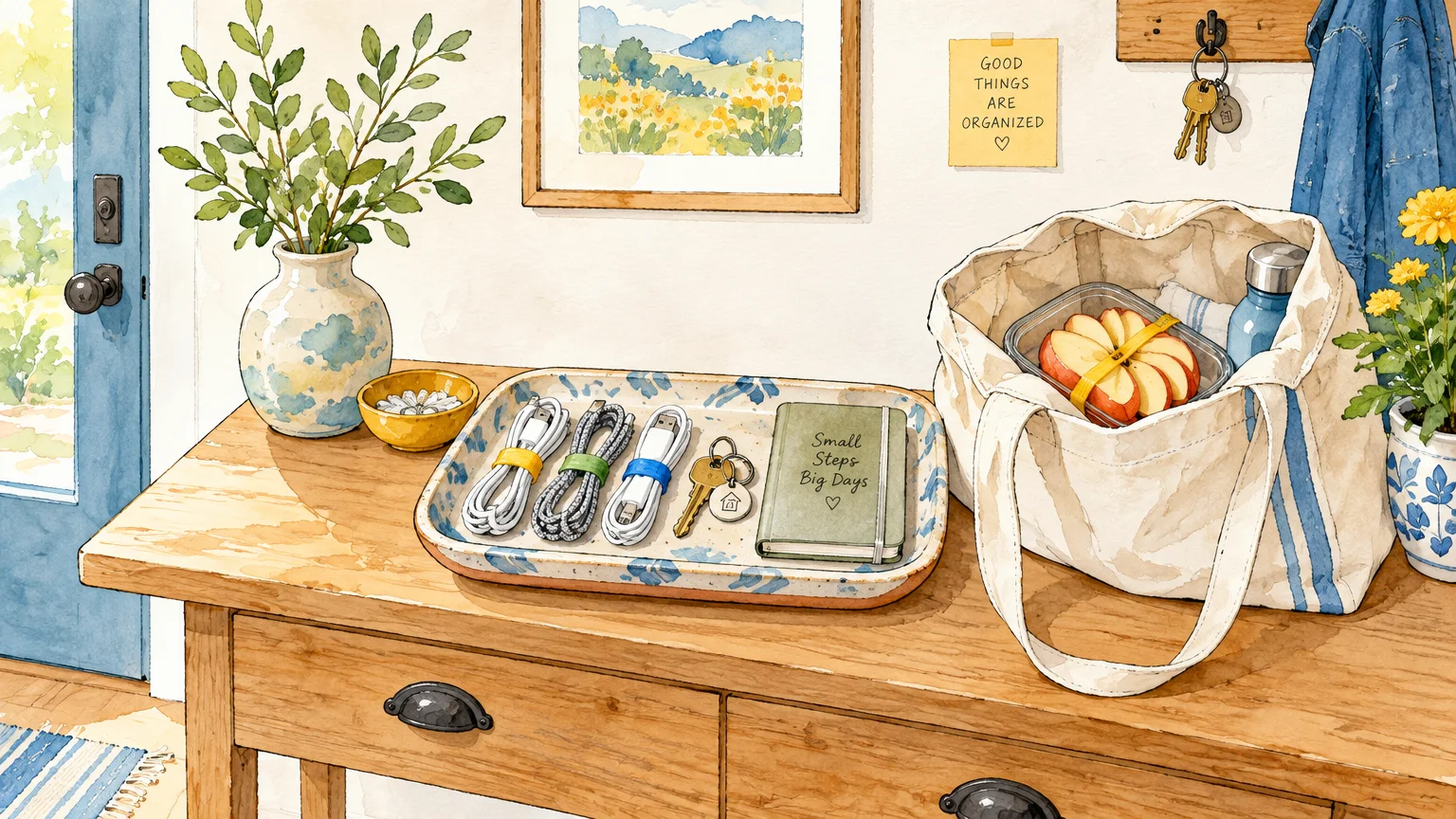
Gather a handful of spare rubber bands from around your home and sort them by size into a designated container. Place a few in your kitchen cutlery drawer, workshop toolbox, and bathroom vanity.
Pick two or three hacks from this guide to tackle your most annoying daily grip or organization issues right now. You will be amazed at how such an inexpensive item can create a calmer, more efficient home.