
You can keep your living space remarkably safe and functional by mastering your household item replacement schedule before unseen failures occur. Many everyday essentials lose their effectiveness long before showing visible signs of damage.
Holding onto degraded goods wastes hard-earned money and exposes your living spaces to structural leaks, fire hazards, and aggressive bacterial colonies. Knowing how often to replace household items brings immediate peace of mind.
Use this room-by-room guide to eliminate hidden expiration household products and discover exactly when to replace common household items throughout your home.
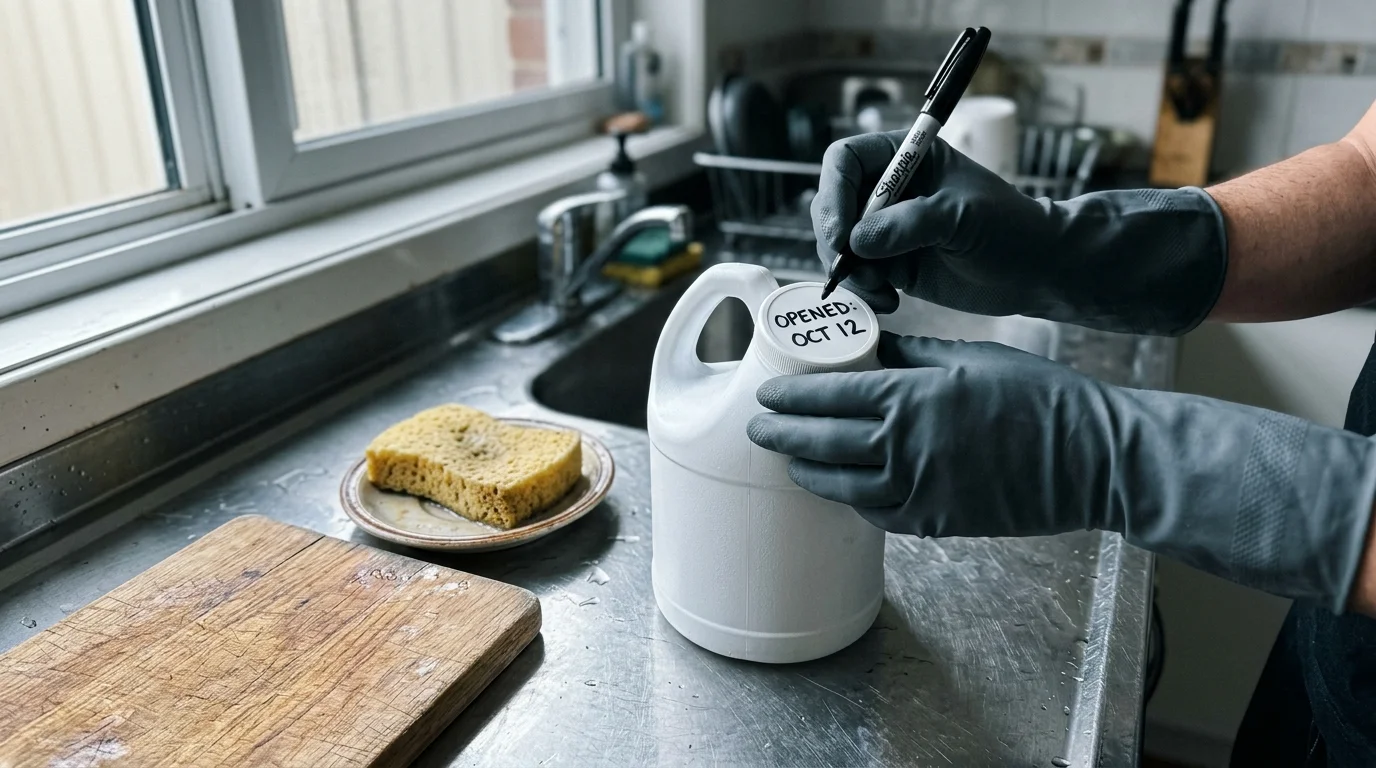
Kitchen Essentials with Hidden Expiration Dates
1. Kitchen Sponges: 1 to 2 Weeks
Your kitchen sponge traps moisture and food residue every time you wipe down a counter or wash a plate. This moist, porous structure creates a thriving incubator for hazardous household microbes.
A landmark study in Scientific Reports revealed that used kitchen sponges harbor up to 54 billion bacterial cells per cubic centimeter. That microbial density mirrors the concentration found in human stool samples.
Thermal sanitation methods like microwaving or boiling kill weaker germs, but they often leave behind the most resilient, pathogenic bacterial strains. Replace your dish sponge every one to two weeks without exception.
Consider switching to washable microfiber cloths or dishwasher-safe silicone scrubbers for tough scrubbing jobs. You can launder these alternatives weekly at high temperatures to sanitize them effectively.
2. Disinfectant Chlorine Bleach: 6 Months
Liquid chlorine bleach sits in most utility cabinets as a go-to disinfectant, yet it loses potency rapidly. Bottled sodium hypochlorite naturally degrades into basic salt and water over time.
According to the U.S. Environmental Protection Agency (EPA), bleach loses roughly 20 percent of its active strength each year after manufacturing. Six months after opening, it ceases to meet hospital-grade disinfection standards.
Always write the purchase date on the bottle using a permanent marker. Discard diluted bleach solutions after 24 hours because added water accelerates the chemical breakdown.
Store bleach in a cool, dark cupboard away from direct sunlight. Elevated temperatures dramatically accelerate the degradation of sodium hypochlorite.
3. Plastic and Wooden Cutting Boards: Discard Upon Deep Scoring
Chopping boards absorb heavy wear from sharp kitchen prep knives. While minor surface scuffs cause no immediate harm, deep knife grooves create permanent harbors for foodborne pathogens.
The USDA Food Safety and Inspection Service specifies replacing cutting boards once they develop deep, knife-scarred crevices. Sanitizing solutions and dishwasher heat cycles cannot penetrate these narrow micro-fissures effectively.
Dangerous bacteria like Salmonella and E. coli lodge inside these tiny crevices and cross-contaminate fresh produce. Retire plastic or wooden boards as soon as your fingernail catches in a groove.
Maintain separate boards for raw poultry and produce to limit cross-contamination risks. Smooth bamboo or hard maple boards resist deep scoring better than soft plastic alternatives.
4. Carbon Water Pitcher and Refrigerator Filters: 2 to 6 Months
Activated carbon filters purify municipal water by capturing chlorine, volatile organic compounds, and heavy metals along internal pores. Once these carbon binding sites saturate completely, the media stops trapping contaminants.
Standard pitcher filters certified under NSF/ANSI standards expire after processing 40 gallons of water; this typically equals two months of steady use. Built-in refrigerator filters treat 200 to 300 gallons, requiring replacement every six months.
Exhausted carbon filters can foster dense biofilm layers and release trapped impurities back into your drinking glass. A noticeable drop in water flow rate often indicates that sediment has clogged the internal media.
Keep spare replacement cartridges in your pantry so you never delay a changeout. Reset your refrigerator filter reminder light every time you click a fresh cartridge into place.
Bathroom and Personal Care Items That Harbor Bacteria
5. Toothbrushes and Electric Brush Heads: 3 to 4 Months
Toothbrushes scrub away destructive plaque, food debris, and oral bacteria twice every day. Over time, friction curls the bristles outward and rounds off their targeted cleaning edges.
The American Dental Association (ADA) advises replacing manual toothbrushes and electric brush heads every three to four months. Clinical studies reveal that worn bristles lose 30 to 40 percent of their plaque-removal efficiency.
Bent bristles can abrade delicate gum margins rather than sweeping away stubborn tartar. Swap your brush heads immediately if you recover from a viral illness or notice frayed nylon fibers.
Store your toothbrush upright in an open-air holder to dry thoroughly between uses. Enclosing wet bristles inside travel caps fosters aggressive mold and microbial growth.
6. Bed Pillows: 1 to 2 Years
Your bed pillow supports your cervical spine for roughly eight hours every night. During that time, it absorbs substantial volumes of sweat, body oils, and shed dead skin cells.
The Asthma and Allergy Foundation of America notes that accumulated skin flakes nourish heavy dust mite populations inside older bedding. Even thorough laundering fails to eliminate the accumulated fungal spores and microscopic mite waste.
Degraded pillow cores also lose their structural resilience, triggering morning neck stiffness and tension headaches. Replace standard fiberfill and memory foam pillows every one to two years.
Test your pillow by folding it in half across your arm; if it fails to spring open flat, replace it immediately. Zippered, allergen-proof encasements keep dust mites from penetrating new pillow inserts.
7. Mascara and Liquid Eye Cosmetics: 3 Months
Liquid eye cosmetics provide a dark, moist haven for infectious microorganisms. Each time you pump a wand into a cosmetic tube, you pull in room air and transfer skin bacteria into the formula.
The U.S. Food and Drug Administration recommends discarding liquid eye products three months after opening. Clinical testing shows that roughly 36 percent of used mascara tubes harbor active bacterial contamination after 90 days.
Using expired eye cosmetics risks severe ocular infections, painful styes, and persistent conjunctivitis. Never dilute a dried formula with water or saliva; simply toss the tube into the trash.
Use a fine-tipped metallic marker to record the discard date directly on the cosmetic packaging upon opening. This simple habit prevents you from guessing when the three-month window expires.
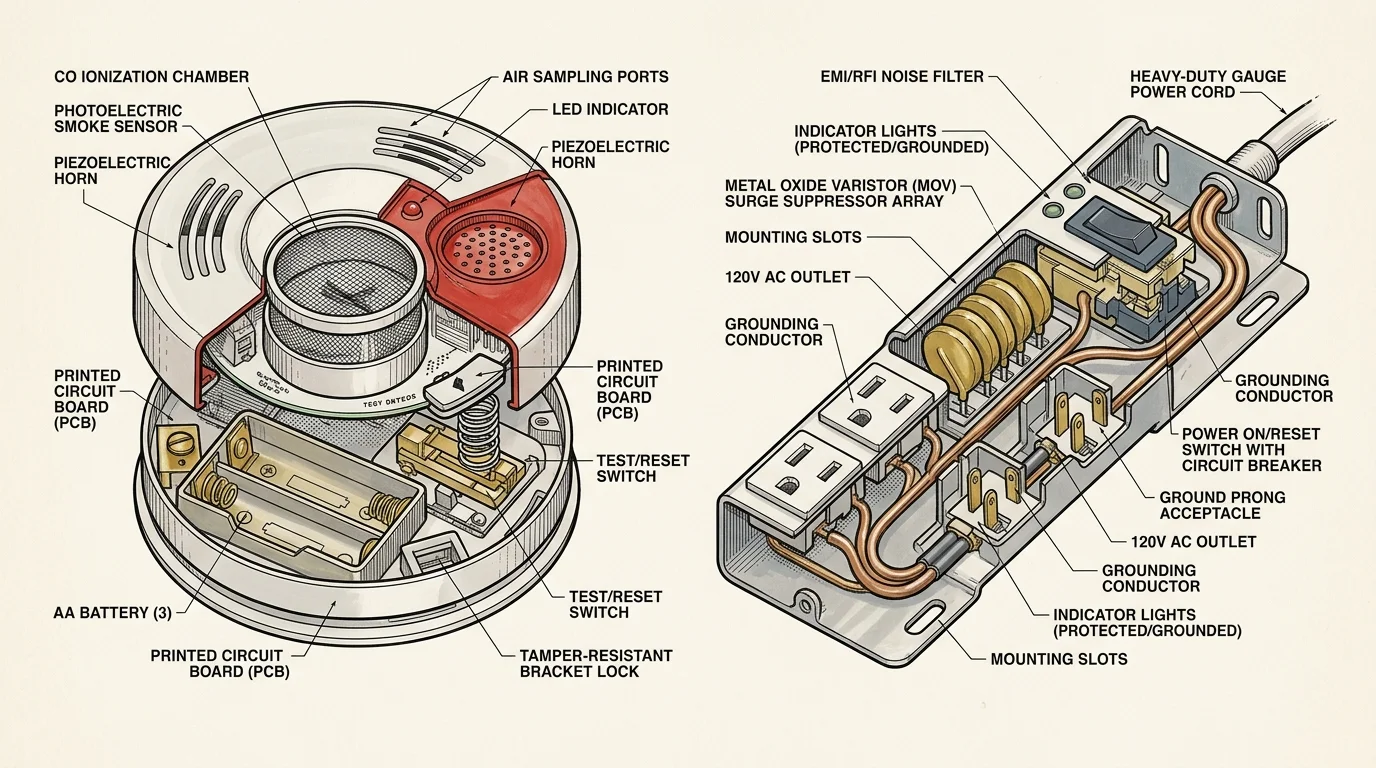
Critical Home Safety and Electrical Hardware
8. Smoke Alarms: 10 Years from Manufacture Date
Smoke alarms serve as your primary defense against lethal residential fires. Many homeowners assume an alarm remains fully functional as long as the test button produces a sharp chirp.
Under NFPA 72 (National Fire Alarm and Signaling Code), residential smoke alarms must be replaced ten years from their manufacture date. Internal sensors inevitably degrade from accumulated dust, airborne grease, and ambient humidity.
Twist the alarm off its mounting base to inspect the factory date stamp stamped on the back. Calculate the ten-year mark from that printed manufacturing date rather than the day you installed the unit.
Gently vacuum smoke alarm vent covers twice a year to clear stray spiderwebs and airborne dust. This effortless maintenance prevents annoying false alarms and preserves optical sensor responsiveness.
9. Carbon Monoxide Detectors: 5 to 7 Years
Carbon monoxide is an invisible, odorless gas that causes hundreds of unintentional fatalities annually. Unlike optical smoke alarms, carbon monoxide detectors rely on sensitive electrochemical sensors to identify toxic fumes.
Under UL 2034 safety standards, these electrochemical sensors naturally dry out and degrade over time. Leading manufacturers like Kidde and First Alert mandate total unit replacement every five to seven years.
Pushing the test button verifies the audible horn and internal circuitry, but it cannot evaluate the chemical sensor. Replace expired units promptly to protect your household from silent, toxic gas exposure.
Position CO detectors outside every separate sleeping area and on every livable level of your house. Install them at knee-to-chest height for easy digital display monitoring.
10. Portable Fire Extinguishers: 12 Years for Disposable Units
A portable fire extinguisher provides rapid suppression during small kitchen flare-ups or electrical sparks. However, internal pressure charges decline and mechanical valve seals stiffen over lengthy periods of neglect.
Under NFPA 10 standards, you must retire non-rechargeable (disposable) home fire extinguishers 12 years after their manufacture date. Rechargeable metal units require professional internal maintenance every six years and hydrostatic testing at twelve.
Check your fire extinguisher pressure gauge monthly to verify the indicator needle remains inside the green operational zone. If the gauge drops into the red zone or the nozzle clogs, replace the unit immediately.
Inspect the locking pin and plastic tamper seal to ensure neither has broken or loosened over time. Mount extinguishers securely near room exit pathways so you can escape safely if flames spread.
11. Washing Machine Hoses: 3 to 5 Years
Washing machine supply lines operate under continuous municipal water pressure even when your washer sits dark and silent. Standard reinforced rubber lines degrade internally from constant pressure fluctuations and thermal stresses.
The Insurance Institute for Business & Home Safety (IBHS) reports that hose failures trigger more than 50 percent of all washer-related water damage claims. The average hose failure strikes at 8.7 years, driving catastrophic repair claims averaging $6,000 to $10,000.
Property insurers recommend replacing rubber hoses every three to five years before sudden ruptures occur. Upgrade to braided stainless steel supply lines, which resist high-pressure blowouts far better than plain rubber tubing.
Examine your washer lines every season for soft blisters, kinked bends, or chalky mineral buildup around connection fittings. Turn off the laundry shut-off valves whenever you leave home for an extended vacation.
12. Surge Protectors and Power Strips: 2 to 5 Years
Surge protectors protect delicate home computers, smart televisions, and high-end audio hardware from unpredictable voltage anomalies. They absorb transient spikes using internal components called Metal Oxide Varistors (MOVs).
Under UL 1449 electrical standards, these varistors consume a portion of their internal protective material with every electrical surge diverted. Over two to five years of routine service, their defensive capacity completely erodes.
Once depleted, the power strip continues supplying electricity, but it leaves connected gear completely exposed to damaging power spikes. Check the status indicator; if the illuminated “Protected” LED turns off, discard the unit immediately.
Never daisy-chain multiple power strips together or plug heavy-draw space heaters into them. Invest in units with high joule ratings to provide maximum buffer against unexpected line surges.
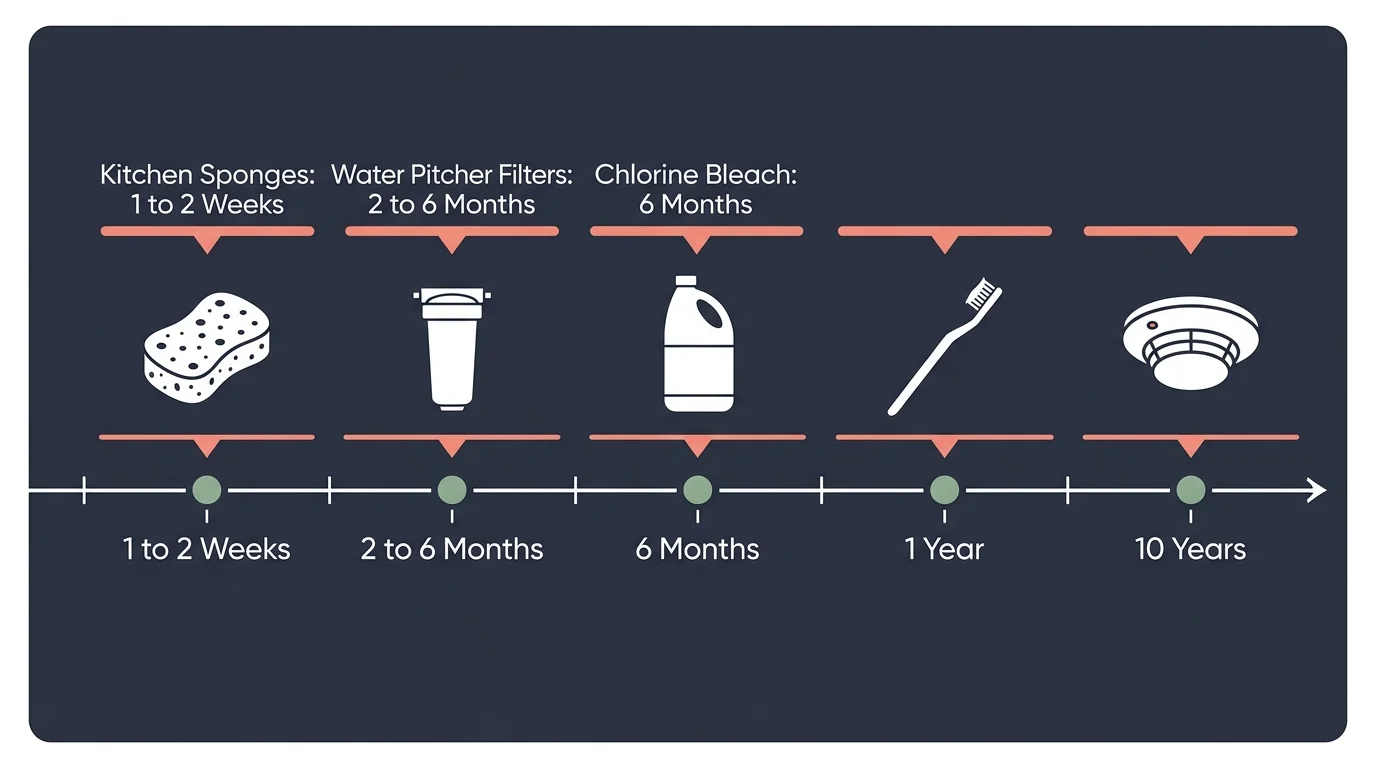
Quick Reference: Household Item Replacement Schedule
Use this comprehensive household item replacement schedule to streamline your seasonal maintenance rounds. Reviewing this guide regularly keeps critical safety equipment and hygiene essentials operating at peak performance.
| Household Item | Recommended Lifespan | Primary Failure Risk | Warning Sign to Replace |
|---|---|---|---|
| Kitchen Sponges | 1 to 2 Weeks | Microbial bloom (54B cells/cm³) | Persistent sour odor, slime, shredding |
| Chlorine Bleach | 6 Months | Chemical degradation to salt water | Six months elapsed since factory date |
| Cutting Boards | Discard Upon Deep Grooving | Deep bacterial harbor (Salmonella) | Fingernail catches in knife scars |
| Water Pitcher / Fridge Filters | 2 Months (Pitcher) / 6 Months (Fridge) | Media saturation and biofilm growth | Reduced water flow, gallon threshold met |
| Toothbrush Heads | 3 to 4 Months | 30–40% loss of plaque removal efficiency | Splayed bristles, illness recovery |
| Bed Pillows | 1 to 2 Years | Dust mite accumulation, lost cervical support | Lumps, morning stiffness, fails fold test |
| Mascara / Liquid Eye Makeup | 3 Months | Bacterial contamination (styes, conjunctivitis) | Three months open, clumping, scent change |
| Smoke Alarms | 10 Years (Manufacture Date) | Optical/ionization sensor degradation | Back stamp date exceeds ten years |
| Carbon Monoxide Detectors | 5 to 7 Years | Electrochemical sensor exhaustion | Unit age exceeds manufacturer rating |
| Portable Fire Extinguishers | 12 Years (Disposable Units) | Seal dry-rot, internal depressurization | Pressure needle drops out of green zone |
| Washing Machine Hoses | 3 to 5 Years | Catastrophic high-pressure rupture | Rubber blisters, cracks, surface corrosion |
| Surge Protectors | 2 to 5 Years | MOV depletion leaving devices unprotected | “Protected” LED light turns off |
Referring to this reference chart helps you track hidden expiration household products without second-guessing yourself. Keep an organized log in your home management binder to simplify your yearly shopping list.
How to Build Your Home Safety Item Checklist
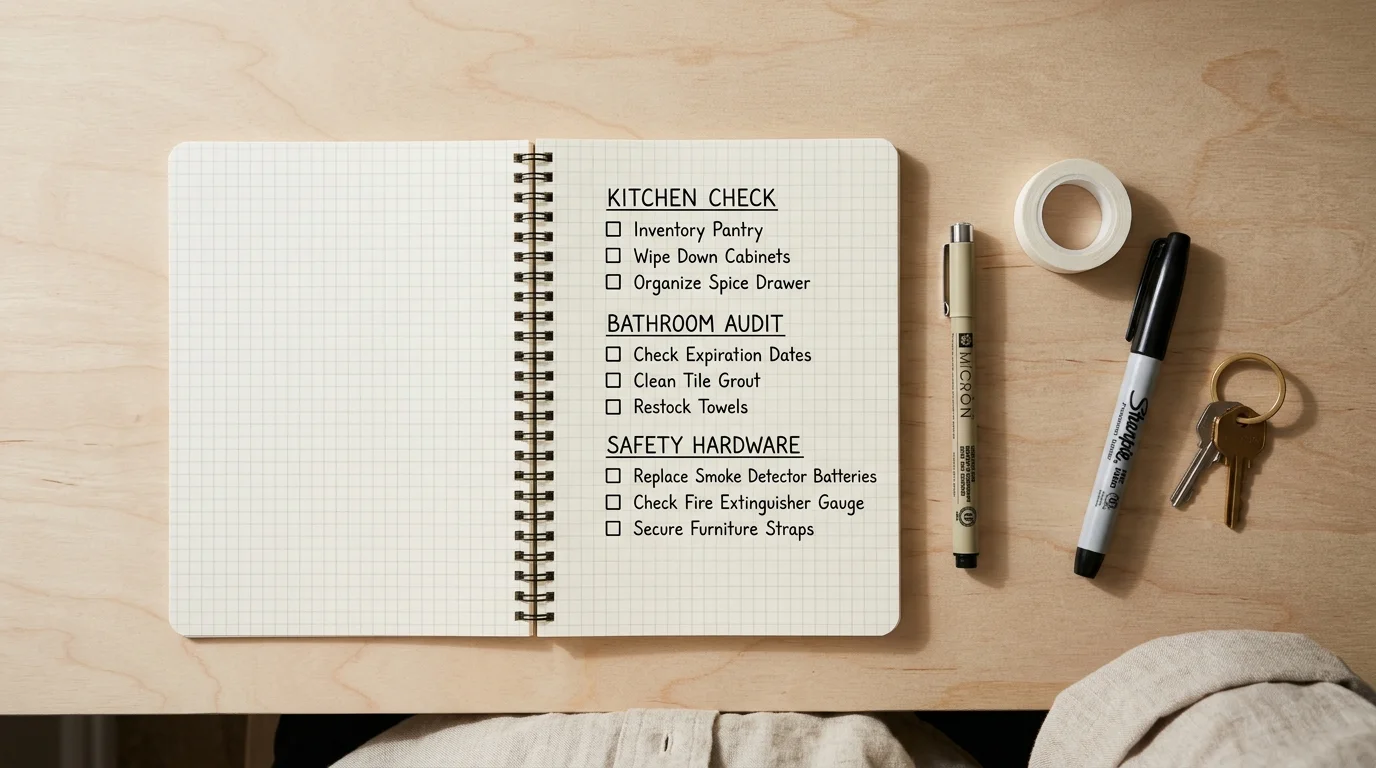
Setting up a proactive inspection routine prevents unneeded stress and expensive home emergencies. Follow these practical steps to audit when to replace common household items throughout your residence.
- Conduct a Room-by-Room Walkthrough: Check one room each weekend with a notepad and permanent marker. Document manufacture dates on safety hardware and evaluate high-wear kitchen and bath goods.
- Label Everything Openly: Write the date of opening on liquid products, cosmetics, and water filter cartridges. A bold date stamp removes uncertainty when checking your supply closet.
- Align Tasks with Seasonal Milestones: Pair quick inspections with routine calendar events like daylight saving time transitions. Testing smoke alarms and checking fire extinguisher gauges takes mere minutes.
- Upgrade Materials Intentionally: When replacing worn goods, invest in commercial-grade materials that resist failure. Choose braided stainless steel over rubber hoses and color-coded bamboo cutting boards over soft plastic.
- Set Calendar Notifications: Enter recurring digital reminders on your phone or computer for periodic changeouts. A smartphone reminder eliminates guesswork for items needing renewal every quarter or year.
Breaking these updates into manageable seasonal routines transforms home safety from a daunting chore into an effortless habit. You will protect your home investment while maintaining a cleaner, healthier living environment.
Your Immediate Action Step Today
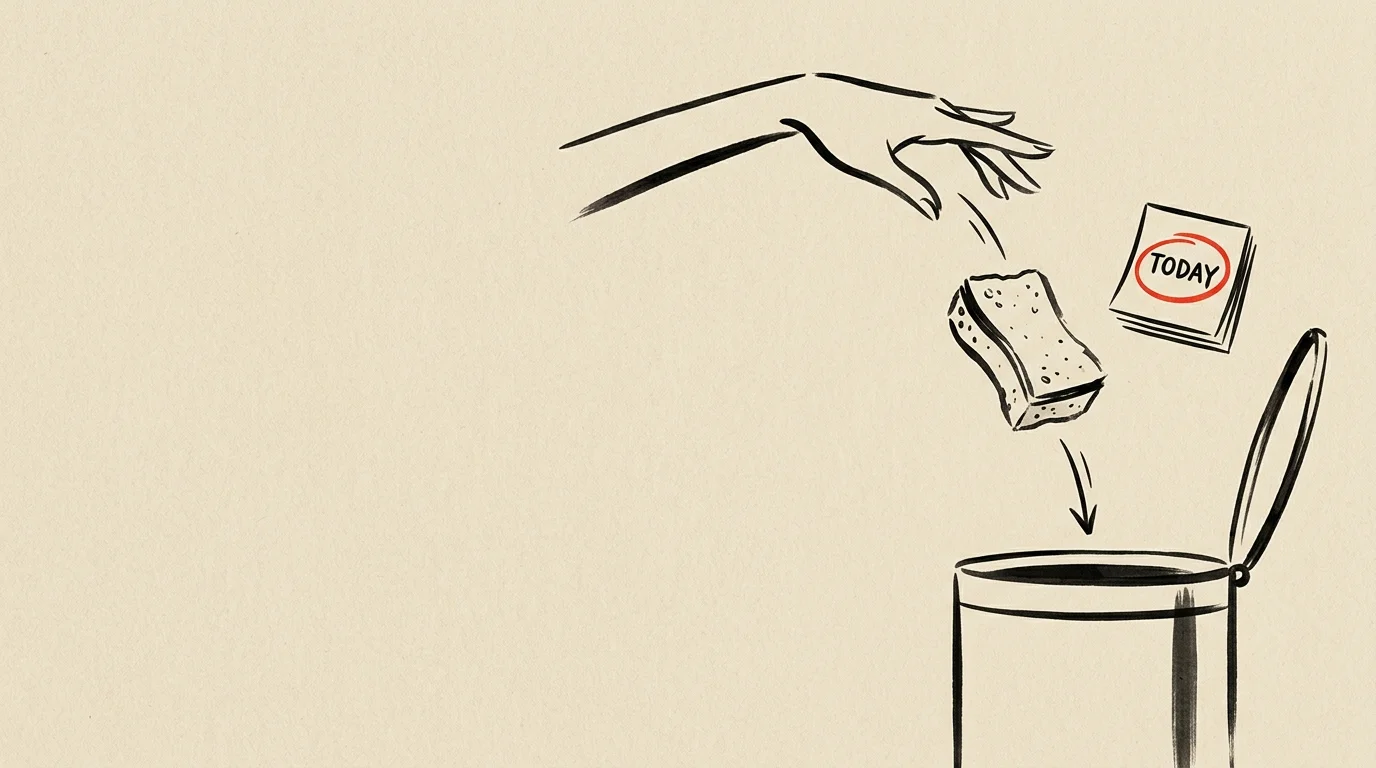
Grab a permanent marker and inspect the back of your nearest smoke alarm and primary fire extinguisher right now. Note their manufacture dates on your smartphone calendar to launch your updated home safety item checklist.