That sudden wave of sneezing, itchy eyes, or chest tightness right after you decorate is rarely just a cold. If fresh pine needles or unpacked holiday bins trigger respiratory flare-ups, you are likely experiencing Christmas tree syndrome.
Live evergreens carry outdoor mold and dormant weed pollen indoors; boxed artificial trees collect heavy coatings of dust mites and closet mildew. A few targeted decontamination steps will cleanse your branches and safeguard your household air.
Here is why your festive evergreen makes you sneeze—and how to clean both real and artificial trees before setting them up.
What Triggers Christmas Tree Syndrome?
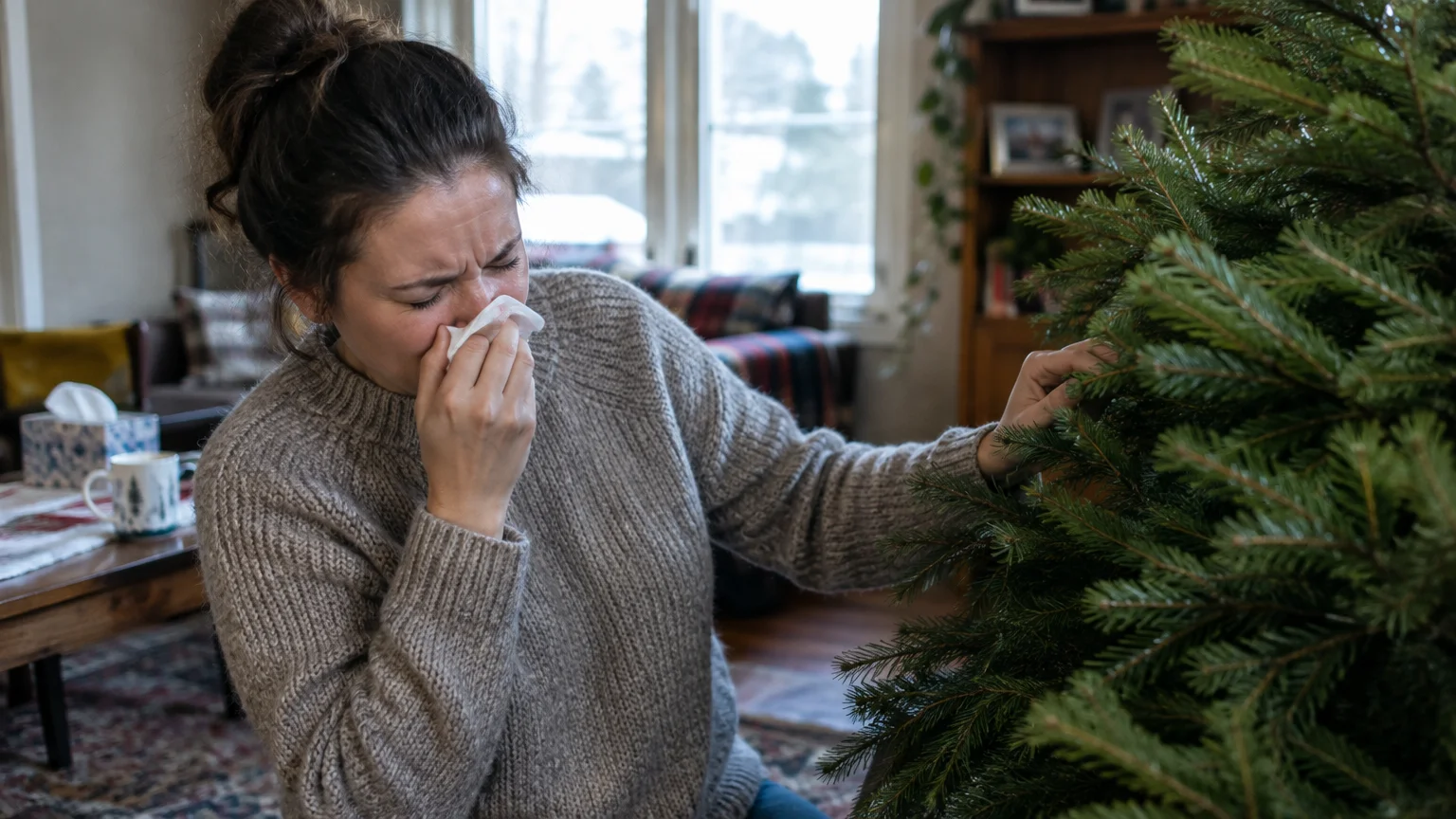
Christmas tree syndrome refers to allergic reactions and asthma flare-ups triggered by real or artificial holiday evergreens. While pine scent smells refreshing, the microscopic hitchhikers riding on those branches cause real respiratory distress.
In 2007, researchers at the American College of Allergy, Asthma & Immunology (ACAAI) meeting tracked airborne mold in a room with a live tree. Mold spores jumped from 800 spores per cubic meter during the first three days to 5,000 by day 14.
A later 2011 study from SUNY Upstate Medical University, published in the Annals of Allergy, Asthma & Immunology, analyzed 28 tree clippings. They identified 53 distinct mold species, with approximately 70 percent categorized as potential allergens.
Live trees also harbor ragweed pollen caught in their boughs during autumn and release volatile organic compounds called terpenes. For people with existing sensitivities, warm indoor air rapidly accelerates spore reproduction.
How to Decontaminate a Live Christmas Tree
Cleaning a live tree requires removing external allergens without stripping the tree of its natural moisture. You should complete all washing steps outdoors so displaced spores never enter your home.
Start by having the tree farm or retail lot place your tree on a mechanical shaker. Vigorous shaking dislodges dead interior needles, loose dirt, and trapped outdoor debris in seconds.
Once home, spray the foliage down thoroughly using a garden hose fitted with a gentle spray nozzle. Clinical health centers recommend rinsing branches to flush away lingering pollen grains and surface mold spores.
Stand the rinsed tree upright in a shaded outdoor spot or well-ventilated garage to dry completely for at least 24 hours. Bringing a wet tree into a warm room creates an ideal breeding ground for hidden fungal spores.
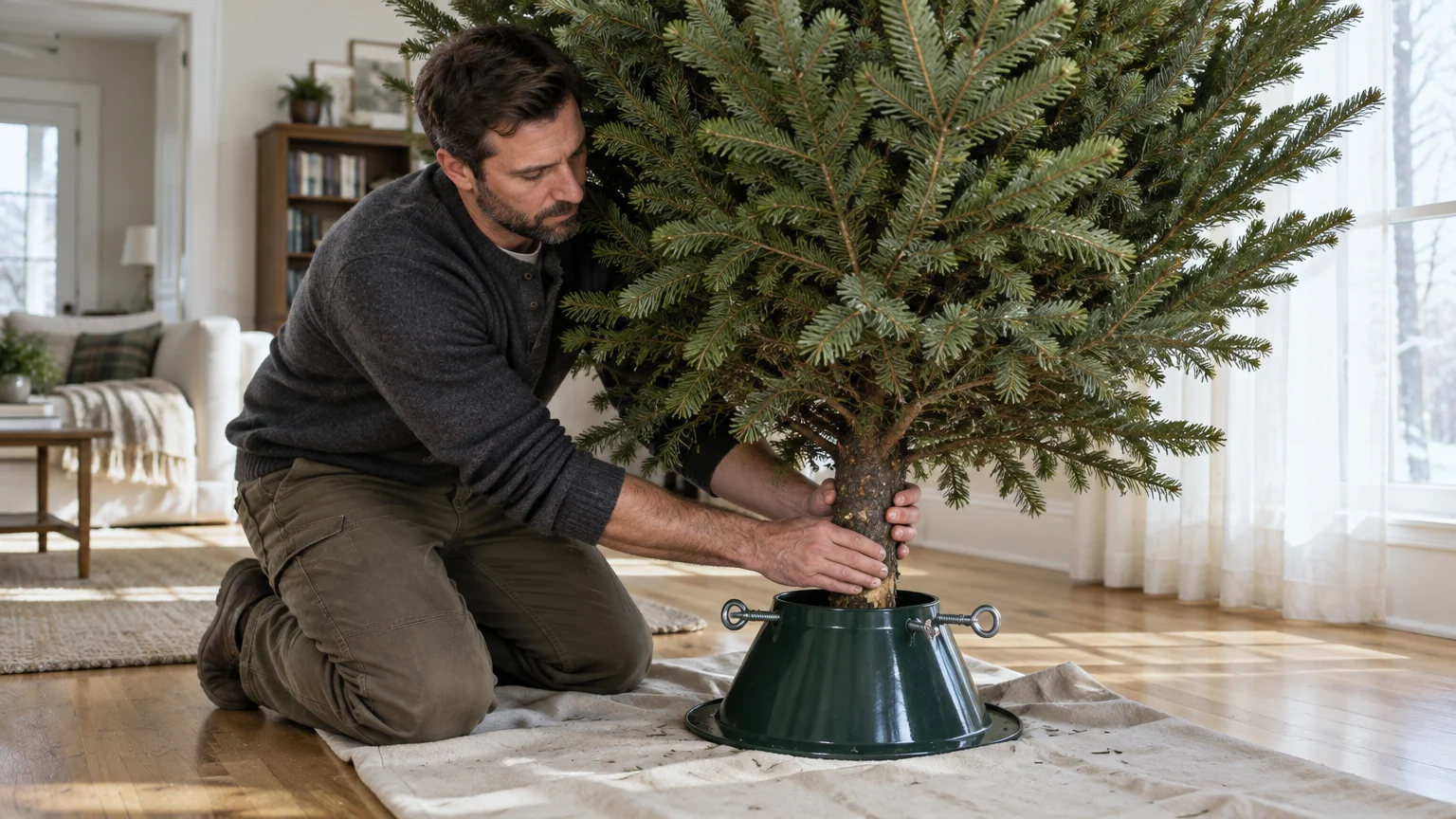
Once dry, cut a fresh half-inch off the base of the trunk and mount it in a clean stand filled with plain tap water. Avoid chemical additives, as clean water provides optimal hydration and minimizes fire risks.
How to Clean a Stored Artificial Tree
Artificial trees do not grow mold while manufactured, but months in a dark basement or humid attic allow dust mites and storage mold to settle into synthetic needles. Unpack your tree outdoors or in your garage to keep allergens out of living areas.
According to the U.S. Environmental Protection Agency (EPA), routine use of chlorine bleach is not recommended for mold cleanup. Instead, wash hard nonporous surfaces with ordinary detergent and water, and dry them thoroughly.
Dead mold spores still trigger allergic reactions, meaning you must physically remove the particles rather than simply spraying them with disinfectant. Never mix bleach with ammonia or acid-based cleaners, as doing so produces hazardous fumes.
Follow these practical steps to safely clean your artificial tree:
- Shake and sweep: Assemble tree sections outside and gently shake each branch to release loose dust particles.
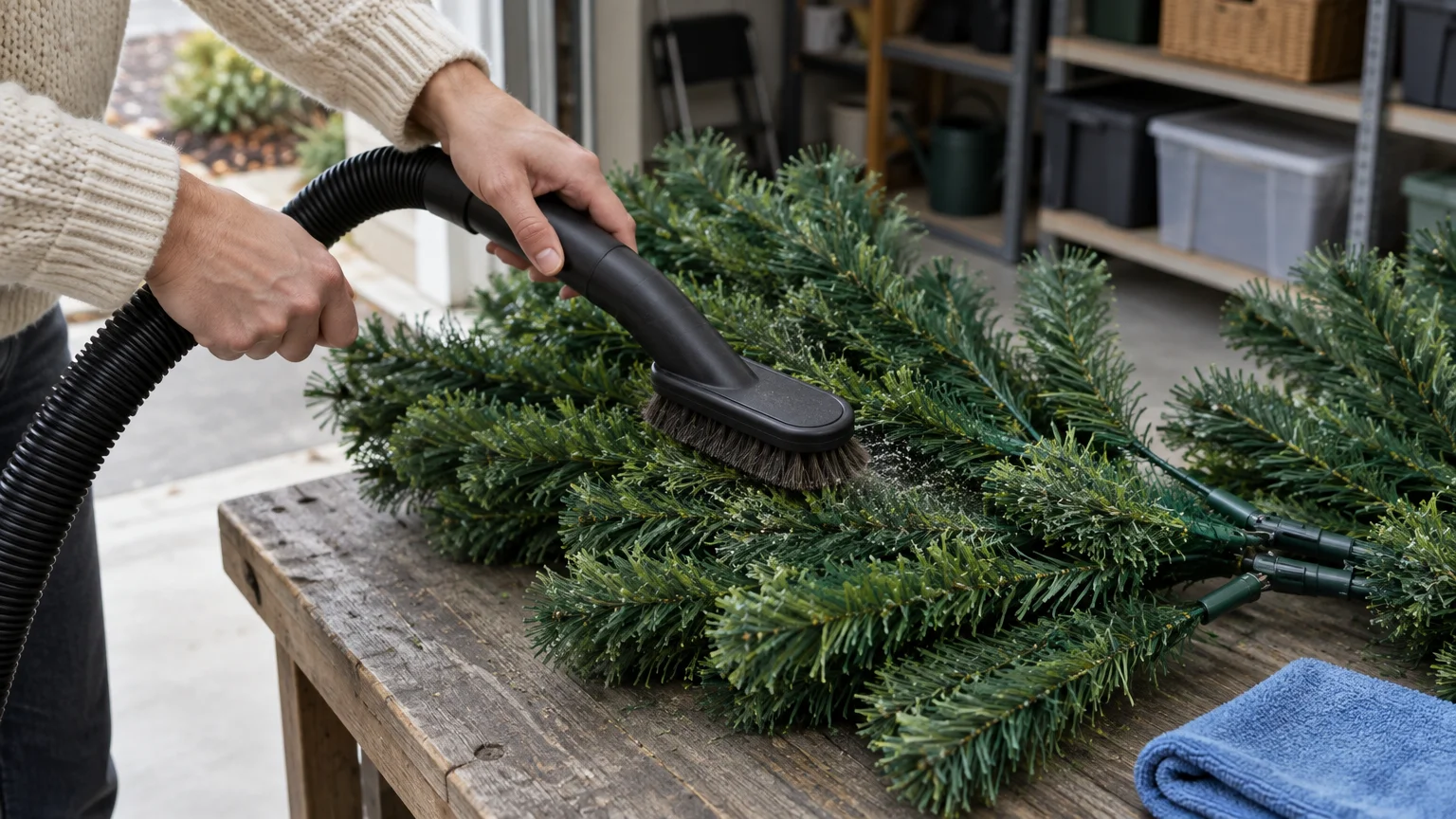
- Vacuum with a brush attachment: Run your vacuum hose fitted with a soft upholstery brush along individual boughs to capture embedded dander and dust mites.
- Wipe with warm soapy water: Dampen a microfiber cloth in water mixed with a few drops of mild dishwashing liquid, then gently wipe dirty stems.
- Dry thoroughly: Allow all synthetic branches to dry completely in open air before plugging in any pre-lit cords or hanging ornaments.
If you own an unlit tree coated in heavy storage grime, rinse individual sections under a low-pressure garden hose outside. Ensure the metal hinges and internal wire stems dry fully to prevent rust.
Real vs. Artificial Tree Allergen Management
| Feature | Live Christmas Tree | Artificial Christmas Tree |
|---|---|---|
| Primary Triggers | Fungal mold spores, trapped outdoor pollen, terpene scent compounds | Dust mites, accumulated storage mold, degraded packaging fibers |
| Decontamination Method | Mechanical shaking and full garden-hose spray-down | Vacuum upholstery brush and mild detergent wipe-down |
| Drying Protocol | Air-dry outdoors or in garage for 24 hours | Wipe dry or air-dry before connecting electrical wiring |
| Post-Season Storage | Curbside recycling or municipal yard-waste composting | Heavy-duty, zippered synthetic storage bag or sealed plastic tote |
Maintaining Clean Indoor Air During the Holidays
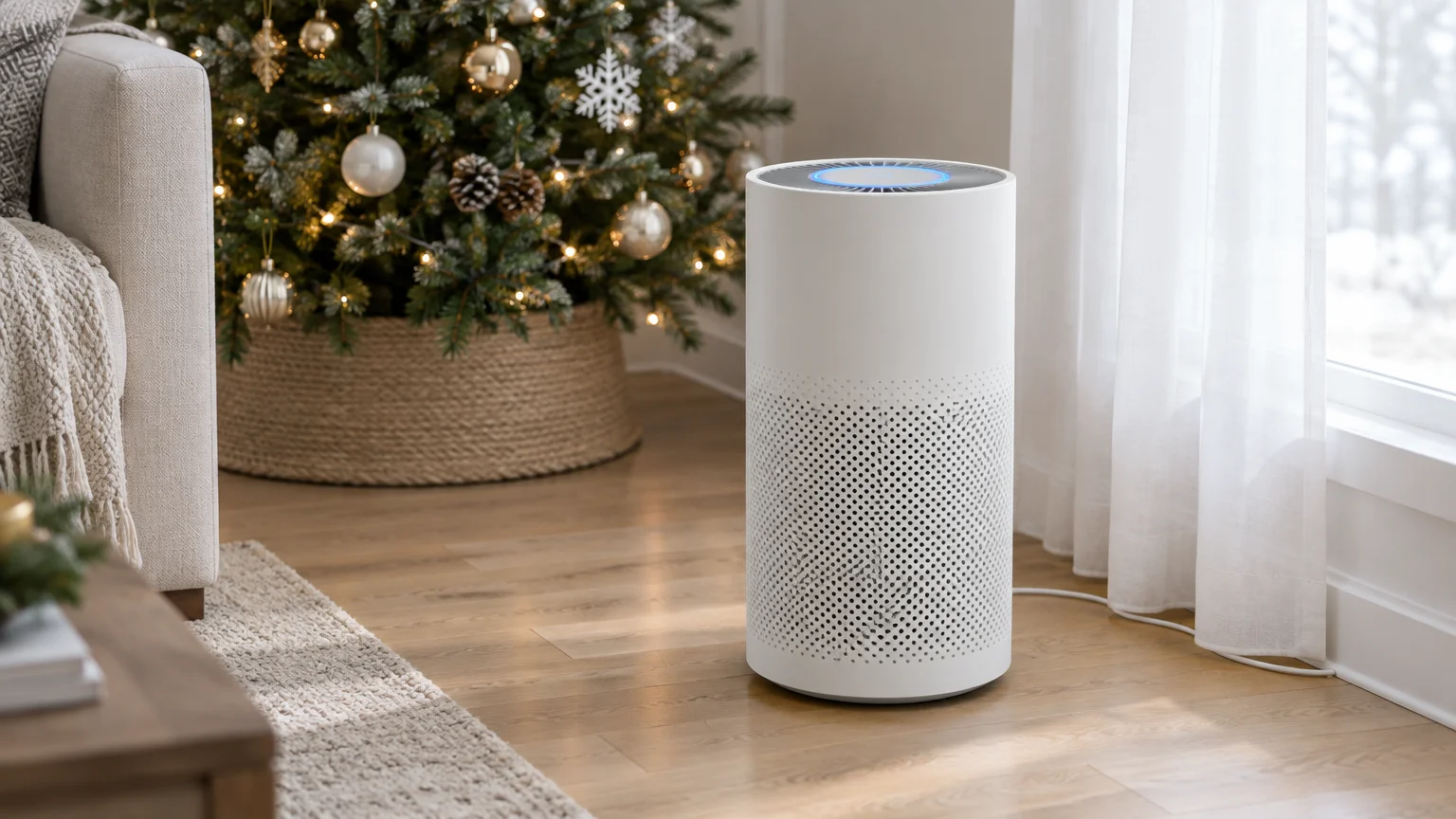
Cleaning your tree before setup eliminates the primary allergen load, but ongoing indoor maintenance keeps respiratory symptoms at bay throughout December. Position a true HEPA air purifier within the same room as your tree to capture circulating airborne particles continuously.
Keep your indoor relative humidity below 50 percent using a dehumidifier or proper ventilation. High indoor humidity accelerates spore growth on damp branches and encourages dust mite proliferation.
Wipe down stored tree ornaments, tree skirts, and decorative tree collars before placing them on branches. Cardboard storage boxes trap moisture and shed fibers, so transition your ornaments into airtight plastic bins.
If you or your family members have documented evergreen sensitivities, consider keeping a live tree indoors for no more than seven to ten days. Shortening the display period prevents mold spore concentrations from climbing toward their peak.
Your Next Step for a Sneeze-Free Setup
Inspect your tree stand, assemble your garden hose or vacuum brush, and wipe down your storage bins before bringing any branches indoors. Tackling this decontamination work outside guarantees a fresh, festive home without the sneezing fits.