Scrubbing inside the toilet bowl feels productive, yet common toilet cleaning mistakes quietly move bacteria onto your sink, floor, and hands. A fresh lemon scent often masks surfaces where resilient viruses still linger.
Learning how to clean a toilet properly takes less effort than fixing a stubborn outbreak later. Small shifts in product dwell time, cloth order, and tool storage stop bathroom germs from circulating around your home.
Use these practical cleaning tips to protect your bathroom hygiene without exhausting scrubbing or risky chemical combinations. Every step below works with ordinary supplies you likely already keep under your sink.
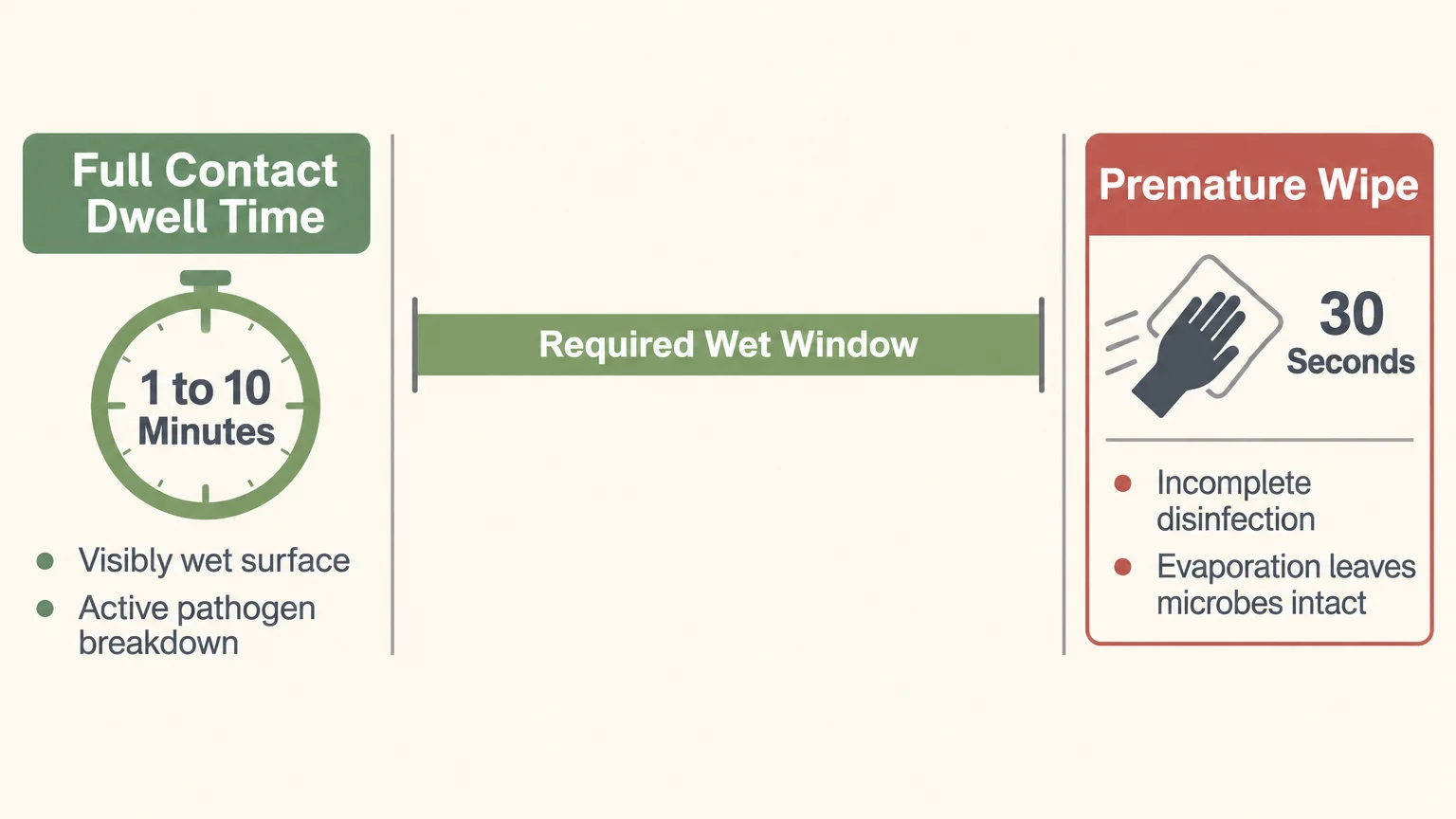
01 Wiping Disinfectant Away Before Contact Time Finishes
Spraying a disinfectant onto the toilet seat and wiping it dry right away leaves pathogens alive. Disinfectants need uninterrupted wet contact to break down bacterial walls and viral shells.
According to CDC and EPA product label guidance, surfaces must stay visibly wet for the full contact time—usually 1 to 10 minutes depending on the formula and target germ. If you use a diluted bleach solution without specific label instructions, the CDC recommends at least 1 minute of wet contact.
Dry bathroom air or a thin mist often evaporates before that clock runs out. When a surface turns dry halfway through the wait, you only cleaned off loose dust rather than disinfecting.
You can make dwell time effortless by working smarter rather than standing idle with a rag.
- Read the active panel first: Check the back label on your EPA-registered disinfectant for the exact dwell time listed for bacteria and viruses.
- Apply a generous, glossy coat: Wet the seat, lid, tank lever, and outer bowl thoroughly so moisture stays visible for the entire countdown.
- Re-wet dry patches: Mist spots near the exhaust fan or heating vent a second time if evaporation dries them early.
- Clean nearby items while waiting: Use the wait window to wipe down baseboards or empty the bathroom trash bin instead of rushing to wipe the toilet dry.
Once the timer finishes, either let the surface air-dry or wipe remaining moisture with a clean cloth. Skipping the premature wipe-down turns the exact same spray into a real germ killer.
02 Skipping the Pre-Clean on Dirty Surfaces
Pouring or spraying disinfectant directly over visible splashes, dust, hair, or urine residue wastes both time and product. Disinfectants cannot penetrate layers of grime to reach microbes underneath.
Guidance from the CDC and the Virginia Department of Health notes that organic matter—such as feces, urine residue, mucus, and heavy soil—rapidly inactivates disinfectants like chlorine bleach. Chemical molecules bind to the dirt instead of neutralizing pathogens.
Think of cleaning and disinfecting as two separate steps rather than one shortcut. Cleaning removes soil and biofilm physically, while disinfecting eliminates remaining invisible germs.
Start every deep toilet session with warm water, mild dish soap or an all-purpose detergent, and a soft microfiber cloth or non-abrasive sponge. Wipe away dust around the tank, lint on the hinges, and dried droplets near the base bolts.
Avoid steel wool or coarse scouring pads on glazed porcelain, plastic toilet seats, and chrome flush handles. Rough abrasives carve microscopic scratches that trap bacteria and stain permanently.
Inside the bowl, flush once to wet the porcelain, swish with mild detergent if heavy residue is present, and flush again before applying your bowl disinfectant. Removing visible buildup first lets your disinfectant work at full strength.
03 Using Wrong Bleach Ratios, Old Mixes, or Splashless Formulas
Household chlorine bleach is effective and inexpensive, yet small mixing errors strip away its germ-fighting power. Guessing measurements or grabbing the wrong bottle off the laundry shelf often leaves bathroom germs untouched.
For general home disinfection, the CDC recommends mixing 5 tablespoons (1/3 cup) of regular, unscented household bleach per gallon of room-temperature water, or 4 teaspoons per quart. Hot water breaks down sodium hypochlorite quickly, reducing sanitizing strength before you even begin.
Check the bottle label carefully before pouring. The CDC notes that splashless bleaches and some laundry bleaches do not disinfect surfaces.
Diluted bleach also loses effectiveness after 24 hours, even inside an opaque spray bottle. Mix only the quart or pint you need for the day, label the bottle clearly, and pour leftovers down the drain with plenty of water when finished.
Adjusting Strength for Stomach Bugs
Routine ratios do not stop hardy stomach viruses when someone in your home falls ill. Norovirus causes 19 to 21 million U.S. illnesses and 570 to 800 deaths each year, and it survives on hard surfaces for days up to 2 weeks or longer.
During or after a stomach illness, the CDC advises using either an EPA-registered anti-norovirus product or a stronger chlorine mix of 1,000 to 5,000 ppm—5 to 25 tablespoons of 5% to 8% household bleach per gallon of water—kept wet for at least 5 minutes. Follow the details on the CDC norovirus prevention page for safe cleanup after vomiting or diarrhea.
Protecting Bathroom Materials From Bleach
Strong chlorine solutions can damage decorative finishes around your toilet if splashed carelessly. Keep bleach away from marble, travertine, and limestone vanity tops or floor tiles, as harsh alkalinity dulls stone sealers.
Wipe down metal seat hinges and chrome flush levers with a plain damp cloth after the required contact time ends. Rinsing metal hardware prevents pitting and keeps hinges turning smoothly.
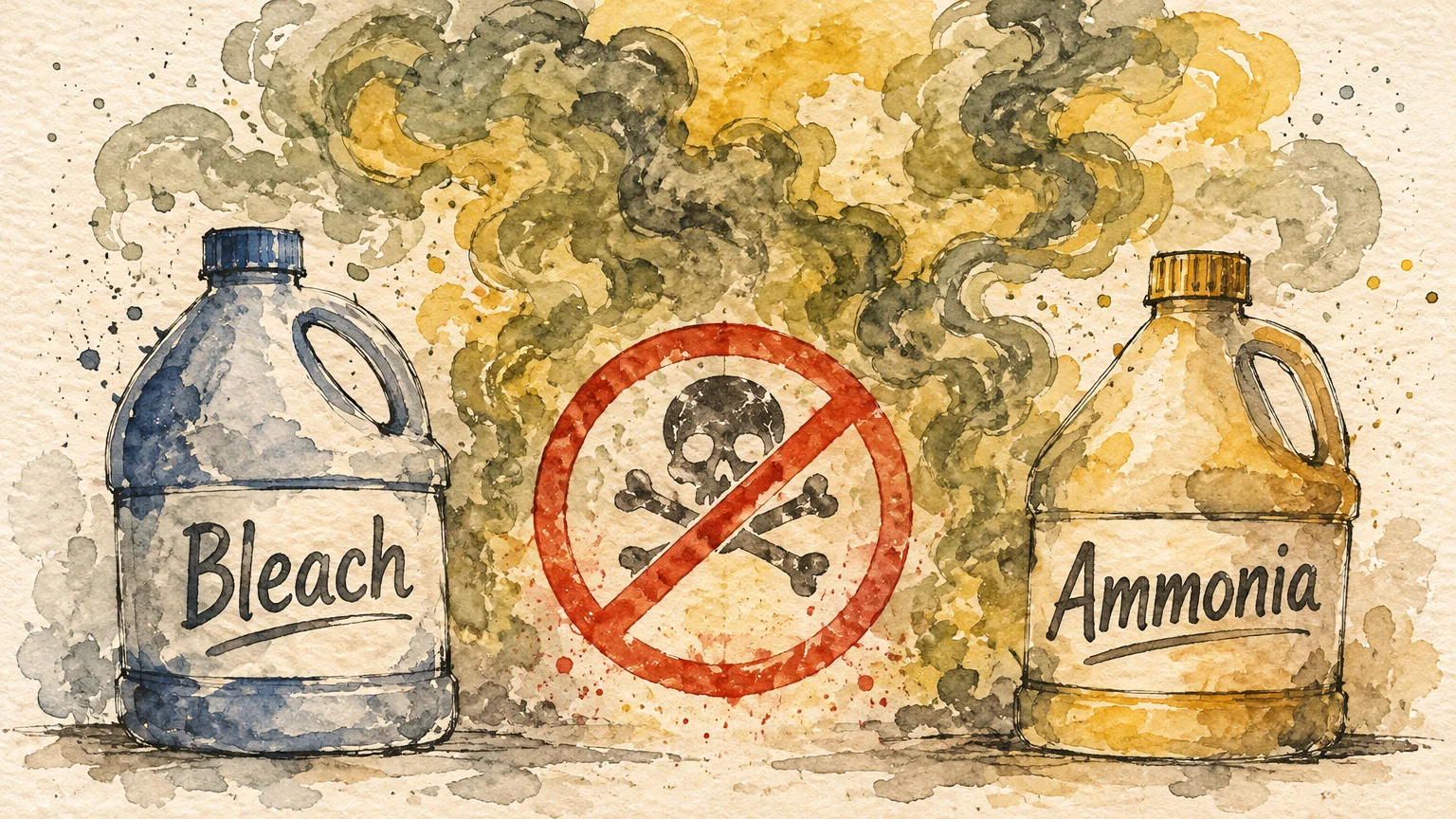
04 Mixing Cleaners That Release Toxic Bathroom Fumes
Combining two cleaners to boost scrubbing power inside a small, enclosed bathroom is one of the most dangerous toilet cleaning mistakes you can make. Invisible chemical reactions happen instantaneously in toilet bowls and drains.
An analysis of U.S. Poison Centers data from 2015 to 2022 identified 75,186 chlorine and chloramine gas exposures, with 85.5% occurring inside homes. Those poisonings led to emergency department visits in 16.7% of cases, hospitalizations in 2%, and 26 deaths.
Warnings from the CDC, Poison Control, Health Canada, and the New Jersey Department of Health highlight three household bleach combinations that produce hazardous vapors. Never combine sodium hypochlorite bleach with ammonia, acids, or rubbing alcohol.
| Dangerous Mixture | Toxic Byproduct | Common Bathroom Mistake |
|---|---|---|
| Bleach + Ammonia | Chloramine gas | Using bleach in the bowl while spraying ammonia glass cleaner nearby, or wiping urine-soaked floors with bleach. |
| Bleach + Acids | Chlorine gas | Pouring bleach over vinegar, acidic rust-removing bowl gels, or chemical drain openers. |
| Bleach + Rubbing Alcohol | Chloroform | Mixing bleach spray with isopropyl alcohol wipes on toilet seats or flush handles. |
Even products from the same category should never overlap inside the bowl. In April 2026, the American Cleaning Institute advised never mixing different toilet bowl cleaners together.
If you keep a continuous drop-in tablet or clip-on cleaner in your tank or rim, remove it and flush thoroughly before applying any gel or liquid bowl cleaner. Hidden residual chemicals in tank water can still react violently with a second formula.
Also keep thick toilet bowl gels strictly inside the porcelain bowl. The American Cleaning Institute warns never to use toilet bowl cleaner on seats, floors, sinks, or outer hardware, because concentrated acids and caustics etch plastic, metal plating, and stone.
Always turn on your exhaust fan or crack a window before opening any disinfectant. If fumes make your eyes water or your throat burn, step outside into fresh air right away and call Poison Control.
05 Cleaning the Toilet Before the Sink and Countertop
When you wipe the toilet first and move straight to the vanity, you carry fecal bacteria across your entire bathroom. Even clean-looking microfiber cloths pick up microbes and transfer them onto damp faucets and light switches.
Peer-reviewed toilet hygiene research tracking household bacteria confirms that enteric germs move from toilets onto bathroom sinks during routine cleaning and colonize reusable tools. A single sponge used on both fixtures turns a wipe-down into a distribution route.
CDC infection control principles direct cleaning and disinfecting from lower-contamination areas toward high-contamination areas. Always finish your vanity, mirror, and shower before touching the toilet exterior or floor base.
Replace cloths and buckets of cleaning solution immediately whenever they look dirty, and always discard or launder them after cleaning fecal or vomit spills. Assigning strict visual cues makes this habit automatic for everyone in your home.
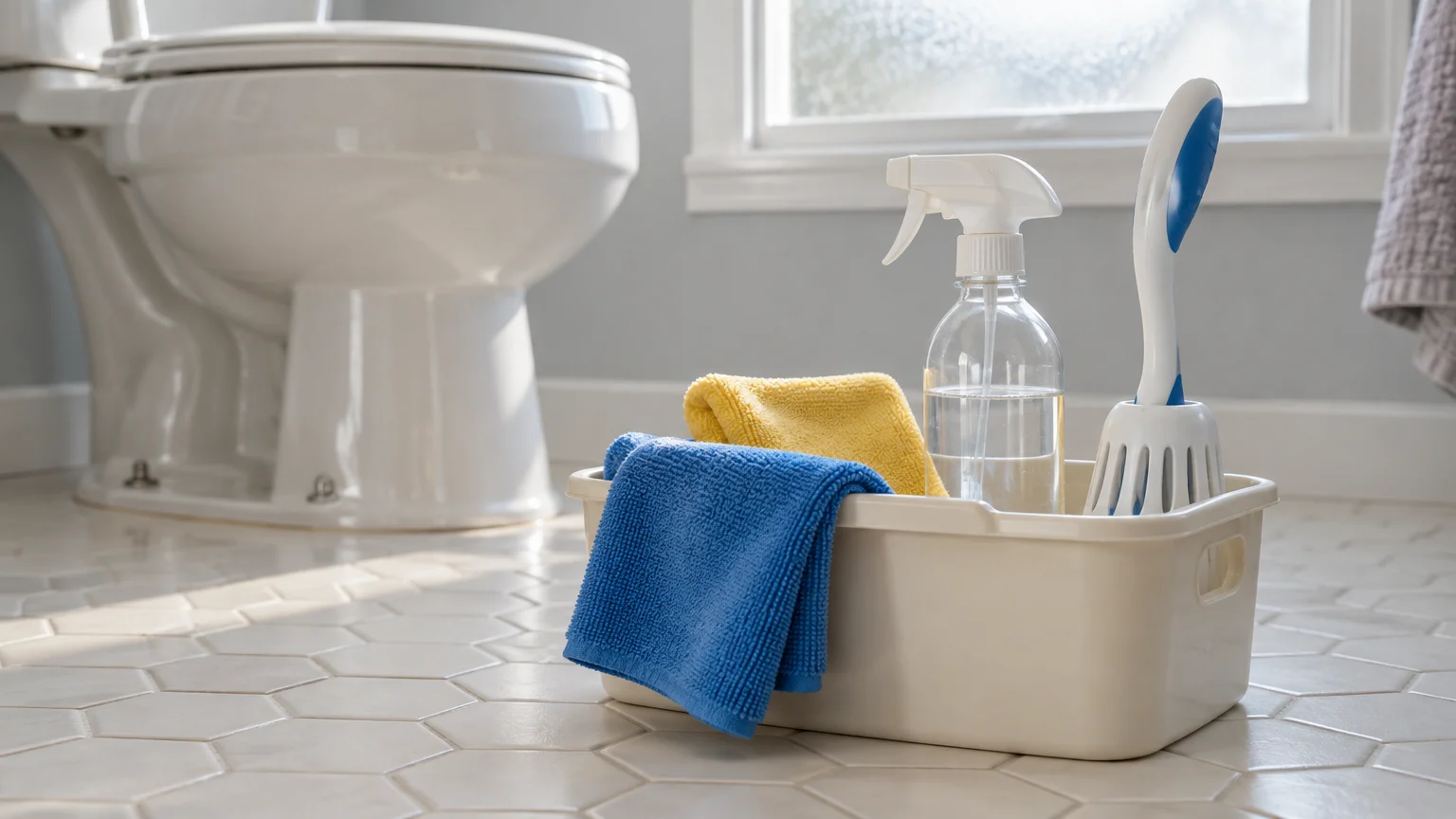
- Color-code microfiber cloths: Reserve blue or green cloths for mirrors, sinks, and counters, and use yellow or red cloths strictly for the toilet exterior.
- Use disposable towels on the dirtiest zones: Wipe the floor bolts, wax-ring seam, and lower porcelain base with paper towels or disposable disinfecting wipes you can toss straight into the bin.
- Launder reusable cloths hot: Wash toilet-designated microfiber cloths separately from kitchen towels in hot water, then tumble dry completely.
- Skip kitchen sponges altogether: Dense cellulose sponges stay damp inside and shelter bacteria far longer than flat-weave microfiber cloths.
Keeping separate cloths in an organized caddy removes guesswork on busy mornings. Older adults and caregivers managing shared bathrooms can label small plastic bins for clean versus used cloths to prevent accidental cross-use.
06 Storing a Dripping Toilet Brush Inside a Closed Caddy
Scrubbing the bowl and jamming a wet brush straight back into a sealed holder creates a dark, humid incubator. Viral and bacterial cells cling to soaked bristles and drip into stagnant caddy puddles.
A January 2024 study in the American Journal of Infection Control found relatively high viral contamination remained on the toilet brush, the brush caddy, and the toilet rim after bowl cleaning. Leaving a wet brush inside a closed container keeps those pathogens alive between cleanings.
Worse yet, stubborn bacteria can migrate back out the next time you scrub. Peer-reviewed toilet hygiene research shows Salmonella can colonize underneath the toilet rim and persist for up to 50 days.
The American Cleaning Institute recommends cleaning and disinfecting both your brush and holder periodically, and never placing a dripping brush inside a closed holder. Simple air-drying cuts microbial survival sharply.
Good Housekeeping recommends a straightforward routine right after every scrub. Wash the brush inside its holder using hot soapy water, rinse cleanly, and disinfect with cold water and a small amount of bleach.
After disinfecting, wedge the brush handle horizontally under the closed toilet seat so the brush head hangs over the dry bowl. Let it drip-dry completely before returning it to a dry, open-sided caddy.
When choosing a replacement brush, look for non-absorbent silicone bristles or stiff synthetic nylon paired with a vented base. Replace any toilet brush once bristles fray, stain, or no longer look clean.
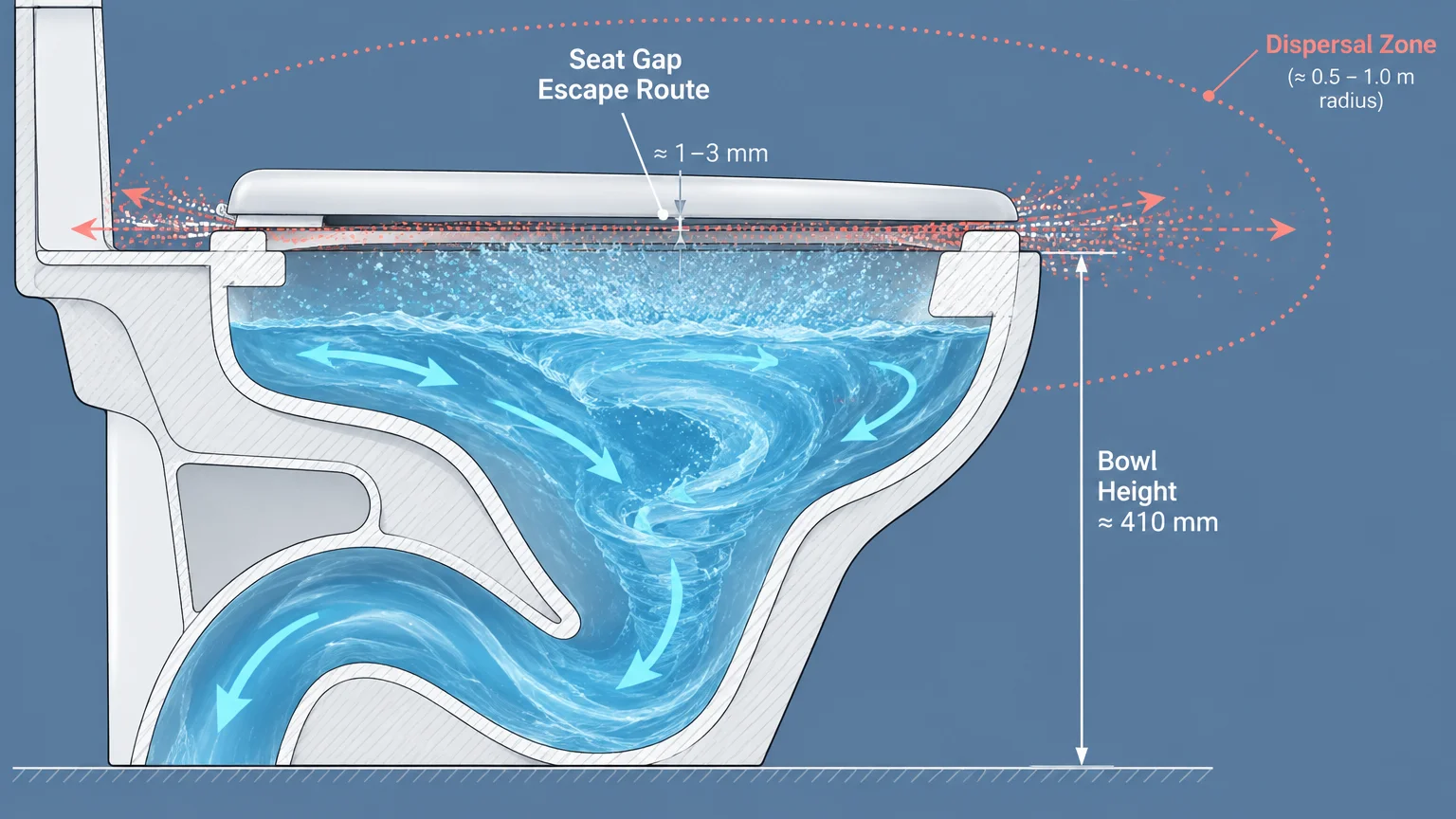
07 Relying on the Closed Lid Alone to Block Flush Plumes
Closing the toilet lid before flushing feels tidy, yet assuming a lowered lid stops all airborne germs creates a false sense of security. Tiny gaps between the seat, lid, and rim still release fast-moving mist.
In December 2022, laser-imaging experiments at the University of Colorado Boulder showed a lidless commercial toilet flush ejects aerosols at 6.6 feet per second. That plume climbs nearly 5 feet high within 8 seconds, while 1-micron droplets stay airborne for minutes.
A September 2026 Flinders University review of 22 studies in Science of the Total Environment confirmed turbulent flushes propel bioaerosols—capable of carrying Legionella, influenza, and norovirus—to adult breathing height. Those microscopic droplets can stay suspended for at least 20 seconds.
Lowering a household lid helps block large visible droplets, but it does not seal the bowl. A January 2024 University of Arizona study in the American Journal of Infection Control found no statistically significant difference in viral contamination on toilet surfaces or nearby floors whether the lid was up or down.
Those researchers observed aerosol plumes travel 5 feet or more. The factor that truly cut contamination was disinfecting the bowl water, toilet, and nearby surfaces—cleaning with a disinfectant and brush reduced bowl-water virus levels by more than 99.99%.
Put this finding to work by moving open toothbrushes, razors, and face towels inside closed medicine cabinets or drawers at least 5 feet away from the toilet. Continue closing the lid for visual tidiness and splash control, while pairing it with routine bowl and floor disinfection.
08 Missing the Dirtiest Bathroom Germ Hotspots
Many people scrub the porcelain bowl until it gleams while walking right past the surfaces covered in the highest bacterial loads. Hand-to-surface contact spreads microbes far beyond the seat.
A household swab study by NSF International detected coliform bacteria—indicators of fecal contamination including E. coli and Salmonella—on 27% of toothbrush holders and 9% of bathroom faucet handles. Look closely at how average microorganism counts per 10 square centimeters (1.55 square inches) compared across bathroom spots:
- Toothbrush holders: 3,318,477 microorganisms, often driven by damp pooled water at the bottom of cups.
- Bathroom faucet handles: 28,068 microorganisms, touched immediately before handwashing.
- Bathroom doorknobs: 315 microorganisms.
- Toilet seats: 266 microorganisms.
- Toilet flush handles: 46 microorganisms.
- Light switches: 30 microorganisms.
Even personal electronics brought into the restroom collect grime quickly. Studies cited by the American Cleaning Institute show cell phones carry an average of 10 times more bacteria than most toilet seats.
During your regular routine, expand your target list beyond the bowl rim. Check under the inner lip of the rim with a small hand mirror so curved brushes actually reach hidden mineral ledges where bacteria hide.
Wipe seat hinge caps, plastic mounting bolts, and the narrow porcelain ledge behind the seat where dust mixes with moisture. Pop toothbrush holders into the dishwasher weekly or scrub them with hot soapy water, rinse well, and let them dry upside down.
Make a household rule to leave cell phones outside the bathroom, or wipe phone cases afterward using alcohol wipes approved by your device manufacturer. Cleaning the highest-count touchpoints takes barely two extra minutes.
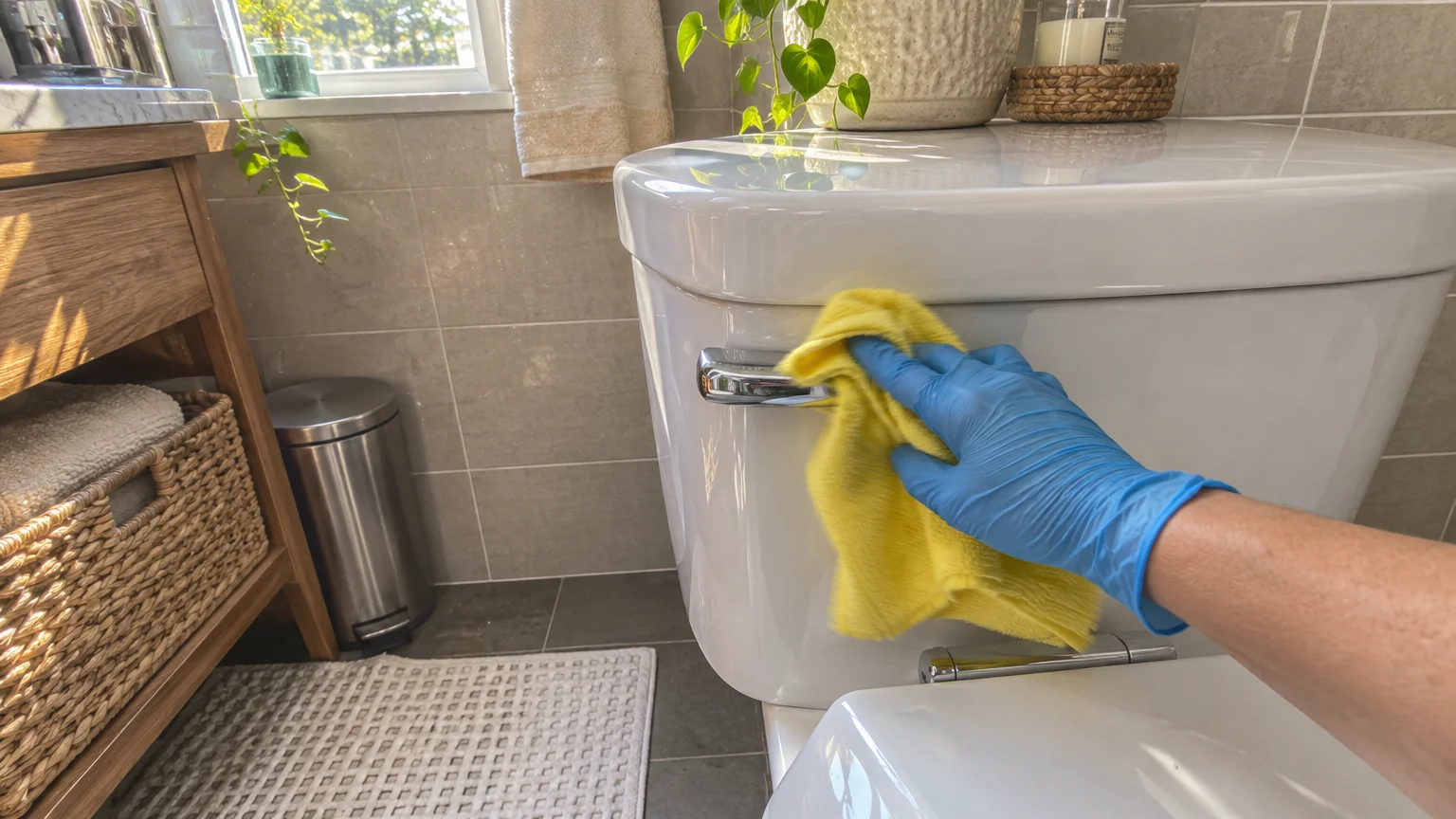
09 Waiting Too Long Between Disinfecting Sessions
Postponing toilet cleaning until hard-water rings turn orange or odors appear lets microbial populations rebound to peak levels. Invisible contamination builds days before a bathroom ever looks messy.
In a 2025 American Cleaning Institute survey, 56% of Americans prioritized cleaning toilets and showers and 51% prioritized disinfecting high-touch surfaces for health. Yet in a separate American Cleaning Institute and Wakefield poll, 40% admitted they would feel embarrassed to say when they last cleaned their toilet.
Waiting two weeks between scrubs forces you to battle baked-on biofilm and mineral scale, which tires out wrists and backs. Consistent light maintenance requires far less physical strain.
A May 2025 University of Arizona household restroom study led by microbiologist Charles P. Gerba, published in MDPI, found bacterial loads peaked after 3 days. Cleaning and disinfecting twice weekly—every 3 days—with surface-specific products cut estimated norovirus infection risk by more than 98% on the most heavily contaminated surfaces, and by 91.5% across commonly touched surfaces in a related 2025 analysis.
Set a simple twice-weekly rhythm, such as Sunday evening and Wednesday morning. If stooping hurts your knees or hips, keep a lightweight long-handled brush and extendable microfiber wand in the bathroom so quick 5-minute maintenance never requires kneeling.
10 Relying on Hand Sanitizer Instead of Soap and Water Afterward
Squirting alcohol-based hand sanitizer after finishing toilet cleanup feels convenient, especially if you wore disposable or rubber gloves. That shortcut leaves dangerous gaps in your bathroom hygiene.
CDC guidance from December 2024 and January 2025 warns that alcohol-based hand sanitizers do not work well against norovirus. Sanitizers also fail to kill Clostridioides difficile (C. diff) spores, which cause nearly 500,000 U.S. infections each year.
Mechanical friction, soap surfactants, and running water physically lift hardy viral particles and bacterial spores off skin and rinse them down the drain. Always follow the CDC handwashing guidelines after cleaning or using the bathroom.
Follow a clean glove-removal sequence so dirty exteriors never touch bare wrists. Before pulling off reusable rubber gloves, wash the gloved hands with soap and water, peel them off inside-out cuff by cuff, and hang them to dry.
Immediately scrub bare hands and wrists with soap and running water, then dry completely using a clean paper towel or freshly laundered hand towel. Damp hands transfer remaining microbes far faster than dry skin.
Step-by-Step Checklist: How to Clean a Toilet Without Spreading Germs
Putting every fix together turns toilet care into a smooth, top-to-bottom sequence that prevents recontamination. Follow this order each time you clean your bathroom.
- Ventilate and clear the room: Switch on the exhaust fan, move bathmats and clutter away from the toilet base, and remove any in-tank bowl tablets before flushing once.
- Clean upper bathroom surfaces first: Wipe the mirror, countertop, and faucet handles using a dedicated clean cloth so lower-contamination zones stay isolated from toilet bacteria.
- Pre-clean the toilet exterior: Put on cleaning gloves, spray mild soapy water onto a toilet-only cloth, and wipe the tank lid, flush handle, outside bowl, seat top, seat underside, and hinges.
- Scrub inside the bowl with cleaner: Apply one bowl cleaner beneath the rim, let it sit per label directions, scrub under the lip and down to the water line with a synthetic or silicone brush, then flush.
- Apply disinfectant for full contact time: Mist or wipe your EPA-registered disinfectant or fresh daily bleach mix across the outer tank lever, seat, rim, and base, keeping surfaces visibly wet for the full 1 to 10 minutes listed on the label (or at least 5 minutes at norovirus strength when illness strikes).
- Target high-touch hotspots and floor base: Wipe the doorknob, light switch, outer wall behind the toilet, and floor around the mounting bolts using clean disposable wipes or paper towels, moving from least dirty to dirtiest.
- Sanitize and air-dry your brush: Wash the brush in its holder with hot soapy water, rinse, disinfect with cold water and a small amount of bleach, and clamp the handle under the toilet seat to drip-dry before storing.
- Remove gloves and wash hands: Discard disposable wipes, wash reusable gloves before pulling them off, and scrub bare hands thoroughly with soap and running water.
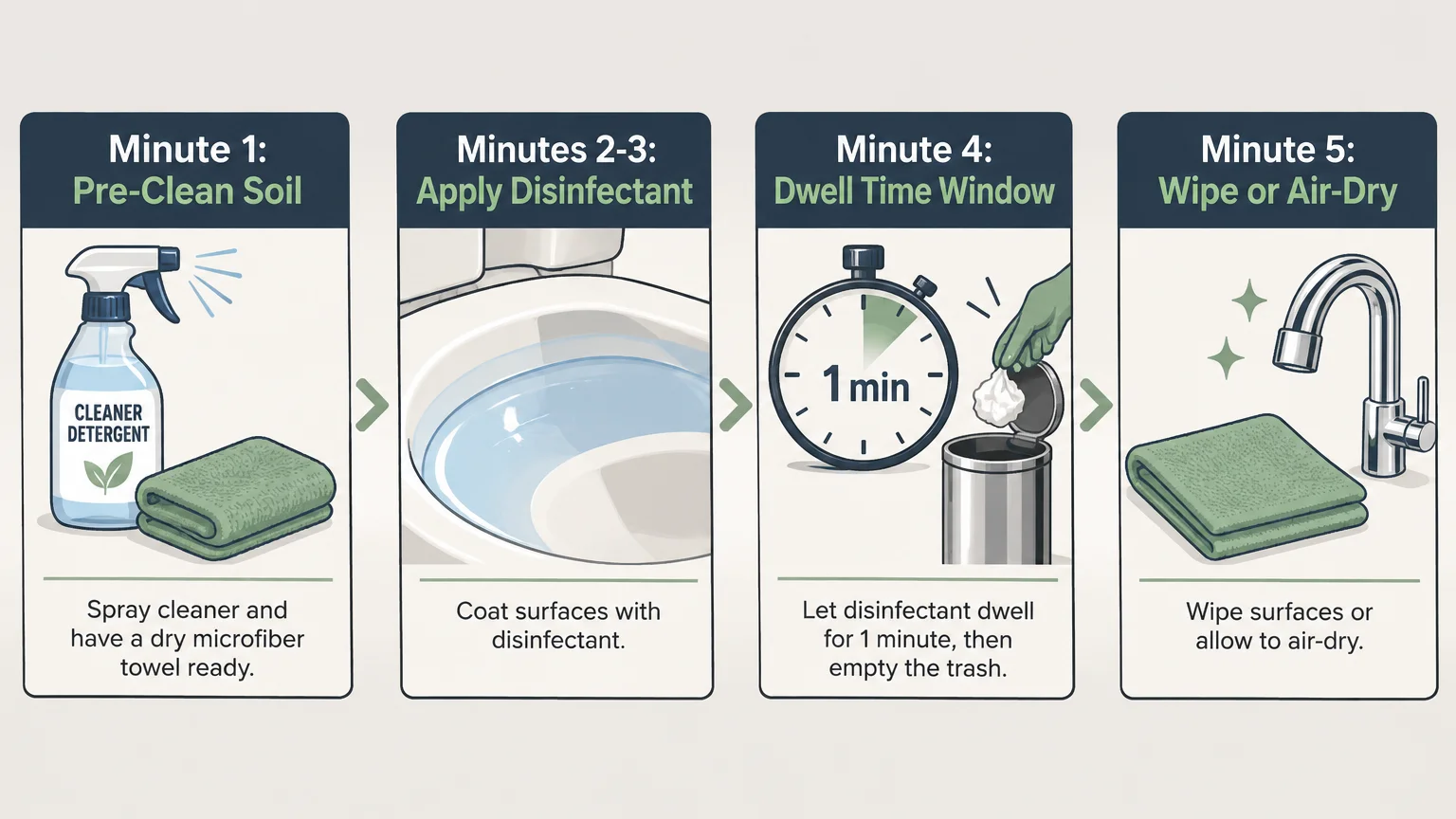
Your Next Five-Minute Bathroom Reset
Walk into your bathroom today and check two bottles under the sink to verify their exact disinfectant contact times and confirm no one has paired bleach with vinegar, ammonia, or rubbing alcohol. Mix fresh diluted bleach only when you plan to use it within 24 hours, and move open toothbrushes inside a closed cabinet away from flush plumes.
Next, pick two fixed days three days apart—like Wednesday and Sunday—to run a quick 5-minute disinfect of your toilet seat, flush handle, faucet, and toothbrush holder. Small, consistent resets keep germs from multiplying and make deep cleaning virtually effortless.