Cloudy streaks and chalky white rings turn a crisp glass shower into an eyesore within days. You can stop scrubbing thick buildup every weekend once you pair quick daily habits with the right cleaning chemistry.
These nine practical shower cleaning tips show you how to clean glass shower doors safely without scratching tempered glass or etching nearby stone. You will learn exact dilution ratios, dwell times, and low-effort routines that keep your bathroom spotless.
Whether you share a busy household or want an easier daily routine, each step fits into minutes a week. Start with the science behind those stubborn droplets so every wipe counts.
Why Cloudiness Sticks to Your Shower Glass
Every splash of tap water leaves behind microscopic dissolved minerals once the moisture evaporates. As water dries on warm glass, calcium and magnesium stay behind and bond tightly to the surface.
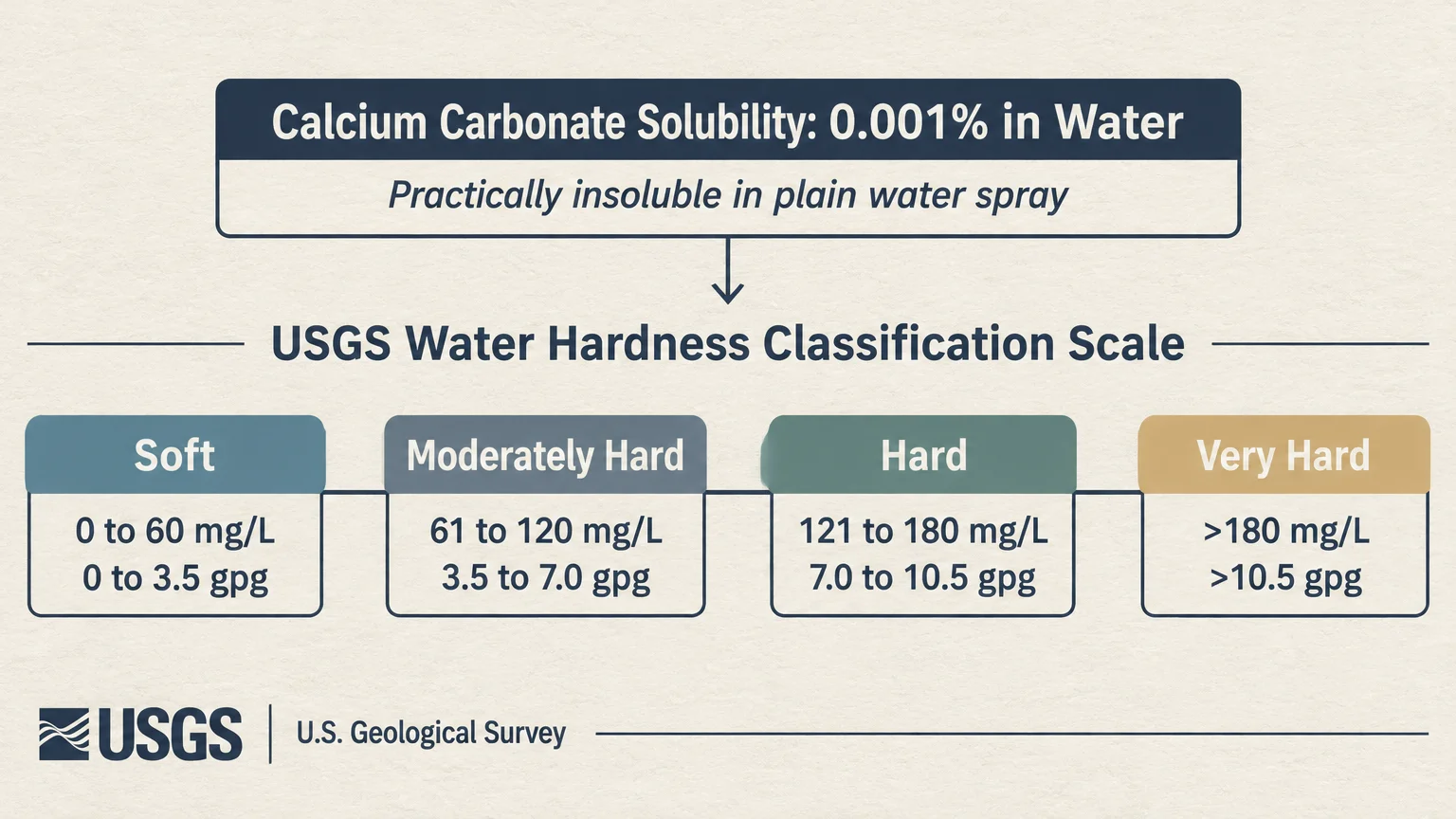
According to PubChem, calcium carbonate has a water solubility of just 0.001%, making it practically insoluble in plain water. That explains why rinsing your door with hot shower spray never removes white spots.
Your local water supply determines how fast those mineral rings appear. The U.S. Geological Survey classifies water hardness by dissolved calcium carbonate levels in milligrams per liter, or parts per million.
- Soft water measures 0 to 60 mg/L, or 0 to 3.5 grains per gallon under Water Quality Association benchmarks.
- Moderately hard water measures 61 to 120 mg/L, or 3.5 to 7.0 grains per gallon.
- Hard water measures 121 to 180 mg/L, or 7.0 to 10.5 grains per gallon.
- Very hard water exceeds 180 mg/L, or more than 10.5 grains per gallon, where 1 grain per gallon equals 17.12 ppm.
The U.S. Environmental Protection Agency places calcium and magnesium under Secondary Drinking Water Standards rather than health limits. These minerals do not harm your health, yet they create constant spotting and scale on bathroom glass.
Worse still, mineral ions react with fatty acids in traditional soaps to form sticky soap film. Stopping water from drying on the glass—and dissolving any remaining scale gently—keeps your doors clear with minimal elbow grease.
Trick 1: Squeegee the Glass Immediately After Every Shower
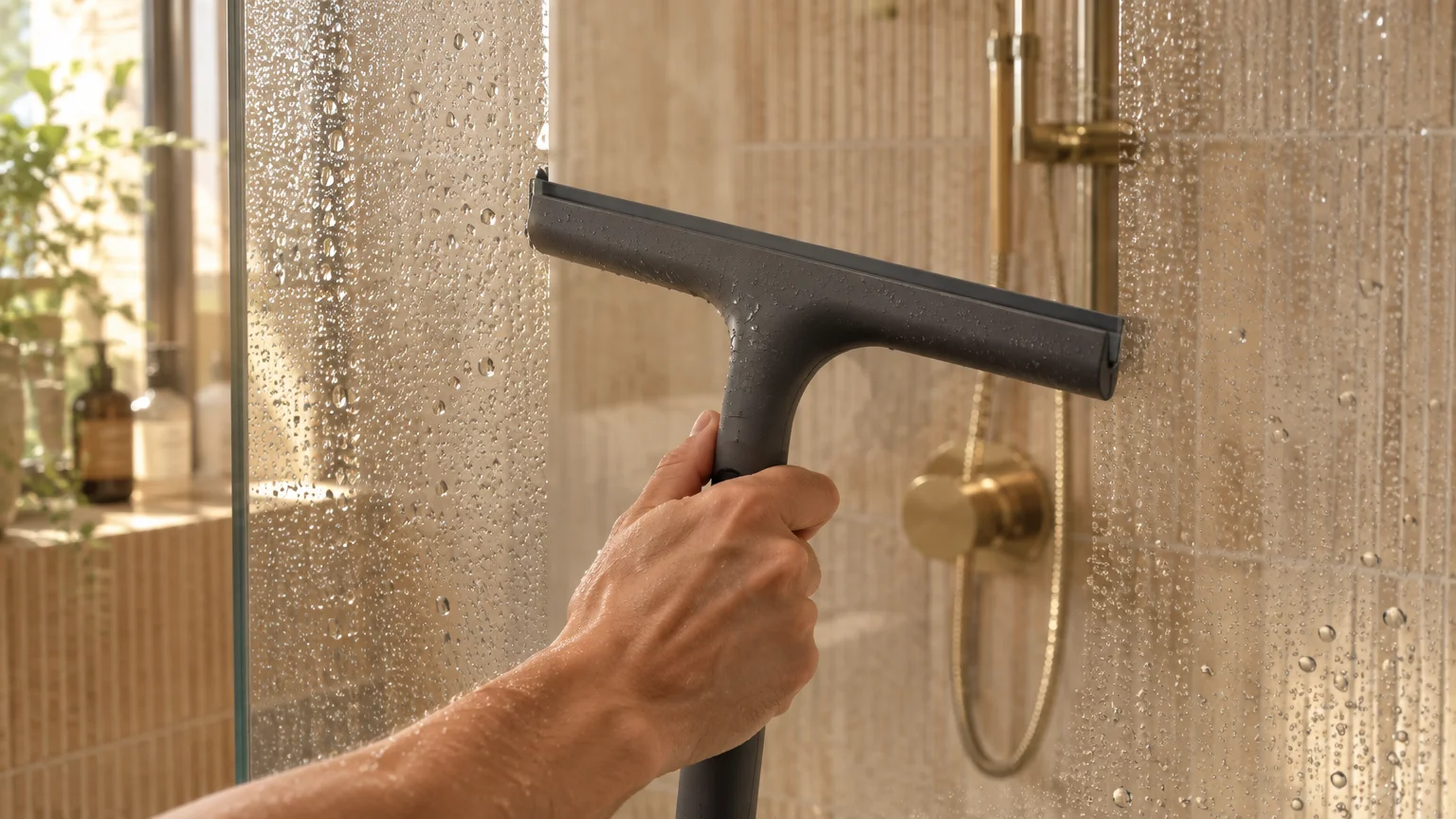
Removing water droplets before they evaporate prevents nearly all mineral spotting before it starts. A quick daily pass with a silicone-blade squeegee cuts your weekly scrubbing workload dramatically.
Keep a lightweight squeegee hanging inside the shower at chest height so you reach it effortlessly. Models with cushioned, nonslip handles and flexible silicone blades reduce wrist strain, which helps if you manage stiff joints or arthritis.
If reaching the top edge of tall frameless glass feels uncomfortable, mount an extendable-handle squeegee on a suction hook. Staying balanced on the shower mat while clearing high water beads keeps your routine safe as well as fast.
- Start at the top corner of the wet glass door and pull the squeegee straight down in one smooth stroke.
- Overlap each vertical pass slightly so no thin beads of water remain behind between lines.
- Wipe the silicone blade with a towel or your fingers after every two or three strokes.
- Finish with one horizontal swipe along the bottom edge, then dry the metal frame or track with a microfiber cloth.
Avoid hard plastic blades that chatter across the glass and skip over water droplets. If you have textured or rain-patterned glass, follow the squeegee pass with a quick buff using an absorbent waffle-weave microfiber towel to reach recessed grooves.
Replace your squeegee blade whenever the rubber edge feels nicked, cracked, or stiff. A fresh blade glides silently across wet glass and removes moisture in a single pass.
Trick 2: Mix Your Descaler With Distilled Water Instead of Tap Water
When you need to remove hard water stains that have already baked onto uncoated glass, mild acid dissolves the mineral bond. Standard white distilled vinegar contains 5% acetic acid with a pH around 2.4 to 2.8, while commercial cleaning vinegar reaches 6% acetic acid at pH 2.2.
As PubChem notes, diluted acetic acid reacts with solid calcium carbonate and produces fizzing effervescence. That chemical reaction converts stubborn white scale into water-soluble calcium acetate and carbon dioxide gas, letting you rinse spots right down the drain.
However, the water you pour into your spray bottle changes how well that vinegar works. Mixing 5% vinegar 1:1 with distilled or deionized water preserves a potent pH between 2.7 and 3.1.
Mixing the exact same vinegar 1:1 with hard tap water pushes the solution pH above 3.2. Dissolved bicarbonates in tap water neutralize part of the acid before it ever touches your shower door, slowing down descaling.
| Water Hardness Level | USGS Scale (mg/L) | Recommended Vinegar-to-Distilled-Water Ratio | Dwell Time on Uncoated Glass |
|---|---|---|---|
| Soft Water | 0–60 mg/L | 1 part 5% vinegar to 2 parts distilled water | 2 to 3 minutes |
| Moderately Hard Water | 61–120 mg/L | 1 part 5% vinegar to 1 part distilled water | 5 to 8 minutes |
| Hard Water | 121–180 mg/L | 1 part 5% vinegar to 1 part distilled water | 10 to 15 minutes |
| Very Hard Water | Over 180 mg/L | Undiluted 5% vinegar or 1:1 6% cleaning vinegar | 15 to 20 minutes with paper towel wrap |
For vertical glass panels where liquid runs straight down, press vinegar-soaked paper towels flat against crusty deposits. Leave the towels against the glass so the acid stays wet, then wipe clean and rinse thoroughly.
Always run your bathroom fan or crack the door while spraying vinegar so the sharp scent dissipates quickly. Label your spray bottle clearly with the exact ingredients and mixing date so nobody mistakes it for plain water.
Trick 3: Use the Right Tool Texture for Uncoated Glass Only
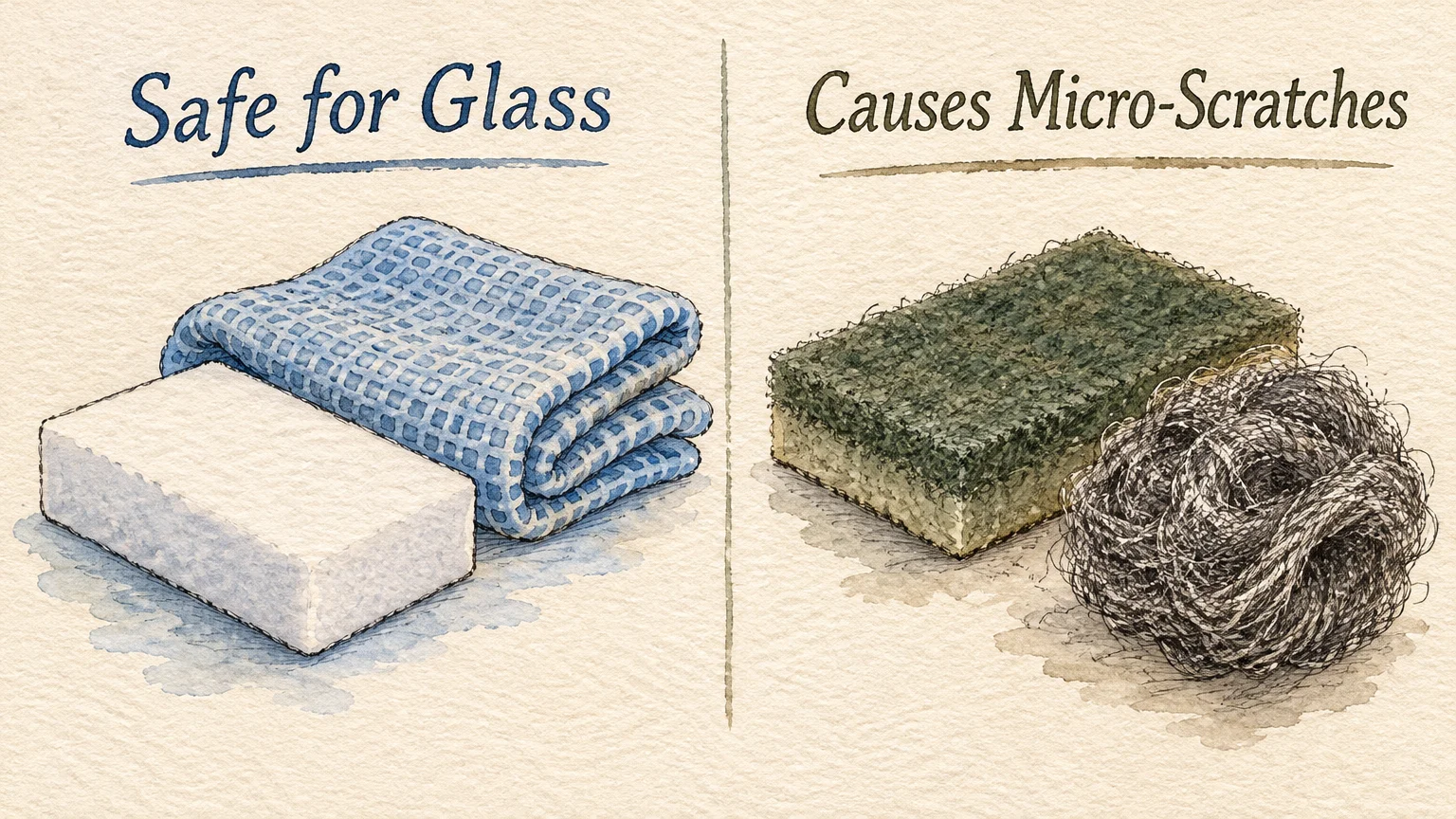
Many people grab the nearest abrasive pad when soap scum refuses to budge, only to leave permanent hairline swirls across the door. Standard shower doors use tempered soda-lime glass, which rates just 5.5 to 6 on the Mohs hardness scale—or up to 7 depending on the formulation.
Thermal tempering makes shower glass two to four times stronger against impact and bending. Unfortunately, tempering does not significantly increase surface scratch resistance against gritty powders or harsh metal scrubbers.
Coarse steel wool in grades 1 through 4 will gouge shower glass immediately. If you have severe, chalky mineral buildup on plain, uncoated glass, only wet #0000 quadruple-zero ultra-fine steel wool is safe enough for gentle buffing.
| Cleaning Tool Texture | Best Use Case | Safe on Coated Glass? |
|---|---|---|
| Flat-weave or glass microfiber cloth | Streak-free buffing and drying after rinsing | Yes |
| Plush terry microfiber towel | Lifting dissolved soap film and wiping metal frames | Yes |
| Non-scratch cellulose or blue scrub sponge | Gentle agitation on weekly body-oil buildup | Check coating instructions first |
| Wet #0000 ultra-fine steel wool | Removing thick mineral crust after spot-testing | No; use on bare, uncoated glass only |
- Confirm your glass has no factory protective film or tinted coating before touching it with any fine abrasive.
- Soak both the #0000 steel wool pad and the glass surface thoroughly with soapy water or diluted vinegar first; never buff dry glass.
- Test a tiny, inconspicuous lower corner using light circular strokes, then rinse and inspect under bright light for any hazing.
- Switch back to a soft non-scratch cellulose sponge or plush microfiber cloth once the heavy crust disappears.
Discard any #0000 steel wool pad immediately after one cleaning session because trapped moisture causes it to rust overnight. Leaving a damp steel wool pad on tile or stone creates stubborn rust stains that are far harder to fix than soap film.
Trick 4: Match Your Cleaner to Your Stone Surround
Even if your glass door resists vinegar, your shower floor, curb, or wall tile might not survive overspray. Marble, limestone, and travertine contain calcium carbonate—the exact mineral that acidic sprays dissolve.
Dripping vinegar or citric acid onto natural stone can permanently etch a dull, rough mark into the polish within 30 seconds to a few minutes. Once acid eats into stone, no soap or polish can wipe away the damage without professional honing.
Engineered quartz thresholds hold up better than natural marble, yet harsh acids or high-alkaline powders can still dull their resin binders over time. Choosing a gentle, neutral cleaner keeps both natural stone and engineered surfaces looking uniform.
The Natural Stone Institute recommends using pH-neutral cleaners sitting near pH 7 around marble, travertine, and limestone. Mild liquid dish soaps typically fall between pH 7 and 8.5, making them a safe everyday option for soap scum removal near stone.
- Protect marble, limestone, or travertine curbs by laying a folded bath towel along the bottom threshold before cleaning.
- Mix one gentle squirt of mild, dye-free liquid dish soap into warm distilled water inside a labeled spray bottle.
- Mist the glass generously and let the soapy solution dwell briefly to soften body oils and light soap film.
- Agitate the glass using a damp microfiber cloth with light circular motions, then rinse thoroughly with warm water and squeegee dry.
For stubborn grime in a stone-lined shower, apply a stone-safe glass cleaner directly onto your cloth instead of spraying the door. Wiping directly from cloth to glass eliminates airborne mist and prevents runoff from pooling onto delicate stone grout.
Trick 5: Follow the Exact Care Rules for Factory-Coated Glass
Modern shower doors often arrive from the factory with invisible hydrophobic coatings bonded to the interior surface. Treating coated glass like plain glass can void your warranty and strip away water-repelling protection within weeks.
Check your installation paperwork or look for an etched corner logo to identify your door type before picking up a bottle. Guardian ShowerGuard, for example, bases its 2025 care instructions directly on the water quality flowing from your showerhead.
- If you live with soft water, clean ShowerGuard glass using a standard household glass cleaner such as Windex.
- If you live with hard water, apply a 50-50 vinegar-and-water solution every 15 showers and rinse completely.
- If your home has high-silica water that leaves white speckles resistant to acid, use a mild abrasive cleanser such as Soft Scrub every 10 showers.
By contrast, EnduroShield—a silane-based hydrophobic coating lasting three to five years—follows very different rules. EnduroShield instructs homeowners to clean weekly with a damp microfiber cloth and mild liquid detergent.
EnduroShield explicitly warns against rough abrasives, highly acidic solutions, or strong alkaline cleaners such as Comet, Ajax, or cerium oxide. Using gritty powders or harsh chemicals wears down the silane barrier and brings back heavy water spotting.
When you are unsure which coating sits on your door, default to mild dish soap, warm water, and a clean microfiber cloth. That gentle combination lifts daily residue without damaging either plain glass or specialized factory finishes.
Trick 6: Apply a Hydrophobic Barrier on Uncoated Doors
If your shower uses bare, uncoated glass, adding a temporary water repellent makes droplets bead up and race down toward the drain. Less standing water means far less calcium sticks behind after every rinse.
Rain-X Shower Door Water Repellent, sold in 16-fluid-ounce bottles, creates a slick barrier that typically lasts for weeks before needing reapplication every three to four weeks. Always open the bathroom door and run your fan first, because Rain-X requires a well-ventilated area during application.
- Deep-clean the uncoated glass first so no soap film or hard water spots get trapped beneath the sealant.
- Dry the glass completely with a lint-free microfiber towel so no moisture interferes with bonding.
- Pour a small amount of repellent onto a clean microfiber cloth and wipe it across the dry glass using overlapping circular motions.
- Let the coat dry to a slight haze per the bottle directions, then buff the glass clear with a dry microfiber towel.
Read product labels carefully before touching specialty surfaces in your bathroom. Rain-X cautions against applying its Original Glass Water Repellent on etched or frosted glass shower doors, plastic, plexiglass, or fiberglass enclosures.
Mark a recurring reminder on your calendar every three to four weeks to reapply the barrier after your weekly wash. Quick buffing keeps water beads sliding off the glass smoothly before scale has time to form.
Trick 7: Run Your Exhaust Fan to Stop Film and Mold Together
Even spotless glass turns cloudy and breeds mildew fast when warm, stagnant steam lingers inside a closed bathroom. Controlling moisture protects both your shower doors and your caulk lines at the same time.
The U.S. Environmental Protection Agency advises keeping indoor relative humidity below 60%, ideally between 30% and 50%. When humidity stays above 60%, airborne mold spores can colonize damp organic surfaces—including soap film, grout, and caulk—within 24 to 48 hours.
Under ASHRAE Standard 62.2, bathrooms need mechanical exhaust vented outdoors rather than into an attic. The standard calls for at least 50 cubic feet per minute for intermittent fans rated at 3 sones or quieter, or 20 CFM for continuous fans rated at 1 sone or quieter.
- Turn on your exhaust fan before stepping under the water so dry air begins circulating early.
- Leave the fan running after you finish showering until mirrors clear and indoor humidity drops back below 50%.
- Keep an inexpensive digital hygrometer on the vanity shelf so you can monitor moisture levels accurately.
- Remember that cracking a window alone does not meet ASHRAE local mechanical exhaust requirements.
Check the edges of your shower door sweeps and silicone seals weekly for dark specks. If mold growth ever spreads beyond 10 square feet on bathroom walls or subfloors, the EPA recommends hiring a professional remediation specialist instead of tackling it yourself.

Trick 8: Switch From Bar Soap to Synthetic Liquid Body Wash
One of the easiest bathroom cleaning hacks happens at the pharmacy rather than the cleaning aisle. Traditional bar soaps rely on natural animal tallow or plant fats combined with lye, which react aggressively with calcium and magnesium in your tap water.
That reaction creates insoluble soap curd—the waxy gray film that clings to glass doors, chrome hinges, and lower tracks. Even if you squeegee carefully, leftover soap droplets cure into tacky streaks overnight.
Switching to a synthetic liquid body wash or sulfate-free shower gel prevents fatty-acid soap curd from forming in the first place. Liquid cleansers rinse cleanly down the drain without binding to hard water minerals on your glass.
Pair that swap with a quick rinse of your lower door track, rubber sweep, and metal hinges before you step out. Flushing pooled suds off horizontal trim stops sticky buildup from hardening inside tight crevices.
Once a week, wipe the aluminum or brass door frame with a damp microfiber cloth and dry it completely. Keeping water off plated hardware prevents pitting and preserves the finish alongside your clear glass.
Trick 9: Stick to a Simple Weekly Maintenance Checklist
Keeping glass clean takes almost no physical strain when you prevent thick scale from taking hold. A light, repeatable schedule replaces exhausting deep-scrubbing marathons and keeps tools within easy reach.
If bending or reaching high corners feels uncomfortable, swap handheld sponges for a lightweight extendable microfiber mop dedicated solely to shower walls and glass. Standing upright while wiping saves your back and shoulders while finishing the job cleanly.
- Daily after showering: Pull a silicone squeegee down the glass, wipe the blade, and run your exhaust fan until steam clears.
- Weekly on glass and frames: Mist with your stone-safe mild dish soap solution or coating-approved cleaner, wipe with a damp microfiber cloth, rinse, and dry chrome hinges.
- Every two weeks on uncoated doors: Apply a 1:1 distilled water and 5% vinegar spray to clear light mineral haze, letting it dwell briefly before rinsing thoroughly.
- Every three to four weeks: Reapply hydrophobic glass repellent to dry, clean uncoated doors with the exhaust fan running.
- Monthly hardware check: Vacuum dust off your bathroom exhaust fan grille and inspect bottom silicone sweeps for trapped hair or film.
Storing a small spray bottle, one microfiber cloth, and a squeegee right inside a bathroom drawer removes every excuse to skip maintenance. When supplies sit steps away, quick upkeep becomes automatic.
Chemical Safety Rules You Should Never Break
Trying to speed up soap scum removal by combining strong cleaners in the same shower stall is one of the most dangerous mistakes in home care. Enclosed, humid bathrooms trap toxic vapors at breathing height within seconds.
Between 2015 and 2022, U.S. poison centers recorded 85,104 chlorine and chloramine gas exposures, with 84.9% happening right inside people’s homes. A 2020 survey of 502 U.S. adults highlighted by the Centers for Disease Control and Prevention found that 42% did not recognize that mixing bleach and ammonia is unsafe.
Never mix these common household products inside your shower, bucket, or spray bottle:
- Bleach plus vinegar or any acidic descaler: Combining sodium hypochlorite with acetic, citric, or phosphoric acid immediately releases chlorine gas, which burns eyes, noses, and throats and can injure lungs, as warned by the CDC, Poison Control, and Health Canada.
- Bleach plus ammonia-based glass cleaners: Mixing these creates toxic chloramine gas, causing coughing, shortness of breath, chest pain, and fluid buildup in the lungs according to the Washington State Department of Health and University of Rochester Medical Center.
- Hydrogen peroxide plus vinegar: Combining these two liquids produces peracetic acid, a highly corrosive chemical that damages skin, eyes, and respiratory airways according to the University of Rochester Medical Center.
Even spraying bleach on tile after rinsing a vinegar-washed glass door can trigger fumes if acidic residue stays pooled in the drain or grout. Always rinse surfaces thoroughly with plenty of plain water and wait until the bathroom airs out before switching products.
If anyone experiences burning eyes, coughing, or breathing trouble after using bathroom cleaners, leave the room immediately for fresh air and contact Poison Control right away. Keeping one simple, single-ingredient routine—rather than layering bottles—protects your lungs while keeping your shower sparkling.

Your Five-Minute Reset Tonight
Hang a soft-grip silicone squeegee inside your shower today and mix your next cleaning spray with distilled water instead of tap water. Make sure your chosen cleaner matches both your door coating and your shower curb before you spray.
After your next shower, turn on the exhaust fan and pull the squeegee cleanly down the glass. That simple habit keeps hard water rings away so your doors look clear every morning.