Hosting friends and family feels much calmer when your home is genuinely clean, not just tidied in a rush. Knowing the right tasks to tackle first saves hours of last-minute scrubbing.
Nearly half of Americans say cleaning—not cooking—is the most stressful part of hosting a holiday meal. Hosts spend an average of 7.5 hours prepping before guests arrive, often rushing through the same visible spots.
Use this practical holiday cleaning checklist to target the ten areas that matter most for food safety, fire prevention, indoor air quality, and true guest comfort.
Why Guests Notice More Than Surface Clutter
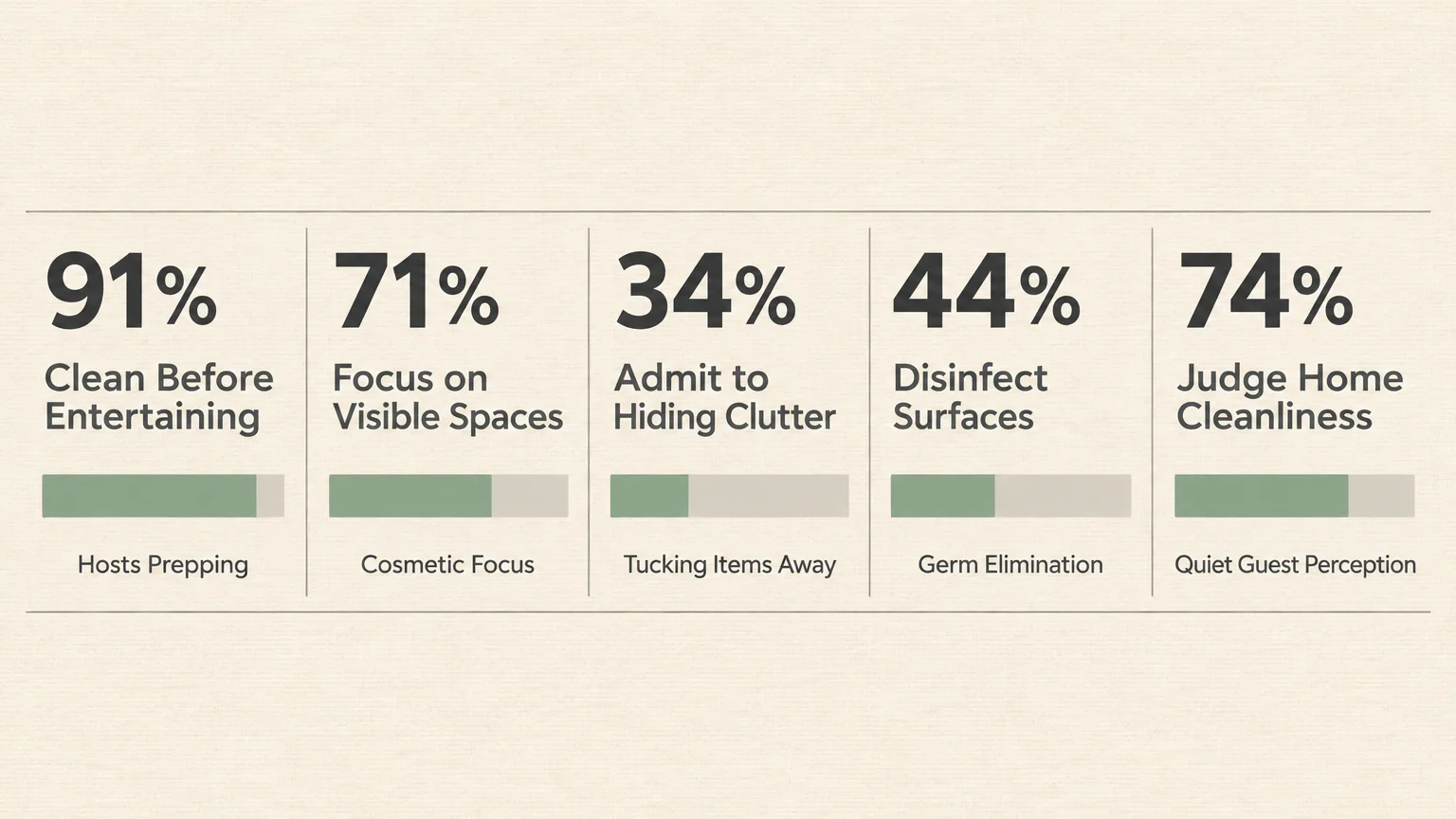
When you clean before Christmas or Thanksgiving, it is tempting to focus only on what meets the eye. According to an American Cleaning Institute survey, 91% of Americans clean before entertaining, and 71% focus on visible spaces.
That same survey shows 34% of hosts admit to hiding clutter, while only 44% disinfect surfaces to stop germ spread. Meanwhile, 74% of Americans judge other people on home cleanliness and tidiness, with 22% judging a lot.
Smart deep cleaning tips fix what actually causes holiday stress—greasy ovens, crowded fridges, slow drains, and stuffy guest rooms. Follow these ten priorities to prepare your home for guests without burning out.
01 Your Oven, Stovetop, and Range Hood
Your range works overtime during the holidays, and baked-on grease creates serious smoke and fire risks. National Fire Protection Association (NFPA) data shows Thanksgiving is the number-one peak day for U.S. home cooking fires, with 1,139 fires on Thanksgiving Day 2024—321% above the daily average.
Christmas Day and Christmas Eve rank second and third at nearly double the daily average. Cooking equipment caused 80% of Thanksgiving home fires from 2020 through 2024, with unattended cooking as the top factor.
Wait before hitting your oven’s pyrolytic self-clean button right before guests arrive. Those cycles run at 800°F to 1,000°F for one to three or more hours, which can ignite large grease chunks.
Overheated fats above 500°F and non-stick PTFE coatings above 450°F also release fumes and carbon monoxide that can kill pet birds within minutes. Manufacturers including Whirlpool and KitchenAid advise clearing debris, removing racks and foil, venting rooms, and relocating pet birds first.
For a safer clean several days ahead, skip harsh fumes and follow this step-by-step routine:
- Unplug or turn off the cool oven, pull out the metal racks, and soak them in warm water with dish soap inside your sink or bathtub.
- Mix a thick paste of baking soda and water, spread it over cool interior enamel surfaces, and avoid bare heating elements or gas igniters.
- Let the paste sit overnight to soften charred spills, then wipe it away with a damp microfiber cloth and a non-scratch nylon scrubber.
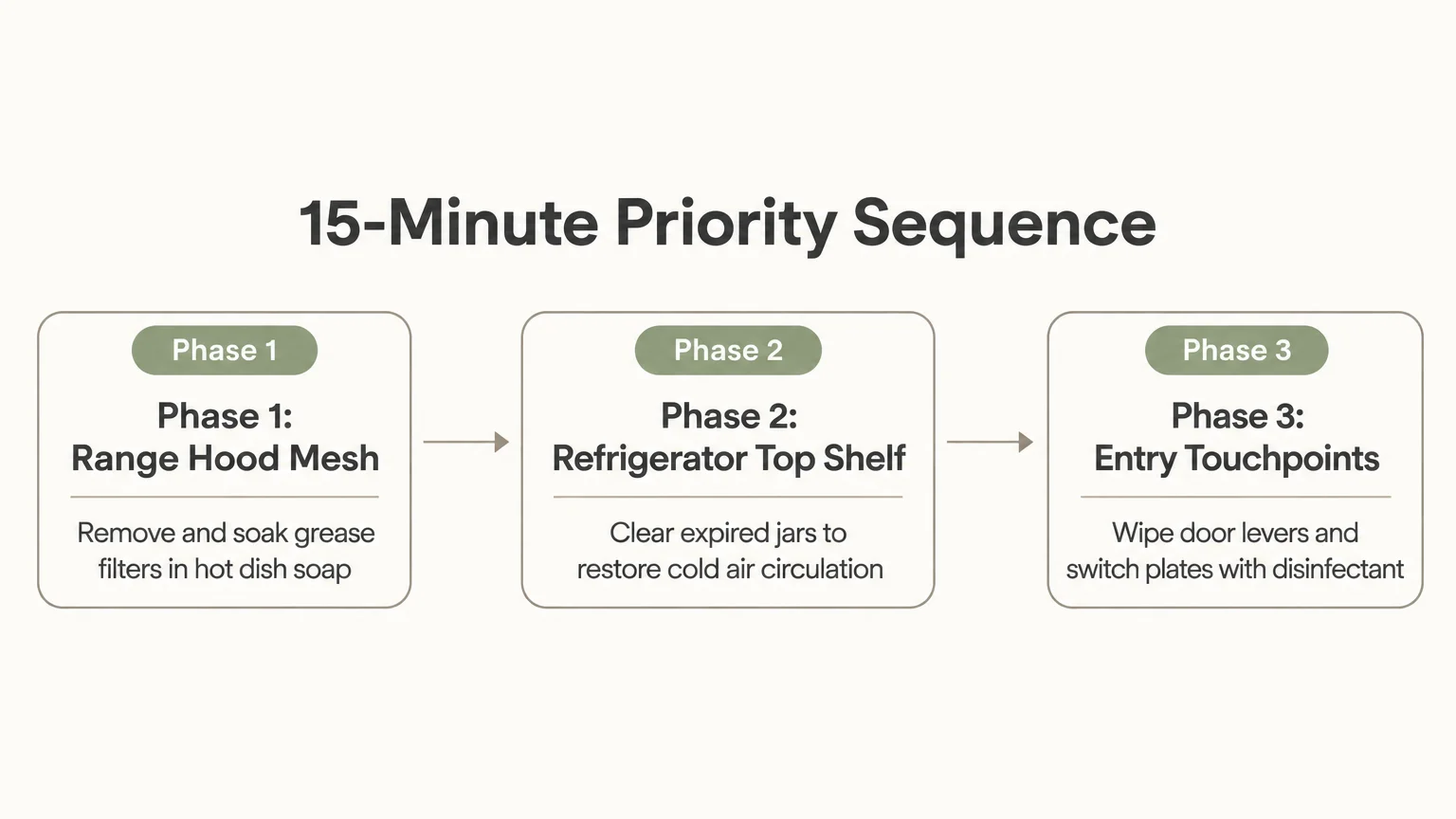
- Remove the metal mesh or baffle filters from your range hood and soak them in hot water mixed with grease-cutting dish soap for 20 minutes before scrubbing and drying thoroughly.
- Check your kitchen smoke alarm placement: the NFPA recommends keeping alarms at least 10 feet (3 meters) from stoves, though a Consumer Product Safety Commission study found 53% sit closer.
02 The Refrigerator and Freezer
Before you shop for holiday groceries, empty old condiments and wipe every shelf from top to bottom. According to a Penn State and Ohio State study, households hosting Thanksgiving discard 78% more food, contributing to roughly $3 billion in national holiday food waste.
Clearing expired jars early creates room for cold air to circulate around large roasts and platters. The U.S. Food and Drug Administration (FDA) advises keeping refrigerators at 40°F or below and freezers at 0°F or below, verified with an appliance thermometer.
Avoid overpacking shelves, because blocked vents create warm pockets where bacteria thrive. Wipe spills immediately with warm soapy water to prevent cross-contamination and Listeria growth.
Food safety matters even more once leftovers stack up after dinner. The USDA Food Safety and Inspection Service (FSIS) warns that bacteria can double as quickly as every 20 minutes inside the 40°F to 140°F Danger Zone.
Clean your fridge efficiently with this quick checklist:
- Remove glass shelves and crisper drawers only after they reach room temperature so warm wash water will not crack cold glass.
- Wash removable bins with mild dish detergent and warm water, rinse clean, and dry with a lint-free towel.
- Wipe rubber door gaskets with a damp soapy cloth and dry them completely so crumbs do not break the cold seal.
- Keep perishable foods out no longer than two hours—or one hour if room temperature tops 90°F—and eat cooked leftovers within four days (one to two days for raw poultry and ground meats).
03 Kitchen Sinks, Disposals, Sponges, and Coffee Makers
Your kitchen sink looks clean after you rinse the dishes, yet it often holds more bacteria than a bathroom. NSF International testing found coliform bacteria—including E. coli and Salmonella—on over 75% of dish sponges, 45% of kitchen sinks, 32% of countertops, and 18% of cutting boards.
Kitchen sinks actually carry 100,000 times more contamination than bathroom sinks. Preparing a home for guests means sanitizing the sink basin, drain, and dish tools before cooking begins.
Slow drains also cause major holiday headaches. A Talker Research and Drano survey of 2,000 hosts found 43% worry about guests clogging drains ahead of Brown Friday, the day after Thanksgiving.
Never pour bleach into a drain that already holds commercial drain cleaner or vinegar. Mixing incompatible cleaners can trigger dangerous chemical reactions and release toxic fumes.
Use these targeted kitchen maintenance steps instead:
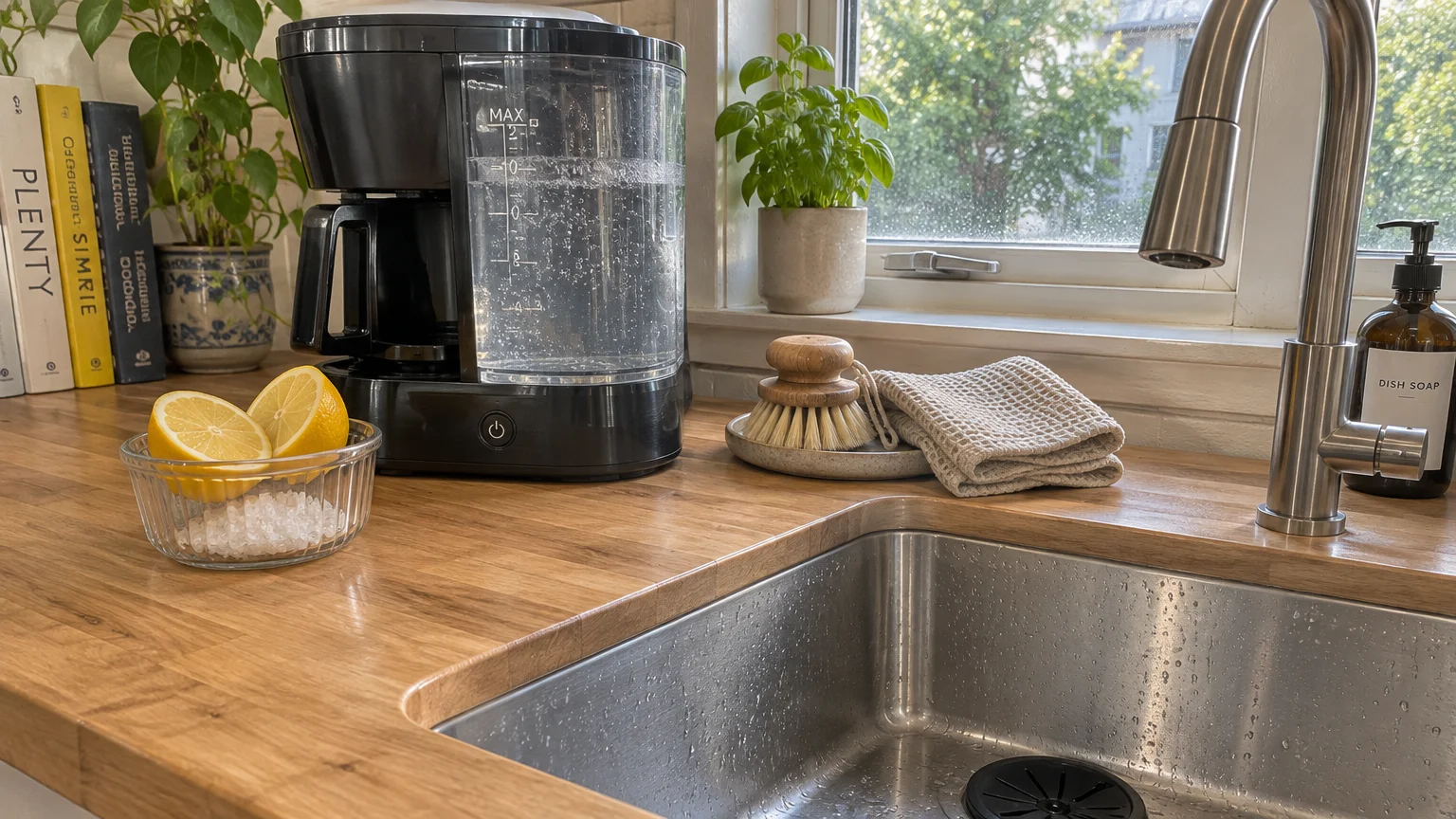
- Sponges and cloths: Microwave wet cellulose sponges for two minutes once daily and replace them every two weeks, or switch to washable dishcloths changed every one to two days.
- Kitchen sink basin: Wash away food film with dish soap and water, then disinfect once or twice weekly using one tablespoon of household bleach per gallon of water.
- Garbage disposal and drain: Sanitize monthly by pouring a solution of one tablespoon of bleach per quart of water down the disposal, and scrape grease and fibrous peels into the trash instead of the drain.
- Coffee maker reservoir: Descale every 40 to 80 brews by letting about four cups of plain white vinegar sit in the reservoir for 30 minutes, running a cycle, and flushing with two or three plain water cycles.
04 Kitchen Countertops and Cutting Boards
Disinfecting kitchen prep zones works only when you match the cleaner to the surface and respect wet contact time. Simply misting a sticky counter and wiping it dry in three seconds leaves germs behind.
The Centers for Disease Control and Prevention (CDC) instructs pre-cleaning visibly dirty surfaces with soap or detergent and water before applying any disinfectant. Disinfectants must remain visibly wet for the product label’s full contact time, which is frequently 10 minutes for EPA-registered hospital disinfectants.
If label instructions are unavailable, the CDC recommends diluting unscented 5% to 9% sodium hypochlorite bleach at five tablespoons (one-third cup) per gallon of room-temperature water, or four teaspoons per quart. Keep the surface wet for at least one minute, and mix a fresh batch daily since diluted bleach loses strength after 24 hours.
Surface compatibility matters just as much as dwell time when choosing holiday cleaning hacks:
- Natural marble, travertine, and limestone: Avoid vinegar, lemon juice, and acidic cleaners because acids etch the stone and create dull spots; use a pH-neutral stone cleaner and a soft microfiber cloth instead.
- Engineered quartz and sealed granite: Wash with warm water and mild dish soap using a non-abrasive cloth, and verify any disinfectant is labeled safe for sealed stone.
- Wood cutting boards and butcher blocks: Wash with hot soapy water after every use, dry upright immediately, and condition dry boards with food-grade mineral oil rather than soaking them in bleach.
Never mix bleach with ammonia, which produces toxic chloramine gas, or with acids like vinegar, toilet cleaners, or drain cleaners, which produce toxic chlorine gas. Likewise, never mix hydrogen peroxide with vinegar.
05 Guest Bathroom Toilets, Sinks, and Toothbrush Holders
Holiday guests spend plenty of time in your powder room and guest bath, and hosts know it. Surveys show 74% of hosts prioritize scrubbing the toilet bowl and 53% focus on scrubbing sinks before guests arrive.
Still, small accessories right next to the sink often get skipped completely. NSF International testing discovered coliform bacteria on 27% of toothbrush holders—making them the third germiest household item—and on 9% of bathroom faucet handles.
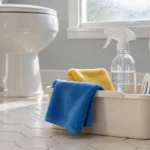
Clean the bathroom from cleanest to dirtiest surfaces so you never transfer toilet germs to the vanity. Wear dedicated rubber gloves and ventilate the room with an open window or running exhaust fan.
Work through the bathroom in this order:
- Empty and wash ceramic or glass toothbrush holders and soap dishes in hot soapy water or run dishwasher-safe pieces through a hot cycle.
- Pre-clean countertops, faucet handles, and sink basins with mild detergent and water to remove toothpaste and soap residue.
- Apply an EPA-registered bathroom disinfectant to faucet handles, flush levers, and light switches, letting it stay visibly wet for the label’s full contact time.
- Scrub inside the toilet bowl with a dedicated bowl brush and toilet cleaner, then wipe the exterior tank, rim, seat, and hinges from top to bottom with disposable towels or color-coded microfiber cloths.
Always check toilet bowl cleaner labels before wiping nearby fixtures with bleach. Many rust-removing toilet cleaners contain strong acids that react dangerously if they contact bleach splashes.
06 Bathroom Exhaust Fans, Grout, and Moisture Zones
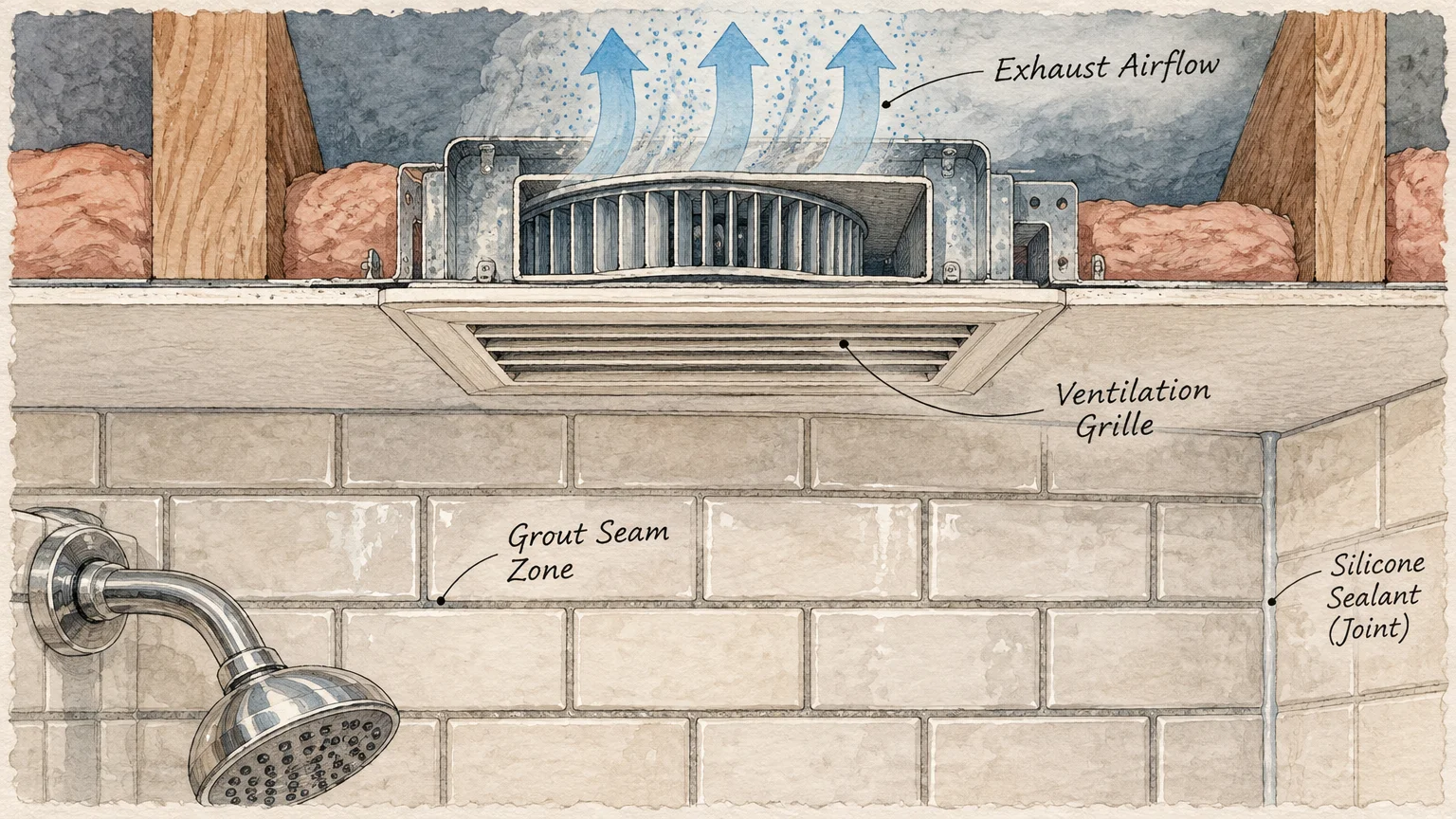
Extra guests mean back-to-back hot showers that pump heavy steam into your bathroom walls and ceilings. If a dust-choked exhaust fan cannot pull humid air outside, condensation lingers and invites mildew.
The U.S. Environmental Protection Agency (EPA) recommends keeping indoor relative humidity below 60%, ideally between 30% and 50%. Wet spots or small leaks must dry within 24 to 48 hours to prevent mold growth.
Skip the myth that bleach is required to clean minor bathroom mold. The EPA states that mild detergent and water remove mold from hard surfaces effectively and does not recommend routine bleach or biocide use; mold patches larger than 10 square feet warrant professional remediation.
Prep your guest bath for extra steam with three quick tasks:
- Pop down or slide off the plastic bathroom exhaust fan grille, wash it in warm soapy water, and vacuum dust off the visible fan blades after switching off the circuit breaker.
- Scrub discolored tile grout with a stiff nylon grout brush, warm water, and mild dish detergent, rinsing thoroughly and drying with a clean towel.
- Wash fabric shower curtains and bath mats in hot water so damp musty odors do not greet overnight visitors.
07 Guest Bedroom Bedding, Mattresses, and Upholstery
A Zillow and Harris Poll survey reports that 70% of Americans say overnight holiday guests should ideally stay three nights or fewer. Even short stays feel rough if dusty spare bedding triggers sneezing and itchy eyes.
Dust mites thrive when indoor humidity rises above 50% and accumulate in spare pillows, quilts, and mattress toppers that sit untouched for months. Washing visible sheets alone misses the allergens trapped underneath.
Health agencies including the Asthma and Allergy Foundation of America and the EPA recommend washing sheets, pillowcases, and blankets in hot water of at least 130°F. Drying everything on a hot setting finishes eliminating dust mites.
Refresh your guest room safely without harsh perfumes:
- Strip the bed completely—including mattress pads, shams, and throw blankets—and wash items at 130°F or warmer according to fabric care tags.
- Zip allergen-barrier covers onto guest pillows and mattresses before remaking the bed.
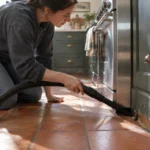
- Vacuum the bare mattress surface, fabric headboard, and upholstered reading chairs slowly using an upholstery nozzle on a HEPA-filter vacuum.
- Wipe ceiling fan blades with a damp microfiber sleeve so dust does not rain onto fresh linens when guests turn on the fan.
08 Living Room Carpets, Area Rugs, and Hard Floors
High-traffic living rooms take a beating from muddy winter boots, pine needles, and snack crumbs. In pre-holiday surveys, 69% of hosts prioritize vacuuming and 68% prioritize mopping before company arrives.
Rushing a vacuum across the center of a rug leaves fine grit trapped deep in the backing, where foot traffic grinds away carpet fibers. Slow, overlapping passes with a HEPA-filter vacuum trap both heavy dirt and airborne allergens.
Choosing the right mopping method protects expensive flooring from water damage and cloudy film. Never soak solid wood or laminate planks, because trapped moisture causes warping and creates a 24-to-48-hour mold risk beneath boards.
Match your floor tool and solution to your material:
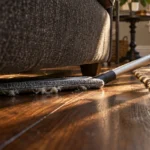
- Sealed hardwood and engineered wood: Vacuum with a soft-brush floor attachment (disabling the spinning beater bar), then damp-mop with a slightly misted microfiber pad and a manufacturer-approved wood cleaner.
- Ceramic or porcelain tile: Sweep or vacuum thoroughly first so wet grit does not scratch glaze, then mop with warm water and a pH-neutral floor cleaner.
- Natural stone floors (marble, slate, travertine): Use a stone-safe pH-neutral cleaner only, because acidic vinegar dulls polished stone and erodes grout sealers.
- Area rugs and wall-to-wall carpet: Vacuum north-to-south and east-to-west at a slow pace, paying extra attention along baseboards and under sofa edges.
09 Trash Bins, Recycling Containers, and Entryway Touchpoints
Sixty-four percent of hosts empty trash bins before guests arrive, while 57% light candles or spray air fresheners. Fragrance masks smells temporarily, yet sticky residue inside kitchen and bathroom wastebaskets keeps generating odors.
Washing the bin itself solves the odor at the source before holiday cooking scraps pile up. Meanwhile, high-touch surfaces near your front door collect winter germs from every arriving coat and handshake.
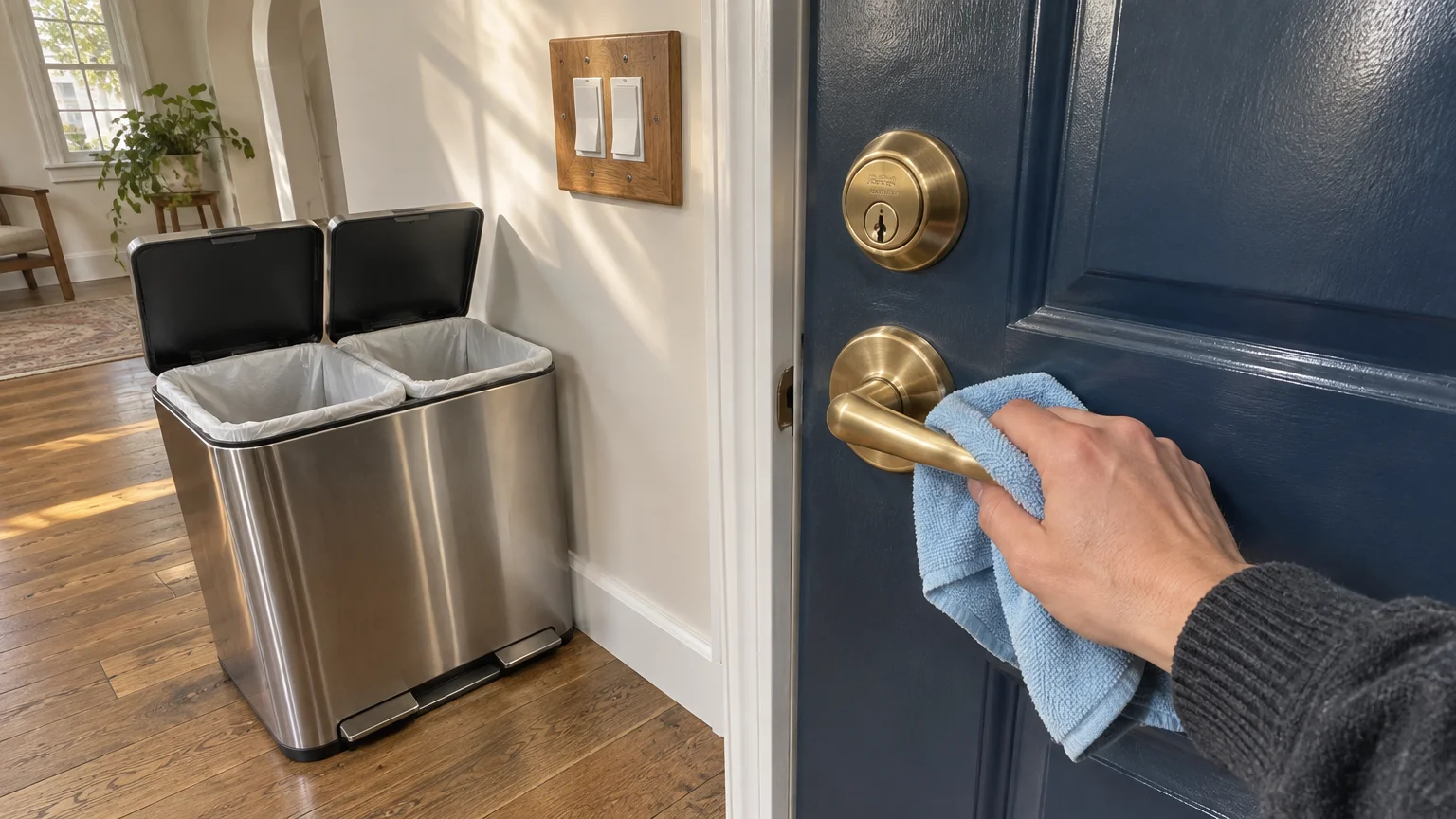
Take your bins outside or into a utility sink for a thorough reset:
- Empty cans completely, dump out loose crumbs, and rinse away sticky drips with a garden hose or shower sprayer.
- Scrub the inside walls, rim, and foot-pedal hinge using hot water, dish soap, and a long-handled scrub brush.
- Spray an EPA-registered disinfectant or diluted bleach solution inside plastic bins, wait for the required contact time, rinse, and air-dry fully before inserting a fresh liner.
- Pre-clean and disinfect front doorknobs, deadbolts, stair handrails, light switches, and thermostat panels using a lightly dampened microfiber cloth—never spray liquid directly into electrical switches.
10 HVAC Filters, Dryer Vents, and Fireplaces
Winter hosting pushes your furnace, clothes dryer, and fireplace harder than almost any other week of the year. Cleaning these mechanical systems before company arrives lowers utility bills and prevents serious home fires.
ENERGY STAR and the U.S. Department of Energy recommend inspecting HVAC filters monthly during peak heating and cooling seasons and replacing them at least every three months (90 days), or sooner with pets and allergies. Keeping filters clean cuts HVAC energy use by 5% to 15% and keeps guest rooms warmer without straining the blower.
Laundry rooms also deserve attention before you wash extra loads of guest towels and table linens. The U.S. Fire Administration reports roughly 2,900 residential dryer fires every year caused primarily by failure to clean lint, while NFPA data logs nearly 16,000 annual washer and dryer fires, over 90% in dryers.
Heating equipment accounts for approximately 48,530 U.S. home fires each year. Protect your home before lighting a cozy holiday fire or running nonstop laundry:
- Swap out dirty furnace return filters and vacuum dust off floor registers and cold-air return grilles.
- Clean the dryer lint screen before or after every single load, and vacuum inside the lint trap housing with a narrow crevice tool.
- Schedule an annual inspection and cleaning for your dryer exhaust duct and exterior flapper vent, per NFPA Standard 211.
- Have every chimney, wood fireplace, and solid-fuel vent inspected and swept of creosote and soot at least once a year, even if you rarely light fires.
Your Printable Pre-Holiday Cleaning Timeline
Spreading these ten deep-cleaning tasks across two weeks eliminates last-minute panic and keeps your energy fresh for cooking and visiting. Use this schedule to pace your work smoothly.
| Timeframe | Priority Cleaning Tasks | Key Safety or Dwell Check |
|---|---|---|
| 2 to 4 Weeks Before | Schedule chimney and dryer duct inspections; swap HVAC filter; wash oven interior and range hood filters. | Never run high-heat self-clean right before hosting; move pet birds and ventilate well. |
| 1 Week Before | Descale coffee maker; clear and wash fridge shelves; clean bathroom exhaust fans and tile grout. | Verify fridge is 40°F or below; use mild detergent on small bath mold spots. |
| 2 to 3 Days Before | Wash guest bedding at 130°F or hotter; HEPA-vacuum mattresses, upholstery, and rugs; scrub trash cans. | Let plastic bins dry fully; check indoor humidity stays between 30% and 50%. |
| 1 Day Before | Sanitize kitchen sink, disposal, and counters; disinfect bathroom faucets, toilets, and toothbrush holders; damp-mop hard floors. | Pre-clean before disinfecting; honor full 1-to-10-minute wet contact times; never mix chemicals. |
| Morning of Hosting | Microwave wet sponge for 2 minutes or grab a fresh dishcloth; wipe entryway handles and switches; empty bathroom and kitchen bins. | Double-check kitchen smoke alarm placement (10 feet from stove) and keep food timers handy. |
Your First 15-Minute Step Today
Walk straight to your kitchen and hallway right now to check three quick items: your HVAC filter date, your refrigerator thermometer reading, and the clutter inside your oven. Writing those three tasks onto your calendar today turns a stressful 7.5-hour marathon into calm, manageable steps before your guests ring the bell.