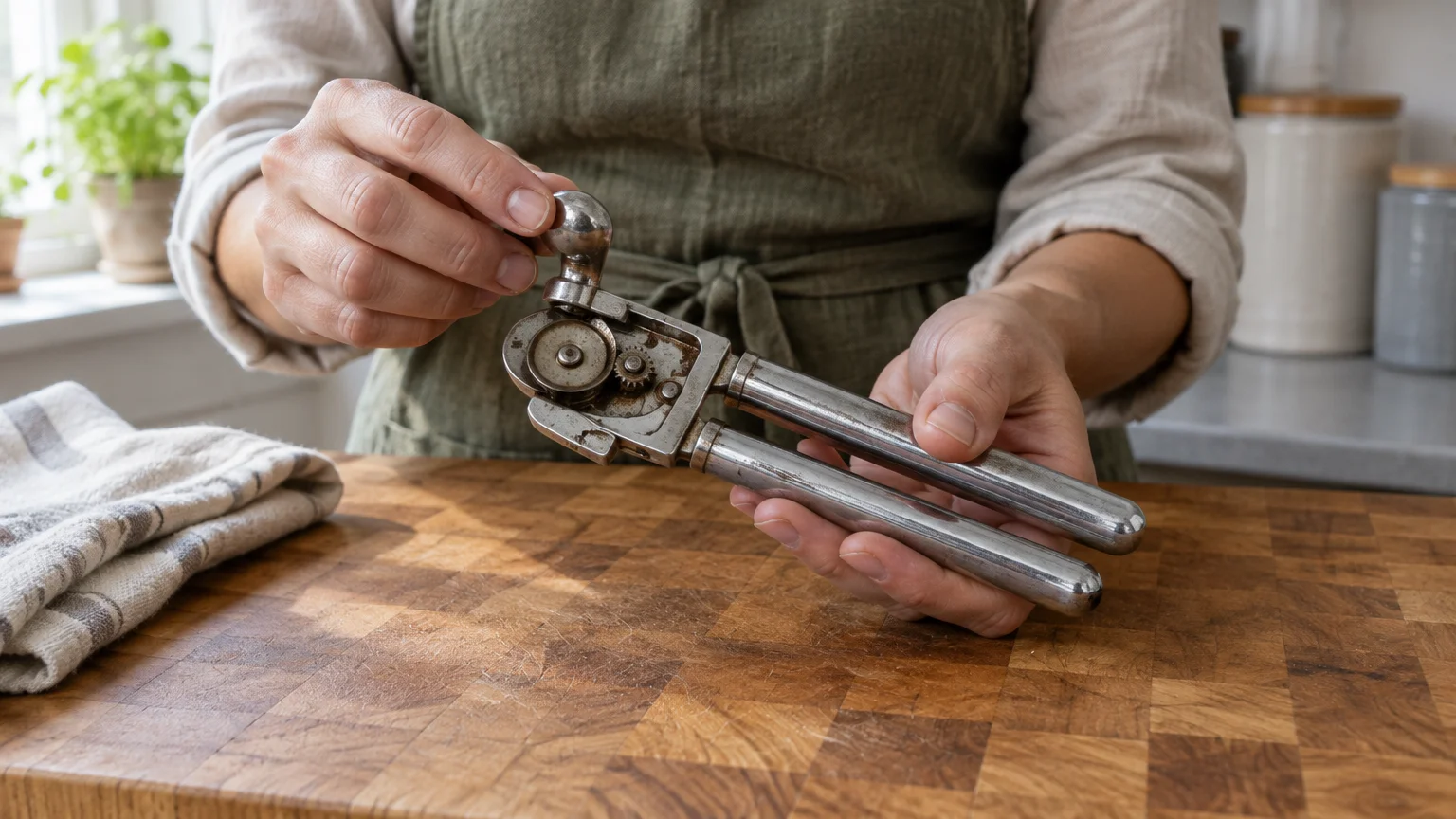
Your manual can opener slices through metal lids and dips directly into soup, tuna, and canned fruit every week. When you place it back into the drawer without washing it, dried residue creates an ideal breeding ground for bacteria.
A quick rinse under tap water will not strip grease or dissolve creeping rust. Taking ten minutes to deep clean and sanitize the cutting wheel protects your food and restores smooth turning action.
Here is how to eliminate hidden food grime, safely dissolve rust, and sanitize this overlooked kitchen essential.

Why Can Openers Harbor Dangerous Kitchen Germs
The cutting wheel of a can opener presses directly into the interior seam of metal cans. This contact transfers sauces, broths, and liquids onto the metal teeth and gears.
According to the NSF International Household Germ Study, can openers ranked fourth on the highlighted list of germiest food-contact items in home kitchens. Testers detected Salmonella, E. coli, yeast, and mold lingering on can opener wheels.
The Centers for Disease Control and Prevention estimates that foodborne pathogens sicken 48 million Americans each year. Those illnesses result in roughly 128,000 hospitalizations and 3,000 deaths.
When you open a fresh can with a contaminated blade, those microbes transfer straight into your meal. Routine cleaning stops this cross-contamination before it starts.
The Difference Between Stripping Grease and Dissolving Rust
Grease and rust require completely different cleaning chemistry. Dish soap acts as a surfactant to lift sticky oils and food sugars, but it cannot dissolve oxidation on steel.
Distilled white vinegar contains about 5% acetic acid, which chemically dissolves iron oxide and mineral scale. However, household vinegar is not an EPA-registered disinfectant and will not reliably sanitize kitchen tools at room temperature.
The USDA Food Safety and Inspection Service notes that rust is not a food-safe material. You must remove all visible rust from kitchen utensils before allowing them to contact food.
If rust has pitted the metal blade or gears deeply, discard the tool. Pitted metal traps food debris and cannot be reliably cleaned or sanitized.
Step-by-Step Routine to Clean and Restore Your Can Opener
You can restore a stiff, grimy manual can opener with basic supplies from your pantry. Follow these practical steps to dissolve rust and strip away baked-on grease.
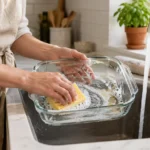
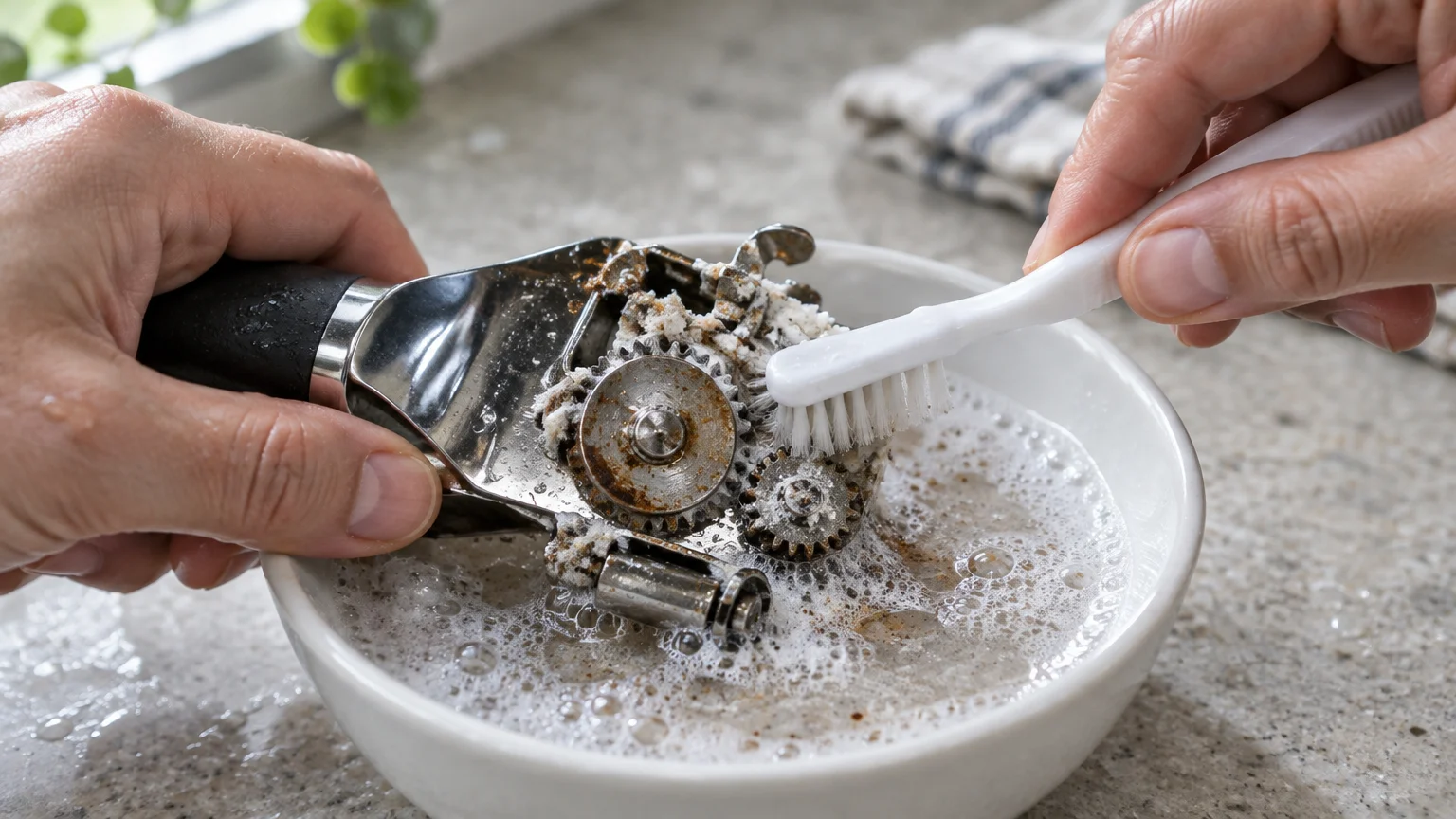
- Scrub away surface grease: Fill a small bowl with hot water and liquid dish soap. Use a stiff nylon toothbrush to scrub dried food residue from the cutting wheel, gears, and pivot hinge.
- Soak the gears in vinegar: Pour distilled white vinegar into a shallow glass or jar. Submerge only the metal cutting mechanism for 15 to 30 minutes to dissolve surface rust.
- Scour stubborn oxidation: Sprinkle baking soda directly onto the damp wheel to create a mild scouring paste. Work the toothbrush bristles between the small gear teeth to dislodge loosened rust flakes.
- Rinse and towel-dry immediately: Rinse the opener thoroughly under hot running water. Hand-dry the entire tool with a clean dish towel right away to prevent flash rust.
If you own an electric can opener, never submerge the motorized base in water. Unplug the unit, detach the removable cutting assembly if your model allows it, and wipe the motor housing with a damp cloth.
How to Sanitize Metal Kitchen Tools Safely
Cleaning removes visible grime, but sanitizing kills microscopic pathogens that survive ordinary washing. You must choose your sanitizing method carefully to protect bare metal from corrosion.
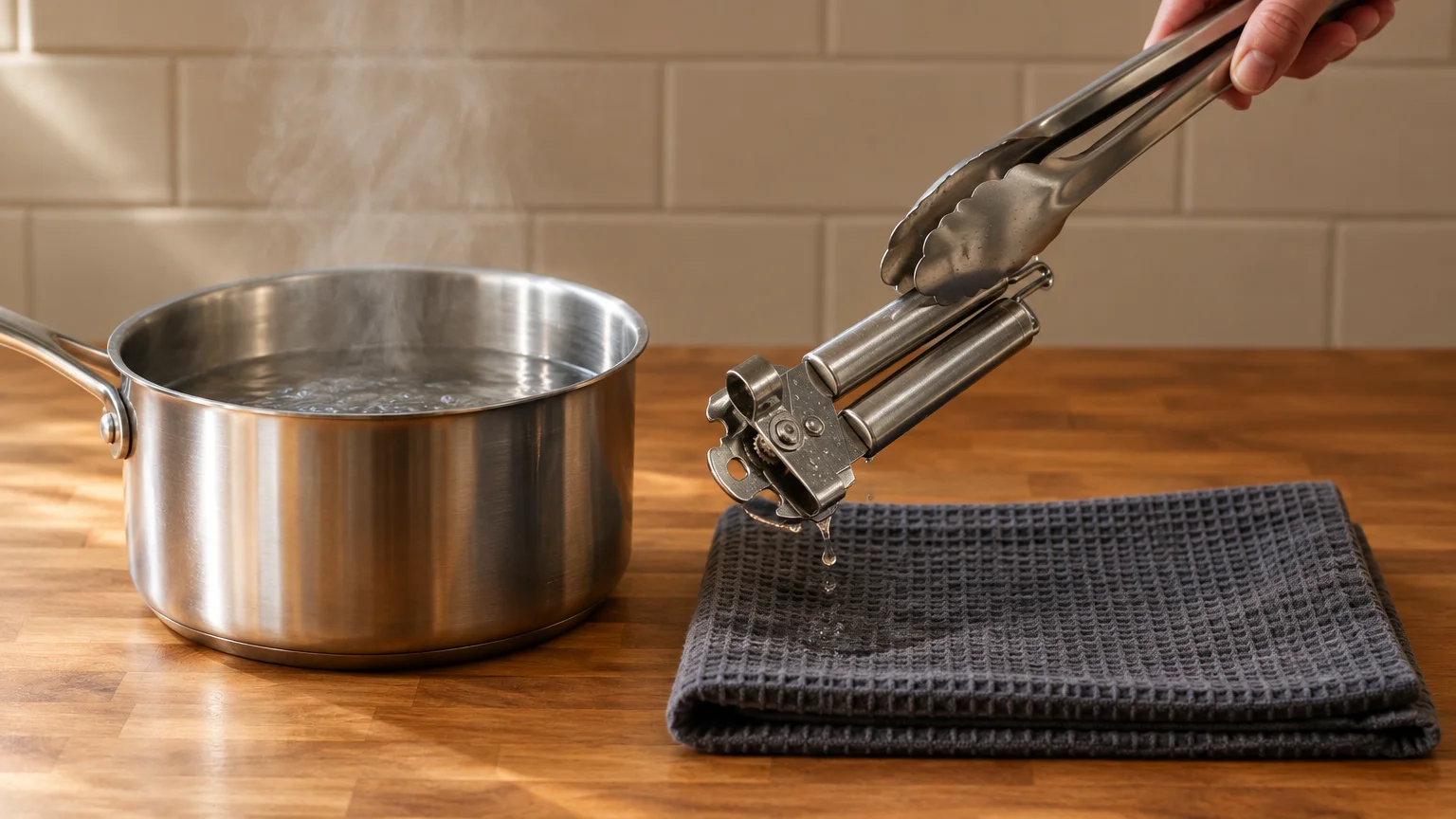
Under the FDA Food Code, manual heat sanitizing requires immersing utensils in clean hot water at 171°F or above for at least 30 seconds.
University food-safety extensions recommend boiling metal utensils for 10 minutes to sanitize them without chemical corrosion. You can also run manual openers through a dishwasher heated cycle if the manufacturer explicitly labels the tool dishwasher-safe.
Chemical sanitizers require caution on carbon steel and chrome-plated tools. Chlorine bleach darkens and corrodes bare metal if left in contact for extended periods.
Standard food-contact sanitizing uses 1 tablespoon of regular, unscented household bleach per gallon of cool water. Never mix chlorine bleach with vinegar or ammonia, because combining them releases hazardous chlorine gas.
Quick Reference: Cleaning vs. Sanitizing Your Opener
Use this reference table to match the right cleaning method to your tool’s condition.
| Method | Primary Purpose | Recommended Frequency | Key Precaution |
|---|---|---|---|
| Hot Soapy Water & Brush | Strips grease and fresh food residue | After every use | Towel-dry immediately to avoid rust |
| White Vinegar Soak | Dissolves surface rust and mineral scale | As needed for rust buildup | Do not rely on vinegar to disinfect |
| Boiling Water Bath | Sanitizes metal without harsh chemicals | Monthly or after raw-meat cans | Check that plastic handles tolerate heat |
| Dilute Bleach Solution | Chemical sanitization (1 tbsp per gallon) | Occasional sanitizing | Never mix with vinegar; rinse metal well |
Preventing rust requires almost no extra effort once you establish a daily routine. Wipe your can opener completely dry with a clean cloth immediately after each wash rather than letting it sit wet in a dish rack.
Your Practical Next Step
Open your kitchen drawer right now and inspect your can opener wheel under a bright light. If you spot dried food residue or orange rust spots, soak the cutting head in vinegar before preparing your next meal.
Storing a clean, bone-dry opener ensures that your canned soups, vegetables, and pantry meals stay fresh and uncontaminated every time you turn the handle.