Scrubbing a burnt baking sheet or greasy casserole dish with steel wool often causes permanent scratches. You can lift stubborn, baked-on grease without ruining your cookware by using gentle alkaline soaks and non-abrasive tools.
Different cookware materials demand specific care to prevent clouding glass, stripping nonstick coatings, or discoloring metal. Matching the right cleaning technique to your pan restores shine while preserving the factory finish.
Whether you manage stubborn casserole dish cleaning or burnt sheet pans, these proven methods loosen grime with minimal physical effort.
Why Abrasives Cause Lasting Cookware Damage
Metal scouring pads and aggressive cleansers strip protective coatings and leave microscopic scratches. Over time, these fine grooves trap fresh grease, making subsequent messes even harder to remove.
Glass bakeware requires particular caution because deep scratches weaken structural integrity. Thermal shock poses another serious risk when hot glass meets cool sink water.
According to the Pyrex Use and Care guide, you must let glass dishes cool to room temperature before washing. Sudden temperature drops can shatter tempered bakeware.
Cookware Material Cleaning Guide
Before applying any cleaner, identify your pan’s base material to prevent accidental etching or discoloration.
| Cookware Material | Safe Cleaning Agents | Recommended Scrubbing Tools | Things to Avoid |
|---|---|---|---|
| Glass (Pyrex) | Warm water, mild dish soap, baking soda paste | Nylon pads, soft sponges | Metal scouring pads, abrasive powders, rapid cooling |
| Ceramic / Enamel | Baking soda soak, dish soap, warm water | Microfiber cloths, silicone sponges | Steel wool, hard metal scrapers |
| Stainless Steel | Baking soda, liquid dish soap, vinegar rinse | Non-scratch nylon sponges, plastic scrubbers | Chlorine bleach, dry steel wool scouring |
| Bare Aluminum | Mild dish soap, cream of tartar solution | Soft cellulose sponges, microfiber cloths | Prolonged baking soda soaks, dishwashers |
| Nonstick Coated | Mild dish liquid, warm water soak | Soft sponge, dish cloth | Abrasive cleaners, scour pads, sharp scrapers |
As researchers at NMSU Cooperative Extension explain, baking soda functions as both a mild alkali and a fine mineral abrasive. While safe for glass and enamel when wet, dry scrubbing can still scuff delicate nonstick surfaces.
The Gentle Baking Soda Soak for Casseroles and Glass
Heavy grease bonds to casserole corners during prolonged oven roasting. An alkaline soak softens these hardened food residues without requiring heavy arm work.
To loosen stubborn baked-on food, university specialists at MSU Extension suggest boiling or soaking two tablespoons of baking soda per quart of water.
- Let your glass or ceramic dish cool completely on a heat-safe trivet.
- Fill the vessel with warm tap water and stir in two tablespoons of baking soda per quart.
- Allow the solution to rest for thirty to sixty minutes so the alkaline liquid penetrates stuck particles.
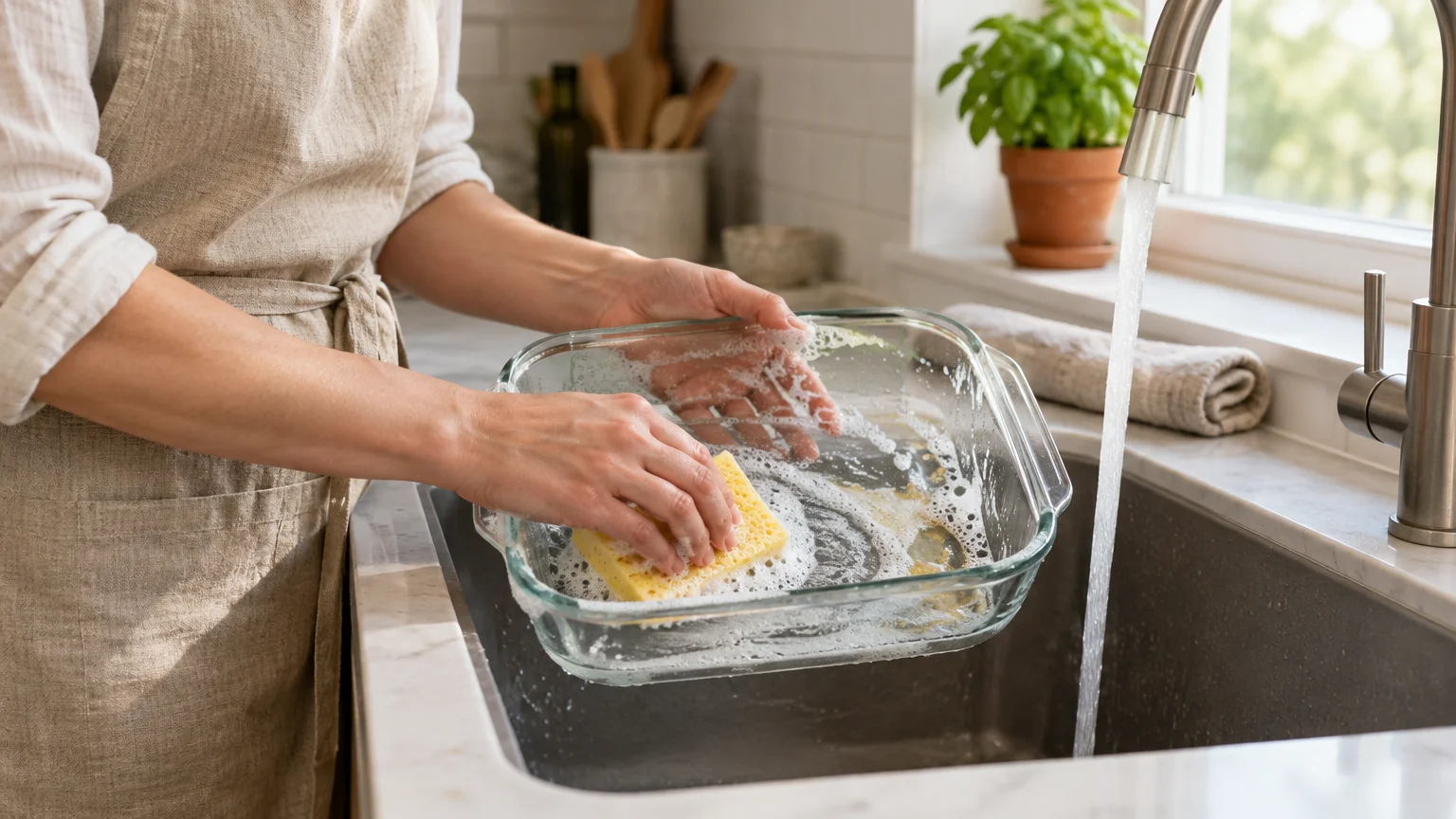
- Gently rub the softened grime away using a plastic or nylon scouring pad.
- Rinse thoroughly with clean, warm water and dry with a soft dish towel.
If burnt corners remain, create a damp paste of baking soda and liquid dish soap. Apply it directly to the trouble spots and let it sit for twenty minutes before wiping.
How to Restore Burnt Baking Sheets
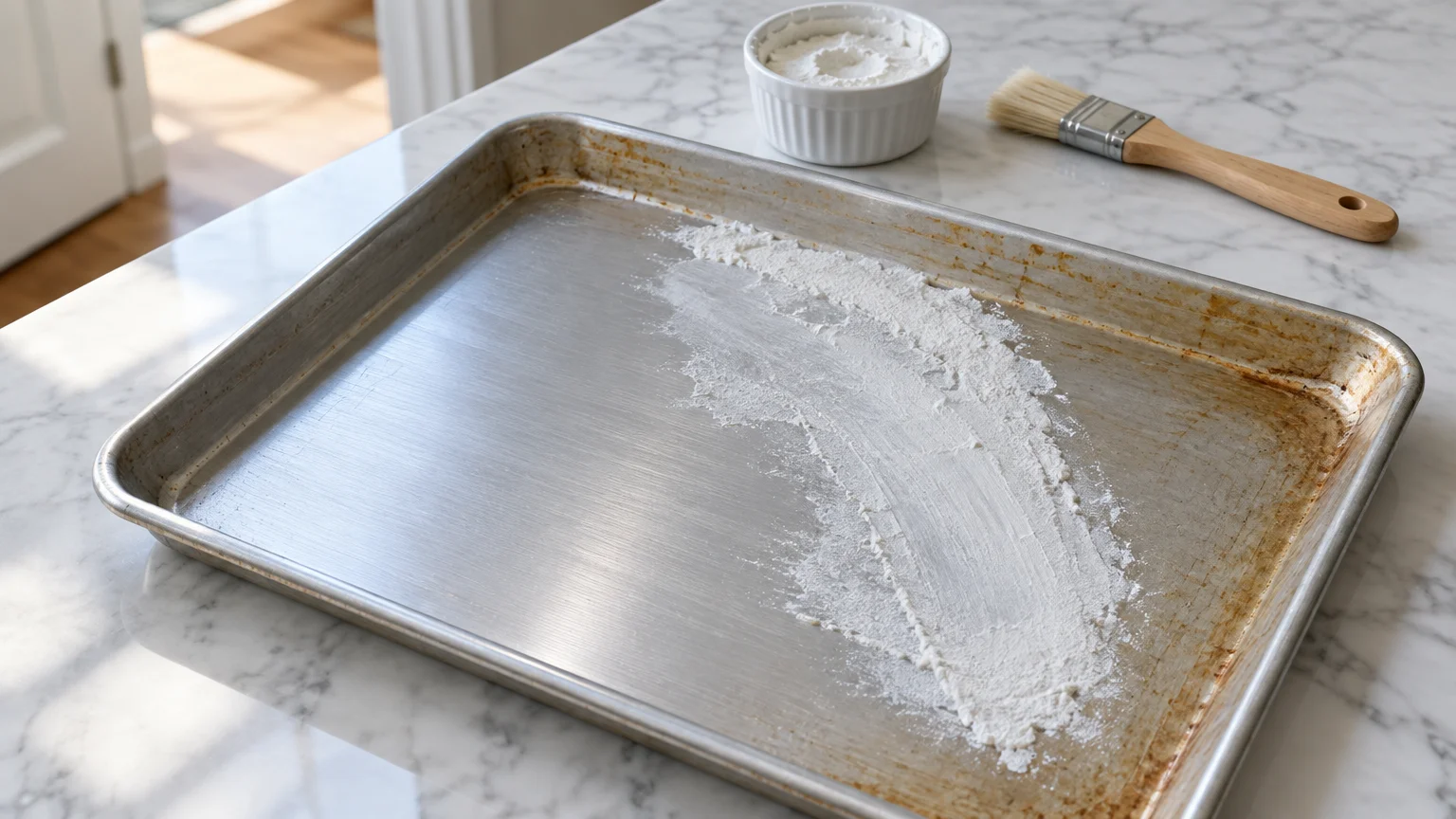
Sheet pans endure intense oven heat that bakes cooking oil into a dark, varnished layer. Restoring them depends entirely on whether your sheet is stainless steel or raw aluminum.
For stainless steel pans, sprinkle a generous layer of baking soda over the surface and mist with hot water. Let the slurry stand for an hour before wiping with a non-scratch nylon pad.
Bare aluminum pans require a gentler touch because alkaline compounds like baking soda can discolor or pit raw metal.
Instead, treat aluminum sheets by simmering water with two tablespoons of cream of tartar. The mild acid lifts discoloration and loosens burnt particles without degrading the metal surface.
Managing Nonstick Cookware Without Stripping Coatings
Nonstick coatings are exceptionally fragile; even light scouring can permanently ruin their food-release properties. Never use abrasive powders, scouring sponges, or sharp tools on coated surfaces.
When grease bakes onto nonstick pans, fill the pan with warm water and two drops of grease-cutting liquid dish soap. Let it soak for twenty minutes on your counter.
Wipe the pan with a soft cellulose sponge or microfiber rag. If residue lingers, gently scrub with a silicone dish scrubber that bends to fit the pan’s curves.
Everyday Habits to Prevent Baked-On Grease
Protecting your bakeware from intense grease buildup starts before your pans enter the oven.
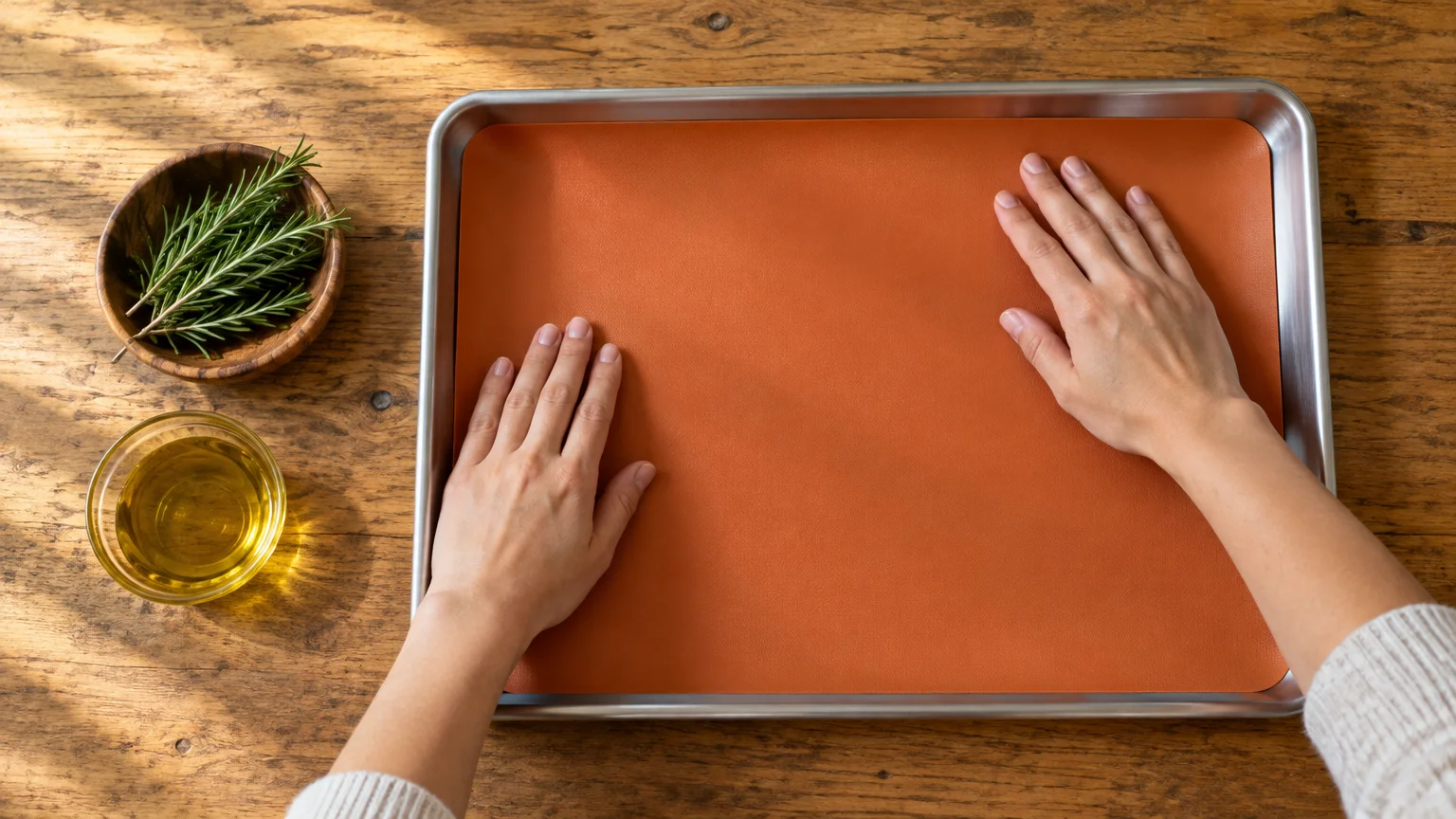
Simple cookware hacks like using silicone mats or parchment liners protect surfaces from direct contact with scorched oils.
- Line rimmed sheets with unbleached parchment paper or reusable silicone mats before roasting.
- Avoid aerosol cooking sprays, which contain propellants that leave sticky, polymerized film under high heat.
- Wipe away small grease splatters immediately after each pan cools to prevent cumulative buildup.
- Use glass baking dishes within their specified temperature limits to prevent oil from charring into the glass pores.
Adopting these small kitchen habits eliminates the need for aggressive cleaning routines later.
Your Next Cleaning Step
Pick your most heavily stained baking sheet or glass casserole dish today. Let it soak in a warm baking soda solution while you tidy the rest of your kitchen.
You will see the softened grease slide away effortlessly under a gentle sponge—no hard scrubbing required.