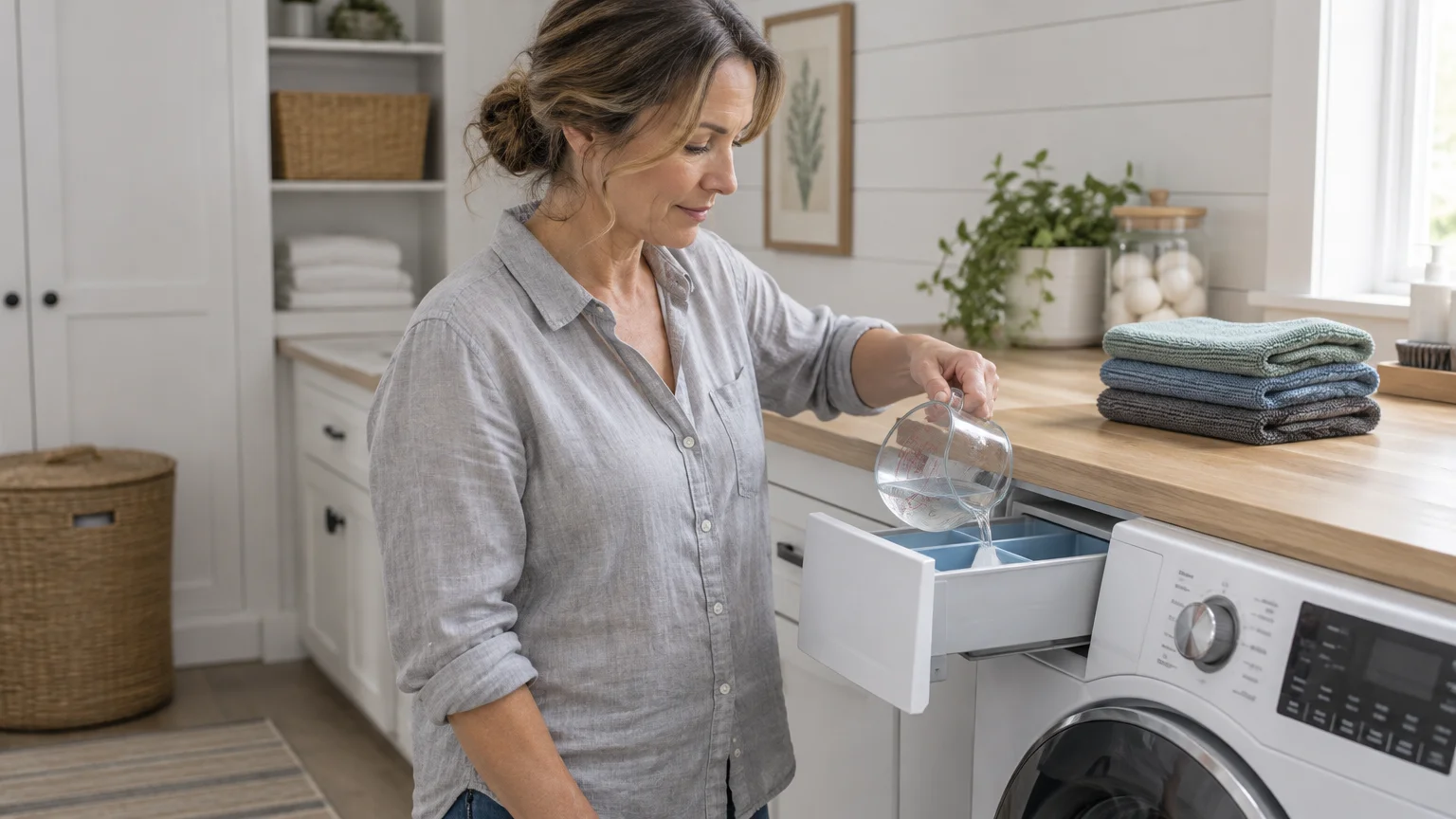
If your microfiber towels push water around instead of absorbing it, fabric softener is likely the culprit. You can restore their cleaning power today with a few simple laundry adjustments.
Fabric softeners leave behind a waxy coating that fills the tiny spaces inside synthetic threads. This coating stops the cloth from grabbing dust, grease, and moisture from your countertops.
Knowing how to wash microfiber towels properly protects your cleaning tools and saves you money. With the right care routine, your cloths will stay absorbent for hundreds of washes.
Why Fabric Softener Destroys Microfiber Towels
Microfiber cloths clean surfaces through physical design rather than harsh chemicals. Each strand consists of polyester and polyamide split into microscopic, wedge-shaped filaments.
These tiny wedges create channels that pull liquid and dirt inside using static charge. The structure traps dust particles instead of scattering them into the air.
Liquid fabric softeners and dryer sheets contain oily conditioning agents. Manufacturers design these ingredients to coat threads so clothes feel slick and smooth against your skin.
When you apply softener to microfiber, that oil settles directly into the fine wedge channels. The residue clogs the fabric and creates a barrier that repels water.
According to laundry research from the American Cleaning Institute, fabric softeners reduce the absorbency of specialty textiles. For microfiber, this coating completely cancels out its natural cleaning strength.
How Excessive Heat Melts Synthetic Fibers
Heat is the second biggest threat to your cleaning cloths. Polyester and polyamide are forms of plastic, which means they soften and melt at high temperatures.
Running your cloths through a hot dryer cycle causes the delicate split tips to singe and fuse together. Once those fine filaments melt into hard clumps, they can no longer grab dirt.
Melted synthetic fibers also feel rough to the touch. A scorched towel can scratch delicate surfaces like car paint, eyeglasses, and television screens.
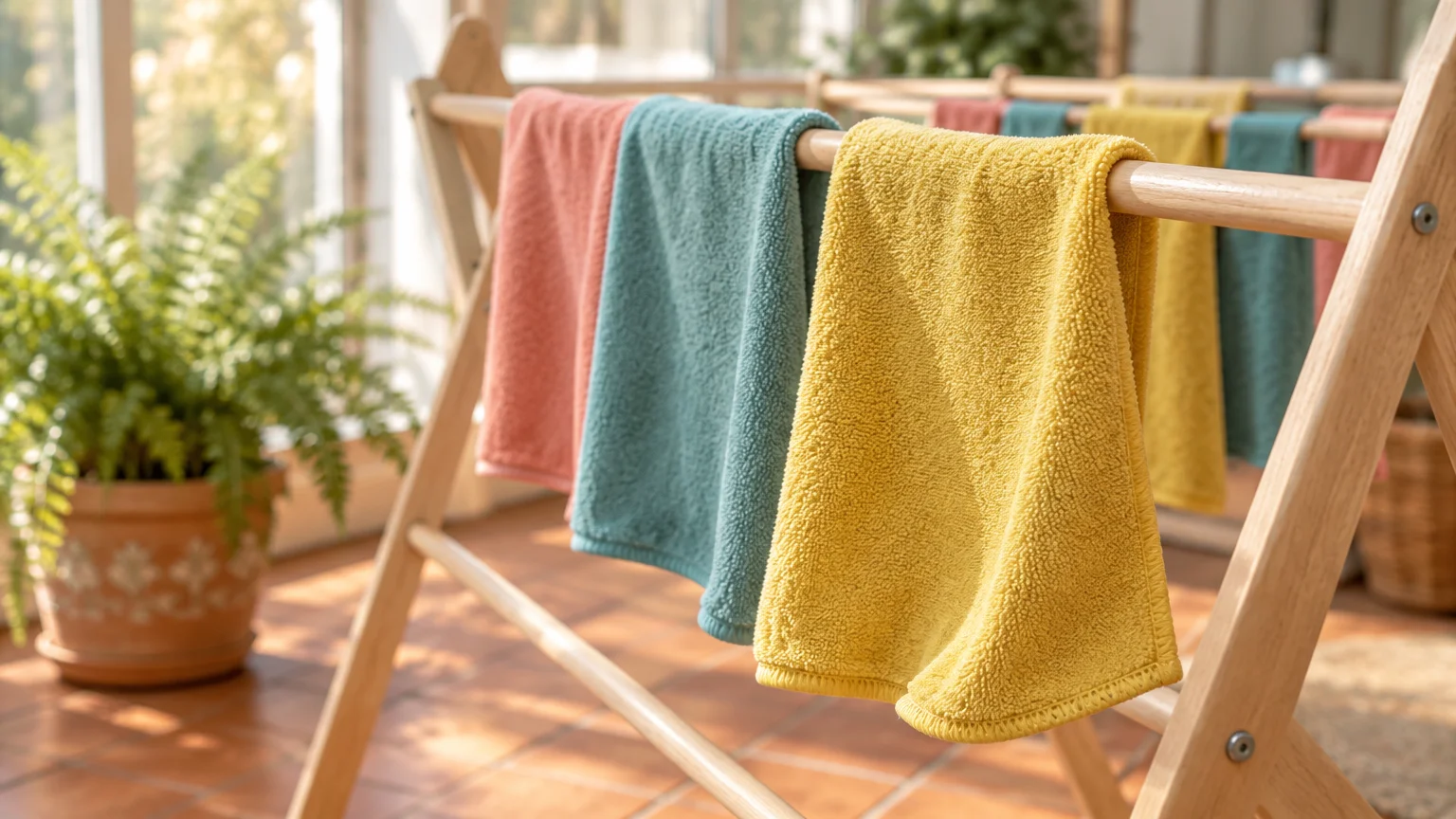
Always keep your dryer heat low, never going above 130°F to 140°F. If you want your towels to last as long as possible, hang them on a drying rack instead.
Common Laundry Mistakes That Ruin Cleaning Rags
Softener and heat cause the most severe harm, but other cleaning rag care errors also degrade performance. Avoiding these everyday laundry mistakes keeps your towels working like new.
One frequent mistake is washing microfiber cloths together with cotton bath towels or flannel bedding. Microfiber naturally attracts loose debris and will pull cotton lint straight into its weave.
Once cotton lint embeds into synthetic channels, removing it is nearly impossible. The towel will leave annoying fuzz across mirrors and windows during every cleaning session.
Detergent selection also matters when you care for your cloths. You do not need expensive specialty soaps for household cleaning, but you must avoid detergents with added softeners or scents.
Heavy doses of regular detergent create thick suds that do not rinse away cleanly. Use only one to two teaspoons of mild liquid detergent per load to prevent soapy buildup.
Never use powdered laundry detergent on synthetic cleaning cloths. Powder granules often fail to dissolve completely in cool water and lodge directly between the fibers.
Chlorine bleach is another additive to skip completely. The harsh chemicals break down the polyamide fibers over time and shorten the cloth lifespan.
Microfiber Care at a Glance
Use this reference table to choose safe cleaning products and wash settings for your towels.
| Care Factor | Recommended Practice | What to Avoid | Why It Matters |
|---|---|---|---|
| Detergent | 1 to 2 tsp mild liquid detergent | Powders, pods, or scented formulas | Excess soap leaves a dulling film behind |
| Softener | Half cup distilled white vinegar | Liquid softeners and dryer sheets | Conditioners coat and clog fiber channels |
| Wash Water | Cool or warm water | Scalding hot water | Moderate temperatures protect fiber elasticity |
| Drying Method | Low heat tumble or air drying | High heat dryer cycles | Hot air melts filament tips and hardens cloth |
| Sorting | Wash microfiber in separate loads | Mixing with cotton towels or fleece | Synthetic fibers attract and trap cotton lint |
How to Strip and Restore Water-Repellent Microfiber
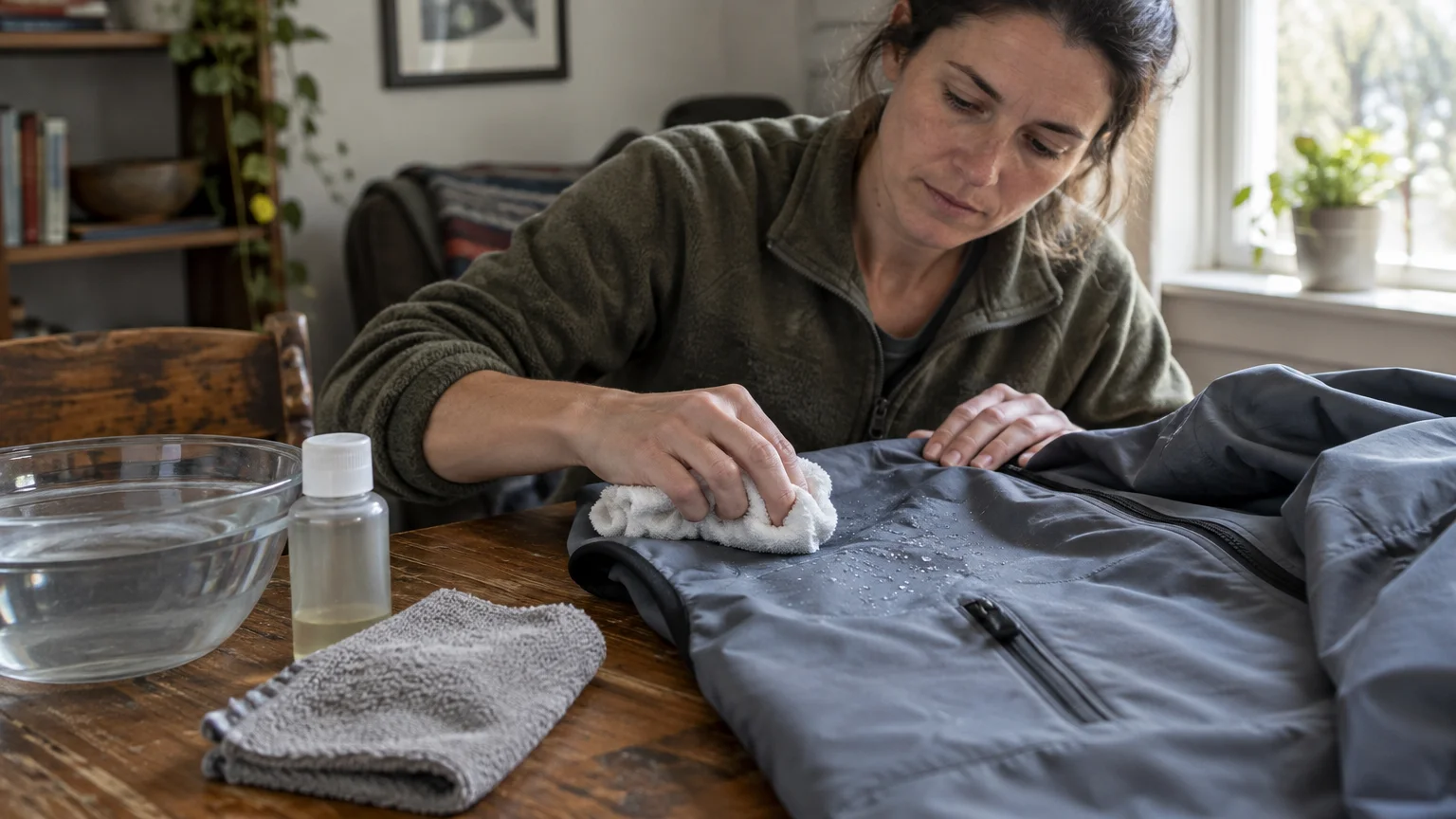
You do not need to throw away towels coated in softener residue. A simple stripping process dissolves built-up oils and reopens the microscopic channels.
Follow these steps to restore absorbency to stiff or water-repellent cleaning cloths.
- Pre-rinse the cloths. Run the towels through a warm rinse cycle without any soap to loosen surface dust and grime.
- Soak in warm water and vinegar. Place the cloths in a clean bucket with warm water and one cup of distilled white vinegar for thirty minutes.
- Wash with baking soda. Wash the load using warm water and one half cup of baking soda instead of detergent to break down stubborn waxes.
- Run an extra rinse. Finish with a clear water rinse cycle to remove any lingering residue from the fibers.
- Air dry thoroughly. Hang the towels on a drying line or run them on your lowest dryer heat setting.
Vinegar dissolves the waxy buildup that laundry softeners leave behind. The Environmental Protection Agency notes that simple solutions like diluted vinegar offer effective alternatives to harsh commercial additives.
The Proper Routine for Cleaning Rag Care
Building a consistent laundry routine prevents residue buildup before it starts. Proper maintenance ensures your towels trap dust effectively on every pass.
Healthcare cleaning guidelines from the Centers for Disease Control and Prevention emphasize that clean, uncontaminated microfiber removes biological soil far better than standard cotton.
Follow this checklist every time you wash microfiber towels to keep them in peak condition.
- Shake out cloths over a trash can before washing to remove loose crumbs and dirt.
- Keep dirty microfiber in a dedicated hamper away from your regular clothing.
- Add one to two teaspoons of clear, fragrance-free liquid detergent into the dispenser.
- Pour half a cup of distilled white vinegar into the fabric softener compartment.
- Select a cool or warm wash cycle with an extra rinse.
- Clean your dryer lint trap before running your cloths on low heat.
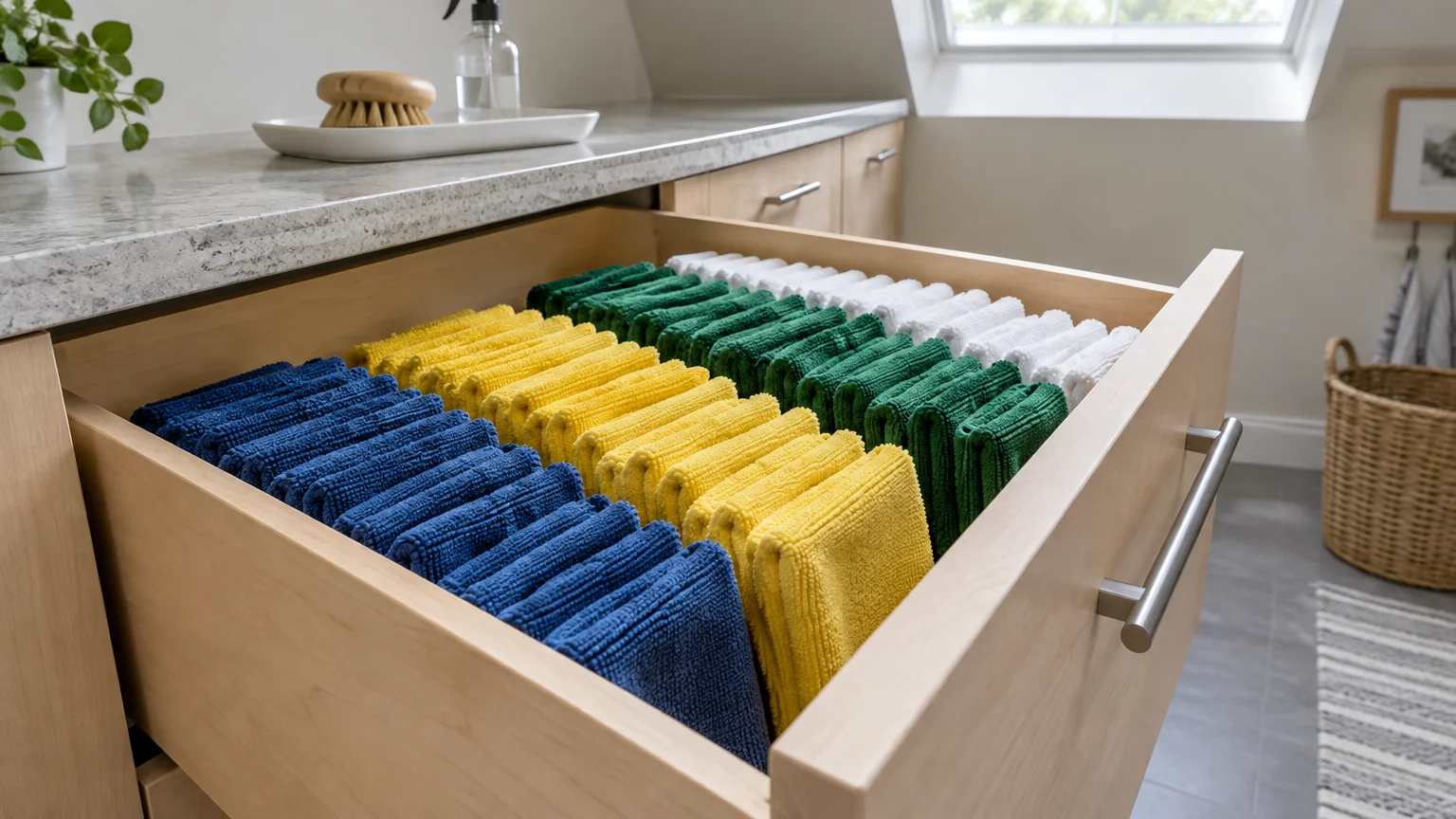
Storing clean towels in a closed bin or drawer protects them from ambient dust. A clean cloth is always ready for quick daily wipe-downs around your home.
Your Next Step for Better Cleaning
Check your cleaning cloths right now by placing a few drops of water on one towel. If the water beads up or rolls off, wash that load today using the vinegar stripping method.
Tossing out fabric softener and lowering your dryer heat takes zero extra time. Your clean countertops, streak-free mirrors, and longer-lasting towels will prove the effort worthwhile.