You can reclaim your meal prep area today by matching each bulky appliance to its ideal storage zone. Clearing counter clutter does not require expensive custom renovations or matching acrylic bins.
Instead, practical kitchen organization relies on a functional system based on how much an item weighs and how often you cook with it. Moving rarely used gear off the counter instantly restores a calm workspace.
Storing appliances by cabinet height and weight also protects your back and preserves your cabinetry. Here is how to create a safer, roomier kitchen setup.
The Golden Rule: Map Appliances by Weight and Reach
Lifting heavy machinery should never strain your spine or risk an expensive drop.
The NIOSH Revised Lifting Equation establishes 51 pounds as the maximum safe load under ideal lifting conditions.
That safe weight limit drops drastically whenever you reach forward, bend over, or lift an item above your shoulders.
Store your heaviest tools between your knuckles and chest height to keep lifts close to your center of gravity.
Daily Essentials: What Earns Permanent Counter Space
Countertops are prime real estate designed for cutting, mixing, and plating meals.
Only appliances you use daily—such as an espresso machine or electric kettle—deserve a permanent spot on your work surface.
If you use an appliance three times a week or less, store it in an accessible cabinet instead.
Shifting secondary tools off the counter immediately opens continuous prep room and reduces visual stress.
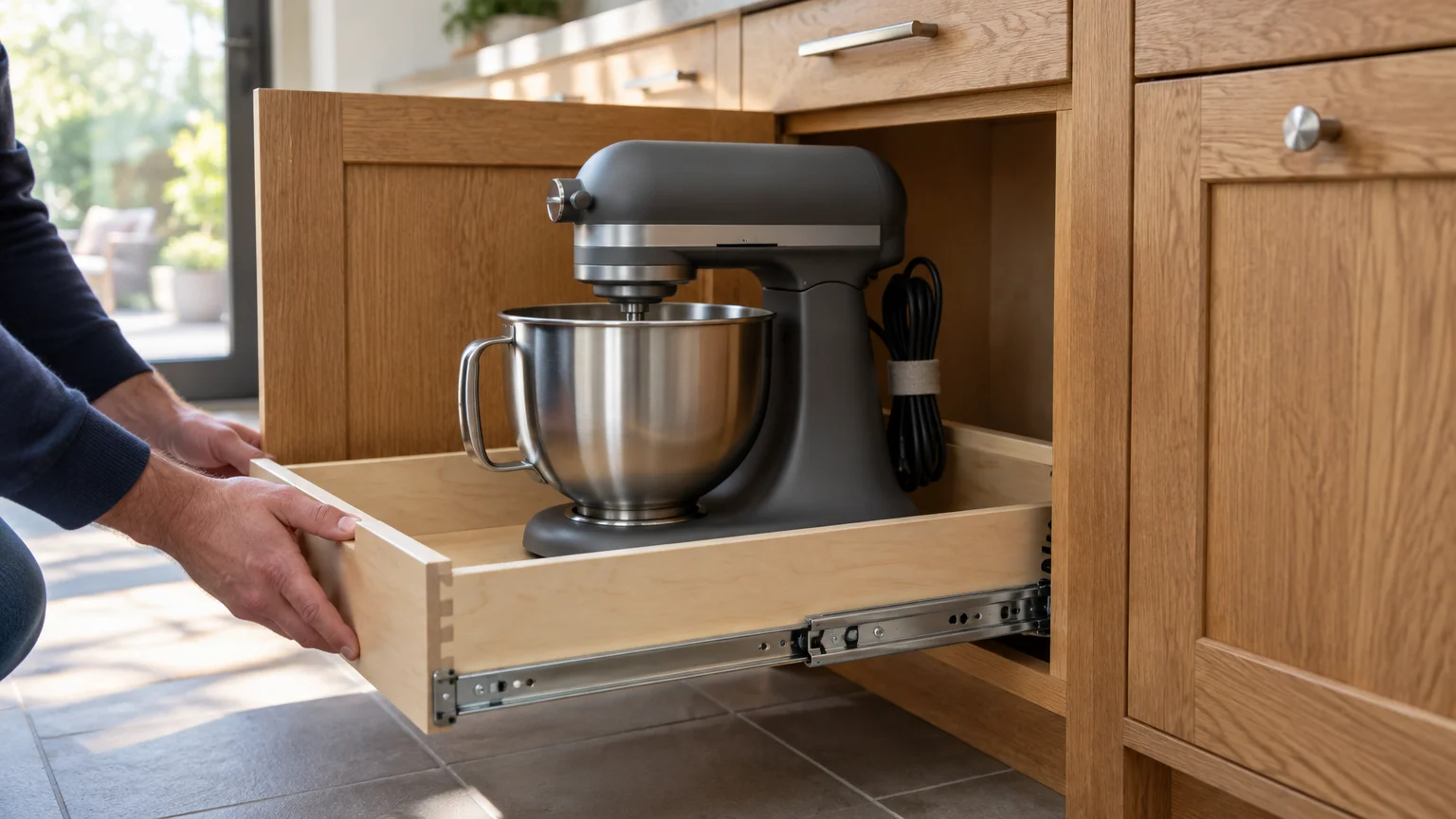
Heavy Machinery: Base Cabinets and Dedicated Pullouts
Standard base cabinets measure 34.5 inches high and 24 inches deep, resting directly on your subfloor.
Because they sit on the floor, well-built base cabinets comfortably support 400 to 600 pounds overall.
Stand mixers are notorious counter hogs; a bowl-lift model weighs 29 to 32 pounds, while tilt-head units weigh 16 to 26 pounds.
According to KitchenAid, storing mixers in lower cabinets, heavy-duty pullout drawers, or specialized mixer lifts prevents awkward carrying across the room.
Always unplug your mixer and wrap the cord securely before moving it into a lower cabinet roll-out tray.
Installing an aftermarket heavy-duty appliance lift inside a base cabinet lets you swing the mixer right to counter height with minimal effort.
Mid-Weight Appliances: Pantry Storage and Adjustable Shelves
Appliances weighing between 10 and 20 pounds—like air fryers, slow cookers, and bread machines—belong on sturdy pantry shelves.
Standard tall pantry cabinets measure 84, 90, or 96 inches high and come in 12-inch or 24-inch depths.
Dedicated pantry storage keeps mid-weight gear accessible without eating into everyday cabinet space.
Check your shelf ratings before stacking multiple heavy cookers in one spot.
Cabinets certified under the ANSI/KCMA A161.1 standard must support 15 pounds per square foot without sagging or joint failure.
Position your most-used pantry appliances between waist and chest level so you can retrieve them without bending over or straining.
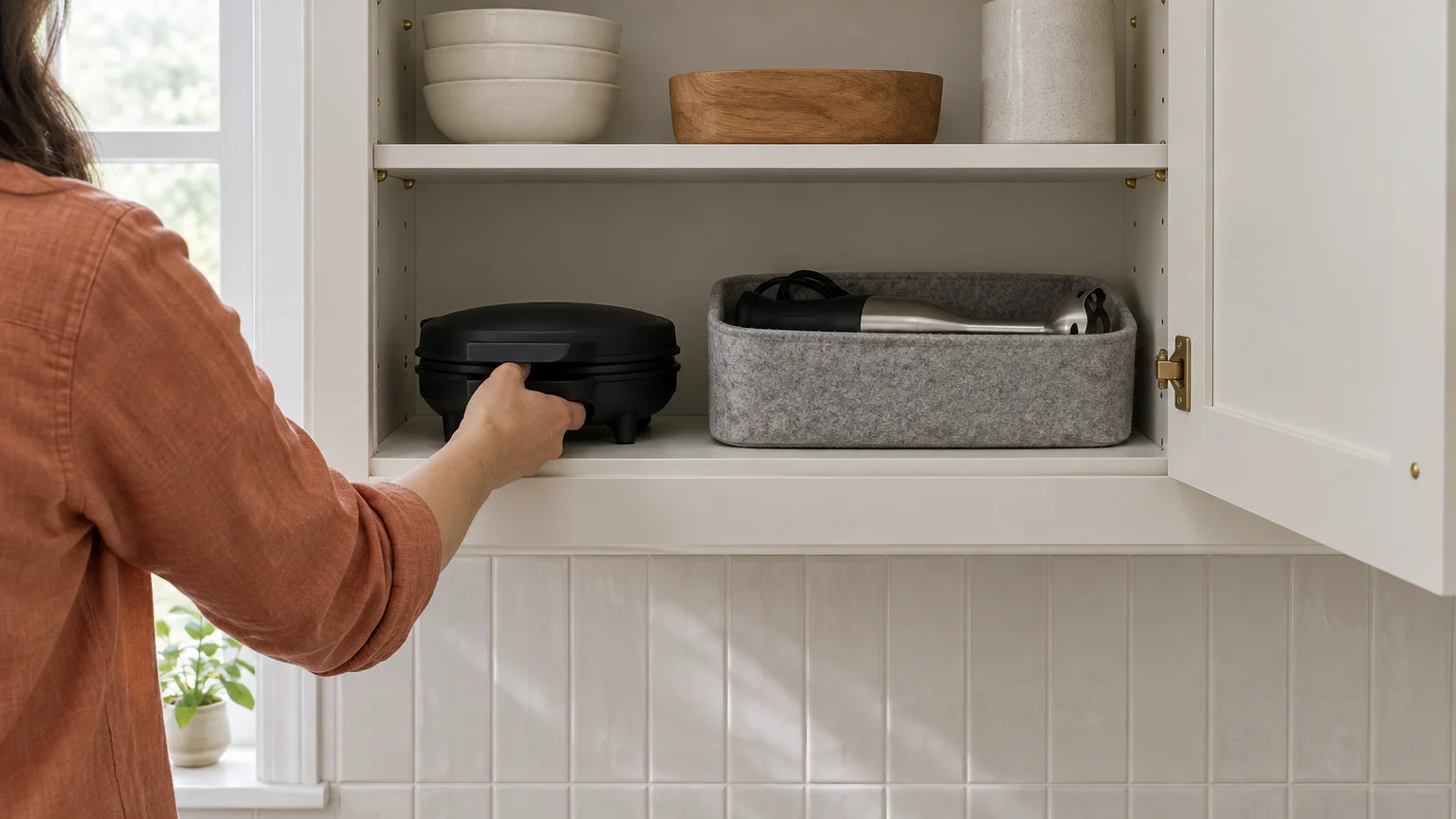
Lightweight Gear: Upper Cabinet Strategy
Wall cabinets are shallower than base units, measuring 12 inches deep and hanging at least 15 to 18 inches above the counter per NKBA guidelines.
Reserve these higher shelves strictly for light, awkward items that weigh under 10 pounds.
Waffle irons, food processor attachments, hand mixers, and immersion blenders fit neatly behind upper cabinet doors.
Never place heavy Dutch ovens or 30-pound mixers in wall cabinets, where an accidental slip could cause injury or structural damage.
Quick-Reference Appliance Storage Guide
| Appliance | Typical Weight | Optimal Storage Zone | Why It Works |
|---|---|---|---|
| Stand Mixer | 16–32 lbs | Base cabinet pullout or appliance lift | Prevents back strain; relies on base cabinet floor support. |
| Air Fryer / Multi-Cooker | 10–15 lbs | Waist-height pantry shelf | Enables a close, two-handed lift without overhead reaching. |
| Dutch Oven / Cast Iron | 12–22 lbs | Lower base cabinet roll-out shelf | Keeps dense, heavy cookware at a low center of gravity. |
| Waffle Maker / Panini Press | 4–8 lbs | Upper wall cabinet | Lightweight body is safe to lift and retrieve overhead. |
| Toaster / Drip Coffee Maker | 4–10 lbs | Dedicated countertop station | Daily frequency justifies keeping it out on primary surfaces. |
Step-by-Step Counter Clearance Plan
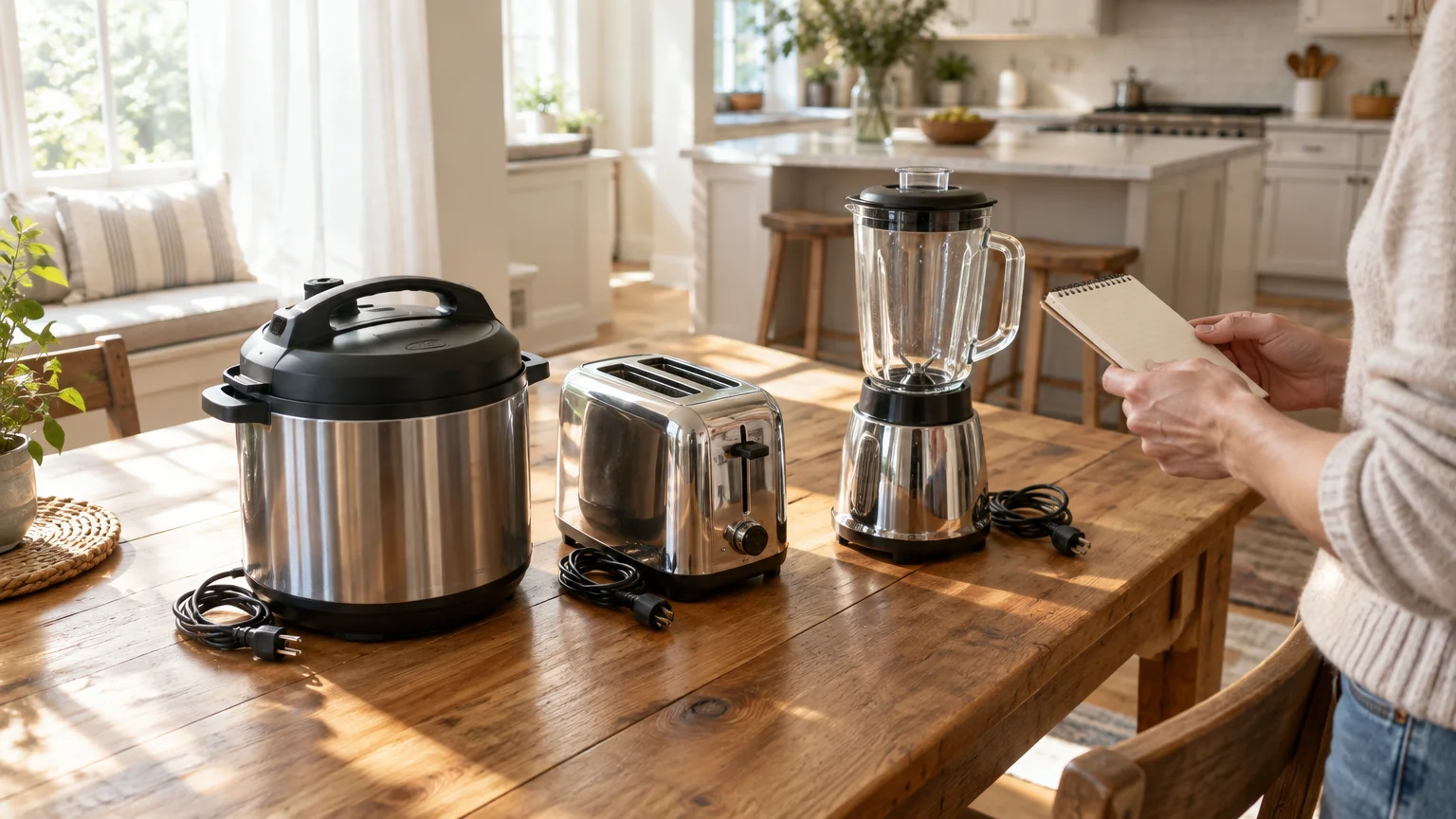
- Audit your surfaces: Clear every small appliance off your countertops and line them up on your kitchen table.
- Separate daily drivers from occasional tools: Keep only the items you touched in the last 48 hours for the counter.
- Weigh your remaining units: Group remaining appliances into heavy (20+ lbs), medium (10–20 lbs), and light (under 10 lbs) piles.
- Assign base cabinets to heavy gear: Slide 20+ pound mixers and roasters onto bottom pullout shelves.
- Fill the pantry sweet spot: Place your medium-weight pressure cookers and air fryers between waist and chest level.
- Stash lightweight items up high: Place hand mixers, blenders, and waffle makers into upper 12-inch cabinets.
Take Your First Step Today
When you store kitchen appliances according to their weight and frequency of use, your kitchen becomes easier to clean and much safer to navigate.
Pick just one appliance off your counter today—preferably the bulky one you have not used all week.
Move it into its weight-appropriate cabinet zone right now and enjoy your freshly cleared prep space.