
Counter clutter turns even a simple morning routine into a scavenger hunt. Most U.S. bathrooms are compact—a standard full bath measures roughly 5 by 8 feet—so a few stray bottles quickly swallow the entire sink ledge.
A 2025 Houzz study found that 51% of renovated U.S. bathrooms are under 100 square feet. When floor space is tight, practical systems matter far more than expensive matching containers.
These eight bathroom organizing ideas clear your vanity top for good. You will learn where to relocate sensitive items, how to measure hidden storage, and which durable materials survive daily steam.

First, Declutter Bathroom Counters by Removing What Does Not Belong
Before you buy a single basket, clear out items that bathroom steam quietly ruins. A Long Island University study published via the NIH recorded residential bathrooms swinging between 56.8°F and 88.7°F, with humidity hitting 100%.
According to MedlinePlus, heat and moisture break down pills before their expiration date. Store medications in a bedroom dresser or high kitchen cabinet at 68°F to 77°F and under 60% relative humidity—never above a steamy sink.
Keep medicines in original child-resistant containers, and discard the moisture-attracting cotton balls inside bottles. The FDA and the American Academy of Dermatology also warn that bathroom moisture fuels bacteria and fungus in makeup and skincare.
Move backup serums and palettes to a dry dresser drawer, and toss mascara every two to four months. Then sort everything left on your counter into four quick categories:
- Daily essentials: Hand soap, toothbrush, toothpaste, and one facial cleanser stay within reach of the faucet.
- Weekly items: Nail clippers, tweezers, and hair masks move into a drawer or wall cabinet.
- Backups: Extra shampoo bottles and bulk toilet paper go to a hallway linen closet or lower bin.
- Expired or broken: Dried polishes, frayed hair ties, and expired sunscreen go straight into the trash.
01 Zone Your Sink With Low-Profile Bathroom Counter Storage
Once you declutter bathroom surfaces, give the daily survivors a strict footprint. In its 2026 Bathroom Trends Study, Houzz reported that 67% of renovating homeowners view organized storage as key to a relaxing space.
Choose one narrow tray in resin, ceramic, or thick clear acrylic—never porous wood or woven seagrass beside a wet faucet. A lipped tray groups soap and lotion so you can lift both with one hand.
Keep toothbrushes out of closed boxes and far from the toilet. The American Dental Association advises storing toothbrushes upright to air-dry without touching, and replacing them every three to four months.
Travel caps trap moisture and speed microbial growth faster than open air. Research in The Journal of Hospital Infection also detected fecal aerosols rising 10 inches above an open toilet seat, so shut the lid before flushing.
02 Maximize Under-Sink Cabinets With Two-Tier Pull-Out Drawers
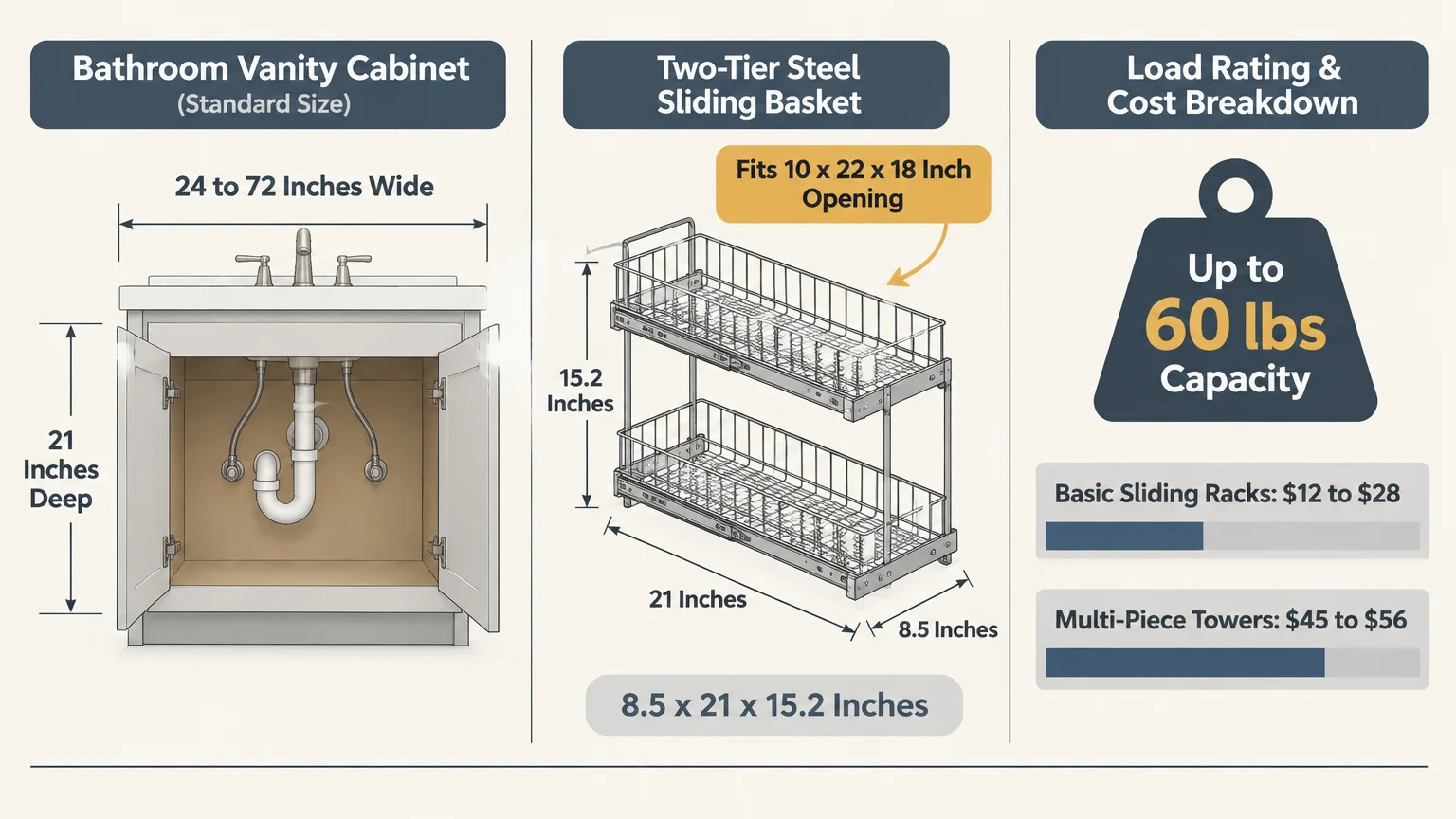
Deep vanity cabinets swallow small bottles behind plumbing pipes. Standard vanities measure 21 inches deep—or 18 inches for narrow models—and span 24 to 72 inches wide, leaving tall cabinet cavities wasted.
Two-tier sliding racks turn that dead space into accessible bathroom organization. Basic plastic and metal sliding organizers cost roughly $12 to $28 at major retailers, while multi-piece metal drawer towers run $45 to $56.
For bulky jugs of lotion or spare conditioner, choose heavy-duty steel pull-out baskets. Models measuring 8.5 by 21 by 15.2 inches fit standard 10-by-22-by-18-inch cabinet openings and support up to 60 lbs.
Stick to coated steel or clear acrylic bins under plumbing lines. Smooth plastic and powder-coated metal wipe dry fast if a pipe sweats or drips.
03 Upgrade to a Recessed Medicine Cabinet Sized to Your Vanity
Eye-level wall storage clears daily toiletries off your counter fast. In the 2025 Houzz study, 32% of renovating homeowners upgraded their medicine cabinets, choosing recessed models twice as often as surface-mounted units.
Recessed cabinets sit inside the wall cavity so doors do not crowd your faucet. Retailer and manufacturer specs from Lowe’s and Kohler recommend choosing a cabinet 2 to 6 inches narrower than your vanity.
Leave at least 3 inches of clearance from side walls or sconces so doors swing cleanly. Roughly 22% of upgraders also add interior outlets to keep electric toothbrushes charging out of sight.
Reserve these adjustable glass shelves for flat grooming tools like razors, floss, and nail scissors. Keep actual prescription drugs out of this cabinet and stored in a cooler, drier room.
04 Claim Vertical Wall Space With Over-the-Toilet Storage
When drawers fill up, look directly above the toilet tank for small bathroom storage. Freestanding over-the-toilet units turn blank wall space into three or four usable shelves without shrinking your walking path.
Basic metal or engineered-wood racks start around $40 to $45, three-shelf wood cabinets run $114 to $130, and wood-and-steel models reach $199 to $200. Always secure freestanding units with the included anti-tip wall anchors.
Closed cabinet doors cut visual clutter far better than open wire shelves. Stash spare towels, tissues, and extra soap bars inside opaque bins on higher shelves.
If your unit has open shelving, place two wide baskets on each shelf instead of lining up loose bottles. Uniform containers stop narrow tubes from tipping over when you reach up.
05 Use Water-Resistant Adhesive Caddies Inside Cabinet Doors
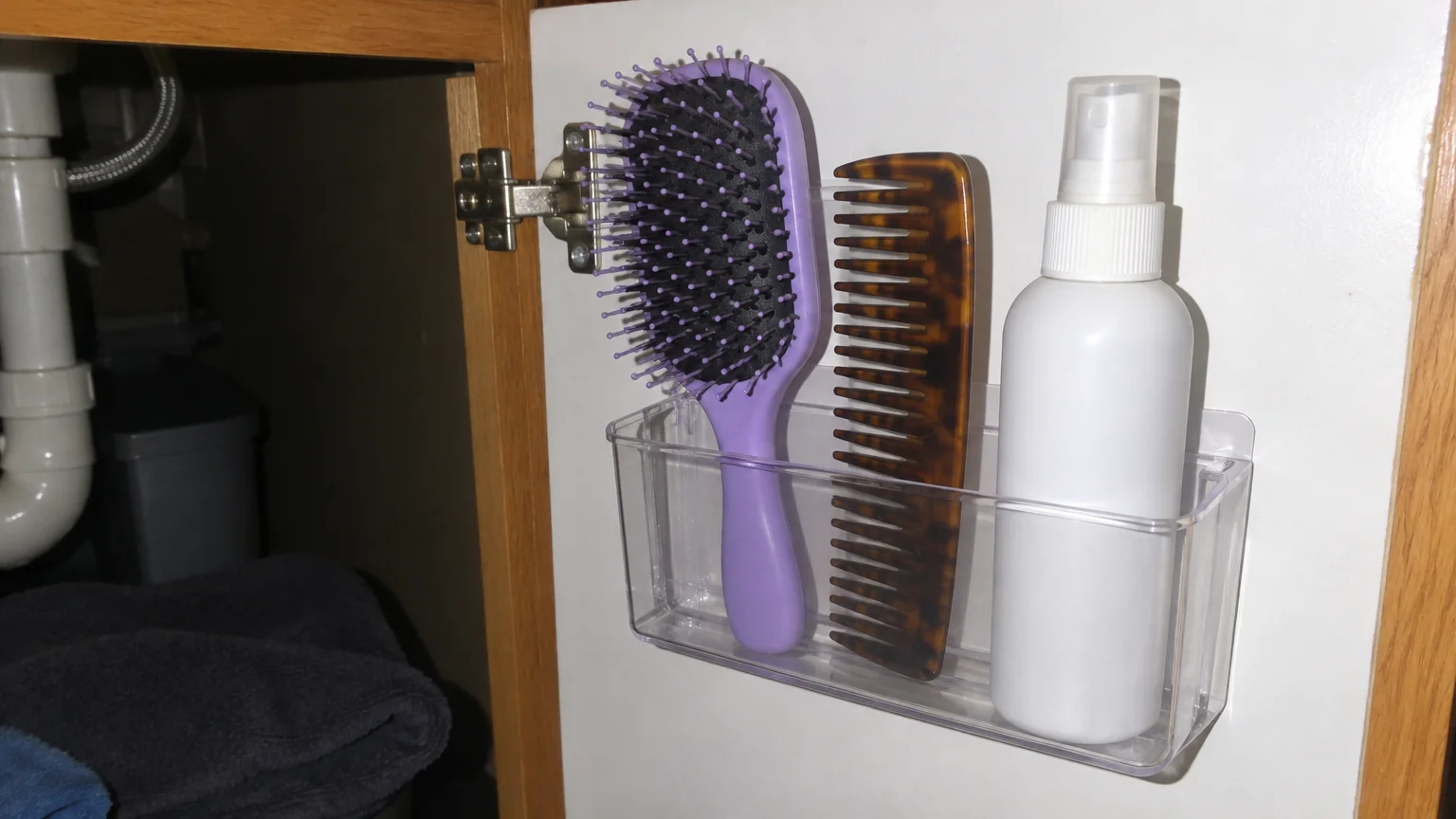
The inside of your vanity doors holds prime space for slim hairbrushes and cotton swabs. Water-resistant adhesive caddies suit renters because they mount securely without drilling into cabinet wood.
Check weight limits before loading tall bottles onto door racks. Large 3M Command water-resistant bath strips hold up to 5 lbs, while small bath strips support roughly 2.8 lbs.
Regular adhesive strips lose 20% to 40% of their grip in high humidity, so use bath-rated strips only. Wipe the door with 70% isopropyl alcohol, press firmly, and wait one full hour before hanging items.
Always test door clearance before pressing strips into place. Hold the loaded caddy against the open door and swing it shut to ensure it clears your basin and pipes.
06 Holster Hot Hair Tools Near GFCI Outlets
Tangled hair dryers and flat irons can consume half a vanity top within seconds. Instead of piling hot tools beside the sink, mount a heat-safe steel or silicone holster to your vanity side.
Electrical safety codes govern where you plug in high-wattage tools. Under the National Electrical Code, bathroom outlets require GFCI protection on a dedicated 20-amp circuit, with one receptacle within 3 feet of each basin.
Those rules protect your household—the U.S. Consumer Product Safety Commission estimates GFCIs prevent nearly half of electrocution incidents. After immersion-protection standards took effect in 1987, hair-dryer electrocutions dropped from 91 deaths to just 1.
Keep outlets strictly outside tub and shower zones. Coil each cord loosely with a fabric strap and drop the cooled barrel straight into its wall holster.
07 Add Narrow Rolling Carts Without Blocking Clearances
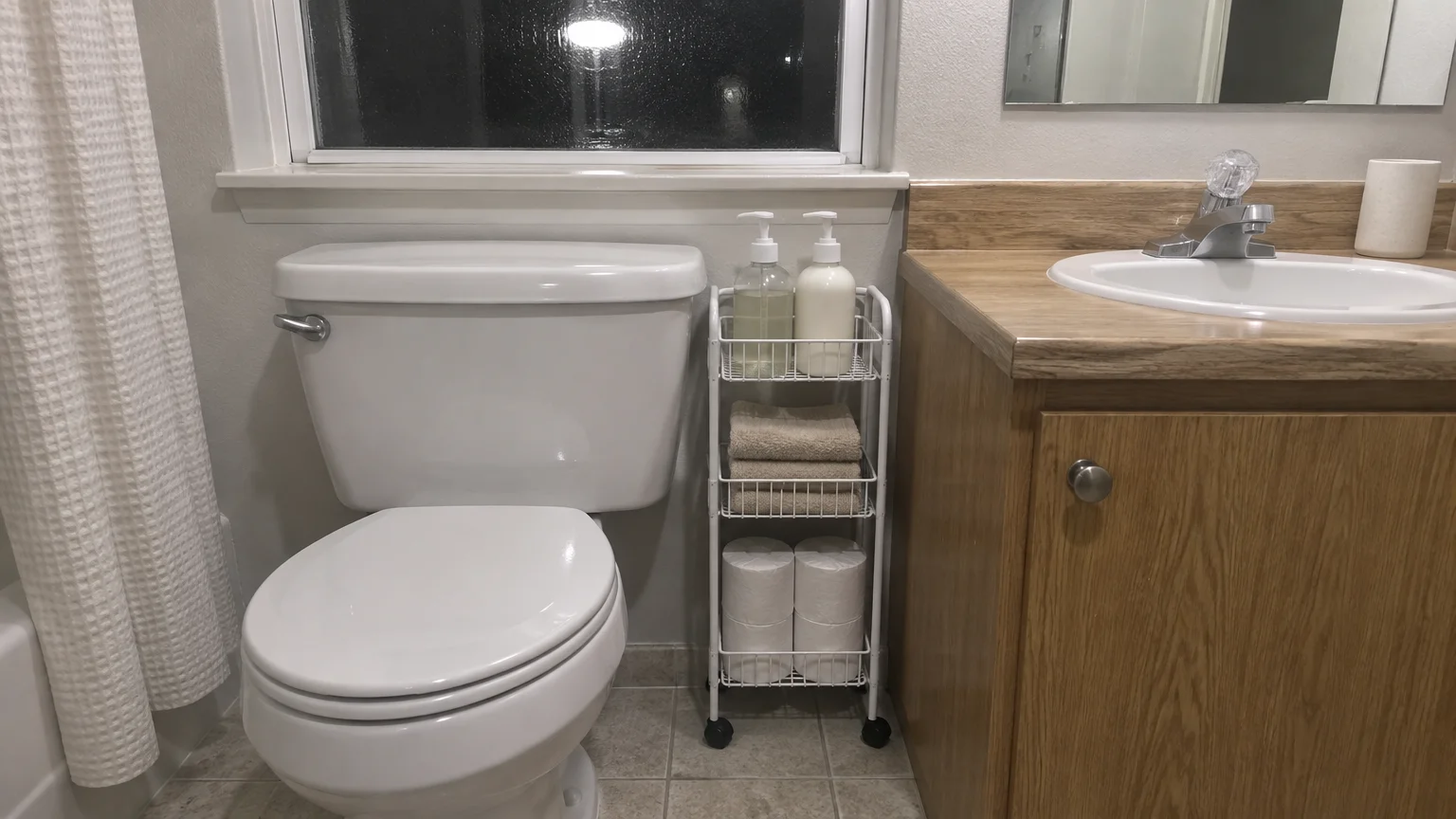
A narrow rolling cart fits neatly beside a pedestal sink or vanity cabinet. Measure your walking lanes first so a new cart never crowds doors or knees.
The International Residential Code requires at least 21 inches of clear floor space in front of sinks and toilets, plus 15 inches from a toilet’s centerline to any side wall or vanity. The National Kitchen and Bath Association recommends wider clearances for comfortable daily movement.
| Bathroom Zone or Fixture | Minimum Code Standard | Recommended Comfort Guideline |
|---|---|---|
| Floor space in front of sink or toilet | 21 inches (IRC) | 30 inches (NKBA) |
| Toilet centerline to side wall or vanity | 15 inches (IRC) | 18 inches (NKBA) |
| Sink centerline to side wall | Varies by layout | 20 inches (NKBA) |
| Clear doorway opening | 24 inches (NKBA, existing homes) | 32 inches (NKBA) |
Once your floor meets those numbers, a slim rolling cart adds three tiers of mobile bathroom counter storage. Choose powder-coated steel with locking wheels so the cart stays steady when you grab a bottle.
08 Protect Stored Items With Proper Bathroom Ventilation
Even smart bathroom organization fails when trapped steam warps labels and dampens spare towels. The U.S. Environmental Protection Agency advises keeping indoor humidity between 30% and 50%, and always below 60%.
Match your exhaust fan capacity to your room size. Standards from ASHRAE and the Home Ventilating Institute require at least 50 CFM for bathrooms up to 50 square feet, and 1 CFM per square foot above that.
Building codes require bathroom fans to vent directly outdoors rather than into attics. Run your fan for 20 minutes after showering so damp air clears before settling inside drawers.
Steady airflow keeps breathable linen bins fresh on upper shelves. Pairing good ventilation with a modern 34-to-36-inch comfort-height vanity—taller than older 30-to-32-inch cabinets—also makes deep drawers easier on your back.
Your 15-Minute Counter Reset
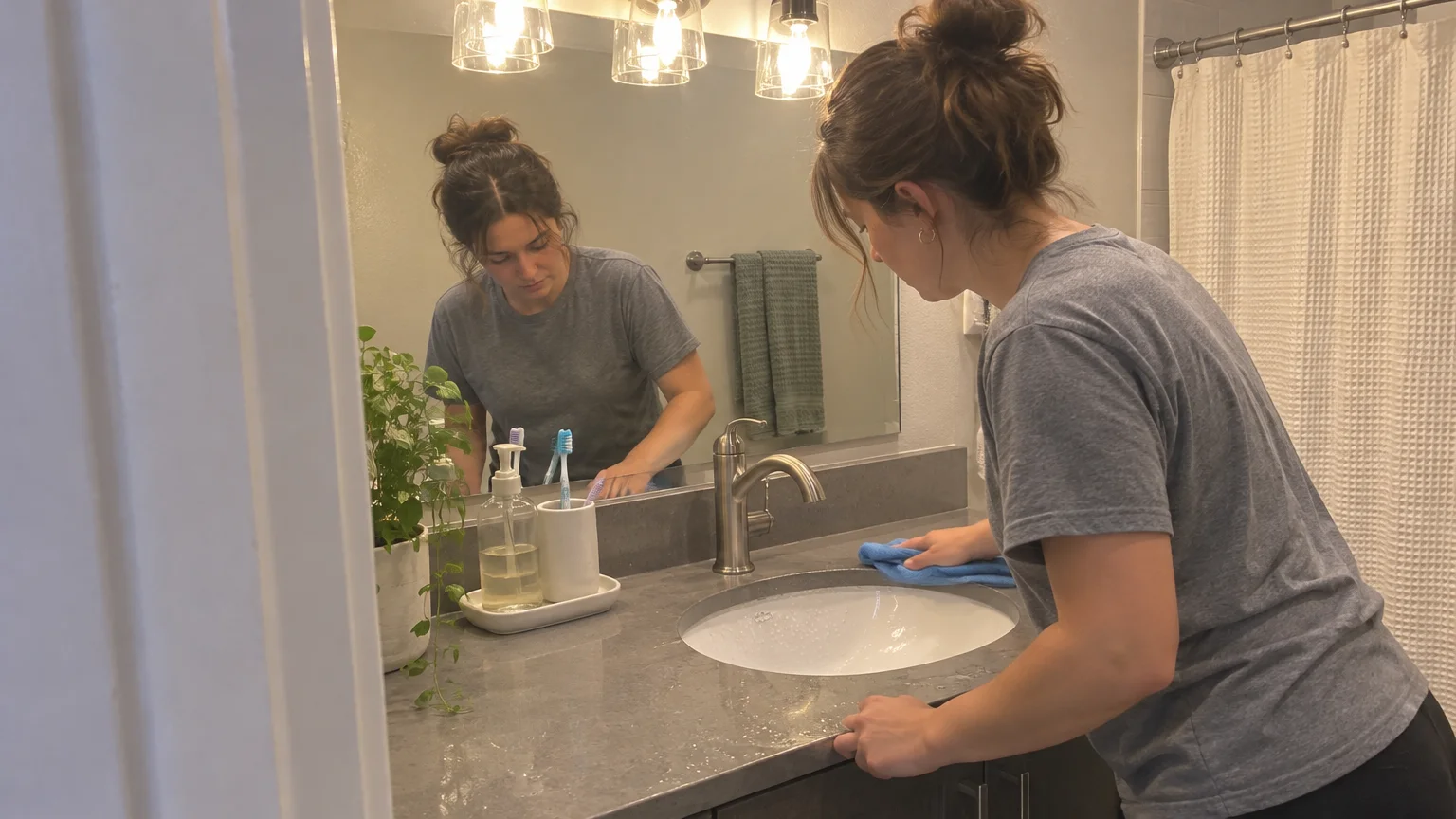
Start with one surface tonight instead of emptying every drawer at once. Clear your vanity top completely, pull out medications and backup skincare, and relocate them to a cool bedroom drawer.
Measure your under-sink cavity and vanity width while the ledge sits empty. With exact dimensions saved in your phone, you can buy one pull-out basket or recessed cabinet that fits the first time.