Dropping everyday items onto your floor steals valuable living space and makes daily cleaning twice as hard. Worse, it exposes your belongings to unexpected moisture, dirt, and destructive household pests.
Professional organizers know that clear floors are the foundation of a calm, functional home. Lifting your everyday items off the ground preserves their condition and protects your space from expensive emergencies.
These essential home organizing tips highlight seven dangerous floor storage mistakes you should stop making, along with simple clutter hacks to correct them today.
01 Cardboard Moving and Storage Boxes
Stacking cardboard boxes directly on your closet or basement floor creates an open invitation for pests. The National Pest Management Association warns that cardboard piles provide shelter and food for cockroaches and rodents.
Cardboard also acts like a sponge, soaking up ground dampness and humidity. According to Penn State Extension, raising storage 12 inches above the ground prevents moisture absorption, rust, and box collapse.
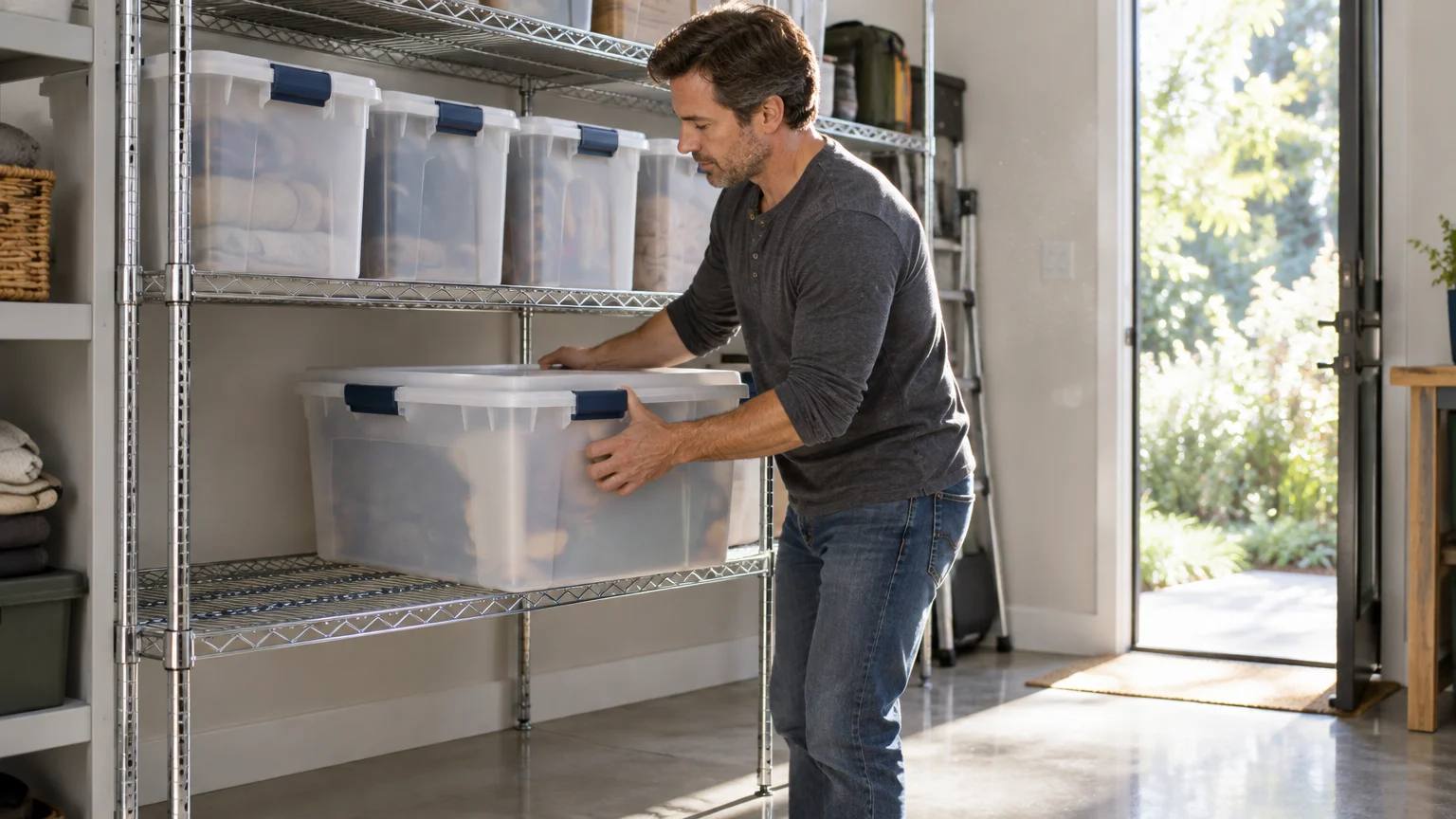
Swap your cardboard boxes for clear plastic bins with locking lids. Set those bins onto sturdy wire shelving units to keep your belongings clean, dry, and fully visible.

02 Bulk Food and Unsealed Pet Kibble
Placing bags of rice, flour, or dog kibble on the pantry floor invites hungry insects and rodents into your kitchen. Thin paper and plastic bags offer zero defense against chewing pests.
Commercial safety standards highlight this danger clearly. The FDA Food Code requires storing all food at least 6 inches above the floor to prevent contamination.
Decant bulk staples and pet food into airtight, food-grade plastic or glass containers. Store these containers on mid-level pantry shelves where you can reach them without straining your back.
03 Piles of Clothing and Spare Bedding
Leaving laundry piles or spare blankets on closet floors creates dark nesting spots for unwanted visitors. Fabric piles also collect dust mites, allergens, and pet dander.
Guidance from K-State Extension urges homeowners to keep clothing and clutter off floors to stop insect infestations. Dropped garments can quickly attract silverfish, carpet beetles, and fabric moths.
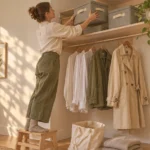
Fabrics left on the floor also absorb moisture from damp carpets. Install hanging canvas organizers, wall hooks, or higher closet shelves to keep fabrics fresh and clean.
04 Important Paperwork, Books, and Photo Albums
Storing legal documents, tax files, and family photo albums on the floor puts them in danger from routine plumbing leaks. Water spreads quickly across hard floors, ruining paper treasures within minutes.
Paper on the ground also attracts silverfish and cockroaches, which feed on paper fibers and bookbinding glue. Trapped moisture can also trigger toxic mold growth in tight paper stacks.
File your important papers in water-resistant lockboxes stored on higher shelves. Keep sentimental photo albums in upper cabinets where rising water and dampness cannot reach them.
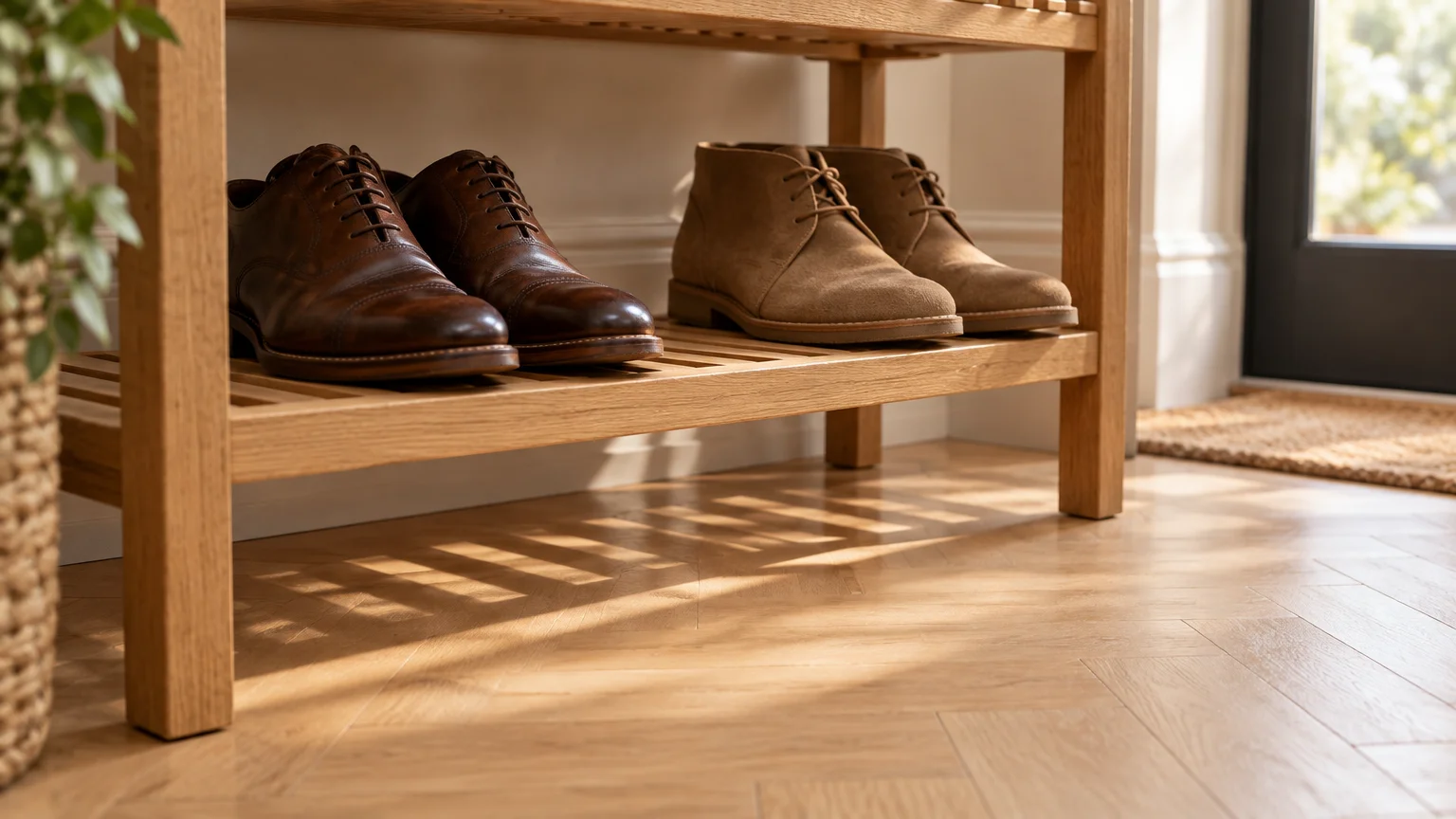
05 Leather Shoes and Seasonal Footwear
Kicking your shoes into a closet floor pile ruins your footwear fast. Scuffs, bent heels, and trapped moisture quickly wear down fine leather and suede.
Closet floors often trap cool, damp air that encourages mold growth inside dark shoe interiors. Piled shoes also create annoying trip hazards that make morning routines frustrating.
Professional organizers affiliated with NAPO recommend using elevated, slatted shoe racks or hanging door organizers. Raising shoes keeps your floor clear for easy vacuuming and lets air circulate freely around each pair.
06 Electronics, Power Strips, and Small Appliances
Resting power strips, computer towers, and small kitchen appliances flat on the ground creates serious electrical hazards. Dust bunnies collect inside vents, which leads to overheating and fire risks.
Flooring also exposes sensitive electronics to water from plumbing leaks or overflowing sinks. The Alabama Cooperative Extension System advises keeping valuable electronics high off floors to prevent flood damage.
Use under-desk cable management trays to lift power strips off your office floor. Place seasonal kitchen appliances onto pull-out cabinet organizers or heavy-duty wire pantry racks instead.
07 Plastic Storage Totes Sitting Flush on Concrete
Plastic bins protect items from dust, but sitting flush on basement concrete causes problems. Temperature differences between cold concrete and warm air create condensation underneath flat bins.
Moisture trapped beneath plastic can damage floors and attract pests that travel along baseboards. Experts at UC ANR IPM advise keeping storage bins elevated off the floor and away from walls.
Connecticut state IPM guidelines recommend storing boxes 8 to 12 inches off the ground. Place plastic totes on metal or resin shelving to guarantee healthy airflow beneath every container.
Quick Comparison: Safe Elevated Alternatives
Use this quick reference guide to replace risky floor habits with smart, elevated storage solutions.
| Stored Item | Floor Storage Hazard | Safe Elevated Solution | Recommended Height |
|---|---|---|---|
| Cardboard Boxes | Cockroaches, rodents, moisture rot | Clear plastic bins on wire shelving | 12 inches off ground |
| Bulk Food and Kibble | Pest chewing, food contamination | Airtight bins on pantry shelves | At least 6 inches |
| Clothing and Blankets | Fabric moths, silverfish, dust mites | Hanging fabric cubes or high shelves | 12 inches or higher |
| Paperwork and Albums | Water leaks, silverfish, mold | Waterproof document safe | Waist to eye level |
| Footwear | Leather mold, scuffing, tripping | Slatted rack or hanging shoe pocket | 4 to 6 inches |
| Electronics and Strips | Dust buildup, fire hazard, water leaks | Under-desk cable tray or shelf | Off floor level |
| Plastic Totes on Concrete | Trapped condensation, baseboard pests | Freestanding resin utility shelving | 8 to 12 inches |

How to Clear Your Floors in Three Practical Steps
Clearing your floors does not require an entire weekend of work. You can create a cleaner, safer home by tackling one space at a time.
- Sort and purge first. Empty your closet or pantry floor and discard broken items, empty boxes, and expired goods.
- Install vertical storage. Add adjustable wire shelves, hanging door organizers, or simple wall hooks to capture unused vertical space.
- Apply the elevation rule. Keep everyday items at least 6 inches off closet floors and 12 inches off basement or garage floors.
Your Next Step for a Safer Floor
Walk through your home today and identify three items sitting directly on your closet or pantry floors.
Lift those items onto an existing shelf or a sturdy raised rack. You will immediately protect your belongings and make sweeping your floors effortless.