Your kitchen should make daily cooking comfortable and safe, not force you to strain or worry about accidents. Retirees and older adults are prioritizing specific kitchen design upgrades to ensure they can confidently age in place without sacrificing style or function. A functional home improvement plan focuses on removing daily friction—like bending for heavy pots or reaching over hot burners. Modern renovations embrace accessibility features that blend seamlessly into beautiful spaces, making your retirement home easier to navigate. Whether you are planning a major remodel or making targeted weekend updates, adopting these six smart kitchen features will immediately improve your safety, simplify meal prep, and help you maintain long-term independence.
1. Induction Cooktops for Enhanced Safety
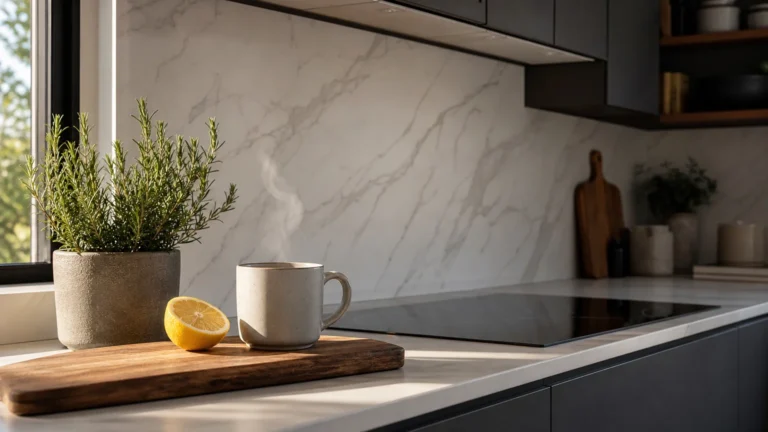
Electric coils stay hot long after you turn them off, and gas stoves carry the risk of open flames. Both pose serious hazards if you accidentally brush against the stove or leave a burner running. Retirees increasingly choose induction cooktops to eliminate these risks entirely.
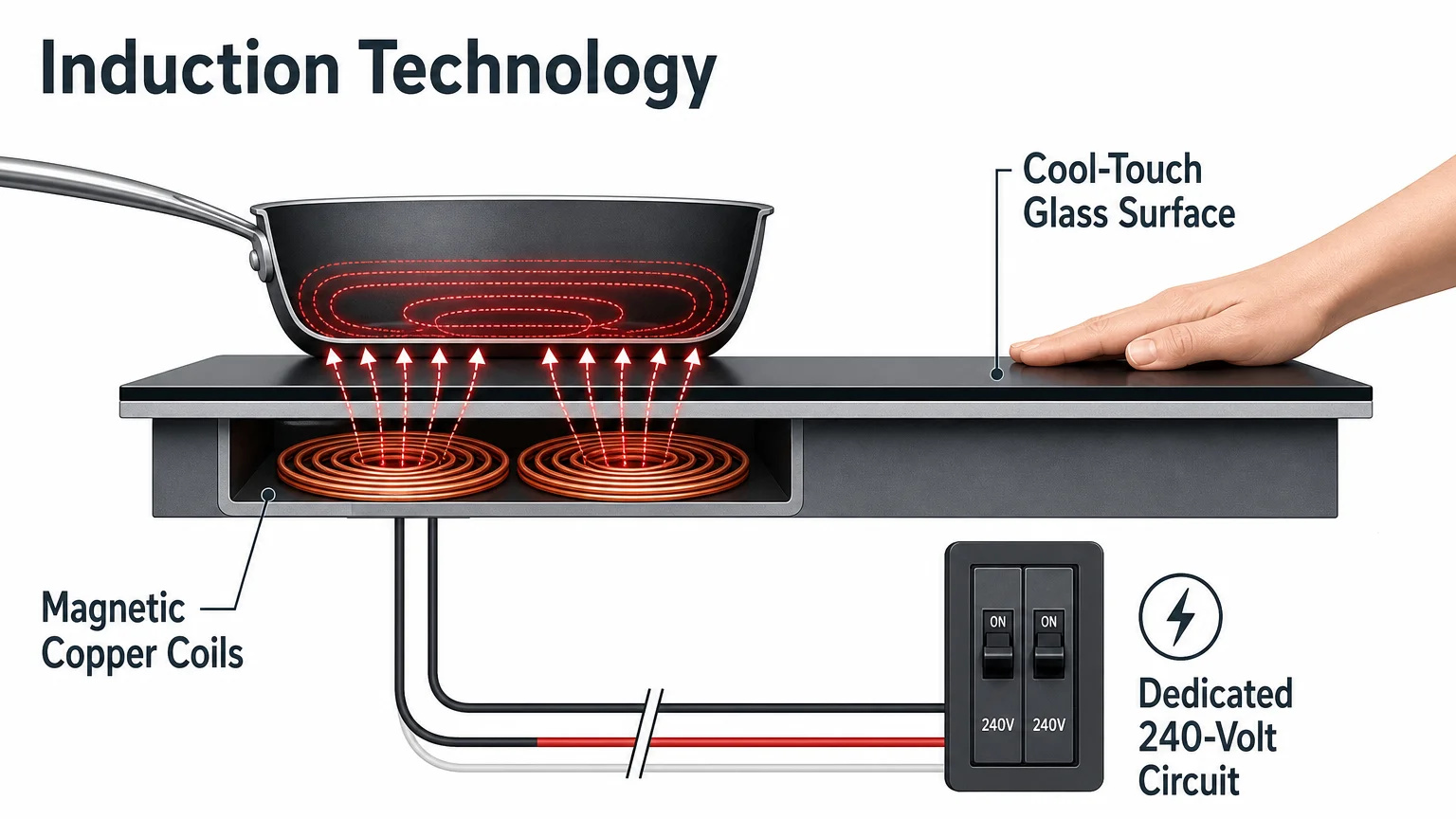
Induction technology uses electromagnetic copper coils to heat the pan directly. Because the cooktop itself does not generate heat, the glass surface remains much cooler than traditional ranges. If you accidentally leave an induction burner turned on without a pot on it, the element will not get hot; it requires a magnetic connection to complete the circuit. Most models also feature automatic shut-off functions that detect when water boils over or a pan runs dry, instantly cutting power to prevent smoke or fire.
According to the AARP, induction stoves are inherently safer for older adults who want to age in place confidently. As skin thins with age, burns become more severe and take longer to heal. Eliminating the open flame drastically reduces this risk.
Beyond physical safety, induction cooktops simplify your daily cleaning routine. Traditional gas ranges force you to lift heavy cast-iron grates and scrub burnt-on food out of deep crevices. Because an induction surface stays relatively cool, spilled sauces and splattered grease do not bake onto the glass. You can simply wipe the smooth surface clean with a damp cloth immediately after cooking. Upgrading to an induction model requires compatible magnetic cookware—such as cast iron or magnetic stainless steel. You will also need an electrician to verify your kitchen has a dedicated 240-volt electrical circuit; however, the daily peace of mind you gain far outweighs the initial setup requirements.
2. Microwave Drawers to Prevent Overhead Reaching
Standard microwaves often sit directly above the stove. This placement forces you to reach up over a hot cooking surface, balance heavy dishes, and carefully lower them to the counter. This awkward movement places significant strain on your shoulders and back. More importantly, it dramatically increases the risk of spilling scalding liquids—like hot soup or boiling water—directly onto your face, chest, or arms.
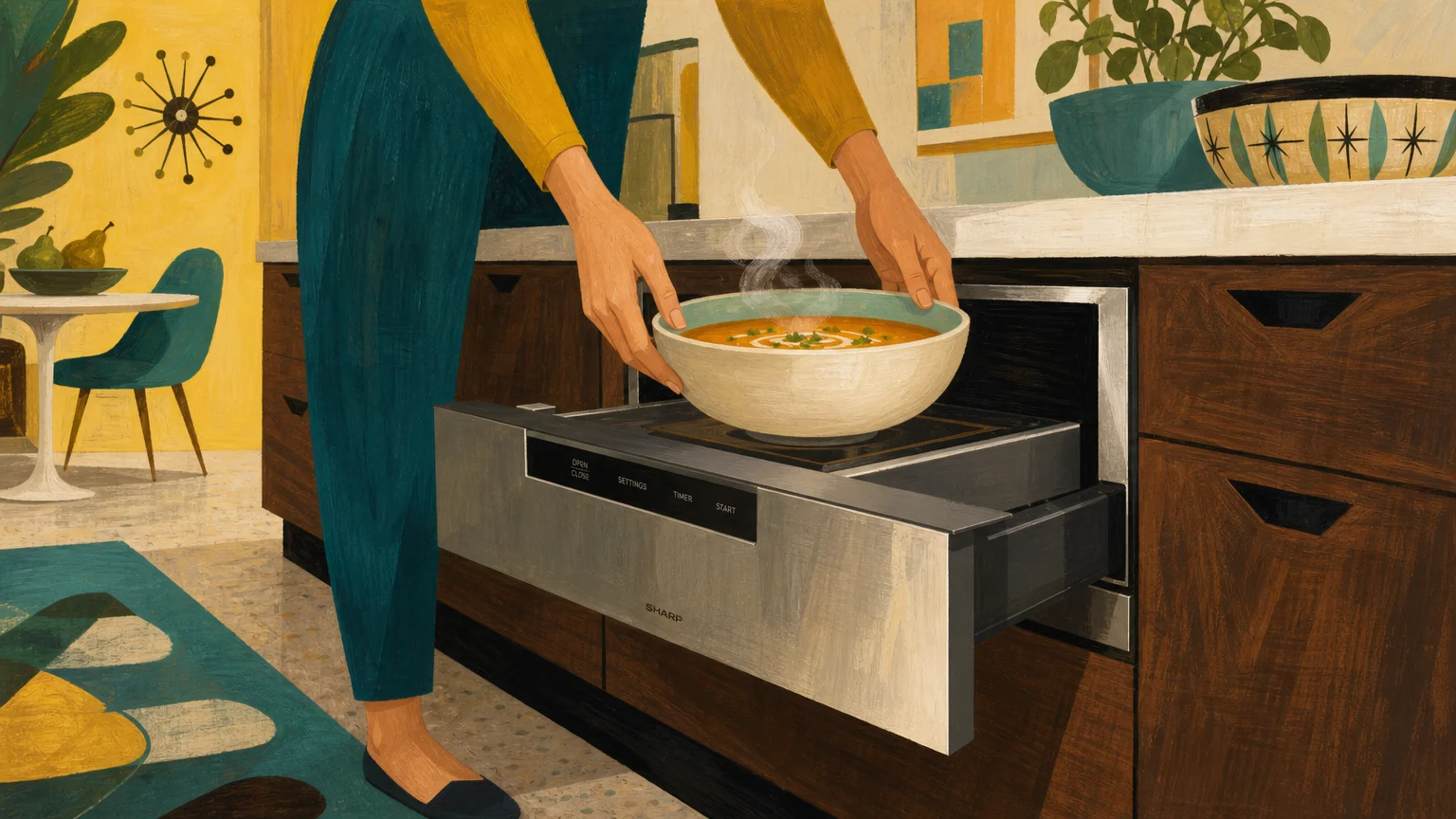
A microwave drawer solves this exact problem by moving the appliance below the counter. You simply push a button on the control panel to glide the drawer open, place your dish inside, and close it with a gentle nudge. When the food finishes cooking, you lift the dish straight up and onto the countertop. This motion relies on your stronger core and bicep muscles rather than stressing your vulnerable rotator cuffs.
Manufacturers design these units to fit seamlessly into standard lower cabinets or kitchen islands. Placing the microwave at waist height means anyone—whether standing, seated on a stool, or using a wheelchair—can easily operate it. Microwave drawers also free up valuable upper cabinet space, allowing you to install a proper, high-powered ventilation hood over your range. Many modern microwave drawers feature angled control panels, so you do not have to bend over to read the buttons. They also include control-lock features, which prove incredibly useful for keeping curious grandchildren from accidentally turning the appliance on.
3. Layered Lighting Systems to Improve Visibility
As you age, the lenses in your eyes naturally yellow and thicken, which reduces the amount of light reaching your retina. The Illuminating Engineering Society (IESNA) provides specific lighting guidelines for senior environments, recognizing that older adults require significantly more light to maintain visual acuity. The National Institute on Aging (NIA) advises that improving home lighting is a critical step in preventing indoor falls. Shadows, glare, and poor lighting can turn a simple task like chopping vegetables into a dangerous chore.
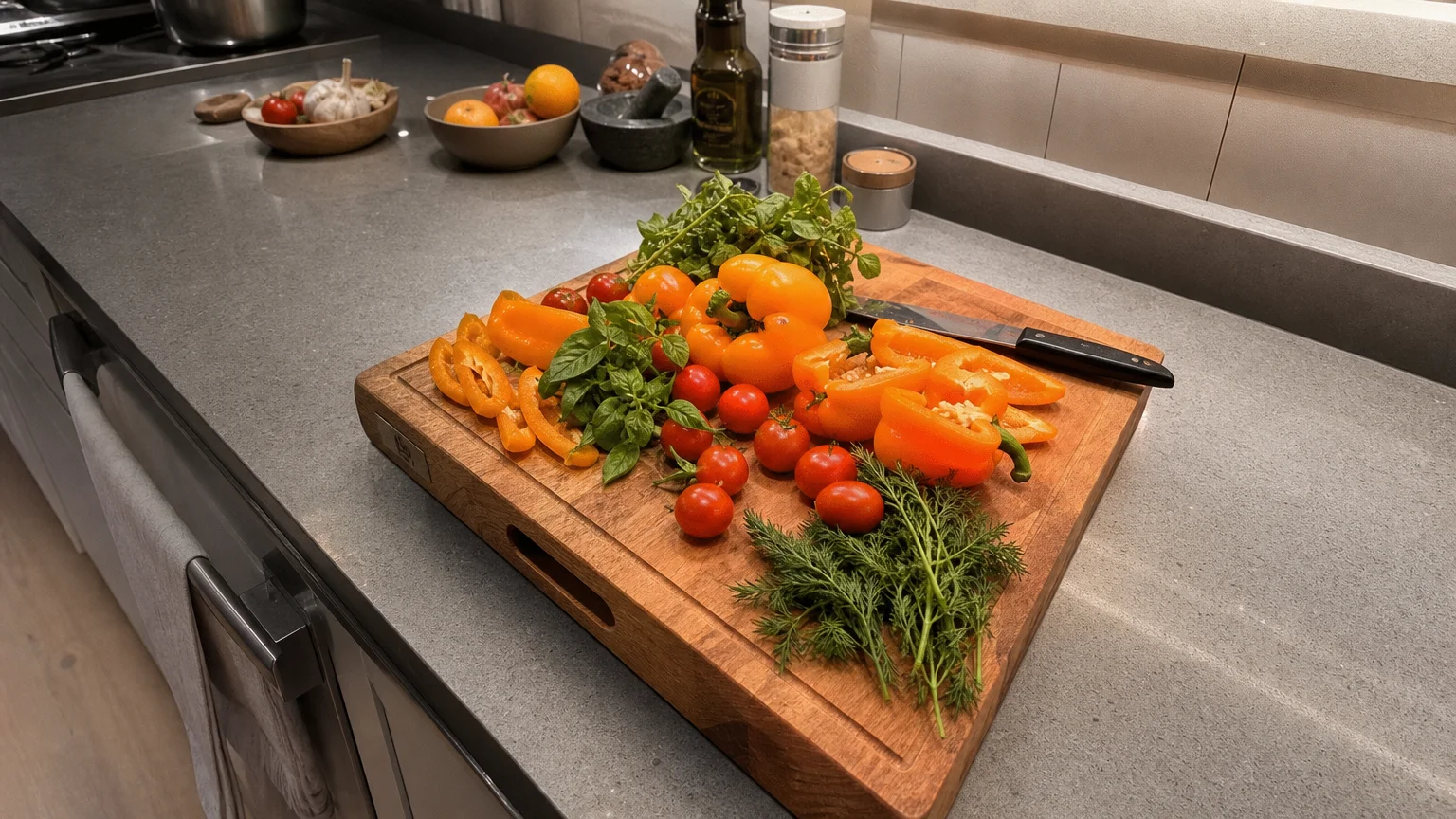
Relying on a single ceiling fixture creates harsh glare and casts deep shadows over your workspace. To combat this, you need a layered lighting system that provides clear, even illumination throughout the entire room. Proper lighting not only prevents accidental cuts during food preparation but also helps you quickly spot spills on the floor before they become slipping hazards.
Follow this step-by-step checklist to properly layer your kitchen lighting:
- Install under-cabinet task lighting: Mount continuous LED strip lights directly over your main prep zones, sink, and stove. This places the light source below your eye level and directly onto the cutting board, completely eliminating the shadows normally cast by your own body.
- Upgrade overhead ambient lighting: Swap dim incandescent bulbs for bright, warm-white LEDs. Aim for a color temperature between 3000K and 3500K. This range improves overall room visibility without creating the harsh, blue-tinted glare that can irritate aging eyes.
- Select high-CRI bulbs: Look for bulbs with a Color Rendering Index (CRI) of 90 or higher. High-CRI lighting provides better color contrast, making it easier to distinguish between the edge of a dark countertop and a dark-handled knife.
- Add toe-kick accent lighting: Install low-lumen LED strips at the base of your lower cabinets. Connect them to motion sensors so they automatically illuminate the floor pathway if you enter the kitchen for a glass of water at night.
- Use rocker switches with dimmers: Replace standard toggle switches with large rocker panels. They require far less finger dexterity to operate; you can simply bump them with an elbow if your hands are full. Adding dimmer capability lets you adjust the brightness to match the natural light entering the room throughout the day.
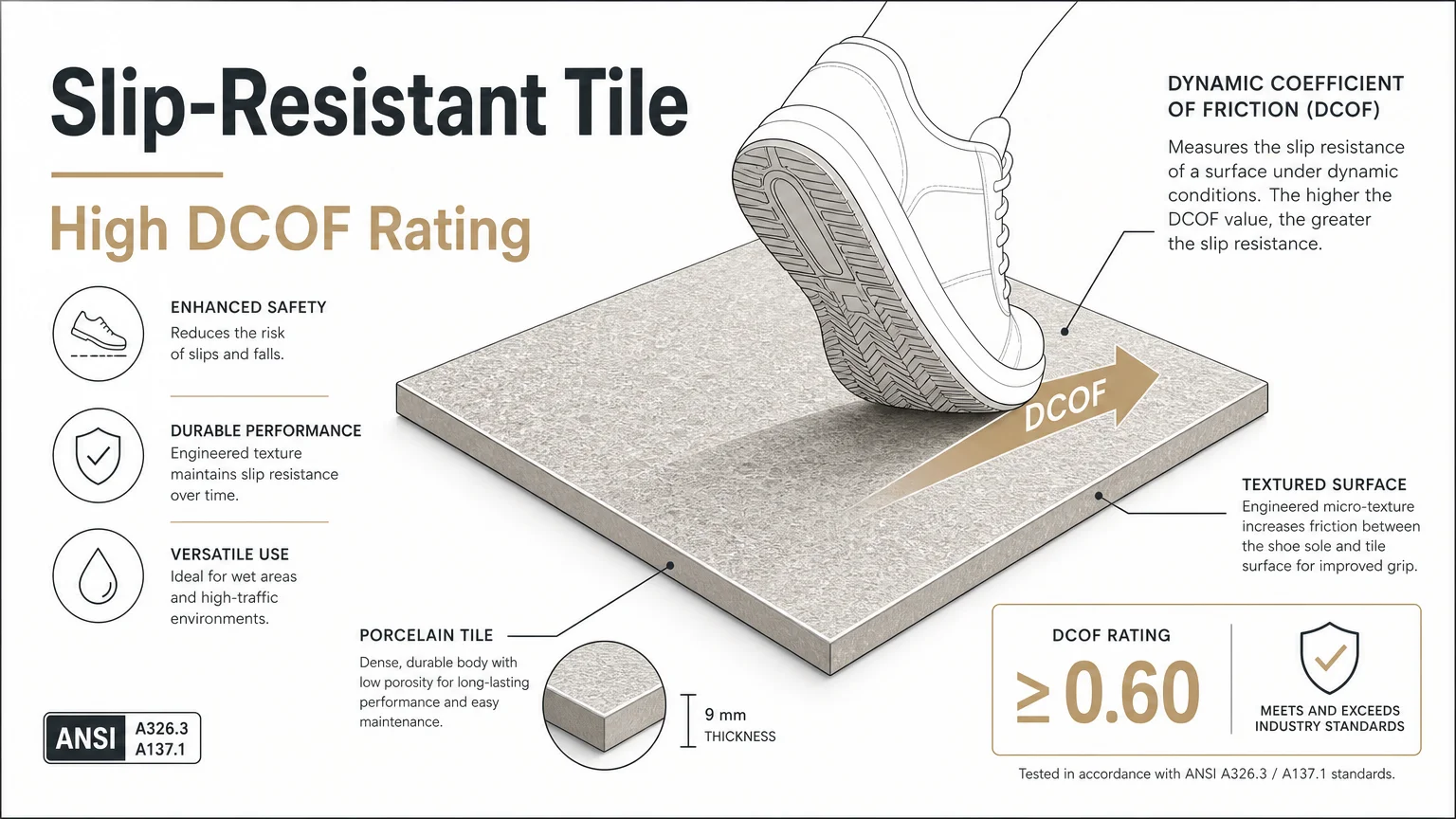
4. Slip-Resistant Flooring with High DCOF Ratings
Kitchen floors frequently endure dropped ice cubes, splashed dishwater, and spilled cooking oil. On standard glossy tiles or heavily polished hardwood, these minor spills instantly transform the floor into a treacherous surface. The Centers for Disease Control and Prevention (CDC) notes that falls are a leading cause of fatal and non-fatal injuries for older adults, making slip-resistant flooring a top priority for any kitchen update.
When selecting flooring, pay close attention to the Dynamic Coefficient of Friction (DCOF). This industry standard measures a floor’s slip resistance when wet. The American National Standards Institute (ANSI) requires hard surface flooring to have a wet DCOF rating of 0.42 or higher for safe use in level interior spaces. Replacing slick surfaces with materials that offer high traction drastically reduces your daily fall risk.
You must also consider transitions between rooms. Thick rugs or elevated thresholds create tripping hazards where the kitchen meets the dining room or hallway. Ensure your new flooring uses flush transition strips so mobility aids, wheelchairs, and shuffling feet can glide over the threshold without catching.
Consider these slip-resistant flooring options for your remodel:
| Flooring Material | Safety Benefits | Maintenance Level |
|---|---|---|
| Textured Porcelain Tile | Offers excellent grip when wet; frequently meets or exceeds the 0.42 DCOF standard. The textured surface catches the sole of your shoe to prevent sliding. | Low maintenance. It resists water damage perfectly, though it requires periodic grout cleaning to prevent discoloration. |
| Luxury Vinyl Plank (LVP) | Provides a softer surface underfoot, which reduces joint fatigue. Most LVP features an embossed, slip-resistant wear layer that mimics the texture of real wood. | Very low maintenance. It is highly water-resistant, durable against dropped items, and easy to wipe clean with a standard damp mop. |
| Cork Flooring | Naturally slip-resistant and highly shock-absorbent. It cushions accidental falls effectively and reduces leg strain during long cooking sessions. | Moderate maintenance. You must quickly wipe up standing water and apply a protective sealant every few years to prevent moisture damage. |
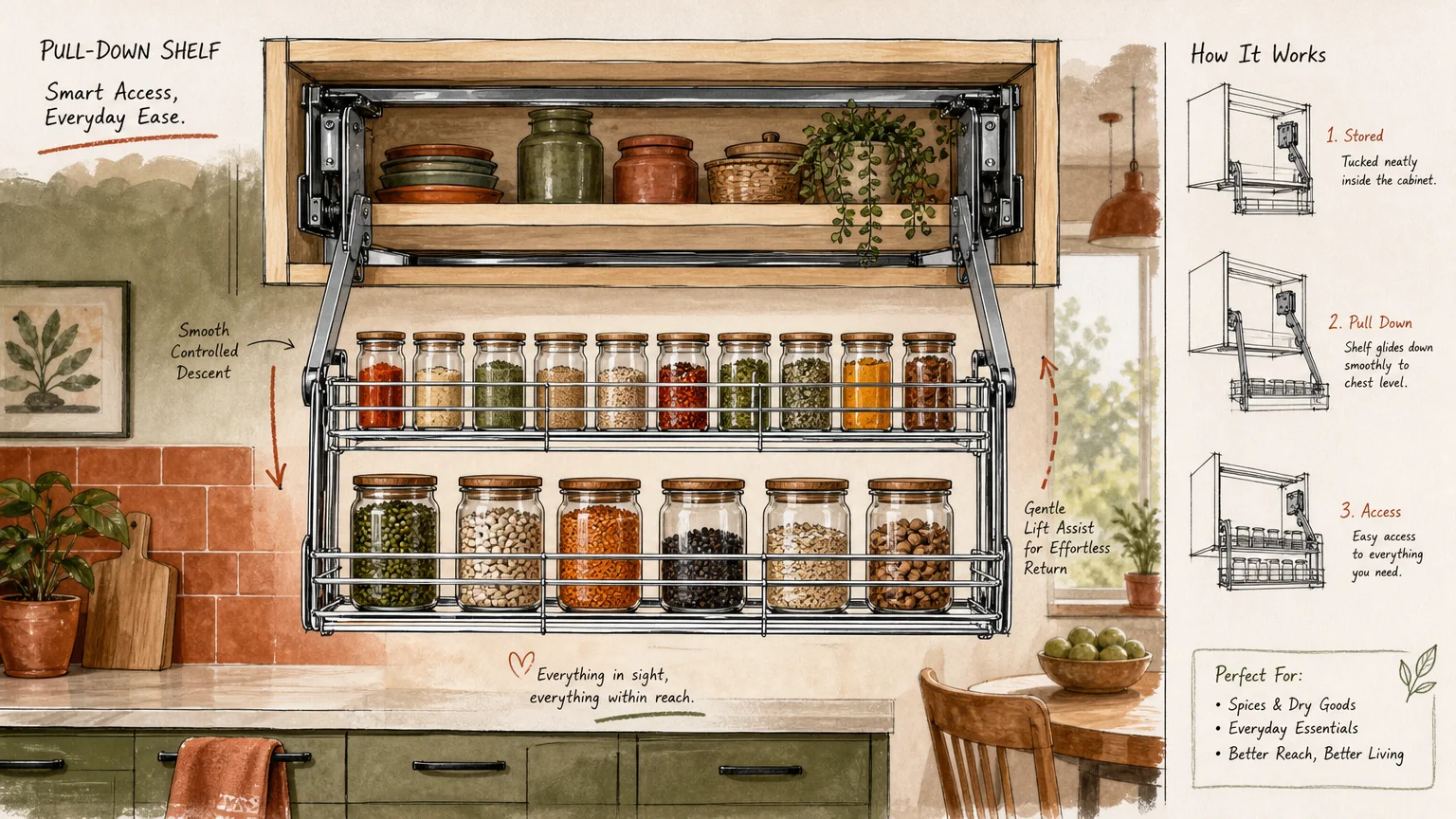
5. Pull-Down Shelving and Deep Drawer Base Cabinets
Traditional kitchen storage forces you into uncomfortable, physically demanding positions. Upper cabinets demand you use step stools to reach the top shelves, which immediately introduces a fall hazard. Standard lower cabinets require you to get on your hands and knees, peering into a dark box to retrieve items hidden in the back. Both scenarios place unnecessary stress on your hips and knees, and getting back up can cause dizzy spells.
Smart kitchen upgrades bring the storage directly to you. Swap out standard lower base cabinets with deep, full-extension pull-out drawers. Drawers allow you to see all your pots, pans, and heavy appliances from above. You simply slide the drawer out and lift the item straight up. Heavy-duty drawer slides can support up to 100 pounds, making them perfect for storing dense cast-iron skillets or heavy stand mixers without the fear of the drawer buckling.
For hard-to-reach corner cabinets, install blind corner pull-outs or multi-tier Lazy Susan hardware. These mechanisms bring items from the deepest recesses of the cabinet right to the front edge.
For upper cabinets, install pull-down shelving systems. These mechanical metal inserts feature a handle that lets you effortlessly pull the entire contents of the top shelf down to counter height. You load or unload your items, and then a gas-assisted piston gently lifts the shelf back up into the cabinet. You can easily retrofit existing cabinets with these hardware inserts. Because you do not need to replace the cabinet boxes themselves, this serves as a highly practical and cost-effective home improvement project that instantly eliminates the need for step stools.
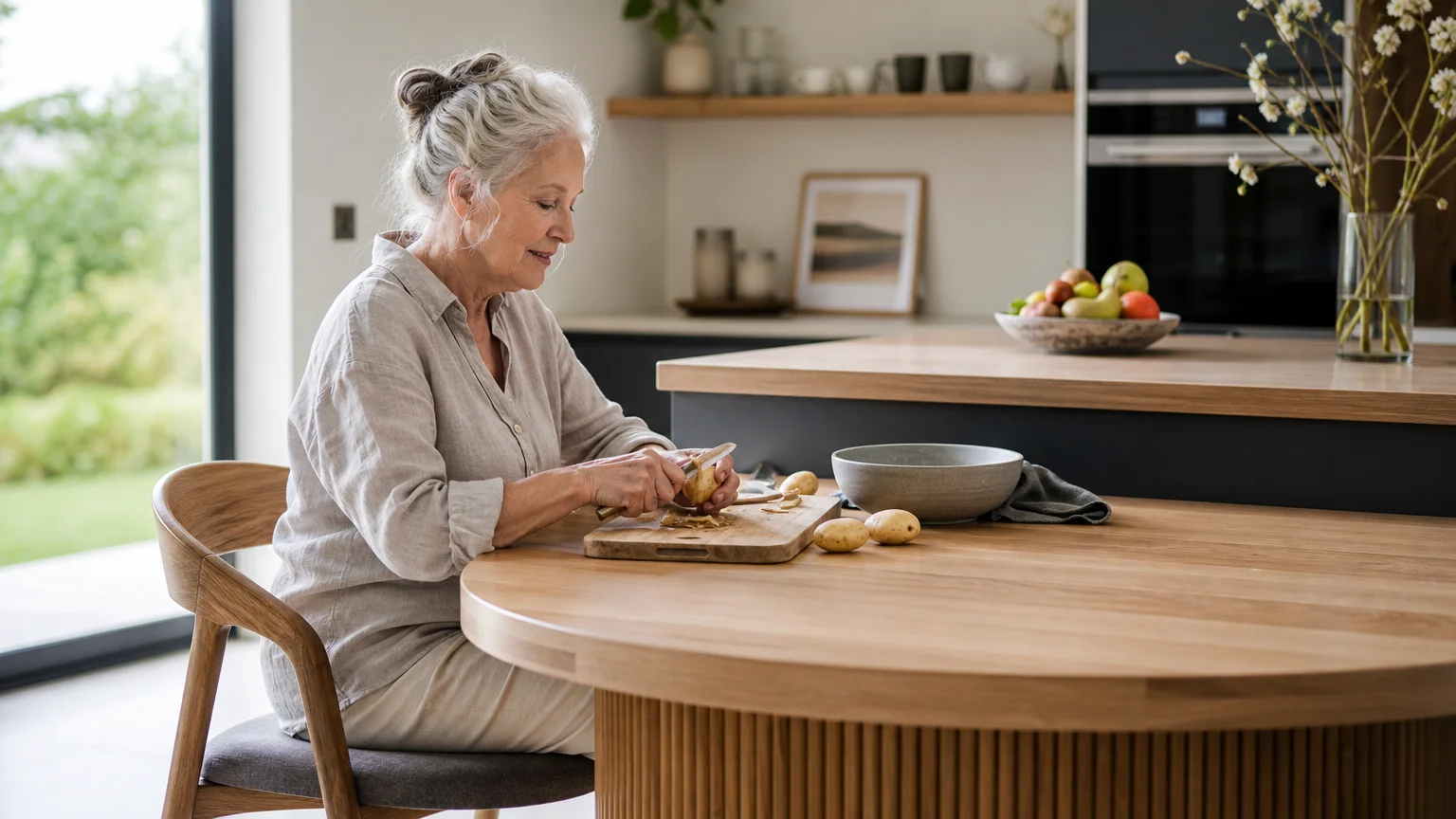
6. Multi-Height Countertops for Seated Meal Prep
Prolonged standing while chopping, mixing, or washing dishes quickly fatigues the lower back, legs, and feet. A well-designed retirement home incorporates multi-height countertops, ensuring you can perform extended kitchen tasks while comfortably seated. Aging in place successfully means recognizing your physical limits and adjusting your environment to support your energy levels.
Standard kitchen countertops sit at 36 inches high. While this height works well for standing tasks, it forces you to awkwardly hike your shoulders if you try to work from a seated position. Lowering a dedicated section of the counter to 30 or 32 inches creates an ergonomic workspace. This drop-down zone allows you to sit comfortably in a standard dining chair or pull a wheelchair directly underneath the surface without bumping your knees.
For true wheelchair accessibility, ensure the open space beneath the lowered counter provides at least 27 inches of vertical knee clearance, 30 inches of width, and 19 inches of depth. To enhance safety, insulate any exposed hot water pipes underneath the sink to prevent accidental leg burns.
Place this lowered section near a primary prep area or adjacent to a shallow sink. A shallow sink bowl—around 5 to 6 inches deep—prevents you from having to lean far forward and reach down to wash dishes, saving your lower back from serious strain. Additionally, choose countertop colors that contrast cleanly with the floor color. Distinct color separation helps older eyes accurately judge depth and edges, preventing misjudged reaches and dropped plates. If you want further guidance on modifying your layout for accessibility, the AARP HomeFit Guide provides excellent room-by-room recommendations and structural dimensions for aging gracefully.
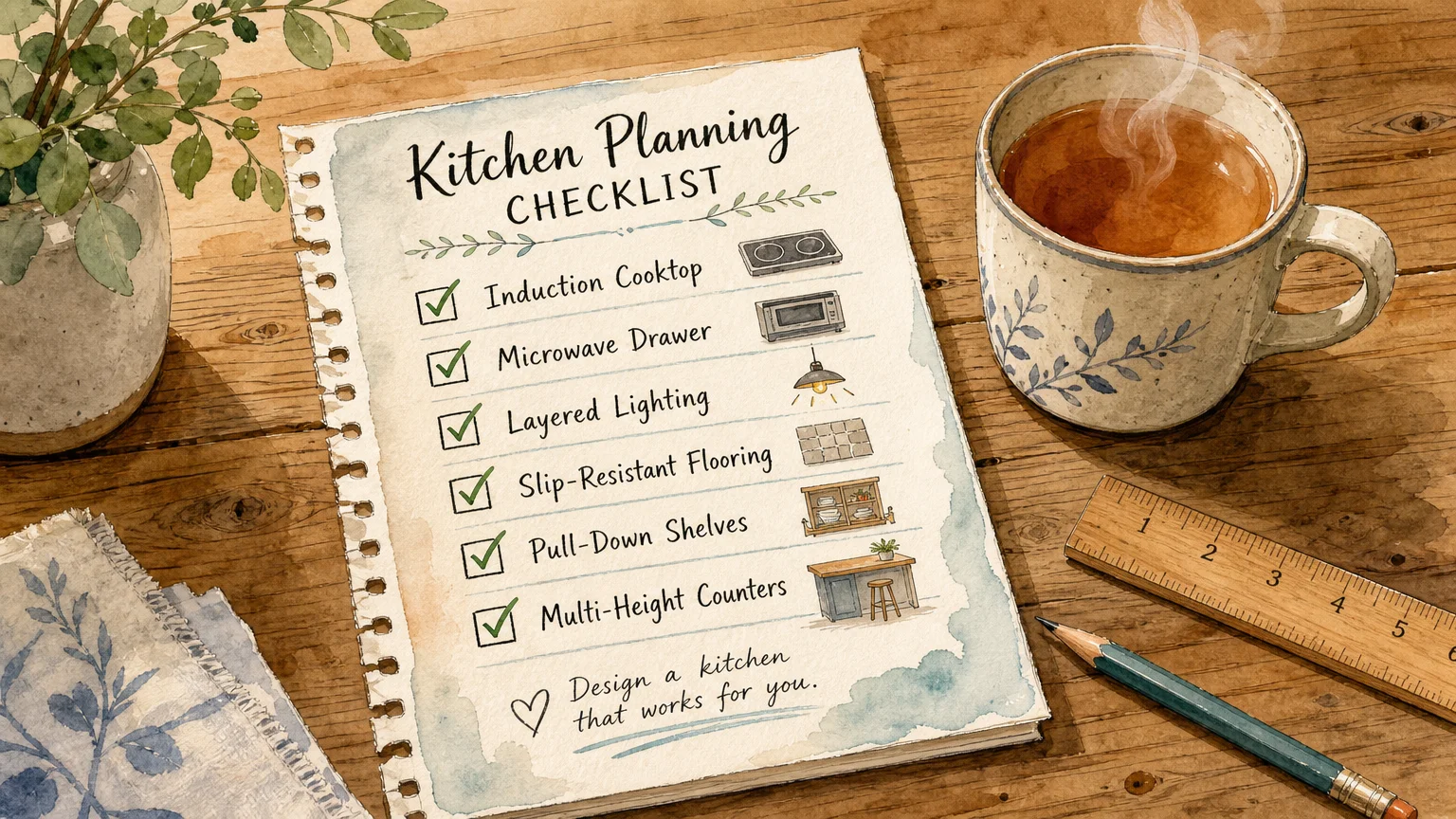
Take Action: Your Next Step for a Safer Kitchen
You do not need to gut your entire kitchen to start enjoying a safer, more functional space. Begin by tackling the most immediate hazards. Take ten minutes today to assess your kitchen’s lighting and storage configuration. Order bright, warm-white LED bulbs to improve your visibility, and relocate your heaviest pots, pans, and daily appliances to counter height or into an easily accessible lower drawer. Clear away any loose throw rugs near the sink that might cause a tripping hazard. Making these small, targeted adjustments today instantly reduces your daily physical strain and paves the way for a more comfortable, independent retirement in the home you love.