You can revive dingy upholstery, erase stubborn fabric sofa stains, and refresh your living space without hiring expensive contractors. Everyday household ingredients quickly lift ground-in dirt while neutralizing lingering odors.
Regular upholstery cleaning at home also eliminates dust mites and common irritants that collect in porous fibers. Simple maintenance protects your family and extends the lifespan of your favorite furniture pieces.
Before reaching for any liquid, you need the right technique for your exact material. These proven methods will help you clean fabric furniture safely, thoroughly, and effortlessly.
Check Your Furniture Care Tag First
Fabric manufacturers place care labels under seat cushions or beneath the bottom dust cover. These tags tell you precisely which cleaning agents protect the material from permanent water rings or fiber damage.
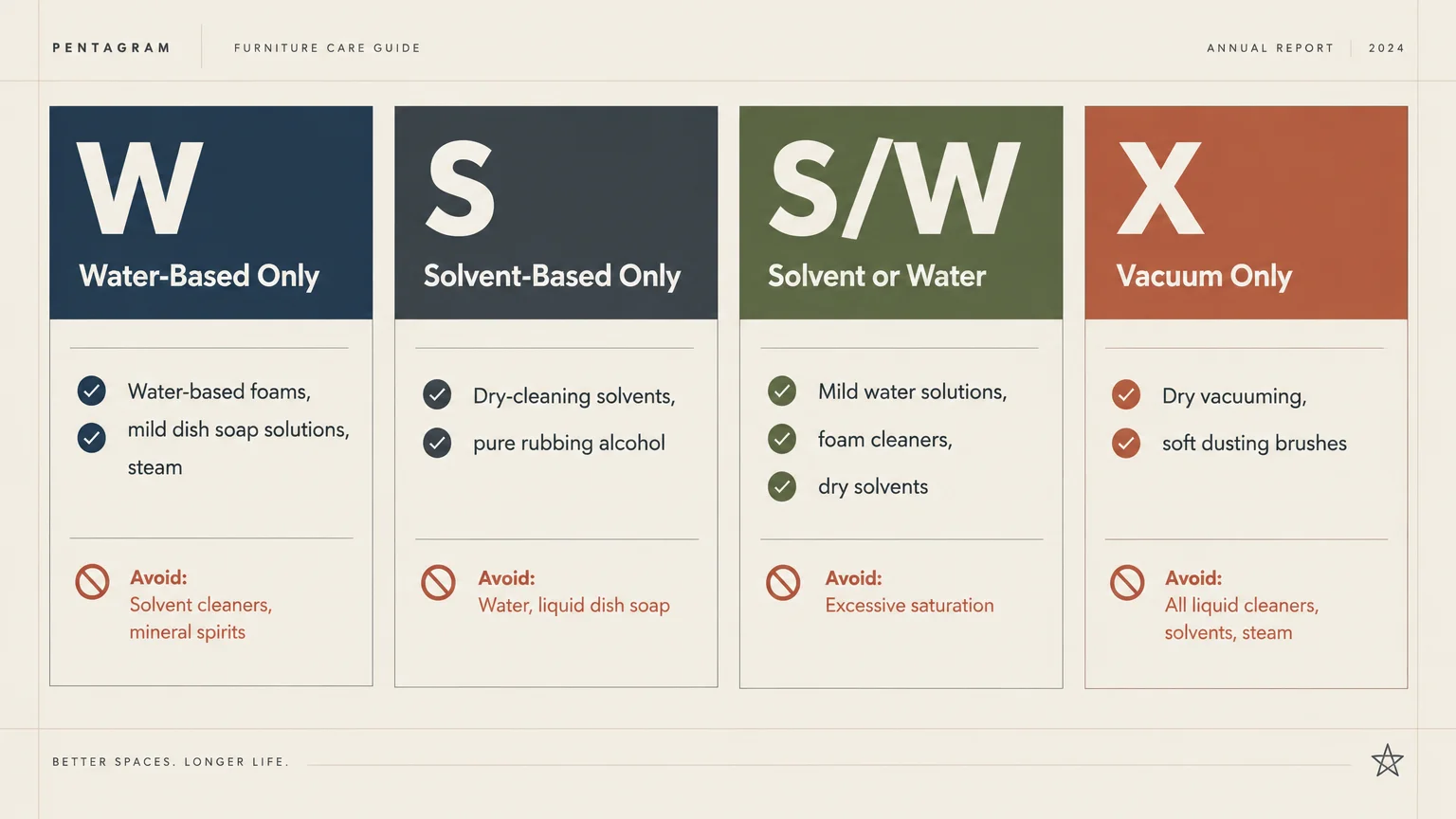
Following industry guidance from the Institute of Inspection Cleaning and Restoration Certification (IICRC) preserves fabric integrity. Always verify your sofa code before applying moisture to upholstery.
| Cleaning Code | Meaning | Safe Cleaning Agents | What to Avoid |
|---|---|---|---|
| W | Water-Based Only | Water-based foams, mild dish soap solutions, steam | Solvent cleaners, mineral spirits |
| S | Solvent-Based Only | Dry-cleaning solvents, pure rubbing alcohol | Water, liquid dish soap, tap water rinses |
| S/W | Solvent or Water | Mild water solutions, foam cleaners, dry solvents | Excessive saturation, abrasive scrubbing |
| X | Vacuum Only | Dry vacuuming, soft dusting brushes | All liquid cleaners, solvents, steam |
If your furniture lacks a tag, treat it as solvent-only or vacuum-only until you test a hidden patch. Testing the underside of a skirt prevents disastrous discoloration on visible cushions.
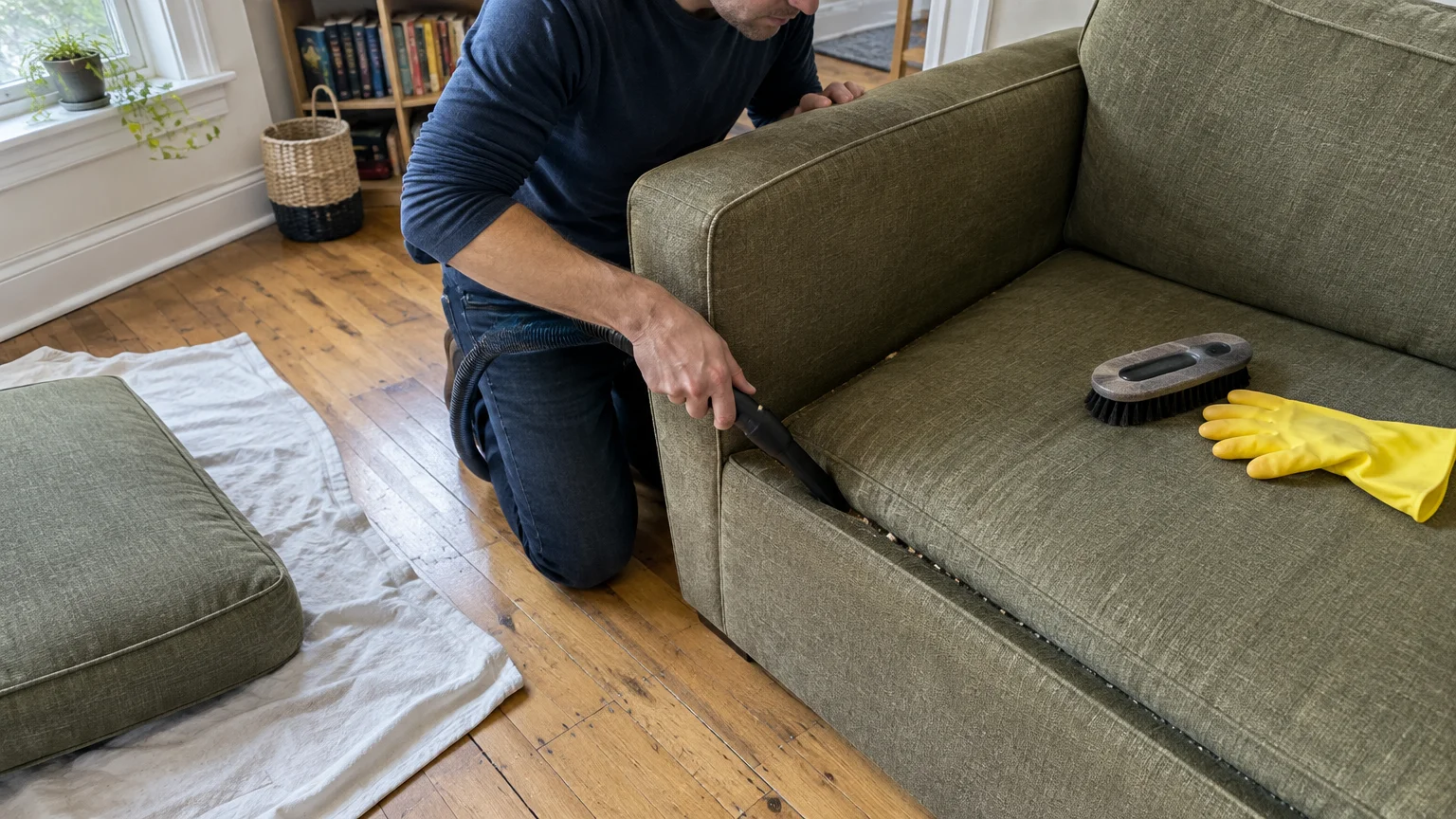
01 Deep Vacuuming with Bristle and Crevice Tools
Dry extraction removes loose debris before liquid can turn settled dust into permanent mud. Skipping this initial dry pass drives grime deeper into the cushion foam beneath your fabric.
According to the Centers for Disease Control and Prevention (CDC), upholstered furniture harbors dust mites and allergens that worsen indoor air quality. Thorough vacuuming immediately reduces these hidden health triggers.
Supplies Needed
- Vacuum cleaner with strong suction
- Narrow crevice tool
- Soft bristle upholstery attachment
- Rubber dishwashing glove for stubborn hair
Step-by-Step Instructions
- Remove every loose cushion and set them aside on a clean sheet.
- Run your crevice tool along the interior seams, button tufts, and deep corners.
- Fit your upholstery brush and glide across the seat deck in slow, overlapping rows.
- Wipe the fabric with a damp rubber glove to pull up stubborn pet fur that vacuum bristles missed.
- Vacuum both sides of the detached cushions before placing them back on the frame.
Vacuum high-traffic sofas every two weeks to prevent gritty dirt from slicing fragile woven threads. Consistent dry maintenance cuts your need for wet cleaning in half.
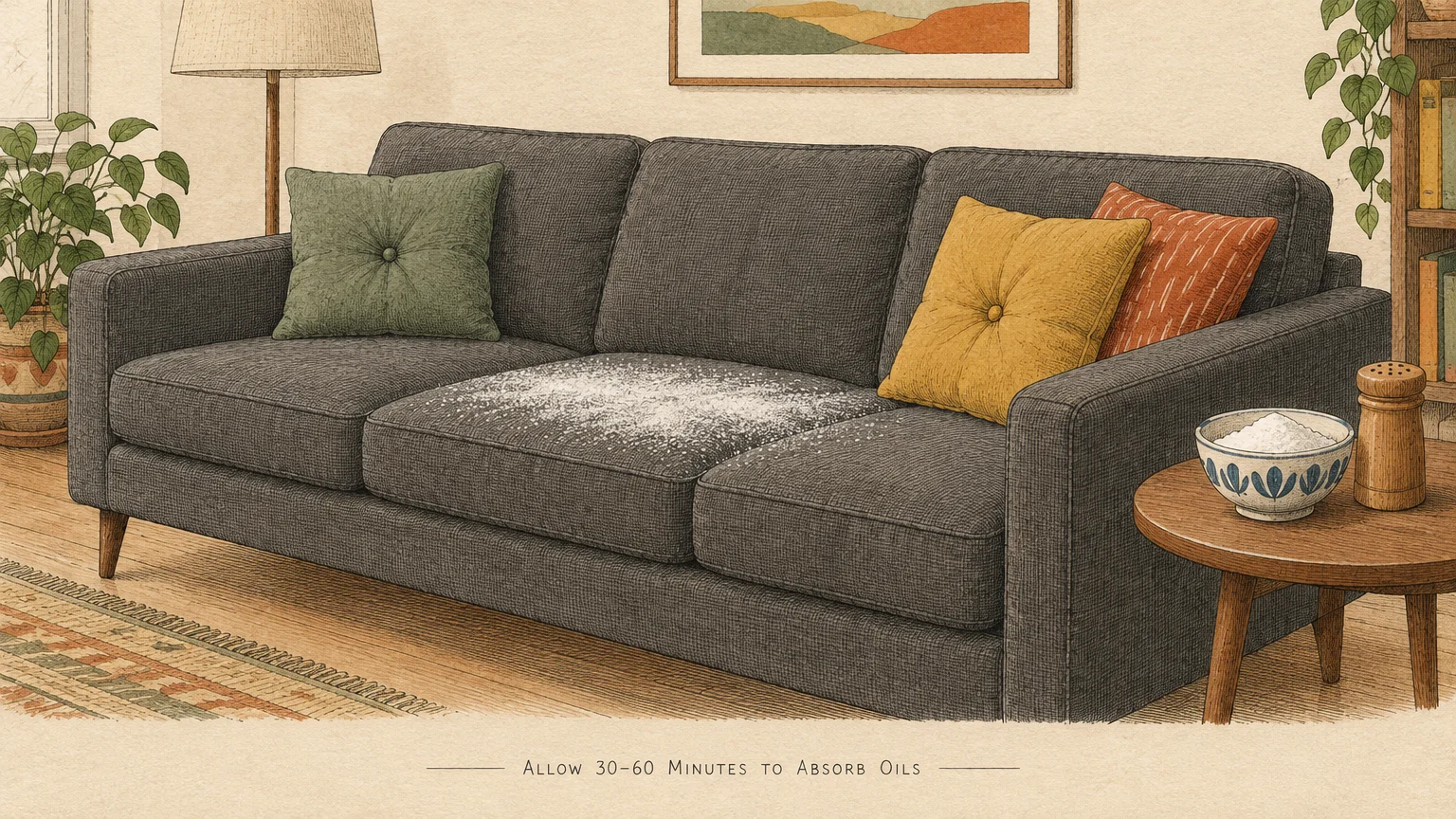
02 Dry Baking Soda Treatment for Odors and Greasy Oils
Baking soda works wonders for refreshing musty couches that carry lingering food aromas or pet smells. Its alkaline nature neutralizes acidic odors rather than merely covering them with artificial fragrance.
This dry powder also draws out body oils from armrests and headrests without soaking delicate fibers. It remains one of the safest couch cleaning tips for households with sensitive skin.
Supplies Needed
- One box of pure baking soda
- Dry kitchen sifter or mesh strainer
- Soft-bristle nylon brush
- Vacuum cleaner with a clean dust cup or bag
Step-by-Step Instructions
- Sprinkle baking soda through a mesh sifter across the entire sofa surface.
- Gently massage the powder into the weave using your dry nylon brush.
- Let the powder sit undisturbed for 45 to 60 minutes to draw out trapped odors.
- Vacuum the fabric thoroughly using the upholstery attachment, moving in a crisscross pattern.
For stubborn oil residues from pets or snacks, mix equal parts baking soda and cornstarch before dusting. Cornstarch absorbs surface oils, while baking soda handles deeper odor elimination.
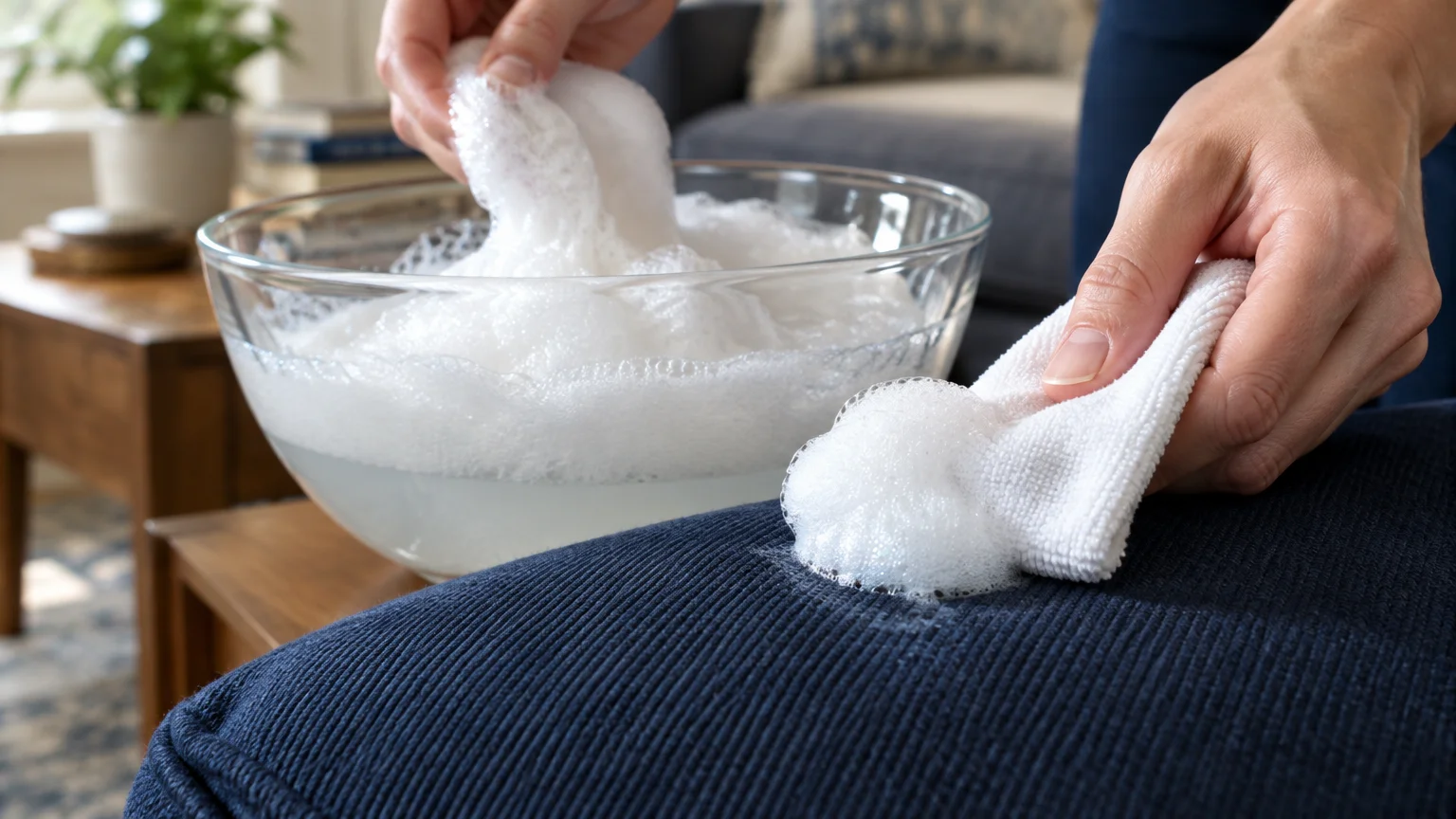
03 Mild Dish Soap Foam for General Water-Safe Spots
Over-wetting cushion foam causes mildew growth and persistent musty smells inside the couch core. Applying whipped soap suds instead of liquid water cleans the surface while keeping the interior cushion bone dry.
Choosing cleaners certified under the EPA Safer Choice Program ensures you use gentle ingredients that protect indoor air. A clear, fragrance-free dish detergent works best for this technique.
Supplies Needed
- One teaspoon of clear liquid dish soap
- One cup of warm distilled water
- Hand whisk or electric hand mixer
- Two white microfiber cloths
Step-by-Step Instructions
- Whisk the dish soap and warm water together in a medium bowl until stiff suds form.
- Dip your dry microfiber cloth into the dry foam layer, leaving the liquid behind.
- Dab the suds gently onto stained areas, working from the outside edge toward the center.
- Moisten a second clean cloth with plain distilled water and blot away all soap residue.
- Press a dry towel firmly over the spot to wick away remaining moisture.
Always work from the outer edges inward when treating localized fabric sofa stains. This directional blotting prevents the stain boundary from expanding outward into an obvious ring.
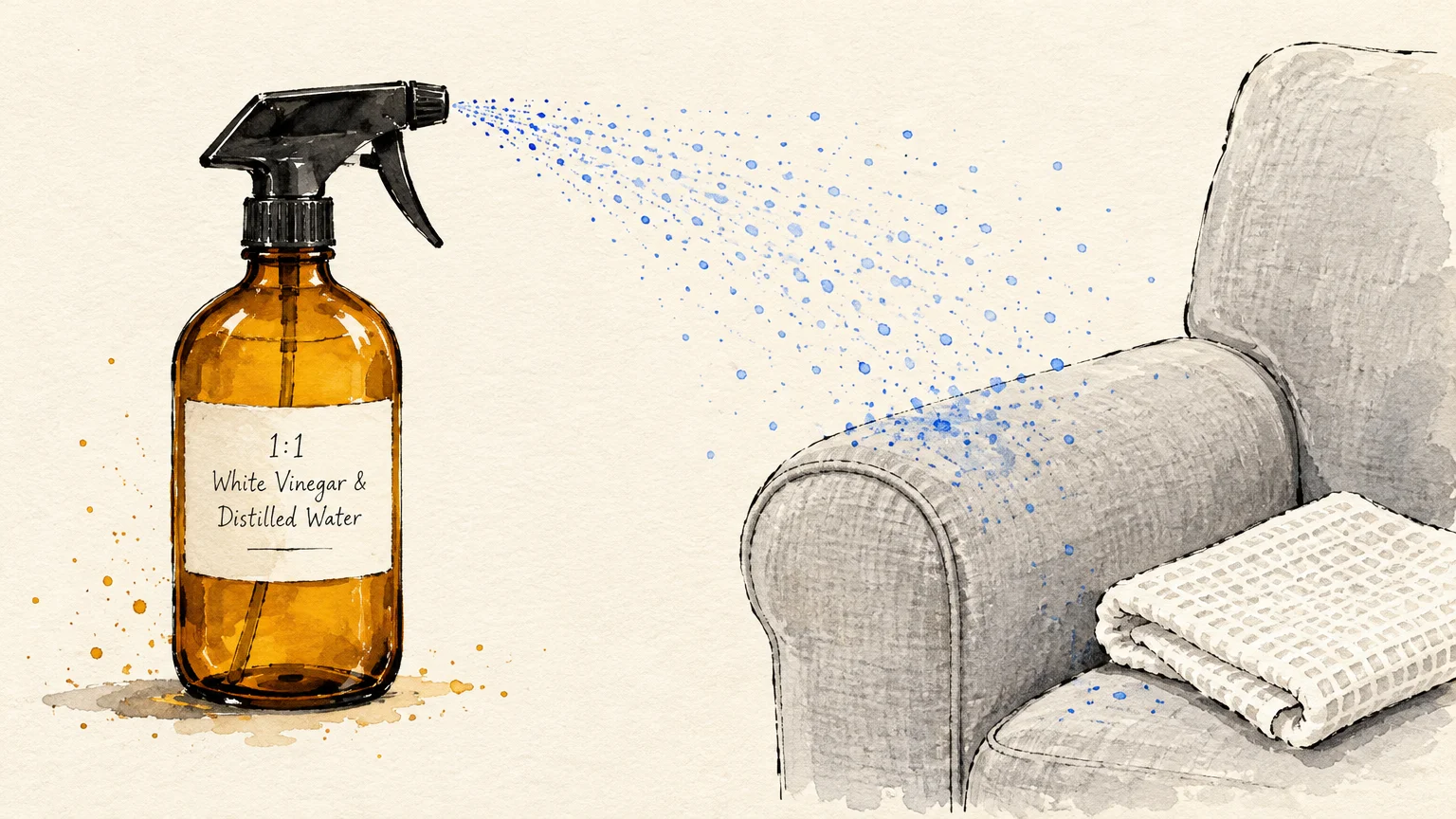
04 Diluted White Vinegar Spray for Surface Dinginess
White distilled vinegar cuts through greasy residues, dissolves light mineral scale, and brightens dull synthetic fabrics. Its mild acidity breaks the bonds holding dirt particles to individual woven strands.
The characteristic sour vinegar smell dissipates completely once the fabric dries. This natural mixture works exceptionally well on polyester, nylon, and cotton-blend sofas bearing code W or W/S.
Supplies Needed
- Half a cup of distilled white vinegar
- One cup of distilled water
- Fine mist spray bottle
- Clean white cotton cloths
Step-by-Step Instructions
- Combine the vinegar and distilled water inside your spray bottle.
- Set the nozzle to the finest mist setting to avoid drenching the upholstery.
- Lightly spritz the soiled area from twelve inches away, dampening only the surface.
- Blot the fabric using a white cotton cloth, rotating to clean sections as grime transfers.
- Open nearby windows or turn on a ceiling fan to dry the area rapidly.
Never substitute cider vinegar or dark vinegars for white distilled vinegar on upholstery. Dark vinegars contain natural plant tannins that permanently stain light-colored furniture fibers.
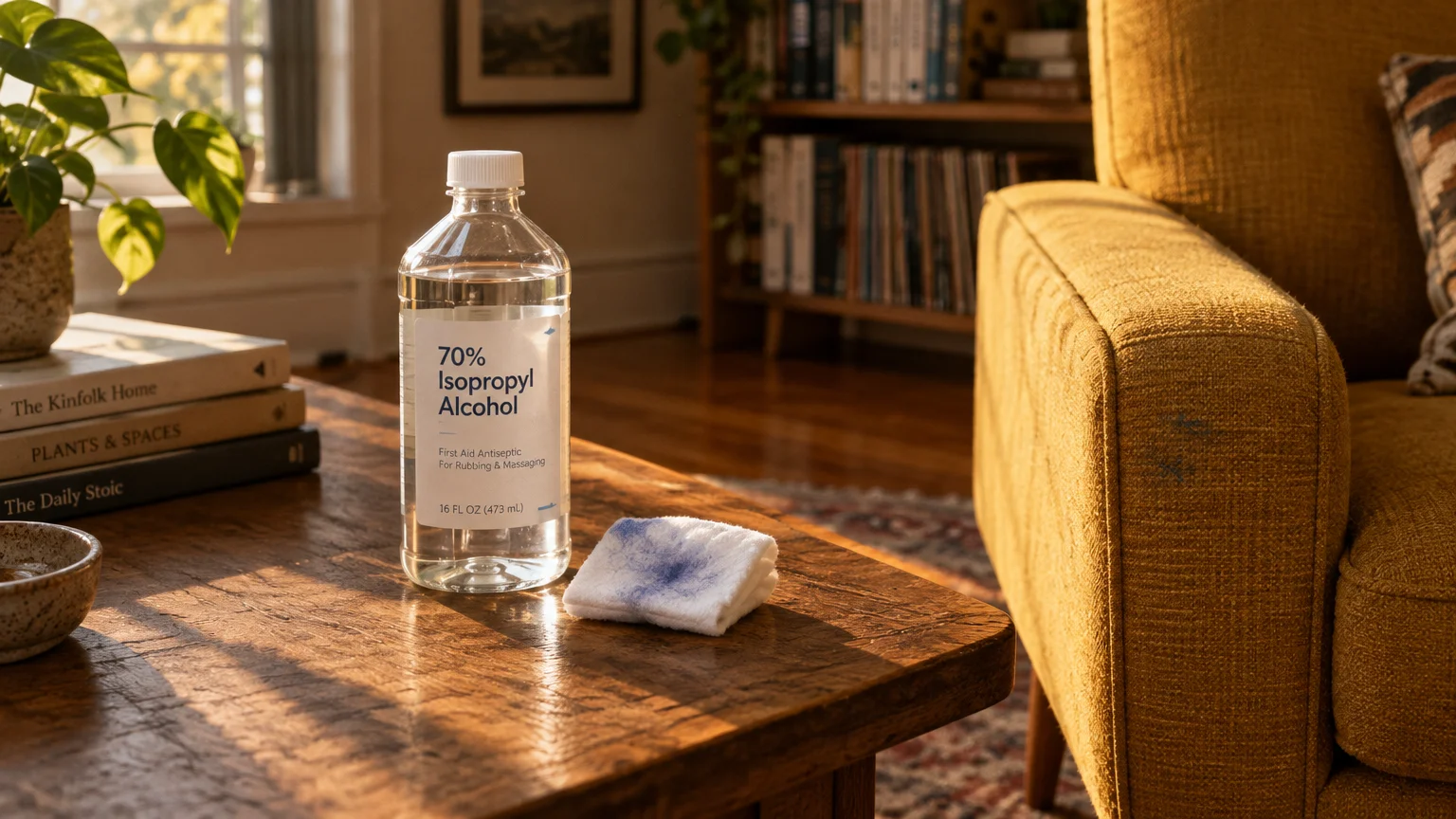
05 Isopropyl Rubbing Alcohol for Solvent-Safe Fabrics
Furniture marked with an S code requires dry solvents because tap water leaves dark, permanent mineral halos. High-purity isopropyl alcohol dissolves stubborn grease, ink, and cosmetic spots while evaporating almost instantly.
Microfiber couches respond remarkably well to this solvent-cleaning technique. Because alcohol leaves no water behind, it prevents the stiff, hardened texture that water-based cleaners cause on microfiber.
Supplies Needed
- Rubbing alcohol (70% or 91% isopropyl concentration)
- Dedicated plastic spray bottle
- Clean white washcloths or white cleaning sponges
- Clean, stiff-bristle scrub brush
Step-by-Step Instructions
- Pour pure isopropyl alcohol into your spray bottle without diluting it with water.
- Mist a moderate amount onto the stained patch until damp.
- Rub briskly with your white washcloth; dirt will transfer quickly onto the rag.
- Allow the alcohol to air dry completely, which typically takes under twenty minutes.
- Brush the dry fabric in small circular motions to soften and fluff the flattened nap.
Always open windows and extinguish any nearby open flames before spraying alcohol solvents. Good ventilation protects your lungs and eliminates any flammable vapor buildup indoors.
06 Targeted Bio-Enzyme Cleaner for Organic Spills
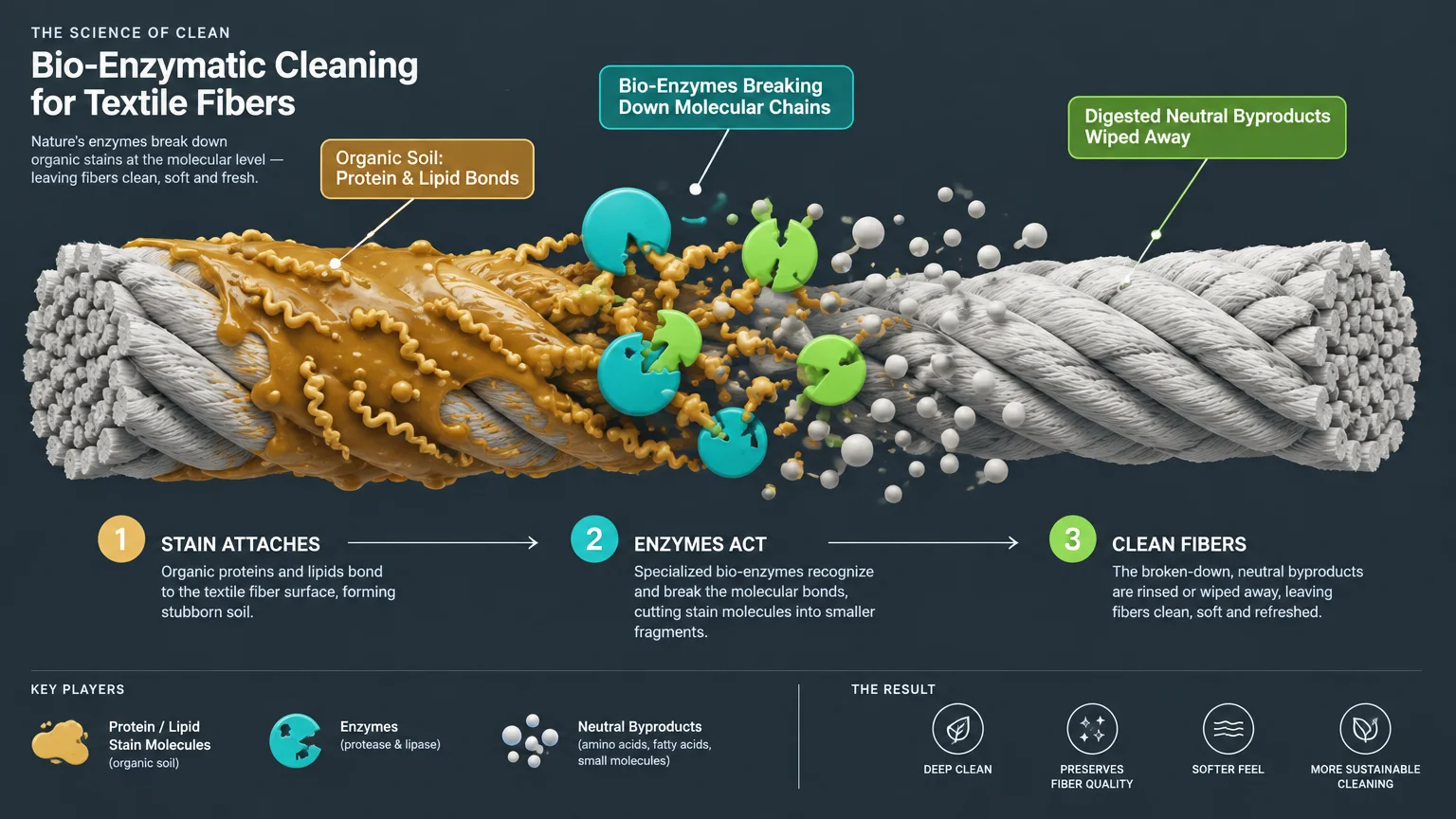
Spills from dairy, urine, pet messes, and vomit contain complex organic proteins and uric acid crystals. Traditional soaps only mask these messes, leaving behind hidden scent markers that attract pets back to the same spot.
Bio-enzymatic formulas consume the organic compounds entirely, breaking proteins down into harmless water and carbon dioxide. They provide the most reliable solution for older adults managing pet accidents on home furniture.
Supplies Needed
- Commercial bio-enzymatic upholstery or pet stain remover
- Absorbent paper towels or white cotton rags
- Plastic wrap to slow evaporation
- Heavy book or weight
Step-by-Step Instructions
- Soak up fresh liquid spills immediately using layered paper towels.
- Spray the enzymatic solution generously enough to reach the depth of the initial spill.
- Cover the damp patch loosely with plastic wrap to keep the active enzymes moist.
- Leave the wrap in place for several hours so the live enzymes digest all organic matter.
- Remove the cover, blot with a dry towel, and let the cushion air dry naturally.
Never apply hot water or heat guns over organic stains treated with enzyme solutions. Excessive heat denatures the beneficial biological proteins, rendering the enzyme formula completely ineffective.
07 Low-Moisture Steam Cleaning for Deep Sanitization
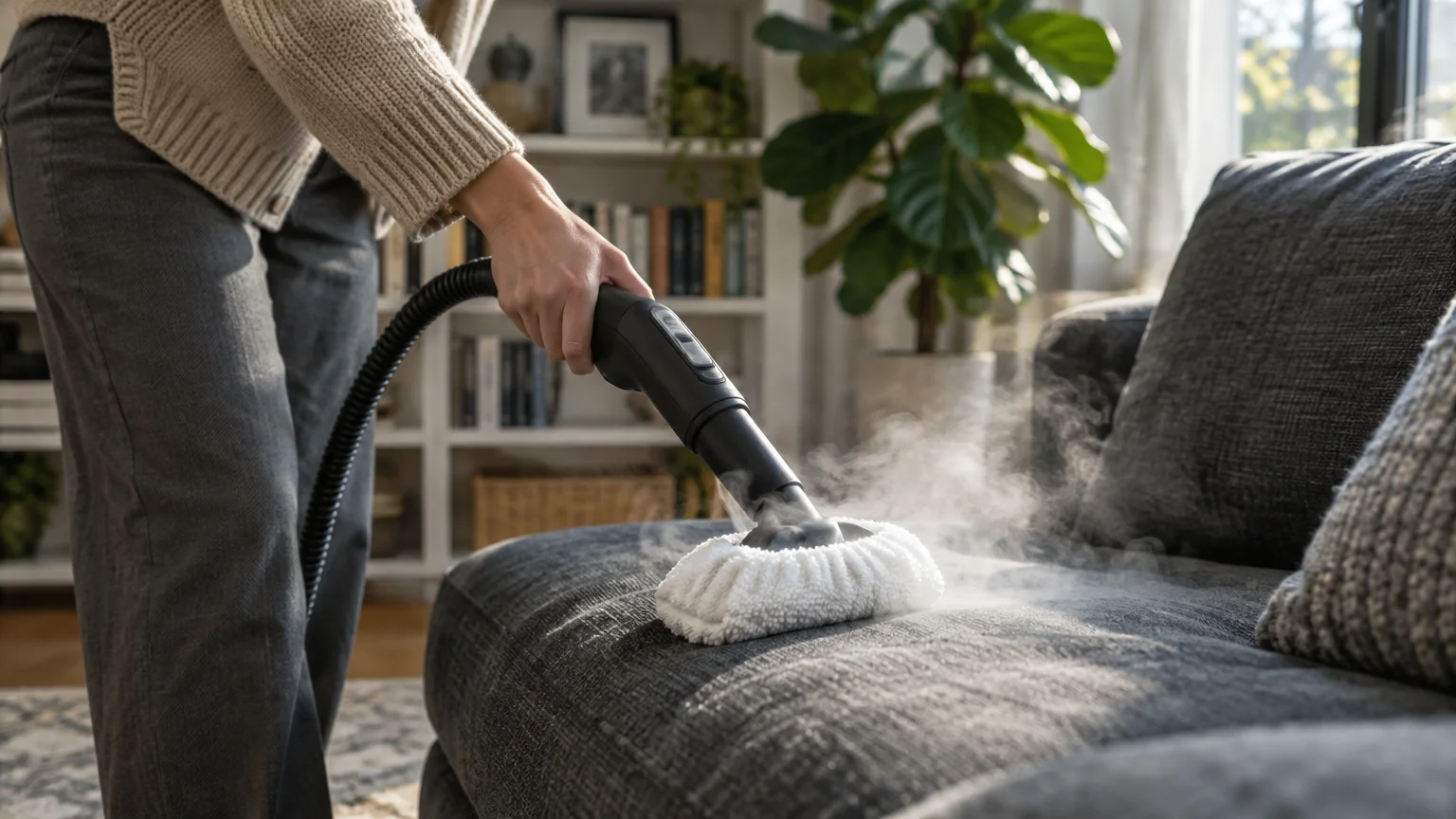
High-temperature steam loosens embedded body oils, lifts compact dirt, and sanitizes upholstered surfaces without harsh chemicals. It penetrates microscopic fabric grooves that standard cloths simply skip over.
Steam works best on code W or durable synthetic furniture like polyester and poly-blends. Always check manufacturer warranties before steaming, as intense heat can occasionally melt delicate synthetic adhesives.
Supplies Needed
- Handheld or canister home steam cleaner with upholstery pad attachment
- Microfiber bonnet cover for the steam head
- Distilled water for the steam reservoir
- Floor fan to speed up drying
Step-by-Step Instructions
- Vacuum the couch thoroughly to ensure zero surface debris remains on the fabric.
- Fill the water tank with pure distilled water to eliminate mineral clogs inside the machine.
- Secure a clean microfiber bonnet over the wide upholstery attachment head.
- Glide the steam head smoothly across the fabric in continuous, linear passes without lingering.
- Direct a high-velocity box fan toward the damp cushions to guarantee swift evaporation.
Keep the steamer head moving constantly across the material to avoid heat concentration. Holding hot steam in one spot for more than three seconds can warp delicate synthetic weaves.
08 Portable Extraction Cleaning for Deep-Clean Overhauls
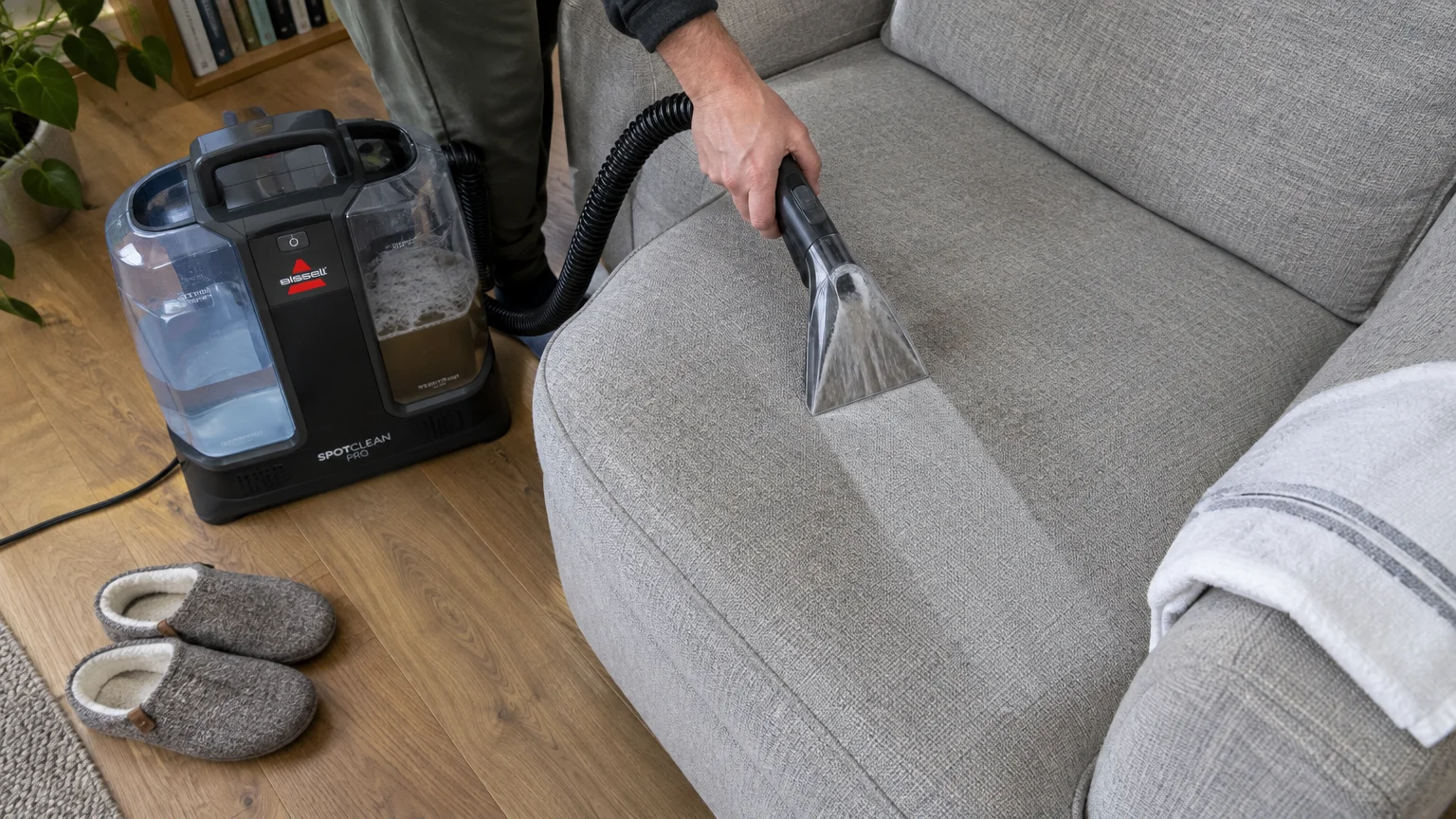
Portable spot-extraction machines inject water-based cleaning solution into fabric and instantly pull it back out with heavy suction. This process removes dirty liquid before it settles deep inside your cushions.
Extraction provides an unmatched deep clean for high-traffic family sectionals carrying years of grime. It restores high-wear areas, such as lower seat edges and armrest fronts, back to factory freshness.
Supplies Needed
- Portable carpet and upholstery extraction unit
- Low-foaming upholstery shampoo matched to your fabric code
- Warm tap water (do not use boiling water)
- Clean measuring cup
Step-by-Step Instructions
- Mix the low-foam shampoo with warm water in the machine’s clean tank per bottle directions.
- Press the extraction tool firmly against your upholstery and pull the solution trigger while drawing backward.
- Release the spray trigger and make two slow “dry passes” over the exact same path to suck out moisture.
- Check the recovered liquid tank; repeat the passes until the extracted water runs clear.
- Elevate the cushions on their ends in an A-frame shape to maximize air contact around each side.
Avoid excessive trigger pulls during extraction passes to prevent saturating the interior foam cushions. Two dry suction passes for every wet spray pass keeps cushion cores dry and prevents mildew.
09 Plain White Shaving Foam for Emergency Spot Treatment
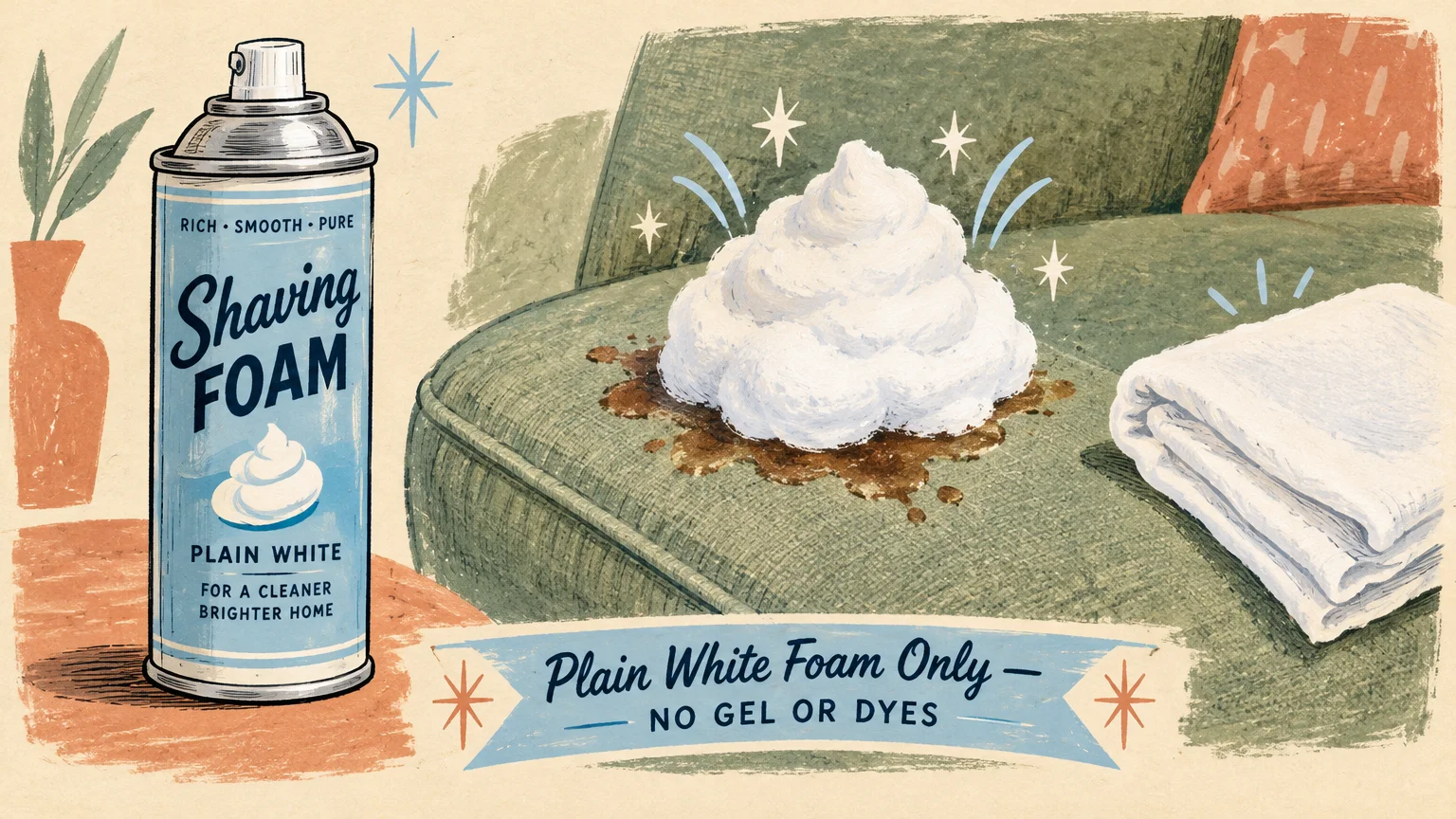
When unexpected coffee or grease spots strike and your cleaning cabinet is bare, reach for standard shaving cream. Shaving cream contains gentle foaming surfactants that lift oils without running down into the cushion.
This quick household remedy functions like a dense, pre-whipped mild soap foam. Use only plain white shaving foam—never colored gel formulations, which contain artificial dyes that stain light fabrics.
Supplies Needed
- One can of classic white foaming shaving cream
- Dull butter knife or clean plastic spoon
- Two white washcloths
- Small bowl of distilled water
Step-by-Step Instructions
- Squirt a dollop of white shaving cream directly onto the stained fabric spot.
- Smooth the foam flat across the surface using the back of your spoon or butter knife.
- Let the foam sit for ten minutes while the surfactants dissolve surface oils.
- Scrape the excess cream away gently with your spoon edge, wiping it onto a paper towel.
- Dampen your washcloth with distilled water and blot the area firmly to pull out remaining residue.
Finish by pressing a dry folded cloth over the cleaned area to soak up residual water. Shaving cream leaves cushions remarkably soft once fully dry, with zero crusty detergent residue.
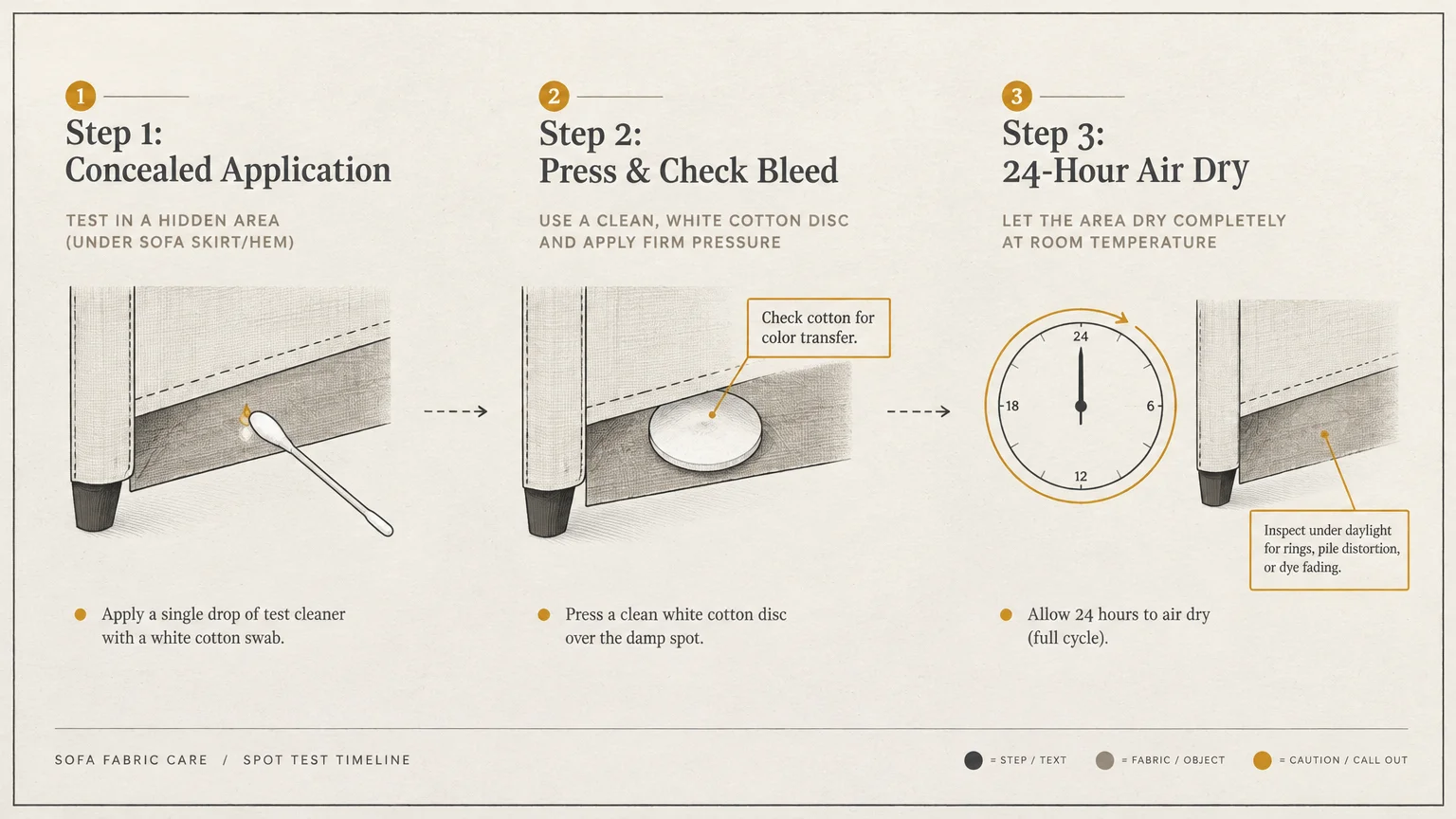
The 24-Hour Fabric Spot-Testing Protocol
Never apply a new cleaning formula directly to the center of a couch cushion without testing first. Even safe solutions can react unexpectedly with specific textile dyes or delicate natural weaves.
Follow this quick protocol on a hidden scrap of fabric before tackling obvious stains:
- Find a hidden spot: Locate the underside of an attached skirt, inner zipper flap, or back base edge.
- Apply a tiny dab: Place two drops of your chosen cleaner onto the hidden fabric.
- Press with white cloth: Hold a clean white rag firmly against the damp patch for twenty seconds.
- Check for color bleed: If any dye transfers onto the white rag, stop immediately and seek professional help.
- Wait 24 hours: Let the patch dry completely, then inspect under natural light for fading or texture stiffness.
If the dry test area matches the surrounding material in color and softness, proceed with confidence. This simple five-minute precaution prevents hundreds of dollars in irreversible furniture damage.
Best Practices to Prevent Water Rings and Fabric Damage
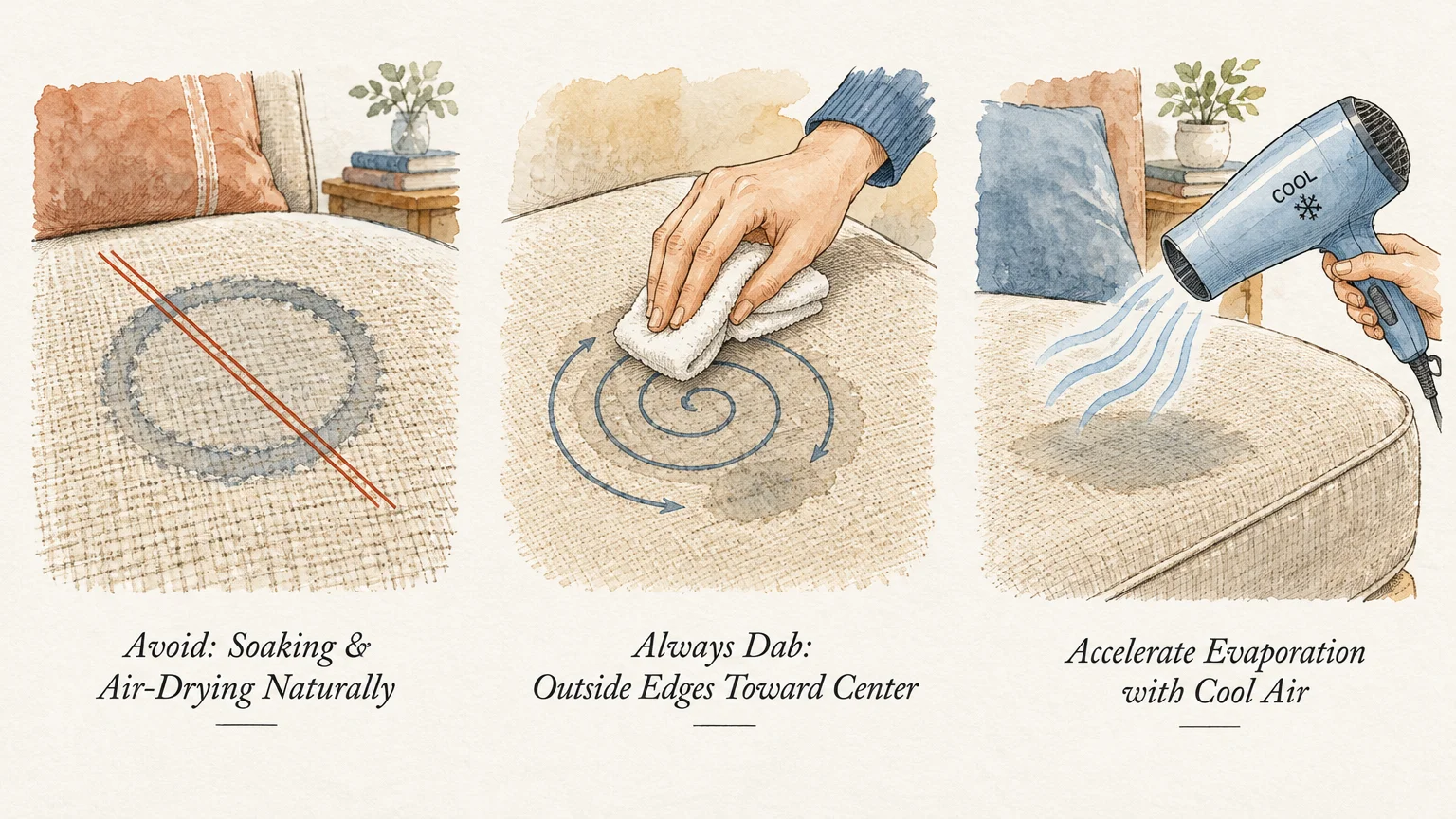
Water rings happen when mineral-rich tap water dries unevenly, pushing dirt and dissolved minerals outward toward dry fibers. Using distilled water for all water-safe cleaning projects eliminates this common headache entirely.
Always feather the moisture boundary outward when working on localized stains instead of stopping abruptly. Gently blending the damp edge into surrounding dry material ensures a seamless look when the fabric dries.
Never scrub fabric surfaces with aggressive circular pressure, which frays twisted yarns and causes permanent piling. Always use gentle, linear blotting strokes from the outside edge toward the center of the spot.
Speed up room air circulation with oscillating fans immediately after completing any wet cleaning method. Achieving full fabric dryness within four hours keeps cushions sanitary and completely free from mildew smells.
Your Practical Next Step
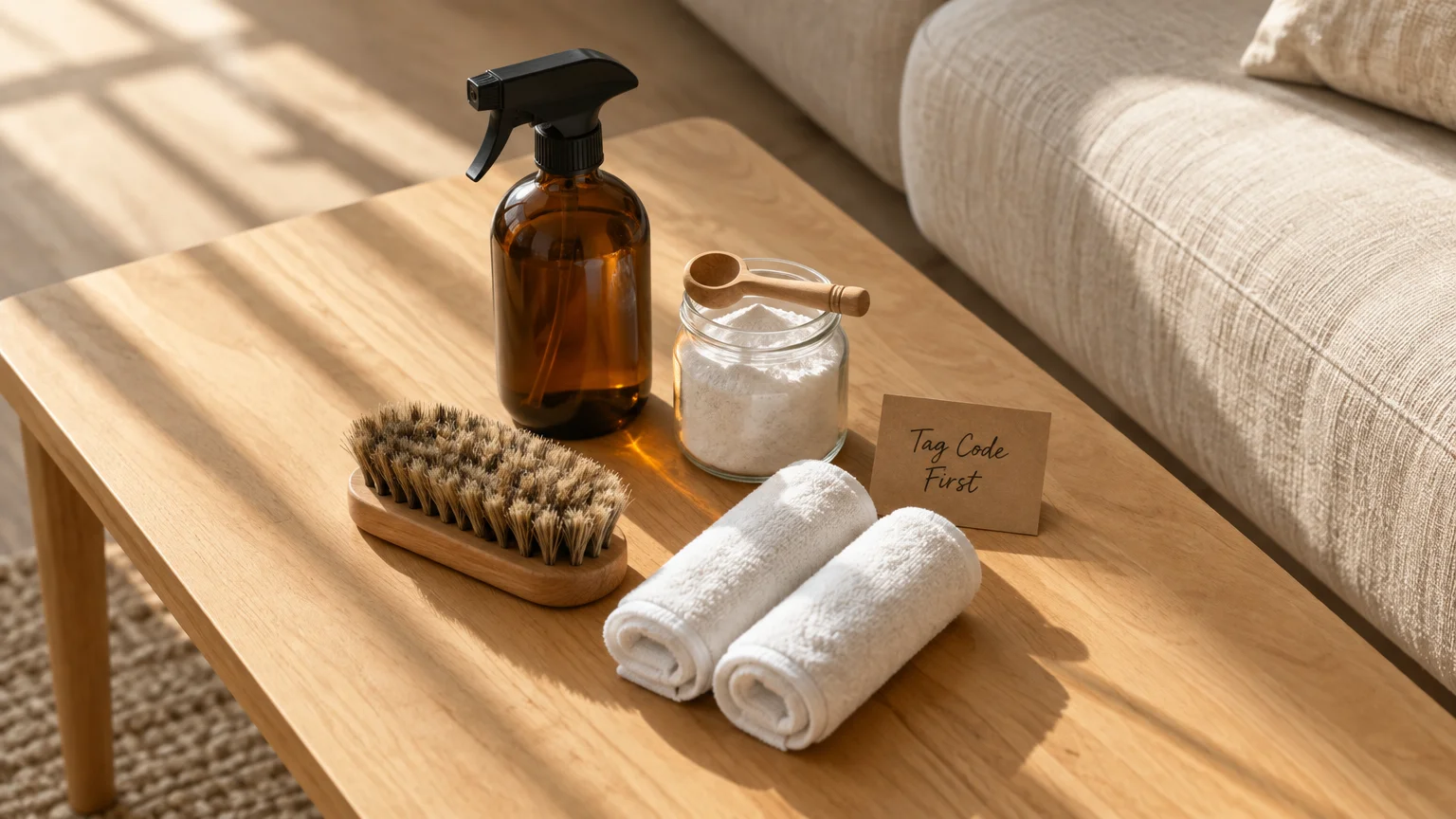
Check the fabric care tag on your couch right now so you know whether it requires water-based or solvent-based care. Stash a small cleaning kit with white microfiber cloths, pure baking soda, and your fabric-safe cleaner nearby for instant spill protection.