You can restore the brilliant shine on your refrigerator and dishwasher without causing costly surface damage. Knowing which common stainless steel cleaning errors to avoid keeps your kitchen looking spotless and preserves your investment.
Stainless steel resists corrosion thanks to a microscopic, self-healing shield called a passive chromium oxide layer. When you use the wrong tools or harsh chemicals, you strip that invisible defense and invite permanent rust.
Sidestep these eight stainless steel cleaning mistakes to protect your finish, banish smudges, and enjoy a calmer, easier kitchen routine.
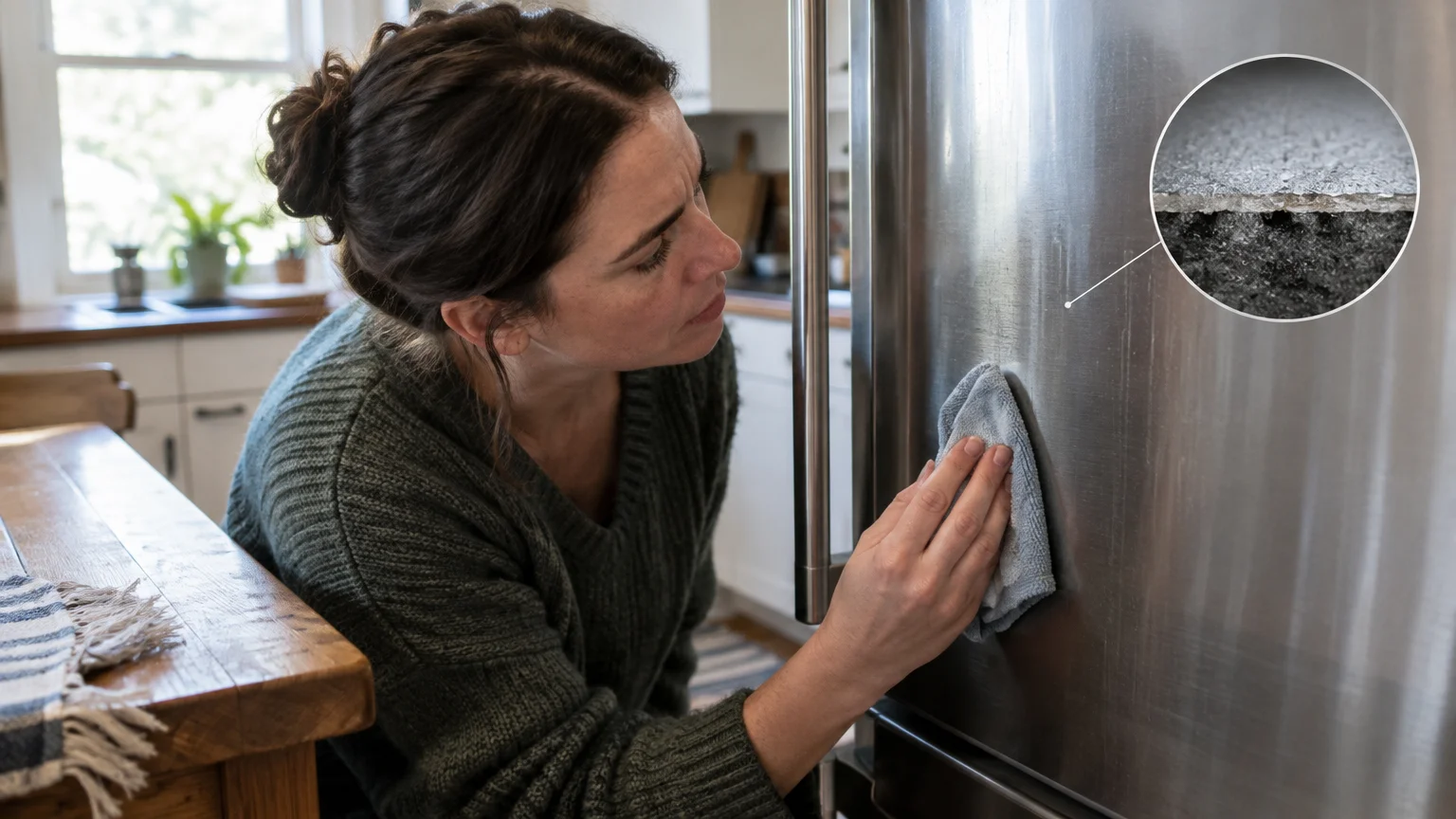
Understanding the Chromium Oxide Layer on Your Appliances
Stainless steel contains at least 10.5 percent chromium, which reacts with oxygen in your home to form an invisible shield. This microscopic barrier defends the underlying iron against moisture, grease, and oxidation.
Unlike painted finishes, this layer heals itself continuously when exposed to clean indoor air. When you strip that barrier with coarse pads or caustic chemicals, oxygen cannot repair the metal fast enough to stop rust.
Protecting this delicate chemical shield is the real secret to maintaining a flawless, showroom-quality kitchen.
01 Cleaning with Chlorine Bleach or Chloride-Based Products
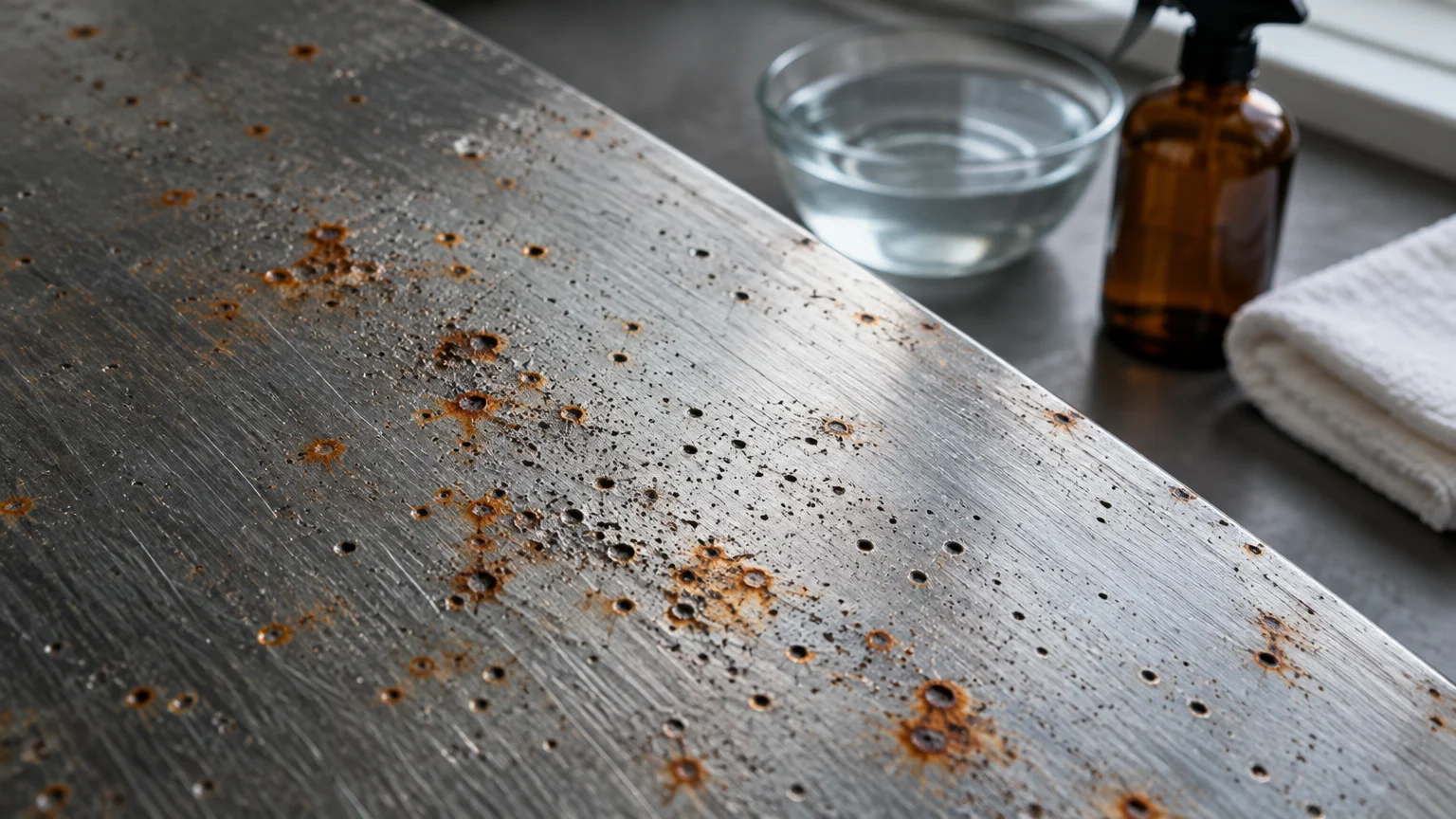
Chlorine bleach quickly degrades stainless steel by attacking its protective chromium content. While bleach sanitizes non-porous plastics, it triggers aggressive chemical corrosion across metal finishes.
Chlorides cause pitting corrosion, puncturing microscopic cavities into the steel. These tiny holes trap moisture and quickly develop into permanent orange rust blooms.
Many multi-surface sprays, disinfectants, and scouring powders contain hidden chlorides such as sodium hypochlorite. Always check product labels carefully before spraying any household disinfectant on your appliances.
The Specialty Steel Industry of North America highlights chlorides as the primary chemical hazard for household stainless steel. Even vapor drifting from an open bucket of bleach water can tarnish nearby metal panels.
If you accidentally splash bleach on your appliances, flush the surface immediately with clean water. Follow up with mild dish soap to neutralize the chemical residue completely.
02 Scrubbing Surfaces with Steel Wool or Coarse Scourers
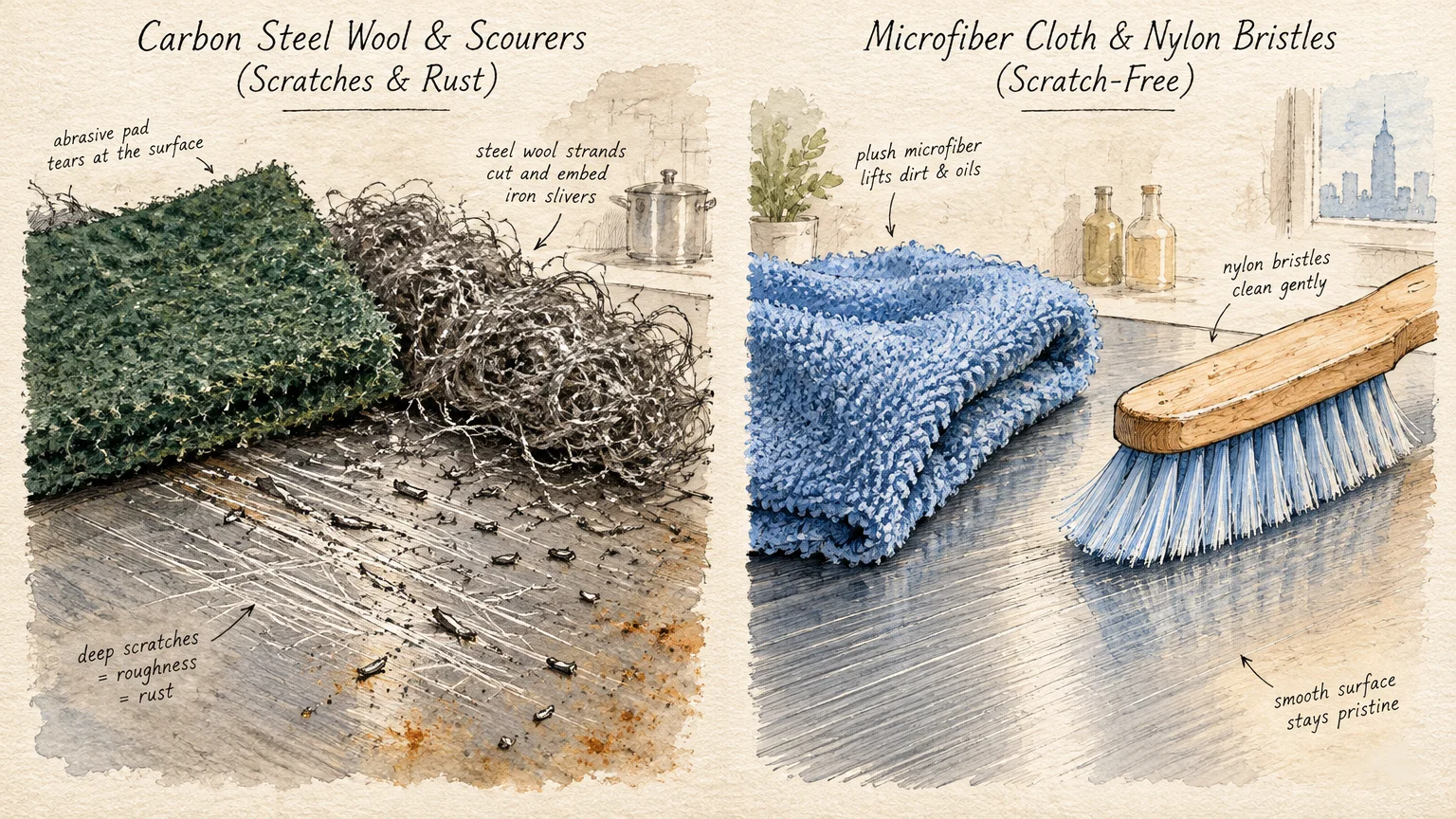
Coarse green scouring pads and traditional carbon-steel wool leave heavy scratch tracks across brushed metal. Even gentle rubbing with abrasive pads strips away the factory luster and creates cloudy patches.
Steel wool pads also introduce free-iron contamination to your appliances. These pads shed tiny carbon steel fragments that embed directly into the softer stainless alloy.
Those trapped iron particles oxidize rapidly when exposed to humidity, creating stubborn surface rust. The rust you see does not originate from your appliance—it comes from the pad itself.
Switch to non-scratch microfiber cloths or soft cellulose sponges for daily cleaning. Microfiber lifts dried sauce splatters and greasy fingerprints through fabric friction alone.
For stubborn, baked-on food spots, use a soft nylon-bristled brush. Nylon dislodges stuck particles effectively without scratching the metal beneath them.
03 Wiping Across or Against the Metal Grain
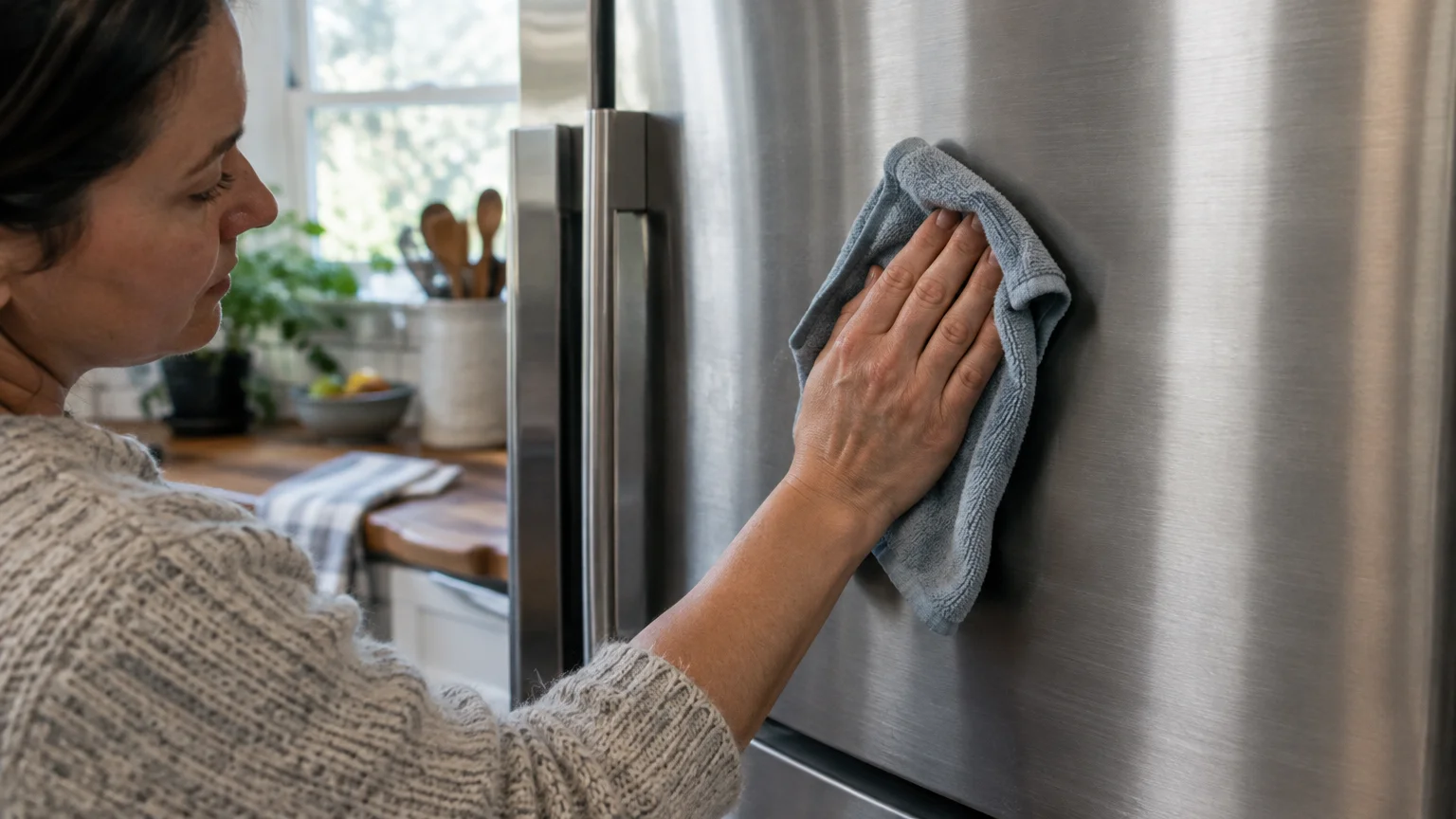
Take a close look at your refrigerator or dishwasher door under bright light. You will see fine, parallel brush lines running horizontally or vertically across the surface.
That directional brush pattern is known as the metal grain. Scrubbing against or perpendicular to those lines drags debris across the tiny ridges instead of gliding between them.
Cross-grain wiping cuts micro-abrasions into the metal ridges, making the entire surface look hazy over time. It also drives dust and cooking oils deeper into the microscopic valleys.
You can determine the grain direction by lightly running your fingertips across the panel. The surface feels smooth when moving with the grain, while moving against it creates slight resistance.
Always align your wiping motions with the direction of those factory lines. Moving with the grain lifts dirt smoothly and preserves your appliance’s uniform finish.
04 Exposing Exterior Panels to Oven Cleaners and Harsh Degreasers
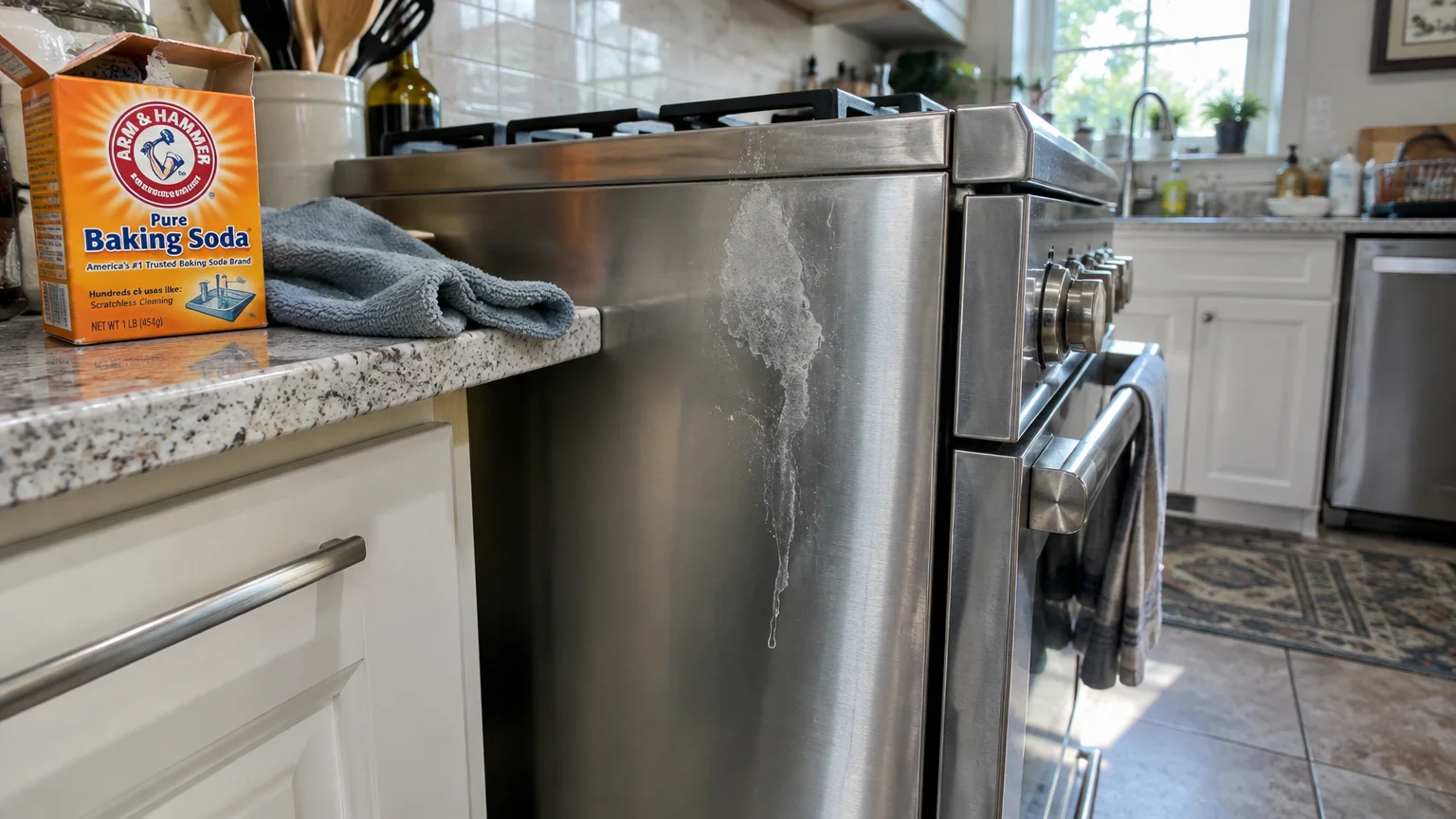
Commercial oven cleaners rely on sodium hydroxide—commonly known as caustic lye—to melt baked grease. While lye dissolves burnt carbon on oven interiors, it rapidly attacks stainless steel exteriors.
Fine mist drifting from an open oven door often settles onto adjacent cabinet trim and dishwasher panels. The caustic mist creates chalky, white drip trails within minutes of contact.
These chemical burns eat through the surface layer and permanently discolor the metal. Polishing pastes cannot remove these bleached streaks because the chemical has etched the alloy.
Shield surrounding appliance panels with thick towels before you spray any heavy oven cleaner. Alternatively, select low-fume, alkaline-free formulas to eliminate the hazard of caustic overspray.
If oven cleaner hits your stainless steel, wipe the area immediately with a towel saturated in cold water. Fast action dilutes the alkali before it burns into the finish.
05 Leaving Tap Water to Air-Dry on the Surface
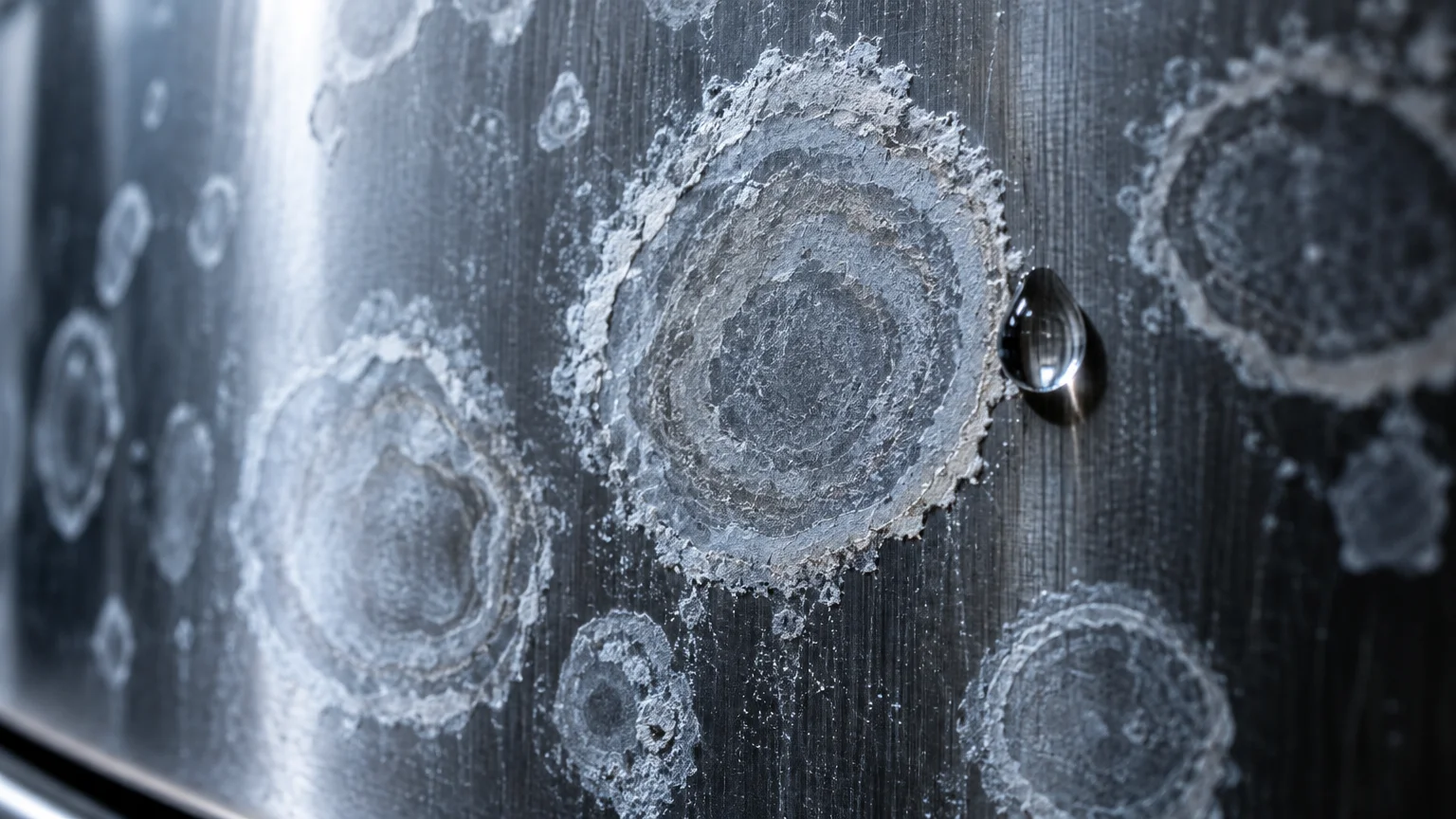
Letting wet appliances air-dry seems convenient, but municipal tap water contains dissolved minerals such as calcium, magnesium, and silica. As the water evaporates, those hard minerals stay behind.
These deposits form chalky water spots and streaks that ruin the clean appearance of your kitchen. Over time, hard water minerals bond chemically to the metal and resist routine wiping.
Major appliance manufacturers like GE Appliances advise drying surfaces immediately with a clean, lint-free cloth. Leaving standing water on metal panels also invites tarnishing in warm, humid kitchens.
If you live in an area with hard tap water, use distilled water for routine cleaning. Distilled water contains zero dissolved minerals, ensuring a crystal-clear finish without spotting.
Always keep a dry, plush microfiber cloth next to your cleaning supplies. Buff the panel dry the instant you finish washing to lock in a streak-free shine.
06 Coating Surfaces with Food-Grade Cooking Oils
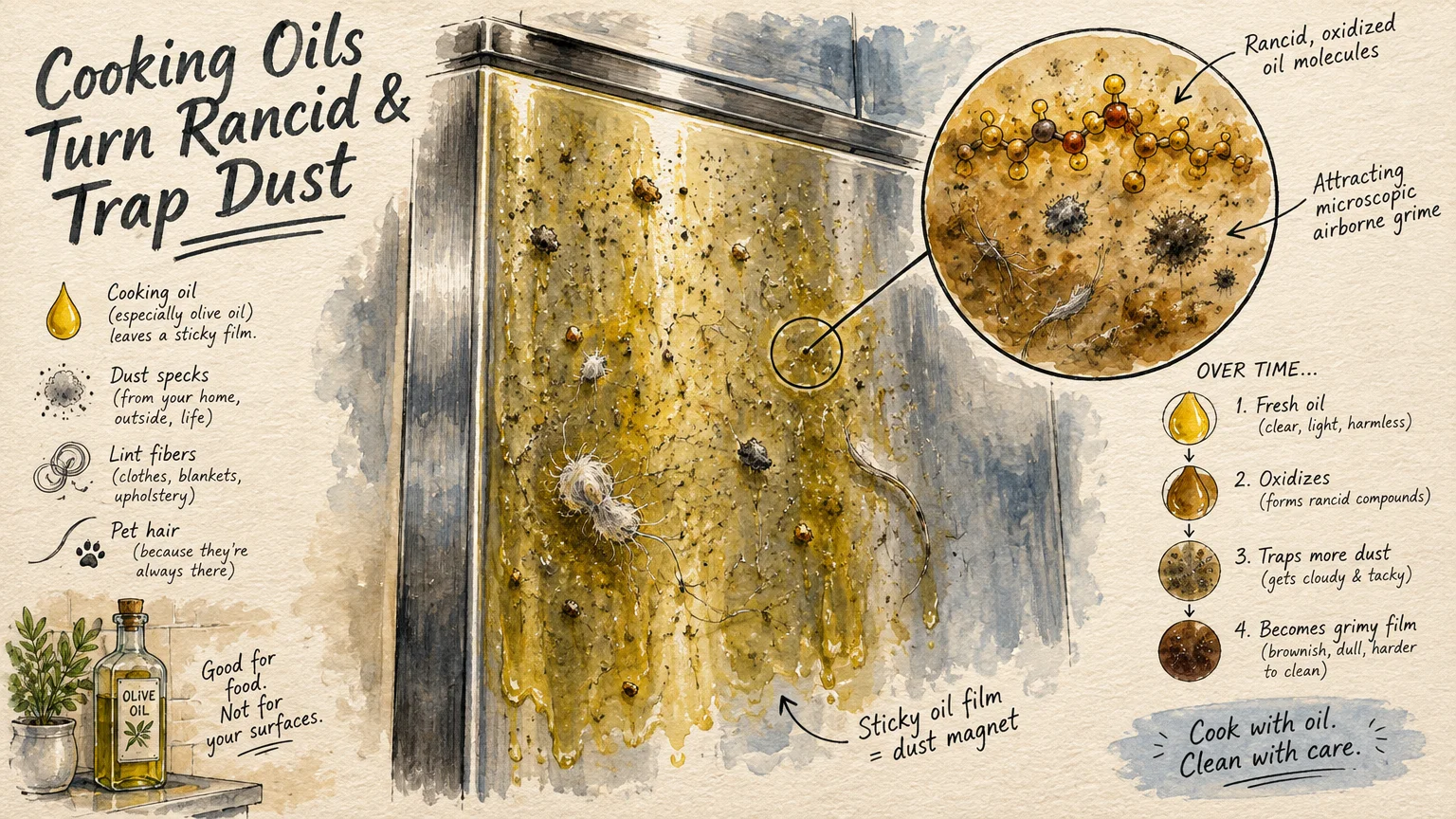
Online cleaning hacks frequently recommend rubbing olive oil, coconut oil, or butter onto stainless steel to conceal fingerprints. While cooking oil produces a quick shine, it creates severe long-term headaches.
Food oils do not evaporate; instead, they oxidize and turn rancid under room air. Over time, the oil degrades into a gummy film that traps airborne dust, hair, and cooking fumes.
Removing that sticky residue requires harsh degreasing agents, which strains the metal finish. Rancid oils also emit sour, unpleasant odors throughout your kitchen.
Select dedicated stainless steel conditioners that use lightweight, evaporating mineral oils or silicone emulsions. These specialized formulas condition the metal without leaving a sticky, dirt-attracting film behind.
If you use mineral oil, apply only a single pea-sized drop to a cloth. Buff the panel thoroughly until the steel feels clean and dry under your fingers.
07 Cleaning Metal Surfaces While They Are Still Hot
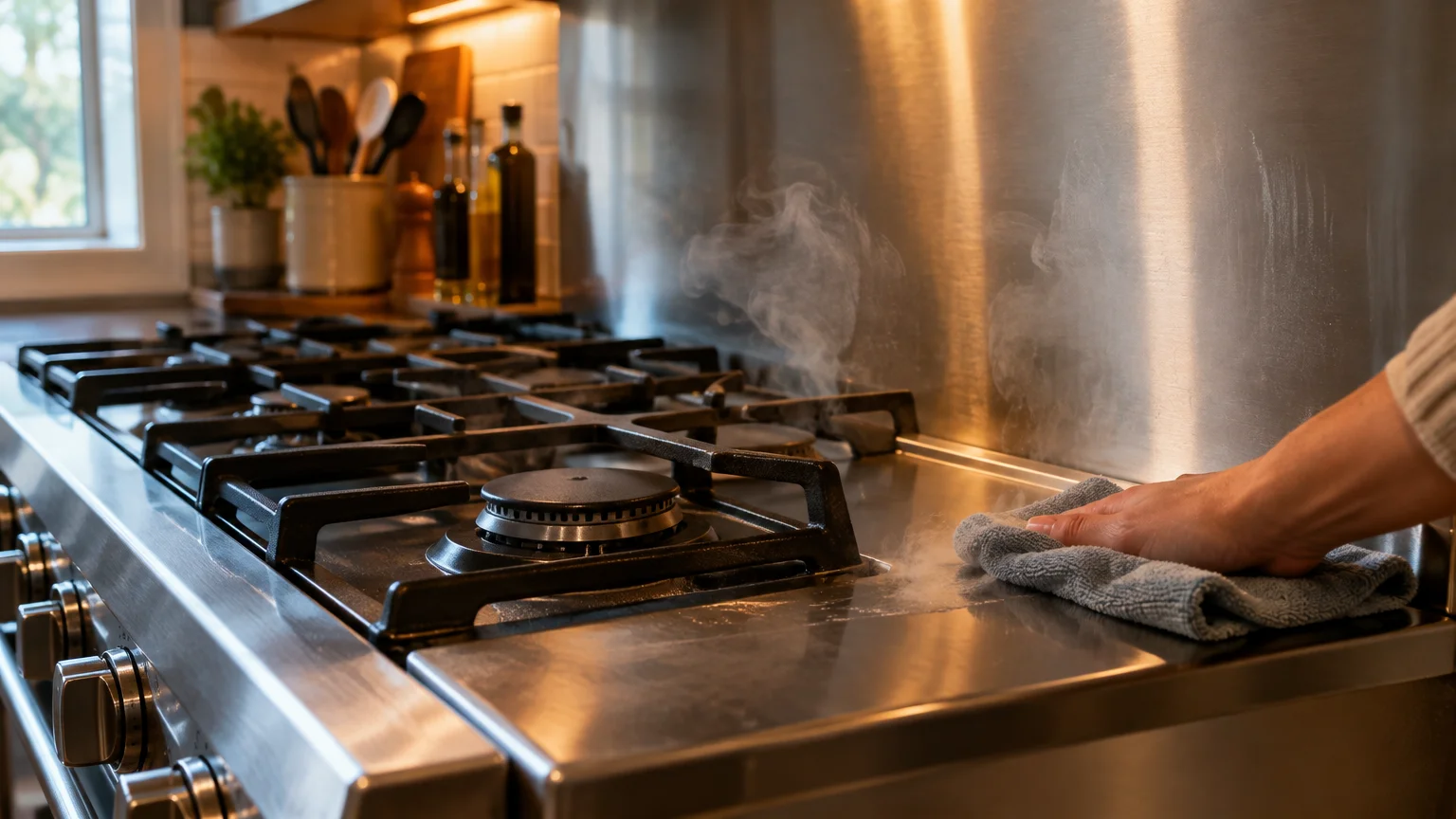
Wiping your range hood, cooktop, or toaster oven while it remains warm feels efficient. However, hot metal accelerates liquid cleaner evaporation to problematic speeds.
When water flashes off instantly, concentrated detergents and surfactants bake directly onto the heated alloy. This creates stubborn rainbow hazing and discolored brown spots that look like permanent scorch marks.
Thermal shock also poses a serious threat to modern kitchen appliances. Applying cool cleaning liquids to hot stainless panels can warp thin metal skins or crack clear protective coatings.
Wait until your appliances reach room temperature before applying any damp cloth or spray. Cool metal gives your cleaning solution ample dwell time to break down oils safely.
This rule applies equally to oven doors after running a self-cleaning cycle. Let the exterior cool for several hours before you wipe down the frame.
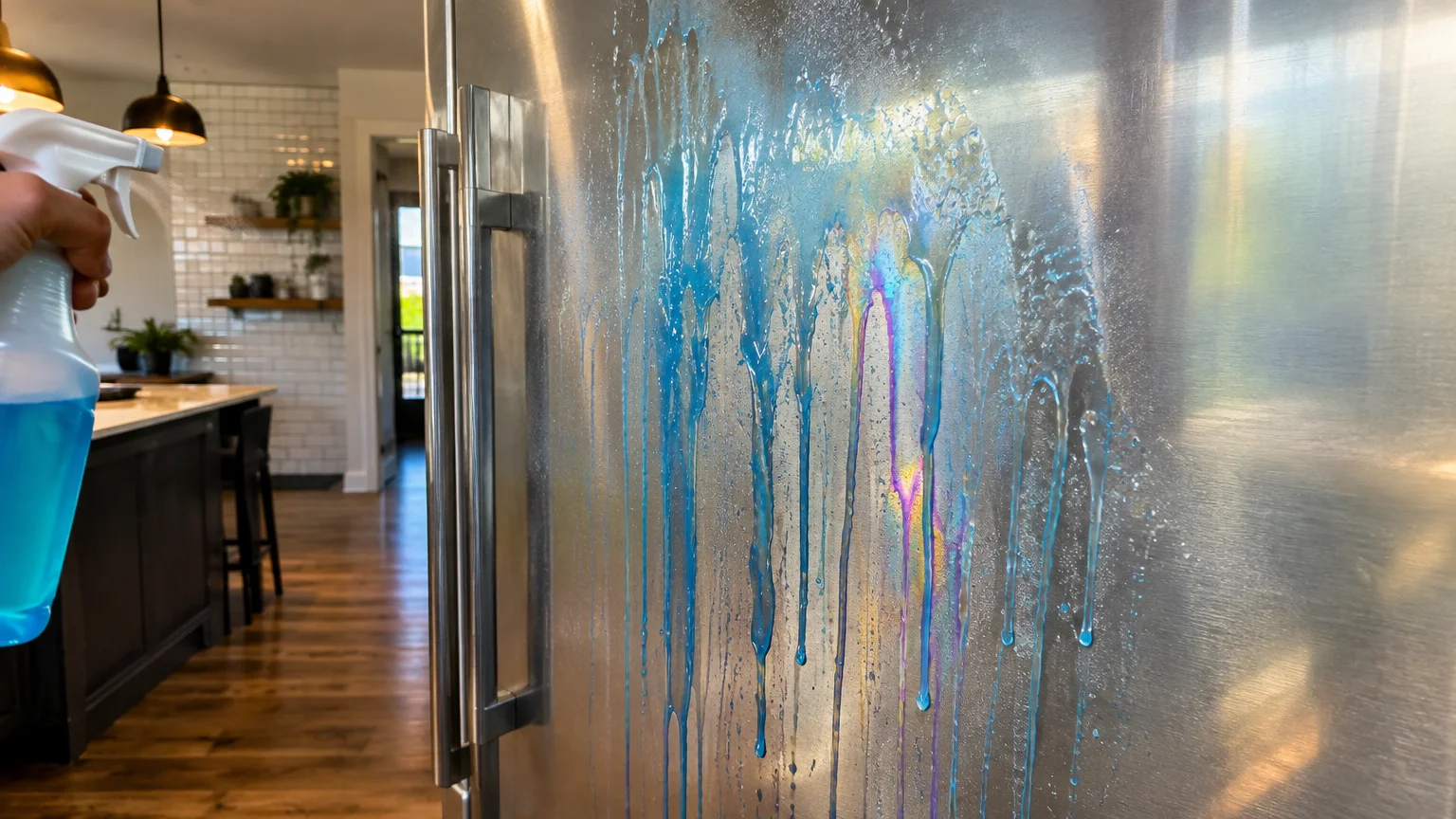
08 Spraying Ammonia-Based Glass Cleaners Directly onto Doors
Reaching for blue window spray is a natural habit when fingerprints clutter your refrigerator. Unfortunately, many common glass cleaners rely on ammonia to strip grease.
Leading appliance brands like Whirlpool apply clear anti-fingerprint coatings to modern stainless appliances. Ammonia strips these protective coatings, leaving uneven, cloudy patches that fingerprint twice as fast as bare metal.
Spraying liquid directly onto appliance doors creates another hidden hazard. The spray runs down panels and seeps into electronic controls, digital touchscreens, and handle seams.
Moisture pooling behind digital displays can corrode electrical circuits and cause costly touchscreen failures. Replacing modern electronic control boards often costs hundreds of dollars.
The American Cleaning Institute advises misting cleaning solutions onto your cloth rather than the appliance. This technique prevents liquid runoff and keeps your sensitive kitchen electronics dry.
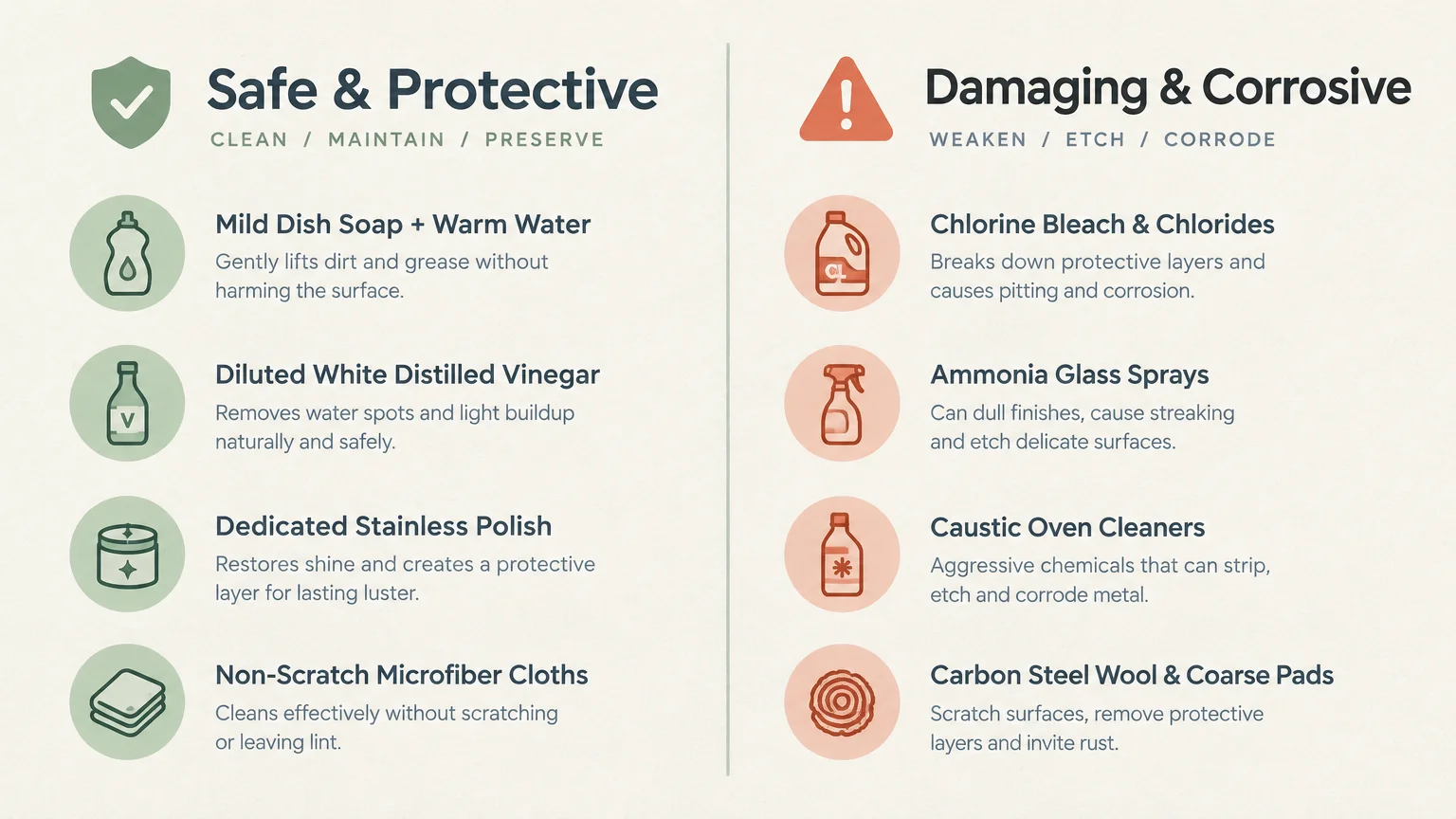
Safe Cleaners vs. Destructive Chemicals for Appliances
Knowing which household chemicals protect your metal—and which destroy it—keeps your appliances looking pristine. Review this quick comparison guide before you clean your kitchen.
| Cleaning Agent | Safe for Stainless? | Chemical Impact on Metal | Recommended Application |
|---|---|---|---|
| Diluted Dish Soap | Yes | Breaks surface tension of grease; preserves chromium oxide layer | Daily maintenance on all stainless finishes |
| Chlorine Bleach | No | Triggers chemical pitting and permanent orange rust spots | Never apply to household stainless steel |
| Distilled White Vinegar (Diluted 1:1) | Yes (with caution) | Dissolves hard water minerals; requires immediate water rinse | Occasional removal of limescale and mineral spots |
| Ammonia-Based Window Spray | No | Dissolves clear anti-fingerprint sealants and clouds finish | Avoid entirely on modern coated appliances |
| Vegetable or Olive Oil | No | Oxidizes into sticky, rancid film that collects dust | Do not use as a polishing agent |
| Specialized Stainless Polish | Yes | Deposits lightweight mineral barrier to repel smudges | Monthly application on thoroughly cleaned surfaces |
Always review your manufacturer user manual before applying commercial specialty products. Some appliances carry proprietary clear coats that require dedicated brand-approved cleaners.
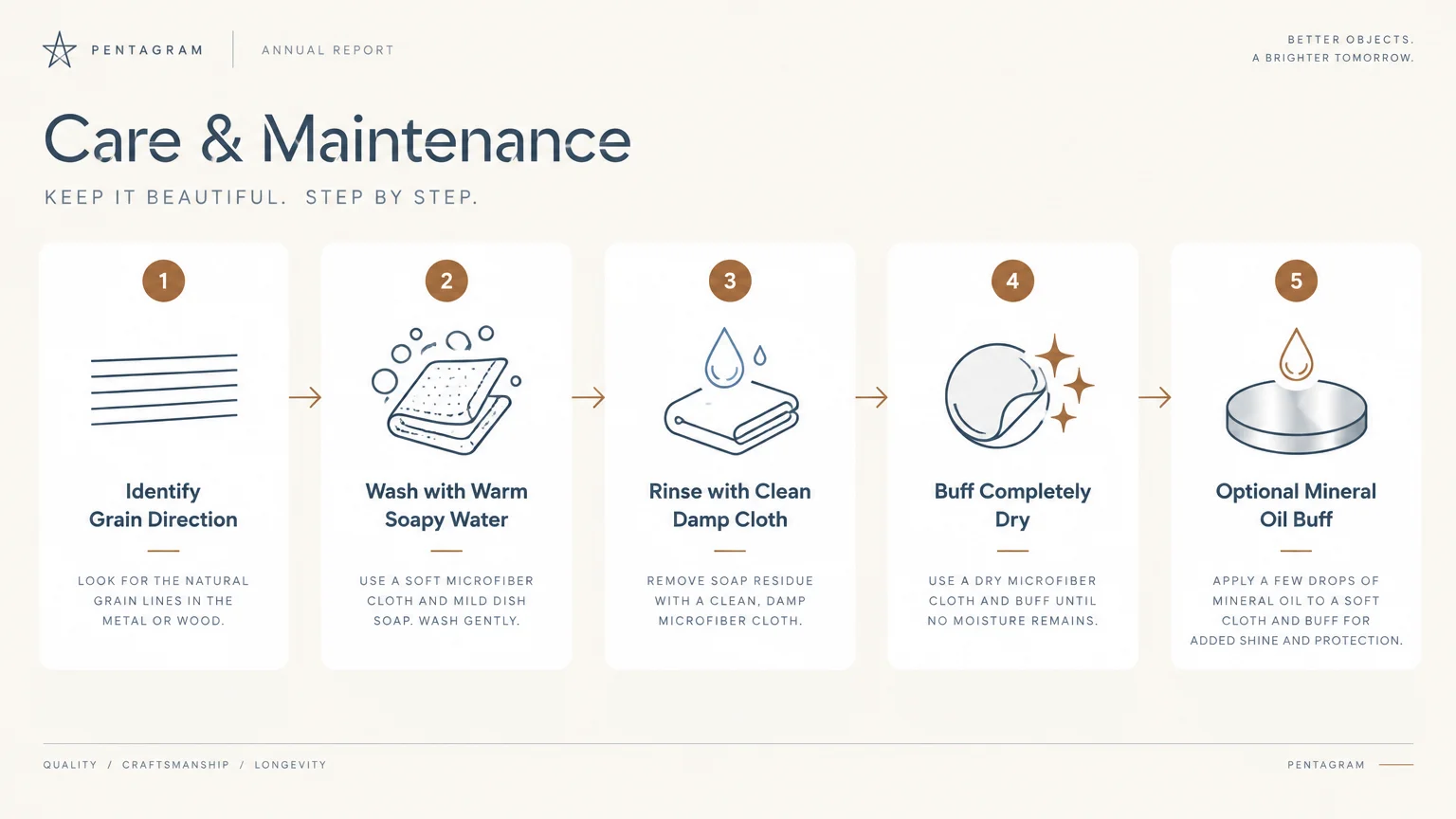
How to Clean Stainless Steel Properly: A 5-Step Method
You do not need costly specialty equipment to achieve a streak-free, mirror-like finish. Follow this simple, reliable five-step cleaning method to protect your appliances and save time.
- Identify the Grain Direction: Run your fingertips across the panel to determine whether the brushed lines run horizontally or vertically. Always guide your cleaning strokes parallel to these lines.
- Mix a Gentle Solution: Add two drops of mild liquid dish soap to two cups of warm water. This balanced solution dissolves oils without leaving harsh residues or stripping factory sealants.
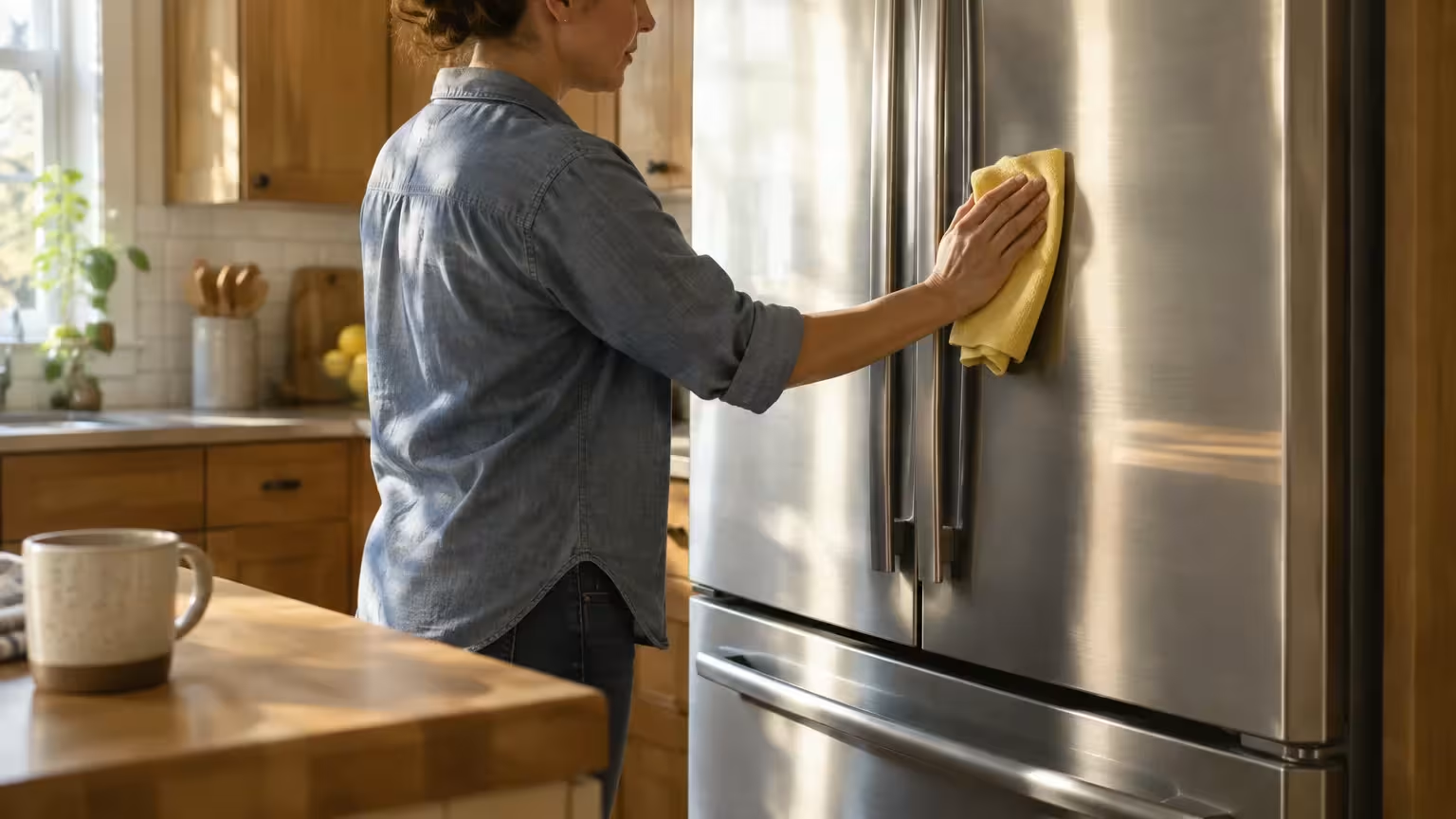
- Wipe with Microfiber: Dip a soft microfiber cloth into your soapy water and wring out excess liquid until damp. Wipe down the entire panel following the grain to lift dirt smoothly.
- Rinse Away Soap Residue: Wet a second clean cloth with plain warm tap water and wring it out completely. Wipe the panel thoroughly to remove loosened food soils and lingering detergent surfactants.
- Buff Bone-Dry Immediately: Take a third clean, dry microfiber cloth and buff the surface vigorously along the grain. Removing residual moisture instantly prevents hard water minerals from settling into the metal.
For stubborn grease splatters on range hoods, make a gentle paste using baking soda and warm water. Apply it with a damp sponge along the grain, then rinse clean.
Baking soda provides mild alkaline cleaning power with low abrasiveness, making it safe for persistent kitchen grease.
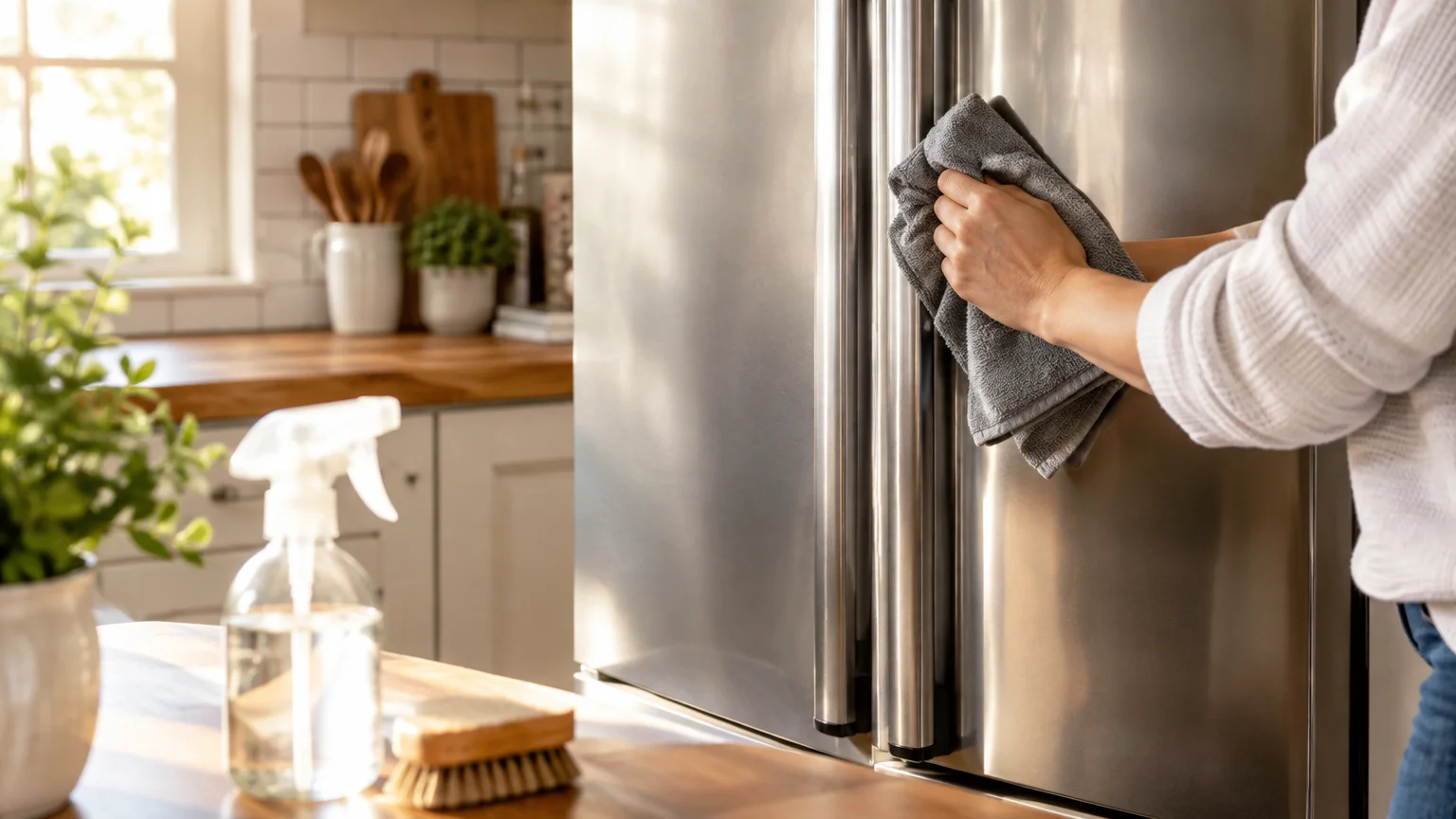
Essential Stainless Steel Care Tips for Daily Upkeep
Adopting a consistent, low-effort maintenance schedule keeps your kitchen looking organized without demanding hours of scrubbing. Incorporate these habits to simplify your routine.
- Wipe High-Touch Zones Daily: Spend thirty seconds each evening wiping refrigerator handles and microwave buttons with a damp microfiber cloth to avoid stubborn grease buildup.
- Wipe Away Acidic Foods Immediately: Clean tomato sauce, citrus juice, and salad dressings off cooktop fronts instantly to prevent natural acids from etching the metal.
- Protect Panels During Deep Cleans: Drape clean bath towels over lower appliance doors whenever you clean upper oven racks or apply degreasers to countertops.
- Reserve Polish for Clean Metal: Never spray stainless polish over dirty panels. Applying oil-based polishes over dust simply seals the grime beneath a greasy film.
Breaking your cleaning tasks into bite-sized habits protects your appliances while keeping your daily home life calm and stress-free.
Your Practical Next Step
Walk into your kitchen right now and check your refrigerator door to find the direction of its brushed grain.
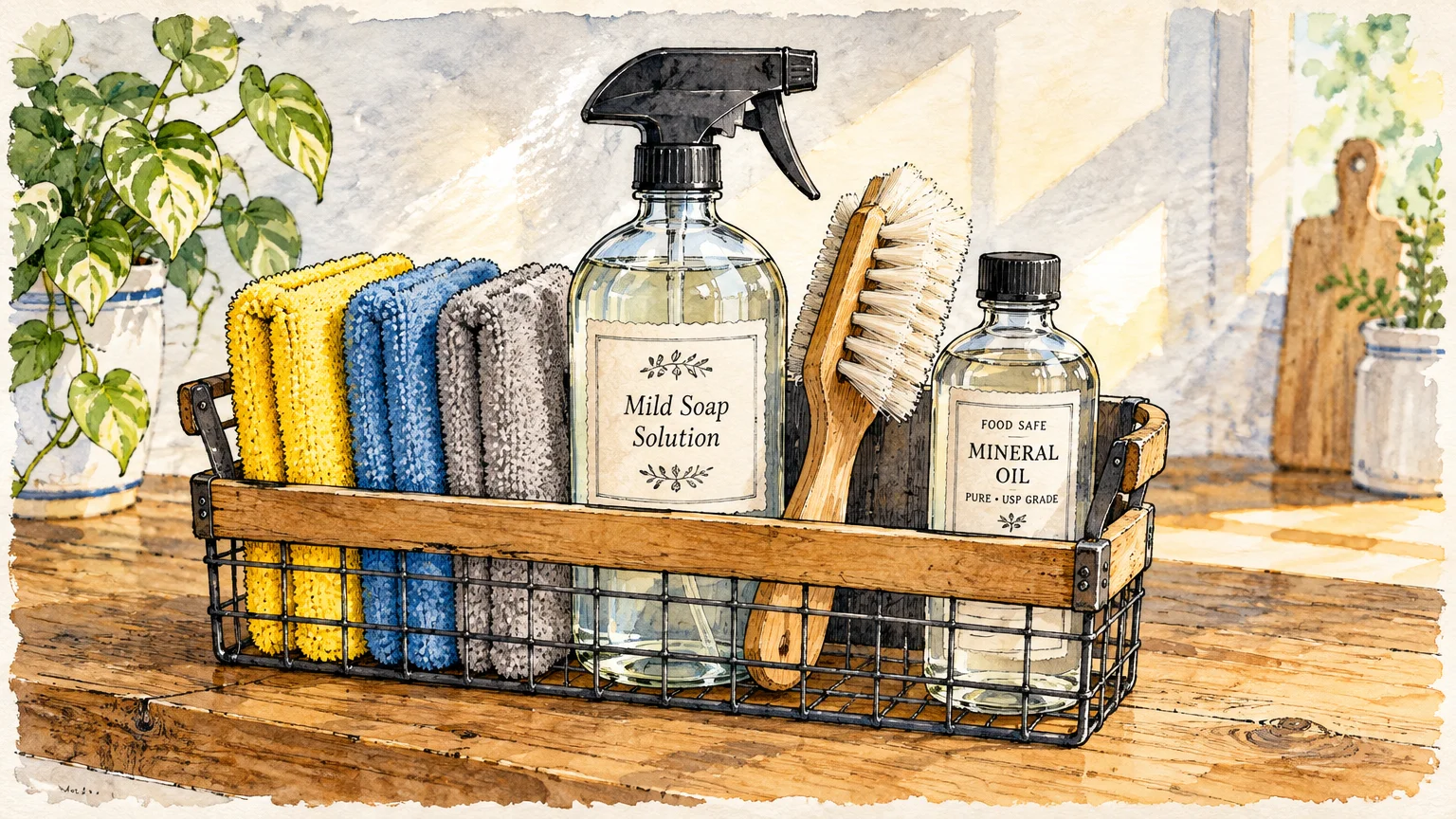
Grab two clean microfiber cloths—one slightly damp with warm soapy water and one completely dry—and clean a single smudged panel.
Buff the metal bone-dry along the grain to see how fast your appliances can gleam without harsh chemicals.